

Introduction
Recently, many customers have asked me: What are the advantages of copper foil compared to traditional round wire? Why are more and more transformer manufacturers choosing foil winding technology? To be honest, this is a very interesting question. I have been in the electrical wire industry for almost 30 years and have witnessed its evolution from round wire winding to flat wire, and now to copper foil winding technology. Today, I’ll talk about the application of copper foil in foil-wound transformers.
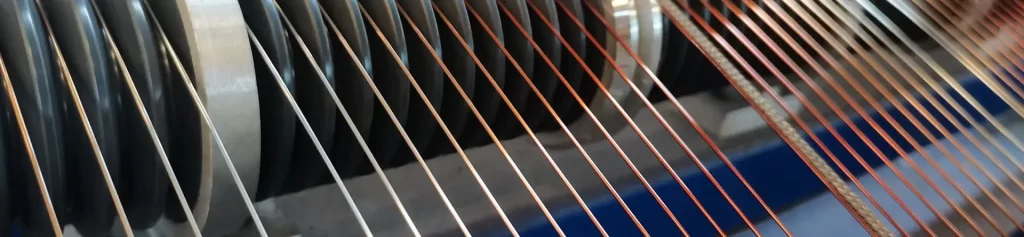
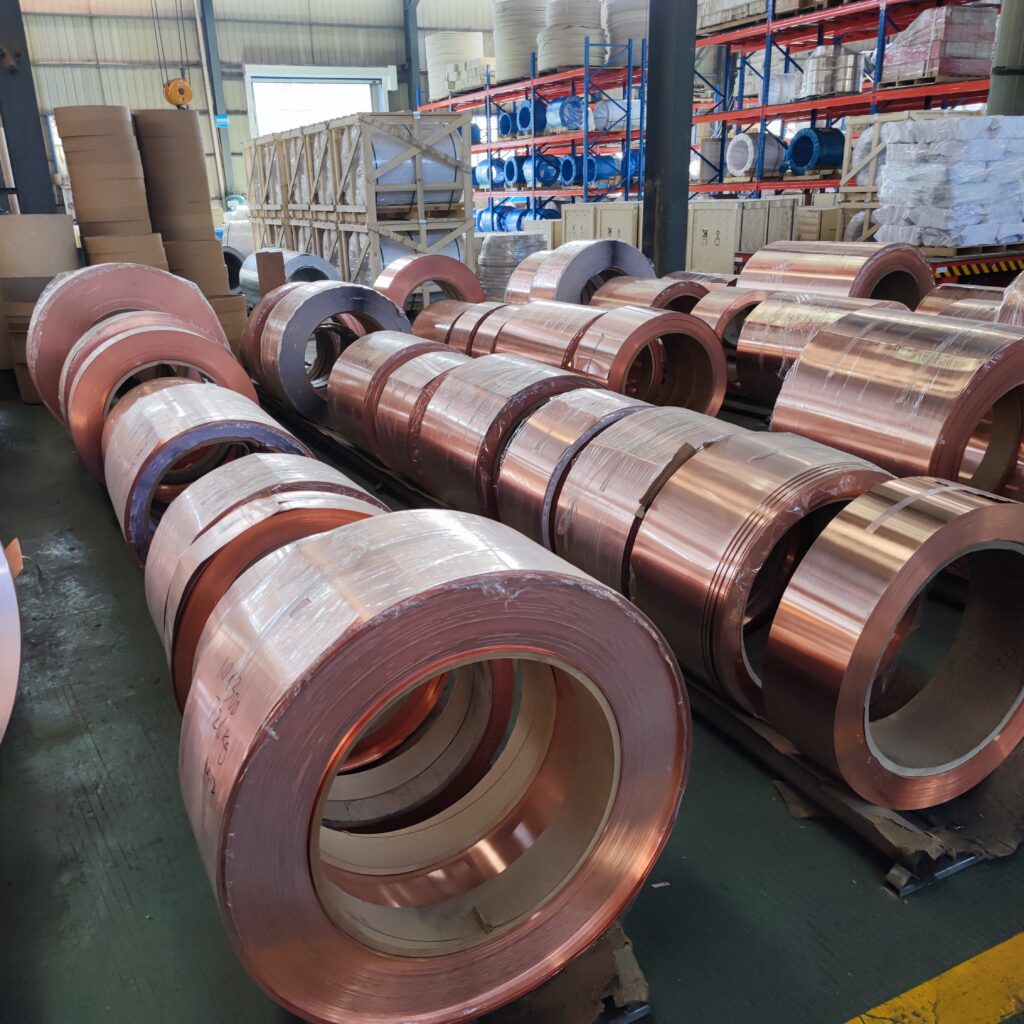
Foil-wound transformers sound sophisticated, but the principle is actually not complicated. Simply put, it uses copper foil instead of traditional round wire as the winding material. Copper foil is like a thin copper strip, ranging in width from a few millimeters to tens of millimeters, and its thickness is usually between 0.1mm and 3mm. Transformers wound with copper foil can be made smaller, more efficient, and have better heat dissipation.
I. Why Choose Copper Foil as Transformer Winding?
This issue needs to be addressed from several perspectives.
Electrical Performance: From an electrical performance standpoint, copper foil has a larger cross-sectional area, resulting in greater current carrying capacity. For example, in a 100A rated current application, several round wires might be needed in parallel, but a single copper foil coil suffices. The skin effect is also less pronounced at high frequencies, naturally leading to lower losses. Our practical tests show that, at the same power, the temperature rise of copper foil windings is 15% to 20% lower than that of round wire windings. This figure is crucial—lower temperature rise translates to longer lifespan and better stability.
Manufacturing Process: From a manufacturing perspective, copper foil winding is planar, resulting in a compact coil structure and less magnetic leakage. Traditional round wire windings always have gaps between coils, making magnetic leakage unavoidable. Copper foil, however, allows for tightly packed layers and a more optimized magnetic circuit design. This advantage is particularly noticeable in high-frequency transformers and precision power supplies.
Mechanical Strength: There’s also the issue of mechanical strength. Transformers vibrate during operation, especially electrical transformers, where the electrodynamic force generated by short-circuit currents is significant. Copper foil has better mechanical strength than round wire, stronger resistance to electrodynamic forces, and is less prone to deformation.
II. Key Specifications of Copper Foil
Choosing copper foil is not arbitrary; several parameters must be carefully considered.
Material—This is the most important. Copper foil used in transformers must be electrolytic copper (ETP copper), with a copper content of 99.9% or higher and an electrical conductivity of not less than 101%. Some small factories use recycled copper, which contains more impurities, has higher resistivity, and causes significant heat generation. Our copper foil supplied by LP Industry uses only electrolytic copper from reputable smelters, and each batch has a material certificate.
Thickness—Common specifications range from 0.1mm to 3mm. Thinner foil is used in high-frequency transformers, and thicker foil is used in power transformers. Thickness tolerance must be strictly controlled, generally within ±0.01mm. Larger tolerances make interlayer insulation difficult to handle during winding, easily leading to quality problems.
Width—Determined according to the transformer design. Widths range from 10mm to 600mm. Too wide a copper foil makes winding difficult, while too narrow a foil results in more parallel layers and increased costs. The most suitable design we’ve seen is to work backwards from the window area to determine the copper foil width, achieving optimal efficiency.
Flatness—The copper foil surface must be free of wavy edges, creases, and oxide spots. Poor flatness can easily cause insulation breakage during winding. We conduct 100% visual inspection before shipment, and any defective foil is rejected.
Edge Treatment—The edges of the cut copper foil have burrs, which must be deburred. Sharp burrs can pierce the insulation, causing short circuits. Many manufacturers overlook this issue, but we have specialized deburring equipment.
III. Insulation Treatment: The Core of Copper Foil Transformers
The copper foil of the transformer is itself a conductor, and insulation is necessary to form a winding. There are three common methods.
Coating with Insulating Varnish: A layer of polyester imide or polyamide imide varnish is applied to the surface of the copper foil, which cures to form an insulation layer. This method is mature and reliable, achieving a thermal class of 200. Most of the copper foil at LP Industry undergoes this treatment.
Insulation Film Coating: A layer of polyester film (PET) or polyimide film (Kapton) is coated on both sides of the copper foil. Coated copper foil has better insulation performance, but it is also more expensive. It is commonly used in precision power supplies and new energy vehicle applications.
Paper-Wrapped Insulation: A layer of insulating paper, such as NOMEX paper or cable paper, is wrapped around the copper foil. This method was traditionally used in oil-immersed transformers, but it is less common now.
After insulation treatment, a withstand voltage test must be performed. The general requirements are: conductor-to-ground withstand voltage of 2000V or higher, and interlayer withstand voltage of 1000V or higher. If the test fails, the entire roll of copper foil cannot be used.
IV. Design and Calculation of Foil-Wound Transformers
There are several key points in designing foil-wound transformers.
Turns Calculation—Similar to round wire transformers, the number of turns per volt is determined based on the cross-sectional area of the iron core and the magnetic flux density. However, the copper foil is wound in a single layer, so the number of turns is the same as the number of layers. This concept needs to be changed.
Current Density Selection—The current density of copper foil is generally selected from 3A/mm² to 5A/mm². Lower values are used for power transformers, while higher values can be used for transformers with good heat dissipation. Too high a current density will cause excessive temperature rise; too low a current density will waste materials and increase costs.
Thermal Design—The heat dissipation of foil-wound transformers mainly relies on the iron core. The heat generated by the winding is conducted to the iron core through the insulation layer, and then dissipated by the iron core. Therefore, the heat dissipation design of the iron core is very important, and sometimes heat sinks or fans are needed.
Short-Circuit Impedance—The short-circuit impedance of foil-wound transformers is usually lower than that of round-wire transformers because of less leakage flux. This factor must be considered in the design; otherwise, the short-circuit current will be too high, and the protection configuration will need to be adjusted.
V. Common Application Areas and Market Trends
New Energy Vehicle Charging Stations—This is the fastest growing market in the past two years. Charging modules require high-power, high-efficiency transformers, and copper foil winding is the preferred choice. We have supplied copper foil to several major domestic manufacturers, and the feedback has been positive. With domestic sales of new energy vehicles exceeding 10 million units in 2024, the copper foil market has boomed, leading to a surge in demand for copper foil.
Photovoltaic Inverters—Also demanding high power and high efficiency. Photovoltaic inverters operate at high frequencies, resulting in significant losses in the round wire transformer, making copper foil an ideal choice. The continuous growth in photovoltaic installations, especially in industrial and commercial distributed photovoltaics, places even higher demands on efficiency, further highlighting the advantages of copper foil transformers.
Server Power Supplies—UPS power supplies for data centers require high power density, where the small size and high efficiency of copper foil transformers are perfectly utilized. The explosive growth of AI computing power and the accelerated construction and expansion of data centers have created a strong demand for high-efficiency power supplies.
Rail Transit—The main transformers for locomotives and rolling stock have extremely high requirements for reliability and heat dissipation, necessitating rigorous certification of copper foil quality. While the certification process in this field is lengthy, once a supplier is included in the supplier list, orders become stable.
Industrial Welding Machines—High current output, copper foil’s low resistance advantage is obvious. While the welding industry is traditional, high efficiency and energy saving are the trends, and copper foil transformers are replacing traditional round wire transformers.
VI. Copper Foil vs. Aluminum Foil: How to Choose?
Some customers ask: Aluminum foil is cheaper than copper foil, can it be used instead? This question needs objective analysis.
Aluminum foil is indeed cheaper, only about one-third the price of copper. However, aluminum’s conductivity is only about 60% of copper’s. This means that to achieve the same current carrying capacity, the cross-sectional area of aluminum foil needs to be larger, potentially resulting in greater weight. Furthermore, aluminum’s mechanical strength is lower than copper, it oxidizes easily, and joint processing is more complicated.
My suggestion is: for low-power, cost-sensitive applications, aluminum foil can be considered. But for high-power, high-reliability applications, copper foil should be used. The initial savings may be offset by later maintenance costs.
In the actual market, power transformers, new energy vehicles, and high-end power supplies almost entirely use copper foil. Only in certain specific scenarios does aluminum foil have a place. This trend is unlikely to change in the short term.
VII. Production Process and Quality Control
The quality of copper foil is largely determined by the production process. How is copper foil produced? The first step is smelting, where copper ingots are heated and melted, then impurities are removed and refined. The second step is casting, forming copper billets. The third step is hot rolling, where the copper billets are rolled into thin strips of a certain thickness. The fourth step is cold rolling, precisely controlling the thickness to achieve the final specifications. The fifth step is annealing, eliminating internal stress and improving ductility. The sixth step is surface treatment, including polishing, deburring, and insulating coating.
Quality problems can arise at any stage. Incorrect smelting temperature results in porosity in the cast billet; deviations in hot rolling parameters lead to uneven thickness; excessive cold rolling reduction causes severe edge cracking; and untimely annealing results in excessive hardness. These problems must be detected during finished product inspection.
At LP Industry, quality control begins from the moment raw materials enter the factory. Every batch of copper ingots undergoes composition analysis, and those that fail to meet standards are returned. Multiple online inspections are conducted during production, with real-time monitoring of thickness, flatness, and surface quality. Before finished products leave the warehouse, random inspections are conducted, including resistivity testing, hardness testing, ductility testing, and withstand voltage testing. The inspection rate is no less than 10%, and if any item fails to meet the standard, the entire batch is returned.
Quality is the bottom line. This principle cannot be shaken.
VIII. Selection Suggestions and Avoidance Guide
Having worked in the industry for many years, I have seen too many cases of problems with product selection. Here are a few suggestions:
First, verify the material certificate. Do not buy copper foil of unknown origin. Products purchased through legitimate channels have material certificates for each batch. Incorrect composition will result in significantly different conductivity, leading to endless problems.
Second, check the thickness tolerance. Suppliers with strict requirements control the tolerance within ±0.01mm. Our LP Industry copper foil has a tolerance of ±0.005mm, the strictest in the industry.
Third, take samples for testing upon receiving the copper foil. Measure resistance, hardness, and surface quality. Do not rush to purchase in large quantities; obtain small samples first to confirm the quality.
Fourth, clarify the insulation treatment method. Different applications have different insulation requirements. Choosing the wrong insulation class is both wasteful and unsafe.
Fifth, assess the supplier’s stable supply capacity. Copper foil is a commodity, and raw material prices fluctuate greatly. Some suppliers offer very low prices, but when raw materials are scarce, they prioritize supplying others, and you may not be able to get your goods. LP Industry has been in the industry for 30 years, with a stable supply chain and has never experienced a shortage.
Sixth, pay attention to packaging and transportation. Copper foil is a soft material and is easily deformed during transportation. Good packaging should use wooden crates lined with moisture-proof paper, and rolls should be separated by cardboard. After receiving the goods, check whether the packaging is intact and free from deformation.
Seventh, understand the return and exchange policy. In case of problems, can you return or exchange the goods, and how complicated is the process? Some suppliers don’t care about the goods after they are sold; be cautious about such cooperation.
IX. What Can We Provide?
After saying so much, let me introduce our company.
Zhengzhou LP Industry Co., Ltd. has focused on the magnetic wire industry for 30 years and is a source manufacturer of copper foil and enameled wire. Our copper foil products include:
- Material: Electrolytic copper (ETP), copper content ≥ 99.9%
- Thickness: 0.1mm to 3mm, customizable
- Width: 10mm to 600mm, customizable
- Insulation treatment: Polyester imide varnish, polyamide-imide varnish, lamination, and other options
- Thermal class: Class 155 to 240
Our products are exported to over 50 countries worldwide, primarily in Europe, America, and Southeast Asia. Quality certifications include ISO9001, ISO14001, ISO45001, as well as UL, REACH, RoHS, etc. All exported products have passed SGS audits.
Regarding delivery time, standard specifications are in stock and shipped within 15 days; customized specifications are delivered within 30 days. This speed is considered fast in the industry.
Interested customers are welcome to contact us. Email: office@cnlpzz.com, WhatsApp: 0086-19337889070. We have a professional technical team that can recommend suitable copper foil specifications based on your application.
This article is original content from LP Industry and requires authorization for reproduction.