

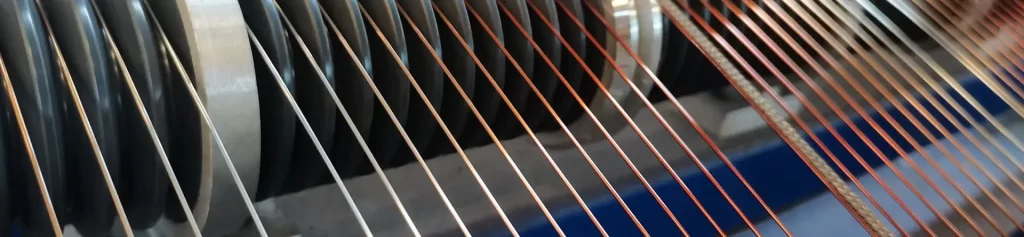
High-frequency electrical systems demand conductors that offer an optimal balance of performance, weight, and cost. Pure copper has long been the default choice for high-frequency applications, but its weight and rising material costs have driven engineers to seek alternatives. Copper Clad Aluminum (CCA) wire has emerged as a compelling solution that combines the surface conductivity benefits of copper with the weight and cost advantages of aluminum. Used in everything from telecommunications infrastructure to radio frequency coils, induction heating systems, and high-frequency transformers, CCA wire offers unique advantages when applied correctly.
What is Copper Clad Aluminum (CCA) Wire?
Copper Clad Aluminum wire, commonly abbreviated as CCA, is a bimetallic conductor that consists of an aluminum core with a copper outer layer metallurgically bonded to the aluminum through a continuous cladding process. The copper layer is permanently bonded to the aluminum substrate, creating a single composite conductor that exhibits properties of both metals.
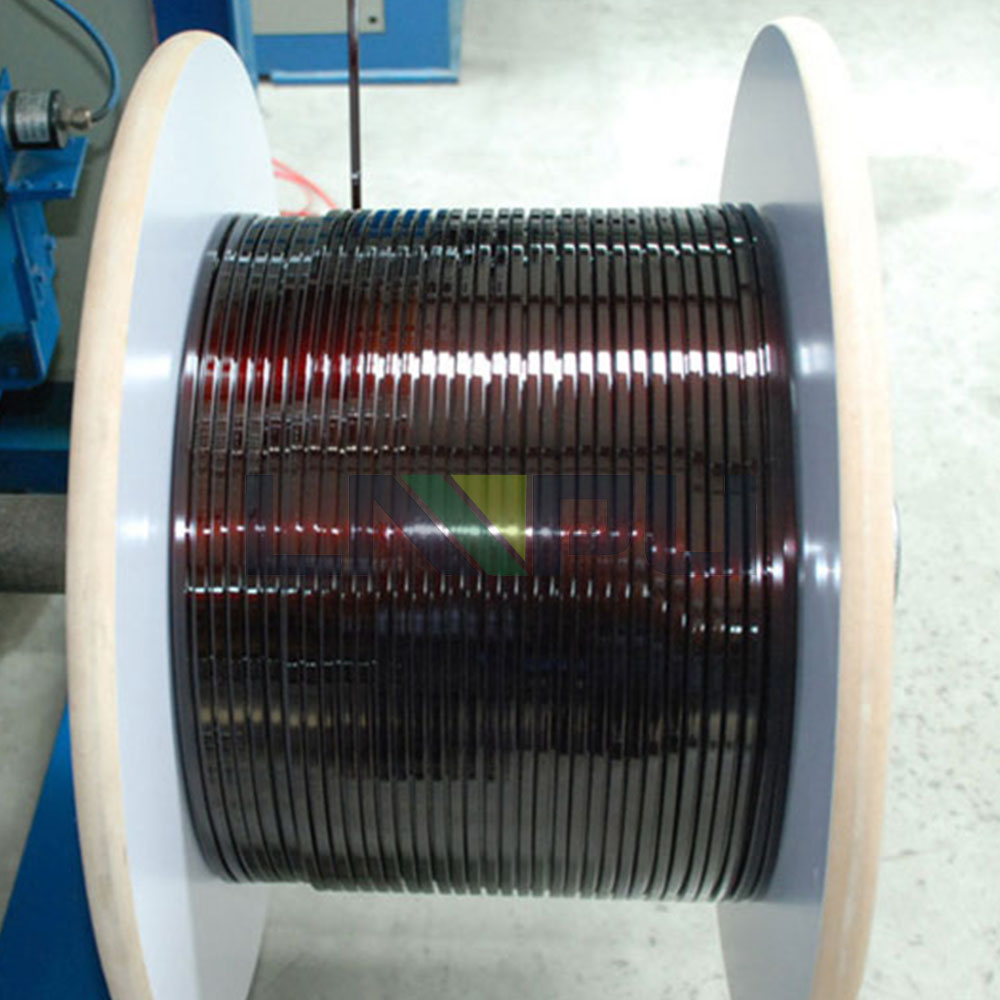
The copper cladding typically represents 10% to 15% of the total cross-sectional area of the conductor, with the remaining 85% to 90% being aluminum. Common cladding ratios include 10%, 12.5%, and 15% by volume, with higher copper content providing better surface conductivity at higher cost. The conductor is available in various forms, including round wire, rectangular wire, and strip, suitable for different winding and cabling applications.
CCA wire is manufactured to international standards that define the cladding thickness, mechanical properties, electrical characteristics, and test methods. The primary standards for CCA magnet wire include ASTM B566, JIS C 3102, and various customer-specific specifications. These standards ensure that the copper-aluminum bond is durable, that the conductor meets electrical performance requirements, and that the wire can be processed using standard winding and termination techniques.
Why Use CCA Wire in High-Frequency Applications?
CCA wire occupies a unique position in the conductor selection landscape for high-frequency applications, offering several distinct advantages that make it the preferred choice in many specific scenarios.
Significant Cost Savings
Aluminum costs significantly less than copper on a per-kilogram basis, and because aluminum has a lower density than copper, the weight savings translate into even greater material cost advantages. CCA wire typically costs 40% to 60% less than equivalent pure copper wire, representing substantial savings in applications that use large quantities of conductor material.
For high-frequency applications involving large coils, transmission lines, or RF cables, the material cost savings can be significant enough to fundamentally change the economics of a design. This is particularly important in consumer electronics and telecommunications equipment, where cost competitiveness is essential.
Weight Reduction
Aluminum has approximately one-third the density of copper. A CCA conductor weighs significantly less than an equivalent pure copper conductor with the same DC resistance. In applications where weight is a critical design consideration—such as aerospace RF systems, mobile telecommunications equipment, and portable electronics—this weight reduction delivers meaningful benefits.
Good High-Frequency Surface Performance
At high frequencies, electrical current tends to flow near the surface of the conductor—a phenomenon known as the skin effect. The skin depth at typical high frequencies (1 MHz to 100 MHz) is on the order of a few microns to tens of microns, much smaller than the radius of typical conductors. This means that the current effectively flows only in the copper cladding layer, which has the high conductivity of copper at the surface where current actually flows.
This unique property of CCA wire means that, despite its aluminum core, it performs nearly as well as pure copper at high frequencies. The lower DC resistance advantage of copper is not fully realized at high frequencies because current only flows in the outer skin layer, which is copper in CCA wire.
Good Solderability and Termination
Unlike pure aluminum wire, which requires special techniques and materials to terminate reliably, CCA wire can be soldered using standard techniques and equipment. The copper outer layer provides a solderable surface, eliminating the need for special aluminum-compatible fluxes, mechanical crimps, or welding procedures for many applications.
Construction and Manufacturing of CCA Wire
The quality and consistency of CCA wire depend heavily on the manufacturing process used to create the metallurgical bond between the copper cladding and aluminum core.
Cladding Process
CCA wire is manufactured using a continuous cladding process in which a copper strip is wrapped around an aluminum core rod and then drawn through a series of dies to reduce the cross-sectional area while maintaining the proportional thickness of the copper layer. The drawing process creates a strong metallurgical bond between the two metals, ensuring that the copper layer does not separate from the aluminum core during subsequent processing or in service.
The cladding ratio is precisely controlled during manufacturing, with the thickness of the copper layer monitored throughout the process. After drawing, the wire is typically annealed to achieve the desired mechanical properties (soft, half-hard, or full-hard temper) and then spooled for shipment to the customer.
Quality Control
Quality CCA wire manufacturers implement rigorous quality control procedures to verify the integrity of the copper-aluminum bond, the consistency of the cladding thickness, and the electrical and mechanical properties of the finished wire. Common quality tests include:
- Bond strength testing: Verifies that the copper layer remains bonded to the aluminum core under stress
- Cladding thickness measurement: Confirms that the copper layer meets the specified percentage of total cross-section
- Electrical resistance testing: Verifies DC resistance is within specification
- Dimensional verification: Confirms wire diameter and ovality are within tolerance
- Surface quality inspection: Identifies defects such as exposed aluminum, scratches, or contamination
Available Forms
CCA wire is available in multiple forms to suit different application requirements:
- Round wire: The most common form, available in a wide range of AWG and metric sizes
- Rectangular wire: Used in high-frequency transformer and inductor windings where high slot fill factor is important
- Strip and foil: Used in planar magnetics, RFID antennas, and high-current RF applications
Electrical Performance in High-Frequency Systems
Understanding how CCA wire performs electrically at high frequencies requires examining the key performance parameters and how they compare to alternative conductors.
DC Resistance
At DC and low frequencies, CCA wire has higher resistance than an equivalent pure copper conductor because aluminum has approximately 61% of the conductivity of copper. To achieve the same DC resistance as a given copper wire, the CCA wire must have a larger cross-sectional area—typically about 1.4 to 1.6 times the cross-section of the equivalent copper conductor.
AC Resistance at High Frequency
As frequency increases, the skin effect causes current to concentrate in the outer surface of the conductor. Because the outer surface of CCA wire is copper, the high-frequency AC resistance of CCA wire approaches that of a pure copper conductor of the same overall size. At frequencies above approximately 1 MHz, the difference in AC resistance between CCA and pure copper becomes small, and at frequencies above 10 MHz, the difference is often negligible for practical purposes.
This convergence of AC resistance at high frequencies is the fundamental basis for using CCA wire in high-frequency applications. The application does not need the higher DC conductivity of copper because the current is only flowing in the copper cladding layer anyway.
Quality Factor (Q) Considerations
The quality factor (Q) of an inductor or RF coil is determined by the ratio of inductive reactance to resistance. Because AC resistance is similar between CCA and pure copper at high frequencies, the Q factor of a CCA coil is comparable to that of a copper coil at the same operating frequency. This makes CCA wire a viable choice for RF coils, antenna windings, and resonant circuits where Q factor is important.
Power Handling Capability
The current-carrying capacity of CCA wire is generally lower than that of an equivalent pure copper conductor due to its higher DC resistance. In high-frequency applications, the current is concentrated in the copper cladding, which limits the effective current-carrying cross-section. Designers must account for this when specifying CCA wire for high-power RF applications.
Key Applications in High-Frequency Industries
CCA wire serves critical functions across numerous high-frequency applications, particularly in industries where cost and weight are important design considerations.
Telecommunications Infrastructure
Telecommunications base station antennas, RF filters, and balun transformers frequently use CCA wire for their windings. The combination of acceptable high-frequency performance, lower cost, and reduced weight is ideal for the large quantities of conductor material used in cellular networks, microwave links, and broadcast antenna systems.
Radio Frequency Identification (RFID) Antennas
RFID antennas in access control cards, inventory tracking labels, and contactless payment cards often use CCA wire or CCA etched foil. The high-frequency operation of RFID systems (typically 13.56 MHz for HF RFID and 860–960 MHz for UHF RFID) is well within the range where CCA performance closely matches pure copper, and the cost savings are critical in these high-volume consumer applications.
Induction Heating Coils
High-frequency induction heating systems for industrial processes, cooking appliances, and metal hardening equipment use CCA coils in many designs. At the operating frequencies (typically 30 kHz to 400 kHz for industrial induction heating), CCA wire provides good performance with significant cost and weight advantages over pure copper.
Plasma Generation and RF Generators
Industrial RF generators for plasma generation, semiconductor manufacturing, and medical equipment use CCA wire in their resonant tank circuits and coupling coils. The high-frequency performance is adequate for these applications, and the cost savings support competitive product pricing.
Switch-Mode Power Supplies
High-frequency transformers and inductors in switch-mode power supplies (SMPS) operating at switching frequencies of 50 kHz to 500 kHz or higher frequently use CCA wire. The high-frequency performance of CCA wire is well-matched to the operating frequencies of modern SMPS, and the cost reduction supports the price-sensitive nature of consumer and industrial power supply markets.
Wireless Power Transfer
Wireless power transfer systems for consumer electronics charging, electric vehicle charging, and industrial applications use CCA wire in their transmit and receive coils. The operating frequencies of wireless power systems (typically 100 kHz to 200 kHz for resonant systems, and around 6.78 MHz or higher for newer standards) are well within the range where CCA performance is acceptable.
CCA vs. Pure Copper vs. Pure Aluminum: A Comparison
Selecting the right conductor for a high-frequency application requires understanding how CCA wire compares to pure copper and pure aluminum in the parameters that matter most for high-frequency design.
DC Conductivity
Pure copper has the highest DC conductivity of the three materials. CCA wire has lower DC conductivity than pure copper because the aluminum core has only 61% of copper’s conductivity, and only the copper layer is fully utilized. Pure aluminum has the lowest DC conductivity, requiring approximately 1.6 times the cross-section of copper for equivalent DC resistance.
High-Frequency Performance
At high frequencies (above approximately 1 MHz), CCA wire and pure copper perform very similarly because current flow is limited to the surface copper layer in both cases. Pure aluminum performs poorly at high frequencies because its lower conductivity skin layer has higher resistance than the equivalent copper skin layer in CCA or pure copper conductors.
Weight Comparison
CCA wire is significantly lighter than pure copper—typically 40% to 50% lighter for equivalent high-frequency performance. Pure aluminum is the lightest of the three, weighing about one-third of equivalent pure copper. CCA offers a middle ground that combines aluminum’s weight advantage with copper’s high-frequency performance.
Cost Comparison
CCA wire costs 40% to 60% less than equivalent pure copper wire, making it a compelling choice for cost-sensitive applications. Pure aluminum is the lowest-cost option, but its poor high-frequency performance and termination challenges make it unsuitable for many high-frequency applications.
Solderability and Termination
CCA wire can be soldered using standard techniques, similar to pure copper. Pure aluminum requires special aluminum-compatible fluxes and techniques, which adds complexity and cost to manufacturing. CCA’s solderability is a significant practical advantage for high-volume production.
Limitations and Challenges
Despite its advantages, CCA wire has important limitations that must be understood and managed in high-frequency applications.
Lower Current-Carrying Capacity
Due to its higher DC resistance, CCA wire has lower current-carrying capacity than pure copper of equivalent size. In high-power high-frequency applications, this limitation may restrict the use of CCA wire or require larger conductor sizes to compensate.
Galvanic Corrosion Risk
When CCA wire is connected to copper conductors or terminations in the presence of moisture, galvanic corrosion can occur at the interface between the dissimilar metals. This is particularly important in outdoor or humid environments. Proper sealing, insulation, and the use of anti-oxidant compounds can mitigate this risk.
Mechanical Properties
CCA wire is softer and more prone to mechanical damage than pure copper. Careful handling during winding and termination is essential to avoid damaging the copper cladding layer. If the copper layer is scratched or compromised in a way that exposes the aluminum core, the high-frequency performance of the wire can be significantly degraded.
Limited High-Temperature Performance
At elevated temperatures, the bond between the copper cladding and aluminum core can weaken, potentially leading to delamination. CCA wire is generally not recommended for applications where the conductor will experience sustained temperatures above approximately 150°C.
Standards and Acceptance
Not all industry standards and equipment certifications recognize CCA wire as a substitute for pure copper. In some critical applications—medical devices, aerospace, certain military equipment—CCA wire may not be accepted. Verify that CCA wire is acceptable for your specific application and equipment certification requirements.
How to Select CCA Wire for High-Frequency Use
Selecting the right CCA wire for a high-frequency application requires careful evaluation of the application’s specific requirements and the wire’s capabilities.
Verify High-Frequency Performance
Request high-frequency AC resistance data from the wire manufacturer, measured at the actual operating frequency of your application. Verify that the AC resistance of the proposed CCA wire is within acceptable limits for the design. If the manufacturer cannot provide this data, consider whether the wire has been validated for the intended operating frequency.
Match Cladding Ratio to Application
Select a cladding ratio appropriate for the application. Higher copper content (15% or higher) provides better surface conductivity and high-frequency performance but at higher cost. Lower copper content (10% to 12%) offers greater cost savings but reduced high-frequency performance. For demanding applications, choose higher cladding ratios.
Specify Mechanical Properties
Specify the appropriate temper (soft, half-hard, full-hard) for the application. Soft temper is easiest to wind but may deform during handling. Harder tempers provide better mechanical stability during winding but are more challenging to form. Match the temper to the winding equipment and process.
Consider Termination Methods
Plan the termination approach before specifying CCA wire. While CCA is solderable, the design must account for the thermal mass of the conductor and ensure that solder joints are mechanically robust. For applications requiring crimp or welded terminations, verify compatibility with the proposed connection methods.
Verify Standards Compliance
Verify that the selected CCA wire complies with applicable industry standards (ASTM B566, JIS C 3102, or customer specifications). Request manufacturer certifications and batch test reports documenting compliance with the relevant standards.
Evaluate Total Cost of Ownership
While CCA wire offers significant material cost savings, evaluate the total cost of ownership including any differences in processing, termination, and field service costs. In some applications, the cost savings of CCA wire are partially offset by additional processing complexity, while in others, the savings are clear and substantial.
Conclusion
Copper Clad Aluminum wire has established itself as a valuable conductor option for high-frequency applications, offering a compelling combination of acceptable high-frequency performance, significant cost savings, and meaningful weight reduction. The fundamental principle underlying CCA’s high-frequency performance—the concentration of current in the surface copper layer due to the skin effect—makes it a near-equivalent to pure copper at frequencies above approximately 1 MHz, while costing 40% to 60% less.
CCA wire excels in applications such as telecommunications infrastructure, RFID antennas, induction heating coils, switch-mode power supplies, and wireless power transfer systems, where the operating frequencies are well within the range where CCA performance closely matches pure copper. The material is widely used and well-supported by manufacturers and the supply chain.
However, CCA wire also has important limitations—lower current-carrying capacity, galvanic corrosion risk, mechanical handling sensitivity, and limited high-temperature performance—that must be carefully considered in the design process. Applications with extreme reliability requirements, sustained high temperatures, or critical safety considerations may continue to require pure copper conductors.
For engineers and procurement professionals evaluating CCA wire for a high-frequency application, the key to success is matching the wire’s capabilities to the specific requirements of the application, validating the high-frequency performance with the wire manufacturer, and carefully managing the limitations through proper design and processing practices. When applied correctly, CCA wire delivers reliable, cost-effective performance across a wide range of high-frequency applications.