


High-voltage electrical equipment, inverter-driven motors, and safety-critical power systems demand magnet wire insulation that can withstand extreme electrical stress without failure. Single-layer enameled wire, while adequate for general applications, may not provide the safety margin required in demanding high-voltage or high-frequency environments. Composite double insulation anti-breakdown enameled copper wire addresses this challenge through a sophisticated two-layer insulation system that delivers superior dielectric strength, exceptional voltage endurance, and dramatically reduced risk of insulation failure.
What is Composite Double Insulation Enameled Copper Wire?
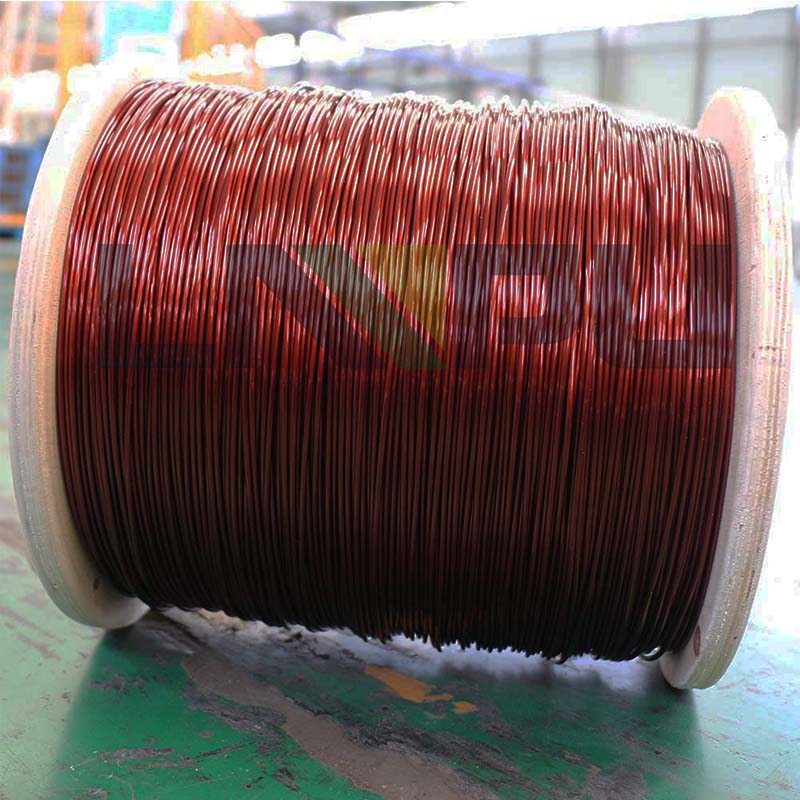
Composite double insulation anti-breakdown enameled copper wire is a specialized magnet wire that features two distinct insulation layers applied over a high-purity copper conductor. Unlike conventional single-layer enameled wire, which relies on one type of insulation to provide all required properties, composite double insulation wire combines two different insulation materials in a precisely engineered dual-layer construction. The inner layer and outer layer are formulated to deliver complementary properties—the inner layer typically provides excellent adhesion and mechanical strength, while the outer layer delivers superior dielectric strength, chemical resistance, and surface durability.
The term “anti-breakdown” in the product name refers to the wire’s enhanced resistance to dielectric breakdown, the catastrophic failure mode in which insulation suddenly transitions from insulating to conducting when the voltage stress exceeds the material’s dielectric strength. By combining two insulation layers with different material properties, composite double insulation wire achieves a dielectric strength significantly higher than single-layer wire of equivalent total thickness, providing critical protection in high-voltage applications.
Composite double insulation wire is available in both round and rectangular conductor forms, in a wide range of AWG sizes from approximately AWG 50 (0.025 mm) to AWG 8 (3.26 mm), and in thermal classes from 130°C (Class B) to 240°C (Class C). The dual-layer construction is typically applied to polyesterimide, polyamide-imide, polyimide, and other high-performance enamel systems.
Construction and Insulation System Design
The construction of composite double insulation anti-breakdown enameled copper wire involves careful engineering of each component to achieve the desired balance of properties.
Conductor Core
The conductor core is typically made from high-purity oxygen-free copper with copper content exceeding 99.95% and oxygen content below 20 ppm. For fine gauge applications, the use of oxygen-free copper ensures excellent ductility during drawing and consistent mechanical properties in the finished wire. The conductor surface must be smooth, clean, and free from defects that could create local stress concentrations in the insulation.
Inner Insulation Layer (Base Coat)
The inner insulation layer, also called the base coat, is the first layer of insulation applied directly over the copper conductor. This layer is formulated to provide excellent adhesion to the copper substrate, good flexibility to withstand winding stresses, and reliable dielectric strength. Common base coat materials include:
- Polyester (Class B, 130°C)
- Polyesterimide (Class H, 180°C)
- Modified polyester (Class F, 155°C)
- Polyurethane (Class A/B, 105-130°C)
The base coat typically represents 60% to 70% of the total insulation thickness. Its primary functions are to provide the bulk dielectric strength and to ensure the insulation adheres strongly to the copper conductor during winding and thermal cycling.
Outer Insulation Layer (Topcoat)
The outer insulation layer, also called the topcoat or overcoat, is applied over the base coat and provides the secondary dielectric barrier along with enhanced surface properties. Common topcoat materials include:
- Polyamide-imide (Class H/C, 200-220°C)
- Polyimide (Class C, 240°C)
- Modified polyamide-imide (Class H, 180°C)
- Self-lubricating versions of the above for improved winding performance
The topcoat typically represents 30% to 40% of the total insulation thickness. Its primary functions are to provide additional dielectric strength, protect the base coat from mechanical damage during winding, and deliver chemical resistance and surface lubricity.
Bonding Between Layers
A critical aspect of composite double insulation construction is the bond between the base coat and topcoat. The two layers must be chemically compatible to form a strong, permanent bond that does not delaminate during winding, thermal cycling, or long-term operation. Modern manufacturing uses carefully matched enamel systems that chemically interlock at the interface, creating a unified dual-layer insulation that performs as a single integrated system.
How Anti-Breakdown Performance Is Achieved
The enhanced anti-breakdown performance of composite double insulation wire results from several interrelated mechanisms.
Layered Dielectric Strength
The total dielectric strength of the dual-layer construction is approximately the sum of the individual layer strengths, because each layer must break down independently for complete insulation failure to occur. If the base coat has a dielectric strength of 3,500 V/mil and the topcoat has a dielectric strength of 4,000 V/mil, the composite system can provide a total dielectric strength of approximately 7,500 V/mil at the interface, compared to 3,500 V/mil for a single layer of the base coat material alone.
Defect Isolation
In any single-layer insulation, manufacturing defects such as pinholes, bubbles, or inclusions create local weak points that can lead to premature breakdown. In a dual-layer construction, the probability of a defect in the base coat aligning precisely with a defect in the topcoat is extremely low. This “defect isolation” effect means the dual-layer system effectively eliminates the path for electrical breakdown, dramatically improving the wire’s breakdown voltage in real-world conditions.
Material Optimization
By assigning different functions to different layers, the dual-layer construction allows each material to be optimized for its specific role. The base coat can be optimized for adhesion and mechanical performance, while the topcoat can be optimized for dielectric strength and surface properties. This specialization is not possible in single-layer wire, where the insulation material must compromise between competing requirements.
Improved Voltage Endurance
Voltage endurance—the wire’s ability to withstand sustained voltage stress over time—is significantly improved in dual-layer constructions. The redundant dielectric barriers mean that even if one layer degrades over time due to partial discharge or thermal aging, the second layer continues to provide reliable insulation. This redundancy is particularly valuable in applications with long service life requirements.
Key Performance Advantages
Composite double insulation anti-breakdown enameled copper wire offers several distinct performance advantages over conventional single-layer wire.
Higher Dielectric Strength
The most significant advantage is the substantially higher dielectric strength. Composite double insulation wire typically provides 1.6 to 2.2 times the dielectric strength of comparable single-layer wire, enabling reliable operation at higher voltages or providing additional safety margin at standard voltages.
Reduced Risk of Insulation Failure
The dual-layer construction dramatically reduces the probability of catastrophic insulation failure. By eliminating the alignment of defects between layers and providing redundant dielectric barriers, composite double insulation wire delivers exceptional reliability in safety-critical applications.
Better Voltage Endurance
Long-term voltage endurance testing demonstrates that dual-layer wire maintains its dielectric properties for significantly longer periods under sustained high-voltage stress compared to single-layer wire. This translates directly into longer service life and reduced warranty costs.
Enhanced Mechanical Properties
The topcoat layer provides additional mechanical protection, improving the wire’s resistance to abrasion, scoring, and impact damage during winding. This is particularly valuable in automated winding operations where the wire is subjected to significant mechanical stress.
Improved Chemical Resistance
Many topcoat materials, particularly polyamide-imide and polyimide, provide excellent resistance to solvents, refrigerants, and other chemicals that the wire may encounter during varnishing, potting, or operation in harsh environments.
Better Thermal Performance
The dual-layer construction often provides higher thermal class ratings than either layer alone, because the topcoat can be a higher-temperature material than the base coat. This allows the wire to operate at temperatures limited by the higher-rated layer while maintaining the processability of the lower-rated base coat.
Superior Winding Performance
The topcoat can be formulated with self-lubricating properties that reduce friction during high-speed winding, improving winding quality and reducing the risk of insulation damage during the winding process.
Typical Applications in Critical Industries
Composite double insulation anti-breakdown enameled copper wire is specified for applications where conventional single-layer wire cannot provide adequate reliability or safety margin.
High-Voltage Motors and Generators
Large industrial motors, high-voltage pump motors, and generator windings operating at 2,300V, 4,160V, 6,600V, or higher voltages use composite double insulation wire to provide the dielectric strength needed to withstand both steady-state operating voltages and transient overvoltages from switching and lightning.
Inverter-Driven Motors
Motors driven by variable frequency drives (VFDs) experience severe voltage stress from the fast-switching pulse-width-modulated (PWM) output of the drive. These voltage spikes can reach 2 to 3 times the DC bus voltage with rise times in the microsecond range. Composite double insulation wire is specifically designed to withstand this type of stress, preventing the premature insulation failure common in inverter-duty motor windings.
Distribution and Power Transformers
Distribution transformers operating at 7,200V, 13,800V, and higher primary voltages, as well as power transformers for transmission applications, use composite double insulation wire in their high-voltage windings. The enhanced dielectric strength and voltage endurance are essential for reliable long-term operation.
Automotive Traction Motors
Electric vehicle traction motors operate at high voltages (400V to 800V systems are now common) and high switching frequencies. Composite double insulation wire provides the dielectric strength and voltage endurance required for automotive-grade reliability over the 15 to 20 year service life expected of EV traction motors.
Wind Turbine Generators
Large multi-megawatt wind turbine generators use composite double insulation wire in their stator windings. The wire’s enhanced dielectric strength and resistance to partial discharge are critical for reliable operation in the harsh electrical environment of modern wind turbine power conversion systems.
Aerospace and Defense Systems
Aerospace power systems, including more-electric aircraft (MEA) power generation and distribution, use composite double insulation wire where the combination of high reliability, low weight, and high dielectric strength is essential. Military and aerospace applications often specify the highest-grade composite double insulation wire available.
Medical Imaging Equipment
MRI gradient coils, CT scanner X-ray generator transformers, and other high-voltage medical imaging systems use composite double insulation wire to provide the dielectric strength and reliability required for continuous operation in life-critical applications.
Switch-Mode Power Supply Transformers
High-power switch-mode power supplies (SMPS) operating at high switching frequencies and high voltages use composite double insulation wire in their main transformer windings. The dual-layer construction provides the voltage endurance needed to withstand the high dv/dt stress of modern power semiconductor switching.
Comparison with Single-Layer Insulation
Understanding the differences between composite double insulation and single-layer insulation helps engineers select the right wire for their application.
Dielectric Strength
Single-layer wire typically provides 2,500 to 4,000 V dielectric strength depending on the insulation material and thickness. Composite double insulation wire typically provides 5,000 to 8,000 V, roughly twice the dielectric strength of single-layer wire of equivalent total insulation thickness.
Cost
Composite double insulation wire is more expensive than single-layer wire, typically 30% to 60% higher in cost. The additional cost reflects the more complex manufacturing process, additional raw materials, and the higher performance delivered.
Overall Diameter
For a given conductor size, composite double insulation wire has a slightly larger overall diameter than single-layer wire due to the additional insulation layer. The difference is typically 0.01 to 0.03 mm, which may affect slot fill factor in tightly wound coils.
Manufacturing Complexity
Composite double insulation wire requires more sophisticated manufacturing processes, with two separate enameling and curing stages. This results in more challenging process control and higher quality assurance requirements.
Application Suitability
Single-layer wire is suitable for general applications at standard voltages and modest reliability requirements. Composite double insulation wire is the preferred choice for high-voltage applications, safety-critical systems, inverter-duty applications, and any environment where insulation failure would have serious consequences.
Standards and Test Methods
Composite double insulation anti-breakdown enameled copper wire is tested and specified according to several international standards.
IEC 60851 Series
The IEC 60851 series of standards specifies test methods for winding wires, including dielectric tests that apply to composite double insulation wire. The standard tests include breakdown voltage measurement, continuity testing, and voltage endurance evaluation.
ASTM D3032
ASTM D3032 covers hookup wire insulation testing, including the dielectric withstand test for enameled magnet wire. The twist pair test method is commonly used to evaluate composite double insulation wire performance.
NEMA MW 1000
NEMA MW 1000 specifies magnet wire requirements in North America, including dual-build constructions that are equivalent to composite double insulation wire. The standard defines minimum dielectric strength values for various wire sizes and thermal classes.
GB/T 7673
The Chinese national standard GB/T 7673 covers enameled winding wire specifications and test methods, including provisions for composite insulation constructions.
Twist Pair Test
The most common test for composite double insulation wire is the twist pair test, in which two wire samples are twisted together and voltage is applied between them. The breakdown voltage is recorded and compared to specification. For composite double insulation wire, this test typically shows 1.6 to 2.2 times the breakdown voltage of equivalent single-layer wire.
Voltage Endurance Test
Voltage endurance testing applies a sustained voltage stress to the wire sample for an extended period (often 1,000 to 10,000 hours) to evaluate long-term insulation performance. Composite double insulation wire typically demonstrates 3 to 10 times the voltage endurance life of single-layer wire at equivalent stress levels.
Pin Hole and Continuity Testing
Modern production lines use online high-voltage continuity testing to detect pinholes, bare spots, and thin areas in the insulation. The dual-layer construction dramatically reduces the number of failures detected by this test compared to single-layer wire, confirming the defect-isolation effect of the composite construction.
Selection Criteria and Best Practices
Selecting composite double insulation anti-breakdown enameled copper wire requires careful evaluation of the application requirements and supplier capabilities.
Voltage Stress Analysis
Begin with a detailed analysis of the maximum voltage stress the wire will experience in service. This includes the steady-state operating voltage, transient overvoltages from switching, lightning, or other sources, and any resonant voltage amplification in the winding. Apply an appropriate safety factor (typically 2x to 5x) to determine the minimum required dielectric strength.
Thermal Class Selection
Select a thermal class that provides adequate margin above the maximum operating temperature. For high-temperature applications, consider composite constructions using high-temperature topcoat materials like polyimide to achieve Class C (220°C+) ratings.
Conductor Size Determination
Determine the required conductor size based on current load, winding window, and resistance requirements. Remember that the dual-layer construction adds slightly to the overall wire diameter, which may affect the maximum conductor size that can fit in a given winding window.
Insulation Build Selection
Most composite double insulation wire is supplied in heavy build or triple build constructions to provide maximum dielectric strength. For very high voltage applications, specify the thickest available build that fits within the design constraints.
Manufacturer Qualification
Select a wire manufacturer with proven capability in producing composite double insulation wire. Verify that the manufacturer:
- Uses matched enamel systems with proven chemical compatibility
- Maintains tight process control on both enameling lines
- Performs comprehensive online and offline testing
- Provides batch test reports with dielectric strength, voltage endurance, and dimensional data
- Has a quality management system certified to ISO 9001 or higher
Incoming Inspection
Implement systematic incoming inspection of composite double insulation wire to verify conformance to specifications. Key tests include dimensional verification, dielectric strength testing on twist pair samples, and visual inspection for surface defects.
Winding Process Optimization
Adjust winding parameters to account for the dual-layer construction. Slightly higher tension settings may be needed to wind the stiffer dual-layer wire, but excessive tension should be avoided to prevent insulation damage. Conduct wound coil dielectric testing to verify that the winding process does not compromise the wire’s insulation integrity.
Conclusion
Composite double insulation anti-breakdown enameled copper wire represents an advanced solution for high-voltage and high-reliability applications where conventional single-layer wire cannot provide adequate safety margin. The sophisticated dual-layer construction delivers dielectric strength approximately twice that of single-layer wire, with the additional benefits of improved voltage endurance, enhanced mechanical properties, and superior chemical resistance. These advantages make composite double insulation wire the preferred choice for high-voltage motors, inverter-duty applications, distribution transformers, EV traction motors, and aerospace power systems.
While composite double insulation wire carries a 30% to 60% cost premium compared to single-layer wire, this additional cost is justified in applications where the consequences of insulation failure are severe—equipment damage, production downtime, safety hazards, or warranty exposure. For applications operating at standard voltages with modest reliability requirements, single-layer wire remains a cost-effective choice, but for demanding high-voltage and high-reliability applications, composite double insulation wire delivers unmatched performance and peace of mind.
When specifying composite double insulation wire, apply the selection criteria and best practices outlined in this guide to ensure optimal results. Partner with a qualified wire manufacturer with proven capability in dual-layer constructions, implement systematic incoming inspection to verify quality, and adjust winding processes to accommodate the dual-layer construction. With proper specification and application, composite double insulation anti-breakdown enameled copper wire provides decades of reliable operation in even the most demanding electrical environments.