

1 Introduction
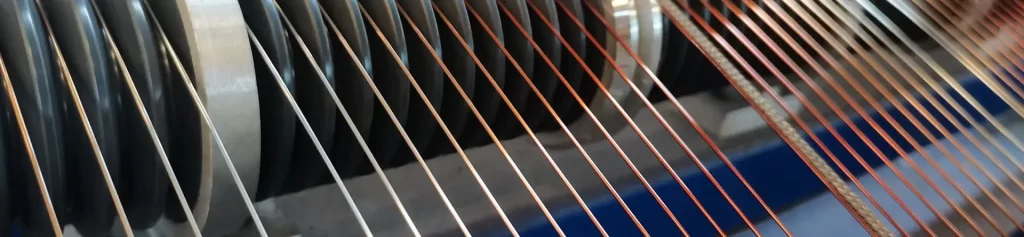
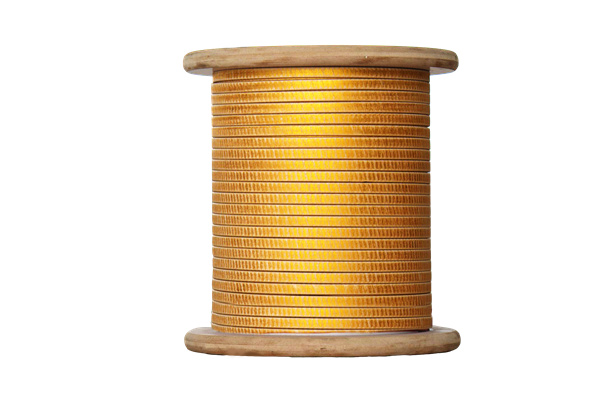
Paper covered wire is an insulated winding wire that uses insulation paper tape such as cable paper, telephone paper, high voltage cable paper, inter-turn insulation paper wrapped around the surface of copper conductor or aluminum conductor. It is the key raw material for winding manufacturing of oil-immersed power transformer, rectifier transformer, mining transformer, series reactor, high voltage current instrument transformer, high voltage bushing and other high voltage electrical equipment. The manufacturing quality of paper covered wire directly determines the electrical performance, mechanical strength, insulation reliability, service life, and operational safety of transformer coil.
The quality issues of paper covered wire run through the entire industry chain including conductor material, insulation paper material, winding process, impregnation process, assembly process, and use environment. Based on IEC 60554, IEC 60243, IEC 60068, GB/T 7969, GB/T 10580, JB/T 8740 and other international and domestic standards, this article systematically describes the common quality issues, failure analysis, and prevention measures of paper covered wire from eight dimensions including paper covered wire overview and quality control system, conductor quality issue, insulation paper quality issue, winding process quality issue, impregnation and drying quality issue, detection diagnosis and prevention measure, and summary.
2 Paper Covered Wire Overview and Quality Control System
2.1 Paper Covered Wire Overview
Paper covered wire is an insulated winding wire that uses insulation paper tape spirally wrapped around round conductor or flat conductor surface. Paper tape width is usually 12 to 30 mm, paper tape thickness 0.05 to 0.17 mm, paper tape layer number 1 to 6 layers, paper tape winding overlap rate 30% to 50%. Paper covered wire heat resistance class 105 to 180 degrees Celsius, typical application for oil-immersed power transformer, rectifier transformer, high voltage instrument transformer, high voltage bushing coil.
Paper covered wire quality decisive factors: conductor material quality, insulation paper quality, winding process quality, impregnation process quality, assembly process quality, storage and transportation quality, use environment quality.
2.2 Quality Control System
Paper covered wire quality control system includes five major modules: incoming inspection, process inspection, factory inspection, type test, and online monitoring.
Incoming inspection: conductor specification, conductor surface, conductor tensile strength, conductor elongation, conductor resistivity. Insulation paper type, thickness, width, tensile strength, moisture content, ash content, pH value, breakdown voltage. Auxiliary material impregnant specification, moisture content, acid value, breakdown voltage.
Process inspection: pre-winding conductor cleanliness, insulation paper cleanliness, winding machine tension and speed. In-winding tension, speed, overlap rate, direction. Post-winding appearance, paper tape layer number, overlap rate, end treatment. Pre-impregnation pre-drying temperature, vacuum, moisture content. In-impregnation vacuum, pressure, temperature, time. Post-impregnation moisture content, breakdown voltage, insulation resistance.
Factory inspection: appearance, specification, electrical, mechanical, physical, chemical, thermal performance 7 categories.
Type test: durability, environmental adaptability, reliability, accelerated aging 4 categories.
Online monitoring: temperature, humidity, tension, speed, length, non-conforming product automatic rejection.
2.3 Quality Control Standard
Standards to be followed for paper covered wire quality control: IEC 60554-3-1 to 3-6 electrical cellulose paper, IEC 60243 solid insulation material electrical strength, IEC 60068 environmental test, ASTM D 2413 electrical cellulose paper, GB/T 7969 cable paper, GB/T 7970 telephone paper, GB/T 10580 high voltage cable paper, JB/T 8740 inter-turn insulation paper, GB/T 4074 enameled wire test method, GB/T 5584 electrical copper flat wire, GB/T 3953 electrical round copper wire, GB/T 3955 electrical round aluminum wire, IEC 60296 transformer oil, IEC 60851 enameled wire test method, NEMA MW 1000-2018 enameled wire standard.
3 Conductor Quality Issue
3.1 Conductor Dimension Deviation Issue
Conductor dimension deviation is one of the most common quality issues of paper covered wire.
Round conductor diameter deviation exceeding standard: round conductor diameter tolerance should be controlled within plus minus 0.005 to plus minus 0.030 mm range. Round conductor diameter too large, paper covered wire total outer diameter too large, coil assembly space insufficient, coil heat dissipation poor. Round conductor diameter too small, conductor cross section area insufficient, conductor resistance exceeding standard, coil temperature rise increase.
Flat conductor width deviation exceeding standard: flat conductor width tolerance should be controlled within plus minus 0.02 to plus minus 0.05 mm range. Flat conductor width too large, coil assembly space insufficient, coil axial dimension deviation. Flat conductor width too small, conductor cross section area insufficient, coil current capacity decrease.
Flat conductor thickness deviation exceeding standard: flat conductor thickness tolerance should be controlled within plus minus 0.01 to plus minus 0.04 mm range. Flat conductor thickness deviation serious, coil inter-disc insulation breakdown voltage decrease, coil insulation failure.
Conductor out-of-roundness deviation exceeding standard: round conductor out-of-roundness tolerance should be controlled within plus minus 0.005 to plus minus 0.020 mm range. Round conductor out-of-round, paper covered wire winding stress uneven, paper tape overlap rate fluctuation, paper covered wire appearance uneven.
Conductor dimension deviation prevention measures: conductor material purchase should be strictly accepted according to standard, conductor drawing process optimization, conductor annealing process optimization, conductor online dimension measurement, conductor incoming 100% dimension sampling inspection.
3.2 Conductor Surface Defect Issue
Conductor surface scratch depth should not exceed 0.02 mm. Conductor surface scratch serious, insulation paper easy damage, coil breakdown voltage decrease, coil insulation failure. Prevention measures: conductor drawing mold regular check, conductor surface cleaning, conductor take-up tension control, conductor storage and transportation protection.
Conductor surface oxidation: copper conductor long-term exposed to air, surface forms copper oxide. Copper conductor oxide layer thickness exceeding 0.005 mm, conductor contact resistance increase, coil DC resistance exceeding standard, coil temperature rise increase. Aluminum conductor oxide layer formation faster, oxide layer dense, affect aluminum conductor welding performance. Prevention measures: conductor storage temperature control, storage humidity control, storage period control, use before cleaning.
Conductor surface oil contamination comes from drawing lubricant, storage and transportation contamination. Conductor surface oil contamination, paper tape adhesion decrease, paper tape easy loose, insulation performance decrease. Prevention measures: conductor use before cleaning, cleaning process standardization, cleaning after conductor sealed storage.
Conductor surface burr commonly seen in drawing process poor. Conductor surface burr puncture insulation paper, coil breakdown voltage decrease. Prevention measures: conductor drawing mold regular replacement, conductor drawing process optimization, conductor surface polishing treatment, conductor incoming burr sampling inspection.
3.3 Conductor Material Quality Issue
Copper conductor material issue: copper content insufficient, copper content below standard requirement, conductor resistance exceeding standard, coil current capacity decrease. Oxygen content exceeding standard, oxygen-free copper oxygen content should be lower than 0.005%, oxygen content exceeding standard, conductor processing performance decrease, coil manufacturing process affected. Impurity content exceeding standard, impurity affect conductor resistivity, mechanical performance, coil reliability.
Aluminum conductor material issue: aluminum content insufficient, conductor resistance exceeding standard. Impurity content exceeding standard, especially iron copper impurity exceeding standard, affect aluminum conductor resistivity, mechanical performance.
Conductor tensile strength not reaching standard: copper conductor soft state tensile strength should be controlled within 200 to 280 MPa, aluminum conductor soft state tensile strength should be controlled within 60 to 100 MPa. Tensile strength exceeding standard conductor too hard, winding easy fracture. Tensile strength insufficient conductor too soft, winding easy deformation.
Conductor elongation not reaching standard: copper conductor elongation should not be lower than 25%, aluminum conductor elongation should not be lower than 20%. Elongation insufficient, winding conductor easy fracture, coil reliability decrease.
4 Insulation Paper Quality Issue
4.1 Insulation Paper Specification Deviation Issue
Insulation paper thickness deviation: insulation paper thickness tolerance should be controlled within plus minus 0.005 mm range. Insulation paper thickness too large, paper covered wire total outer diameter too large, coil assembly space insufficient. Insulation paper thickness too small, breakdown voltage decrease, insulation performance decrease.
Insulation paper width deviation: insulation paper width tolerance should be controlled within plus minus 0.1 mm range. Insulation paper width too large, paper tape overlap rate too high, paper covered wire total outer diameter too large. Insulation paper width too small, paper tape overlap rate too low, paper tape gap, breakdown voltage decrease.
Insulation paper length deviation mainly affects production continuity. Insulation paper length insufficient, frequent paper change, production efficiency decrease. Insulation paper length too long, storage space increase.
4.2 Insulation Paper Moisture Content Exceeding Standard Issue
Insulation paper moisture content control: cable paper moisture content should be lower than 8%, telephone paper should be lower than 7%, high voltage cable paper should be lower than 6%, inter-turn insulation paper should be lower than 6%, Nomex 410 paper should be lower than 5%.
Insulation paper moisture content exceeding standard reason: storage environment humidity exceeding standard, storage period too long, transportation process moisture absorption, package damage. Insulation paper moisture content exceeding standard consequence: insulation resistance decrease, dielectric loss increase, breakdown voltage decrease, paper covered wire pre-drying time extension, paper covered wire impregnation quality decrease, coil operation reliability decrease.
Insulation paper moisture content control measures: storage environment temperature 5 to 35 degrees Celsius, relative humidity 30% to 70%, storage period not exceeding 1 year, storage period quarterly moisture content sampling inspection, transportation process moisture-proof package, moisture content non-conforming paper covered wire cannot leave factory.
4.3 Insulation Paper Impurity Issue
Insulation paper impurity type: metal impurity, metal particle, metal fiber, coil local electric field concentration, breakdown voltage decrease, easy breakdown point. Insulation paper conductive point, carbon black particle, conductive fiber, coil local partial discharge increase, insulation aging acceleration. Non-metal impurity, sand, bark, fiber bundle, breakdown voltage decrease, paper covered wire appearance defect.
Insulation paper impurity detection: light transmission check, visual inspection, microscope check. Detection method: put insulation paper under light transmission check, visible light point determined as impurity. Impurity proportion should be lower than 5 per square meter.
Insulation paper impurity control measures: raw material wood pulp strict screening, production environment cleanliness control, production equipment regular cleaning, insulation paper incoming 100% light transmission check.
4.4 Insulation Paper Appearance Defect Issue
Insulation paper appearance defect type: insulation paper damage, hole, tear, insulation breakdown point easy occur, coil breakdown voltage decrease. Insulation paper crease, wrinkle, affect winding smoothness, paper tape overlap rate fluctuation. Insulation paper contamination, oil stain, water stain, affect insulation performance. Insulation paper color difference, color uneven, affect appearance consistency, may accompany performance difference.
Insulation paper appearance detection: visual inspection, light transmission check, comparison sample check. Detection method: spread out insulation paper, visual check under light, confirm no damage, no crease, no contamination, color uniform.
Insulation paper appearance defect control measures: raw material strict screening, production process optimization, production environment cleanliness control, insulation paper incoming full inspection.
4.5 Insulation Paper Electrical Performance Issue
Insulation paper breakdown voltage not reaching standard: cable paper breakdown voltage should not be lower than 400 to 800 V, telephone paper should not be lower than 300 to 400 V, high voltage cable paper should not be lower than 1000 to 1600 V. Breakdown voltage not reaching standard reason: raw material wood pulp quality poor, production process improper, insulation paper thickness insufficient, insulation paper density insufficient.
Insulation paper insulation resistance not reaching standard: insulation paper volume resistivity should not be lower than 10 to the 10 Ω·cm. Insulation resistance not reaching standard reason: insulation paper moisture content exceeding standard, insulation paper impurity, insulation paper aging.
Insulation paper dielectric loss not reaching standard: cellulose paper dielectric loss tangent should not be higher than 0.02. Dielectric loss not reaching standard reason: insulation paper moisture content exceeding standard, insulation paper impurity, insulation paper production process residual ion too much.
Insulation paper pH value not reaching standard: insulation paper pH value should be controlled within 6.5 to 8.0. pH value acidic or alkaline both affect insulation paper aging, affect insulation paper and impregnant compatibility.
Insulation paper ash content exceeding standard: insulation paper ash content should be lower than 0.5% to 1.0%. Ash content exceeding standard reason: raw material impurity, production process contamination. Ash content exceeding standard affect insulation paper electrical performance, mechanical strength.
5 Winding Process Quality Issue
5.1 Winding Tension Issue
Winding tension too large: paper tape tension exceeds process standard, conductor subject to pulling force too large, conductor elongation exceeding standard, conductor cross section area decrease, conductor resistance increase. Paper tape stretching deformation, paper tape thickness decrease, breakdown voltage decrease, paper tape overlap rate fluctuation. After coil winding completion paper tape stress release, paper tape loose, paper tape gap, breakdown voltage decrease. During coil assembly process paper tape displacement, coil insulation damage, coil appearance defect.
Winding tension too small: paper tape tension below process standard, paper tape and conductor adhesion insufficient, paper tape easy loose, paper covered wire storage and transportation process paper tape displacement. Paper tape overlap rate fluctuation, local paper tape gap, breakdown voltage decrease.
Winding tension control standard: cylindrical coil 5 to 15 Newton, disc coil 10 to 30 Newton, helical coil 15 to 50 Newton, continuous coil 10 to 40 Newton. Winding tension control precision plus minus 0.1 Newton.
5.2 Winding Overlap Rate Issue
Winding overlap rate insufficient: paper tape overlap rate below 30% to 50% standard requirement, local paper tape gap, insulation weak point, breakdown voltage decrease.
Winding overlap rate too large: paper tape overlap rate exceeds standard requirement, paper covered wire total outer diameter too large, coil assembly space insufficient, paper covered wire cost increase, production efficiency decrease.
Winding overlap rate control measures: winding machine tension stability, winding machine speed stability, winding machine wire arrangement precision plus minus 0.1 mm, winding machine regular calibration.
5.3 Winding Direction and Sequence Issue
Winding direction error: paper tape winding direction inconsistent with design requirement, coil current distribution uneven, coil skin effect increase, coil eddy current loss increase. Prevention measures: confirm winding direction before winding, drawing clear mark winding direction, operator training.
Winding sequence error: multi-layer paper tape winding sequence error, insulation performance not reaching standard, breakdown voltage decrease. Prevention measures: winding process document clear winding sequence, operator operate according to process document, first article inspection confirm.
Paper tape start point and end point position error: paper tape start point position not covering conductor complete circumference, paper tape start point area insulation weak. Paper tape end point not fixed or fixed not firm, paper tape end point easy loose, insulation damage. Prevention measures: paper tape start point overlap 50 to 100 mm, paper tape end point use insulation tape fix or hot melt fix.
5.4 Winding End and Appearance Quality Issue
Paper tape end burr: paper tape end shear section burr, paper tape end easy scratch other layer paper tape, paper tape inter-layer insulation damage. Prevention measures: paper tape shear use special tool, paper tape shear after check end.
Paper tape end warping: paper tape end not bonded or bonded not firm, paper tape end warping, paper tape displacement, insulation damage. Prevention measures: paper tape end use insulation tape fix, paper tape end pre-impregnation hot press bonding.
Winding loose strand: paper tape not closely adhere conductor, paper tape local loose, paper tape displacement, insulation damage. Prevention measures: winding tension control, pre-winding conductor cleaning, pre-winding insulation paper cleaning.
Winding bump: paper tape local overlap rate too large, paper tape local protrusion, coil assembly difficulty, coil appearance defect. Prevention measures: winding machine tension even, winding machine wire arrangement even, winding online monitoring.
Winding dent: paper tape local tension too small, paper tape local adhesion poor, paper covered wire appearance dent, coil heat dissipation poor. Prevention measures: winding tension even, winding machine tension control precision improvement.
6 Impregnation and Drying Quality Issue
6.1 Impregnation and Impregnant Defect
Impregnant insufficient penetration: vacuum pressure impregnation process parameter improper, vacuum insufficient, pressure insufficient, temperature insufficient, time insufficient. Impregnant insufficient penetration consequence: insulation layer local no impregnant, insulation weak point, breakdown voltage decrease, dielectric loss increase, coil operation reliability decrease.
Impregnation uneven reason: impregnation tank internal temperature uneven, impregnant flow insufficient, coil in impregnation tank placement improper. Prevention measures: impregnation tank temperature evenness within plus minus 3 degrees Celsius, coil placement spacing greater than or equal to 100 mm, impregnant circulation system configuration.
Impregnant moisture content exceeding standard: impregnant storage process moisture absorption, moisture content exceeding 30 mg/kg, coil impregnation after moisture content increase, insulation performance decrease. Prevention measures: impregnant storage sealed, use before moisture content detection, moisture content non-conforming cannot use.
Impregnant acid value exceeding standard: impregnant use process oxidation, acid value exceeding 0.03 mg KOH/g, impregnant has corrosion effect on insulation paper, insulation paper aging acceleration. Prevention measures: regular detection acid value, acid value non-conforming filter or replace, storage sealed oxygen isolation.
Impregnant breakdown voltage not reaching standard: breakdown voltage should not be lower than 35 kV. Not reaching standard reason: moisture content exceeding standard, impurity, aging. Prevention measures: regular detection breakdown voltage, non-conforming filter or replace.
6.2 Drying and Bubble Issue
Pre-drying insufficient: coil pre-drying temperature too low, pre-drying time too short, pre-drying vacuum insufficient. Coil pre-drying after moisture content exceeding 0.5%, affect subsequent impregnation quality, coil operation reliability decrease. Pre-drying process: temperature 100 to 120 degrees Celsius, time 24 to 72 hours, vacuum 50 to 100 Pa.
Post-impregnation drying insufficient: coil post-impregnation drying temperature too low, drying time too short, drying vacuum insufficient. Coil post-impregnation drying after moisture content exceeding 0.1%, coil operation temperature under moisture evaporation, insulation performance decrease. Post-impregnation drying process: temperature 80 to 100 degrees Celsius, time 24 to 48 hours, vacuum 50 to 100 Pa.
Impregnation bubble: coil impregnation after insulation layer residual bubble, bubble area electric field concentration, breakdown voltage decrease, easy breakdown point.
Impregnation bubble source: pre-impregnation vacuum insufficient, impregnation process air entry, impregnant dissolved gas, impregnation tank leakage.
Impregnation bubble prevention measures: pre-impregnation vacuum lower than 50 Pa, vacuum time sufficient, impregnant degassing treatment, impregnation tank sealing regular check, impregnation tank and coil air pressure balance control.
Impregnation bubble detection method: visual inspection, light transmission check, X-ray check, ultrasonic check.
7 Detection Diagnosis and Prevention Measure
7.1 Appearance and Dimension Detection
Appearance detection: visual inspection paper covered wire surface smoothness, paper tape evenness, paper tape end treatment, color consistency, should be no scratch, no damage, no contamination, no color difference.
Dimension detection: micrometer measure paper covered wire total outer diameter, projector measure flat conductor specification, profilometer measure round conductor out-of-roundness, winding overlap rate measurement, paper tape layer number measurement.
Appearance and dimension detection proportion: incoming inspection 100%, process inspection sampling, finished product inspection 100%.
7.2 Electrical Performance Detection
Breakdown voltage detection should conform to IEC 60243 standard. Detection equipment: breakdown voltage tester, detection voltage 0 to 50 kV continuously adjustable, voltage rise rate 100 V/s to 500 V/s. Cylindrical low voltage coil breakdown voltage should not be lower than 1500 V, continuous high voltage coil breakdown voltage should not be lower than 4500 V.
Insulation resistance detection should conform to IEC 60093 standard. Detection equipment: insulation resistance tester, detection voltage 500 V to 5000 V. Coil post-impregnation insulation resistance should not be lower than 1000 MΩ.
Dielectric loss detection should conform to IEC 60250 standard. Detection equipment: dielectric loss tester, test voltage 1000 V to 10000 V, frequency 50 Hz. Coil dielectric loss tangent should not be higher than 0.005, namely at 90 degrees Celsius.
Partial discharge detection should conform to IEC 60270 standard. Detection equipment: partial discharge tester, detection sensitivity 1 pC. 110 kV coil partial discharge amount should be lower than 100 pC, 220 kV coil should be lower than 50 pC, 500 kV coil should be lower than 30 pC.
Mechanical performance detection: tensile strength detection should conform to ASTM D 828 standard, detection precision plus minus 1%, cable paper longitudinal tensile strength not lower than 8.5 to 13.0 kN/m. Elongation detection copper conductor elongation not lower than 25%, aluminum conductor not lower than 20%. Peel strength tester detect paper tape peel strength not lower than 0.5 N/cm.
7.3 Failure Diagnosis Method
Fault tree analysis: paper covered wire quality failure can adopt fault tree analysis. Conductor fault tree, insulation paper fault tree, winding process fault tree, impregnation process fault tree.
Fishbone diagram analysis: paper covered wire quality failure can adopt fishbone diagram analysis. Personnel factor, equipment factor, material factor, method factor, environment factor, measurement factor.
Statistical analysis: paper covered wire quality failure statistical analysis, batch qualification rate, defect type distribution, defect grade distribution, failure trend analysis.
7.4 Prevention Measure System
Prevention measure principle: source prevention, process prevention, inspection prevention, improvement prevention.
Source prevention: raw material supplier audit, incoming inspection, quality statistics, quality improvement.
Process prevention: work instruction, operator training, equipment maintenance, process discipline check, key process control.
Inspection prevention: incoming inspection, process inspection, finished product inspection, first article inspection, patrol inspection, factory inspection.
Improvement prevention: quality statistical analysis, quality improvement project, quality continuous improvement, corrective prevention measure.
7.5 Storage and Transportation Management
Storage condition management: paper covered wire storage temperature 5 to 35 degrees Celsius, relative humidity 30% to 70%, avoid direct sunlight, avoid rain, avoid chemical corrosion. Storage period not exceeding 1 year, storage period quarterly sampling inspection.
Transportation management: paper covered wire transportation use wooden box or pallet, avoid moisture absorption, avoid mechanical damage, transportation process rain-proof, sun-proof, shock-proof. Transportation identification should be clear, including specification, batch number, production date, transportation precaution.
Package management: paper covered wire package should be sealed, moisture-proof, shock-proof, damage-proof. Package should be separated batch and specification, avoid mixed batch and mixed specification. Package identification should be clear.
8 Summary
Paper covered wire quality issue is the key control point of oil-immersed power transformer, rectifier transformer, mining transformer, series reactor, high voltage instrument transformer, high voltage bushing and other high voltage electrical equipment manufacturing. Common quality issues include conductor dimension deviation, conductor surface defect, insulation paper specification deviation, insulation paper moisture content exceeding standard, insulation paper impurity, insulation paper appearance defect, insulation paper electrical performance not reaching standard, winding tension abnormal, winding overlap rate abnormal, winding direction error, impregnation insufficient, impregnant contamination, drying insufficient, impregnation bubble 14 categories typical issues.
Conductor quality issue prevention measures: conductor material purchase strict acceptance, conductor drawing process optimization, conductor annealing process optimization, conductor online dimension measurement, conductor incoming 100% dimension sampling inspection, conductor surface cleaning, conductor storage and transportation protection.
Insulation paper quality issue prevention measures: insulation paper strict screening, production environment cleanliness control, insulation paper incoming full inspection, storage environment humidity control, storage period regular sampling inspection, insulation paper breakdown voltage tester detection.
Winding process quality issue prevention measures: winding machine tension control precision plus minus 0.1 Newton, winding machine speed stability, winding machine wire arrangement precision plus minus 0.1 mm, winding machine regular calibration, winding online monitoring, operator training.
Impregnation and drying quality issue prevention measures: impregnation tank temperature evenness plus minus 3 degrees Celsius, coil placement spacing greater than or equal to 100 mm, impregnant circulation system configuration, impregnant regular detection, impregnation tank sealing regular check, impregnant degassing treatment.
Quality control system covers five major modules: incoming inspection, process inspection, factory inspection, type test, online monitoring. Detection method includes appearance and dimension detection, electrical performance detection, mechanical performance detection. Failure diagnosis method includes fault tree analysis, fishbone diagram analysis, statistical analysis. Prevention measure system covers source prevention, process prevention, inspection prevention, improvement prevention. Storage and transportation management should strictly control storage condition, transportation condition, package condition.
With paper covered wire quality issue continuously accumulating experience, quality control system continuously improving, detection method continuously progressing, prevention measure continuously optimizing, paper covered wire quality level will be further improved, providing more reliable guarantee for oil-immersed transformer and high voltage electrical equipment manufacturing, providing more solid foundation for power system safe operation.
Contact Information: E-mail office@cnlpzz.com, WhatsApp 0086-19337889070, Zhengzhou LP Industry Co., Ltd.
- Email: office@cnlpzz.com
- WhatsApp: 0086-19337889070
- Company: Zhengzhou LP Industry Co., Ltd.