

1 Introduction
Class 200 N grade ultra heat resistant enameled copper wire is an ultra heat resistant enameled copper wire with a thermal class of 200 degrees Celsius, and is the key winding material for high power, high power density, high reliability, and harsh environment electrical equipment. Class 200 N grade enameled copper wire is increasingly used in new energy vehicle drive motors, rail transit traction motors, wind power generation, special transformers, industrial variable frequency motors, home appliances, aerospace, robot servos, superconducting magnets and other scenarios. Class 200 N grade enameled copper wire has excellent heat resistance, outstanding dielectric strength, good mechanical properties, and excellent chemical stability, and is the key technology for the design and manufacture of high end electrical systems.
The design and application of Class 200 N grade enameled copper wire is a key technical issue faced by winding engineers, electrical designers, and equipment manufacturers. This article, based on IEC 60317, NEMA MW 1000-2018, IEC 60034, and ASTM B 49 international standards, systematically describes the technical methods and engineering practice of Class 200 N grade ultra heat resistant enameled copper wire from nine dimensions including basic theory, enamel system, conductor specification, performance characteristics, application scenarios, design selection, manufacturing process, quality control, and future development trends, providing systematic technical reference for the design and manufacture of high end electrical systems.
2 Basic Theory
2.1 Thermal Class Definition
Thermal class is the identification of the long term maximum allowable temperature for enameled copper wire operation. Class 200 N grade enameled copper wire has a thermal class of 200 degrees Celsius, defined as enameled copper wire that can operate long term above 20000 hours at an ambient temperature of 200 degrees Celsius and has a thermal shock temperature not lower than 220 degrees Celsius.
Class 200 N grade enameled copper wire thermal class parameters: Temperature index 200 degrees Celsius, thermal shock temperature 220 degrees Celsius, minimum breakdown voltage not lower than 75% of the specified value, extractable substance content not exceeding 0.5%, and softening breakdown temperature not lower than 320 degrees Celsius.
2.2 Thermal Class System
According to international standards such as IEC 60085 and NEMA MW 1000-2018, the enameled copper wire thermal class system includes:
Class 105 Grade A: Temperature index 105 degrees Celsius, minimum thermal shock temperature 125 degrees Celsius.
Class 120 Grade E: Temperature index 120 degrees Celsius, minimum thermal shock temperature 140 degrees Celsius.
Class 130 Grade B: Temperature index 130 degrees Celsius, minimum thermal shock temperature 150 degrees Celsius.
Class 155 Grade F: Temperature index 155 degrees Celsius, minimum thermal shock temperature 175 degrees Celsius.
Class 180 Grade H: Temperature index 180 degrees Celsius, minimum thermal shock temperature 200 degrees Celsius.
Class 200 Grade N: Temperature index 200 degrees Celsius, minimum thermal shock temperature 220 degrees Celsius.
Class 220 Grade R: Temperature index 220 degrees Celsius, minimum thermal shock temperature 240 degrees Celsius.
Class 240 240 grade: Temperature index 240 degrees Celsius, minimum thermal shock temperature 260 degrees Celsius.
Class 200 N grade enameled copper wire is at the mid-to-high end position in the thermal class system, connecting upward to Class 220 Grade R and Class 240 240 grade, and connecting downward to Class 180 Grade H.
2.3 Class 200 N Grade Enamel Film Foundation
Class 200 N grade enamel films are mainly polyamide-imide AIW enamel film and polyesterimide overcoated with polyamide-imide EIW/AIW composite enamel film.
Polyamide-imide AIW enamel film: The AIW enamel film molecular main chain contains aromatic imide groups and amide groups. The enamel film has excellent heat resistance, outstanding dielectric strength, good mechanical properties, and excellent chemical stability. A single coating of AIW enamel film can reach Class 200 N grade.
Polyesterimide overcoated with polyamide-imide EIW/AIW composite enamel film: The EIW enamel film is used as the base layer, accounting for 70% to 80% of the total enamel film thickness, providing mechanical strength and dielectric strength. The AIW enamel film is used as the surface layer, accounting for 20% to 30% of the total enamel film thickness, providing heat resistance and chemical stability. The EIW/AIW composite enamel film is the most classic enamel film structure for Class 200 N grade.
2.4 Class 200 N Grade Enameled Copper Wire Characteristics
Class 200 N grade enameled copper wire has the following unique characteristics:
Excellent heat resistance: Class 200 N grade enameled copper wire can operate long term above 20000 hours at an ambient temperature of 200 degrees Celsius, with gentle enamel film thermal aging life curve and high long term operational reliability.
Outstanding dielectric strength: Class 200 N grade enameled copper wire enamel film has high dielectric strength, with minimum breakdown voltage not lower than 75% of the specified value. The breakdown voltage is usually 1.2 to 1.5 times that of similar Grade H enameled copper wire.
Good mechanical properties: Class 200 N grade enameled copper wire enamel film has high mechanical strength, high tensile strength, high elongation, strong enamel film adhesion, and good enamel film wear resistance.
Excellent chemical stability: Class 200 N grade enameled copper wire enamel film is acid resistant, alkali resistant, oil resistant, solvent resistant, refrigerant resistant, and has chemical stability higher than Grade H and lower grade enameled copper wire.
Excellent damp heat performance: Class 200 N grade enameled copper wire enamel film has excellent damp heat resistance, and insulation performance is stable in humid environments.
3 Enamel System
3.1 Polyamide-imide AIW Enamel Film
Polyamide-imide AIW enamel film is the core enamel film material of Class 200 N grade enameled copper wire. It is prepared by the polycondensation reaction of aromatic dianhydride and aromatic diisocyanate. The enamel film structure contains aromatic imide rings and amide groups.
AIW enamel film characteristics: Excellent heat resistance, glass transition temperature 250 to 300 degrees Celsius. High dielectric strength, breakdown voltage 100 to 200 kV per mm. Good mechanical properties, tensile strength 100 to 150 MPa. Excellent chemical stability, acid and alkali resistant, oil resistant, refrigerant resistant.
AIW enamel film application: AIW enamel film is often used for single coat Class 200 N grade enameled copper wire, and is also often used as the surface layer of EIW/AIW composite enamel film.
3.2 Polyesterimide EIW Enamel Film
Polyesterimide EIW enamel film is prepared by the copolymerization reaction of polyester and imide. The enamel film structure contains ester groups and imide groups. It is the standard enamel film material for Grade H enameled copper wire, and is also the base layer material for EIW/AIW composite enamel film.
EIW enamel film characteristics: Good heat resistance, glass transition temperature 150 to 200 degrees Celsius. High dielectric strength, breakdown voltage 100 to 180 kV per mm. Good mechanical properties, tensile strength 80 to 120 MPa. Relatively low price.
EIW enamel film application: EIW enamel film is often used for Grade H enameled copper wire, and is also often used as the base layer of EIW/AIW composite enamel film.
3.3 EIW/AIW Composite Enamel Film
EIW/AIW composite enamel film is the standard enamel film structure of Class 200 N grade enameled copper wire. The EIW enamel film is used as the base layer, and the AIW enamel film is used as the surface layer. The composite enamel film combines the mechanical properties of the EIW enamel film and the heat resistance of the AIW enamel film.
EIW/AIW composite enamel film characteristics: Heat resistance reaching Class 200 N grade, high dielectric strength, good mechanical properties, excellent chemical stability, moderate price, and mature process.
EIW/AIW composite enamel film base surface layer thickness ratio: The base layer EIW enamel film accounts for 70% to 80% of the total enamel film thickness, and the surface layer AIW enamel film accounts for 20% to 30% of the total enamel film thickness.
EIW/AIW composite enamel film application: EIW/AIW composite enamel film is often used in new energy vehicle drive motors, rail transit traction motors, wind power generation, special transformers, industrial variable frequency motors, and other Class 200 N grade enameled copper wire.
3.4 Enamel Film Thickness
Class 200 N grade enameled copper wire enamel film thickness:
Thin enamel film Grade 1: Film thickness 0.02 to 0.06 mm, minimum breakdown voltage 1500 to 7500 V, suitable for low voltage scenarios.
Heavy enamel film Grade 2: Film thickness 0.04 to 0.10 mm, minimum breakdown voltage 2350 to 12000 V, suitable for medium voltage scenarios.
Extra heavy enamel film Grade 3: Film thickness 0.06 to 0.13 mm, minimum breakdown voltage 3000 to 14000 V, suitable for high voltage scenarios.
Class 200 N grade enameled copper wire recommends heavy enamel film Grade 2 or extra heavy enamel film Grade 3, ensuring that the enamel film remains intact in high temperature environments.
3.5 Enamel Film Color
Class 200 N grade enameled copper wire enamel film color: The EIW/AIW composite enamel film is usually dark brown or reddish brown, and the AIW enamel film is usually amber or dark brown. The enamel film color does not affect the enamel film performance, but can be used as an auxiliary means for identifying the enamel film type.
4 Conductor Specification
4.1 Conductor Material
Class 200 N grade enameled copper wire conductor material:
TU1 oxygen-free copper: Copper content not less than 99.97%, oxygen content below 0.003%, conductivity not less than 101% IACS, which is the standard conductor material for Class 200 N grade enameled copper wire.
TU2 oxygen-free copper: Copper content not less than 99.95%, oxygen content below 0.005%, conductivity not less than 100% IACS, which is the commonly used conductor material for Class 200 N grade enameled copper wire.
T2 standard electrolytic copper: Copper content not less than 99.90%, oxygen content below 0.05%, conductivity not less than 100% IACS, which is the economical conductor material for Class 200 N grade enameled copper wire.
4.2 Conductor Diameter
Class 200 N grade enameled copper wire conductor diameter range:
Micro: Conductor diameter 0.018 to 0.10 mm, applied to micro motors, sensors, and inductors.
Small: Conductor diameter 0.10 to 0.50 mm, applied to small motors, home appliances, and relays.
Medium: Conductor diameter 0.50 to 2.50 mm, applied to medium motors, transformers, and coils.
Large: Conductor diameter 2.50 to 6.00 mm, applied to large motors, transformers, and special coils.
4.3 Conductor Shape
Class 200 N grade enameled copper wire conductor shape:
Round wire: Circular cross section, mature process, wide universality, which is the most commonly used conductor shape.
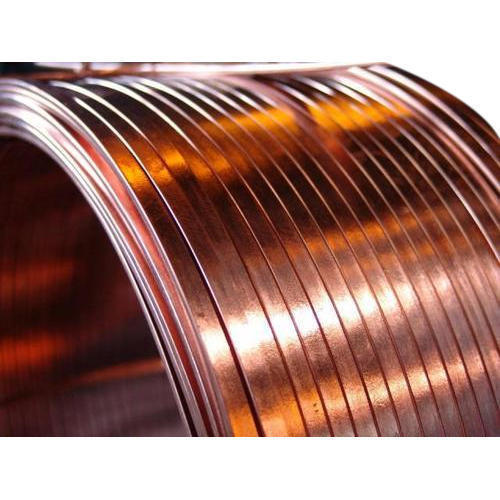
Flat wire: Flat rectangular cross section, high slot fill factor, large power density, which is the key conductor shape for high power density windings.
Foil wire: Foil cross section, suitable for high current windings and low voltage high current transformers.
Litz wire: Multiple strands of fine wire twisted together, suitable for high frequency windings.
4.4 Plated Conductor
Class 200 N grade enameled copper wire plated conductor:
Nickel-plated copper: Conductor surface nickel plated 1 to 3 micrometers, improving conductor oxidation resistance and corrosion resistance, applied to high temperature, humid, and corrosive environments.
Silver-plated copper: Conductor surface silver plated 1 to 5 micrometers, improving conductor surface conductivity, reducing skin effect influence, applied to high frequency and high current scenarios.
Tin-plated copper: Conductor surface tin plated 1 to 3 micrometers, improving conductor soldering performance, applied to scenarios requiring frequent soldering.
5 Performance Characteristics
5.1 Heat Resistance
Class 200 N grade enameled copper wire heat resistance:
Long term heat resistance temperature: 200 degrees Celsius, enameled copper wire can operate long term above 20000 hours at an ambient temperature of 200 degrees Celsius.
Short term heat resistance temperature: 240 to 250 degrees Celsius, enameled copper wire can operate short term tens to hundreds of hours at an ambient temperature of 240 to 250 degrees Celsius.
Thermal shock temperature: 220 degrees Celsius, enameled copper wire does not crack or blister in the 220 degrees Celsius thermal shock test.
Softening breakdown temperature: 320 to 350 degrees Celsius, enameled copper wire enamel film does not soften breakdown in the 320 to 350 degrees Celsius softening breakdown test.
Thermal aging life: Above 20000 hours at 200 degrees Celsius, above 40000 hours at 180 degrees Celsius, above 80000 hours at 160 degrees Celsius.
5.2 Electrical Performance
Class 200 N grade enameled copper wire electrical performance:
Conductor DC resistivity: 1.724×10⁻⁸ Ω·m, namely at 20 degrees Celsius, complying with electrical copper standards.
Enamel film dielectric strength: 100 to 200 kV per mm, breakdown voltage higher than Grade H enameled copper wire.
Enamel film volume resistivity: 10¹⁴ to 10¹⁶ Ω·cm, excellent insulation performance.
Enamel film dielectric loss tangent: 0.005 to 0.010, low dielectric loss.
Enamel film relative dielectric constant: 3.0 to 4.0, stable dielectric performance.
5.3 Mechanical Performance
Class 200 N grade enameled copper wire mechanical performance:
Enamel film tensile strength: 100 to 150 MPa, high mechanical strength.
Enamel film elongation: 30% to 50%, good enamel film toughness.
Enamel film adhesion: The enamel film does not crack or fall off in the bending, stretching, and torsion tests.
Enamel film wear resistance: The enamel film is scratch resistant and wear resistant.
Conductor tensile strength: 220 to 280 MPa, namely soft state, 380 to 450 MPa, namely hard state.
Conductor elongation: 25% to 40%, namely soft state, 1% to 5%, namely hard state.
5.4 Chemical Performance
Class 200 N grade enameled copper wire chemical performance:
Acid resistance: The enamel film is stable in dilute acid, and can withstand 5% sulfuric acid, 5% hydrochloric acid, and 5% nitric acid.
Alkali resistance: The enamel film is stable in dilute alkali, and can withstand 5% sodium hydroxide.
Oil resistance: The enamel film is stable in mineral oil and synthetic oil, and is suitable for oil-immersed transformers and oil-immersed motors.
Refrigerant resistance: The enamel film is stable in refrigerants such as R22, R134a, and R410A, and is suitable for refrigeration compressor motors.
Solvent resistance: The enamel film is stable in alcohol, ketone, and ester solvents.
5.5 Damp Heat Performance
Class 200 N grade enameled copper wire damp heat performance:
Damp heat resistance test: After 1000 hours of test at 40 degrees Celsius and 95% relative humidity, the enamel film is intact and the insulation resistance does not decrease significantly.
Water resistance: The enamel film is stable in water, and short term immersion in water does not affect the insulation performance.
Salt spray resistance: The enamel film is stable in 5% sodium chloride salt spray environment, and is suitable for marine environment.
6 Application Scenarios
6.1 New Energy Vehicle Drive Motors
New energy vehicle drive motors are the most important application scenario for Class 200 N grade enameled copper wire. Drive motors have high power density, stringent efficiency requirements, large vibration impact, and complex operating environments.
New energy vehicle drive motor enameled copper wire specifications: AWG 18 to AWG 32, conductor diameter 0.20 to 1.00 mm, enamel film thickness Grade 2 or Grade 3, enamel system EIW/AIW composite enamel film, conductor material TU1 oxygen-free copper.
New energy vehicle drive motor enameled copper wire parameters: Long term heat resistance 200 degrees Celsius, short term peak temperature 220 to 250 degrees Celsius, breakdown voltage 20% higher than Grade H enameled copper wire, mechanical strength 30% higher than Grade H enameled copper wire, chemical stability 50% higher than Grade H enameled copper wire.
New energy vehicle drive motor application case: A certain model of permanent magnet synchronous drive motor adopts Class 200 N grade enameled copper wire, with flat conductor specification width 6 mm, thickness 2.0 mm, enamel film thickness 0.10 mm, slot fill factor 78%, power density 5.5 kW per kg, efficiency 97%.
6.2 Rail Transit Traction Motors
Rail transit traction motors are an important application scenario for Class 200 N grade enameled copper wire. Traction motors have large power, strong overload capacity, long operation time, and large vibration impact.
Rail transit traction motor enameled copper wire specifications: Conductor diameter 0.50 to 2.50 mm, enamel film thickness Grade 2 or Grade 3, enamel system EIW/AIW composite enamel film, conductor material TU1 oxygen-free copper.
Rail transit traction motor enameled copper wire parameters: Long term heat resistance 200 degrees Celsius, short term peak temperature 240 to 260 degrees Celsius, enamel film intact during overload operation, high insulation reliability.
Rail transit traction motor application case: A certain model of subway traction motor adopts Class 200 N grade enameled copper wire, with flat conductor specification width 8 mm, thickness 3.0 mm, enamel film thickness 0.12 mm, slot fill factor 70%, overload capacity 2.5 times rated power, efficiency 96%.
6.3 Wind Power Generation
Wind power generation is a special application scenario for Class 200 N grade enameled copper wire. Wind power operating environment is harsh, with large temperature variation, strong vibration impact, and extremely high reliability requirements.
Wind power enameled copper wire specifications: Conductor diameter 0.50 to 3.00 mm, enamel film thickness Grade 2 or Grade 3, enamel system EIW/AIW composite enamel film, conductor material TU1 oxygen-free copper or nickel-plated copper.
Wind power enameled copper wire parameters: Long term heat resistance 200 degrees Celsius, low temperature operating environment -40 degrees Celsius, enamel film does not crack under high and low temperature alternating environment, insulation stable in humid environment.
Wind power application case: A certain model of onshore wind power generator adopts Class 200 N grade enameled copper wire, with flat conductor specification width 10 mm, thickness 4.0 mm, enamel film thickness 0.12 mm, slot fill factor 68%, protection level IP54, service life over 20 years.
6.4 Special Transformers
Special transformers are a traditional application scenario for Class 200 N grade enameled copper wire. Special transformers have high voltage class, strict insulation requirements, and high long term operational reliability requirements.
Special transformer enameled copper wire specifications: Conductor diameter 0.30 to 3.00 mm, enamel film thickness Grade 2 or Grade 3, enamel system EIW/AIW composite enamel film, conductor material TU1 oxygen-free copper.
Special transformer enameled copper wire parameters: Long term heat resistance 200 degrees Celsius, enamel film stable in oil-immersed environment, enamel film not damaged under short circuit impact.
Special transformer application case: A certain model of high current rectifier transformer adopts Class 200 N grade enameled copper wire, with flat conductor specification width 12 mm, thickness 4.0 mm, enamel film thickness 0.13 mm, slot fill factor 72%, efficiency 98.5%.
6.5 Industrial Variable Frequency Motors
Industrial variable frequency motors are a high volume application scenario for Class 200 N grade enameled copper wire. Variable frequency motors are powered by inverters, with high harmonic content, high partial discharge risk, and large temperature rise fluctuation.
Industrial variable frequency motor enameled copper wire specifications: Conductor diameter 0.30 to 2.50 mm, enamel film thickness Grade 2 or Grade 3, enamel system EIW/AIW composite enamel film, conductor material TU1 oxygen-free copper.
Industrial variable frequency motor enameled copper wire parameters: Long term heat resistance 200 degrees Celsius, strong partial discharge resistance, good enamel film corona resistance.
Industrial variable frequency motor application case: A certain model of general variable frequency motor adopts Class 200 N grade enameled copper wire, with conductor specification width 4 mm, thickness 1.5 mm, enamel film thickness 0.10 mm, power density 4.5 kW per kg, efficiency 96%.
6.6 Home Appliance Motors
Home appliance motors are a high volume application scenario for Class 200 N grade enameled copper wire. Home appliance motors require high efficiency, low noise, long life, and high reliability.
Home appliance motor enameled copper wire specifications: Conductor diameter 0.20 to 1.50 mm, enamel film thickness Grade 1 or Grade 2, enamel system EIW/AIW composite enamel film, conductor material TU1 or TU2 oxygen-free copper.
Home appliance motor enameled copper wire parameters: Long term heat resistance 200 degrees Celsius, home appliance environment temperature usually 60 to 100 degrees Celsius, enamel film heat resistance has large margin.
Home appliance motor application case: A certain model of variable frequency air conditioner compressor motor adopts Class 200 N grade enameled copper wire, with flat conductor specification width 3 mm, thickness 1.5 mm, enamel film thickness 0.08 mm, slot fill factor 65%, efficiency 92%.
6.7 Aerospace Motors
Aerospace motors are a high end application scenario for Class 200 N grade enameled copper wire. Aerospace motors have harsh operating environments, extremely high reliability requirements, and strict weight constraints.
Aerospace motor enameled copper wire specifications: Conductor diameter 0.10 to 1.00 mm, enamel film thickness Grade 2 or Grade 3, enamel system PIW polyimide enamel film or AIW polyamide-imide enamel film, conductor material TU1 oxygen-free copper.
Aerospace motor enameled copper wire parameters: Long term heat resistance above 200 degrees Celsius, enamel film does not discharge in low pressure environment, enamel film not damaged in high strength vibration environment.
Aerospace motor application case: A certain model of aerospace motor adopts Class 200 N grade enameled copper wire, with conductor diameter 0.50 mm, enamel film thickness 0.10 mm, enamel system PIW polyimide enamel film, working temperature -55 to 220 degrees Celsius, vibration level 30 g.
6.8 Robot Servo Motors
Robot servo motors are a high precision application scenario for Class 200 N grade enameled copper wire. Servo motors have high power density, fast dynamic response, high positioning accuracy, and strong overload capacity.
Robot servo motor enameled copper wire specifications: Conductor diameter 0.20 to 1.00 mm, enamel film thickness Grade 2, enamel system EIW/AIW composite enamel film, conductor material TU1 oxygen-free copper.
Robot servo motor enameled copper wire parameters: Long term heat resistance 200 degrees Celsius, short term overload temperature 250 degrees Celsius, high enamel film mechanical strength, high winding positioning accuracy.
Robot servo motor application case: A certain model of industrial robot servo motor adopts Class 200 N grade enameled copper wire, with flat conductor specification width 4 mm, thickness 1.5 mm, enamel film thickness 0.08 mm, slot fill factor 73%, power density 4.5 kW per kg, positioning accuracy 0.01 mm.
6.9 Superconducting Magnet Support
The conventional conductor windings supporting superconducting magnets are a special application scenario for Class 200 N grade enameled copper wire. Superconducting magnets require conventional conductor winding support, and the conventional conductor windings bear high current, extreme low temperature, and strong magnetic field.
Superconducting magnet support enameled copper wire specifications: Conductor diameter 0.20 to 1.50 mm, enamel film thickness Grade 2, enamel system PIW polyimide enamel film or AIW enamel film, conductor material TU1 oxygen-free copper.
Superconducting magnet support enameled copper wire parameters: Long term heat resistance above 200 degrees Celsius, enamel film does not crack in extreme low temperature environment, enamel film insulation performance stable in strong magnetic field environment.
6.10 Electric Tools
Electric tool motors are a high strength application scenario for Class 200 N grade enameled copper wire. Electric tool motors have frequent start stop, severe overload, and large vibration impact.
Electric tool enameled copper wire specifications: Conductor diameter 0.30 to 1.50 mm, enamel film thickness Grade 2, enamel system EIW/AIW composite enamel film, conductor material TU1 or TU2 oxygen-free copper.
Electric tool enameled copper wire parameters: Long term heat resistance 200 degrees Celsius, enamel film not damaged under frequent overload, enamel film does not crack under high strength vibration.
Electric tool application case: A certain model of electric drill motor adopts Class 200 N grade enameled copper wire, with conductor diameter 0.50 mm, enamel film thickness 0.10 mm, enamel system EIW/AIW composite enamel film, overload capacity 3 times rated power, start stop life over 10000 times.
7 Design Selection
7.1 Selection Principle
Class 200 N grade enameled copper wire selection principle:
Temperature matching: The enameled copper wire thermal class should be higher than the equipment maximum operating temperature, with a temperature rise margin of 20 to 30 degrees Celsius.
Voltage matching: The enameled copper wire breakdown voltage should be 1.5 to 2 times higher than the equipment maximum working voltage.
Mechanical matching: The enameled copper wire tensile strength and elongation should meet the mechanical stress requirements during winding, insertion, and operation.
Chemical matching: The enameled copper wire enamel film should withstand the chemical media in the equipment operating environment.
Economic matching: Under the premise of meeting the performance, select economical enameled copper wire to control costs.
7.2 Selection Process
Class 200 N grade enameled copper wire selection process:
Step 1: Determine the equipment maximum operating temperature and temperature rise. When selecting the enameled copper wire thermal class, ensure that the enameled copper wire thermal class is 20 to 30 degrees Celsius higher than the equipment maximum operating temperature.
Step 2: Determine the equipment maximum working voltage. When selecting the enameled copper wire enamel film thickness, ensure that the enameled copper wire breakdown voltage is 1.5 to 2 times higher than the equipment maximum working voltage.
Step 3: Determine the equipment working environment. Consider ambient temperature, humidity, chemical media, vibration impact, and so on.
Step 4: Determine the conductor specification. Determine the conductor diameter and shape based on current carrying capacity, slot fill factor, and mechanical strength.
Step 5: Determine the conductor material. Determine the conductor material based on conductivity, mechanical properties, and cost.
Step 6: Determine the enamel system. Determine the enamel system based on temperature, voltage, chemical, mechanical, and economic factors.
7.3 Selection Pitfalls
Class 200 N grade enameled copper wire selection pitfalls:
Blind pursuit of high thermal class: The cost of Class 200 N grade enameled copper wire is higher than that of Class 180 Grade H and Class 155 Grade F. Blind pursuit of high thermal class leads to cost waste.
Ignoring voltage class: The breakdown voltage of Class 200 N grade enameled copper wire is high, but improper enamel film thickness selection may lead to insufficient breakdown voltage.
Ignoring chemical environment: The chemical resistance of Class 200 N grade enameled copper wire is better than that of Grade H, but specific chemical media may still damage the enamel film.
Ignoring economics: The enamel film cost of Class 200 N grade enameled copper wire accounts for 20% to 30% of the total cost of enameled copper wire, and blind selection leads to cost waste.
7.4 Selection Recommendations
Class 200 N grade enameled copper wire selection recommendations:
New energy vehicle drive motors: Recommend Class 200 N grade EIW/AIW composite enamel film enameled copper wire, conductor material TU1 oxygen-free copper, enamel film thickness Grade 2 or Grade 3.
Rail transit traction motors: Recommend Class 200 N grade EIW/AIW composite enamel film enameled copper wire, conductor material TU1 oxygen-free copper, enamel film thickness Grade 2 or Grade 3.
Wind power generation: Recommend Class 200 N grade EIW/AIW composite enamel film enameled copper wire, conductor material TU1 oxygen-free copper or nickel-plated copper, enamel film thickness Grade 2 or Grade 3.
Special transformers: Recommend Class 200 N grade EIW/AIW composite enamel film enameled copper wire, conductor material TU1 oxygen-free copper, enamel film thickness Grade 2 or Grade 3.
Home appliance motors: Recommend Class 200 N grade EIW/AIW composite enamel film enameled copper wire, conductor material TU1 or TU2 oxygen-free copper, enamel film thickness Grade 1 or Grade 2.
Aerospace motors: Recommend Class 200 N grade PIW polyimide enamel film or AIW enamel film enameled copper wire, conductor material TU1 oxygen-free copper, enamel film thickness Grade 2 or Grade 3.
8 Manufacturing Process
8.1 Conductor Processing
Class 200 N grade enameled copper wire conductor processing:
Round conductor drawing: The round copper rod is gradually reduced in diameter to the target diameter through multiple drawing dies. The drawing force, lubrication, cooling, and annealing should be controlled during the drawing process.
Flat conductor processing: The round copper wire is processed into a flat rectangular cross section through a flat drawing die or a special shape extrusion die. The flat drawing stress, die precision, and conductor surface quality should be controlled during the processing.
Foil wire processing: The round copper wire is rolled into foil through a rolling mill. The rolling force, foil thickness, and foil surface quality should be controlled during the processing.
Conductor surface treatment: The conductor surface should be clean, free of oxide layer, free of oil, and the conductor surface roughness should be controlled within Ra 0.8 to Ra 1.6 micrometers.
8.2 Enamel Film Coating
Class 200 N grade enameled copper wire enamel film coating:
Varnish preparation: AIW varnish and EIW varnish should be prepared according to the process requirements, and the varnish viscosity, solid content, and solvent ratio should be strictly controlled.
Coating process: The conductor passes through the varnish tank and the die vertically or horizontally, and enters the curing oven after coating. The varnish temperature, viscosity, die precision, and conductor speed should be controlled during the coating process.
Oven curing: The coated conductor enters the curing oven, and the oven temperature curve should be strictly controlled. The curing temperature is too low, and the enamel film curing is insufficient. The curing temperature is too high, and the enamel film ages. The oven temperature of Class 200 N grade enameled copper wire is usually 350 to 450 degrees Celsius.
Coating times: Grade 1 enamel film is coated 4 to 6 times, Grade 2 enamel film is coated 6 to 8 times, and Grade 3 enamel film is coated 8 to 12 times.
8.3 EIW/AIW Composite Enamel Film Coating
Class 200 N grade EIW/AIW composite enamel film coating process:
Base layer EIW coating: The conductor is first coated with EIW varnish and cured in the oven. The number of base layer EIW coatings accounts for 70% to 80% of the total number of composite enamel film coatings.
Surface layer AIW coating: AIW varnish is coated on the base layer EIW and cured in the oven. The number of surface layer AIW coatings accounts for 20% to 30% of the total number of composite enamel film coatings.
Composite enamel film thickness control: Base layer EIW thickness 0.04 to 0.08 mm, surface layer AIW thickness 0.01 to 0.03 mm.
Composite enamel film oven temperature: Base layer EIW oven temperature 300 to 400 degrees Celsius, surface layer AIW oven temperature 350 to 450 degrees Celsius.
8.4 Enameled Copper Wire Post-Treatment
Class 200 N grade enameled copper wire post-treatment:
Lubrication treatment: The surface of the enameled copper wire should be coated with lubricant to improve the winding performance and insertion performance of the enameled copper wire.
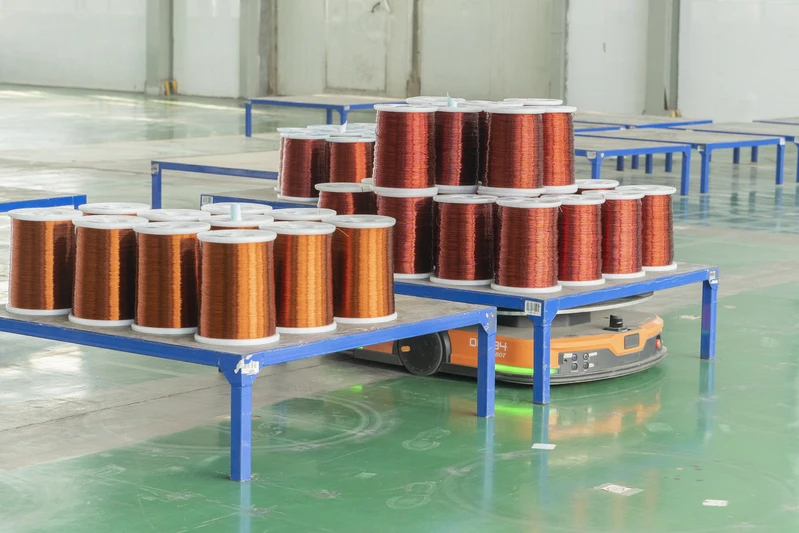
Cutting into spools: The enameled copper wire is cut into spools according to the specification, and the spool weight is usually 5 to 50 kg.
Packaging: The enameled copper wire spools are packaged in moisture-proof packaging, sealed with plastic film, and externally packaged in cartons or wooden boxes.
Labeling: The enameled copper wire spools should be labeled with specifications, batch number, production date, and manufacturer.
8.5 Manufacturing Quality Control
Class 200 N grade enameled copper wire manufacturing quality control:
Conductor quality control: Conductor diameter, roundness, surface roughness, copper content, oxygen content, conductivity, tensile strength, and elongation.
Enamel film quality control: Enamel film thickness, enamel film uniformity, enamel film integrity, breakdown voltage, thermal shock, softening breakdown, and thermal aging.
Finished product quality control: Enameled copper wire appearance, enamel film continuity, enamel film voltage resistance, enamel film insulation resistance, enamel film dielectric loss, and enameled copper wire flexibility.
Batch management: Class 200 N grade enameled copper wire should be managed by batch, and batch sampling inspection should comply with IEC 60317 and NEMA MW 1000-2018 standard requirements.
9 Quality Control
9.1 Conductor Quality Control
Class 200 N grade enameled copper wire conductor quality control items:
Conductor diameter: The conductor diameter should be within the tolerance range, with typical tolerance ±0.005 to ±0.015 mm.
Conductor roundness: Conductor roundness tolerance ±0.005 to ±0.010 mm.
Conductor surface roughness: Ra 0.8 to Ra 1.6 micrometers.
Conductor copper content: Not lower than 99.90%, TU1 not lower than 99.97%, TU2 not lower than 99.95%.
Conductor oxygen content: TU1 below 0.003%, TU2 below 0.005%, T2 below 0.05%.
Conductor conductivity: Not lower than 100% IACS, TU1 not lower than 101% IACS.
Conductor tensile strength: 220 to 280 MPa, namely soft state, 380 to 450 MPa, namely hard state.
Conductor elongation: 25% to 40%, namely soft state, 1% to 5%, namely hard state.
9.2 Enamel Film Quality Control
Class 200 N grade enameled copper wire enamel film quality control items:
Enamel film thickness: The enamel film thickness should be within the tolerance range, with typical tolerance ±0.005 to ±0.010 mm.
Enamel film uniformity: The enamel film thickness is uniform along the circumferential direction, and the enamel film thickness fluctuation does not exceed ±10%.
Enamel film continuity: The enamel film should be continuous and intact, without pinholes, bubbles, or impurities.
Breakdown voltage: The breakdown voltage should be higher than 75% of the specified value, Grade 1 not lower than 1500 V, Grade 2 not lower than 2350 V, Grade 3 not lower than 3000 V.
Thermal shock: The enamel film does not crack or blister in the 220 degrees Celsius thermal shock test.
Softening breakdown: The enamel film does not soften breakdown in the 320 to 350 degrees Celsius softening breakdown test.
Thermal aging: After 20000 hours of thermal aging test at 200 degrees Celsius, the enamel film is intact and the insulation performance is stable.
9.3 Finished Product Quality Control
Class 200 N grade enameled copper wire finished product quality control items:
Appearance: The enameled copper wire surface is clean, the enamel film is intact, and the color is uniform.
Flexibility: The enameled copper wire enamel film does not crack or fall off after bending.
Solderability: The solderability of Class 200 N grade enamel film is poor, and the enamel film needs to be removed before soldering.
Insulation resistance: The enameled copper wire insulation resistance is not lower than 100 megohms per kV of rated voltage.
Dielectric loss: The enameled copper wire dielectric loss tangent is not higher than 0.010.
Voltage resistance: The enameled copper wire does not break down under the specified voltage.
9.4 Factory Inspection
Class 200 N grade enameled copper wire factory inspection items:
Batch sampling inspection: Each batch of enameled copper wire is sampled and inspected according to IEC 60317 and NEMA MW 1000-2018 standards.
Type test: Type tests are conducted regularly, including thermal aging test, thermal shock test, softening breakdown test, and chemical resistance test.
Factory inspection report: Each batch of enameled copper wire should be accompanied by a factory inspection report, and the report should include specifications, performance, and inspection results.
Quality certificate: Each batch of enameled copper wire should be accompanied by a quality certificate, proving that the enameled copper wire complies with relevant standards.
9.5 Common Quality Issues
Class 200 N grade enameled copper wire common quality issues:
Enamel film thickness deviation: The enamel film thickness exceeds the tolerance range. Causes include varnish viscosity deviation, die precision deviation, and conductor speed fluctuation.
Unqualified breakdown voltage: The breakdown voltage is lower than the specified value. Causes include insufficient enamel film thickness, enamel film pinholes, and enamel film impurities.
Thermal shock cracking: The enamel film cracks in the thermal shock test. Causes include insufficient enamel film curing, insufficient enamel film ductility, and excessive enamel film internal stress.
Poor solderability: The poor solderability of Class 200 N grade enamel film is a normal phenomenon, but some customers require the enamel film to have a certain solderability, and it is necessary to select solderable enameled copper wire.
9.6 Inspection Standards
Class 200 N grade enameled copper wire main inspection standards:
IEC 60317-0-1: General requirements for enameled round copper wire.
IEC 60317-13: 200 grade polyesterimide enameled round copper wire.
IEC 60317-15: 200 grade polyamide-imide enameled round copper wire.
IEC 60317-26: 200 grade polyamide-imide enameled round copper wire.
IEC 60317-29: 200 grade polyesterimide overcoated with polyamide-imide enameled round copper wire.
NEMA MW 1000-2018: National Electrical Manufacturers Association enameled wire standard.
ASTM B 49: American Society for Testing and Materials electrical copper standard.
GB/T 6109.1 to GB/T 6109.20: China National Standard enameled round copper wire.
10 Future Development Trends
10.1 Enamel Film Technology Evolution
Class 200 N grade enameled copper wire enamel film technology continues to evolve.
Nano-modified enamel film: Nano alumina, nano boron nitride, and nano graphene oxide modified enamel film, improving the mechanical strength, dielectric strength, and thermal stability of the enamel film.
Self-repairing enamel film: The enamel film can be automatically repaired after damage, improving the long term reliability of the enamel film.
Ultra corona resistant enamel film: Corona resistant enamel film improves the voltage impulse resistance of windings and extends the winding life, especially suitable for variable frequency motors.
Ultra-thin enamel film: Ultra-thin enamel film technology reduces the enamel film thickness while ensuring dielectric strength, improving slot fill factor.
10.2 Conductor Technology Evolution
Class 200 N grade enameled copper wire conductor technology continues to evolve.
High purity conductor: Conductor purity evolving to above 99.99%, with conductivity exceeding 102% IACS.
Plated conductor: Nickel plated, silver plated, tin plated, copper plated composite plated conductor evolution, improving the comprehensive performance of the conductor.
Alloy conductor: Copper alloy conductor evolution, such as silver copper alloy, cadmium copper alloy, chromium copper alloy, beryllium copper alloy, improving the mechanical strength and high temperature resistance of the conductor.
Composite conductor: Copper clad aluminum composite conductor, copper clad steel composite conductor evolution, balancing cost and performance.
10.3 Manufacturing Process Evolution
Class 200 N grade enameled copper wire manufacturing process continues to evolve.
Automated manufacturing: Conductor processing, enamel film coating, enamel film curing, cutting into spools fully automated manufacturing.
Online inspection: Conductor diameter, enamel film thickness, enamel film integrity online inspection, real-time monitoring of manufacturing quality.
Intelligent manufacturing: Intelligent manufacturing based on industrial Internet and artificial intelligence, predicting manufacturing quality and optimizing manufacturing parameters.
10.4 Application Expansion
Class 200 N grade enameled copper wire applications continue to expand.
New energy vehicles: The power density of drive motors continues to increase, and 800 V high voltage platforms are popular, with rapid growth in demand for Class 200 N grade enameled copper wire.
Rail transit: The traction motors of high-speed rail, subway, and light rail continue to upgrade, with stable demand for Class 200 N grade enameled copper wire.
Wind power generation: The development of offshore wind power, deep sea wind power, and high altitude wind power has increased demand for Class 200 N grade enameled copper wire.
Special transformers: Flexible DC transmission, offshore platform power systems, and superconducting magnet support have increased demand for Class 200 N grade enameled copper wire.
Industrial variable frequency: Industry 4.0, intelligent manufacturing, and industrial variable frequency motors have increased demand for Class 200 N grade enameled copper wire.
Aerospace: Commercial aerospace, electric aviation, low altitude economy, and aerospace motors have increased demand for Class 200 N grade enameled copper wire.
Robots: Industrial robots, service robots, and humanoid robot servo motors have increased demand for Class 200 N grade enameled copper wire.
Home appliances: High end home appliances, variable frequency home appliances, and smart home appliances have increased demand for Class 200 N grade enameled copper wire.
10.5 Standards and Certification Evolution
Class 200 N grade enameled copper wire standards and certification systems continue to improve.
International standards: IEC 60317, NEMA MW 1000-2018, ASTM B 49 and other international standards continue to update.
Industry standards: Special standards for new energy vehicles, rail transit, wind power, aerospace and other industries continue to be established.
Certification systems: UL certification, CE certification, CSA certification, CCC certification, RoHS certification and other certification systems continue to evolve.
Environmental standards: The EU RoHS 2.0, REACH regulations, and REACH high concern substance list have continuously raised the environmental requirements for enameled copper wire.
11 Conclusion
Class 200 N grade ultra heat resistant enameled copper wire is the key winding material for high power, high power density, high reliability, and harsh environment electrical equipment. Class 200 N grade enameled copper wire is increasingly used in new energy vehicle drive motors, rail transit traction motors, wind power generation, special transformers, industrial variable frequency motors, home appliances, aerospace, robot servos, superconducting magnets, electric tools, and other scenarios.
The enamel system is the core of Class 200 N grade enameled copper wire. Polyamide-imide AIW enamel film and polyesterimide overcoated with polyamide-imide EIW/AIW composite enamel film are the standard enamel systems for Class 200 N grade. Conductor specifications should be comprehensively selected based on application scenarios, current carrying capacity, slot fill factor, mechanical strength, and chemical environment. Performance characteristics include heat resistance, electrical performance, mechanical performance, chemical performance, and damp heat performance, which are the basis for the design and selection of Class 200 N grade enameled copper wire.
Application scenarios cover 10 major fields including new energy vehicle drive motors, rail transit traction motors, wind power generation, special transformers, industrial variable frequency motors, home appliances, aerospace motors, robot servo motors, superconducting magnet support, and electric tools. Each application scenario has unique requirements for Class 200 N grade enameled copper wire, and should be optimized based on specific scenarios.
Design selection should be based on the principles of temperature matching, voltage matching, mechanical matching, chemical matching, and economic matching, strictly follow the selection process, and avoid selection pitfalls. The manufacturing process should strictly implement conductor processing, enamel film coating, EIW/AIW composite enamel film coating, enameled copper wire post-treatment, manufacturing quality control, and other processes. Quality control should include conductor quality control, enamel film quality control, finished product quality control, and factory inspection, and should be strictly implemented according to standards such as IEC 60317, NEMA MW 1000-2018, ASTM B 49, and GB/T 6109.
The continuous evolution of Class 200 N grade ultra heat resistant enameled copper wire technology is driven by the synergistic effect of nano-modified enamel film, self-repairing enamel film, ultra corona resistant enamel film, ultra-thin enamel film, high purity conductor, alloy conductor, composite conductor, automated manufacturing, online inspection, intelligent manufacturing, and other technologies, as well as the continuous development of strategic emerging industries such as new energy vehicles, rail transit, wind power, special transformers, aerospace, robots, home appliances, and superconductivity, the technical performance and application scope of Class 200 N grade ultra heat resistant enameled copper wire will be further improved and expanded, providing a solid foundation for the design and manufacture of high end electrical systems.
Contact Information
- E-mail: office@cnlpzz.com
- WhatsApp: 0086-19337889070
- Company: Zhengzhou LP Industry Co., Ltd.