


Introduction
Electrolytic capacitors are one of the most fundamental and important passive components in electronic circuits, widely used in various application scenarios such as power supply filtering, coupling, energy storage, and timing circuits. The unique characteristic of electrolytic capacitors is that they use electrolyte as one side of the dielectric material, enabling them to achieve large capacitance in a relatively small volume.
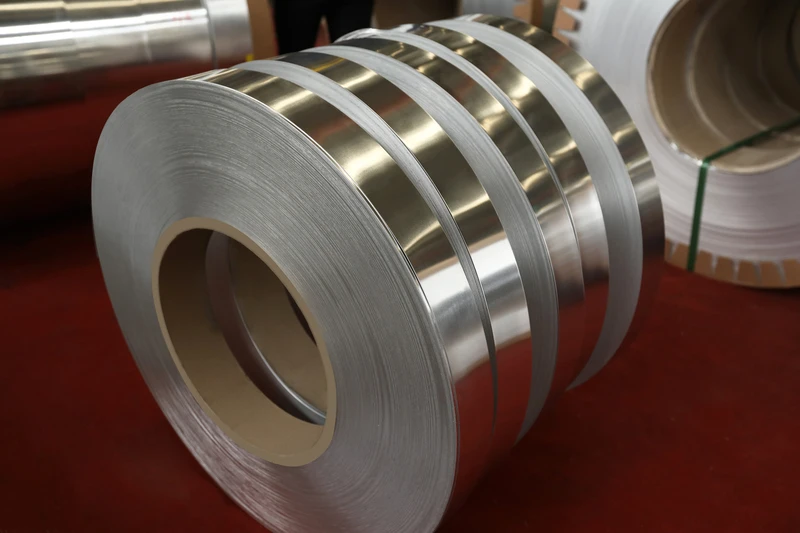
Anode aluminum foil is the core material of aluminum electrolytic capacitors, serving as the positive electrode (anode) of the capacitor. Unlike ordinary aluminum foil, anode aluminum foil requires special etching treatment to dramatically increase surface area, followed by anodizing to form a dense aluminum oxide dielectric layer. The quality of this oxide layer directly determines key performance parameters of the electrolytic capacitor such as capacitance, leakage current, and loss tangent.
This article systematically explains key parameters, selection criteria, and industrial applications for anode aluminum foil used in electrolytic capacitors, serving as a professional reference for electrolytic capacitor manufacturers and procurement personnel.
1. Electrolytic Capacitor Structure and Anode Aluminum Foil Principles
1.1 Basic Structure of Electrolytic Capacitors
The basic structure of aluminum electrolytic capacitors includes anode aluminum foil, electrolytic paper (or electrolyte), cathode aluminum foil, and the casing. The anode and cathode aluminum foils are separated by electrolytic paper, with electrolyte filling the entire internal space.
Capacitance is proportional to electrode surface area and inversely proportional to dielectric layer thickness. Since the aluminum oxide dielectric layer can only be made very thin (typically hundreds to thousands of angstroms), the surface area of aluminum foil must be dramatically increased through etching to achieve sufficient capacitance.
The capacitance calculation formula is: C = ε × A / d, where ε is the dielectric constant, A is the effective surface area, and d is the dielectric layer thickness. Etching treatment can increase the surface area of aluminum foil by dozens or even hundreds of times, which is crucial for achieving large capacitance.
1.2 Formation and Function of Anodized Oxide Film
After etching, the surface of anode aluminum foil forms a fluffy, porous aluminum oxide structure. This oxide film requires anodizing treatment in a specific electrolyte to form a dense dielectric layer.
During the anodizing process, aluminum foil serves as the anode and reacts with the electrolyte under the influence of an electric field, forming a uniform, dense aluminum oxide (Al₂O₃) film on its surface. The dielectric constant of this oxide film is approximately 8.4, and its thickness determines the rated voltage of the capacitor.
Oxide film thickness is proportional to the anodizing voltage. For example, a capacitor requiring a 400V working voltage needs an anodized oxide film thickness of approximately 5600Å (angstroms). Oxide film quality directly affects key indicators such as leakage current, loss tangent, and lifespan.
1.3 Difference Between Anode and Cathode Aluminum Foil
In electrolytic capacitors, anode and cathode aluminum foils bear completely different functions.
Anode aluminum foil: After etching and anodizing treatment, an aluminum oxide dielectric layer forms on the surface. The integrity of the oxide layer determines capacitor performance.
Cathode aluminum foil: Usually only requires etching treatment to increase surface area; no complete oxide layer formation is needed. The larger the cathode aluminum foil surface area, the better the contact between capacitor and electrolyte, resulting in lower equivalent series resistance (ESR).
These two types of aluminum foil have significant differences in processing technology and performance requirements and cannot be interchanged.
2. Key Specifications and Technical Requirements
2.1 Aluminum Foil Purity
Anode aluminum foil has extremely high purity requirements because impurities directly affect oxide film quality and capacitor performance.
High purity aluminum (99.99%, i.e., 4N aluminum): Higher purity results in better oxide film uniformity and density, lower capacitor leakage current, and longer lifespan. High purity aluminum is the standard material for manufacturing high-voltage electrolytic capacitor anodes.
Ultra-high purity aluminum (99.999%, i.e., 5N aluminum): Used for precision electrolytic capacitors with extremely high performance requirements, achieving lower leakage current and more stable performance.
Main impurities in aluminum foil include iron, silicon, copper, etc. These elements can destroy the continuity of the oxide film, leading to increased leakage current. Research shows that iron content needs to be strictly controlled below 10ppm, and silicon content also needs to be kept at low levels.
2.2 Etching Process and Specific Capacitance
Etching is the most critical process step in anode aluminum foil manufacturing. Its purpose is to corrode the aluminum foil surface through chemical or electrochemical methods, forming numerous micropores and grooves to dramatically increase effective surface area.
Chemical etching: Using hydrochloric acid or sulfuric acid electrolyte for etching; relatively simple process with lower cost. The etched surface presents a sponge-like structure.
DC etching: Using DC current for etching in hydrochloric acid electrolyte; can obtain more uniform etching structure.
AC etching: Using AC current for etching; the most mainstream etching process currently, able to achieve uniform etching effect over large areas.
Specific capacitance is the core indicator for measuring anode aluminum foil performance, defined as capacitance per unit area (μF/cm²). Higher specific capacitance means larger capacitance can be achieved in the same volume. High specific capacitance anode aluminum foil can reach 0.8–1.2 μF/cm² or even higher.
2.3 Oxide Film Characteristics
Oxide film quality directly determines capacitor performance, with main parameters including:
Dielectric strength: The ability of the oxide film to withstand electric field intensity without breakdown. High-quality oxide film can have dielectric strength above 10MV/cm.
Leakage current: The tiny current flowing through the oxide film at rated voltage. Lower leakage current means better insulation performance. Leakage current is usually expressed as μA/μF·V or μA/μF.
Loss tangent (tanδ): The energy loss of the capacitor under AC signals. High-quality oxide film has lower loss tangent.
Oxide film integrity inspection usually includes: voltage withstand test, leakage current test, accelerated aging test, etc.
2.4 Thickness and Mechanical Strength
Anode aluminum foil thickness needs comprehensive consideration based on capacitor rated voltage and mechanical processing requirements.
Aluminum foil thickness range: Typically between 30μm and 120μm; different voltage class capacitors use aluminum foil of different thicknesses.
Thickness selection principle: High-voltage capacitors (rated voltage above 400V) usually use thicker aluminum foil (above 80μm) to withstand mechanical stress during oxidation; low-voltage capacitors can use thinner aluminum foil to reduce cost.
Mechanical strength: Aluminum foil needs sufficient tensile strength and elongation to ensure no breakage or excessive deformation during winding, lamination, and other processing.
Flatness: Aluminum foil flatness directly affects oxide film uniformity. Aluminum foil with excessive warping causes oxidation unevenness.
2.5 Surface Quality Requirements
Anode aluminum foil has stringent surface quality requirements; any defects may affect oxide film formation and performance.
Surface cleanliness: The etched aluminum foil surface must be thoroughly cleaned, without residual etching solution, oil contamination, or other impurities.
Etching uniformity: Etching structure should be uniform across the entire aluminum foil surface, without local over-etching or under-etching.
Oxide film integrity: The oxide film should completely cover the aluminum foil surface, without pinholes, cracks, or other defects.
Appearance inspection: The aluminum foil surface should have no obvious scratches, indentations, creases, or other defects.
3. Application Characteristics of Different Voltage Classes
3.1 Low-Voltage Anode Aluminum Foil (Rated Voltage 6.3V–50V)
Low-voltage anode aluminum foil has a thinner oxide film, with main characteristics of high specific capacitance and relatively lower cost.
Specific capacitance range: Low-voltage aluminum foil can reach 1.0–1.5 μF/cm², much higher than high-voltage aluminum foil.
Etching process: Usually adopts high specific capacitance etching process with deeper etching degree to maximize surface area.
Application fields: Mobile phone chargers, computer power supplies, consumer electronics, and other high-volume applications.
Selection advice: Choose products with high specific capacitance and low leakage current, while considering adaptability for winding processing.
3.2 Medium-Voltage Anode Aluminum Foil (Rated Voltage 63V–160V)
Medium-voltage anode aluminum foil needs to balance specific capacitance and voltage withstanding.
Specific capacitance range: Usually between 0.6–0.9 μF/cm².
Etching process: Requires precise control of etching degree, ensuring sufficient surface area while guaranteeing oxide film quality and integrity.
Application fields: Industrial power supplies, communication equipment, automotive electronics, etc.
Selection advice: Focus on oxide film voltage withstanding margin and leakage current performance; choose products with excellent comprehensive performance.
3.3 High-Voltage Anode Aluminum Foil (Rated Voltage 200V–550V)
High-voltage anode aluminum foil has a thicker oxide film and the highest requirements for aluminum foil purity and processing technology.
Specific capacitance range: Usually between 0.3–0.6 μF/cm².
Etching process: Needs to maximize surface area while ensuring oxide film quality; etching process control requirements are stringent.
Application fields: Variable frequency drives, inverters, high-power power supplies, rail transit, and other industrial fields.
Selection advice: Focus on oxide film density, voltage withstanding stability, and lifespan performance, as capacitor reliability requirements are extremely high in these applications.
4. Industrial Applications and Selection Recommendations
4.1 Consumer Electronics Field
In consumer electronics, electrolytic capacitors are mainly used for power supply filtering and coupling applications.
Mobile phone chargers: Require large quantities of miniaturized electrolytic capacitors with strict requirements for both volume and performance. Recommended: low-voltage, high specific capacitance anode aluminum foil.
Televisions and monitors: The power section requires various specifications of electrolytic capacitors; appropriate voltage class and capacitance need to be selected based on specific location.
Computer power supplies: Require large quantities of electrolytic capacitors for input and output filtering; working environment temperature is relatively high; need to choose products with good temperature resistance.
4.2 Industrial Power Field
Industrial power supplies have far higher requirements for electrolytic capacitor reliability and lifespan than consumer electronics.
Variable frequency drives: As core power components, electrolytic capacitors need to operate stably under harsh conditions of high temperature, high voltage, and high ripple current for long periods. Must use high-voltage, high-quality anode aluminum foil.
Switching power supplies: Need to select aluminum electrolytic capacitors of different voltage classes based on power level; focus on lifespan and reliability indicators.
Uninterruptible power supplies (UPS): Have very high requirements for capacitor stability and lifespan; usually need to select industrial-grade or higher-level products.
4.3 Automotive Electronics Field
Automotive electronics is a rapidly developing application field with special requirements for electrolytic capacitors.
Vehicle chargers: Wide operating temperature range (-40°C to +85°C or higher); need to select electrolytic capacitors with excellent temperature resistance.
Motor drives: Involve high current and frequent charge-discharge cycles; have very high requirements for capacitor ripple current withstanding capacity.
In-vehicle infotainment systems: Have requirements for both volume and performance; need miniaturized, highly reliable electrolytic capacitors.
4.4 Common Selection Problems and Solutions
Insufficient capacitor lifespan: Check if anode aluminum foil oxide film quality meets requirements; confirm if rated voltage selection has sufficient margin (usually rated voltage needs to be 20% or more above working voltage); consider the effect of operating temperature on lifespan.
Excessive leakage current: Incomplete or uneven oxide film leads to increased leakage current; check if anodizing process is correct; choose aluminum foil material with higher purity.
Excessive capacitance decay: Oxide film may age under high temperature or high electric field; choose anode aluminum foil with better heat resistance; ensure usage conditions are within capacitor specifications.
Voltage withstanding breakdown: Insufficient oxide film thickness or defects lead to breakdown; choose anode aluminum foil with higher rated voltage; check oxide process quality.
5. Supplier Selection and Quality Control
5.1 Quality Certifications
Anode aluminum foil quality directly affects electrolytic capacitor performance and reliability; supplier certifications need to be examined.
ISO9001 quality management system certification is the basic requirement. For automotive-grade applications, IATF16949 certification is required. Environmental certifications such as RoHS and REACH are necessary for exporting to overseas markets.
5.2 Technical Capability Evaluation
Etching and oxidation process capability: This is the core technology for anode aluminum foil manufacturing; supplier process level and stability need to be examined.
Testing capability: Whether the supplier has complete testing equipment to perform factory inspection on key parameters.
Custom samples: Different capacitor manufacturers may have special specifications; whether the supplier supports customized development.
5.3 Production Capacity and Delivery
Stable production capacity is the guarantee for batch supply. Supply shortages may occur during peak seasons in the electrolytic capacitor market; suppliers with sufficient production capacity reserves need to be selected.
6. Product Specifications Summary
| Parameter | Specification Range |
|---|---|
| Aluminum Foil Purity | 99.99% – 99.999% |
| Thickness | 30μm – 120μm |
| Width | 3mm – 500mm |
| Specific Capacitance | 0.3μF/cm² – 1.5μF/cm² |
| Rated Voltage | 6.3V – 550V |
| Etching Type | Chemical Etching / AC Etching |
| Surface State | Plain Foil / Anodized Foil |
7. Technical Support and Contact
For detailed product specifications, samples, or technical selection support, please contact Zhengzhou LP Industry Co., Ltd. With years of expertise in electronic aluminum exports, our anode aluminum foil products are widely used in the aluminum electrolytic capacitor manufacturing field.
- Email: office@cnlpzz.com
- Phone/WhatsApp: 0086-19337889070
- Key Products: Anode aluminum foil, Cathode aluminum foil, Electronic aluminum foil, Etched aluminum foil
This document provides professional guidance for anode aluminum foil selection in electrolytic capacitor applications. For specific projects, please consult with technical professionals based on actual operating conditions.