


The biggest difference between sodium-ion batteries (Na-ion) and lithium-ion batteries (Li-ion) lies in the current collector — both the cathode and anode of Na-ion batteries can use aluminum foil, because sodium does not form an alloy with aluminum (lithium reacts with aluminum, so the Li-ion anode must use copper foil). This distinction directly determines that **1 GWh of Na-ion batteries requires 400–600 tons of aluminum foil, which is twice that of Li-ion batteries of equivalent capacity**. In 2025, Na-ion batteries entered the first year of mass production, and aluminum foil usage is entering a rapid growth trajectory. Below, we clarify the specifications of Na-ion aluminum foil based on the latest market data from 2025 to 2026.
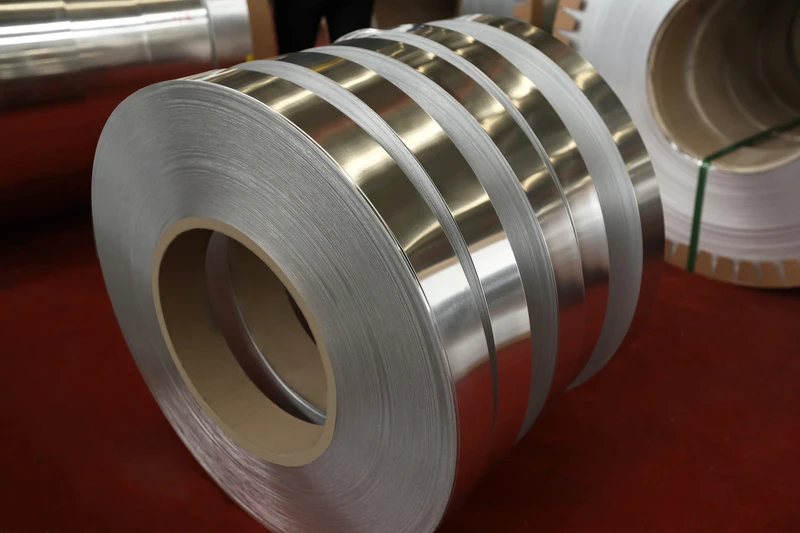
I. Three Key Characteristics of Na-Ion Aluminum Foil
- **Aluminum foil for both cathode and anode** — Sodium does not form an alloy with aluminum (Na-Al compounds are unstable), so the cathode (Prussian blue / layered oxides / polyanion) and anode (hard carbon) can both use Al current collectors. **The aluminum foil usage per GWh is twice that of Li-ion batteries**.
- **Thicker than Li-ion** — The mainstream Na-ion current collector thickness is **15–25 μm** (Li-ion mainstream is 12–15 μm). This is because Na-ion energy density is lower (120–160 Wh/kg vs. Li-ion 200–280 Wh/kg), requiring thicker aluminum foil to ensure mechanical stability.
- **Double-sided carbon coating is mandatory** — Hard carbon anode has poor adhesion with aluminum foil, so Na-ion anodes must be double-sided carbon coated (coating thickness 1–3 μm), unlike Li-ion cathodes which only need single-sided coating.
Once you remember these three points, the selection logic for Na-ion aluminum foil is established.
II. Key Specifications and Typical Values
| Category | Thickness (μm) | Alloy/Purity | Tensile Strength (MPa) | Elongation (%) | Surface Treatment |
|---|---|---|---|---|---|
| Anode Current Collector (Mainstream) | 18–25 | 1235 / 1060 (≥ 99.6%) | ≥ 160 | ≥ 3 | **Double-Sided Carbon Coating (Mandatory)** |
| High Energy Density Anode | 12–15 | 1070 (≥ 99.7%) | ≥ 130 | ≥ 1.5 | Double-Sided Carbon Coating |
| Na Metal Battery Current Collector | 8–10 | 1060 (≥ 99.6%) | ≥ 120 | ≥ 2 | Surface Passivation |
| Na-Ion Battery Aluminum Shell | 0.6–1.2 mm | 3003-H14 | 140–180 | ≥ 5 | Passivation + Stamping |
Three figures from the table deserve attention: **15–20 μm is the Na-ion cathode mainstream**; **18–25 μm is the double-sided coated anode mainstream** (3–5 μm thicker than the cathode, so the total thickness remains controllable after covering with the carbon coating); **8–10 μm is the next-generation specification for Na metal batteries** — leading Chinese manufacturers (such as Shandong Chengruntong Aluminum) can already produce them in batches.
III. Market Size and Growth
The estimates for the Na-ion market vary significantly across sources. Here we compare five independent data sources together:
| Data Source | 2025 (USD Billion) | 2035 (USD Billion) | CAGR |
|---|---|---|---|
| DataM Intelligence | 12.6 | 86.4 | 21.2% |
| Research Nester | 26.0 | 131.0 | 19.7% |
Note: GMInsights reported “2024 = USD 270.1 billion”, which is an obvious outlier (likely a typographical error) and is excluded from the comparison. Taken together, **the Na-ion market in 2025 was USD 1.26–2.6 billion, and by 2035 it is expected to reach USD 8.6–13.2 billion, with a CAGR of 19.7%–21.4%**.
**Competitive Landscape** (GMInsights 2024 data + Mordor 2025 data):
- **CATL** (Contemporary Amperex Technology) held a **23%** Na-ion material market share in 2024, accounting for **20–25%** of global capacity in 2025.
- **BYD** + **HiNa Battery** together accounted for **30–35%** of global capacity in 2025.
- CATL / BYD / HiNa combined accounted for **55–60%** of global Na-ion capacity in 2025.
- Other major players: Faradion (acquired by Reliance) / Chuangyi Technology / Huayang Co. / Lifang New Energy / Sodium Innovation Energy.
**Aluminum Foil Demand Estimation**: 1 GWh of Na-ion batteries requires approximately 400–600 tons of aluminum foil (dual-aluminum structure). Based on the estimated 2025 global Na-ion shipments of 5–8 GWh, **Na-ion aluminum foil demand in 2025 will be 20,000–50,000 tons per year**, corresponding to a market size of **USD 0.1–0.25 billion** (on the aluminum material side). If global Na-ion shipments reach 200 GWh by 2035, **aluminum foil demand will reach 800,000–1,200,000 tons per year**.
IV. Application Fields and Selection Logic
- **Energy Storage Stations (≥100 MWh)** — Solutions from CATL and HiNa Battery, mainly using 18–25 μm double-sided coated anode aluminum foil combined with 3003 aluminum shell, emphasizing cycle life of ≥ 6,000 cycles.
- **A0-Class EVs / Low-Speed Electric Vehicles** — Solutions from BYD Seagull EV, Yadea, and Aima, mainly using 15–20 μm single-sided coated cathode aluminum foil, emphasizing total vehicle cost 20–30% lower than Li-ion.
- **Telecom Base Stations / 5G Backup** — Solutions from Huawei and ZTE, emphasizing -40°C low-temperature performance (Na-ion retains 90% capacity at -20°C, outperforming Li-ion), with aluminum shell thickness of 1.0 mm and IP65 rating.
- **Residential Storage** — Solutions from HiNa and Pylontech, mainly using prismatic aluminum shells (3003-H14, 0.8 mm), emphasizing long cycle life (≥ 8,000 cycles) and high safety (Na-ion does not catch fire when over-discharged).
- **Na Metal Batteries (Frontier)** — Prototypes from CAS and universities, mainly using 8–10 μm ultra-thin aluminum foil (some at 4 μm), not yet in mass production.
V. Procurement Notes
1. **Identify the alloy grade clearly** — Use 1xxx series (1235/1100) for Na-ion cathode, 1xxx series (1235/1060) for anode, and 1060 for Na metal batteries. Mixing them will result in poor coating adhesion or insufficient mechanical strength.
2. **Pay attention to carbon coating uniformity** — Coating thickness tolerance ≤ ±0.3 μm, areal density tolerance ≤ ±5%, directly affecting hard carbon anode cycle life (uneven coating leads to uneven sodium deposition and accelerated capacity fade).
3. **Inspection items** — Thickness tolerance (±1 μm), surface roughness Ra (0.3–0.6 μm), tensile strength (≥ 150 MPa), elongation (≥ 2%), and carbon coating adhesion (tape test without powder drop).
4. **Certifications and compliance** — There are no specific Na-ion standards yet. Manufacturers can refer to **IEC 62619 / UL 1973 / UN 38.3** (Li-ion standards currently applied to Na-ion). Leading manufacturers have begun applying for Na-ion specific certifications (such as GB/T 42288-2022 “Sodium-Ion Battery Terminology and Classification”).
Final Thoughts
When selecting aluminum foil for Na-ion batteries, the key is to remember **”dual-aluminum structure + double-sided coating”** — this is the fundamental difference from Li-ion. **In 2025 the Na-ion market was USD 1.26–2.6 billion, and by 2035 it may reach USD 8.6–13.2 billion (CAGR 19.7%–21.4%)**, with CATL, BYD, and HiNa accounting for 55–60% of global capacity. For aluminum foil suppliers, Na-ion aluminum foil usage per GWh is twice that of Li-ion. The track is growing fast with clear incremental demand, making it one of the most important new growth areas over the next 5 years.
If you are evaluating Na-ion battery aluminum foil suppliers (cathode current collector / anode current collector / Na-ion aluminum shell), please contact Zhengzhou LP Industry Co., Ltd. Email: office@cnlpzz.com, WhatsApp: 0086-19337889070. We offer direct factory supply with 30 years of metal processing experience and support customized specifications and OEM processing.