

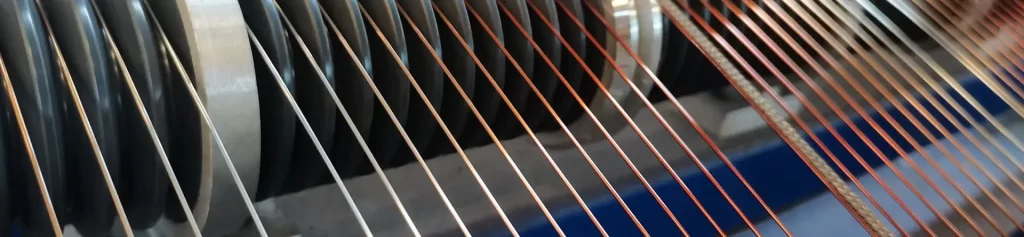
Oil-immersed transformers are one of the most widely used transformer types in power systems. Their core conductive fluid—the aluminum foil winding—directly determines the transformer’s energy efficiency rating, heat dissipation performance, and service life. With the acceleration of new energy grid integration and the upgrading of distribution automation, the market demand for high-performance aluminum foil for oil-immersed transformers continues to grow. This article will systematically analyze the core technical requirements of aluminum foil for oil-immersed transformers from the dimensions of material characteristics, technical standards, selection parameters, and process matching.
I. Technical Definition and Classification of Aluminum Foil Materials
1.1 Basic Definition
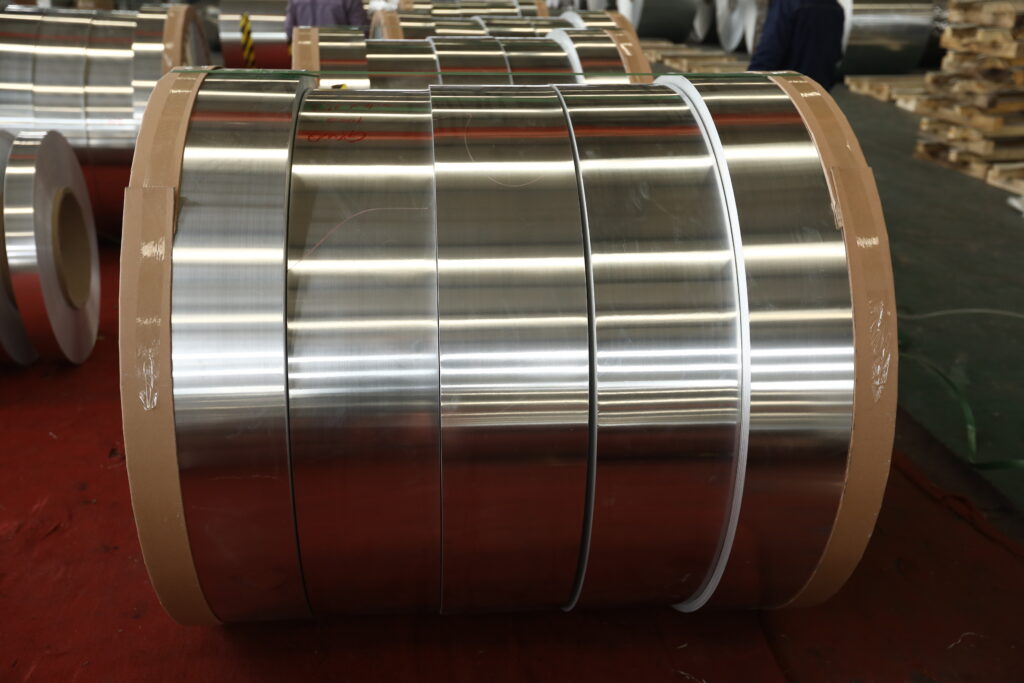
Aluminum foil for oil-immersed transformers refers to electrolytic aluminum or rolled aluminum foil materials used in transformer windings. The thickness typically ranges from 0.3mm to 3.5mm, and the width is determined according to the transformer design. Compared with copper foil, aluminum foil has significant cost advantages and is lightweight, making it widely used in the power distribution field.
1.2 Material Classification
| Grade | Typical Purity | Properties | Typical Applications |
|---|---|---|---|
| 1060 | ≥99.60% | High conductivity, good processability | Power distribution transformer |
| 1070 | ≥99.70% | Higher purity, stable performance | Power transformer |
| 3003 | Al-Mn alloy | High strength, good corrosion resistance | Special transformer |
1.3 Core Performance Indicators
Electrical Performance:
- Conductivity: ≥34 MS/m (IACS≥59%)
- Resistivity: ≤0.0295 Ω·mm²/m (20°C)
- Temperature Coefficient of Resistance: 0.004/°C
Geometric Accuracy:
- Thickness Tolerance: ±3% to ±5%
- Width tolerance: ±0.5mm to ±1.0mm
- Surface roughness: Ra≤1.6μm
Mechanical properties:
- Tensile strength: 70-110 MPa (O temper)
- Elongation: ≥15%-25%
- Hardness: 25-45 HV
II. Industry Standards and Certification System
2.1 Main Implemented Standards
| Standard System | Standard Number | Core Content |
|---|---|---|
| IEC | IEC 60325 | Technical Conditions for Aluminum Foil for Transformers |
| GB | GB/T 8544 | Aluminum and Aluminum Alloy Foil for Electrical Use |
| JIS | JIS H4160 | Aluminum and Aluminum Alloy Foil Materials |
| ASTM | ASTM B373 | Specifications for Aluminum Foil for Transformers |
2.2 Key Certification Requirements
Oil-immersed aluminum foil for transformers must meet the following certification system requirements:
- ISO 9001: Quality Management System Certification
- UL Certification: Material Flame Retardant Performance Verification
- RoHS/REACH: Restriction of Hazardous Substances Directive
- SGS Certification: Third-Party Quality Testing
III. Key Selection Parameters and Design Matching
3.1 Purity and Grade Selection
The purity of aluminum foil directly affects its conductivity and corrosion resistance. Oil-immersed transformers commonly use 1060 and 1070 industrial pure aluminum, characterized by:
- 1060 aluminum foil: 99.6% purity, conductivity ≥35% IACS, excellent processing performance, and high cost-effectiveness.
- 1070 aluminum foil: 99.7% purity, lower impurity content, and more stable long-term aging performance.
3.2 Thickness Selection Principles
Select aluminum foil thickness based on transformer capacity and voltage level:
| Transformer Type | Capacity Range | Aluminum Foil Thickness |
|---|---|---|
| Power Distribution Transformer | 30-2500 kVA | 0.8-2.0 mm |
| Power Transformer | 10-35 kV | 1.5-2.5 mm |
| Electric Furnace Transformer | Large Capacity | 2.0-3.5 mm |
3.3 Condition Class Selection
- O State (Soft State): Fully annealed, highest plasticity, suitable for complex winding shapes.
- H22/H24: Semi-hard state, balances strength and plasticity, suitable for conventional windings.
- H26/H28: High-strength state, suitable for high-tension winding processes.
IV. Special Requirements for Oil-Immersed Transformers
4.1 Resistance to Oil Corrosion
Oil-immersed transformers use mineral insulating oil; the aluminum foil must have good oil corrosion resistance:
- Surface passivation treatment to prevent oil deterioration
- Compatibility between aluminum foil and insulating oil must pass specific testing
- Avoid using alloying elements that affect oil performance.
4.2 Heat Dissipation Performance Matching
The high thermal conductivity (237 W/m·K) of the aluminum foil is beneficial for transformer heat dissipation:
- The design of oil channels between winding layers must match the aluminum foil thickness.
- Eddy current loss control requires strict thickness tolerances.
- The skin effect is more significant at high frequencies, requiring control of surface quality.
4.3 Weldability Requirements
Aluminum foil windings require good weldability:
- Overlap area should be ≥90% of the contact area
- Contact resistance ≤5μΩ (under rated current)
- Cold pressure welding or energy storage welding processes are recommended
V. Quality Inspection and Control Points
5.1 Incoming Material Inspection Items
| Inspection Items | Standard Requirements | Testing Methods |
|---|---|---|
| Chemical Composition | Meets Grade Requirements | Spectroscopic Analysis |
| Mechanical Properties | Tensile Strength and Elongation Meet Standards | Tensile Test |
| Thickness Tolerance | ±3% to ±5% | Thickness Gauge |
| Surface Quality | No Cracks, Oxidation, Inclusions | Visual Inspection + Microscope |
5.2 Common Quality Problems
- Uneven Thickness: Excessive thickness fluctuation along the coil direction, leading to excessively high local temperature rise
- Surface Oxidation: Aluminum foil turns gray or black, affecting welding quality
- Edge Burrs: Damage to insulation paper during winding, causing short circuit risk
- Delamination Defect: Insufficient interlayer bonding due to improper rolling process
VI. Supplier Evaluation and Selection
6.1 Production Capacity Assessment
- Full-process production line from smelting to hot rolling to cold rolling to annealing to slitting
- Thickness control accuracy: within ±0.02mm
- Monthly production capacity: ≥300 tons of stable supply
6.2 Technical Service Capabilities
- Provide material reports and dimensional inspection reports
- Support small-batch sample verification
- Capable of non-standard customization (thickness, width, condition)
6.3 Certification and Testing
- ISO 9001/14001/45001 triple system certification
- Third-party SGS or BV test reports
- Compliant with international standards such as IEC/GB/JIS
VII. Product Specifications (Reference)
The following are the standard specifications for our oil-immersed transformer aluminum foil:
| Grade | Thickness (mm) | Width (mm) | Condition | Tensile Strength (MPa) | Elongation (%) |
|---|---|---|---|---|---|
| 1060 | 0.5-3.0 | 20-600 | O/H22/H24 | 70-110 | ≥15 |
| 1070 | 0.3-3.0 | 20-600 | O/H22/H24 | 65-100 | ≥20 |
| 3003 | 0.8-2.5 | 20-400 | H24/H26 | 130-180 | ≥8 |
Surface Condition: Natural, Oiled, Passivated
Packaging: Wooden Crate + Moisture-proof Paper + Steel Sheet Packaging
Conclusion
The selection of aluminum foil for oil-immersed transformers requires comprehensive consideration of electrical performance, mechanical strength, oil corrosion resistance, and cost-effectiveness. Transformer manufacturers are advised to focus on material consistency data, third-party testing reports, and actual batch application experience when evaluating suppliers.
Our company has focused on exporting magnetic wire and metal foil for 30 years and can provide 1060/1070/3003 series aluminum foil for oil-immersed transformers. Samples can be shipped worldwide. Inquiries are welcome.
Contact Information:
Email: office@cnlpzz.com
WhatsApp: 0086-19337889070
The technical parameters described in this document are general reference values. Please consult with our technical team to confirm specific selections based on your transformer design requirements.