

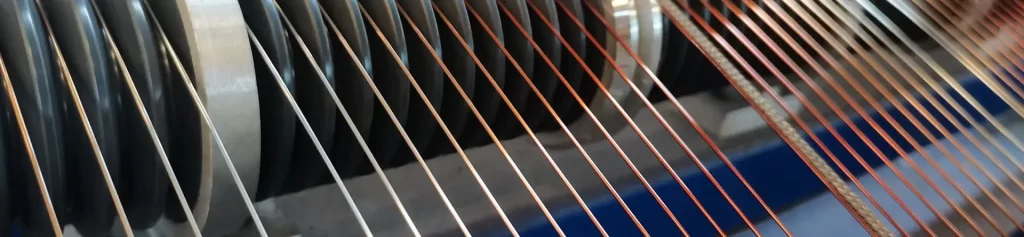
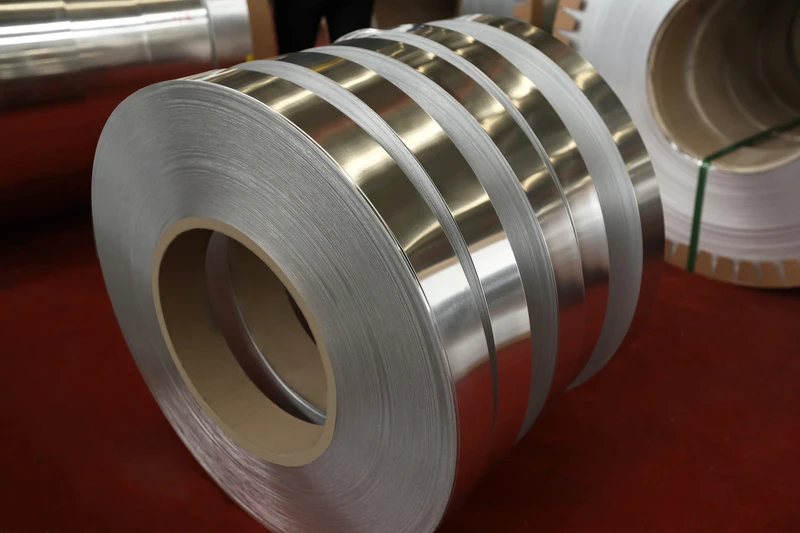
Aluminum foil for iron core reactors is a key conductive material in iron core reactor winding manufacturing. Iron core reactors feature an iron core that provides a low-reluctance magnetic circuit, offering advantages such as large inductance value, compact size, and lightweight construction. They are widely used in power system reactive power compensation, harmonic treatment, variable frequency drive input/output filtering, and other fields.
I. Working Characteristics of Iron Core Reactors
Iron core reactors adopt an iron core coil structure with a defined magnetic circuit. Their working characteristics are as follows:
The operating frequency is typically in the 50Hz or 60Hz power frequency range, synchronized with the power grid. Compared with air core reactors, iron core reactors offer larger inductance value with smaller size and weight, resulting in lower cost at the same capacity. Magnetic saturation can occur; when current exceeds the rated value, the iron core enters saturation state, reducing inductance and limiting short-circuit current capability. Iron core loss and noise issues need to be considered during design. Heat dissipation design must consider both the iron core and windings.
Core functions include: reactive power compensation, harmonic treatment, variable frequency drive input/output filtering, and power equipment protection.
II. Four Requirements for Aluminum Foil Materials
First, good conductivity. Aluminum content ≥99.60%, conductivity IACS ≥59%, reducing copper loss and temperature rise. Good conductivity directly affects reactor efficiency and heat generation.
Second, good thermal conductivity. Aluminum has excellent thermal conductivity, facilitating winding heat dissipation and controlling temperature rise. This is crucial for controlling winding temperature during reactor operation.
Third, stable mechanical properties. Withstand vibrations during operation and electromagnetic stress during short-circuit faults. Aluminum foil needs sufficient strength and toughness to resist mechanical stress without deformation or damage.
Fourth, reliable dimensional accuracy. Thickness and width accuracy directly affects the reactor’s electrical parameters. Inductance is precisely related to winding turns and magnetic circuit length.
III. Detailed Explanation of Parameters
3.1 Aluminum Foil Substrate
- Material: Pure aluminum 1060 (aluminum content ≥99.60%) or 1070 (aluminum content ≥99.70%)
- Conductivity: IACS ≥59% (1060) or IACS ≥60% (1070)
- Thickness Range: 0.1-3.0mm
- Width Range: 10-600mm
3.2 Mechanical Property Parameters
O State (Annealed): Fully annealed with best ductility and processability. Tensile strength 55-95MPa, elongation ≥25%, hardness 40-50HV. Suitable for applications requiring bending or complex shape winding.
H18 State (Hard): Stronger cold work hardening with higher strength. Tensile strength ≥125MPa, elongation ≥2%, hardness ≥65HV. Suitable for applications requiring higher strength without bending.
3.3 Alloy Series Selection
- 1060 Aluminum Alloy: Aluminum content ≥99.60%, high purity, good corrosion resistance, IACS ≥59%, cost-effective. The most commonly used material for iron core reactors.
- 1070 Aluminum Alloy: Aluminum content ≥99.70%, higher purity, better conductivity, IACS ≥60%. Suitable for applications requiring higher electrical performance.
- 3003 Aluminum Alloy: Aluminum-manganese alloy with better mechanical properties and high-temperature performance. Suitable for higher operating temperatures or higher strength requirements.
IV. Selection Guide
4.1 Selection by Power Rating
Small power (below 10kVar): Recommend 0.2-0.5mm thickness, 20-80mm width, 1060 aluminum alloy. Easy to process and suitable for small power reactor winding requirements.
Medium power (10-100kVar): Recommend 0.3-1.0mm thickness, 50-200mm width, 1060 or 1070 aluminum alloy. Select appropriate alloy and temper based on specific electrical parameters.
Large power (100-500kVar): Recommend 0.5-1.5mm thickness, 100-300mm width, 1070 or 3003 aluminum alloy. Large power reactors have higher current, requiring larger cross-sectional area and better heat dissipation.
Ultra-large power (above 500kVar): Recommend 1.0-3.0mm thickness, 200-600mm width, 3003 aluminum alloy. The highest requirements for materials and processes.
4.2 Selection by Insulation Class
General insulation: O-state annealed aluminum foil with surface insulation treatment, suitable for general industrial environments.
Higher insulation: H-class insulating coating, heat resistance 180°C, suitable for high voltage or high temperature environments.
4.3 Selection by Application Scenario
Reactive power compensation reactor: Generally 1060 or 1070 aluminum alloy with general insulation is sufficient.
Variable frequency drive input reactor: Connected to the power grid, recommend 1070 or 3003 aluminum alloy for better thermal stability and mechanical strength.
Variable frequency drive output reactor: Variable frequency range, may involve medium frequency applications, recommend thinner specifications for better high-frequency performance.
High temperature environment reactor: Recommend 3003 aluminum alloy with better high-temperature stability and mechanical property retention.
V. Differences from Air Core Reactor Aluminum Foil
| Item | Iron Core Reactor Aluminum Foil | Air Core Reactor Aluminum Foil |
|---|---|---|
| Conductivity Requirement | IACS ≥59-60% | IACS ≥59-60% |
| Mechanical Properties | General | Higher |
| Heat Dissipation Design | Iron core + winding heat dissipation | Air convection heat dissipation |
| Insulation Class | General | Usually higher |
VI. Dimensional Tolerance Requirements
Thickness tolerance: Standard ±0.02mm, High precision ±0.01mm, Ultra-high precision ±0.005mm
Width tolerance: Standard ±0.3mm, High precision ±0.1mm, Ultra-high precision ±0.05mm
VII. Key Points of Production Process
7.1 Aluminum Foil Substrate Production
High-quality aluminum alloy plate → hot rolling → cold rolling → annealing
Key Control Points: Aluminum content compliance, strict impurity control, thickness uniformity, smooth surface, burr-free edges
7.2 Insulation Coating Treatment
- Ordinary insulation: anti-oxidation + basic insulation
- H-class insulation: heat resistance 180°C
- Special insulation: customized per requirements
7.3 Precision Slitting and Forming
Width tolerance per precision requirements, edges neat and burr-free, length customized
VIII. Quality Inspection Methods
8.1 Dimensional Inspection
Thickness: electronic micrometer (0.001mm accuracy); Width: projector/vernier caliper; Length: steel tape measure
8.2 Appearance Inspection
Surface: scratches, indentations, oxide spots; Edge: burrs, rough edges
8.3 Performance Testing
Mechanical: universal testing machine, Vickers hardness tester; Electrical: eddy current conductivity meter (IACS ≥59%); Chemical: spectrometer
IX. Supplier Selection Recommendations
Key points: Material quality, specifications range, insulation processing capability, test reports, technical support
Sample testing: Dimensional inspection → Performance testing → Winding testing
X. Commonly Used Specifications
| Thickness | Width Range | Alloy | Temper | Typical Applications |
|---|---|---|---|---|
| 0.3mm | 30-100mm | 1060 | O-state | Small power reactors |
| 0.5mm | 50-150mm | 1060 | O-state | Medium power reactors |
| 0.8mm | 80-200mm | 1070 | O-state | Large power reactors |
| 1.0mm | 100-250mm | 1070 | O-state | Large power reactors |
| 1.5mm | 150-300mm | 3003 | O-state | Ultra-large power reactors |
| 2.0mm | 200-400mm | 3003 | O-state | Industrial grade reactors |
XI. Conclusion
Our company has 30 years of experience in exporting electrical wire and metal foil, specializing in aluminum foil for iron core reactors.
Core advantages:
- 1060/1070/3003 aluminum alloy, aluminum content ≥99.60%, conductivity IACS ≥59%
- Thickness range 0.1-3.0mm, width range 10-600mm
- Regular specifications in stock
- Customized specifications and insulation treatment available
- Each batch comes with test reports
- Samples and small batch orders shipped globally
Contact our technical team for selection support.
Contact Information:
Email: office@cnlpzz.com
WhatsApp: 0086-19337889070