

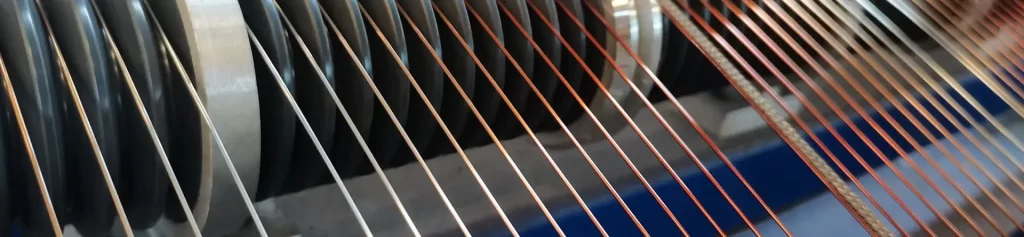
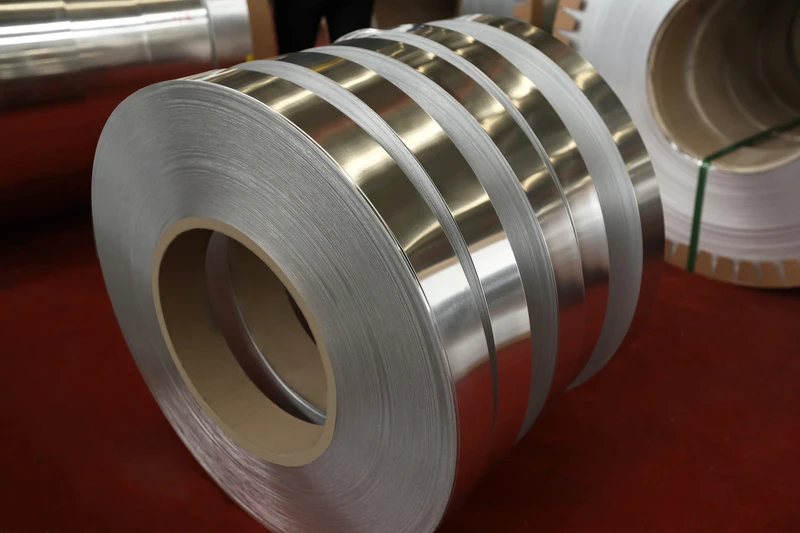
Aluminum foil for input filter reactors is a key conductive material in the manufacturing of input filter reactor windings in power electronic equipment. Input filter reactors are typically installed on the input side of frequency converters or rectifiers, connected to the power grid, primarily playing important roles such as filtering harmonics from the power grid, preventing high-frequency interference from entering the equipment, and protecting power devices.
I. Working Characteristics of Input Filter Reactors
Input filter reactors are installed in series between the equipment and the power grid. Their working characteristics are as follows:
The operating frequency is fixed in the 50Hz or 60Hz power frequency range, synchronized with the power grid frequency. The operating temperature is relatively stable, but is significantly affected by ambient temperature. They must withstand overvoltage and surge impacts from the power grid, requiring high electrical strength. The electromagnetic force is relatively small, but short-circuit withstand capability needs to be considered.
Core functions include: filtering harmonic currents from the power grid, preventing high-frequency interference from entering the equipment, improving the power factor, and protecting rectifier devices.
II. Four Requirements for Aluminum Foil Materials
First, good conductivity. Aluminum content ≥99.60%, conductivity IACS ≥59%, reducing losses and temperature rise.
Second, excellent heat resistance. Capable of withstanding temperature variations caused by power grid fluctuations with good thermal stability.
Third, stable mechanical properties. Able to withstand vibrations during operation and potential short-circuit electromagnetic stress.
Fourth, reliable dimensional accuracy. The precision of thickness and width directly affects the reactor’s electrical parameters.
III. Detailed Explanation of Parameters
3.1 Aluminum Foil Substrate
- Material: Pure aluminum 1060 (aluminum content ≥99.60%) or 1070 (aluminum content ≥99.70%)
- Conductivity: IACS ≥59% (1060) or IACS ≥60% (1070)
- Thickness Range: 0.1-3.0mm
- Width Range: 10-600mm
3.2 Mechanical Property Parameters
O State (Annealed): Tensile strength 55-95MPa, elongation ≥25%
H18 State (Hard): Tensile strength ≥125MPa, elongation ≥2%
3.3 Alloy Series
- 1060 Aluminum Alloy: Aluminum content ≥99.60%, high purity, good corrosion resistance, IACS ≥59%
- 1070 Aluminum Alloy: Aluminum content ≥99.70%, superior conductivity, IACS ≥60%
- 3003 Aluminum Alloy: Aluminum-manganese alloy with better high-temperature performance
IV. Selection Guide
4.1 Selection by Power Rating
| Power Rating | Recommended Thickness | Recommended Width | Recommended Alloy |
|---|---|---|---|
| Small Power (<10kW) | 0.2-0.5mm | 20-80mm | 1060 |
| Medium Power (10-100kW) | 0.3-1.0mm | 50-200mm | 1060 or 1070 |
| Large Power (100-500kW) | 0.5-1.5mm | 100-300mm | 1070 or 3003 |
| Ultra-Large Power (>500kW) | 1.0-3.0mm | 200-600mm | 3003 |
4.2 Selection by Insulation Class
General insulation: O-state annealed aluminum foil, surface insulation treatment
Higher insulation: H-class insulating coating, heat resistance 180°C
4.3 Selection by Application Environment
General industrial: 1060 aluminum alloy
High temperature: 3003 aluminum alloy
High conductivity: 1070 aluminum alloy
V. Dimensional Tolerance Requirements
Thickness tolerance: Standard ±0.02mm, High precision ±0.01mm
Width tolerance: Standard ±0.3mm, High precision ±0.1mm
VI. Key Points of Production Process
6.1 Aluminum Foil Substrate Production
Aluminum alloy plate → hot rolling → cold rolling → annealing
Key Control Points: Aluminum content compliance, impurity control, thickness uniformity, smooth surface, burr-free edges
6.2 Insulation Coating Treatment
- Ordinary insulation: anti-oxidation + basic insulation
- H-class insulation: heat resistance 180°C
6.3 Precision Slitting and Forming
Width tolerance per precision requirements, edges neat and burr-free, length customized, surface protection
VII. Quality Inspection Methods
7.1 Dimensional Inspection
Thickness: electronic micrometer (0.001mm); Width: projector/vernier caliper; Length: steel tape
7.2 Appearance Inspection
Surface: scratches, indentations, oxide spots; Edge: burrs, rough edges
7.3 Performance Testing
Mechanical: universal testing machine; Electrical: eddy current conductivity meter; Chemical: spectrometer
VIII. Supplier Selection Recommendations
Key points: Material quality, specifications range, insulation processing capability, test reports, technical support
Sample testing: Dimensional inspection → Performance testing → Winding testing
IX. Commonly Used Specifications
| Thickness | Width Range | Alloy | Temper | Typical Applications |
|---|---|---|---|---|
| 0.3mm | 30-100mm | 1060 | O-state | Small power reactors |
| 0.5mm | 50-150mm | 1060 | O-state | Medium power reactors |
| 0.8mm | 80-200mm | 1070 | O-state | Large power reactors |
| 1.0mm | 100-250mm | 1070 | O-state | Large power reactors |
| 1.5mm | 150-300mm | 3003 | O-state | Ultra-large power reactors |
| 2.0mm | 200-400mm | 3003 | O-state | Industrial grade reactors |
X. Conclusion
Our company has 30 years of experience in exporting electrical wire and metal foil, specializing in aluminum foil for input filter reactors.
Core advantages:
- 1060/1070/3003 aluminum alloy, aluminum content ≥99.60%, conductivity IACS ≥59%
- Thickness range 0.1-3.0mm, width range 10-600mm
- Regular specifications in stock
- Customized specifications and insulation treatment available
- Each batch comes with test reports
- Samples and small batch orders shipped globally
Contact our technical team for selection support.
Contact Information:
Email: office@cnlpzz.com
WhatsApp: 0086-19337889070