

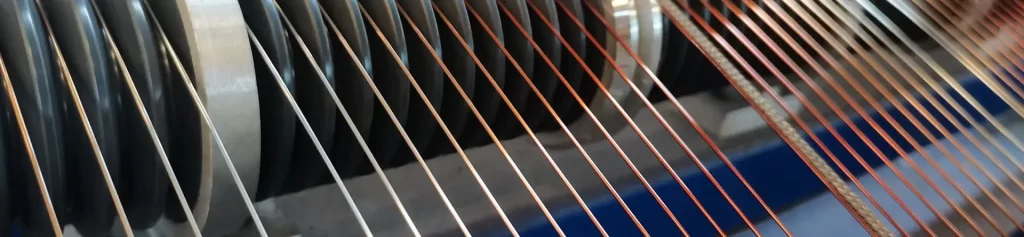
Automotive wire harnesses are the neural network of an automotive electrical system, undertaking key functions such as power transmission, signal transmission, electrical control, electromagnetic shielding, and safety protection. Aluminum foil, as the core shielding and protection material in automotive wire harnesses, plays an irreplaceable role in electromagnetic compatibility (EMC), electrostatic shielding, grounding protection, thermal management, and signal integrity. With the rapid development of automotive electrification, intelligence, and connectivity, especially the rise of high-voltage wire harnesses (600V/800V/1000V) in new energy vehicles, the demand for aluminum foil in wire harnesses has increased significantly. This article systematically describes the basic structure of automotive wire harnesses, the key role of aluminum foil, a comparison between aluminum foil and copper foil, types and specifications of aluminum foil, manufacturing processes, typical applications, shielding effectiveness, key performance requirements, and selection decisions.
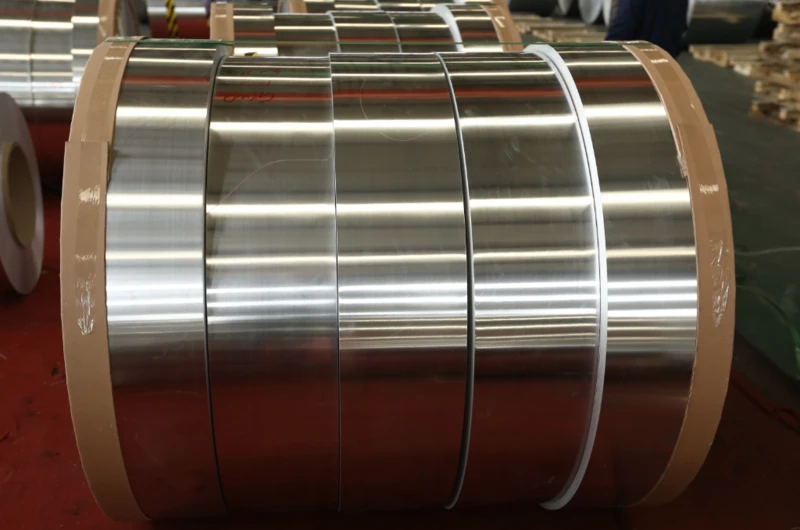
Basic Structure and Functions of Automotive Wire Harness
An automotive wire harness is a comprehensive electrical system composed of multiple wires, cables, connectors, terminals, insulation materials, shielding materials, and protective materials. It is a key carrier for power and signal transmission within a vehicle. The design, manufacturing, and reliability of automotive wire harnesses directly affect a vehicle’s performance, safety, comfort, and level of intelligence.
According to function, automotive wiring harnesses mainly include the following categories:
Power harnesses transmit high currents and connect high-power devices such as batteries, generators, starters, ignition systems, fuel pumps, electric water pumps, electric steering, and electric brakes. Traditional gasoline-powered vehicles use power harnesses with an operating voltage of 12V/24V and a current of 5-300A; new energy vehicles use high-voltage power harnesses with an operating voltage of 400V/600V/800V/1000V and a current of 100-500A.
Signal harnesses transmit low-voltage, low-current analog and digital signals, connecting various sensors (temperature, pressure, position, speed, rotational speed), controllers (ECU, TCU, BCM, VCU), and actuators (solenoid valves, relays, motors). Signal harnesses operate at 3-12V and mA-level current, are sensitive to electromagnetic interference (EMI), and require strict shielding protection.
High-voltage wiring harnesses (HV Harnesses) are core components of new energy vehicles (EVs, PHEVs, FCEVs), connecting high-voltage battery packs, motor controllers, drive motors, on-board chargers (OBCs), DC/DC converters, power distribution units (PDUs), charging interfaces, etc. High-voltage wiring harnesses operate at voltages of 400-1000V and have extremely high requirements for insulation, shielding, grounding, waterproofing, and mechanical protection.
The battery pack harness is located inside the power battery pack of a new energy vehicle and connects the battery module, battery management system (BMS), current sensor, temperature sensor, heating film, and cooling system. The battery pack harness has high requirements for chemical resistance (to battery coolant), vibration resistance, flame retardancy, and low-smoke halogen-free properties.
Charging harnesses include AC charging cables (from the charging station to the on-board charger) and DC charging cables (from the fast charging station to the battery pack), with operating voltages of 250-1000V and operating currents of 32-500A.
The body harness connects electrical components such as headlights, wipers, power windows, door locks, seat adjustments, air conditioning, and audio systems. Body harnesses are typically divided into several subsystems: engine compartment harness, instrument panel harness, main body harness, door harness, headliner harness, and chassis harness.
A typical wire harness structure consists of a conductor (copper/aluminum core wire), an insulation layer (PVC, XLPE, silicone rubber, TPE), a shielding layer (aluminum foil, copper foil, braided layer, Mylar tape), an inner sheath (PVC, TPE), an outer sheath (PVC, TPE, polyurethane), connectors, terminals, cable ties, corrugated tubing, and heat shrink tubing. The shielding layer is a key structure in the wire harness for protecting signal integrity and electromagnetic compatibility.
Key Functions of Aluminum Foil in Wire Harness
Aluminum foil plays several key roles in automotive wiring harnesses: electromagnetic shielding, electrostatic shielding, grounding protection, thermal management, signal integrity, and mechanical protection.
In terms of electromagnetic interference (EMI) shielding, aluminum foil is one of the core materials for wire harness shielding layers. Automotive electrical systems contain numerous sources of electromagnetic interference: the switching frequency of motor controllers (inverters) at 5-20 kHz, DC/DC converters at 50-200 kHz, on-board chargers at 50-100 kHz, ignition system high-voltage discharge at 20-40 kV, and motor brush sparks. These interference sources can cause interference to surrounding sensors, controllers, and communication equipment through radiation and conduction. Aluminum foil achieves a shielding effectiveness (SE) of 30-100 dB by reflecting and absorbing electromagnetic waves, protecting sensitive signals from interference.
In terms of electrostatic discharge (ESD) shielding, aluminum foil forms a Faraday cage within the shielding layer, protecting internal conductors from damage caused by external electrostatic discharge (ESD). During operation, automobiles may be affected by external static electricity (lightning, static buildup, human discharge). The aluminum foil shielding layer guides these static charges to the grounding terminal, preventing damage to internal signal lines.
In terms of grounding protection, the aluminum foil shielding layer is usually connected to the vehicle’s grounding system at one or both ends to form a low-impedance grounding loop. When insulation breakdown or short circuit occurs inside the wiring harness, the fault current flows into the vehicle’s grounding system through the aluminum foil shielding layer, triggering the protection circuit (fuse, circuit breaker) to protect the safety of passengers and equipment.
In terms of thermal management, aluminum foil has a high thermal conductivity (approximately 237 W/m·K for pure aluminum). The aluminum foil shielding layer can serve as a heat conduction channel within the wire harness, evenly distributing the heat generated by the conductor to the outer surface of the wire harness, thus improving heat dissipation efficiency. In high-current, high-power-density wire harnesses (such as high-voltage wire harnesses in new energy vehicles), the heat dissipation function of aluminum foil is particularly important.
In terms of signal integrity, the aluminum foil shielding layer forms a coaxial or shielded twisted pair structure with the internal conductor, reducing the discontinuity of the transmission line’s characteristic impedance and minimizing signal reflection, crosstalk, and radiation loss. In high-speed signal harnesses such as automotive Ethernet (100BASE-T1, 1000BASE-T1), CAN/CAN FD, LIN, and FlexRay, aluminum foil shielding is crucial for ensuring signal integrity.
In terms of mechanical protection, aluminum foil still has good tensile strength (80-150 MPa) even at thin thicknesses (0.02-0.05 mm). The composite structure of aluminum foil, insulation layer, and inner sheath can withstand mechanical stresses such as bending, stretching, vibration, and impact, protecting the internal conductor from damage.
Comparison of Aluminum Foil and Copper Foil
Aluminum foil and copper foil are the two main materials for wire harness shielding, and they differ significantly in terms of weight, cost, conductivity, shielding effectiveness, mechanical properties, corrosion resistance, and processability.
In terms of weight, aluminum has a density of 2.70 g/cm³, while copper has a density of 8.96 g/cm³. Aluminum weighs approximately 30% of copper. With the trend towards lightweighting in automobiles (especially the range requirements of new energy vehicles), aluminum foil has a significant weight advantage over copper foil. The total weight of automotive wiring harnesses can reach 30-80 kg; using aluminum foil instead of copper foil can reduce weight by 50-70%.
In terms of cost, the market price of aluminum is about 1/4 to 1/3 of that of copper (based on 2024 data: aluminum is about 18-25 yuan/kg, and copper is about 60-80 yuan/kg). Replacing copper foil with aluminum foil can significantly reduce the material cost of wire harnesses, especially for large-size shielding layers (such as the entire shielding of high-voltage wire harnesses).
Regarding conductivity, copper has a conductivity of 100% IACS, while aluminum has a conductivity of approximately 61% IACS. Copper’s conductivity is significantly superior to aluminum’s. In terms of shielding effectiveness, due to the skin effect of high-frequency electromagnetic waves, the skin depth of electromagnetic waves on the conductor surface is approximately on the order of μm. Therefore, there is little difference in shielding effectiveness between aluminum foil and copper foil at high frequencies (>1 MHz). However, for low-frequency (<100 kHz) shielding, copper foil is superior to aluminum foil.
In terms of mechanical properties, copper has a tensile strength of 220-400 MPa, while aluminum has a tensile strength of 80-150 MPa (pure aluminum, O state). Copper has significantly better mechanical strength than aluminum, but aluminum has better flexibility (aluminum elongation 20-35%, copper elongation 15-30%). In wire harness bending and torsion scenarios, aluminum foil is less prone to cracking.
In terms of corrosion resistance, aluminum forms a dense oxide film (Al₂O₃) in the atmosphere, exhibiting good corrosion resistance. However, aluminum is easily corroded in acidic, alkaline, and chlorine-containing environments. Copper forms green copper rust (basic copper carbonate) in the atmosphere, and its atmospheric corrosion resistance is generally moderate. Automotive wiring harnesses contain insulating materials such as PVC, XLPE, and silicone rubber, providing relatively stable chemical environments. In battery coolant (ethylene glycol aqueous solution), salt water, and acidic media, aluminum foil exhibits lower corrosion resistance than copper foil. Automotive wiring harnesses typically use aluminum foil + plastic composites (aluminum foil Mylar tape) to improve corrosion resistance.
In terms of processability, aluminum has better ductility than copper; aluminum foil can be rolled to ultra-thin thicknesses of 0.005-0.02 mm, while copper foil is typically 0.01-0.05 mm. Aluminum foil is easily laminated with plastic films (PET, PP) to form aluminum foil Mylar tape, exhibiting good processability. Copper foil is more difficult and costly to process at thinner thicknesses.
Regarding connection methods, connecting aluminum foil to copper wire requires special processes (such as ultrasonic welding, crimping, and copper-aluminum transition joints), as direct welding is difficult (due to the oxide film on the aluminum surface). Connecting copper foil to copper wire can be done using welding (tin soldering, silver soldering), crimping, or wrapping. In automotive wiring harnesses, the connection between aluminum foil and connectors is typically crimped, using copper-aluminum transition terminals or nickel plating.
Types and Specifications of Aluminum Foil
Aluminum foil for automotive wiring harnesses is classified according to alloy type, state, thickness, width, and composite form.
Regarding alloy type, the alloy type of aluminum foil directly determines its mechanical properties, conductivity, and corrosion resistance. Commonly used aluminum alloy foils in automotive wiring harnesses include:
- 1060 Aluminum Alloy (Pure Aluminum, Al ≥ 99.60%): Highest conductivity (61% IACS), best flexibility, lowest price, suitable for general shielding. – 3003 Aluminum Alloy (Al-Mn Alloy, Mn 1.0-1.5%): Higher strength than 1060, good corrosion resistance, suitable for general shielding and grounding. – 5052 Aluminum Alloy (Al-Mg Alloy, Mg 2.2-2.8%): High strength (tensile strength 170-305 MPa), resistant to marine corrosion, suitable for automotive chassis and marine environments. – 6061 Aluminum Alloy (Al-Mg-Si Alloy): Can be heat-treated for strengthening, high strength, suitable for structural components and shielding components. – 7072 Aluminum Alloy (Al-Zn Alloy, Zn 1.0-1.3%): Often used as the outer layer of composite foils, providing good surface finish.
The most commonly used aluminum foils for automotive wiring harnesses are 1060, 3003, and 5052 alloys. Among them, 1060 is used for general shielding (lowest cost), 3003 is used for shielding and grounding (strength and conductivity balance), and 5052 is used for harsh environments (high strength and corrosion resistance).
In terms of temper, aluminum foil is classified into O temper (annealed, soft), H14 temper (semi-hard), H18 temper (hard), and H19 temper (super-hard) according to its work hardening degree. O temper aluminum foil has the highest elongation (20-35%) and the best flexibility, making it suitable for wire harness wrapping and bending. H18/H19 temper aluminum foil has high strength (tensile strength 130-180 MPa) but lower elongation (1-5%), making it suitable for rigid structural components. For automotive wire harnesses, O temper or H14 temper aluminum foil is typically chosen to balance flexibility and strength.
In terms of thickness, the thickness of aluminum foil directly determines mechanical strength, shielding effectiveness, weight, and cost. Common thicknesses of aluminum foil used in automotive wiring harnesses include:
- 0.02mm (Extremely Thin): Used for fine wires, lightweight applications, and low shielding requirements. – 0.03mm (Thin): Used for general wire harness shielding and lightweight applications. – 0.05mm (Standard): Most commonly used, for balanced shielding, mechanical applications, and cost considerations. – 0.07mm (Thick): Used for high mechanical strength and high shielding requirements. – 0.10mm (Extra Thick): Used for structural shielding, grounding layers, and harsh environments.
The most commonly used aluminum foil in automotive wiring harnesses is 0.03-0.05mm thick.
Regarding width, the width of the aluminum foil is selected based on the outer diameter of the wire harness and the application scenario. Common widths of aluminum foil for automotive wire harnesses include: 10mm, 15mm, 20mm, 25mm, 30mm, 40mm, 50mm, 60mm, 80mm, 100mm, 120mm, 150mm, and 200mm. Standard widths of 25-50mm are used for general wire harness wrapping, while widths of 100-200mm are used for large-size shielding layers and full-length wrapping.
In terms of composite forms, aluminum foil can be laminated with various plastic films to form aluminum-plastic composite tapes. Common forms include:
- Aluminum foil + PET (polyester) film (aluminum foil with Mylar tape, most commonly used): Enhances mechanical strength and insulation performance. – Aluminum foil + PP (polypropylene) film: Improved temperature resistance. – Aluminum foil + PTFE (polytetrafluoroethylene) film: High temperature resistance (200°C+). – Aluminum foil + mica tape: High temperature resistance and flame retardancy. – Aluminum foil + copper foil (copper-aluminum composite foil): A composite solution for shielding and grounding.
The most commonly used automotive wiring harness is aluminum foil + PET composite tape (aluminum foil Mylar tape), with a typical structure of “aluminum foil (0.02-0.05mm) + adhesive + PET film (0.012-0.025mm)”.
Manufacturing Process of Aluminum Foil
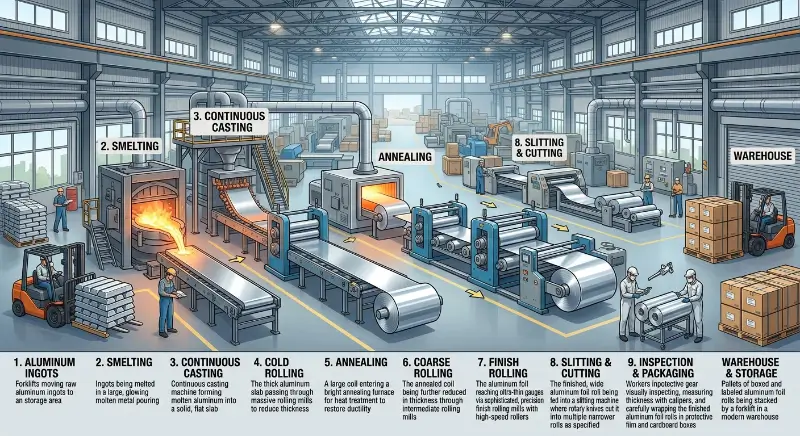
The manufacturing process of aluminum foil for automotive wiring harnesses includes melting, casting, homogenization, hot rolling (blanking rolling), cold rolling, intermediate annealing, foil rolling (finish rolling), slitting, annealing, lamination (with plastic film), winding, and packaging.
In terms of smelting, aluminum ingots are heated to 700-750°C in a smelting furnace and melted, with alloying elements (Mn, Mg, Si, Zn, etc.) added to adjust the composition. Refining, degassing, and slag removal processes are required during smelting to ensure the purity of the molten aluminum.
In terms of casting, molten aluminum is used to form aluminum billets (200-600mm thick, 1000-2000mm wide) through semi-continuous or continuous casting. The casting process requires control of cooling rate, grain size, and segregation.
In terms of homogenization, the aluminum billet is heated to 500-600°C in a homogenization furnace and held for several hours to homogenize the microstructure and eliminate casting stress.
In hot rolling, aluminum billets are rolled in multiple passes on a hot rolling mill (bill rolling) to reduce the thickness from 200-600 mm to 4-8 mm. The hot rolling temperature is 350-500°C, and the hot rolling process is accompanied by dynamic recrystallization.
In cold rolling, hot-rolled aluminum strip undergoes multiple cold rolling passes at room temperature to reduce its thickness from 4-8 mm to 0.1-0.5 mm. The cold rolling process results in work hardening, increasing the strength of the aluminum while decreasing its plasticity.
Regarding intermediate annealing, intermediate annealing (300-400°C, holding for 2-8 hours) is required during cold rolling to eliminate work hardening, restore plasticity, and facilitate continued rolling.
In foil rolling (precision rolling), aluminum strip is rolled into ultra-thin strips on foil rolling mills, reducing the thickness from 0.1-0.5 mm to 0.005-0.10 mm. Foil rolling is a key process in aluminum foil manufacturing, requiring precise control of tension, rolling force, roll roughness, and rolling speed.
For slitting, aluminum foil is slit into narrow strips of roll material according to width (10-2000mm) on a slitting machine. The slitting process requires control of the precision of the cutting tools, tension, and winding quality.
For annealing, the aluminum foil is annealed to the final state (O state, H14 state, H18 state) as required by the customer. The annealing temperature for the O state is 300-400°C, and the partial annealing temperature for the H14/H18 state is 150-250°C.
In the composite (aluminum-plastic composite) process, aluminum foil and plastic film are laminated using adhesives (acrylate, polyurethane) via dry or wet methods. Dry lamination involves first applying the adhesive to the plastic film, drying it, and then hot-pressing it onto the aluminum foil. Wet lamination involves applying the adhesive to the aluminum foil, immediately bonding it to the plastic film, and then drying and curing it.
In terms of winding and packaging, the composite aluminum foil rolls are wound into standard rolls (PT10-PT60 spools) on a winding machine, and the outer layer is packaged with a moisture-proof packaging film, and the product specifications, batch number, and production date are marked.
Applications in Traditional ICE Vehicle Wire Harness
Traditional gasoline-powered vehicles (ICE, Internal Combustion Engine) operate at 12V/24V, and their electrical systems are relatively simple. The application of aluminum foil in wiring harnesses is mainly concentrated in signal wiring harness shielding and engine compartment wiring harness shielding.
Regarding the shielding of the engine compartment wiring harness, there are numerous sources of electromagnetic interference within the engine compartment: the ignition system (20-40kV high-voltage discharge), the alternator (rectification noise), the fuel pump, the ignition coil, and various sensors. Engine compartment wiring harnesses typically employ a double-layer shielding system consisting of aluminum foil and a braided layer (the aluminum foil provides 100% coverage, while the braided layer provides low-frequency shielding and mechanical protection).
Regarding sensor wiring harness shielding, sensitive signal wiring harnesses such as the engine crankshaft position sensor (CKP), camshaft position sensor (CMP), oxygen sensor (O2), knock sensor (KS), and air flow sensor (MAF) must be shielded with aluminum foil. The 100% coverage and high-frequency shielding performance of aluminum foil effectively protects sensor signals from interference from the ignition system.
Regarding CAN bus harness shielding, the automotive CAN (Controller Area Network) bus is the core communication protocol of the automotive electronic control system. The CAN harness adopts a twisted-pair cable + aluminum foil shielding structure (CAN_H and CAN_L are twisted pairs and covered with aluminum foil). Aluminum foil shielding reduces the radiated and conducted emissions of the CAN bus and improves the electromagnetic compatibility of CAN communication.
Regarding shielding of vehicle body wiring harnesses (low-frequency, high-current devices), transient voltage pulses are generated when high-current devices (starter motor, air conditioning blower, power seats, power windows) in the vehicle body wiring harness are switched on and off. Aluminum foil shielding can reduce the interference of these transient pulses to other sensitive devices.
Regarding the shielding of antenna harnesses (car radio, GPS, 4G/5G), the vehicle antenna harness adopts a coaxial cable structure (coaxial aluminum foil + braided layer + outer sheath). The aluminum foil serves as the inner shielding layer to prevent signal leakage and external interference.
Regarding the instrument cluster wiring harness shielding, the instrument cluster wiring harness connects to devices such as the speedometer, tachometer, fuel gauge, and ECU. The instrument cluster wiring harness uses aluminum foil shielding to ensure accurate instrument readings and stable ECU communication.
Applications in New Energy Vehicle HV Wire Harness
New energy vehicles (NEVs) include battery electric vehicles (BEVs), plug-in hybrid electric vehicles (PHEVs), and fuel cell electric vehicles (FCEVs). High-voltage wiring harnesses are a core component of NEVs, operating at 400-1000V, and require extremely high standards for insulation, shielding, grounding, waterproofing, and mechanical protection. The use of aluminum foil in high-voltage wiring harnesses for NEVs has increased significantly.
For high-voltage power harness shielding, the high-voltage power harnesses in new energy vehicles (connecting the battery pack, motor controller, drive motor, OBC, DC/DC converter, and PDU) adopt a double-layer shielding structure of aluminum foil and braided layer. The aluminum foil provides 100% coverage and high-frequency shielding (>1 MHz), while the braided layer provides low-frequency shielding (<1 MHz) and mechanical protection. Both ends or one end of the shielding layer are connected to the vehicle ground, forming a low-impedance EMC shielding and fault current return path.
Regarding the shielding of the drive motor wiring harness, the switching frequency of the drive motor controller (Inverter) in new energy vehicles is 5-20 kHz, generating a large number of high-frequency harmonics. The drive motor wiring harness (connecting the Inverter and the drive motor) is protected with aluminum foil shielding to prevent high-frequency harmonics from radiating through the wiring harness and interfering with other equipment.
Regarding the shielding of the OBC (On-Board Charger) wiring harness, the OBC converts the AC 220V/380V from the charging station to DC power to charge the battery pack. The high-frequency switches (50-100 kHz) inside the OBC generate a significant amount of electromagnetic interference. The OBC wiring harness (connecting the OBC and the battery pack, and the AC charging interface) is protected with aluminum foil shielding.
Regarding the shielding of the DC/DC converter harness, the DC/DC converter converts high-voltage batteries (400-800V) to low-voltage (12V/48V). The high-frequency switches (50-200 kHz) inside the DC/DC converter generate a large amount of electromagnetic interference. The DC/DC harness is protected with aluminum foil shielding.
Regarding shielding of internal wiring harnesses in the battery pack, aluminum foil shielding is required for the BMS (battery management system) wiring harness, inter-module connection wiring harness, temperature sensor wiring harness, cooling system wiring harness, etc. Aluminum foil shielding protects the integrity of BMS signals and prevents high-frequency switching within the battery pack and external interference from affecting battery management.
Regarding the shielding of the charging interface harness, the charging interfaces (AC charging port, DC charging port) are connected to the charging station, and the shielding layer of the charging harness ensures that the charging process is not affected by external interference. The charging current of DC fast charging can reach 250-500A, and the shielding layer of the charging harness also undertakes the function of fault current return.
Regarding the shielding of the body control unit (VCU, BCM) wiring harness, the signal wiring harness of the body control unit (VCU vehicle controller, BCM body controller) of new energy vehicles uses aluminum foil shielding to protect the integrity of CAN, CAN FD, and vehicle Ethernet (100BASE-T1, 1000BASE-T1) signals.
Shielding Effectiveness and EMC Design
Electromagnetic compatibility (EMC) is a core requirement for automotive electronic systems. Key automotive EMC standards include: CISPR 25 (Radio interference characteristics of vehicles, ships and internal combustion engine drive systems – Limits and methods of measurement for protection of onboard receivers), ISO 11452 (Road vehicles – Test methods for immunity of electrical/electronic components to narrowband radiated electromagnetic energy), ISO 7637 (Road vehicles – Immunity of electrical/electronic components to conducted and coupled electromagnetic interference), GB/T 18655 (Radio interference characteristics of vehicles, ships and internal combustion engines for protection of onboard receivers), and GB/T 33014 (Test methods for immunity of electrical/electronic components of road vehicles to narrowband radiated electromagnetic energy).
Shielding Effectiveness (SE) is a core indicator for evaluating the shielding capability of shielding materials, measured in dB. The definition of shielding effectiveness is: SE = 20 × log10(E₀/E₁), where E₀ is the electric field strength without shielding, and E₁ is the electric field strength with shielding. The shielding effectiveness requirements for automotive wiring harnesses vary depending on the application scenario.
- General signal harness: 30-50 dB – Sensitive sensor harness (O2, CKP, CMP, MAF): 50-70 dB – CAN bus harness: 40-60 dB – Automotive Ethernet harness (100BASE-T1, 1000BASE-T1): 60-80 dB – High-voltage power harness: 50-80 dB – Critical safety harness (Autonomous driving, ADAS): 70-100 dB
The shielding effectiveness of aluminum foil mainly comes from reflection loss (R), absorption loss (A), and multiple reflection loss (B). Reflection loss is related to the conductivity, permeability, and electromagnetic wave frequency of the shielding material. Absorption loss is related to the thickness, conductivity, permeability, and electromagnetic wave frequency of the shielding material. Multiple reflection loss is significant in thin shielding layers (<0.1 mm).
The relationship between the shielding effectiveness of aluminum foil and its thickness, alloy, and composite method:
- 0.02mm aluminum foil (1060 alloy): SE approx. 40-60 dB (10 kHz-1 GHz) – 0.03mm aluminum foil (1060 alloy): SE approx. 50-70 dB (10 kHz-1 GHz) – 0.05mm aluminum foil (1060 alloy): SE approx. 60-80 dB (10 kHz-1 GHz) – 0.05mm aluminum foil + PET (0.025mm) composite: SE approx. 60-80 dB (10 kHz-1 GHz) – 0.05mm aluminum foil + braided layer (density ≥85%): SE approx. 70-100 dB (10 kHz-1 GHz)
For high-frequency (>1 MHz) shielding, due to the skin effect, the shielding effectiveness of aluminum foil and copper foil is similar (skin depth is on the order of μm). For low-frequency (<100 kHz) shielding, copper foil is superior to aluminum foil (copper has higher conductivity and greater reflection loss).
In terms of grounding design, the grounding method of the aluminum foil shielding layer directly affects the shielding effectiveness:
- Single-ended grounding: One end of the shielding layer is grounded, suitable for low-frequency circuits (<100 kHz), and can suppress electrostatic coupling. – Double-ended grounding: Both ends of the shielding layer are grounded, suitable for high-frequency circuits (>1 MHz), and can suppress electromagnetic radiation. – Multi-point grounding: Multiple grounding points on the shielding layer, suitable for ultra-high frequency (>100 MHz) and long-distance shielding.
Automotive high-voltage wiring harnesses typically use double-ended grounding (both the battery pack end and the motor controller end are grounded) to ensure high-frequency shielding and fault current return. Signal wiring harnesses typically use single-ended grounding (the controller end is grounded) to avoid ground loop interference.
Key Performance Requirements and Testing Methods
Key performance requirements for aluminum foil used in automotive wiring harnesses include: conductivity, shielding effectiveness, mechanical properties, temperature resistance, chemical resistance, and flame retardancy.
Regarding conductivity, the conductivity of the aluminum foil is tested according to IEC 60093 or ASTM B193. 1060 aluminum alloy has a conductivity ≥61% IACS, while 3003 aluminum alloy has a conductivity of approximately 50% IACS. Conductivity directly affects the reflection loss of shielding effectiveness.
Regarding shielding effectiveness, aluminum foil shielding effectiveness is tested according to ASTM D4935 (for planar materials) or IEC 62153-4-3 (for wiring harnesses). Test methods include near-field method, far-field method, and simulated wiring harness method. Shielding effectiveness testing of automotive wiring harnesses is typically conducted according to the OEM’s enterprise standards (such as Volkswagen VW 80000, General Motors GMW 3097, Toyota TSC 7000) or ISO 11452.
In terms of mechanical properties, aluminum foil exhibits tensile strength, elongation, tear strength, and flexural strength. Typical mechanical property requirements for aluminum foil used in automotive wiring harnesses include:
- Tensile strength: 80-150 MPa (O temper), 120-200 MPa (H14 temper) – Elongation: 20-35% (O temper), 3-8% (H14 temper) – Tear strength: ≥30 N/mm – Bending resistance: No cracks after bending 180° (bending radius 1-2 mm)
Regarding temperature resistance, the aluminum foil’s temperature resistance is tested according to ISO 6722 (Road Vehicles – 60V and 600V Single-Core Cables) or the standards of individual vehicle manufacturers. The operating temperature range of automotive wiring harnesses is -40°C to +125°C (up to +150°C in the engine compartment). The melting point of the aluminum foil itself is 660°C, far exceeding the operating temperature of the wiring harness. The temperature resistance of aluminum foil + PET composite tape is limited by PET (PET melting point 260°C, operating temperature -40°C to +150°C). The temperature resistance of aluminum foil + PI composite tape is even higher (PI operating temperature -200°C to +260°C).
Regarding chemical resistance, aluminum foil is tested according to SAE J1128, J1127 or ISO 6722, including resistance to gasoline, engine oil, diesel, battery acid, coolant (ethylene glycol aqueous solution), brake fluid, and salt spray. The chemical resistance of aluminum foil is generally low, and overall chemical resistance needs to be improved through aluminum foil + plastic composites (aluminum foil + PET + adhesive).
Regarding flame retardancy, aluminum foil itself is non-flammable (aluminum’s combustion temperature is above 660°C), but the flame retardancy of aluminum foil + plastic composite tape depends on the plastic film. Automotive wiring harnesses typically require flame retardancy ratings of VW-1, FT-2, or ISO 6722.
Regarding vibration and mechanical shock, aluminum foil for automotive wiring harnesses must pass SAE J1455 or ISO 16750 tests, including random vibration (5-2000Hz, 10-30g), mechanical shock (50g, 11ms), and drop tests. The aluminum foil shielding layer should not crack or detach under vibration and shock.
Selection Decision Recommendations
The selection of aluminum foil for automotive wiring harnesses should be based on a comprehensive judgment of wiring harness type, operating voltage, shielding requirements, mechanical environment, temperature environment, and cost.
Recommended initial solution: For conventional gasoline-powered vehicles, use 0.03mm thick 1060 aluminum alloy O-state aluminum foil (non-composite) for signal harnesses, body harnesses, and instrument panel harnesses, wrapped in single or double layers. Advantages: Lowest cost, best flexibility, and easy to process.
Recommended intermediate-level solution: For the engine compartment wiring harness, sensor wiring harness, and CAN bus wiring harness of traditional gasoline vehicles, use 0.05mm thick 3003 aluminum alloy O-state aluminum foil + PET composite (aluminum foil + PET Mylar tape), single-layer wrapping + braided layer. Advantages: Shielding effectiveness 50-70 dB, high mechanical strength, and good chemical resistance.
Recommended Advanced Solution: For CAN FD, in-vehicle Ethernet (100BASE-T1, 1000BASE-T1), ADAS (Advanced Driver Assistance Systems) wiring harnesses, and power domain control wiring harnesses in new energy vehicles, use 0.05mm thick 3003 aluminum alloy H14 state aluminum foil + PET composite (aluminum foil + PET Mylar tape) with double-ended grounding design. Advantages: Shielding effectiveness 60-80 dB, high mechanical strength, and high reliability.
Recommended solution for extreme environments: For high-voltage power harnesses, battery pack harnesses, OBC/DCDC harnesses, and critical safety harnesses for autonomous driving in new energy vehicles, choose a 0.05-0.07mm thick 5052 aluminum alloy H14 state aluminum foil + PI polyimide film composite (aluminum foil + PI Mylar tape), with a double-layer aluminum foil + braided layer structure. Advantages: Shielding effectiveness 70-100 dB, temperature resistance -40°C to +200°C, optimal chemical resistance, highest mechanical strength, and best reliability.
Not recommended options:
- Copper foil alternatives: Copper foil offers superior shielding performance compared to aluminum foil, but it is more expensive and heavier, which does not align with the trend towards lightweight automotive manufacturing. – Single braided layer (no aluminum foil): The braided layer has a coverage rate of 80-95%, but its shielding effectiveness is lower than that of aluminum foil (100% coverage), resulting in insufficient high-frequency shielding. – Excessively thick aluminum foil (≥0.10mm): Increases weight, reduces flexibility, and makes processing difficult.
Future Development Trends
The rapid development of vehicle electrification, intelligentization, connectivity, and autonomous driving is driving continuous innovation and upgrading of automotive wiring harness aluminum foil technology.
Regarding high-voltage platform upgrades, the high-voltage platforms for new energy vehicles are being upgraded from 400V to 800V, and are evolving towards 1000V. These upgrades place higher demands on the insulation, shielding, withstand voltage, and mechanical properties of aluminum foil. 800V/1000V high-voltage harnesses require thicker (0.07-0.10mm) and higher mechanical strength aluminum foil shielding.
In terms of lightweight upgrades, the pursuit of longer driving range in new energy vehicles is driving overall vehicle lightweighting, with lightweight wiring harnesses being a key direction. Aluminum foil can reduce weight by 50-70% compared to copper foil, but further thinning (0.02-0.03mm) and strength improvement are needed. The application of new high-strength aluminum alloys (7075, 6061) will further improve the strength-to-weight ratio of aluminum foil.
In terms of autonomous driving upgrades, Level 3/L4/L5 autonomous driving places significantly higher demands on the shielding effectiveness, reliability, and signal integrity of wiring harnesses. Key wiring harnesses for autonomous driving (cameras, radar, lidar, and automotive Ethernet) require high shielding effectiveness of 70-100 dB, driving the widespread adoption of high-end solutions such as aluminum foil + PI composite tape and double-layer aluminum foil + braided layer.
In terms of intelligent manufacturing, the directions for intelligent manufacturing of aluminum foil include: online thickness inspection (laser thickness gauge), online defect detection (CCD vision system), automated slitting and packaging, and automated lamination of aluminum foil and plastic film. Intelligent manufacturing improves the quality stability and production efficiency of aluminum foil.
In terms of environmental upgrades, environmental requirements for automotive wiring harnesses are becoming increasingly stringent. The plastic portion of aluminum foil + plastic composite tape must meet requirements for low VOCs, low smoke, halogen-free, and recyclability. New environmentally friendly adhesives (acrylate water-based adhesives) and recyclable composite structures are the development directions.
Conclusion
Aluminum foil is a core shielding and protective material in automotive wiring harnesses, playing a crucial role in electromagnetic compatibility, electrostatic shielding, grounding protection, thermal management, signal integrity, and mechanical protection. Compared to copper foil, aluminum foil has significant advantages such as lighter weight (30% less weight), lower cost (1/4-1/3 price), better flexibility, and ease of composite application, aligning with the development trend of automotive lightweighting and cost control.
Aluminum foil for automotive wiring harnesses is categorized by alloy type (mainstream alloys such as 1060, 3003, and 5052), by temper (O temper, H14 temper, and H18 temper), by thickness (0.02-0.10mm), and by composite form (pure aluminum foil, aluminum foil + PET composite, and aluminum foil + PI composite). The shielding effectiveness requirements for automotive wiring harnesses range from 30-50 dB for general signal harnesses to 70-100 dB for critical safety harnesses.
The selection of aluminum foil should be based on a comprehensive assessment of wire harness type, operating voltage, shielding requirements, mechanical environment, temperature environment, and cost. The manufacturing process of automotive wire harness aluminum foil includes smelting, casting, hot rolling, cold rolling, foil rolling, slitting, annealing, lamination, and winding. The EMC design of automotive wire harnesses should comply with international and domestic standards such as CISPR 25, ISO 11452, ISO 7637, and GB/T 18655.
With the rapid development of automotive electrification, intelligentization, connectivity, and autonomous driving, the demand for aluminum foil in automotive wiring harnesses will continue to grow. New high-strength aluminum alloys, thinner designs, PI composites, and double-layer aluminum foil + braided layer structures represent the future development direction of aluminum foil shielding technology. Engineers should select appropriate aluminum foil and composite solutions based on the specific application scenarios of the wiring harness to ensure the electromagnetic compatibility, reliability, and lightweighting of automotive electrical systems.