

I. Six Typical Application Scenarios for Acid Alkali Resistant Enameled Copper Wire
1.1 Chemical, Electroplating and Electrochemical Reactor Scenarios
Chemical, electroplating and electrochemical reactor scenarios represent the most stringent application field for acid and alkali resistant enameled copper wire. Strong acid and strong alkali reactor agitator motors (5 to 50 kW), chemical process pump motors (1 to 100 kW), chlor-alkali electrolysis cells, and hydrometallurgy electrolytic cells are in long-term contact with strongly corrosive media at operating temperatures of 60 to 180 degree C. Typical media include H2SO4 (10 to 98 percent), HCl (5 to 37 percent), HNO3 (10 to 65 percent), NaOH (10 to 50 percent), and NaCl (saturated solution). Strongly oxidizing acids (HNO3, concentrated H2SO4, CrO3) destroy enamel film through oxidation reactions, and strong alkalis (NaOH, KOH) attack polyester-based enamel films through saponification reactions. Electroplating rectifiers (500 to 50000 A, 3 to 24 V) supporting enameled copper wire are in long-term contact with CrO3 (30 to 50 percent), NiSO4 (300 to 400 g per L), CuSO4 (200 to 250 g per L), H2SO4 (10 to 20 percent), and cyanide plating solutions, subjected to dual attack from acid mist erosion and electrochemical corrosion. Key requirements for this scenario include chemical corrosion resistance, permeation resistance, Class 180 to 200 enamel film, breakdown voltage greater than or equal to 6000 V, PDIV greater than or equal to 2 times rated voltage, and the global annual market size for electroplating supporting enameled copper wire is approximately 500 million US dollars.
1.2 Marine, Metallurgy and High Temperature Molten Scenarios
Marine, metallurgy and high temperature molten scenarios place extremely high requirements on corrosion resistance, high temperature resistance and thermal shock resistance of enameled copper wire. Ship propulsion motors, steering motors, anchor motors, offshore wind power, tidal energy, marine platforms, and port machinery are long-term exposed to the coupled environment of 5 percent NaCl salt spray, high humidity (90 to 100 percent RH), strong ultraviolet light, and wave surge washing. IEC 60068-2-52 severity level 1 to 6 is the minimum requirement for marine applications, and the ASTM B117 standard 1000 to 5000 h salt spray test is the medium-high end requirement. Steel continuous casting, rolling mills, steelmaking electric arc furnaces, induction furnaces, aluminum electrolysis, and magnesium electrolysis equipment supporting enameled copper wire operate at long-term working temperatures of 200 to 300 degree C (short-term peak 350 degree C), subjected to rapid temperature cycling (5 to 30 degree C per minute), molten metal splashes (splash temperature 600 to 800 degree C short-term contact), and pickling solutions (HCl 15 to 20 percent, H2SO4 10 to 15 percent). Key requirements for this scenario include salt spray test greater than or equal to 1000 h passing, Class 200 to 220 enamel film, thermal shock resistance (-40 to +250 degree C cycling 1000 cycles without cracking), polyamide-imide (PAI) topcoat, and nickel plated copper wire (Ni 1 to 5 micrometers).
1.3 Pharmaceutical, Food Processing and Paper Water Treatment Scenarios
Pharmaceutical, food processing and paper water treatment scenarios place special requirements on hygiene standards, chemical stability and low migration properties of enameled copper wire. Pharmaceutical reactor agitator motors, filling lines, food processing, brewing, and dairy production equipment supporting enameled copper wire are in long-term contact with organic solvents (ethanol, acetone, isopropanol), CIP (clean-in-place) cleaning solutions (NaOH 1 to 5 percent plus HNO3 0.5 to 2 percent), and steam (120 to 140 degree C). They must pass FDA 21 CFR food contact certification, USP Class VI medical grade certification, 3A sanitary standards, low ion migration (less than 1 mg per dm squared), and resist frequent CIP cleaning (1 to 3 times daily). Paper drying cylinder motors, sewage treatment aerators, sludge pumps, and seawater desalination high pressure pumps (reverse osmosis RO, high pressure 600 to 1000 m) supporting enameled copper wire are in long-term contact with NaClO (10 to 15 percent), H2O2 (30 to 50 percent), NaOH (5 to 15 percent), alum Al2(SO4)3, polyacrylamide (PAM), and polyaluminum chloride (PAC) and other oxidizing and corrosive media. Key requirements for this scenario include Class 155 to 180 enamel film, oxidant resistance, moisture resistance (IP67 protection), 24-hour continuous operation, 10 to 20 year service life, and seawater desalination high pressure pump motors (600 to 1000 m head, 5 to 20 MPa, flow rate 50 to 5000 cubic meters per day) must withstand Cl- 35000 to 45000 ppm.
II. Four Core Technical Constraints for Acid Alkali Resistant Enameled Copper Wire
2.1 Acid Alkali Corrosion and Enamel Material Chemical Stability Constraint
Acid alkali corrosion and enamel material chemical stability represent the primary constraint for acid and alkali resistant enameled copper wire. The enamel film must remain stable in the full pH 1 to 14 chemical media range. Oxidizing acids (HNO3, concentrated H2SO4, CrO3) destroy enamel film through oxidation reactions. Non-oxidizing acids (HCl, H3PO4, dilute H2SO4) destroy enamel film through permeation and hydrolysis. Strong alkalis (NaOH, KOH) attack polyester-based enamel films through saponification reactions. Strong oxidants (NaClO, H2O2, KMnO4) destroy enamel film molecular chains through strong oxidation. Chemical resistance key indicators include enamel film swelling rate less than 1 percent (24 h immersion), enamel film mass change less than 0.5 percent, breakdown voltage decline rate less than 10 percent, acid resistance index (AR value) greater than or equal to 100, alkali resistance index (AL value) greater than or equal to 100 (refer to ISO 2812 immersion test), and ASTM D543 plastics chemical reagent resistance standard. Enamel material chemical stability from high to low: polyimide (PI) strongest acid and alkali resistance (Class 220 to 240, resistant to concentrated H2SO4, concentrated HNO3, NaOH), polyamide-imide (PAI) strong acid and alkali resistance (Class 200), polytetrafluoroethylene (PTFE) strongest chemical inertness (Class 240 and above, but poor adhesion), epoxy resin (EP) strong alkali resistance medium acid resistance (Class 155 to 180), polyesterimide (PEI) medium acid resistance poor alkali resistance (Class 180), modified polyester weak acid and alkali resistance (Class 130 to 155).
2.2 Permeation Diffusion and Multilayer Composite Enamel Film Constraint
Permeation and diffusion represent the primary mechanism of enamel film chemical failure. During long-term chemical media immersion, water molecules (size 0.4 nm) and ions (Na+ 0.36 nm, Cl- 0.66 nm, H+ 0.24 nm) slowly permeate through enamel film micropores, microcracks and molecular chain gaps, reaching the copper conductor surface and triggering electrochemical corrosion. Permeation key indicators include H2O permeation rate less than 5 g per square meter per 24 h (refer to ASTM E96), ion permeation rate less than 1 microgram per square cm per 24 h, enamel film thickness Grade 1 (0.02 to 0.06 mm) / Grade 2 (0.04 to 0.10 mm) / Grade 3 (0.06 to 0.15 mm) / Grade 4 (0.10 to 0.20 mm special corrosion resistance), and enamel film continuity 100 percent (no pinholes, withstand voltage test greater than or equal to 5000 V). Methods to improve permeation resistance include increasing enamel film thickness, adopting multilayer composite enamel film, adding nano fillers (SiO2, Al2O3, TiO2), and improving enamel film crosslinking density. Multilayer composite enamel film adopts different material combinations to leverage each layer’s material advantages. The base coat (polyester or modified polyester) provides adhesion and flexibility. The middle coat (PAI) provides high temperature resistance and chemical resistance. The top coat (PI or PTFE) provides ultimate chemical inertness. Typical composite enamel film systems include: base coat (modified polyester 20 to 30 micrometers) plus top coat (PAI 30 to 50 micrometers) total thickness 50 to 80 micrometers; base coat (polyester 20 to 30 micrometers) plus middle coat (PAI 30 to 50 micrometers) plus top coat (PI 20 to 40 micrometers) total thickness 70 to 120 micrometers; base coat (epoxy 20 to 30 micrometers) plus top coat (PTFE 30 to 50 micrometers) total thickness 50 to 80 micrometers. Composite enamel film synergistically provides acid alkali resistance, high temperature resistance, and wear resistance.
2.3 High Temperature Chemical Coupled Aging and Mechanical Vibration Constraint
High temperature chemical coupled aging and mechanical vibration represent the combined constraint for acid and alkali resistant enameled copper wire. Heat resistance grades include Class 130 long-term operation at 130 degree C, Class 155 at 155 degree C, Class 180 at 180 degree C, Class 200 at 200 degree C, and Class 220 at 220 degree C (refer to IEC 60085). Accelerated aging test requirements include: 200 degree C x 1000 h enamel film without cracking, breakdown voltage decline less than 20 percent; thermal aging life decline rate in chemical media presence less than 30 percent (compared with no chemical media). Mechanical vibration specifications include: 5 to 50 g (10 to 2000 Hz), impact 50 to 100 g (11 ms half sine wave), and chemical corrosion and mechanical stress coupled action causes enamel film crack propagation acceleration. Chemical mechanical coupled aging test method includes: 500 h salt spray plus 1 g vibration plus 60 degree C simultaneously, requiring enamel film without cracking and breakdown voltage greater than or equal to 4000 V. Solder joints and end connections are weak links for chemical mechanical coupled aging and require special protection.
2.4 Protection Grade and Certification System Constraint
Protection grade and certification system represent the standardized constraint for acid and alkali resistant enameled copper wire. Protection grade system includes IP55, IP65, IP67, IP68, with IP67 immersion 1 m x 30 min and IP68 immersion 1 m x 7 days. Explosion proof certification includes ATEX 94/9/EC (Ex e II increased safety type / Ex d IIC flameproof type), applicable to chemical, oil and gas, and mining explosive gas environments. International certifications include UL certification (UL 1446 insulation system), CE certification (European Union), RoHS 2.0 (hazardous substance restriction), REACH (chemicals registration), IEC 60068-2-52 salt spray test, ASTM B117 salt spray test, GJB 150 military environment, and ISO 12944 coating corrosion resistance. LP factory enameled copper wire has passed ISO 9001/14001/45001 triple-system certification, all series products comply with RoHS 2.0, REACH, UL certification, and ATEX explosion proof certification support is available.
III. Five Design Strategies for Acid Alkali Resistant Enameled Copper Wire
3.1 Enamel Material Selection and Multilayer Composite Strategy
Enamel material selection and multilayer composite represent the core design strategy for acid and alkali resistant enameled copper wire. Enamel material selection must comprehensively consider six factors including chemical media, temperature, mechanical, electrical, cost, and service life. For strong acid and strong alkali scenarios, PI, PAI, and PTFE enamel films are preferred. Polyimide (PI) withstands temperature 220 to 240 degree C with the strongest acid and alkali resistance, resistant to concentrated H2SO4, concentrated HNO3, NaOH, and HF (except hydrofluoric acid). Polyamide-imide (PAI) withstands temperature 200 degree C with strong acid and alkali resistance and high mechanical strength. Polytetrafluoroethylene (PTFE) has the strongest chemical inertness but requires special base coat to enhance adhesion. For oxidizing acid scenarios, PI, PAI, and ceramic coatings are preferred. For strong alkali scenarios, PAI, epoxy, and PI are preferred. For organic solvent scenarios, PI, PAI, and PVDF (polyvinylidene fluoride) are preferred. For special scenarios (electroplating, strong oxidation environments), ceramic coatings (Al2O3, SiO2) and fluorocarbon coatings (PFA, FEP, ETFE) can be selected. Multilayer composite enamel film adopts base coat (modified polyester 20 to 30 micrometers) plus top coat (PAI 30 to 50 micrometers), or base coat (polyester 20 to 30 micrometers) plus middle coat (PAI 30 to 50 micrometers) plus top coat (PI 20 to 40 micrometers), or base coat (epoxy 20 to 30 micrometers) plus top coat (PTFE 30 to 50 micrometers), with total thickness 50 to 120 micrometers. The process key for composite enamel film is interlayer temperature gradient curing (160 degree C, 200 degree C, 240 degree C, 280 degree C, 350 degree C stepped curing).
3.2 Conductor Protection, End Sealing and Insulation Composite Strategy
Conductor protection, end sealing and insulation composite represent the auxiliary design strategy for acid and alkali resistant enameled copper wire. Conductor protection adopts nickel plated copper wire (Ni 1 to 5 micrometers) where the Ni coating blocks direct chemical media contact with copper. Ni is chemically stable at room temperature and forms NiO passivation film after annealing above 300 degree C. Tin plated copper wire (Sn 1 to 3 micrometers) is low cost with weak acid resistance but good processability. Silver plated copper wire (Ag 1 to 2 micrometers) has the best electrical conductivity and strong oxidation resistance but is high cost and easily sulfided. The conductor protection strategy can extend enameled wire service life by 30 to 50 percent, but the coating reduces enamel film adhesion and requires special base coat process. End sealing adopts epoxy potting (EP potting) with two-component epoxy resin at 60 to 80 degree C x 4 to 8 h with sealing thickness 5 to 10 mm, silicone potting (silicone potting) with RTV silicone or HTV silicone at 25 to 100 degree C x 24 h with sealing thickness 3 to 8 mm, hot melt potting (hot melt potting) with PA/PET hot melt adhesive melted at 150 to 180 degree C, blocking chemical media from permeating from the end. Insulation composite includes enameled wire plus glass fiber (temperature resistance 400 degree C), enameled wire plus mica tape (voltage resistance 8000 V per mm), enameled wire plus polyimide film (temperature resistance 250 degree C), enameled wire plus fluoroplastic (chemical corrosion resistance), enameled wire plus ceramic fiber (temperature resistance 1000 degree C), and enameled wire plus silicone resin (temperature resistance 200 degree C), combined with vacuum pressure impregnation (VPI) process: vacuum less than 50 Pa, pressurize 0.2 to 0.5 MPa, impregnation 8 to 24 h, atmospheric curing 80 to 100 degree C x 4 to 8 h, high temperature curing 120 to 150 degree C x 8 to 24 h. The VPI process eliminates internal air gaps in windings and significantly improves chemical resistance, mechanical strength, and insulation performance.
IV. Five Engineering Cases for Acid Alkali Resistant Enameled Copper Wire
4.1 Chemical Reactor Agitator and Electroplating Rectifier Cases
A chemical plant 300000 tons/year sulfuric acid production unit has an associated reactor agitator motor: power 15 kW, working voltage 380 V, speed 1450 rpm, stator diameter 280 mm, stator length 200 mm. Media: 30 percent H2SO4 plus 5 percent NaCl plus 80 degree C. The conductor adopts 1.20 mm round copper wire, Class 200 polyamide-imide (PAI) enamel film, enamel film thickness 100 micrometers, slot fill factor 70 percent, water-cooled structure. The motor adopts IP65 protection, fully enclosed shell, epoxy potting at end. Five years of operation (24 h continuous operation) without failure, enamel film without cracking, breakdown voltage greater than or equal to 5000 V. This case verifies the reliability of PAI enamel film in long-term operation with 30 percent H2SO4 plus 80 degree C. An auto parts factory chrome plating production line has an associated electroplating rectifier transformer: capacity 5000 A x 12 V, working temperature 60 to 70 degree C. Media: CrO3 40 percent plus H2SO4 1 percent plus mist environment. The conductor adopts flat wire 4.00 x 2.00 mm, polyimide (PI) enamel film, enamel film thickness 120 micrometers, PDIV greater than or equal to 2 times rated voltage, breakdown voltage greater than or equal to 8000 V. The transformer adopts vacuum pressure impregnation (VPI) epoxy resin process with overall impregnation 12 h. Eight years of operation (16 h daily continuous operation) without failure, enamel film without cracking, insulation resistance greater than or equal to 1000 megohm km. This case verifies the reliability of PI enamel film in strong CrO3 oxidation environments.
4.2 Ship Propulsion, Seawater Desalination and Pharmaceutical CIP Cases
A 5000 ton class bulk carrier main propulsion motor: power 500 kW, voltage 690 V, speed 1800 rpm. Media: 5 percent NaCl salt spray plus wave surge washing plus sunlight ultraviolet. The conductor adopts 1.50 mm round copper wire, Class 200 polyamide-imide (PAI) enamel film plus nickel plating (Ni 3 micrometers), enamel film thickness 80 micrometers. The motor adopts IP65 protection, anodized aluminum alloy shell, sealing rubber ring. IEC 60068-2-52 severity level 6 (Kb test 96 h salt spray cycle plus drying cycle) 1000 h passing, ASTM B117 salt spray test 3000 h passing, 6 years of operation without failure. A 100000 tons/day seawater desalination reverse osmosis (RO) high pressure pump motor: power 250 kW, voltage 6000 V, speed 3000 rpm, pump head 800 m, flow rate 5000 cubic meters per day. Media: Cl- containing seawater (35000 to 45000 ppm), high pressure 8 MPa, temperature 30 to 40 degree C. The conductor adopts flat wire 5.00 x 2.50 mm, polyimide (PI) enamel film, Class 220 high temperature resistance, enamel film thickness 150 micrometers. The motor adopts IP68 protection, fully enclosed water-cooled structure, 316L stainless steel shell. Fifteen years of operation (overhaul cycle 12 years) without failure, enamel film without cracking, breakdown voltage greater than or equal to 6000 V, PDIV greater than or equal to 12 kV (2 times rated). A biopharmaceutical factory 5000 L fermentation tank supporting motor: power 7.5 kW, voltage 380 V, speed 1450 rpm. Media: 3 CIP cleaning times daily (NaOH 2 percent plus HNO3 1 percent plus 80 degree C) plus steam sterilization (121 degree C x 30 min). The conductor adopts 0.80 mm round copper wire, Class 180 polyamide-imide (PAI) enamel film, enamel film thickness 80 micrometers, passing FDA 21 CFR food contact certification, USP Class VI medical grade certification, 3A sanitary standards. Ten years of operation (24 h continuous operation) without failure, insulation resistance greater than or equal to 1000 megohm km, meeting GMP verification requirements.
V. Precision Manufacturing and Quality Control for Acid Alkali Resistant Enameled Copper Wire
5.1 Manufacturing Process and Quality Control
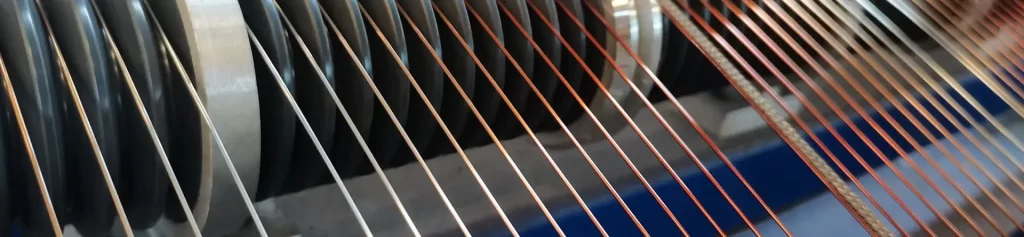
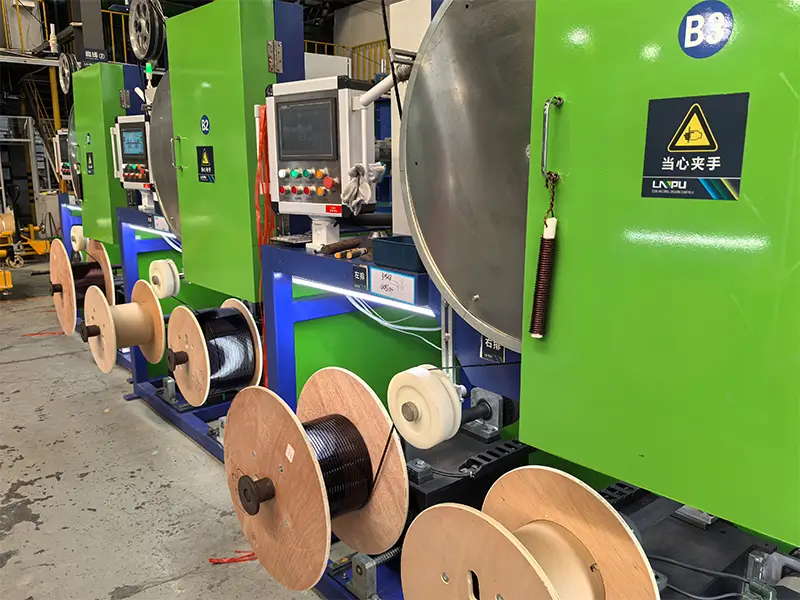
Precision enamel coating process is the core manufacturing process for acid and alkali resistant enameled copper wire. Coating methods include die coating (most commonly used), felt coating, and roll coating. Coating process parameters include enamel liquid viscosity 100 to 400 cP (25 degree C), coating passes 5 to 12 passes, curing temperature 160 to 350 degree C stepped curing, curing time 5 to 30 s per pass, and line speed 5 to 50 m per minute. Multilayer composite enamel film process: base coat coating, curing, middle coat coating, curing, top coat coating, curing, each layer independent temperature control. Key control points include enamel liquid temperature plus or minus 1 degree C, enamel liquid viscosity plus or minus 5 cP, curing temperature plus or minus 5 degree C, and line speed plus or minus 2 percent. Typical process parameters include: PAI enamel film 180 to 200 degree C curing x 10 to 20 s per pass x 6 to 8 passes; PI enamel film 250 to 350 degree C curing x 15 to 30 s per pass x 8 to 12 passes. End sealing processes include epoxy potting (EP potting) with two-component epoxy resin at 60 to 80 degree C x 4 to 8 h with sealing thickness 5 to 10 mm, silicone potting (silicone potting) with RTV silicone at 25 to 100 degree C x 24 h, and hot melt potting (hot melt potting) with PA/PET hot melt adhesive melted at 150 to 180 degree C. Welding processes include laser welding (precision plus or minus 0.05 mm), ultrasonic welding, tin welding, and magnetic pulse welding. After welding the end requires epoxy or silicone secondary sealing. Welding quality verification includes tensile test greater than or equal to 50 N per square mm, contact resistance less than 0.1 milliohm, and sealing test IP67 and above.
Quality control and accelerated aging test are the reliability assurance for acid and alkali resistant enameled copper wire. Routine quality inspection includes conductor dimension (diameter tolerance plus or minus 0.005 to 0.030 mm), roundness (less than or equal to 0.001 x d), enamel film thickness (tolerance plus or minus 0.005 to 0.015 mm), enamel film continuity (pinhole test greater than or equal to 5000 V 30 m no breakdown), breakdown voltage (Grade 1 greater than or equal to 3000 V / Grade 2 greater than or equal to 5000 V / Grade 3 greater than or equal to 8000 V), PDIV (greater than or equal to 2 times rated), and insulation resistance (greater than or equal to 1000 megohm km dry). Accelerated aging tests include acid alkali resistance test (ISO 2812 immersion 10 to 30 percent H2SO4 plus 10 to 50 percent NaOH x 1000 to 5000 h), salt spray test (IEC 60068-2-52 / ASTM B117 1000 to 5000 h), damp heat test (IEC 60068-2-78 40 degree C x 90 percent RH x 1000 to 5000 h), accelerated thermal aging (200 degree C x 1000 to 5000 h), and chemical mechanical coupled aging (500 to 1000 h).
VI. Future Trends and Emerging Technologies for Acid Alkali Resistant Enameled Copper Wire
6.1 Ultra-Strong Chemical Stability Enamel Film and Intelligent Self-Healing Technology
Next generation ultra-strong chemical stability enamel film technology development directions include: (1) Perfluoropolyether (PFPE) enamel film: chemical inertness close to PTFE, can use traditional coating process, acid and alkali resistance greater than or equal to 10000 h without failure; (2) Ceramic-polymer composite enamel film: Al2O3, SiO2, ZrO2 nano particle filling improves enamel film hardness and chemical inertness, enamel film hardness 5 to 8 H (pencil hardness), acid and alkali resistance greater than or equal to 10000 h; (3) Graphene composite enamel film: graphene two-dimensional lamellar structure blocks molecular permeation, H2O permeation rate less than 1 g per square meter per 24 h, acid and alkali resistance greater than or equal to 10000 h. Intelligent self-healing enamel film technology includes: microencapsulated corrosion inhibitors (benzotriazole, 8-hydroxyquinoline) embedded in enamel film, releasing corrosion inhibitor at damage points to form protective film when damaged; pH responsive self-healing enamel film (based on pH sensitive polymer) automatically heals upon acid and alkali contact; conductive polymer PANI/PPy automatically oxidizes and reduces to protect copper conductor during electrochemical corrosion.
6.2 Green Environmental Protection Enamel Film and Extreme Environment Adaptability Technology
Green environmental protection enamel film technology includes: water-based enamel film system replacing solvent-based enamel film, VOC emission less than 50 g per L, complying with EU REACH and US EPA standards; ultraviolet curing (UV) enamel film: curing time less than 5 s, energy consumption reduced 80 percent, VOC emission less than 20 g per L; electron beam (EB) curing enamel film: curing temperature less than 100 degree C, suitable for heat sensitive conductors, VOC close to 0. Extreme environment adaptability enamel film includes: deep sea 10000 m isostatic pressure (100 MPa) enamel film requires compression deformation resistance; polar -60 degree C low temperature enamel film requires low temperature flexibility (enamel film Tg less than -70 degree C); desert +80 degree C diurnal temperature difference enamel film requires plus or minus 80 degree C temperature cycle without cracking; space vacuum plus strong radiation enamel film requires atomic oxygen resistance, ultraviolet radiation resistance, and vacuum outgassing resistance (TML less than 1 percent, CVCM less than 0.1 percent). Next generation acid and alkali resistant enameled copper wire will combine four major directions: ultra-high chemical stability, intelligent self-healing, green environmental protection, and extreme environment adaptability.
Conclusion
Acid and alkali resistant enameled copper wire is the core foundational material for harsh industrial environments (pH 1 to 14, 60 to 200 degree C, 90 to 100 percent RH, 1000 to 5000 h salt spray), covering six major scenarios including chemical electroplating, marine and shipboard, metallurgy high temperature, pharmaceutical and food processing, and pulp and paper water treatment. Mastering five design strategies including enamel material chemical stability (PEI, PAI, PI, PTFE, EP), multilayer composite enamel film, conductor protection, insulation composite, and protection grade can achieve 5 to 30 year long-term reliable operation, chemical media adaptation for the full pH 1 to 14 range, and salt spray resistance 1000 to 5000 h passing. Intelligent self-healing enamel film, ultra-strong chemical stability enamel film, green environmental protection enamel film, and extreme environment adaptability enamel film are the four future directions.
LP factory with 30 years enameled wire export experience, 60 mu modern production base, ISO 9001/14001/45001 triple-system certification, conductor diameter 0.018 to 5.000 mm full specification, Class 105 to 220 seven heat resistance grades, 8000 tons annual capacity, can provide global customers with full-scenario acid and alkali resistant enameled copper wire support spanning from chemical electroplating to marine metallurgy, and from pharmaceutical and food processing to pulp and paper water treatment, including Class 180/200 PAI enamel film, Class 220 PI enamel film, nickel plated/tin/silver plated copper wire, multilayer composite seal, ATEX explosion proof certification, RoHS/REACH/UL certification, and IP65-68 protection grade. The core advantage of LP factory lies in: comprehensive support from chemical sample testing, accelerated aging test to batch supply and reliability verification, ensuring long-term reliability under harsh industrial environments.
**Contact Information**:
– Email: office@cnlpzz.com
– WhatsApp: 0086-19337889070