

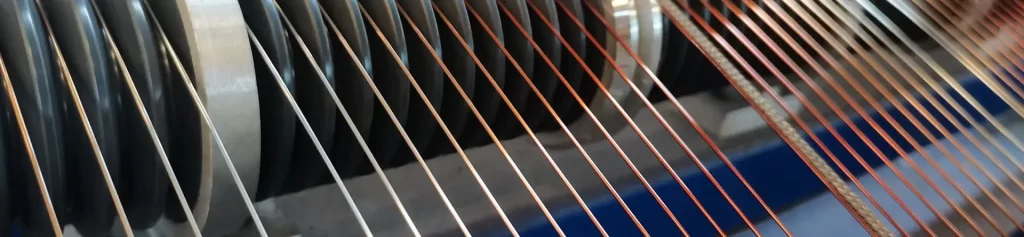
Wear-resistant enameled copper wire is a high-performance product specifically designed for winding processes in automated machinery.
Against the backdrop of modern manufacturing&39;s transformation towards automation and intelligence, automatic winding machines have become the mainstream equipment in motor production.
Automatic winding machines operate under high intensity, speed, and precision requirements, placing stringent demands on the mechanical properties of enameled copper wire.
Ordinary enameled copper wire is prone to wear, scratches, and even detachment of the enameled coating during automatic winding, which not only affects production efficiency but also leads to a decline in motor quality.
Wear-resistant enameled copper wire, through optimized insulating varnish formulation and process parameters, significantly improves the wear resistance of the enameled coating, maintaining insulation integrity under harsh mechanical stress conditions.

Technical Characteristics of Automated Winding Machines High-Speed Operation Characteristics Automated winding machines operate at speeds far exceeding those of traditional manual winding: Modern automated winding machines can reach linear speeds of 20 to 40 meters per second, generating intense friction on the wire.
During high-speed operation, the contact time between the wire and the guide rollers and mold is extremely short, but the friction frequency is extremely high.
Prolonged high-speed operation can cause the enamel coating of ordinary wire to heat up, soften, or even fail.
High Tension Condition Characteristics Automated winding requires maintaining constant tension to ensure neat alignment: Excessive tension can cause conductor stretching deformation or enamel coating cracking.
Insufficient tension can lead to loose winding, affecting motor performance.
Automated winding machines require high precision in tension control, with tension fluctuations typically controlled within ±5%.
Frequent Start-Stop Characteristics Automated winding involves numerous sudden stop-start operations: The impact stress generated during start-stop can easily cause localized damage to the enamel coating.
Frequent tension changes place higher demands on the adhesion and elasticity of the enamel coating.
Long continuous operation times on automated production lines further enhance the durability requirements of the enameled wire.
Technical Characteristics of Abrasion-Resistant Enameled Copper Wire Excellent Abrasion Resistance Abrasion resistance is the core performance indicator of enameled copper wire: A modified insulating varnish formula is used to improve the hardness and toughness of the enamel coating.
The curing process is optimized to create a dense and uniform structure in the enamel coating.
The bonding force between the enamel coating and the copper conductor is enhanced, reducing enamel coating loss due to friction.
Excellent Adhesion The adhesion between the enamel coating and the conductor directly affects abrasion resistance: The conductor surface undergoes special treatment to improve the bonding strength with the insulating varnish.
The enamel coating adhesion test must meet stringent standard requirements.
Good adhesion ensures that the enamel coating does not crack or peel off during long-term friction.
Excellent Elasticity Automatic Winding Requires Good Elasticity in the Enameled Wire: The enamel coating needs to withstand frequent bending and tensile stresses.
Insufficient elasticity can lead to fatigue cracking of the enamel coating.
Optimized enamel coatings have good resilience, reducing stress damage.
Good Thermal Stability The heat generated by friction requires good heat resistance in the enamel coating: The heat resistance temperature of the insulating varnish needs to be higher than the actual operating temperature.
A thermally stable enamel coating will not soften when heated by friction.
It should maintain excellent abrasion resistance even under long-term thermal stress.
Key Performance Indicators and Test Methods Abrasion Resistance Index The abrasion resistance index is a direct indicator of the abrasion resistance of the enameled wire: National standards specify test methods for the abrasion resistance of the enamel coating.
The test principle involves rubbing the enamel coating surface back and forth with a needle under certain pressure.
The number of rubs required for the enamel coating to be worn through is recorded; the higher the number of rubs, the better the abrasion resistance.
Adhesion Rating Adhesion rating indicates the bonding strength between the enamel coating and the conductor: assessed through tensile or thermal shock tests.
High-quality abrasion-resistant enameled copper wire requires a Class 1 adhesion rating.
Poor adhesion of the enamel coating can easily lead to detachment during automatic winding.
Softness Softness affects the winding performance of the enameled wire: Insufficient softness can cause the enamel coating to crack during winding.
Softness is assessed through repeated bending tests.
Automatic winding machines typically require the enameled wire to achieve Class 1 softness.
Surface Quality The surface quality of the enamel coating affects frictional resistance: The surface should be smooth and flat, free of particles, bubbles, and impurities.
A rough surface will increase friction with the guide rollers.
High-quality products have a lower surface roughness Ra value, typically below micrometers. —
Typical Applications in the Field of Automated Machinery Automatic Winding Machines Automatic winding machines are the primary users of abrasion-resistant enameled copper wire: High line speed and high output are typical characteristics of automatic winding machines.
The requirements for wear resistance, flexibility, and surface quality of enameled wire are stringent.
Using high-quality wear-resistant enameled copper wire can significantly improve production efficiency and yield.
CNC Winding Machines CNC winding machines represent the direction of high-precision automated winding: Complex winding patterns are achieved through program control.
Higher requirements are placed on the dimensional accuracy and performance consistency of enameled wire.
CNC winding machines have high maintenance costs; wear-resistant enameled wire can extend the mold&39;s lifespan.
Automatic Insertion Machines Automatic insertion machines are used for the automated production of motor stator windings: During the insertion process, enameled wire needs to pass through narrow slots.
Higher requirements are placed on the wear resistance and flexibility of enameled wire.
During the insertion process, enameled wire experiences severe friction with the iron core slots.
Automatic Binding Machines Automatic binding machines are used for binding the ends of motor windings: During the binding process, enameled wire is subjected to both tension and friction.
High requirements are placed on the tensile strength and wear resistance of enameled wire.
Abrasion-resistant enameled wire reduces wire breakage and enamel coating damage during the binding process.
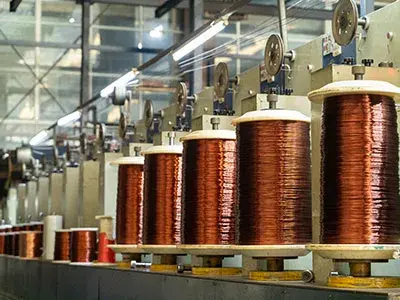
Selection Guide Selection Based on Winding Speed Winding speed is the primary parameter for selection: Low-speed winding machines can use ordinary abrasion-resistant products. Medium-speed winding machines are recommended to use high-grade abrasion-resistant products. High-speed and ultra-high-speed winding machines require ultra-abrasion-resistant products. Selection Based on Machine Type Different types of automatic machines have different requirements for enameled wire: Automatic winding machines prioritize abrasion resistance and flexibility. CNC winding machines require better dimensional accuracy and consistency. Insertion machines require higher flexibility and elasticity. Selection Based on Conductor Specifications Conductor cross-sectional area affects enameled wire selection: Thin conductors require thinner enamel coatings to ensure flexibility. Thicker conductors require thicker enamel coatings to provide sufficient mechanical protection. The combination of conductor and enamel coating requires a comprehensive balance of various performance characteristics. Cost-Based Selection: Optimize costs while meeting performance requirements: Ordinary wear-resistant products are moderately priced and offer high cost-effectiveness. High-grade and super-high-grade products are more expensive but have a longer lifespan. Consider overall usage costs, including wire breakage rate and die wear. — Chapter Six: Usage Precautions Machine Parameter Settings: Reasonable machine parameter settings are a prerequisite for fully utilizing the performance of the enameled wire: Tension settings should be determined according to the conductor specifications and enamel coating grade. Excessive tension will damage the enamel coating, while insufficient tension will affect winding quality. Regularly calibrate the tension control system to ensure stable tension. Guide Roller and Die Maintenance: The maintenance condition of the guide rollers and dies directly affects the lifespan of the enameled wire: Worn guide rollers will produce burrs that scratch the enamel coating. Keep the guide roller surface clean and regularly check for wear. The dimensional accuracy and surface quality of the die must meet requirements. Storage and Pre-treatment: Proper storage and pre-treatment can extend the lifespan of the enameled wire: The storage environment should be dry and clean, avoiding moisture and contamination. enameled wire should be protected from compression and bending deformation. Proper preheating is necessary before use in winter to reduce brittle fracture. — Chapter Seven: Technological Development Trends Ultra-Abrasion-Resistant Materials Ultra-abrasion-resistant materials are an important development direction for enameled wire technology: New high-performance insulating varnishes are constantly being developed, continuously improving abrasion resistance. Nano-modification technology provides new possibilities for ultra-abrasion-resistant {enamel coatings}. The application of composite materials brings enamel coating performance to new heights. Intelligent Detection Online detection technology improves product quality stability: Real-time monitoring of enamel coating thickness and surface quality. Online detection and early warning of friction. Intelligent detection systems provide data support for enameled wire production. Environmental Protection Environmental protection requirements drive enameled wire materials towards a green direction: The application of water-based insulating varnishes reduces environmental pollution. Research on biodegradable materials has made progress. Green manufacturing has become an important issue for the enameled wire industry. —
ConclusionAbrasion-resistant enameled copper wire is an indispensable material in the field of automated machinery.
Its excellent wear resistance, outstanding adhesion, good elasticity, and thermal stability enable it to maintain stable performance under high-speed, high-tension, and high-frequency operating conditions.
In automatic winding machines, CNC winding machines, automatic winding machines, and automatic binding machines, wear-resistant enameled copper wire provides strong support for efficient, stable, and reliable production.
When selecting a model, factors such as winding speed, machine type, conductor specifications, and cost should be considered comprehensively to choose the most suitable product.
With the continuous advancement of automated machine technology, the performance requirements for wear-resistant enameled copper wire will continue to increase, driving the research and innovation of related technologies.