


Fiberglass‑covered wire, as a critical insulating base material for high‑end electrical equipment, has a packaging system that directly affects the product’s integrity, traceability, and electrical reliability throughout its entire lifecycle—from factory shipment to final assembly. Its insulation structure consists of alkali‑free electrical‑grade glass fiber yarn combined with an insulating varnish, making it highly sensitive to environmental factors such as mechanical damage, moisture ingress, ultraviolet radiation, oil contamination, and rapid temperature fluctuations. Consequently, packaging standards in the quality management system for fiberglass‑covered wire are accorded the same importance as manufacturing processes themselves. From an industry‑ecosystem perspective, the packaging standard system for fiberglass‑covered wire is a subset of the commercial magnet wire packaging framework, subject to the coordinated constraints of multiple authoritative standards issued by the International Electrotechnical Commission (IEC), the National Electrical Manufacturers Association (NEMA), the American Society for Testing and Materials (ASTM), the International Organization for Standardization (ISO), and China’s national standards (GB/T). This framework spans numerous dimensions, including reel specifications, protection levels, identification systems, transport testing, and acceptance procedures. This guide systematically reviews the comprehensive standard framework for packaging fiberglass‑covered wire, providing procurement professionals, quality engineers, logistics managers, and exporters with an authoritative compliance reference.
Core Values and Standardization Framework for Fiberglass‑Wound Wire Packaging
The core value of fiberglass‑wound wire packaging is structured around four dimensions. The first dimension is physical protection: although the fiberglass yarn benefits from the curing of its insulating varnish during winding, its surface still harbors microscopic pores and mechanical weak points; the primary role of packaging is to prevent scratches, dents, and vibration‑induced damage during transportation and stacking. The second dimension is environmental isolation: fiberglass‑wound wire is highly sensitive to moisture, oil contamination, and ultraviolet radiation. In humid conditions, the copper conductor undergoes oxidation (Cu₂O → CuO → Cu₂(OH)₂CO₃—verdigris), and the varnish film degrades through photooxidation under UV‑A irradiation, necessitating effective isolation via packaging. The third dimension is traceability management: each reel of fiberglass‑wound wire should bear a unique identifier linking it to raw material batches, manufacturing processes, test data, and customer information, enabling end‑to‑end traceability from raw materials to the end user. The fourth dimension is handling efficiency: standardized spool dimensions, package weights, and stacking methods can significantly enhance warehousing and loading/unloading productivity while reducing logistics costs. Based on these four dimensions, the packaging standardization system should focus on eight key modules: spool and bobbin specifications, winding tension and strand arrangement, moisture‑ and dust‑proof protection, labeling and marking systems, stacking and securing methods, transport testing protocols, export and maritime shipping requirements, and acceptance and rejection procedures. These eight modules constitute a comprehensive decision‑making framework, covering the entire process from factory release to customer unloading. From a full‑chain perspective, the uniformity of packaging standards serves as a foundational guarantee for the electromagnetic wire industry’s global supply chain. Whether addressing the stringent quality traceability demands of high‑end markets in Europe and North America or the cost‑control imperatives of emerging markets in Asia and the Pacific, standardized packaging systems are essential to bridging the technical gaps across regions and application scenarios. Moreover, the synergy between packaging and manufacturing standards is equally critical; for example, NEMA MW 41‑C not only specifies performance criteria for fiberglass‑wound wire—such as dielectric strength, elongation, and thermal life—but also outlines requirements for packaging spools and protective measures, thereby integrating the product and its packaging into a unified quality assurance system. In supplier evaluation frameworks, the ability to implement packaging standards is a key metric, reflecting a supplier’s attention to detail and the maturity of its quality management system.
Reel and Drum Specifications (IEC 60264 + NEMA MW 1000 + GB/T 7672)
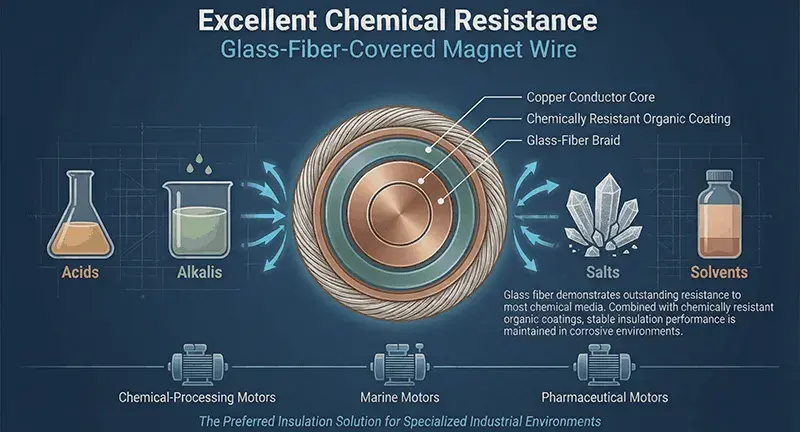
The reel (reel/spool/drum) is the core packaging carrier for fiberglass‑insulated wire, and the standardization of its specifications directly determines the compatibility of handling equipment, storage racking, and transport containers. The internationally recognized reel standards are derived from the IEC 60264 series, which specifies dimensional series, materials, strength requirements, and marking rules for reels used in winding‑wire packaging, covering both the European metric and American inch‑based systems. The MW 41‑C section of NEMA MW 1000‑2018 provides clear specifications for reels used with round copper wire insulated with glass fiber, corresponding to the international standard IEC 60317‑48 and establishing a mutually recognized framework among China, the United States, and Europe. The Chinese national standard GB/T 7672 series (GB/T 7672.3 for round copper wire, GB/T 7672.4 for flat copper wire) sets out explicit requirements for glass‑fiber‑insulated wire, in coordination with the IEC 60264 reel standard. Key procurement factors encompass five dimensions: First, reel materials should be high‑strength plywood, fiberboard, or steel construction; selection depends on product weight and shipping distance, with steel reels preferred for heavier single reels to ensure structural integrity. Second, reel diameter series must comply with IEC 60264 and NEMA standards, with common sizes including small reels (diameter 250–400 mm, suitable for samples and small‑volume orders), medium reels (diameter 500–800 mm, for regular batch orders), and large reels (diameter 1,000 mm and above, for high‑volume orders and heavy windings). Third, the bobbin width should match the outer diameter of the fiberglass‑insulated wire, allowing adequate clearance to prevent damage to the fiberglass layer during winding. Fourth, the flange strength of the reel must meet stacking requirements; plywood reels typically feature grading based on the number of glued layers and thickness. Fifth, the central bore diameter of the reel should be compatible with mainstream handling equipment (such as forklifts, cranes, and reel racks), with common sizes of 80 mm, 110 mm, and 150 mm. In practice, procurement teams are advised to establish a “reel specification library,” pre‑defining parameters by product type and shipping distance to avoid last‑minute changes that could reduce handling efficiency.
Winding Tension and Lay Specifications
Winding tension and lay are critical process parameters in the packaging of fiberglass‑wrapped wire, directly affecting the product’s electrical performance, mechanical integrity, and appearance quality. Excessive tension can cause the fiberglass yarn to stretch and deform, the varnish coating to crack, and the conductor’s elongation to exceed specifications; too little tension, on the other hand, results in a loose spool, leading during transport to shifting, misalignment, and localized compression marks. Key process requirements cover five aspects: First, winding tension should be set according to conductor size—AWG for round wire or cross‑sectional area for flat wire—and the number of fiberglass layers. Typically, the tension range for round wire is inversely proportional to the conductor diameter, while for flat wire it must ensure uniform distribution across the width. Second, the lay should be neat and tight, with no significant gaps or overlaps between adjacent turns to avoid localized stress concentrations. Third, after each layer is wound, appropriate securing methods—such as ropes, tapes, or clips—should be employed to prevent loosening and movement during transport. Fourth, the spool end faces must be flat, and the fiberglass‑wrapped wire should not extend excessively beyond the flange edge, usually leaving a reasonable clearance to facilitate handling and protection. Fifth, the outer periphery of the spool should be fitted with protective layers—PE film, EPE pearl cotton, or corrugated cardboard—to prevent direct impacts during loading and unloading. In production practice, suppliers are advised to implement an online winding‑tension monitoring system that records the tension profile for each spool, attaching it to the outgoing inspection report to provide customers with a basis for quality traceability. From a quality‑economics perspective, quality issues arising from improper tension control are often not detected until the final assembly stage, at which point rework costs—including disassembly, rewinding, and re‑insulation—can amount to several times or even dozens of times the original manufacturing cost, far exceeding the preventive costs incurred during the packaging phase. Suppliers are encouraged to establish a tension‑profile database and use SPC (statistical process control) to continuously monitor tension fluctuations, promptly identifying potential risk factors such as equipment wear and tensioner drift. During customer acceptance, some high‑end clients—such as nuclear power, rail transit, and medical equipment manufacturers—require suppliers to provide the tension‑profile record for each spool as one of the mandatory documents for incoming‑material inspection.
Moisture‑Proof, Dust‑Proof, Oil‑Resistant, and UV‑Protective Packaging
The sensitivity of fiberglass‑wrapped wire to environmental factors dictates a multi‑layered design approach for its packaging protection system. Copper conductors experience accelerated oxidation when relative humidity exceeds a specific threshold; the varnish coating undergoes photooxidative degradation under UV‑A irradiation; and oil contamination degrades the insulating performance and surface quality of the fiberglass yarn. Therefore, packaging protection must be systematically engineered to address these environmental challenges. Key protective requirements span six dimensions: First, moisture‑proof packaging should employ aluminum foil composite bags (AL/PE laminates, with aluminum foil thickness typically 7–15 μm), heat‑shrink film, or PE film, in conjunction with desiccants (silica gel, commonly supplied as 100 g per tray), to maintain an appropriate level of internal relative humidity. Second, dust‑proof packaging must be applied immediately after winding—using PE film or heat‑shrink film—to prevent contamination of the fiberglass surface by dust, oil, and fiber debris. Third, UV‑resistant packaging, intended for long‑term outdoor or semi‑outdoor storage, should utilize black PE film or composite films incorporating UV absorbers, with a UV‑A (315–400 nm) transmittance of less than 1%. Fourth, oil‑resistant packaging, designed for maritime container transport (exposed to diesel exhaust fumes and oil contamination) or industrial environments (vapors from machine oils and cutting fluids), should incorporate an aluminum foil composite layer to create an effective oil barrier. Fifth, protection against rapid temperature changes, crucial for air and sea transport across climatic zones, requires cushioning materials (EPE pearl cotton, bubble wrap) to minimize condensation. Sixth, sealing integrity must be verified through leak‑proofness checks following drop tests, vibration tests, and temperature–humidity cycling tests. Typical packaging protection systems are categorized into three tiers: Basic (PE film + moisture‑proof bag); Standard (PE film + aluminum foil bag + desiccant); and Premium (PE film + aluminum foil bag + desiccant + cushioning materials + UV barrier). These tiers correspond to different application scenarios and transportation distances. From a life‑cycle cost perspective, the choice of packaging protection should balance packaging costs with transportation‑related loss costs. For short‑haul land transport (distance ≤ 1,000 km, duration ≤ 3 days), basic‑tier packaging generally suffices; however, for long‑haul sea transport (distance > 5,000 km, duration ≥ 30 days) or destinations characterized by high temperature and high humidity, premium‑tier packaging is recommended to prevent failures such as copper verdigris and varnish degradation. A typical failure case involved fiberglass‑wrapped wire exported to Southeast Asia, packaged in basic‑tier PE film. Upon unpacking at the port of arrival, approximately 18% of the product exhibited verdigris corrosion, necessitating costly rework and substantial economic losses. This case underscores the critical importance of aligning packaging protection levels with specific transport conditions. The aluminum foil layer thickness, composite structure, and barrier performance of aluminum foil composite films must comply with ASTM F1249 (water vapor transmission rate testing) and ASTM D3985 (oxygen transmission rate testing); procurement technical specifications should explicitly define these key parameters.
Identification and Marking System
The identification and marking system is the key medium for achieving traceability in fiberglass‑wrapped wire packaging, and it must simultaneously meet the requirements of human readability, machine scanning, as well as customs and commodity inspection. The identification content should encompass four major categories: product information, production information, customer information, and compliance information. The key identification requirements cover six dimensions: First, product identification shall include the product name, specification (AWG for round wire or cross‑sectional area for flat wire), conductor material (copper/aluminum), insulation class (Class 130/155/180/200/220), number of fiberglass layers (single/double), varnish film type, net weight, gross weight, date of manufacture, and expiration date. Second, production identification shall include the manufacturer’s name, production batch number, production line number, quality inspector code, and optional QR codes or RFID tags. Third, customer identification shall include the customer order number, customer part number, and customer reel number (optional). Fourth, compliance identification shall include standard numbers (such as IEC 60317‑48, NEMA MW 41‑C, GB/T 7672), certification marks (UL, CE, CQC, RoHS, REACH compliance statements), and hazardous materials markings (where applicable; fiberglass‑wrapped wire is generally not classified as a hazardous material). Fifth, shipping markings shall comply with the ISO 780 and GB/T 191 requirements for packaging and transport pictograms, featuring symbols such as “This Side Up,” “Keep Dry,” “Protect from Rain,” “Fragile,” and “Maximum Stacking Height.” Sixth, the identification carrier must be resistant to abrasion, oil contamination, and fluctuations in temperature and humidity; thermal transfer or laser‑etched markings are superior to conventional ink printing. In export scenarios, markings and labels must also conform to the regulations of the destination country (e.g., U.S. FDA, EU CE, Japan PSE) to avoid clearance delays caused by non‑compliant labeling. In digital traceability applications, the use of QR codes and RFID tags is becoming increasingly widespread: QR codes (QR Code, Data Matrix) are suitable for low‑cost, visual traceability, while RFID tags (UHF, HF RFID) are ideal for batch reading, automated warehouse management (WMS), and IoT integration. High‑end customers (such as manufacturers of new energy vehicle drive motors and rail transit traction transformers) typically require suppliers to assign a unique digital identifier to each reel of fiberglass‑wrapped wire, linking it to the production batch, raw material lot, test data, and customer order number, thereby enabling end‑to‑end traceability from raw materials to the end user. The digital upgrade of the identification system is not only a technological advancement but also an inevitable trend in supply chain collaboration, allowing purchasers, suppliers, logistics providers, customs authorities, and testing institutions to share product information in real time, significantly enhancing supply chain transparency and operational efficiency. In the field of export compliance, some destination countries have already begun requiring electronic labels (e‑Labels) or blockchain‑based traceability; procurement technical agreements should therefore allow for future upgrades.
Stacking and Securing Methods
Stacking and securing are critical technical issues in the packaging and transportation of fiberglass‑wrapped wire, directly affecting the structural integrity of the product during multilayer stacking and ensuring safe handling and loading/unloading. Fiberglass‑wrapped wire reels are heavy cylindrical components; improper stacking can easily lead to reel deformation, damage to the fiberglass insulation, cracking of the enamel coating, and other quality problems. Key stacking requirements encompass five dimensions: First, the number of stacking layers must be strictly limited based on the reel material and weight—plywood reels are typically restricted to a lower stack height, while steel reels can be stacked higher; the procurement technical agreement should clearly specify the maximum number of layers and the allowable stacking load. Second, the stacking pattern should alternate in a “well” or “H” configuration to prevent direct alignment between upper and lower reels, which could concentrate cumulative stress. Third, buffer materials (corrugated cardboard, EPE foam) should be placed between layers to distribute the load and prevent direct contact between reels. Fourth, securing methods should combine multiple measures, including strapping with steel or PET straps, wrapping with stretch or shrink film, and corner protectors made of paper or plastic, to ensure stability during transport. Fifth, palletized shipping must comply with ISO 6780 and GB/T 2934 standards; wooden, plastic, and steel pallets each have their own applicable scenarios, with steel or heavy‑duty wooden pallets preferred for heavy reels. Containerization is the mainstream mode for exporting fiberglass‑wrapped wire: a standard 20‑foot general purpose container (20’GP) can typically hold 30–50 medium‑ and small‑size reels, while a 40‑foot high cube container (40’HC) can accommodate 60–100 reels, with the exact quantity depending on reel dimensions, individual weight, stacking height, and packing density. Before stowing, a “fit‑for‑service inspection” must be conducted to verify that the container interior is clean, free of sharp objects, oil, odors, and pests, and that the door seals are intact. The stowage process should follow the principles of “heavier items below, lighter ones above,” “symmetrical loading,” and “providing ventilation gaps” to avoid unilateral overloading that could cause tilting or shifting during transit. In maritime shipping, stacking and securing must also account for the container’s rocking motion; non‑slip mats and securing brackets should be added as needed.
Transportation Testing Methods (ISTA + ASTM + GB/T)
Transportation testing is a critical means of verifying the effectiveness of fiberglass‑wound wire packaging and protective systems. Internationally, the ISTA (International Safe Transit Association) series of test procedures are widely adopted; in China, these correspond to the GB/T 4857 series of packaging and transportation standards, while in the United States they align with the ASTM D4169 standard for transport packaging testing. Key transportation tests fall into six major categories: First, vibration testing simulates the vibrations experienced by transport vehicles (trucks, trains, ships, and aircraft) under various road conditions and operating scenarios. A vibration shaker is used to conduct three‑axis X/Y/Z tests according to a prescribed power spectral density (PSD), followed by inspections of package integrity, product appearance, and insulation performance. Second, impact testing replicates drops, collisions, and abrupt braking during loading, unloading, and handling. This is performed using drop testers or impact benches, with post‑test evaluations of packaging and product damage. Third, stacking testing mimics the multilayer stacking loads encountered during warehousing and transit. Stacking machines or hydraulic loading devices are employed, and the tests assess spool deformation and fiberglass integrity. Fourth, tilt‑impact testing simulates the tilting forces experienced during truck turns or ship rolling, with post‑test checks for product displacement and package integrity. Fifth, temperature–humidity cycling replicates the temperature and humidity variations encountered when transporting goods across different climate zones, assessing the effectiveness of moisture‑proof packaging, copper conductor oxidation, and varnish film integrity. Sixth, low‑pressure testing simulates the low‑pressure environments of air freight or high‑altitude transport, validating the integrity of sealed packaging. Test levels should be determined comprehensively based on transportation distance, mode, and product value; for example, conventional land transport may use ISTA 3A, sea transport ISTA 3E, and air transport should include low‑pressure testing. The frequency and representativeness of testing are equally important. Suppliers are advised to establish a three‑tier testing system: “initial batch testing + periodic testing + complaint‑related retesting.” Initial batch testing involves full‑spectrum assessments (ISTA 3A/3E/3K) prior to the launch of new products, new packaging, or new shipping routes. Periodic testing is conducted quarterly or semiannually via random sampling to verify the consistency of packaging processes. Complaint‑related retesting is initiated immediately following reports of transport‑induced damage, enabling root‑cause identification and the implementation of corrective measures. Test reports from third‑party testing organizations (such as SGS, TÜV, BV, and Intertek) carry greater credibility among premium customers. It is recommended to conduct at least one to two third‑party witnessed tests annually to bolster customer confidence in packaging protection capabilities.
Special Requirements for Export and Sea Freight
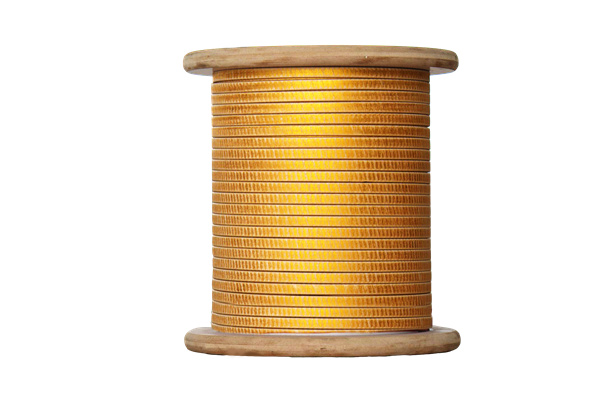
Export and sea transport represent high-risk scenarios for fiberglass‑wound‑wire packaging, involving long‑haul shipping, passage across climatic zones, multimodal logistics, and customs and commodity inspection—complex factors that impose particularly stringent packaging requirements. Key export and maritime stipulations span seven dimensions: First, fumigation and quarantine: wooden packaging destined for the United States, Canada, Australia, New Zealand, and other countries must comply with ISPM 15 standards of the International Plant Protection Convention, employing either heat treatment (HT) or methyl bromide fumigation (MB) and bearing the IPPC mark; non‑fumigated plywood, fiberboard, or composite‑material reels are recommended as a priority. Second, moisture protection: to address “container rain” within maritime containers—where relative humidity can exceed 95%—aluminum‑foil‑laminated bags should be used in conjunction with desiccants (recommended dosage: 100–200 g per reel), with vacuum or nitrogen‑flushed packaging (oxygen content below 2%) employed when necessary. Third, salt‑spray resistance: for oceanic voyages subject to corrosive sea‑air salt spray, outer packaging should incorporate salt‑resistant stretch film or PE film. Fourth, thermal shock mitigation: given trans‑climatic shipments (from cold to tropical regions), outer packaging must provide adequate thermal buffering space. Fifth, maritime shipping marks must conform to the destination port’s customs regulations, including HS codes, certificates of origin, quality certificates, and test reports. Sixth, container stowage should follow a well‑pattern stacking arrangement, supplemented by anti‑slip mats and lashing straps; internal container securing brackets may be deployed as needed. Seventh, export documentation must comprise a commercial invoice, packing list, certificate of origin, quality certificate, test report, MSDS (if applicable), and cargo insurance policy. In export operations, the procurement team and suppliers are advised to establish an “Export Packaging Checklist” to verify, item by item, the specific requirements of each destination country.
Acceptance, Rejection, and Quality Assurance
Acceptance is a critical component of quality control for fiberglass‑wrapped wire packaging and should be conducted prior to warehousing, encompassing four major categories of inspection: appearance, labeling, protective measures, and accompanying documentation. Key acceptance requirements span six dimensions: First, appearance inspection covers the integrity of the spool structure, the integrity of the protective film, end‑face flatness, and the presence of stacking marks; second, labeling inspection includes label legibility, information completeness, scannability of QR codes/RFID tags, and the clarity of compliance markings; third, protective‑measure inspection verifies the seal integrity of moisture‑proof bags (confirmable via sealing tests), the condition of desiccants (ensuring they have not reached saturation), and the integrity of cushioning materials; fourth, weight verification entails checking net weight, gross weight, and spool tare weight to ensure consistency with the order; fifth, accompanying‑document inspection includes quality certificates, test reports, RoHS/REACH compliance reports, and, for sea transport, fumigation certificates and IPPC markings; sixth, random unpacking inspections are performed according to AQL (Acceptable Quality Level) sampling standards, with key parameters such as inter‑layer bond strength, dielectric breakdown voltage, and insulation resistance subject to sampled verification. Rejection criteria should include spool damage, severe fiberglass degradation, missing labels, compromised moisture protection, and expiration beyond the specified shelf life. Quality assurance requires establishing a supplier performance evaluation system, incorporating metrics such as on‑time delivery rate, PPM defect rate, customer complaint rate, and annual return rate, along with regular unannounced supplier audits and annual reviews. In high‑end applications—nuclear power, medical devices, aerospace—acceptance should further include third‑party witnessed testing and document traceability checks, ensuring that each spool can be traced back to its raw material batch and process parameters. Amid the trend toward digital procurement, some customers have implemented SRM (Supplier Relationship Management) systems, requiring suppliers to upload product data, test reports, quality certificates, and batch traceability information in real time, thereby enabling data interoperability between buyers and suppliers. This digital collaboration model not only enhances procurement transparency but also provides a data foundation for supplier performance assessment, quality improvement, and risk early warning. Looking ahead, fiberglass‑wrapped wire packaging standards will be deeply integrated with smart manufacturing and supply chain digitalization, as new technologies such as blockchain traceability, digital twins, and AI‑powered visual inspection gradually permeate all stages of packaging quality management, reshaping the supply chain ecosystem for high‑performance electromagnetic wires.