


Enameled copper wire is prone to oxidation and mechanical damage during storage and transportation. Oxidation typically manifests as patina (e.g., Cu₂(OH)₂CO₃, CuO, Cu₂O) on the copper conductor surface, resulting in reduced solderability and degradation of insulation resistance; mechanical damage compromises dielectric integrity through enamel coating indentations and cracking. Both failure modes are irreversible and must be prevented via controlled storage conditions.
This article systematically outlines best storage practices for enameled copper wire across three typical scenarios: warehousing, export transportation, and long-term inventory. Coverage includes the electrochemical mechanisms underlying oxidation and enamel aging; chemical stability of different enamel types; temperature, humidity (RH), and light exposure control; packaging technology pathways; shelf-life assessment; failure case analysis; and a comprehensive international and national standards framework—including IEC, NEMA, GB/T, JIS, ASTM, ISO, RoHS, REACH, ELV, UL, ANSI/NEMA, JIS C, and others.
Oxidation and Degradation Mechanisms of Enameled Copper Wire
Oxidation and degradation of enameled wire are not attributable to a single factor but result from the synergistic effects of temperature, humidity, light exposure, oxygen, and gaseous pollutants.
Copper Oxidation Process
In dry air, copper initially forms a dense, protective red cuprous oxide (Cu₂O) layer. This oxide layer remains protective under low-humidity conditions. In the presence of moisture, oxygen, and carbon dioxide, Cu₂O further oxidizes to black cupric oxide (CuO). When gaseous pollutants such as SO₂, H₂S, and Cl⁻ are present, the reaction rate increases markedly, ultimately yielding green or blue basic copper carbonate Cu₂(OH)₂CO₃—commonly known as verdigris.
The critical humidity is typically defined as 60% RH. Above this threshold, the oxidation rate increases exponentially; above 85% RH, visible blackening of the wire surface can be observed within weeks under standard ambient temperature conditions.
Chemical Aging of Enamel Coatings
Chemical aging mechanisms differ significantly among enamel types. Polyester enamel undergoes photo-oxidative degradation in the UV-A spectral range (315–400 nm), resulting in main-chain scission, embrittlement, and loss of gloss. Polyurethane enamel undergoes hydrolytic swelling at relative humidities exceeding 85% RH, causing a sharp decline in solderability. Polyimide enamel exhibits superior resistance to both UV radiation and hydrolysis; consequently, polyimide enameled wires rated Class 220 exhibit the longest shelf life.
Arrhenius Thermal Acceleration Effect
Thermal acceleration of chemical reactions follows the Arrhenius relationship: the rate constant increases exponentially with rising temperature. According to this model, a temperature increase of 10°C approximately doubles the reaction rate. This explains the experimentally observed significant acceleration of enameled wire oxidation during summer storage compared with winter conditions.
Mechanical Damage
Excessive stacking weight may cause indentation marks in the enamel coating of spools located at the bottom of a stack. Insufficient bending radius induces microcracking in the enamel. Impact damage during transportation or lifting operations may lead to localized enamel delamination. Once such physical damage occurs, the underlying copper conductor is directly exposed to environmental media, and oxidation initiates at the defect site and propagates radially outward.
Enamel Types and Chemical Stability
Significant differences exist among various enamel types in terms of tolerance to storage environments. Matching enamel selection with storage conditions is a critical factor in ensuring the long-term performance of enameled wire.
Polyester Enamel (Class F 155°C)
Polyester enamel is the most widely used enamel system in industrial applications. Its advantages include cost-effectiveness and excellent solderability. Its limitations lie in a thermal class of 155°C and relatively weak resistance to UV radiation and hydrolysis. The shelf life under unopened conditions is typically 3–5 years; after opening, it shortens to 6–12 months. Poor humidity control in storage may further reduce usable service life.
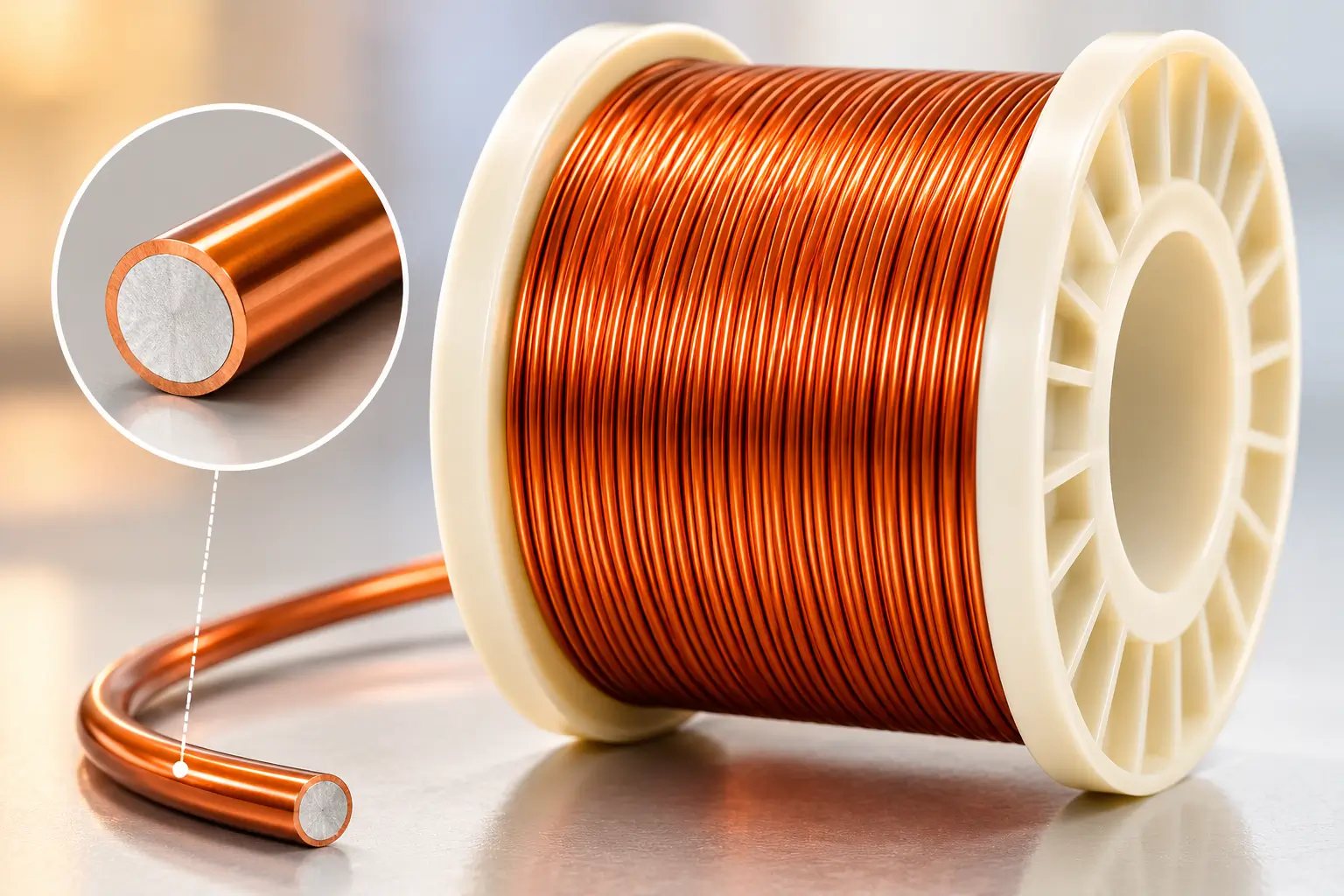
Polyurethane Enamel (Class F 155°C, Solderable)
Polyurethane enamel exhibits optimal solderability, enabling rapid soldering under standard tin bath conditions. However, among common enamel systems, it possesses the lowest resistance to hydrolysis. Exposure to humid air after opening significantly prolongs soldering time. The shelf life after opening is typically 3–6 months; prompt use following opening is recommended.
Polyesterimide Enamel (Class H 180°C)
Polyesterimide enamel achieves an elevated thermal class of 180°C and demonstrates superior chemical stability compared to polyester enamel. Its shelf life under unopened conditions is typically 4–6 years; after opening, it extends to 12–18 months. This enamel is the mainstream choice for industrial motors.
Polyamide-imide Enamel (Class H 180–200°C)
Polyamide-imide enamel is commonly applied as a topcoat over a polyesterimide basecoat, forming a composite coating system. It exhibits outstanding chemical stability and good resistance to acids, alkalis, cutting fluids, and fluorocarbons (e.g., Freon). Its shelf life under unopened conditions is typically 5–8 years; after opening, it ranges from 18–24 months. Typical application areas include traction motors for new-energy vehicles and air-conditioning compressors.
Polyimide Enamel (Class 220 / N 200°C)
Polyimide enamel offers the highest thermal class among common enamel systems. Its distinct melting point occurs near 400°C, and it exhibits exceptional resistance to ionizing radiation and chemicals. Its shelf life under unopened conditions is typically 6–10 years; after opening, it extends to 24–36 months. Primary application domains include aerospace, nuclear power, and rail transit systems.
Polyvinyl Acetal Enamel (Class 105–120°C)
Polyvinyl acetal enamel represents a conventional enamel system with the lowest relative cost. Its thermal class falls between 105°C and 120°C, and its mechanical hardness is comparatively low. Its shelf life under unopened conditions is typically 2–3 years. Current applications are predominantly found in household appliances and low-end transformers.
Self-bonding Enamel
Self-bonding magnet wire incorporates a thermally fusible self-adhesive layer—comprising epoxy, polyamide, or thermoplastic elastomer systems—over a conventional enamel base. Among common enamel systems, its shelf life after opening is the shortest, typically around 6 months, due to progressive curing and functional degradation of the adhesive layer over time.
Temperature and Humidity Environmental Control Standards
Temperature and humidity parameters are the core controlled variables for enameled wire storage environments.
Temperature Range
The recommended temperature range is 15 to 25°C. Constant-temperature conditions are superior to fluctuating temperatures, as thermal cycling induces a “breathing effect” within packaging, causing repeated condensation of moisture.
The permissible extreme temperature range is −10 to 40°C. Condensation must be strictly avoided. When transferring spools from low-temperature environments to ambient conditions, they must be held in an intermediate transition zone for no less than 24 hours to allow uniform temperature recovery of the spools to ambient temperature.
Relative Humidity Range
The recommended relative humidity (RH) range is 30 to 65% RH. This range represents the internationally accepted mild storage condition. RH exceeding 85% RH constitutes a red-alert threshold for accelerated oxidation.
Industrial dehumidification equipment must be deployed in tropical and subtropical humid regions—including South China, Southeast Asia, India, and similar areas—to maintain RH below 60% RH. Internal RH in maritime shipping containers may reach 95% RH; therefore, desiccants and moisture-barrier packaging must be used concurrently.
Dew Point Control
Dew point temperature is the critical temperature at which water vapor begins to condense. Storage temperature must remain at least 5°C above the dew point temperature. Otherwise, a condensate water film will form on the enameled wire surface—serving as the initial trigger for patina formation (e.g., Cu₂O, CuO, Cu₂(OH)₂CO₃) and enamel hydrolysis.
ESAB welding electrode storage specifications emphasize that storage conditions must remain stable to prevent moisture condensation. The saturation moisture content of warm air is significantly higher than that of cold air; thus, larger temperature differentials increase dew point risk.
Temperature and Humidity Monitoring System
Warehouses must be equipped with digital temperature and humidity data loggers, with sampling intervals not exceeding 30 minutes. Monitoring data shall be archived monthly and retained as technical evidence for quality traceability.
Light and Air Quality Control
Light exposure and gaseous pollutants are often overlooked yet highly influential factors in storage environments.
UV Protection
UV-A radiation (315–400 nm) induces photo-oxidative degradation of polyester and polyurethane coatings, resulting in embrittlement, loss of gloss, and blistering. Protective measures include employing cold-light LED illumination systems free of UV emission, installing UV-blocking amber or brown glass, and using black PE film or opaque corrugated cardboard for outer packaging.
Air Quality
Ambient air in industrial zones, coastal areas, and saline-alkali regions contains gaseous pollutants such as H₂S, SO₂, Cl⁻, and acidic or alkaline vapors. These substances act as catalysts for patina formation.
Warehouse siting must avoid locations downwind of prevailing winds from industrial zones, maintaining a minimum distance of 5 km. Coastal warehouses must be situated at least 1 km from the shoreline to mitigate salt fog corrosion carried by sea breezes. Warehouses adjacent to chemical industrial parks must disable mechanical ventilation systems and maintain a slight positive pressure environment. Air filtration systems may integrate activated carbon filter units and HEPA filters.
According to copper coin preservation research published by coinagerings.org, oxidation risk increases significantly when relative humidity exceeds 50%; SO₂ and chlorides in coastal and industrial environments constitute persistent gaseous corrosive agents.
Packaging Technology Tier Scheme
Packaging constitutes the final protective barrier for enameled wire storage. Different storage scenarios correspond to distinct packaging technology tiers.
Tier 1: Basic Packaging
Applicable to intra-factory handling and “buy-and-use-immediately” scenarios, with a maximum storage duration of 3 months. Packaging components include PE shrink film, five-layer corrugated cardboard boxes, and wood-plastic spools (standard weights: 30 / 50 / 100 / 150 kg). This tier does not incorporate desiccants or inert gas.
Tier 2: Moisture-Resistant Packaging
Applicable to distributor inventory and short-term export orders, with a storage duration of 3 to 12 months. Packaging components augment Tier 1 with an aluminum foil bag (aluminum foil thickness ≥ 0.02 mm; water vapor transmission rate compliant with moisture-resistance class requirements), silica gel desiccant (standard dosage: 100 g per 100 kg enameled wire), and humidity indicator cards. The interior of the cardboard box is lined with PE film, and the box is sealed using pressure-sensitive sealing tape.
Tier 3: Vacuum and Nitrogen-Flush Packaging
Applicable to long-term inventory for premium customers and strategic reserves, with a storage duration of 1 to 3 years. Packaging employs either vacuum sealing (vacuum level no lower than 50 mbar) or nitrogen purging (residual oxygen concentration < 2%). The bag material uses a three-layer PA/AL/PE co-extruded laminate structure, combined with silica gel desiccant and oxygen indicator cards; sealing is performed via vacuum heat-sealing.
Nitrogen molecules possess a larger kinetic diameter than oxygen molecules, enabling effective displacement of residual oxygen within the package and thereby retarding oxidation reactions. Vacuum sealing directly eliminates the gaseous-phase oxygen environment.
Tier 4: UV-Resistant and Mechanical-Impact-Resistant Packaging
Applicable to specialized scenarios including maritime container transport, tropical humid climates, and military aviation applications. Packaging components feature an outer layer of black PE film (UV blocking rate ≥ 99%), foam plastic end caps installed on both ends of each spool to absorb mechanical shock, and corrugated cardboard separators placed between adjacent spools. Container-specific desiccant rods are placed inside the shipping container.
Mechanical Damage Protection
Mechanical damage during storage is often underestimated; however, damage to the enamel coating can trigger localized oxidation reactions originating from the point of coating breach.
Minimum Bending Radius
The minimum bending radius for winding wire shall be no less than five times its diameter. Excessively small bending radii may induce microcracking in the enamel film—damage that is invisible to the naked eye but readily observable under microscopy.
Stacking Layers
Spools shall be stacked to a maximum of five layers. Exceeding this limit subjects bottom-layer spools to cumulative compressive stress, potentially causing enamel indentation and spool deformation. During stacking, the centers of upper- and lower-layer spools must be aligned to prevent eccentric loading.
End-Cap Cushioning
Foam plastic or corrugated cardboard end-caps shall be installed on both ends of each spool to prevent impact damage during lifting and transportation. When spools are placed horizontally, end-caps bear the full static load; when placed vertically, end-caps absorb lifting impact loads.
Isolation from Contamination Sources
Enameled wire must be stored separately from corrosive media such as cutting fluids, oils, and acidic or alkaline solutions. Contact with contaminants—including metal chips and welding fumes—must be avoided. Spools shall not be placed directly on the floor; instead, they shall be supported on shelving or pallets at a minimum elevation of 20 cm above ground level.
Shelf Life Reference
The shelf life of enameled wire depends on the type of enamel coating and its temperature class. The table below lists the typical shelf life for various enamel coatings under standard storage conditions:
| Enamel Coating Type | Temperature Class | Unopened Shelf Life | Opened Shelf Life |
|---|---|---|---|
| Polyester (PE) | Class F 155°C | 3–5 years | 6–12 months |
| Polyurethane (PU, solderable) | Class F 155°C | 2–3 years | 3–6 months |
| Polyesterimide (PEI) | Class H 180°C | 4–6 years | 12–18 months |
| Polyamide-imide (PAI) | Class H/N 180–200°C | 5–8 years | 18–24 months |
| Polyimide (PI) | Class 220°C | 6–10 years | 24–36 months |
| Polyvinyl formal (PVA) | Class 105/120°C | 2–3 years | 6–9 months |
| Self-bonding enamel | Class B/F | 1–2 years | 6 months |
The significantly reduced shelf life after opening arises from desiccant exhaustion, loss of inert gas atmosphere, and exposure to ambient temperature and humidity. Enameled wire should be used as soon as possible after opening; inventory stored for more than six months is recommended to undergo retesting of enamel coating performance.
Common Failure Cases and Handling
Verdigris and Blackening
The primary symptoms of verdigris and blackening are green, blue, or black patches appearing on the surface of copper conductors. Causes involve a combination of high humidity, prolonged storage, and compromised packaging integrity. As verdigris constitutes irreversible corrosion, affected batches must be scrapped entirely. Preventive measures include controlling warehouse humidity, using aluminum-foil moisture-barrier packaging, and ensuring full utilization within the specified shelf life.
Enamel Cracking
Enamel cracking manifests as fine cracks in the enamel coating during bending or winding—typically invisible to the naked eye but clearly discernible under microscopy. Causes arise from the synergistic effect of low-temperature dry environments and enamel aging. Affected batches are evaluated via insulation resistance testing; nonconforming batches must be scrapped. Preventive measures include maintaining ambient humidity within the recommended range and avoiding excessively dry conditions.
Enamel Whitening and Loss of Gloss
Enamel whitening and loss of gloss are characterized by a hazy, milky appearance and diminished surface luster. Causes result from the combined effects of UV-light-induced oxidation and ozone erosion. Although the appearance fails specification, electrical insulation performance may remain compliant. Batches passing insulation testing may be downgraded for less critical applications. Preventive measures include using black PE film for outer packaging and installing UV-blocking windows in storage facilities.
Moisture-Induced Swelling
Moisture-induced swelling is a characteristic failure mode of polyurethane (PU) enameled wire. Symptoms include softening and tackiness of the enamel coating after opening the package, along with significantly extended soldering time. Causes stem from hydrolysis of the PU enamel coating. This failure mode is irreversible and mandates scrapping of the entire batch. Preventive measures include immediate use after opening and maintaining post-opening storage humidity below 50% RH.
Mechanical Indentation
Mechanical indentation is evidenced by visible dents or impressions on the enamel surface, often accompanied by deformation of the spool. Causes include excessive stacking height or off-center loading. Insulation thickness at indented locations may fall below specification, posing a risk of dielectric breakdown during winding; such batches must be scrapped. Preventive measures include limiting stacking height, ensuring precise vertical alignment of spools, and installing end-cap buffers.
Chemical Contamination
Chemical contamination manifests as enamel swelling, blistering, or delamination. Causes include co-storage with cutting fluids, acidic or alkaline solutions, or oils and greases. Chemical contamination represents irreversible damage, requiring complete batch scrapping. Preventive measures include designating dedicated storage zones and strictly enforcing segregation protocols.
Sub-Enamel Copper Corrosion (Verdigris)
Sub-enamel copper corrosion (verdigris) is a rare yet severe failure mode. Symptoms include green spots on the enamel surface; upon scraping, underlying copper conductor corrosion is revealed. Causes involve the synergistic effect of extreme humidity, elevated SO₂ concentration, and excessively long storage duration. Since the conductor itself is corroded, the entire batch must be scrapped. Standard packaging offers no effective protection; only comprehensive mitigation—comprising vacuum or nitrogen-purged packaging, aluminum-foil bags, and desiccants—is adequate.
Testing Methods and Quality Control
Systematic quality inspections must be conducted before, during, and after storage; comprehensive inspection records constitute the technical foundation for quality traceability.
Visual Inspection
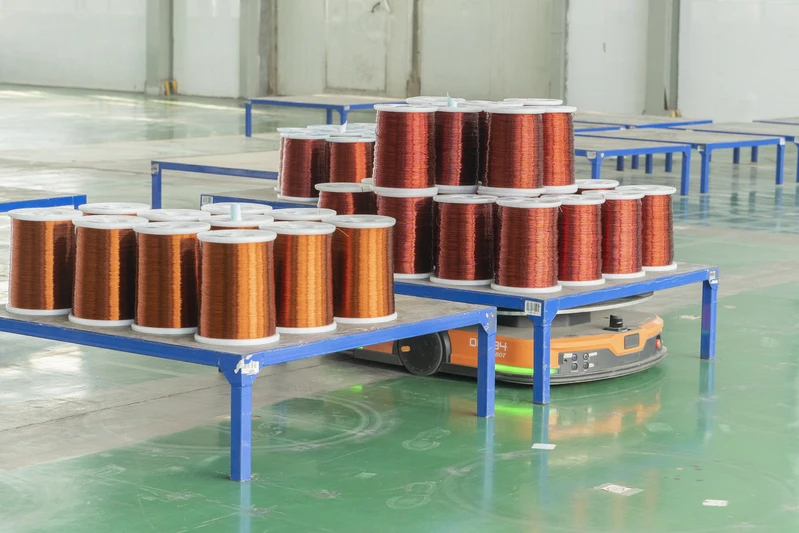
Visual inspection employs a 10× magnifier to examine enamel color, surface condition of the copper conductor, and bobbin integrity. The enamel coating shall exhibit uniform color and gloss, with no defects such as whitening, loss of gloss, or blistering. After enamel removal, the copper conductor shall appear bright and free from blackening or verdigris (Cu₂(OH)₂CO₃). Bobbins shall show no deformation or physical damage.
Moisture Regain Test
For the moisture regain test, specimens are conditioned at 40°C and 95% RH for 24 hours, followed by measurement of weight change. The acceptance criterion is a weight increase not exceeding 0.1%. Exceeding this threshold indicates hygroscopic swelling of the enamel coating, necessitating re-drying or scrapping.
Insulation Resistance Test
The insulation resistance test is performed under DC 100 V; the minimum acceptable insulation resistance is 100 MΩ·m. A value below this threshold indicates significant degradation of the enamel’s insulating performance.
Dielectric Withstand Voltage Test
The dielectric withstand voltage test is conducted in accordance with IEC 60851, GB/T 4074, or JIS C 3202, among other applicable standards. The enamel coating must withstand the specified test voltage without breakdown. For conventional enameled wires, the typical test voltage range is 1.5–6 kV.
Solderability Test
Solderability testing is a characteristic requirement for polyurethane (PU)-enameled wire. Specimens are immersed in a molten solder bath at 380°C; the maximum acceptable immersion time is 2 seconds. PU-enameled wire stored for more than six months after opening must undergo re-testing; batches exhibiting immersion times exceeding 5 seconds are recommended for rejection.
Thermal Shock Test
The thermal shock test subjects specimens to 175°C (Class F 155°C) or 200°C (Class H 180°C) for 30 minutes, followed by visual examination for enamel cracking or blistering.
Test Standard Cross-Reference
| Test Item | IEC Standard | NEMA Standard | GB Standard | JIS Standard |
|---|---|---|---|---|
| Dielectric Withstand Voltage | IEC 60851-5 | MW 1000 §4.7 | GB/T 4074.5 | JIS C 3202 §6.5 |
| Insulation Resistance | IEC 60851-5 | MW 1000 §4.6 | GB/T 4074.5 | JIS C 3202 §6.4 |
| Solderability | IEC 60851-4 Test 16 | MW 1000 §4.4 | GB/T 4074.4 | JIS C 3202 §6.7 |
| Thermal Shock | IEC 60851-6 Test 9 | MW 1000 §4.3 | GB/T 4074.6 | JIS C 3202 §6.10 |
| Softening Breakdown | IEC 60851-6 Test 9 | MW 1000 §4.3 | GB/T 4074.6 | JIS C 3202 §6.11 |
Complete Standard System
The international and national standards governing enameled wire storage, categorized by issuing organization, are as follows:
IEC – International Electrotechnical Commission
IEC 60317 series specifies the requirements for individual types of enameled round winding wires. IEC 60851 series specifies test methods for enameled wires, covering six parts: general requirements, dimensional measurements, electrical properties, mechanical properties, chemical properties, and thermal properties. IEC 60172 specifies the method for determining the temperature index of enameled wires. IEC 60085 specifies the thermal classification system for electrical insulating materials, including classes A, E, B, F, H, N, R, and 250.
NEMA – National Electrical Manufacturers Association
ANSI/NEMA MW 1000-2023 is the North American general specification for magnet wire, covering packaging, marking, test methods, and requirements for various enamel types.
GB – China National Standards
GB/T 6109 series is the Chinese standard for enameled round winding wires, comprising 22 parts and technically equivalent to IEC 60317. GB/T 4074 series is the Chinese standard for test methods for enameled wires, technically equivalent to IEC 60851. GB/T 1408 specifies test methods for dielectric strength of solid insulating materials. GB/T 10579 specifies test methods for chemical resistance of enameled wires.
JIS – Japanese Industrial Standards
JIS C 3202 is the Japanese standard for enameled winding wires; the latest revision is from 2014. JIS C 3210, C 3211, and C 3212 specify technical requirements for polyester-, polyurethane-, and polyvinyl formal–enameled wires, respectively. JIS C 3059 and JIS C 3053 specify test methods for enameled wires.
ASTM – American Society for Testing and Materials
ASTM B193 specifies test methods for resistivity of electrically conductive materials. ASTM D1676 specifies test methods for enamel coatings on enameled wires. ASTM D2303 specifies test methods for dielectric breakdown voltage in liquid media.
ISO – International Organization for Standardization
ISO 9001 specifies requirements for quality management systems. ISO 14001 specifies requirements for environmental management systems. ISO 45001 specifies requirements for occupational health and safety management systems.
European Union Compliance Standards
RoHS 2.0 (2011/65/EU) restricts the use of hazardous substances in electrical and electronic equipment. REACH (EC No. 1907/2006) governs the registration, evaluation, authorization, and restriction of chemicals. ELV 2000/53/EC is the End-of-Life Vehicles Directive.
Factory Operational SOP
Short-Term Turnover
Storage duration for short-term turnover scenarios does not exceed 3 months. Temperature shall be controlled within the range of 15–25°C, and relative humidity (RH) shall be maintained below 70% RH. Packaging employs a basic grade, comprising PE shrink film and corrugated cardboard boxes; desiccants are not required. A stock card recording system shall be established to log receipt date, batch number, and quantity, and the First-In-First-Out (FIFO) principle must be strictly enforced.
Export Sea Freight
Transport duration for export sea freight scenarios typically ranges from 1 to 3 months. Internal container RH may reach up to 95% RH; therefore, moisture-proof packaging using aluminum foil bags with desiccants is mandatory. Dedicated desiccant rods shall be installed inside containers. Temperature and humidity data loggers shall be placed inside containers to enable the consignee to retrieve full-cycle environmental records upon delivery. Shipping routes shall avoid high-humidity equatorial zones; transit routing may be selected to minimize cumulative humidity exposure time. Upon receipt, customers shall immediately transfer enameled wire into indoor storage.
Long-Term Inventory
Storage duration for long-term inventory scenarios exceeds 1 year. Vacuum or nitrogen-purged packaging shall be employed, with residual oxygen concentration controlled below 2%. Packaging components include aluminum foil bags, silica gel desiccants, and humidity indicator cards. Temperature shall be controlled within 15–25°C, and RH shall be maintained between 30% and 65% RH. A sampling inspection regime shall be implemented every 6 months, covering visual inspection, moisture regain testing, insulation resistance testing, and solderability testing. Batches passing inspection may continue in storage; non-conforming batches shall be processed immediately.
Key Points
The core control parameters for storage of enameled copper wire can be summarized as follows:
Critical Humidity Threshold: Set at 60% RH; oxidation rate increases significantly above this level, and 85% RH constitutes a red-alert threshold. Temperature Range: Must be maintained between 15°C and 25°C; constant-temperature conditions are superior to temperature cycling, and condensation must be strictly avoided. Ultraviolet (UV) Protection: Particularly critical for polyester and polyurethane enamel coatings, as photo-oxidative degradation is the primary aging mechanism for these film types. Air Quality Control: Storage areas must be isolated from gaseous pollutants—including SO₂, H₂S, and Cl⁻—as well as marine salt spray and acidic/alkaline vapors.
Packaging Technology: Selection shall be tiered according to storage duration: basic packaging for short-term turnover, moisture-proof packaging for medium-term storage, vacuum or nitrogen-purged packaging for long-term inventory, and UV-resistant/mechanically protective packaging for maritime transport. Mechanical Protection: Requires maintaining a minimum bending radius of ≥5× wire diameter, limiting stacking height to ≤5 layers, and incorporating end-cap cushioning structures.
Shelf Life: Varies by enamel type—3–5 years for polyester enamel, 6–10 years for polyimide enamel; shelf life is markedly reduced after package opening. Testing Regime: Must include visual inspection, moisture regain testing, insulation resistance testing, solderability testing, and thermal shock testing. Standards Framework: Includes core standards such as IEC 60317 / 60851, NEMA MW 1000, GB/T 6109, and JIS C 3202. Quality Traceability: Requires establishment of a complete traceability chain based on temperature/humidity logging data, inventory card records, and batch-specific test reports.