

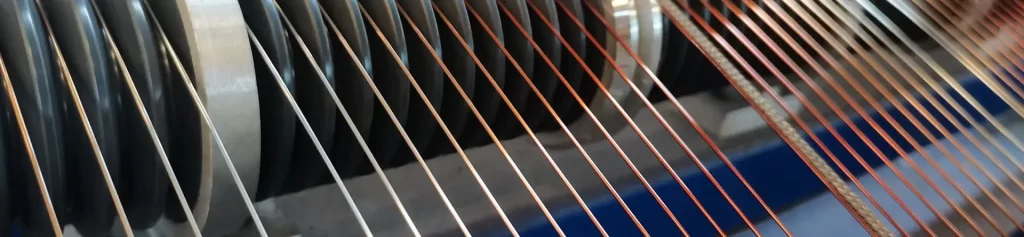
Energy storage modules are the “battery warehouse” of new energy systems — residential 5–20 kWh, commercial & industrial (C&I) 100 kWh–5 MWh, and grid-scale 1–500 MWh all depend on them. Their core is the electrical connection: cell → module → pack → PCS full-chain series/parallel wiring. High current (1500 V DC / 1000+ A), light weight, and long service life (6000+ cycles) are the three hard indicators. Aluminum foil is replacing copper busbars — aluminum has a density of 2.7 g/cm³ versus copper’s 8.96 g/cm³ (70% lighter), and aluminum costs ~USD 3/kg versus copper’s ~USD 9/kg (67% cheaper). Below, we clarify the specifications of aluminum foil for energy storage module connections based on the latest 2025–2026 market data.
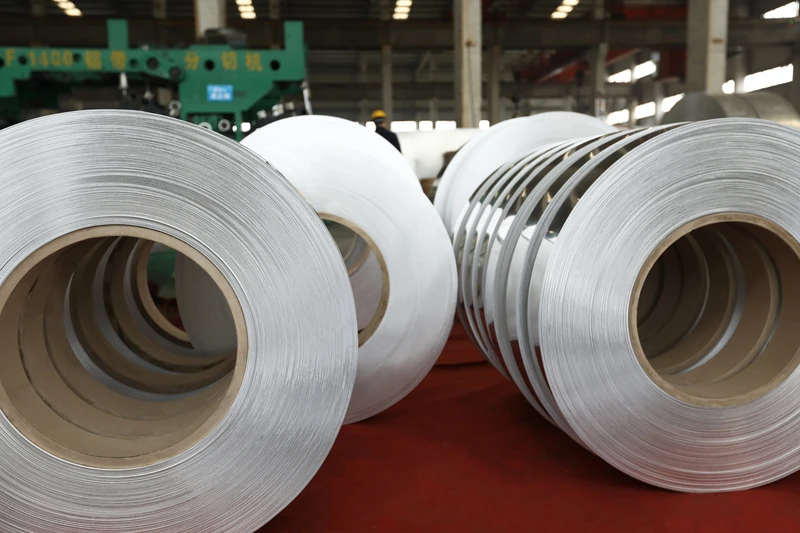
I. Four Mainstream Types of Energy Storage Modules
- **Residential ESS (5–20 kWh)** — Single unit 5–10 kWh, with 5–15 kg of aluminum foil per unit. Main brands: Pylontech, CATL, Sungrow. Representatives: Tesla Powerwall 3, Huawei LUNA 2000.
- **Commercial & Industrial ESS (C&I ESS, 100 kWh–5 MWh)** — Single cabinet 100–500 kWh, with 50–200 kg of aluminum foil per cabinet, emphasizing high safety (UL 1973) and long service life (6000+ cycles). Representatives: CATL EnerC, BYD CUBE.
- **Grid-Scale / Utility-Scale Storage (1–500 MWh)** — Single project 100 MWh+, emphasizing the 1500 V DC high-voltage architecture and centralized PCS grid connection. Representatives: Tesla Megapack, Sungrow ST5015UX.
- **Containerized BESS (1–6 MWh)** — Single container 1–6 MWh, with 500–3,000 kg of aluminum foil per container, emphasizing rapid deployment and modular design. Representatives: CATL EnerC, HyperStrong.
Impact on aluminum foil: Grid-scale + containerized solutions require 2.0–5.0 mm thick specifications (high current, low resistance); residential / C&I use 1.0–3.0 mm medium thickness; flexible busbars emphasize 0.2 mm × N layers.
II. Four Main Applications of Aluminum Foil in Energy Storage Module Connection
- **Battery Cell Tab** — Mainstream solution. Cell positive terminal → aluminum tab → module busbar. Thickness 0.5–1.5 mm × width 10–30 mm, alloy 1060 / 1100, with nickel plating (to prevent galvanic corrosion).
- **Module Hard Busbar** — Internal series/parallel connection of cells within the module. Thickness 1.0–3.0 mm × width 20–100 mm, current carrying capacity 1000+ A, emphasizing low resistance (≤ 0.1 mΩ) and high-temperature resistance.
- **Flexible Busbar** — Multi-layer aluminum foil (0.2 mm × N layers) lamination + polyester insulation, used for cell expansion buffering, heat dissipation, and vibration damping. Representatives: Tesla Powerwall 3, CATL EnerC.
- **Pack External Lead-out Busbar** — Pack → PCS storage inverter. Thickness 2.0–5.0 mm × width 30–100 mm, alloy 1060 / 3003, with tin / nickel plating.
III. Key Specifications and Typical Values
| Category | Thickness (mm) | Width (mm) | Alloy | Surface Treatment | Typical Application |
|---|---|---|---|---|---|
| Module Hard Busbar | 1.0–3.0 | 20–100 | 1060 / 1100 | Nickel Plating / Passivation | Module Internal Series/Parallel |
| Flexible Busbar | 0.2 × N Layers | 20–80 | 1060 / 1100 | Polyester Insulation | Vibration Damping / Heat Dissipation |
| Pack External Lead-out | 2.0–5.0 | 30–100 | 1060 / 3003 | Tin / Nickel Plating | Pack → PCS |
| Heat Sink / Cold Plate | 1.0–2.0 | 50–200 | 1060 / 3003 | Anodizing | Liquid Cooling / Air Cooling |
| Signal/Communication Shielding | 0.05–0.2 | 50–150 | 1060 | Aluminum Foil Tape | BMS Shielding |
Key figures: 1060 aluminum (Al ≥ 99.6%) is the mainstream for energy storage modules (distinguishing it from 1100 industrial pure aluminum); thickness 1.0–3.0 mm is the mainstream for module hard busbars; flexible busbars use 0.2 mm multi-layer lamination (vibration damping + heat dissipation); surface nickel / tin plating is the key to corrosion prevention (preventing aluminum-copper galvanic corrosion). GB/T 3190 (wrought aluminum and aluminum alloy chemical composition) and ASTM B209 (aluminum sheet/strip) are the main reference standards.
IV. Market Size and Growth
Comparing four independent data sources side by side:
| Data Source | 2024–2025 (USD Billion) | 2030–2033 (USD Billion) | CAGR |
|---|---|---|---|
| MarketsandMarkets (Containerized BESS) | 2024 = 9.33 → 2025 = 13.87 | 2030 = 35.82 | 20.9% |
| Mordor Intelligence (BESS Full Scope) | 2024 base | 2031 = 198.80 | ~22.4% |
| GIRIDIH (Global BESS GWh) | 2024 = 315 GWh | — | — |
Taken together, the global BESS market in 2024 ranged from USD 3.60 billion to USD 138.7 billion (depending on scope), growing to USD 18.20–198.80 billion by 2030–2033, with a CAGR of 17.9%–22.4% (consistent across four major institutions). Containerized BESS dominates (MarketsandMarkets), making it the largest and fastest-growing segment.
Aluminum foil demand estimation: Based on aluminum foil usage of 200–500 kg per 1 MWh energy storage module, the global energy storage installed capacity will reach approximately 1,500 GWh per year by 2030 (annual new installations), corresponding to a global annual demand for energy storage module aluminum foil of 300,000–750,000 tons, with a market size of USD 0.5–1.2 billion (including processing).
V. Competitive Landscape and Applications
- **CATL (China)**: EnerC containerized energy storage + outdoor cabinet — global energy storage cell leader, with 50–200 kg of aluminum foil per pack.
- **BYD (China)**: CUBE Energy Storage + Battery-Box — energy storage pack leader, with high-voltage architecture + aluminum-copper substitution.
- **Sungrow (China)**: ST5015UX 1500V energy storage PCS — energy storage PCS leader.
- **HyperStrong (China)**: HyperStrong containerized energy storage — China’s top 3 energy storage system integrator.
- **Envision (China)**: Wind power + energy storage integration — China’s smart energy leader.
- **Tesla (USA)**: Megapack (3.9 MWh) + Powerwall 3 — global residential / grid-scale energy storage leader.
- **Pylontech (China)**: US5000 / Force H1 — global residential energy storage leader.
- **Huawei (China)**: LUNA 2000 + Smart PV — AI energy storage management.
VI. Procurement Notes
1. **Identify the aluminum alloy clearly**: 1060 (Al ≥ 99.6%) is the mainstream for energy storage modules (distinguishing it from 1100 industrial pure aluminum); 3003 is used for high-strength applications (such as pack external lead-out).
2. **Thickness tolerance control**: For 1.0–3.0 mm thickness, tolerance ≤ ±0.05 mm, otherwise assembly accuracy will be affected.
3. **Surface treatment is mandatory**: Nickel plating (5–10 μm) is required for battery cell tabs; tin plating / passivation is used for module hard busbars; Cu-Al Transition (copper-aluminum composite) is the key to pack lead-out.
4. **Resistance and current carrying**: Single-point contact resistance ≤ 0.1 mΩ, current carrying capacity ≥ 1000 A (1500 V DC energy storage).
5. **Voltage withstand and insulation**: Insulation withstand voltage ≥ 3500 V DC (1 minute without breakdown); polyester insulation thickness ≥ 0.2 mm (flexible busbar).
6. **Inspection items**: Thickness tolerance (±0.05 mm), resistivity (≤ 2.9 × 10⁻⁸ Ω·m, 1060 aluminum), tensile strength (≥ 75 MPa, 1060-O), elongation (≥ 25%), plating adhesion (≥ 3.4 N), salt spray test (≥ 500 h).
7. **Certifications and compliance**: UL 1973 (energy storage battery safety standard); UL 9540 / 9540A (energy storage system safety); IEC 62619 (industrial lithium battery safety); GB/T 36276 (Chinese energy storage battery standard); GB/T 3190 (aluminum and aluminum alloys); RoHS / REACH (environmental).
Final Thoughts
When selecting aluminum foil for energy storage module connections, the key is to remember “aluminum-copper substitution + flexible busbar + UL 1973 certification” — these are the biggest differences from traditional copper busbars. The global BESS market will reach USD 18.20–198.80 billion by 2030–2033, with a CAGR of 17.9%–22.4%, and containerized BESS dominates. For aluminum foil suppliers, each 1 MWh system uses 200–500 kg of aluminum, and global 1,500 GWh annual installations by 2030 correspond to 300,000–750,000 tons per year of aluminum foil demand — a high-growth B2B industrial track.
If you are evaluating energy storage module connection aluminum foil suppliers (battery cell tab / module hard busbar / flexible busbar / pack external lead-out), please contact Zhengzhou LP Industry Co., Ltd. Email: office@cnlpzz.com, WhatsApp: 0086-19337889070. We offer 1060 / 1100 / 3003 aluminum foil + nickel / tin / passivation surface treatment, with single-point contact resistance ≤ 0.1 mΩ, and support customized specifications and OEM processing. UL 1973 / IEC 62619 / GB/T 36276 compliance support is available.