

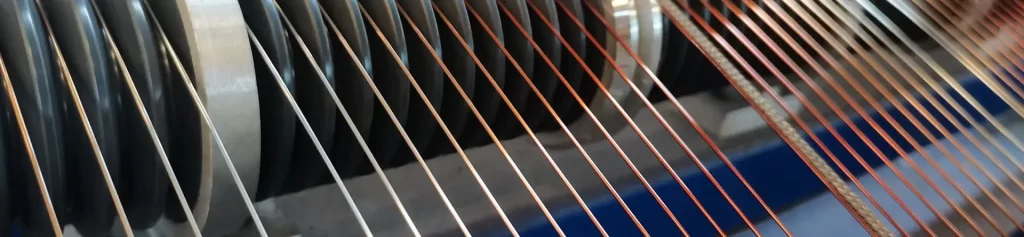
1. Introduction: The core positioning of paper-wrapped wire from the perspective of project-level application
In the entire life cycle of electrical engineering projects – from design, procurement, construction, debugging to operation and maintenance – Paper Covered Wire serves as the winding internal insulation material for core equipment such as transformers, motors, switchgear, etc., and undertakes multiple performance missions such as electrical, mechanical, thermal, and chemical.
Different from project components in the form of “software” such as EMC, SolidWorks, AutoCAD, etc., paper-covered wires are in the form of “material” – once the winding is embedded, it is difficult to replace, and the material selection directly determines the reliability index, life expectancy, and operation and maintenance cost of the entire project. Understanding the positioning of paper-covered wires in engineering projects is the core knowledge that electrical engineers, procurement, and project managers must master.
Accurate engineering data: In oil-immersed transformer projects, paper-covered wire-related failures account for 30-40% of the total failures; in high-voltage motor projects, 70% of winding insulation failures are directly related to the status and usage specifications of paper-covered wires/insulating paint/interlayer insulation materials.
This guide systematically explains the application methods of paper-covered wires in electrical engineering projects from a project life cycle perspective, covering selection in the design stage, specification matching in the procurement stage, storage and operation in the construction stage, detection in the commissioning stage, life assessment in the operation and maintenance stage, and quality control systems in large projects.
—
2. Key performance requirements of paper covered wires in engineering projects
2.1 Electrical performance requirements
Paper covered wire needs to meet the following electrical performance indicators in engineering projects:
- Breakdown voltage: 5-15 kV (single-layer insulated paper-covered wire); multi-layer insulation up to 20-30 kV
- Dielectric loss tangent (tan δ): 0.015-0.025 (50 Hz, room temperature)
- Dielectric constant: 2.5-3.5 (depending on moisture content and impregnation state)
- Insulation resistance: ≥ 10¹² Ω·cm (dry state)
- Partial discharge onset voltage (PDIV): ≥ 1.5 times the working voltage
2.2 Mechanical performance requirements
- Tensile strength: copper conductor 220-280 MPa; aluminum conductor 80-120 MPa
- Elongation: ≥ 25% (copper), ≥ 15% (aluminum)
- Bending radius: ≥ 3 times the wire diameter (diameter > 3 mm); ≥ 2 times (diameter ≤ 3 mm)
- Winding tension: 0.5-2.0 N/mm² (adjusted according to wire diameter and speed)
- Friction coefficient: 0.15-0.35 (paper surface to paper surface)
2.3 Thermal performance requirements
- Temperature resistance level: 105°C (ordinary kraft paper), 155°C (modified paper), 220°C (Nomex paper), 240°C (polyimide film)
- Short-term overload temperature: Typically up to +15°C (short-term), +30°C (emergency overload)
- Heat aging life: 20-40 years (105°C Kraft paper); 30-50 years (220°C Nomex)
- Thermal conductivity:0.12-0.25 W/(m·K)
- Coefficient of Thermal Expansion: Matches copper/aluminum conductors (approx. 17×10⁻⁶/°C)
2.4 Chemical performance requirements
- Oil resistance: Must be stable for a long time in mineral oil, synthetic ester oil, and silicone oil
- Moisture resistance: Moisture content < 6% (unimpregnated state); < 0.5% (impregnated after drying)
- Chemical Resistance: Resistant to acids, alkalis, and transformer oil decomposition products
- Environmental stress resistance: Resistant to ozone, moisture, mildew, and insects
2.5 Compliance with engineering specifications
- NEMA MW 1000-2018: MW 31/33 (kraft paper), MW 60/61 (aramid paper), MW 64/65 (polyimide film)
- IEC 60317: General specification for paper wrapped winding wires
- GB/T 7673: National standard for paper wrapped winding wire
- UL 60950 / IEC 61558: Insulation system safety certification (project level)
Project conclusion: The selection of paper-covered wire must meet all four performance requirements of the project design, and each one is indispensable. Deviations in any indicator may lead to major project risks.
—
3. Paper covered wire selection during the project design stage
3.1 Design input parameters
During the electrical project design stage, the design institute/engineer must clarify the following parameters:
| parameter | illustrate | Typical range |
|---|---|---|
| Operating voltage | System rated voltage | 0.4 kV / 10 kV / 35 kV / 110 kV / 220 kV / 500 kV |
| INSULATION RATING | Transformer/motor temperature resistance level | A(105°C)/E(120°C)/B(130°C)/F(155°C)/H(180°C)/C(220°C+) |
| capacity | Transformer/motor rated capacity | 10kVA-500MVA |
| Cooling method | Oil immersed/dry/water cooling | ONAN/ONAF/OFAF/AN/AF |
| Short circuit impedance | Transformer short circuit impedance percentage | 4-25% |
| Load Characteristics | Cycle/Continuous/Overload | Periodic/continuous/reload start |
| Environmental Conditions | Temperature/Humidity/Altitude/Pollution | -40°C to +55°C, altitude 0-4000m |
| Seismic requirements | earthquake intensity | 7 degrees / 8 degrees / 9 degrees |
3.2 Paper covered wire selection matrix
| Application scenarios | Recommended paper wrapped wire | Key parameters | Remark |
|---|---|---|---|
| 10 kV oil-immersed distribution transformer | Kraft paper double wrapped (MW 31) | Thickness 0.08-0.13 mm | Best value for money |
| 35 kV oil-immersed transformer | Kraft paper double wrapped (MW 33) | Thickness 0.10-0.15 mm | Breakdown > 10 kV |
| 110 kV oil-immersed transformer | Modified paper double-layer wrapping (MW 60) | Thickness 0.13-0.20 mm | Long-term temperature resistance 155°C |
| 220 kV oil-immersed transformer | Modified paper + paint film composite | Thickness 0.15-0.25mm | high quality level |
| 500 kV oil-immersed transformer | Aramid paper (MW 61) | Thickness 0.18-0.30 mm | With polyimide |
| Dry type transformer | Aramid paper + paint film composite | Thickness 0.10-0.20 mm | Fire protection rating according to UL 94 |
| High Voltage Motor | Modified paper + paint film composite | Thickness 0.08-0.15 mm | High speed winding adaptation |
| Special Motors (Nuclear Power/Traction) | Polyimide film (MW 64/65) | Thickness 0.10-0.20 mm | extreme environment |
3.3 Selection decision-making process
“` Design input → Voltage level → Insulation level → Cooling method → Capacity specifications → Economic constraints → Paper covered wire selection ↓ Standard compliance verification ↓ Supplier evaluation ↓ Specification confirmation “`
Project Example: A 110 kV substation main transformer project
- Design input: 110 kV / 30 MVA / ONAN/ONAF / short circuit impedance 10.5%
- Selection process: 110 kV → select MW 33/60 → 30 MVA → double-layer wrapping → ONAN/ONAF → 0.13mm modified paper
- Final specifications: PV130/130-DUAL-MW60-0.13mm (copper conductor 130 mm², double-layer modified paper package)
—
4. Paper-wrapped wire specification management in the project procurement stage
4.1 Preparation of procurement specifications
The procurement specification is the core document for project-level paper-covered wire quality control and must contain the following elements:
- Basic information: project name, contract number, purchase order number, specification version
- Technical requirements: Conductor specifications, insulation paper type, insulation layer thickness, insulation structure, electrical properties, mechanical properties, thermal properties
- Testing requirements: Factory testing, sampling testing, third-party testing
- Quality Control: ISO 9001 certification, production process audit, first article inspection, batch inspection
- Delivery Requirements: Packaging, Labeling, Documentation, Shipping, Delivery Time
- Warranty requirements: Quality guarantee period, failure traceability, after-sales response
4.2 Supplier evaluation dimensions
| Assessment Dimensions | weight | Assessment points |
|---|---|---|
| Technical Skills | 30% | Equipment level, R&D capabilities, number of patents |
| Quality Management | 25% | ISO 9001, ISO 14001, ISO 45001, process capabilities |
| Production Capacity | 15% | Capacity, delivery time, order flexibility |
| Cost Competitiveness | 10% | Unit price, payment terms, price adjustment mechanism |
| After-sales service | 10% | Technical support, failure response, spare parts supply |
| Historical performance | 10% | Similar project cases and customer reviews |
4.3 Key procurement parameters
- Conductor specification: diameter (mm) or cross-sectional area (mm²); tolerance ±1% (copper)/±2% (aluminum)
- Insulation layer thickness: 0.05-0.30 mm; tolerance ±10%
- Wrapping method: single layer forward wrapping, single layer reverse wrapping, double layer opposite wrapping, double layer opposite direction
- Number of insulation layers: 1-4 layers
- Additional coatings: Epoxy paint, polyurethane paint, polyimide paint, single/double layer paint film
- Marking requirements: wire color, continuous arrow mark, batch number
- Packaging requirements: spool size (500-1000 mm), winding length (50-500 kg/spool), moisture-proof packaging
4.4 Key terms of the procurement contract
- Quality guarantee period: 12-24 months (from the date of delivery)
- Acceptance Standard: GB/T 7673, IEC 60317, NEMA MW 1000-2018
- Sampling ratio: 1-3% (small batch)/0.5-1% (large batch)
- Batch traceability: Provide material certificates, test reports, and process records for each batch
- Technical Documents: Factory test report, type test report, third-party test report
Engineering Conclusion: Specification management in the procurement stage is the pre-control point of project quality. The more accurate the specification description, the fewer disputes will be in subsequent acceptance.
—
5. Storage and operation of paper-covered wire during project construction stage
5.1 Storage environment requirements
| project | Require | Things to note |
|---|---|---|
| temperature | 5-35°C | Avoid direct sunlight and heat sources |
| humidity | Relative humidity 30-70% | Moisture-proof packaging or temperature and humidity control |
| ventilation | good ventilation | Avoid chemical mist, smoke and dust |
| Stacking | The spool can be placed vertically or horizontally | Store flat in a single layer to avoid squeezing |
| isolation | Keep 1m+ away from heat sources | Keep away from corrosive chemicals 2m+ |
| Storage Period | Within 12 months | Exceeding the limit requires re-testing |
5.2 On-site operating specifications
- Inspection before unpacking:
- Check packaging integrity
- Check specification mark
- Record batch number
- Take photos and archive
- Pre-winding treatment:
- Leave at room temperature for 24 hours (temperature equilibrium)
- Check the integrity of the paper layer (no damage)
- Measure initial moisture content (< 8%)
- Check the conductor surface (no oxidation, no damage)
- Winding process control:
- Tension control: 0.5-2.0 N/mm² (according to wire diameter)
- Speed control: 10-100 r/min (according to wire diameter and equipment)
- Environmental control: temperature 20-30°C, humidity 40-60%
- Real-time monitoring: tension, speed, number of winding turns
- Inspection after winding:
- Appearance inspection (no damage, no pollution)
- Dimensional measurement (outline dimensions, insulation thickness)
- Initial electrical test (insulation resistance, breakdown voltage)
- Drying before vacuum pressure impregnation (VPI)
- VPI process requirements:
- Drying temperature:100-130°C
- Drying time:12-48 hours
- Vacuum degree: < 100 Pa
- Impregnation pressure: 0.3-0.7 MPa
- Soaking time: 4-8 hours
5.3 Common construction problems and countermeasures
| question | reason | Countermeasures |
|---|---|---|
| Paper layer damaged | Tension is too large, winding speed is too fast | Adjust tension and reduce speed |
| Paper layer offset | Guide wheel deviation and conductor runout | Adjust guidance and check equipment |
| insulation thickness out of tolerance | Uneven paper layer tension and paper layer quality | Adjust tension and change paper |
| Moisture content exceeds standard | Storage environment is humid and insufficiently dry | Re-dry and extend drying time |
| Breakdown between winding layers | Paper layer damage and contamination | Isolate damage and check cleanliness |
Project Conclusion: On-site operation during the construction phase is the core control link of project quality. 70% of paper-wrapped wire failures are caused by irregular on-site operations.
—
6. Paper-wrapped wire inspection during project debugging stage
6.1 Inspection before winding
- Visual inspection: conductor surface, insulating paper, color identification
- Dimensional measurement: conductor diameter, insulation thickness, overall dimensions
- DC resistance: four-terminal method measurement, accuracy ±0.1%
- Insulation resistance: 500V megger, ≥ 1000 MΩ·km
- Breakdown voltage: 50 Hz AC, 5 kV/min boost to breakdown
- Dielectric loss: tan δ test, 0.2-1.0 times operating voltage
6.2 Testing after immersion
| test items | Test method | Acceptance criteria |
|---|---|---|
| Appearance inspection | Visual inspection + magnifying glass | No damage, no bubbles, no pollution |
| insulation resistance | 500V megger | > 1000 MΩ(normal) |
| Media Loss | Xilin Electric Bridge | tan δ < 0.005 (normal temperature) |
| Partial Discharge | pulse current method | PDIV > 1.5 times operating voltage |
| AC voltage resistance | 50Hz,1min | 2 times operating voltage + 1 kV |
| Lightning Shock | 1.2/50μs | Standard lightning strike level |
| Temperature rise test | Rated load | Winding temperature rise ≤ 65K (oil immersed) |
6.3 Frequently asked questions during debugging phase
| question | reason | Check method | Countermeasures |
|---|---|---|---|
| Low insulation resistance | Insufficient impregnation, contamination, moisture | Dry and clean again | Re-VPI |
| High dielectric loss | The moisture content exceeds the standard and the paper layer is aged. | Moisture content test | re-dry |
| Partial discharge exceeds the standard | Bubbles, impurities, paper layer defects | Ultrasonic testing | Re-VPI |
| Withstand voltage breakdown | Paper layer damage and contamination | Disassembly and inspection | Replace winding |
| Temperature rise is too high | Poor heat dissipation and overload | Infrared temperature measurement | Improve ventilation |
6.4 Third-party testing agency
- Domestic: China Electric Power Research Institute, Xi’an High Voltage Electrical Apparatus Research Institute, Shanghai Cable Research Institute
- International: KEMA (Netherlands), CESI (Italy), TÜV (Germany), Underwriters Laboratories (USA)
- Selection criteria: CNAS/CMA certification, industry recognition, testing capabilities, report authority
Project Conclusion: Debugging and testing is the final quality check before project acceptance. Standards must be strictly implemented, and any data anomalies must be traced back to the root cause.
—
7. Paper-covered wire life management during the project operation and maintenance stage
7.1 Aging mechanism
Paper-covered wires mainly bear the following aging stresses during long-term operation:
- Heat Aging: After 20 years of operation at 105°C, the degree of polymerization (DP) of the paper decreases from 1000 to 200-300
- Electrical Aging: Electric field accelerates insulation aging and local overheating caused by dielectric loss
- Mechanical Aging: Insulation wear caused by winding vibration and electromagnetic force
- Chemical Aging: Erosion of paper by transformer oil decomposition products (acids, water, aldehydes, ketones)
- Environmental Aging: Humidity, Temperature Cycles, Pollution
7.2 Lifetime prediction model
The following models are commonly used in engineering to evaluate the remaining life of paper-covered wires:
- IEEE C57.91: Transformer thermal aging model
- Arrhenius model: Relationship between temperature and life
- Dakin Model: Decline rate based on degree of polymerization (DP)
- IEC 60422: Mineral oil impregnated paper insulation aging monitoring
Life Judgment Criteria:
- DP > 500: Good status
- DP 300-500: Pay attention to aging and need to track
- DP 200-300: Seriously aged, requiring planning and overhaul
- DP < 200: end of life and needs to be replaced
7.3 Online monitoring and status assessment
| Monitoring items | Monitoring methods | frequency | Exception threshold |
|---|---|---|---|
| Furfural in oil | HPLC method | quarter | > 0.5 mg/L (note) |
| Moisture in oil | Karl Fischer method | quarter | > 30 mg/kg (note) |
| Partial Discharge | UHF / Ultrasound | real time | >100pC |
| Media Loss | Online tan δ | real time | > 0.005 |
| Winding Temperature | Fiber optic/infrared | real time | over 95°C |
| Load current | Current transformer | real time | 110% more than rated |
7.4 Maintenance strategy
- Daily maintenance (monthly): appearance inspection, oil level and temperature, load monitoring
- Regular maintenance (annual): oil sample testing, insulation resistance, dielectric loss test
- Special testing (3-5 years): chromatographic analysis, partial discharge, winding deformation
- Overhaul (15-20 years): disassembly and overhaul, VPI re-impregnation, paper layer replacement
- Life extension assessment (more than 20 years): Comprehensive assessment to determine life extension or replacement
7.5 Failure case analysis
Case 1: 110 kV transformer oil-immersed paper-covered wire failure
- Phenomena: Furfural in oil is 2.5 mg/L, far exceeding the warning value of 0.5 mg/L
- Diagnosis: The insulation paper is severely aged, and the degree of polymerization DP drops to 180
- Cause: Long-term overload operation, winding temperature exceeds the design value
- Treatment: Replace the windings and improve the cooling system
- Avoid: Reasonable selection before production and strict load control during operation
Case 2: 35 kV dry-type transformer paper-covered wire breakdown
- Phenomena: Breakdown between winding turns during withstand voltage test
- Diagnosis: Insufficient insulation thickness in the overlapping area of the paper covered wire
- Cause: Wrapping misalignment during construction, defects in the overlap area
- Process: Rework and rewind, strengthen process inspection
- Avoid: Standardize construction and strengthen process self-inspection
Project conclusion: Life management in the operation and maintenance phase is the guarantee of long-term reliability of the project, and a complete monitoring system must be established.
—
8. Project-level quality control system
8.1 Quality control levels
“` First level: Supplier quality control ↓ Second level: Procurement acceptance ↓ Third level: Construction process control ↓ Fourth level: Debugging and acceptance ↓ Fifth level: Operation and maintenance monitoring “`
8.2 Critical Quality Control Points (QCP)
| QCP number | control point | Control content | File output |
|---|---|---|---|
| QCP-01 | Paper wrapped wire arrives | Specification checking, appearance inspection, batch verification | Arrival inspection record |
| QCP-02 | Storage environment | Temperature and humidity records, moisture-proof measures | Store log |
| QCP-03 | Preparation before winding | Tension calibration, equipment inspection | Equipment Checklist |
| QCP-04 | Winding process | Tension, speed, number of layers | winding record |
| QCP-05 | maceration process | temperature, vacuum, pressure | VPI process records |
| QCP-06 | Debugging and testing | Insulation resistance, dielectric loss, withstand voltage | debug report |
| QCP-07 | Acceptance and handover | Comprehensive testing, documentation and archiving | Acceptance report |
8.3 Document management system
- Design documents: technical specifications, selection calculations, materials list
- Purchasing documents: Specifications, supplier evaluation forms, contracts, arrival records
- Construction documents: process records, equipment records, self-inspection records, mutual inspection records
- Debugging documents: test outline, test records, test reports, defect handling
- Operation and maintenance documents: operation logs, maintenance records, monitoring data, change records
8.4 Risk control
| risk category | risk level | control measures |
|---|---|---|
| Improper design | high | Three-party design review, expert review |
| Purchased wrong materials | middle | Strict specifications and secondary review |
| Construction Violations | high | Training certification, process supervision |
| Debugging missing items | middle | Standardized test outline |
| Improper operation and maintenance | middle | Regular training and status assessment |
Project Conclusion: A perfect quality control system is the key to the success of the project, and every link cannot be relaxed.
—
9. Differences in paper-covered wire selection for different project types
9.1 Oil-immersed transformer project
- Key Parameters: Temperature resistance 105-220°C, oil resistance, long-term chemical stability
- Typical specifications: MW 31/33/60/61, double-layer wrapped with kraft paper/modified paper
- Key points for selection: Compatibility with transformer oil, long-term thermal aging life
- Typical Project: 110 kV / 220 kV / 500 kV substation main transformer
9.2 Dry-type transformer project
- Key Parameters: Flame retardancy (Grade F/H), thermal conductivity, low smoke and non-toxic
- Typical Specifications: Double-layer wrapping of aramid paper + paint film composite
- Key points for selection: Fire protection rating (UL 94 V-0), temperature rise control
- Typical projects: urban power distribution stations, subways, buildings, data centers
9.3 High voltage motor project
- Key Parameters: High frequency vibration resistance, winding accuracy, overload resistance
- Typical specifications: modified paper + paint film composite, thickness 0.08-0.15 mm
- Key points for selection: Winding speed adaptation, mechanical strength
- Typical projects: Large water pump motors, compressor motors, traction motors
9.4 Special engineering projects
- Nuclear Power: Radiation resistant, low smoke and non-toxic (LOCA test), 40-year lifespan
- Wind Energy: Vibration resistant, salt spray resistant, low temperature (-40°C) start-up
- Photovoltaic: UV resistant, PID resistant, high temperature (desert area)
- Rail Transit: Vibration resistant, fireproof, low smoke density, low toxicity
- Ship: Resistant to salt spray, impact, and tilt
Project Conclusion: There are significant differences in the selection of paper-covered wires for different project types, and the selection must be customized according to the project characteristics.
—
10. Common engineering misunderstandings and avoidance
10.1 Misunderstanding 1: Taking price as the main selection criterion
Error: Only look at the unit price, not the comprehensive cost Example: Purchasing inferior paper-covered wire results in a transformer life of 8 years vs. 30 years for high-quality Avoidance: Implement life cycle cost (LCC) analysis and focus on reliability
10.2 Misunderstanding 2: Ignoring the details of the specification
Error: The description in the specification is vague, leading to acceptance disputes Example: The contract does not specify the paper layer thickness tolerance, resulting in rework Avoid: The specification is refined to specific parameters and tolerances, and detection methods are provided
10.3 Misunderstanding 3: Saving craftsmanship during the construction stage
Error: Missing key process steps to meet deadlines Example: Insufficient VPI impregnation time, resulting in insulation defects Avoidance: Strict process discipline, all process records are traceable
10.4 Misunderstanding 4: Only monitoring without analysis during the operation and maintenance phase
Error: Monitoring data is not analyzed and hidden dangers are not dealt with Example: Furfural data continues to rise without timely intervention, resulting in breakdown Avoidance: Establish a data analysis model and perform regular status assessments
10.5 Misunderstanding 5: Not re-evaluating after changes
Error: Paper-covered wires were not re-evaluated after project changes Example: Changes in electrical performance were not considered when the operating environment changed (altitude, temperature) Avoidance: Any changes require re-evaluation of the technology
Project Conclusion: Project-level paper-covered wire application requires a global perspective, and negligence in any link may become the cause of project failure.
—
11. Supplier contact and suggestions
For the selection and procurement of paper-covered wires in electrical engineering projects, recommended suppliers are:
Company information
- Company:Zhengzhou LP Industry Co., Ltd.
- Expertise: Paper covered wire, enameled wire, composite insulation materials
- Service Scope: Project-level technical support, specification customization, batch supply
product specifications
- Paper covered wire: 0.10-0.30 mm insulation thickness, covering the full range of MW 31/33/60/61/64/65
- Conductor specifications: 0.30-8.00 mm diameter (copper/aluminum)
- Composite solution: paper bag + paint film, adapting to the diverse needs of engineering projects
Contact information
- Email:office@lpwindingwire.com
- WhatsApp:0086-19337889070
- Response speed: technical response within 24 hours, global supply
With 30 years of experience in exporting electromagnetic wires and engineering project supply cases in more than 50 countries around the world, it can provide complete paper-wrapped wire technology solutions and supply chain guarantee for electrical engineering projects.
—
Appendix: Reference standards and literature
International standards
- NEMA MW 1000-2018: Magnet Wire Standard (magnet wire comprehensive standard)
- IEC 60317:Specifications for particular types of winding wires
- IEC 60216: Electrical insulating materials – Thermal endurance
- IEC 60422: Mineral insulating oils in electrical equipment
- IEEE C57.91:Transformer loading guide
- UL 1446:Standard for Systems of Insulating Materials – General
National standards
- GB/T 7673: Paper wrapped winding wire
- GB/T 6109: Enameled round winding wire
- GB/T 1094: Power transformer
- GB/T 1095: Transformer product model compilation method
- GB/T 11021: Electrical insulation heat resistance classification
- GB/T 1408: Test method for electrical strength of insulating materials
Industry standards
- JB/T 6213: Special purpose PVC insulated cables
- DL/T 911: Test method for dielectric strength of power transformer winding insulation
- T/CAME 31: Technical specifications for insulating paper for large-capacity high-voltage transformers
Related reading
- Paper Covered Wire vs PVC Insulated Wire: A Complete Selection Guide
- Paper Covered Wire for Power Transformer Windings: A Complete Selection Guide
- Oil Immersion Resistant Enameled Copper Wire Inside Motor Coils: A Complete Guide
- Understanding Insulation Classes (F, H, C) in Enamed Wire
- How to Select Paper Covered Wire for Transformer Windings: A Complete Selection Guide