

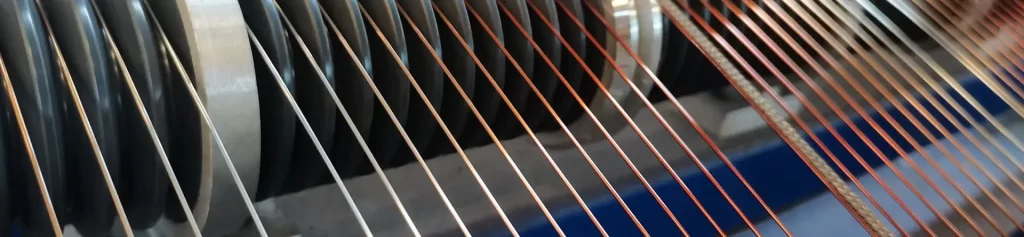
Copper Winding Wire for Small Electric Motors
Small electric motors typically refer to motors with a power of ≤ 7.5 kW (IEC 60034-1 classification), widely used in household appliances, power tools, automotive electrical systems, office equipment, and small industrial equipment. The selection of winding wires in this power range differs systematically from that of large motors and transformers in conductor specifications, enamel coating systems, mechanical properties, and winding processes, making it one of the sub-sectors in electrical engineering most prone to systematic selection errors.
This article systematically elaborates on the engineering selection of copper winding wires for small electric motors from seven dimensions: conductor specifications, enamel coating system, electrical parameters, mechanical properties, winding process, application compatibility, and procurement and acceptance.
I. Engineering Requirements for Copper Winding Wires in Small Electric Motors
Influence of Operating Conditions on Copper Wire Performance
The core characteristics of small electric motor operating conditions:
- Frequent Start-Stop Cycles: Washing machines, air conditioner compressors, and power tools typically start and stop 5–20 times/hour. – Limited Temperature Rise Margin: Due to limited casing volume, the heat dissipation area to power density ratio is approximately 30%–50% of that of large motors. – Complex Mechanical Stress: Washing machines experience vibration acceleration of 8–12 g during spin-drying, while power tools experience peak vibration exceeding 15 g. – Long Lifespan Requirements: Home appliances are designed for a lifespan of 10–15 years (≥ 30,000 h), while power tools require 5–8 years. – High Cost Sensitivity: The overall price range is concentrated between 100–3000 RMB, with copper wire accounting for 8%–15% of the BOM.
Comparison of Conductor Materials
| index | Pure copper (TU1) | Aluminum (1350) | Copper-clad aluminum (CCA 10A/15A) |
|---|---|---|---|
| Resistivity (20°C, μΩ·m) | 1.724 | 2.654 | 1.92–2.65 |
| Relative conductivity (IACS) | 100% | 61% | 63%–70% |
| Density (g/cm³) | 8.89 | 2.70 | 3.63–4.11 |
| Tensile strength (soft state, MPa) | ≤ 250 | ≤ 95 | 110–150 |
| Elongation (soft state, %) | ≥ 30 | ≥ 25 | ≥ 25 |
| Slot fill factor (same as cross-sectional area) | high | middle | middle |
| Creep resistant (150°C) | excellent | Difference | middle |
| Solderability (380°C immersion tin) | Excellent (directly soldered) | Poor (requires ultrasound assistance) | Good (copper layer ≥ 10%) |
| Price (RMB/kg, 2025) | 70–80 | 20–25 | 40–50 |
Engineering selection criteria: For applications where any one of the three requirements—power density, temperature rise margin, or lifespan—is classified as “strict,” the conductor should be pure copper TU1 or oxygen-free copper OFC. CCA is only applicable to lightly loaded motors (≤ 50 W), intermittent operation, and applications where cost weighting > 60%.
Industry Chain and Standard Positioning of Copper Wire for Small Motors
Small motor copper wire belongs to a subcategory under the broad category of “magnet wire” and follows the following standard system:
- IEC 60317: Standard for enameled round wire/flat wire products (IEC 60317-0-1 General Requirements, IEC 60317-XX Various Enamel Coatings) – IEC 60851: Standard for test methods of enameled wire – NEMA MW 1000-2018: Standard for enameled wire in the North American market – GB/T 6109: National standard for enameled round winding wire in China – JIS C 3202: Japanese standard for enameled wire – ASTM B566: Standard for copper-clad aluminum wire
Conductor material standards: GB/T 3953 (electrical round copper wire), GB/T 5584 (electrical round copper rod).
The global annual demand for copper winding wire for small motors is approximately 800,000–1,000,000 tons, accounting for 40% of the total output of enameled wire. Among them, household appliance motors account for about 55%, power tool motors account for about 20%, automotive motors account for about 15%, and office equipment and micro motors combined account for about 10%.
II. Conductor Specifications and Wire Diameter System
Correspondence between the diameter range of round wire and power
| Motor power | Typical wire diameter range | Conductor cross-sectional area (mm²) |
|---|---|---|
| micro motor (<10 W) | Φ0.10–0.30 mm | 0.0079–0.071 |
| Small motor (10–100 W) | Φ0.30–0.80 mm | 0.071–0.503 |
| Medium-sized motor (100 W–1 kW) | Φ0.80–2.00 mm | 0.503–3.14 |
| Medium and large motors (1–7.5 kW) | Φ1.00–3.50 mm | 0.785–9.62 |
Engineering experience values: The mainstream wire diameter range for household appliance motors is Φ0.50–1.50 mm; for power tools, it is Φ0.40–1.20 mm; for automotive auxiliary motors, it is Φ0.60–2.00 mm; and for office equipment and micro motors, it is Φ0.10–0.40 mm.
IEC 60317 Preferred Wire Diameters specifications
| Nominal diameter (mm) | Diameter tolerance (mm) | Nominal diameter (mm) | Diameter tolerance (mm) |
|---|---|---|---|
| 0.250 | ±0.005 | 1.000 | ±0.015 |
| 0.315 | ±0.006 | 1.120 | ±0.015 |
| 0.400 | ±0.008 | 1.250 | ±0.018 |
| 0.500 | ±0.010 | 1.400 | ±0.020 |
| 0.630 | ±0.012 | 1.600 | ±0.020 |
| 0.710 | ±0.015 | 1.800 | ±0.025 |
| 0.800 | ±0.015 | 2.000 | ±0.025 |
Tolerance requirements increase with wire diameter: for diameter < 0.5 mm, the tolerance is ±0.005–0.010 mm, mainly constrained by the cumulative error of the number of winding turns; for diameter ≥ 1.0 mm, the tolerance is relaxed to ±0.015–0.025 mm, mainly constrained by the fluctuation of the slot fill factor.
Application Boundaries of flat wire in Small Motors
Flat wire (rectangular wire) is mainly used in the following scenarios for small motors:
- New Energy Vehicle Drive Motors: Hairpin windings, flat wire cross-sections of 1.5 × 4.0 mm and 2.0 × 5.0 mm. – High-Speed Motors (Speed > 10,000 rpm): Improved rotor reliability through reduced centrifugal stress. – High Power Density Industrial Motors: Slot fill factor increased to 85%–92% (round wire 70%–78%), power density increased by 15%–25%.
Flat wire accounts for less than 5% of the market share of small motors dominated by Φ0.30–2.00 mm round wire, mainly due to the high cost of flat wire winding equipment and long changeover time.
III. enamel coating type and thermal class system
Main enamel coating types and engineering characteristics
| enamel coating type | IEC abbreviation | thermal class (°C) | Main engineering characteristics | Typical small motor applications |
|---|---|---|---|---|
| polyurethane | UEW | 130 | 380°C direct welding, moderate mechanical strength | micro motor, household fan motor |
| polyester | PEW | 155 | Good heat resistance, high mechanical strength, and solvent resistance | General motors, home appliance main drive motor |
| polyesterimine | EIW | 180 | Resistant to thermal shock, chemicals, and damp heat | High-temperature motors, power tools, automotive motors |
| Polyamide-imide | AIW | 200 | High temperature resistance, refrigerant resistance, radiation resistance | Special motors, new energy drives |
| polyimide | PIW | 220 | Extremely high temperature, flame retardant | Military and aerospace special motors |
Common composite enamel coating (double coating) systems include: UEW+PEW (155°C), PEW+EIW (180°C), and EIW+AIW (200°C). Double coating solutions are used in applications with higher breakdown voltage requirements and more stringent enamel coating reliability requirements.
Selection of enamel coating grade (thickness)
The thickness of the enamel coating is classified into three levels according to IEC 60317:
- Grade 1 (Thin): Minimum enamel coating thickness, corresponding to “Lightweight winding” – Grade 2 (Medium): Standard enamel coating thickness, corresponding to “General Purpose Motor” – Grade 3 (Thick): Maximum enamel coating thickness, corresponding to “High Reliability Winding”
Small motor enamel coating grade selection matrix:
| Application scenarios | Recommended level | Engineering Reasons |
|---|---|---|
| micro motor, office equipment | Grade 1 | Priority slot fill rate and enamel coating reliability requirements are moderate. |
| Home appliance main drive motor | Grade 2 | Performance/space balance |
| Power tool motor | Grade 2 or 3 | Vibration and wear resistant, impact resistant |
| Automotive motor | Grade 2 or 3 | Resistant to temperature cycling, vibration, and flame retardant |
| Special motors | Grade 3 | High reliability and long lifespan |
IEC Insulation thermal class and enamel coating Mapping
| Insulation class | Maximum operating temperature (°C) | I recommend enamel coating | Typical applications |
|---|---|---|---|
| E | 120 | UEW | Motors for ordinary household appliances and office equipment |
| B | 130 | UEW / PEW | Fan motors, secondary motors for household appliances |
| F | 155 | PEW / EIW | Air conditioner outdoor unit, washing machine, refrigerator compressor |
| H | 180 | EIW | Power tools, car drive motor |
| N | 200 | AIW | New energy vehicle drive, special motor |
| R | 220 | PIW | Military and aerospace special motors |
Design principles: A 15–20 K margin should be allowed for the measured temperature rise of the motor. When the temperature rise limit is 75 K, Class F (155°C) insulation should be selected instead of Class B (130°C). For motors that frequently start and stop, such as those used in washing machines and air conditioner outdoor units, Class F or higher insulation is recommended.
Specific Requirements for enamel coating in Application Scenarios
Home appliance motors: Resistant to refrigerant contact (air conditioner outdoor unit in contact with R410A and R32 refrigerants), resistant to damp heat aging (IEC 60068-2-78, 40°C/93% RH, 56 days), and resistant to vibration (IEC 60068-2-6).
Power tool motors: Shock resistant (high start-stop frequency, frequent stall conditions), dust resistant, strong short-term overload capacity (stall current 5-8 times rated current).
Automotive motors: Temperature cycling resistance (-40°C ~ +150°C, 500 cycles), vibration resistance (road vibration 5–20 g), flame retardant (UL 94 V-0), and low smoke halogen-free (LSZH) requirements for some models.
Office equipment motors: Low noise (magnetostriction coefficient), long life (≥ 30,000 h), and high dimensional accuracy (±0.005 mm).
IV. Key Electrical Parameters
DC Resistance of Conductors
Formula for calculating the DC resistance of a conductor at 20°C:
R₂₀ = ρ × L / A
Where: – ρ = 1.724 × 10⁻⁸ Ω·m (TU1 pure copper) – L = Average turn length of winding (m) – A = Conductor cross-sectional area (m²)
Temperature correction (resistance increases by 21.6% at operating temperature of 75°C):
R₇₅ = R₂₀ × [1 + α × (75 − 20)]
Temperature coefficient α = 0.00393 /°C (0–100°C range).
Current Density (J) Selection
Current density J = I / A (unit A/mm²) is one of the core parameters for selecting copper wire for small motors.
| Motor type | Current density range (A/mm²) | Remark |
|---|---|---|
| micro motor (<10 W) | 5–8 | Large heat dissipation margin for short-term operation |
| Home motor | 4–6 | Intermittent operation, long lifespan |
| Power tool motor | 6–10 | Short-duration high current, intermittent heat dissipation |
| Automotive auxiliary motor | 5–8 | Vibration and temperature rise are strictly controlled. |
| Industrial small motors | 4–5 | Long-term operation |
The current density of power tool motors is 30%–50% higher than that of household appliance motors, provided that they operate intermittently (typically 50% of the working cycle), and cannot be directly compared with continuously running household appliance motors.
Skin Effect and High-Frequency Loss
Skin depth δ versus frequency (copper conductor, 20°C):
δ = √(ρ / (π × f × μ₀))
| Motor type | Operating frequency | Skin depth δ (mm) | Loss impact |
|---|---|---|---|
| Industrial frequency motor | 50/60 Hz | 9.4 / 8.5 | The effect is negligible when the wire diameter is < 2 mm. |
| Variable frequency motor | 20–200 Hz | 9.4–3.0 | Moderate impact, requires verification |
| high-speed motor | 200–1000 Hz | 3.0–1.3 | Significant impact, Leeds line recommended. |
| tool motor | 50–400 Hz | 9.4–2.1 | Intermittent operation, superimposed thermal effects |
The skin loss of variable frequency home appliances (variable frequency air conditioners, variable frequency washing machines) is 30%–50% higher than that at industrial frequency, which is one of the main reasons for the higher temperature rise of variable frequency motor windings.
Inter-turn insulation and breakdown voltage
Breakdown voltage of small motor enamel coating (Grade 2, room temperature):
| Nominal wire diameter (mm) | Breakdown voltage (kV, ≥) |
|---|---|
| 0.30 | 1.8 |
| 0.50 | 2.5 |
| 0.80 | 3.0 |
| 1.00 | 3.5 |
| 1.50 | 4.5 |
| 2.00 | 5.0 |
Inter-turn short circuit is the most common failure mode of small motors (accounting for 35%), and the uniformity control of the enamel coating and the prevention of scratches during the winding process are the core of the process.
Insulation Resistance and Dielectric Loss
Insulation resistance requirements for small motors:
- Normally stable insulation resistance (500 V megohmmeter): ≥ 100 MΩ – After immersion in water for 24 hours: ≥ 10 MΩ – Dielectric loss tangent tan δ (1 kHz, 25°C): ≤ 5% – Volume resistivity (enamel coating): ≥ 1 × 10¹⁴ Ω·cm
V. Mechanical Properties and Winding Process
Flexibility and Bending Performance
Small motor windings undergo multiple bending deformations during automatic winding, winding, and shaping processes. The enamel coating should meet the following requirements:
- Elongation (soft conductor): ≥ 30% – Springback Angle (Φ0.5 mm): ≤ 8° – Bending Test: 5 turns around a 1× diameter round rod without cracking – Minimum Bending Radius: ≥ 2× conductor diameter
The typical curvature radius of the stator slot in a small motor is 3–10 mm, and this bending radius limitation imposes constraints on the selection of wire diameter.
Abrasion resistance of enamel coating (IEC 60317)
| Nominal diameter (mm) | Level 1 mean failure force (N) | Level 1 Single Minimum (N) | Level 2 mean failure force (N) | Level 2 single minimum (N) |
|---|---|---|---|---|
| 0.400 | 1.95 | 1.65 | 3.15 | 2.65 |
| 0.500 | 2.10 | 1.80 | 3.45 | 2.95 |
| 0.630 | 2.30 | 1.95 | 3.75 | 3.20 |
| 0.800 | 2.65 | 2.25 | 4.30 | 3.65 |
| 1.000 | 3.00 | 2.55 | 4.85 | 4.10 |
| 1.600 | 3.10 | 2.65 | 4.95 | 4.20 |
| 2.500 | 3.15 | 2.65 | 5.00 | 4.30 |
Scratches on the enamel coating are the biggest killer of winding manufacturing yield. Grade 2 enamel coatings need to undergo 8–15 contact frictions on automatic winding machines.
Tensile Strength and Elongation of Conductors
Conductor state classification:
- Hard Copper (unannealed after wire drawing): Tensile strength ≥ 380 MPa, elongation ≤ 5% – Soft Copper (annealed): Tensile strength ≤ 250 MPa, elongation ≥ 30%
Small motor windings must use soft copper (annealed copper) with conductor elongation ≥ 30% (thickness ≤ 2.50 mm) or ≥ 32% (thickness 2.50–5.60 mm, IEC 60317-0-8 reference value for rectangular copper wire).
Key Parameters of Winding Process
Winding tension control:
| Motor type | Tension range (g) | Remark |
|---|---|---|
| micro motor | 3–8 | Small wire diameter, low tension |
| Home appliance motors | 8–20 | Mainstream tension range |
| Power tool motor | 15–30 | High tension, impact resistant |
| Automotive motor | 10–25 | Medium to high tension, stability preferred |
Excessive tension can cause the copper wire to thin (reducing the cross-sectional area and increasing the resistance) and microcracks in the enamel coating; insufficient tension can cause the coil to become loose, the inter-turn capacitance to be unstable, and the winding to be difficult.
Winding speed: micro motor 5–15 m/s, household appliance motor 10–25 m/s, power tool 8–18 m/s.
Winding Methods: – Concentrated Winding: Each coil is wound in a concentrated manner, suitable for 2-pole and 4-pole low-power motors. – Distributed Winding: Winded across slots, suitable for three-phase asynchronous motors. – Automatic Winding: Modern household appliance motors use 100% automatic winding machines (including flying fork type, external rotor type, and internal winding type).
Workshop Environment (GB/T 30841 equivalent to IEC 60068): – Temperature 20–28°C – Relative Humidity 40%–60% – Dust Concentration ≤ 100,000 particles/m³ (ISO Class 8 Cleanliness) – Electrostatic Protection (to prevent dust adsorption by enamel coating)
VI. Application Correspondence and Selection Matrix
Motors for Household Appliances
| Home appliance types | Power range | enamel coating | Wire diameter (mm) | thermal class | Key Requirements |
|---|---|---|---|---|---|
| Washing machine (inverter BLDC) | 200–500 W | PEW/155 or EIW/180 | 0.50–1.20 | F | Resistant to damp heat and vibration |
| Air conditioner outdoor unit (inverter) | 750–3000 W | PEW/155 or EIW/180 | 0.80–1.80 | F | Resistant to refrigerants and resistant to damp heat |
| Refrigerator compressor | 100–300 W | PEW/155 | 0.40–0.90 | B/F | Refrigerant resistant, long lifespan |
| Fan motor | 30–80 W | UEW/130 | 0.20–0.50 | E/B | Low cost, low noise |
| Range hood motor | 100–300 W | UEW/PEW | 0.30–0.70 | F | Oil-resistant and long-lasting |
The mainstream solution for household appliance motors is Class F (155°C) round wire (PEW or EIW) + Grade 2 enamel coating thickness. For washing machine inverter motors, EIW/180 is the preferred choice, as its resistance to damp heat aging is 30%–50% longer than PEW/155.
Electric Tool Motors
Typical selection of motors for power tools (electric drills, angle grinders, electric saws, electric planers, electric screwdrivers, etc.):
- enamel coating type: PEW/155 or EIW/180 – wire diameter range: Φ0.40–1.20 mm – thermal class: Class F or H – enamel coating grade: Grade 2 or 3
Special requirements: vibration resistance (5–15 g acceleration), shock resistance (start-stop frequency of more than 20 times/h), strong short-term overload capacity (locked rotor current of 5–8 times the rated current), and good heat dissipation (with fan cooling).
Automotive Motors
| Automotive motor type | enamel coating | Wire diameter (mm) | thermal class |
|---|---|---|---|
| wiper motor | EIW/180 | 0.80–1.50 | H |
| Air conditioner blower | PEW/155 or EIW/180 | 0.50–1.20 | F/H |
| Electric window motor | PEW/155 or EIW/180 | 0.40–0.90 | F |
| fuel pump motor | PEW/155 | 0.30–0.70 | B/F |
| New energy drive motor | EIW/180 or AIW/200 | flat wire 1.5×4 mm | H/N |
Automotive motors must meet the following requirements: temperature cycling resistance (-40°C to +150°C, 500 cycles), vibration resistance (road vibration 5–20 g), flame retardancy (UL 94 V-0), and resistance to refrigerants (air conditioning systems). Conductor suppliers must be IATF 16949 certified.
Office Equipment Motors
Typical selection of motors for office equipment (printers, copiers, scanners, shredders, fax machines, etc.):
- enamel coating type: UEW/130 or PEW/155 – wire diameter range: Φ0.10–0.40 mm – thermal class: Class E or B – enamel coating grade: Grade 1 or 2
The requirements for wire diameter accuracy (±0.005 mm), enamel coating uniformity, noise (≤ 35 dB), and lifespan (≥ 30,000 h) of motors used in office equipment are significantly higher than those for motors used in household appliances.
Toys and micro motor
Typical selections for toy motors and consumer electronics micro motors (DC motors, coreless motors):
- enamel coating type: UEW/130 – wire diameter range: Φ0.10–0.30 mm – thermal class: Class E (120°C) – enamel coating grade: Grade 1
For micro motors, the self-soldering capability of enamel coating is the highest (soldering immediately after automated winding), and UEW is the only engineering-feasible solution.
VII. Procurement and Acceptance
Key Factors in Selection
When purchasing copper winding wire for small motors, the eight core parameters are:
- Conductor Material: Pure Copper TU1 / Oxygen-Free Copper OFC / Copper-Clad Aluminum CCA 2. Conductor Specifications: Round wire diameter (mm) or Flat wire thickness × Width (mm) 3. Enamellable Coating Type: UEW / PEW / EIW / AIW 4. Thermal Class: Class E (120°C) / B (130°C) / F (155°C) / H (180°C) / N (200°C) / R (220°C) 5. Enamellable Coating Grade: Grade 1 / Grade 2 / Grade 3 6. Compliance Standards: IEC 60317 / NEMA MW 1000 / GB/T 6109 / JIS C 3202 7. Packaging Specifications: Spool weight (30 kg / 60 kg / 150 kg) 8. Certification Requirements: UL / REACH RoHS / IECQ / IATF 16949
Incoming Quality Control (IQC)
| Inspection items | method | Judgment criteria |
|---|---|---|
| conductor diameter | micrometer | ±0.005 mm |
| enamel coating thickness | Microthickness Measurement | IEEE 57 / IEC 60851 |
| enamel coating continuity | Pinhole test | < 5 holes / 30 m |
| DC resistance | resistance bridge | ≤ 0.01724 Ω·mm²/m (20°C) |
| Breakdown voltage | High voltage test | ≥ 2.5 kV (Grade 2) |
| Softening and Breakdown | Oven + Breakdown | ≥ 200°C (according to enamel coating) |
| Solderability | 380°C Immersion Tin | ≤ 3 s Unfinished paint (UEW) |
| elongation | Tensile test | ≥ 30% (soft state) |
| enamel coating abrasion resistance | steel wire friction | See the table in section 5.2 |
Common Quality Problems and Countermeasures
Embryation of enamel coating: Insufficient baking temperature, residual solvent in enamel coating—return to factory for re-baking or return the product.
Copper wire turning black: This indicates copper rod oxidation or conductor purity issues. Test the copper content (≥ 99.95%) and replace the copper rod batch.
enamel coating scratches: Transportation collision, rough winding mold — change transportation method, polish the mold.
Excessive Resistance: Insufficient conductor cross-sectional area, high resistivity of copper rod — 100% random resistance inspection, traceable copper rod batch number.
Elongation not up to standard: Abnormal annealing process — Require the supplier to change the batch and trace the annealing furnace temperature profile.
Key Points for Supplier Evaluation
| Evaluation Dimensions | Key Indicators |
|---|---|
| Quality Management System | ISO 9001, IATF 16949 (required for automotive electrical systems), ISO 14001 |
| Production equipment | Imported painting machines (Italy SICME, Germany MAG, Japan Tanaka) |
| Detection capabilities | Own laboratory, UL certified, IECQ certified |
| Industry experience | ≥ 10 years of experience in enameled wire manufacturing |
| Client Cases | Cooperation with well-known home appliance manufacturers, power tool manufacturers, and automotive motor manufacturers |
Cost and Price Range
| enamel coating system | Relative Price (Copper Wire Base) |
|---|---|
| Pure copper (without enamel coating) | 1.0× |
| UEW/130 | 1.05–1.10× |
| PEW/155 | 1.15–1.25× |
| EIW/180 | 1.30–1.45× |
| AIW/200 | 1.50–1.70× |
| PIW/220 | 1.80–2.20× |
Small motors account for 8%–15% of the total BOM cost. Selection should comprehensively consider three indicators: material cost, manufacturing yield, and after-sales claim rate, rather than solely relying on the unit price.
Storage and Usage Management
Storage conditions: Temperature 10–30°C, relative humidity 40%–60%, avoid direct sunlight, shelf life ≤ 12 months.
Usage Management: First-In-First-Out (FIFO), use within 24 hours after opening, visual inspection before winding (enamel coating color, damage), random inspection before online (resistance, breakdown).
Summary: Engineering Selection Guidance for Copper Winding Wire in Small Electric Motors
For small electric motor copper winding wire selection, the motor power is the primary parameter that determines wire diameter and current density. Below 100 W, wire diameters of Φ0.10–0.50 mm are typical (toy motors, small fans, micro pumps); current density is generally 5–8 A/mm² to balance slot fill and temperature rise. From 100 W to 1 kW, the mainstream range of Φ0.50–1.50 mm applies to home appliance motors, power tools, and small industrial drives; current density is reduced to 4–7 A/mm² to control I²R losses. Above 1 kW, larger diameters of Φ1.00–3.50 mm or flat/rectangular wire are required for industrial-grade motors and traction applications; current density drops to 3–6 A/mm², and flat wire (rectangular cross-section) becomes the preferred choice to maximize slot fill above 70%.
The application scenario further refines the selection across five major motor categories. Home appliance motors (washing machines, refrigerator compressors, range hoods) typically use PEW/155 Grade 2 enamel coating, balancing cost and Class F thermal endurance. Power tools (drills, grinders, saws) require EIW/180 Grade 2 or Grade 3 to withstand vibration, impact, and thermal cycling. Automotive motors (window regulators, seat adjusters, cooling fans, oil pumps) demand EIW/180 Grade 2 or higher combined with IATF 16949 supplier certification because 15-year service life and zero-defect reliability are non-negotiable. Office equipment (printers, scanners, copiers) uses UEW/130 Grade 1 to leverage low-cost solderable winding termination. Toy micro motors and hobby motors use UEW/130 Grade 1 with the smallest wire diameters (Φ0.05–0.20 mm) because cost dominates over thermal endurance.
The thermal class and cost constraints close the selection logic. Class E (120°C) insulation maps to UEW enamel coating for office equipment and toy micro motors where low cost is the primary driver. Class F (155°C) maps to PEW for home appliance motors and general-purpose small motors where cost-effectiveness is balanced against Class F thermal endurance. Class H (180°C) maps to EIW for power tools, automotive motors, and industrial applications where reliability and thermal margin are critical. On the cost dimension, the extreme-cost scenario uses pure copper with UEW Grade 1 enamel coating; the mainstream scenario uses pure copper with PEW Grade 2; the high-reliability scenario uses pure copper with EIW Grade 2 or Grade 3, often combined with ISO/IATF 16949 certified suppliers. The selection of copper winding wire for small electric motors is a systematic engineering exercise—five parameters including motor type, power density, thermal class, life requirements, and cost constraints must be jointly verified. Optimizing any single dimension in isolation will lead to the failure of the overall solution.