

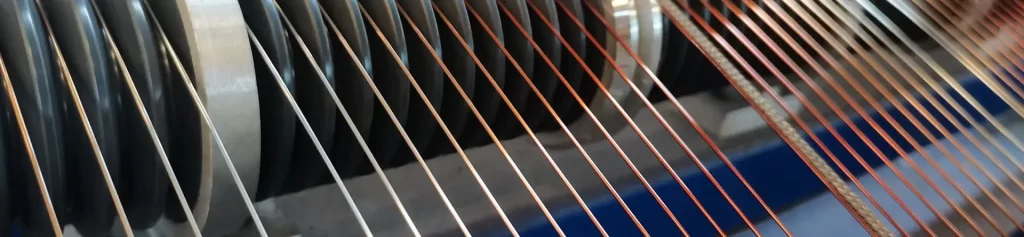
The enameled copper wire industry is undergoing a quiet revolution. For the past thirty years, traditional solvent-based enamel coatings have dominated the market—behind the abbreviations for polyurethane (UEW), polyester (PEW), polyester imide (EIW), and polyamide imide (AIW) lies the volatilization and emission of large amounts of organic solvents (NMP, DMF, cresol, xylene).
But regulations have changed, and so have customer questions. “Does your enamel coating contain PFAS?” “Do you have a water-based version?” “What are the VOC emission figures?” These questions were almost never asked three years ago. Now—every week. From LP’s thirty years of export experience, environmentally friendly enameled copper wire coatings have gone from a “bonus” to a “barrier to entry.” This article systematically reviews the driving forces of environmental regulations, the limitations of traditional solvent-based enamel coatings, four mainstream alternative technologies (water-based, UV/EB curing, bio-based resins, and NMP-free/DMF-free systems), performance maintenance strategies, and the technological evolution direction in the next 3-5 years.
I. Driving Forces: Environmental regulations are reshaping the enameled wire supply chain
RoHS 2.0/3 (EU 2011/65/EU + 2015/863): Restricts lead, mercury, cadmium, hexavalent chromium, and four phthalates (DEHP, BBP, DBP, DIBP). The new RoHS 3 further tightens the limits for these four phthalates to 1000 ppm. While enamel coatings themselves do not contain these heavy metals, the lead content of the conductor copper rod is strictly controlled—the combination of lead-free copper rods and environmentally friendly enamel coatings has become the standard for exports.
REACH SVHC (EU 1907/2006): The List of Substances of Very High Concern (SVHCs) has increased to 253 items by 2025. If any SVHC substance is present in an article at a concentration exceeding 0.1% w/w, importers must notify ECHA and provide a Safety Data Sheet (SDS) to their customers. This directly impacts enamel coating formulations—certain traditional catalysts, crosslinking agents, and UV absorbers are forced to be replaced.
PFAS Restrictions (EU 2025/1988): The EU’s PFAS restriction regulations, published in October 2025, primarily affect fire-fighting foams (total concentration ≤ 1 mg/L), but also extend to all fluoropolymers. PTFE modifiers and fluorinated surfactants used in the enamel coating industry are now on the review list. Enameled wire exported to Europe must undergo a reassessment of its fluorinated components.
VOC Emission Control (EPA 40 CFR Part 60 + EU 2010/75/EU IED): Traditional solvent-based enamel coatings release VOCs during the coating and baking processes. The US EPA stipulates that newly built enamel coating plants must have VOC emissions ≤ 50 mg/m³, while the EU IED directive has even stricter requirements. In recent years, domestic enamel coating plants in Henan, Guangdong, Jiangsu, and other regions have been intensively installing RTOs (Regenerative Thermal Oxidizers) – with an investment of 3-5 million RMB per unit – solely to meet environmental regulations. An interesting phenomenon: Regarding the same IEC 60317 standard, before 2010, customers only asked “how many degrees it can withstand,” but now they first ask “does it contain NMP?” The bargaining power in material procurement is shifting from “performance first” to “compliance first.”
II. Limitations of Traditional Solvent-Based Enameled Wire Coating
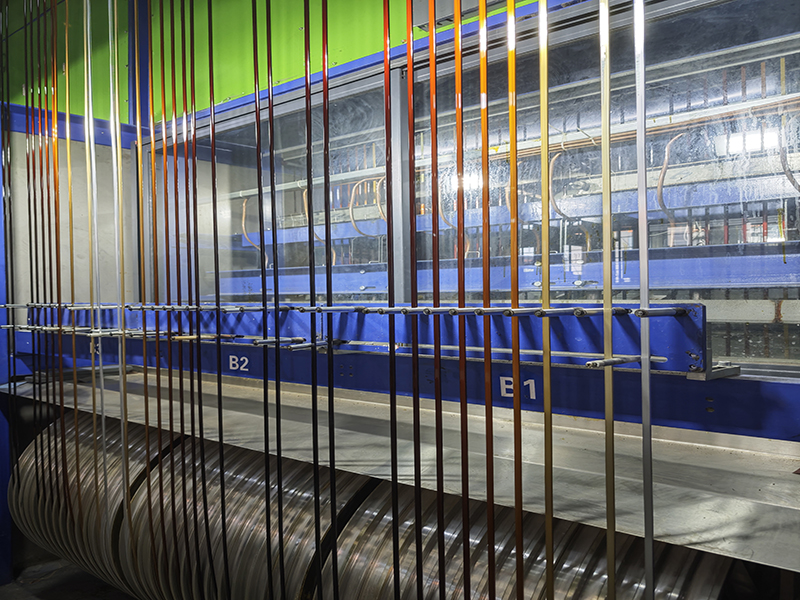
The enamel coating process essentially involves dissolving polymer resin in an organic solvent, coating it onto copper wire, and then baking it at high temperature to allow the solvent to evaporate and form an insulating film. Commonly used solvents and their corresponding characteristics and environmental hazards are shown in the table below:
| Solvent | Boiling Point | Main Applications | Environmental Issues |
|---|---|---|---|
| NMP (N-methylpyrrolidone) | 202℃ | Polyamide-Imide (AIW) | REACH Restriction on Reproductive Toxicity |
| DMF (N,N-Dimethylformamide) | 153℃ | polyurethane (UEW) | REACH SVHC, IARC 2A Carcinogenic |
| Cresol | 191-203℃ | polyester Imine (EIW) | Toxicity, Odor |
| Xylene | 138-144℃ | General-purpose Diluent | VOC, Photochemical Smog |
| Ethylene Glycol Butyl Ether | 171℃ | Leveling Agent | Reproductive Toxicity |
III. 4 Environmentally Friendly Alternative Technologies
3.1 Water-based enamel coating
Core concept: Replace organic solvents with water, and make the resin into an aqueous dispersion or aqueous solution.
Current progress: According to Dataintelo’s 2025 industry report, water-based polyester imine coating (PEI) has already captured 37.7% of the global enameled wire enamel coating market, making it the fastest-growing segment. Leading suppliers such as Elantas, Hitachi Chemical, and DuPont have launched water-based product lines, covering three thermal classes: Class 155, Class 180, and Class 200.
Advantages:
- VOC emissions reduced by 80-90% (from 200-400 g/L to 20-50 g/L)
- Free of NMP/DMF/cresol
- Baking temperature can be reduced to 280-350℃ (energy saving of 15-25%)
- Equipment cleaning can be done with water only, no organic solvent cleaning agents required.
Challenges:
- Water has high surface tension (72 mN/m), resulting in poor wettability of copper wires, requiring the addition of surfactants (while also considering environmental protection).
- Slow water evaporation during baking affects production cycle time (line speed reduced by 20-30%).
- High storage stability requirements (cannot be frozen, cannot be at high temperatures, cannot be stored for long periods).
LP factory Experience: Since 2023, we have helped a European customer (producing high-end home appliance motors) switch to water-based Class 180 PEI. Initially, the line speed decreased by 25% in the first two months, but after stabilization, it remained within an acceptable range. The most critical change reported by the customer was the elimination of solvent odor in the factory, and workshop workers no longer needed to wear respirators.
3.2 UV/EB Curing enamel coating
Core Idea: Using ultraviolet light (UV) or electron beam (EB) to initiate resin cross-linking and curing, replacing traditional thermal curing.
UV Curing enamel coating: Uses epoxy acrylate and polyurethane acrylate as the main resins, combined with a photoinitiator. After coating, it can be cured by irradiation with a 365 nm UV lamp for 0.5-3 seconds, without the need for high-temperature baking.
EB Curing enamel coating: Uses an electron beam generated by an electron accelerator to initiate curing, with higher energy, capable of penetrating opaque coatings.
| Dimensions | UV Curing | EB Curing |
|---|---|---|
| Equipment Investment | 500,000-1,500,000 RMB | 5,000,000-15,000,000 RMB |
| Curing Speed | 0.5-3 seconds | < 1 second |
| Coating Thickness | 5-50 μm | 50-200 μm |
| Applicable to enameled wires | Fine wires (0.10-0.50 mm) | Heavy duty wires (> 1.0 mm) |
| Energy Consumption | Low | High |
3.3 Bio-based Resin
Core Idea: To synthesize enamel coating resins by replacing petroleum-based monomers with renewable raw materials (vegetable oils, starch, cellulose, lignin).
Current Progress:
- Soybean Oil-Based Polyester: Commercial products are available from DuPont (US) and Hitachi (Japan), with a bio-based content of 30-50% and heat resistance of 155-180°C.
- Polylactic Acid (PLA) Modification: Used for low-end enamel coatings (below 130°C), costing 10-15% less than petroleum-based coatings.
- Itaconic Acid: A bio-based unsaturated acid produced through fermentation, which can replace phthalic anhydride in the synthesis of polyester imines, with a bio-based content > 70%.
Advantages:
- 30-60% reduction in carbon footprint (raw material side)
- Some bio-based resins are biodegradable in soil
- Meets “green supply chain” audit requirements (required by end-product brands such as Apple, Huawei, and Tesla).
Challenges:
- Unstable supply of bio-based raw materials (affected by crop yields)
- Limited thermal class (up to 180°C; above 200°C, still relies on petroleum-based PAI/PI).
- Price is 20-40% higher than petroleum-based (higher cost for small-scale production)
3.4 NMP-free / DMF-free solvent-based enamel coating
Core idea: Retain the maturity of traditional solvent-based processes, but use low-toxicity, recyclable alternative solvents.
Alternatives:
- Divalent ester (DBE): A mixed ester solvent developed by DuPont, with low toxicity and biodegradability, used for polyurethane enamel coating.
- Propylene carbonate (PC): High boiling point, low toxicity, low VOC, used for polyester imine enamel coating.
- Ethyl acetate/ethyl propionate: Low-toxicity alcohol ester solvent, used for solderable polyurethane enamel coating.
Current progress: Elantas and Essex Furukawa have both launched the “GreenSol” series of NMP-free enamel coatings, mainly targeting automotive motors (200 grade) and household appliance motors (155-180 grade). LP factory began supplying NMP-free Class 200 AIW enameled wire to European customers in bulk in 2024.
Advantages:
- Excellent process compatibility (direct solvent replacement, equipment and processes unchanged)
- Performance retention (heat resistance, breakdown, and adhesion comparable to conventional systems)
- Regulatory-friendly (free of REACH-restricted substances)
IV. Performance Maintenance: Environmentally Friendly Coatings Are Not a Performance Compromise
Many engineers worry that environmentally friendly coatings will compromise performance. Based on actual data, this concern is partially valid, but largely a misunderstanding.
Breakdown Voltage: The breakdown voltage of water-based PEI enamel coating at Grade 180 can reach Grade 2 (≥ 4.0 kV), comparable to solvent-based coatings. The key control points are coating uniformity and baking profile. Because of its low viscosity (50-200 mPa·s) and good leveling properties, water-based enamel coating is actually easier to achieve a uniform coating.
Heat Resistance: Water-based enamel coating thermal class has been covered up to Grade 200 (PEI/PAI composite system), on par with solvent-based AIW. Bio-based resins mainly cover grades 130-180, while grades 200 and above still rely on PAI/PI systems.
Adhesion: The traditional testing method is to age the enameled wire in a 200°C oven and then perform a winding test (IEC 60851-3). Both water-based and solvent-based enameled coatings show no cracking when wound to a diameter of 1-3 times the wire diameter, indicating comparable adhesion.
Chemical Resistance: Water-based enameled coatings exhibit slightly lower resistance to transformer oils, refrigerants, and salt water than solvent-based coatings (5-10% difference), but this can be compensated for by post-curing processes.
A Counterintuitive Phenomenon: Because water-based enameled coatings do not contain low-boiling-point solvents, their density is actually better than that of solvent-based coatings. Solvent-based enamel coatings evaporate rapidly during baking, potentially leaving micropores within the coating. Water-based enamel coatings evaporate slowly, resulting in a denser structure and 10-20% improved moisture resistance.
V. Technological Evolution Directions in the Next 3-5 Years
5.1 Regulatory-Driven Tightening
EU PFAS restrictions are expected to be gradually implemented between 2025 and 2027, with all industry restrictions anticipated by 2027. The enamel coating industry’s response is complete defluorination—PTFE modifiers will be phased out, replaced by inorganic lubricants (molybdenum disulfide, graphite). In China, the “dual-carbon” policy is driving low-carbon transformation in the enamel coating industry, with a mandatory RTO equipment installation (VOCs ≤ 50 mg/m³) expected to be completed between 2026 and 2028.
5.2 Waterborne Coatings are the Mainstream Direction
The market share of waterborne enamel coatings is projected to grow from 37.7% in 2025 to 55-60% in 2030. Key technological breakthroughs include:
- Solving the high surface tension problem of water (nanosurfactants)
- Increasing linear speed (infrared + hot air composite baking)
- Expanding thermal class to 220 (PEI/PAI waterborne composite system)
5.3 UV/EB Curing Penetrates into Medium-Heavy-Duty Wires
With the decreasing cost of EB equipment (estimated to drop to 2-3 million RMB by 2028) and the development of high-temperature-resistance UV resins, UV/EB curing of enamel coatings will penetrate into medium-heavy-duty wires (0.50-2.00 mm), covering the industrial motor and home appliance motor markets.
5.4 Intelligent Manufacturing
AI-assisted enamel coating formulation development will accelerate the iteration of new materials. Traditional formulation development cycles take 2-3 years, while AI models can shorten this to 6-9 months. LP factory is collaborating with universities to develop an AI system for enameled coating formulations, aiming for launch in 2027.
5.5 Recycling and Regeneration
The copper conductor recovery rate of discarded enameled wire has exceeded 95%, but the enameled coating becomes waste gas/residue. Future research directions:
- Degradable enameled coating (strippable under alkaline conditions)
- Enameled coating and copper separation technology (solvent extraction, pyrolysis)
- Chemical recovery of enameled coating materials (depolymerization → monomer recovery)
Conclusion
Environmentally friendly enameled copper wire coatings are no longer just an “environmentally friendly label,” but a “product standard.” Based on LP factory’s 30 years of export experience, customer focus on environmental attributes will continue to rise over the next three years—the market share of traditional solvent-based enameled coatings will continue to decline, while water-based and NMP-free systems will become mainstream. LP factory provides a full range of environmentally friendly enameled copper wires: water-based 130-200 grade, NMP-free 200 grade AIW, and bio-based 130-180 grade, meeting full compliance requirements of IEC 60317, NEMA MW 1000-2018, RoHS, REACH, and PFAS. With 30 years of experience in exporting magnetic wires, we have exported to over 50 countries and hold ISO 9001/14001/45001 triple certifications.
Contact Information:
WhatsApp: 0086-19337889070
Email: office@cnlpzz.com