

1 Introduction
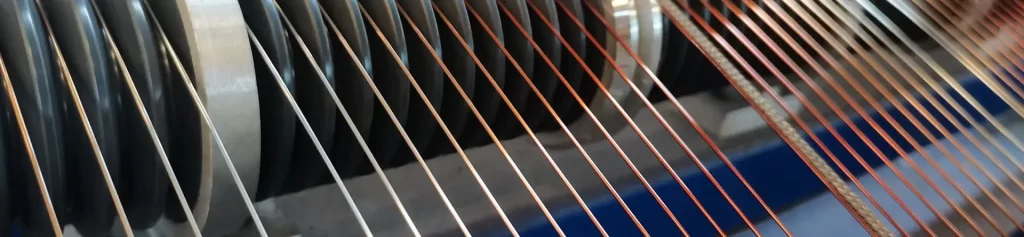
Paper covered wire is an insulated winding wire that uses insulation paper tape such as cable paper, telephone paper, high voltage paper, and inter-turn insulation paper wrapped around the surface of copper conductor or aluminum conductor. It is the key winding material for high voltage electrical equipment such as oil-immersed power transformers, mining transformers, rectifier transformers, reactors, high voltage instrument transformers, and high voltage bushings. Paper covered wire has the advantages of high insulation strength, good mechanical properties, stable heat resistance, mature impregnation process, relatively low cost, and strong compatibility with oil paper composite insulation. It has been used in the field of high voltage electrical equipment manufacturing for over 100 years. The performance and quality of paper covered wire mainly depend on the standardization and quality control of conductor material, insulation paper material, impregnating varnish material, composite insulation material, and manufacturing process.
The design and application of paper covered wire is a key technical issue faced by winding engineers, electrical designers, and transformer manufacturers. Based on IEC 60554, IEC 60243, ASTM D 2413, GB/T 7969, GB/T 7970, GB/T 10580, JB/T 8740 and other international and domestic standards, this article systematically describes the technical methods and engineering practice of standard materials for paper covered wire production from eight dimensions including paper covered wire overview, conductor material standard, insulation paper standard, impregnating varnish standard, composite material standard, application scenarios, selection principle, and summary, providing systematic technical reference for the design and manufacture of high voltage electrical systems.
2 Paper Covered Wire Overview
2.1 Paper Covered Wire Definition
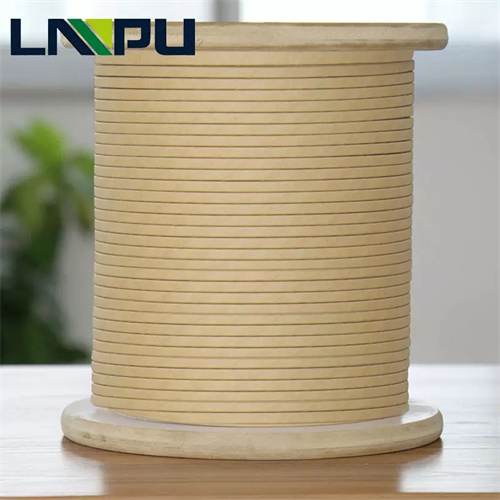
Paper covered wire is an insulated winding wire that uses insulation paper tape spirally wrapped around the surface of round conductor or flat conductor. The paper tape width is usually 12 to 30 mm, the paper tape thickness is 0.05 to 0.13 mm, the paper tape layer number is 1 to 6 layers, and the paper tape wrapping overlap rate is 30% to 50%.
Paper covered wire classification by conductor material: paper covered copper wire, paper covered aluminum wire, paper covered copper clad aluminum wire.
Paper covered wire classification by conductor shape: round paper covered wire, flat paper covered wire.
Paper covered wire classification by insulation structure: paper covered bare wire, paper covered enameled wire, paper covered fiberglass wire, paper covered film wire, paper covered composite wire.
Paper covered wire classification by insulation layer number: single layer paper covered wire, double layer paper covered wire, three layer paper covered wire, multi-layer paper covered wire.
2.2 Paper Covered Wire Development History
Paper covered wire development history: In 1890, paper covered copper wire was first applied to power transformer windings. In 1920, high voltage cable paper was applied to high voltage transformer windings. In 1950, inter-turn insulation paper was standardized. In 1970, heat resistant paper covered wire was developed. In 1990, high dielectric strength paper covered wire was developed. In 2000, Nomex aramid paper covered wire was developed. In 2010, composite paper covered wire was developed. In 2020, high performance paper covered wire was standardized.
2.3 Paper Covered Wire Technical Advantages
Paper covered wire technical advantages:
High insulation strength: Paper covered wire uses multi-layer paper tape wrapping, dense insulation layer, high breakdown voltage, suitable for high voltage scenarios.
Strong oil paper compatibility: The insulation paper of paper covered wire has good compatibility with mineral oil, stable insulation performance after oil immersion, and excellent oil paper composite insulation performance.
Good mechanical properties: Paper covered wire insulation layer has high mechanical strength, bending resistance, vibration resistance, and mature winding process.
Stable heat resistance: Paper covered wire uses cellulose paper or synthetic fiber paper, with a thermal class of 105 to 180 degrees Celsius, and stable long term operating temperature.
Relatively low cost: The raw material cost of paper covered wire is lower than that of enameled wire, fiberglass covered wire, and film wrapped wire, with high cost performance.
Mature process: Paper covered wire manufacturing process is mature, winding equipment is widely used, inspection methods are standard, and quality is stable and reliable.
3 Conductor Material Standard
3.1 Copper Conductor Standard
Paper covered wire copper conductor material should comply with ASTM B 49, GB/T 3953 and other standards:
TU1 oxygen-free copper: Copper content not less than 99.97%, oxygen content below 0.003%, conductivity not less than 101% IACS, elongation not less than 35%, tensile strength 200 to 260 MPa, namely soft state. It is the standard conductor material for paper covered wire round wire.
TU2 oxygen-free copper: Copper content not less than 99.95%, oxygen content below 0.005%, conductivity not less than 100% IACS, elongation not less than 30%, tensile strength 200 to 270 MPa, namely soft state. It is the commonly used conductor material for paper covered wire round wire.
T2 standard electrolytic copper: Copper content not less than 99.90%, oxygen content below 0.04%, conductivity not less than 100% IACS, elongation not less than 25%, tensile strength 200 to 280 MPa, namely soft state. It is the economical conductor material for paper covered wire round wire.
T2 standard electrolytic copper flat wire: Copper content not less than 99.90%, conductivity not less than 100% IACS, tensile strength 200 to 280 MPa, namely soft state. It is the standard conductor material for paper covered wire flat wire.
3.2 Aluminum Conductor Standard
Paper covered wire aluminum conductor material should comply with ASTM B 230, GB/T 3955 and other standards:
1060 pure aluminum: Aluminum content not less than 99.60%, conductivity not less than 61% IACS, elongation not less than 25%, tensile strength 60 to 95 MPa, namely soft state. It is the standard aluminum conductor for paper covered wire round wire.
1050 pure aluminum: Aluminum content not less than 99.50%, conductivity not less than 61% IACS, elongation not less than 25%, tensile strength 60 to 100 MPa, namely soft state. It is the commonly used aluminum conductor for paper covered wire round wire.
1350 pure aluminum: Aluminum content not less than 99.50%, conductivity not less than 61.8% IACS, elongation not less than 20%, tensile strength 60 to 95 MPa, namely soft state. It is the standard conductor for transformer aluminum windings.
3.3 Conductor Shape and Specification
Paper covered wire conductor shape and specification:
Round conductor: Conductor diameter 0.50 to 6.00 mm, diameter tolerance plus minus 0.005 to plus minus 0.030 mm, roundness tolerance plus minus 0.005 to plus minus 0.020 mm, surface roughness Ra 0.8 to 1.6 micrometers. It is the most commonly used conductor shape for paper covered wire.
Flat conductor: Conductor width 2.00 to 16.00 mm, conductor thickness 0.80 to 5.60 mm, width tolerance plus minus 0.02 to plus minus 0.05 mm, thickness tolerance plus minus 0.01 to plus minus 0.04 mm, width thickness ratio 1.5 to 20, fillet radius 0.4 to 1.5 mm. It is the key conductor shape for high voltage transformer high current windings.
3.4 Conductor Surface Quality
Paper covered wire conductor surface quality requirements:
The surface should be clean, free of oxide layer, free of oil, and free of moisture.
The surface should be smooth, with roughness Ra 0.8 to 1.6 micrometers.
The surface should be free of scratches, dents, folds, and cracks.
The surface should be free of burrs, the conductor edge should be smooth, and the insulation paper should not be torn.
The side and fillet of the flat conductor should be smooth to avoid stress concentration and damage to the insulation paper.
4 Insulation Paper Standard
4.1 Cable Paper Standard
Cable paper is the most commonly used insulation paper material for paper covered wire, and should comply with IEC 60554-3-1, GB/T 7969 and other standards.
Cable paper model and specification:
DLZ-0.05 low voltage cable paper: Thickness 0.05 mm, width 12 to 25 mm, tensile strength longitudinal above 8.5 kN/m, transverse above 4.0 kN/m, breakdown voltage above 400 V, moisture content below 8%, ash content below 1.0%, pH value 6.5 to 8.0.
DLZ-0.08 low voltage cable paper: Thickness 0.08 mm, width 12 to 25 mm, tensile strength longitudinal above 11.0 kN/m, transverse above 5.0 kN/m, breakdown voltage above 600 V, moisture content below 8%, ash content below 1.0%, pH value 6.5 to 8.0.
DLZ-0.13 low voltage cable paper: Thickness 0.13 mm, width 12 to 30 mm, tensile strength longitudinal above 13.0 kN/m, transverse above 6.0 kN/m, breakdown voltage above 800 V, moisture content below 8%, ash content below 1.0%, pH value 6.5 to 8.0.
Cable paper application scenarios: DLZ-0.05 is suitable for inter-turn insulation of low voltage oil-immersed transformer windings, DLZ-0.08 is suitable for medium voltage oil-immersed transformer winding insulation, DLZ-0.13 is suitable for high voltage oil-immersed transformer winding insulation.
4.2 Telephone Paper Standard
Telephone paper is a commonly used thin insulation paper material for paper covered wire, and should comply with IEC 60554-3-2, GB/T 7970 and other standards.
Telephone paper model and specification:
DH-0.05 telephone paper: Thickness 0.05 mm, width 12 to 25 mm, tensile strength longitudinal above 3.5 kN/m, transverse above 1.6 kN/m, breakdown voltage above 300 V, moisture content below 7%, ash content below 0.8%, pH value 6.5 to 8.0.
DH-0.08 telephone paper: Thickness 0.08 mm, width 12 to 25 mm, tensile strength longitudinal above 4.0 kN/m, transverse above 1.8 kN/m, breakdown voltage above 350 V, moisture content below 7%, ash content below 0.8%, pH value 6.5 to 8.0.
DH-0.13 telephone paper: Thickness 0.13 mm, width 12 to 30 mm, tensile strength longitudinal above 4.5 kN/m, transverse above 2.0 kN/m, breakdown voltage above 400 V, moisture content below 7%, ash content below 0.8%, pH value 6.5 to 8.0.
Telephone paper application scenarios: Telephone paper is suitable for transformer winding inter-turn insulation, low voltage winding insulation, and inter-layer insulation.
4.3 High Voltage Cable Paper Standard
High voltage cable paper is the key insulation material for high voltage paper covered wire, and should comply with IEC 60554-3-3, GB/T 10580 and other standards.
High voltage cable paper model and specification:
GDL-0.08 high voltage cable paper: Thickness 0.08 mm, width 12 to 30 mm, tensile strength longitudinal above 11.0 kN/m, transverse above 5.0 kN/m, breakdown voltage above 1000 V, moisture content below 6%, ash content below 0.5%, pH value 6.5 to 8.0.
GDL-0.13 high voltage cable paper: Thickness 0.13 mm, width 12 to 30 mm, tensile strength longitudinal above 13.0 kN/m, transverse above 6.0 kN/m, breakdown voltage above 1300 V, moisture content below 6%, ash content below 0.5%, pH value 6.5 to 8.0.
GDL-0.17 high voltage cable paper: Thickness 0.17 mm, width 15 to 30 mm, tensile strength longitudinal above 15.0 kN/m, transverse above 7.0 kN/m, breakdown voltage above 1600 V, moisture content below 6%, ash content below 0.5%, pH value 6.5 to 8.0.
High voltage cable paper application scenarios: High voltage cable paper is suitable for 35 kV and above oil-immersed power transformer winding insulation, 110 kV and above high voltage instrument transformer insulation, and high voltage bushing insulation.
4.4 Inter-turn Insulation Paper Standard
Inter-turn insulation paper is the key material for transformer winding inter-turn insulation, and should comply with IEC 60554-3-4, JB/T 8740 and other standards.
Inter-turn insulation paper model and specification:
ZB-0.05 inter-turn insulation paper: Thickness 0.05 mm, width 10 to 25 mm, tensile strength longitudinal above 4.0 kN/m, transverse above 2.0 kN/m, breakdown voltage above 350 V, moisture content below 6%, ash content below 0.7%, pH value 6.5 to 8.0.
ZB-0.08 inter-turn insulation paper: Thickness 0.08 mm, width 10 to 25 mm, tensile strength longitudinal above 4.5 kN/m, transverse above 2.2 kN/m, breakdown voltage above 400 V, moisture content below 6%, ash content below 0.7%, pH value 6.5 to 8.0.
Inter-turn insulation paper application scenarios: Inter-turn insulation paper is suitable for transformer winding inter-turn insulation, inter-layer insulation, and low voltage winding insulation.
4.5 Synthetic Fiber Paper Standard
Synthetic fiber paper is the key insulation material for high temperature resistant paper covered wire windings, and should comply with IEC 60554-3-6 and other standards.
Nomex 410 aramid paper: Thickness 0.05 to 0.76 mm, width 12 to 30 mm, tensile strength longitudinal 9.0 to 200 kN/m, transverse 5.0 to 130 kN/m, breakdown voltage 400 to 4500 V, moisture content below 5%, ash content below 0.5%, thermal class 220 degrees Celsius.
Nomex 411 aramid paper: Thickness 0.13 to 0.58 mm, width 12 to 30 mm, tensile strength longitudinal 16.0 to 60 kN/m, transverse 9.0 to 40 kN/m, breakdown voltage 1100 to 5000 V, moisture content below 5%, thermal class 220 degrees Celsius.
Polyester fiber paper: Thickness 0.05 to 0.25 mm, width 12 to 30 mm, tensile strength longitudinal 4.0 to 20 kN/m, transverse 2.0 to 10 kN/m, breakdown voltage 300 to 1500 V, moisture content below 5%, thermal class 155 degrees Celsius.
Synthetic fiber paper application scenarios: Synthetic fiber paper is suitable for Class H 180 degrees Celsius and above high temperature resistant oil-immersed transformers, dry type transformers, traction transformers, rectifier transformers, and high temperature electrical equipment.
4.6 Insulation Paper Selection Principle
Insulation paper selection principle:
Voltage class matching: Low voltage below 1 kV selects DLZ-0.05 or DH-0.05 / medium voltage 1 to 35 kV selects DLZ-0.08 or GDL-0.08 / high voltage above 35 kV selects GDL-0.13 or GDL-0.17.
Thermal class matching: Class A 105 degrees Celsius selects DLZ cable paper or DH telephone paper / Class E 120 degrees Celsius selects DLZ cable paper / Class B 130 degrees Celsius selects GDL high voltage cable paper / Class F 155 degrees Celsius selects polyester fiber paper / Class H 180 degrees Celsius selects Nomex aramid paper / Class C above 200 degrees Celsius selects mica paper or ceramic fiber paper.
Mechanical strength matching: High voltage high current transformer selects insulation paper with high tensile strength and large elongation. Low voltage low current transformer can select standard insulation paper.
Cost matching: Under the premise of meeting performance, select economical insulation paper to control cost.
5 Impregnating Varnish Standard
5.1 Impregnating Varnish Basic Requirements
Paper covered wire impregnating varnish is the key supporting material for oil-immersed transformers, high voltage instrument transformers and other equipment. The impregnating varnish should meet the following basic requirements:
Electrical performance: Impregnating varnish breakdown voltage not less than 30 kV per mm, volume resistivity not less than 10 to the power of 12 Ω·cm, dielectric loss tangent not higher than 0.01.
Chemical stability: Impregnating varnish should be resistant to mineral oil, thermal aging, acid and alkali, and moisture.
Impregnation performance: Impregnating varnish has moderate viscosity, good fluidity, strong permeability, and can fully impregnate the paper covered wire insulation layer.
Curing performance: Impregnating varnish should be cured at 100 to 150 degrees Celsius, with moderate curing time and complete cured film.
5.2 Mineral Oil Impregnant
Mineral oil impregnant is the most commonly used impregnation material for oil-immersed power transformers, high voltage instrument transformers, high voltage bushings and other equipment, and should comply with IEC 60296, ASTM D 3487, GB 2536 and other standards.
Mineral oil model and specification:
10 transformer oil: Kinematic viscosity 10 mm² per s, namely at 50 degrees Celsius, flash point 135 degrees Celsius, breakdown voltage above 35 kV, dielectric loss tangent below 0.005, namely at 90 degrees Celsius, moisture content below 30 mg per kg, acid value below 0.03 mg KOH per g.
25 transformer oil: Kinematic viscosity 13 mm² per s, namely at 50 degrees Celsius, flash point 140 degrees Celsius, breakdown voltage above 35 kV, dielectric loss tangent below 0.005, namely at 90 degrees Celsius, moisture content below 30 mg per kg, acid value below 0.03 mg KOH per g. It is the standard oil for power transformers.
45 transformer oil: Kinematic viscosity 13 mm² per s, namely at 50 degrees Celsius, flash point 145 degrees Celsius, breakdown voltage above 35 kV, dielectric loss tangent below 0.005, namely at 90 degrees Celsius, moisture content below 30 mg per kg, acid value below 0.03 mg KOH per g. It is the standard oil for high voltage transformers and high voltage instrument transformers.
5.3 Synthetic Oil Impregnant
Synthetic oil impregnant is the key impregnation material for paper covered wire windings in special scenarios:
Silicone oil: Kinematic viscosity 10 to 50 mm² per s, namely at 25 degrees Celsius, flash point above 300 degrees Celsius, breakdown voltage above 35 kV, dielectric loss tangent below 0.001, thermal class above 200 degrees Celsius. Suitable for high temperature transformers.
Synthetic ester oil: Kinematic viscosity 15 to 30 mm² per s, namely at 40 degrees Celsius, flash point above 250 degrees Celsius, breakdown voltage above 35 kV, dielectric loss tangent below 0.005, excellent biodegradability. Suitable for environmentally friendly transformers.
Vegetable oil: Kinematic viscosity 15 to 35 mm² per s, namely at 40 degrees Celsius, flash point above 250 degrees Celsius, breakdown voltage above 35 kV, dielectric loss tangent below 0.01, renewable. Suitable for environmentally friendly transformers.
5.4 Impregnation Process and Quality Control
Paper covered wire winding impregnation process:
Vacuum pressure impregnation: First vacuumize to below 50 Pa, hold for 1 to 4 hours, inject impregnant, hold vacuum for 1 to 2 hours, pressurize to 0.2 to 0.5 MPa, hold for 4 to 12 hours. Vacuum pressure impregnation is the standard impregnation process for oil-immersed transformer windings.
Paper covered wire winding impregnation quality control:
Before impregnation: Winding should be dry, moisture content below 0.5%, clean, free of impurities. Impregnant should be filtered, moisture content below 30 mg per kg, acid value below 0.03 mg KOH per g.
During impregnation: Vacuum below 50 Pa, pressure 0.2 to 0.5 MPa, temperature 60 to 80 degrees Celsius, time 8 to 24 hours.
After impregnation: Winding after impregnation should have no bubbles, no local drying, insulation resistance not less than 1000 MΩ, dielectric loss tangent not higher than 0.005.
6 Composite Material Standard
6.1 Paper Covered Enameled Wire Composite Material
Paper covered enameled wire is an insulated winding wire that combines paper insulation and enamel insulation, and should comply with IEC 60317 and other standards.
Paper covered enameled wire insulation structure: Inner layer enamel film, outer layer paper tape wrapping, enamel film and paper tape cooperate for insulation.
Paper covered enameled wire advantages: Inner layer enamel film provides electrical insulation and mechanical strength, outer layer paper tape provides voltage resistance and oil immersion compatibility, and composite insulation performance is better than single insulation.
Paper covered enameled wire application: Paper covered enameled wire is suitable for high voltage oil-immersed transformer windings, mining transformer windings, and special transformer windings.
6.2 Paper Covered Fiberglass Wire Composite Material
Paper covered fiberglass wire is an insulated winding wire that combines paper insulation and fiberglass insulation, and should comply with IEC 60317-0-8 and other standards.
Paper covered fiberglass wire insulation structure: Inner layer fiberglass wrapping, outer layer paper tape wrapping, fiberglass and paper tape cooperate for insulation.
Paper covered fiberglass wire advantages: Fiberglass provides mechanical strength and heat resistance, paper tape provides electrical insulation and oil immersion compatibility, composite insulation thermal class 180 degrees Celsius.
Paper covered fiberglass wire application: Paper covered fiberglass wire is suitable for dry type transformer windings, Class H oil-immersed transformer windings, and high temperature transformer windings.
6.3 Paper Covered Film Wire Composite Material
Paper covered film wire is an insulated winding wire that combines paper insulation and film insulation, and should comply with IEC 60317 and other standards.
Paper covered film wire insulation structure: Inner layer polyester film or polyimide film, outer layer paper tape wrapping, film and paper tape cooperate for insulation.
Paper covered film wire advantages: Film provides electrical insulation and mechanical strength, paper tape provides voltage resistance and oil immersion compatibility, composite insulation has high breakdown voltage.
Paper covered film wire application: Paper covered film wire is suitable for high voltage oil-immersed transformer windings, 35 kV and above power transformer windings.
6.4 Continuously Transposed Conductor Composite Material
Continuously transposed conductor CTC is a composite winding wire that uses multiple enameled flat wires transposed and wrapped with paper insulation, and should comply with IEC 60317 and other standards.
Continuously transposed conductor structure: 5 to 80 enameled flat wires continuously transposed, outer layer paper tape wrapping, single enameled flat wire thickness 0.90 to 3.15 mm, width 2.50 to 13.00 mm, width thickness ratio 2.0 to 9.0.
Continuously transposed conductor advantages: Continuous transposition eliminates circulation loss, paper tape wrapping provides insulation, single enameled wire provides electrical insulation, composite insulation performance is excellent.
Continuously transposed conductor application: Continuously transposed conductor is suitable for large power transformer windings and high current rectifier transformer windings.
6.5 Composite Material Selection Principle
Composite material selection principle: The breakdown voltage should be 1.5 to 2 times higher than the equipment maximum working voltage / the thermal class should be 20 to 30 degrees Celsius higher than the equipment maximum operating temperature / the mechanical strength should meet the requirements of winding, assembly, and operation / should be compatible with impregnant / under the premise of meeting performance, select economical type.
7 Application Scenarios
7.1 Oil-immersed Power Transformer
Oil-immersed power transformer is the largest application scenario of paper covered wire. Oil-immersed power transformer capacity 50 kVA to 1000 MVA, voltage class 0.4 kV to 1000 kV, insulation medium is mineral oil and insulation paper composite insulation system.
Oil-immersed power transformer paper covered copper wire specification: Round conductor diameter 0.50 to 3.00 mm, flat conductor width 2.00 to 16.00 mm, thickness 0.80 to 5.60 mm. Insulation paper model DLZ-0.08 / DLZ-0.13 / GDL-0.08 / GDL-0.13 / GDL-0.17. Paper tape layer number 2 to 6 layers. Impregnant 25 or 45 transformer oil.
Oil-immersed power transformer application case: A certain model of 110 kV 50 MVA oil-immersed power transformer adopts paper covered copper wire, flat conductor specification width 10 mm, thickness 3.15 mm, insulation paper model GDL-0.13, paper tape layer number 4 layers, impregnant 45 transformer oil, winding dielectric loss tangent 0.003, operating voltage 110 kV, insulation class A, service life over 30 years.
7.2 Oil-immersed Rectifier Transformer
Oil-immersed rectifier transformer is an important application scenario of paper covered wire. Rectifier transformer has high current, high harmonic content, high temperature rise, and strict insulation requirements.
Oil-immersed rectifier transformer paper covered wire specification: Flat conductor width 4.00 to 16.00 mm, thickness 1.00 to 5.60 mm, insulation paper model DLZ-0.13 / GDL-0.13, paper tape layer number 2 to 4 layers, impregnant 25 transformer oil.
Oil-immersed rectifier transformer application case: A certain model of 10 kV 5000 kVA oil-immersed rectifier transformer adopts paper covered copper wire, flat conductor specification width 12 mm, thickness 4.00 mm, insulation paper model DLZ-0.13, paper tape layer number 3 layers, impregnant 25 transformer oil, operating voltage 10 kV, current 5000 A.
7.3 Mining Transformer
Mining transformer is a special application scenario of paper covered wire. Mining transformer has harsh operating environment, large vibration impact, high insulation requirements, and strict explosion proof requirements.
Mining transformer paper covered wire specification: Round conductor diameter 0.80 to 3.00 mm, flat conductor width 2.00 to 10.00 mm, thickness 0.80 to 3.15 mm. Insulation paper model DLZ-0.08 / DLZ-0.13, paper tape layer number 2 to 4 layers, impregnant 25 transformer oil.
Mining transformer application case: A certain model of 6 kV 500 kVA mining transformer adopts paper covered copper wire, flat conductor specification width 6 mm, thickness 2.00 mm, insulation paper model DLZ-0.13, paper tape layer number 3 layers, impregnant 25 transformer oil, operating voltage 6 kV, insulation class A.
7.4 Series Reactor
Series reactor is a conventional application scenario of paper covered wire. Series reactor has high working current, high harmonic content, large vibration impact, and strict insulation requirements.
Series reactor paper covered wire specification: Round conductor diameter 1.00 to 5.00 mm, flat conductor width 4.00 to 16.00 mm, thickness 1.50 to 5.60 mm. Insulation paper model DLZ-0.13 / GDL-0.13, paper tape layer number 2 to 4 layers, impregnant 25 transformer oil.
Series reactor application case: A certain model of 10 kV 100 kvar series reactor adopts paper covered aluminum wire, flat conductor specification width 8 mm, thickness 3.15 mm, insulation paper model DLZ-0.13, paper tape layer number 3 layers, impregnant 25 transformer oil, operating voltage 10 kV.
7.5 High Voltage Current Transformer
High voltage current transformer is a high voltage application scenario of paper covered wire. Current transformer has strict insulation requirements and high long term operational reliability requirements.
High voltage current transformer paper covered wire specification: Round conductor diameter 0.50 to 2.00 mm, insulation paper model GDL-0.08 / GDL-0.13 / Nomex 410, paper tape layer number 4 to 8 layers, impregnant 45 transformer oil or silicone oil.
High voltage current transformer application case: A certain model of 110 kV high voltage current transformer adopts paper covered copper wire, conductor diameter 1.00 mm, insulation paper model GDL-0.13, paper tape layer number 6 layers, impregnant 45 transformer oil, operating voltage 110 kV, insulation class A.
7.6 High Voltage Bushing
High voltage bushing is a high voltage insulation application scenario of paper covered wire. Bushing has strict insulation requirements, high creepage distance requirements, and high outdoor weather resistance requirements.
High voltage bushing paper covered wire specification: Round conductor diameter 0.50 to 2.00 mm, insulation paper model GDL-0.13 / GDL-0.17 / Nomex 410, paper tape layer number 6 to 12 layers, impregnant 45 transformer oil or synthetic ester oil.
High voltage bushing application case: A certain model of 220 kV oil-immersed transformer bushing adopts paper covered copper wire, conductor diameter 1.50 mm, insulation paper model GDL-0.17, paper tape layer number 10 layers, impregnant 45 transformer oil, operating voltage 220 kV, insulation class A.
7.7 Dry Type Transformer
Dry type transformer is an oil-free application scenario of paper covered wire. Dry type transformer has no mineral oil, uses air or solid insulation, and has strict insulation requirements.
Dry type transformer paper covered wire specification: Round conductor diameter 0.50 to 2.50 mm, flat conductor width 2.00 to 12.00 mm, thickness 0.80 to 3.15 mm. Insulation paper model DLZ-0.08 / DLZ-0.13 / Nomex 410, paper tape layer number 2 to 4 layers.
Dry type transformer application case: A certain model of 10 kV 1000 kVA dry type transformer adopts paper covered fiberglass wire, flat conductor specification width 6 mm, thickness 2.00 mm, insulation paper model Nomex 410, paper tape layer number 2 layers, operating voltage 10 kV, insulation class H.
7.8 Traction Transformer
Traction transformer is a special application scenario of paper covered wire. Traction transformer has large vibration impact, strong overload capacity, and strict insulation requirements.
Traction transformer paper covered wire specification: Flat conductor width 2.00 to 10.00 mm, thickness 0.80 to 3.15 mm. Insulation paper model DLZ-0.13 / Nomex 410 / polyester fiber paper, paper tape layer number 2 to 4 layers, impregnant 25 transformer oil or synthetic ester oil.
Traction transformer application case: A certain model of 25 kV traction transformer adopts paper covered enameled wire, flat conductor specification width 5 mm, thickness 1.60 mm, insulation paper model Nomex 410, paper tape layer number 3 layers, impregnant 25 transformer oil, operating voltage 25 kV, insulation class H.
7.9 Selection Recommendation Summary
Paper covered wire selection recommendation:
Oil-immersed power transformer: Recommend TU2 copper conductor, GDL-0.13 high voltage cable paper, 4 layer paper tape, 45 transformer oil impregnation. 110 kV and above voltage class recommends GDL-0.17 high voltage cable paper, 6 layer paper tape.
Oil-immersed rectifier transformer: Recommend TU2 copper conductor, DLZ-0.13 cable paper, 3 layer paper tape, 25 transformer oil impregnation.
Mining transformer: Recommend T2 copper conductor, DLZ-0.13 cable paper, 3 layer paper tape, 25 transformer oil impregnation.
Series reactor: Recommend 1350 aluminum conductor, DLZ-0.13 cable paper, 3 layer paper tape, 25 transformer oil impregnation.
High voltage current transformer: Recommend TU1 copper conductor, GDL-0.13 high voltage cable paper, 6 layer paper tape, 45 transformer oil impregnation.
High voltage bushing: Recommend TU1 copper conductor, GDL-0.17 high voltage cable paper, 10 layer paper tape, 45 transformer oil impregnation.
Dry type transformer: Recommend T2 copper conductor, Nomex 410 aramid paper, 2 layer paper tape, Class H insulation.
Traction transformer: Recommend T2 copper conductor, Nomex 410 aramid paper, 3 layer paper tape, synthetic ester oil impregnation, Class H insulation.
8 Summary
8.1 Conductor Material System
The conductor material of paper covered wire mainly includes copper and aluminum, forming 6 standardized products.
Copper conductor system: TU1 oxygen-free copper, TU2 oxygen-free copper, T2 standard electrolytic copper, copper content covers 99.90% to 99.97%, conductivity not less than 100% IACS, soft state tensile strength 200 to 280 MPa, elongation not less than 25%. TU1 is suitable for high voltage instrument transformers, high voltage bushings and other high reliability scenarios. TU2 is suitable for power transformer windings. T2 is suitable for mining transformers, dry type transformers, traction transformers and other economical scenarios.
Aluminum conductor system: 1060 pure aluminum, 1050 pure aluminum, 1350 pure aluminum, aluminum content covers 99.50% to 99.60%, conductivity not less than 61% IACS, soft state tensile strength 60 to 100 MPa, elongation not less than 20%. 1350 is the standard conductor for transformer aluminum windings. 1060 and 1050 are suitable for general aluminum windings.
Conductor specification system: Round conductor diameter 0.50 to 6.00 mm, flat conductor width 2.00 to 16.00 mm, thickness 0.80 to 5.60 mm, width thickness ratio 1.5 to 20, fillet radius 0.4 to 1.5 mm, conductor surface roughness Ra 0.8 to 1.6 micrometers. The conductor specification system covers the winding requirements of all voltage classes from 0.4 kV to 1000 kV.
8.2 Insulation Paper Material System
The insulation paper material of paper covered wire mainly includes cellulose paper and synthetic fiber paper, forming 5 standardized systems.
Cable paper system: DLZ-0.05 / DLZ-0.08 / DLZ-0.13 low voltage cable paper, complying with IEC 60554-3-1 and GB/T 7969, breakdown voltage 400 to 800 V, suitable for low voltage to medium voltage oil-immersed transformer windings.
Telephone paper system: DH-0.05 / DH-0.08 / DH-0.13 telephone paper, complying with IEC 60554-3-2 and GB/T 7970, breakdown voltage 300 to 400 V, suitable for transformer winding inter-turn insulation and inter-layer insulation.
High voltage cable paper system: GDL-0.08 / GDL-0.13 / GDL-0.17 high voltage cable paper, complying with IEC 60554-3-3 and GB/T 10580, breakdown voltage 1000 to 1600 V, suitable for 35 kV and above oil-immersed transformers, high voltage instrument transformers, high voltage bushings.
Inter-turn insulation paper system: ZB-0.05 / ZB-0.08 inter-turn insulation paper, complying with IEC 60554-3-4 and JB/T 8740, breakdown voltage 350 to 400 V, suitable for transformer winding inter-turn insulation and low voltage windings.
Synthetic fiber paper system: Nomex 410 and Nomex 411 aramid paper, polyester fiber paper, complying with IEC 60554-3-6, thermal class 155 to 220 degrees Celsius, breakdown voltage 400 to 5000 V, suitable for Class H high temperature resistant oil-immersed transformers, dry type transformers, traction transformers.
8.3 Impregnating Varnish Material System
The impregnating varnish material of paper covered wire mainly includes mineral oil and synthetic oil, forming 6 standardized products.
10 transformer oil: Kinematic viscosity 10 mm² per s, namely at 50 degrees Celsius, flash point 135 degrees Celsius, breakdown voltage not less than 35 kV, suitable for small power transformers and distribution transformers.
25 transformer oil: Kinematic viscosity 13 mm² per s, namely at 50 degrees Celsius, flash point 140 degrees Celsius, breakdown voltage not less than 35 kV, is the standard oil for power transformers, widely used in medium voltage oil-immersed transformers and distribution transformers.
45 transformer oil: Kinematic viscosity 13 mm² per s, namely at 50 degrees Celsius, flash point 145 degrees Celsius, breakdown voltage not less than 35 kV, is the standard oil for high voltage transformers and high voltage instrument transformers, used for 110 kV and above high voltage equipment.
Silicone oil: Kinematic viscosity 10 to 50 mm² per s, flash point not less than 300 degrees Celsius, thermal class above 200 degrees Celsius, suitable for high temperature transformers and high temperature electrical equipment.
Synthetic ester oil: Kinematic viscosity 15 to 30 mm² per s, excellent biodegradability, suitable for environmentally friendly transformers and offshore wind power transformers.
Vegetable oil: Kinematic viscosity 15 to 35 mm² per s, renewable, suitable for environmentally friendly transformers and green power equipment.
Impregnation process system: Vacuum pressure impregnation is the standard process for oil-immersed transformer windings, vacuum below 50 Pa, pressure 0.2 to 0.5 MPa, temperature 60 to 80 degrees Celsius, time 8 to 24 hours, insulation resistance after impregnation not less than 1000 MΩ, dielectric loss tangent not higher than 0.005.
8.4 Composite Material System
The composite material of paper covered wire mainly combines paper insulation with other insulation materials, forming 4 standardized products.
Paper covered enameled wire: Inner layer enamel film, outer layer paper tape wrapping, enamel film and paper tape cooperate for insulation, complying with IEC 60317, suitable for high voltage oil-immersed transformer windings, mining transformer windings, special transformer windings.
Paper covered fiberglass wire: Inner layer fiberglass wrapping, outer layer paper tape wrapping, fiberglass and paper tape cooperate for insulation, complying with IEC 60317-0-8, thermal class 180 degrees Celsius, suitable for dry type transformers, Class H oil-immersed transformers, high temperature transformers.
Paper covered film wire: Inner layer polyester film or polyimide film, outer layer paper tape wrapping, film and paper tape cooperate for insulation, complying with IEC 60317, high breakdown voltage, suitable for high voltage oil-immersed transformers, 35 kV and above power transformers.
Continuously transposed conductor CTC: 5 to 80 enameled flat wires continuously transposed, outer layer paper tape wrapping, complying with IEC 60317, single enameled flat wire thickness 0.90 to 3.15 mm, width 2.50 to 13.00 mm, width thickness ratio 2.0 to 9.0, suitable for large power transformers and high current rectifier transformers.
8.5 Application Scenario System
The application scenarios of paper covered wire cover 8 major fields including power transformer, rectifier transformer, mining transformer, reactor, instrument transformer, bushing, dry type transformer, and traction transformer.
Power transformer field: Oil-immersed power transformer 50 kVA to 1000 MVA, voltage 0.4 kV to 1000 kV, using DLZ / GDL cable paper and 25 or 45 transformer oil impregnation, 110 kV 50 MVA typical winding dielectric loss tangent 0.003, service life over 30 years.
Rectifier transformer field: Oil-immersed rectifier transformer has high current, high harmonic, high temperature rise, using DLZ-0.13 cable paper and 25 transformer oil impregnation, typical 10 kV 5000 kVA rectifier transformer current 5000 A.
Mining transformer field: Mining transformer 6 kV to 35 kV, using DLZ cable paper and 25 transformer oil impregnation, typical 6 kV 500 kVA mining transformer insulation class A.
Reactor field: Series reactor has high current, high harmonic, using DLZ / GDL cable paper and 25 transformer oil impregnation, typical 10 kV 100 kvar series reactor adopts paper covered aluminum wire.
Instrument transformer field: High voltage current transformer 110 kV and above, using GDL cable paper or Nomex 410 and 45 transformer oil or silicone oil impregnation, typical 110 kV current transformer 6 layer paper tape, insulation class A.
Bushing field: High voltage bushing 110 kV to 1000 kV, using GDL high voltage cable paper and 45 transformer oil or synthetic ester oil impregnation, typical 220 kV bushing 10 layer paper tape, insulation class A.
Dry type transformer field: Dry type transformer has no mineral oil, using DLZ / Nomex 410 insulation paper and solid insulation, typical 10 kV 1000 kVA dry type transformer 2 layer paper tape, insulation class H.
Traction transformer field: Traction transformer has large vibration, strong overload, using DLZ / Nomex 410 / polyester fiber paper and 25 transformer oil or synthetic ester oil impregnation, typical 25 kV traction transformer 3 layer paper tape, insulation class H.
Design selection principle: Voltage class matching 1.5 to 2 times margin / current capacity matching 10% to 20% margin / thermal class matching 20 to 30 degrees Celsius margin / mechanical strength meets winding, assembly, and operation requirements / impregnant compatibility matching / under the premise of meeting performance, select economical type.
Reference standards: IEC 60554 total 6 parts / IEC 60243 / IEC 60296 / IEC 60317 total 4 series / ASTM B 49 / ASTM B 230 / ASTM D 2413 / ASTM D 3487 / GB/T 3953 / GB/T 3955 / GB/T 7969 / GB/T 7970 / GB/T 10580 / GB 2536 / JB/T 8740.
Contact Information: E-mail office@cnlpzz.com, WhatsApp 0086-19337889070, Zhengzhou LP Industry Co., Ltd.
- Email: office@cnlpzz.com
- WhatsApp: 0086-19337889070
- Company: Zhengzhou LP Industry Co., Ltd.