

Introduction
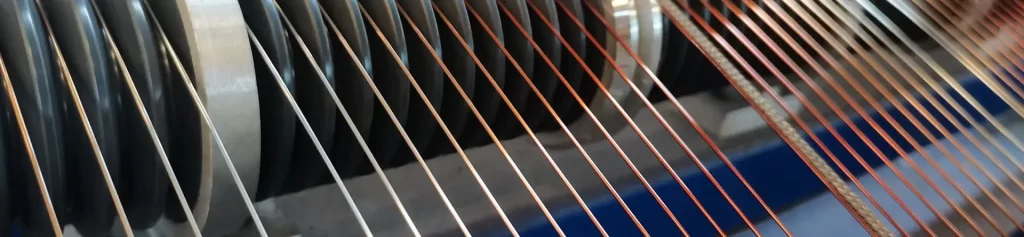
Overview of Paper-Covered Wire Manufacturing Process is a core topic in the transformer manufacturing industry and the magnet wire / specialty winding wire manufacturing industry. As a critical insulation material for transformer windings, paper-covered wire production encompasses several key stages: conductor drawing and annealing, insulation paper selection and pre-treatment, paper layer winding, in-process quality control, final inspection, and packaging. Understanding the paper-covered wire manufacturing process flow, key process technologies, quality control points, application areas, and process differences from enameled wire holds significant practical guidance value for transformer manufacturer procurement engineers, power engineers, transformer process engineers, and technical readers interested in paper-covered wire manufacturing technology.
From the perspective of manufacturing processes for paper-wrapped wire, the production process differs significantly from that of enamel-coated wire. The enamel-coated wire manufacturing process centers on enamel liquid application and oven curing, featuring a high degree of automation and high production efficiency. In contrast, the paper-wrapped wire manufacturing process centers on helical wrapping of insulating paper, involving conductor preparation, selection of insulating paper, paper-layer wrapping, tension control, layer-count control, and take-up—each with process control parameters markedly distinct from those of enamel-coated wire. Key characteristics of paper-wrapped wire manufacturing include continuous yet relatively low-speed operation, numerous quality control points, and substantial influence of operator experience on final product quality.
The engineering implications of the Paper Covered Wire Manufacturing Process can be systematically elaborated from eight dimensions: an overview of the entire manufacturing process, conductor preparation, selection and pre-treatment of insulating paper materials, paper wrapping process, in-process quality control, final product inspection and packaging, application fields, and process development trends. This article serves as a systematic engineering reference for procurement engineers, power engineers, transformer process engineers at transformer manufacturers, and other technical readers interested in paper covered wire manufacturing processes.
Comprehensive Manufacturing Process
The manufacturing process of paper-covered wire is a complete process system, encompassing conductor preparation, insulation paper selection, paper-layer winding, in-process quality control, finished-product inspection, and packaging.
Process Flow Overview
The typical manufacturing process for paper-covered magnet wire includes conductor incoming inspection, conductor drawing (round or rectangular), conductor annealing, conductor surface cleaning, insulation paper selection and pre-treatment, insulation paper wrapping, control of layer count and overlap quality, in-process inspection, coiling, final inspection, packaging, and warehousing. Process design must consider multiple factors, including product technical requirements, production capacity requirements, quality requirements, equipment capabilities, personnel allocation, and production cost.
A critical process node is insulation paper wrapping. Insulation paper wrapping is the core manufacturing process for paper-covered magnet wire; wrapping quality directly determines the dielectric strength, insulation reliability, and appearance quality of the paper-covered magnet wire. The insulation paper wrapping process is the core control step in the paper-covered magnet wire manufacturing process.
Process Characteristics
The manufacturing process of paper-covered magnet wire is characterized by numerous process steps, high requirements for continuity, and multiple quality control points. The quality of the conductor preparation process directly affects the smoothness of the paper wrapping process and the final product quality. The paper wrapping process is the core step in paper-covered magnet wire manufacturing; process control parameters—including paper layer tension, paper layer overlap ratio, wrapping speed, and paper layer alignment—directly influence the finished product’s dielectric performance and appearance quality.
Another characteristic of paper-wrapped wire manufacturing is its high process flexibility. In contrast to enameled wire, where the enamel coating and curing processes are relatively fixed and require extended line-changeover time to adjust product specifications, paper-wrapped wire production allows flexible adaptation to various product specifications by adjusting parameters such as number of paper layers, paper width, and overlap ratio during paper wrapping—resulting in higher process flexibility.
Process and Enameled Wire Comparison
The manufacturing processes for paper-covered wire and enamel-coated wire differ significantly across multiple dimensions. The enamel-coated wire manufacturing process centers on enamel liquid coating, baking and curing, and enamel film quality inspection, featuring high production efficiency and a highly automated process. The paper-covered wire manufacturing process centers on insulating paper wrapping, tension control, and layer count control, resulting in relatively lower production efficiency and a greater number of process control points.
The advantages of the magnet wire manufacturing process include high production efficiency, a high degree of automation, and convenient specification changeover. Its limitations include limited dielectric strength, rendering it unsuitable for high-voltage transformers. The advantages of the paper-wrapped wire manufacturing process include high dielectric strength and excellent insulation reliability, making it suitable for high-voltage transformers. Its limitations include relatively low production efficiency, a greater number of process control points, and the requirement to replace insulating paper and adjust process parameters during specification changeover.
Conductor Preparation Process
The conductor is the core component of paper-covered magnet wire; its quality directly affects the wire’s electrical conductivity, mechanical properties, and insulation performance. Conductor preparation processes include conductor drawing, conductor annealing, and conductor surface cleaning.
Conductor Material Selection
The conductor material for paper-covered magnet wire is predominantly copper, including electrolytic tough pitch copper (ETP) and oxygen-free copper (OFC). ETP copper exhibits excellent electrical conductivity, mechanical properties, and workability, making it the primary conductor material for paper-covered magnet wire. OFC offers higher purity, lower oxygen content, superior electrical conductivity, and enhanced corrosion resistance, rendering it the preferred conductor material for high-end paper-covered magnet wire.
Paper-covered wire can also use aluminum as the conductor material, including electrical-grade pure aluminum (Alloy 1350). The density of aluminum conductors is approximately one-third that of copper, and their electrical conductivity is about 60% that of copper. Advantages of aluminum conductors include low weight and low cost; limitations include relatively lower conductivity and more complex termination processes. Paper-covered aluminum conductor wire is suitable for medium- and low-voltage transformers where weight and cost are critical factors.
Conductor Cross-Sectional Shape
Conductor cross-sectional configurations of paper-covered magnet wire include round, rectangular, and square shapes. Round paper-covered magnet wire features a circular conductor cross-section and is suitable for cylindrical windings in small- and medium-sized transformers. Rectangular paper-covered magnet wire features a rectangular conductor cross-section and is suitable for disc-type, continuous, and helical windings in medium- and large-sized transformers. Square paper-covered magnet wire features a square conductor cross-section and is suitable for special transformer windings.
Precision of conductor cross-sectional dimensions is critically important for paper-wrapped magnet wire applications. Deviations in conductor cross-sectional dimensions directly affect the electrical conductivity, fill factor, and winding processability of paper-wrapped magnet wire. High-end paper-wrapped magnet wire imposes stringent requirements on conductor cross-sectional dimensional accuracy, necessitating tight control of cross-sectional dimensional deviations.
Conductor Drawing Process
Conductor drawing is a critical process in paper-covered wire manufacturing, whereby coarse copper or aluminum rods are drawn to achieve the required cross-sectional dimensions. Key parameters in the conductor drawing process include drawing speed, draw ratio, annealing process, die quality, and surface quality—requiring integrated control of all these factors.
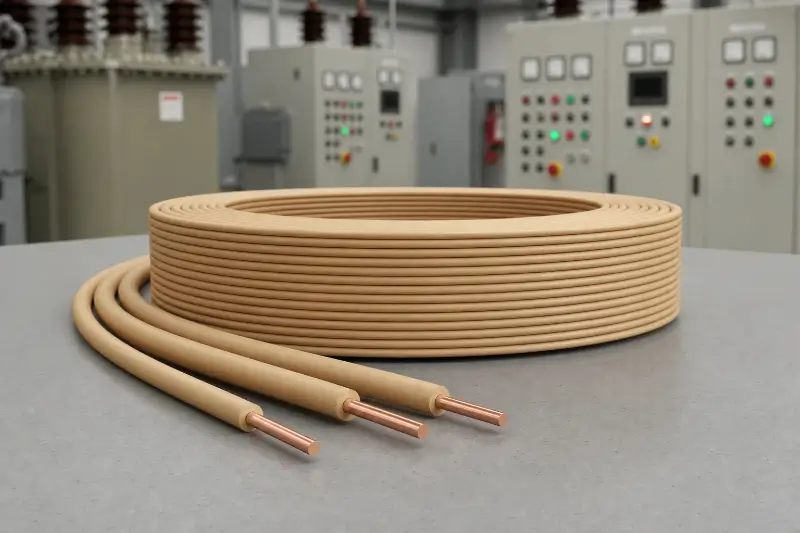
The drawing process for round conductors is relatively mature, with fewer process control points. In contrast, the drawing process for rectangular conductors is more complex, requiring specialized rectangular wire drawing equipment and dies, and involves a greater number of process control points. Key process control parameters for rectangular conductor drawing include cross-sectional dimensional accuracy, corner radius, surface quality, and hardness uniformity.
Conductor Annealing Process
Conductor annealing is a critical process in paper-covered wire manufacturing, eliminating internal stresses induced during wire drawing and enhancing both elongation and electrical conductivity of the conductor. The key to the conductor annealing process lies in the integrated control of annealing temperature, annealing time, annealing atmosphere, and cooling rate.
Annealing temperature is the core parameter of the conductor annealing process. The annealing temperature for copper conductors typically ranges from 400°C to 600°C, while that for aluminum conductors typically ranges from 300°C to 400°C. Selection of the annealing temperature must consider the conductor material composition, cross-sectional dimensions, and final performance requirements.
The annealing atmosphere is a critical parameter in the conductor annealing process. High-quality annealing employs protective inert gases (e.g., nitrogen) or reducing atmospheres to prevent oxidation of the conductor during annealing. Oxidation layers on the conductor surface reduce adhesion between the paper insulation and the conductor, compromising the insulation reliability of paper-wrapped wire.
Conductor Surface Treatment
Conductor surface treatment is a critical process in paper-wrapped wire manufacturing, ensuring conductor surface cleanliness, appropriate surface roughness, and excellent adhesion through surface cleaning and treatment. Conductor surface treatment processes include chemical cleaning, mechanical polishing, electrochemical polishing, and surface passivation.
The surface quality of the conductor directly affects the adhesion between the paper layer and the conductor. Contaminants on the conductor surface—such as oil, oxide layers, and dust—significantly reduce the adhesion between the paper layer and the conductor, thereby compromising the insulation reliability of paper-covered magnet wire. The conductor surface treatment process must ensure a clean, contaminant-free conductor surface with appropriate surface roughness.
Insulation Paper Material Selection and Preprocessing
Insulating paper is a critical insulating material for paper-wrapped magnet wire; the selection and pre-treatment of insulating paper directly affect the dielectric strength, mechanical strength, and long-term reliability of paper-wrapped magnet wire.
Selection of Insulation Paper Types
Insulation paper types for paper-covered magnet wire include cable paper (Kraft Paper), telephone paper (Crepe Paper), and polyester film–paper composites (e.g., DMD, NMN, NHN). Cable paper is manufactured from unbleached kraft pulp and exhibits excellent mechanical strength, oil absorption, and dielectric properties; it serves as the primary insulation material for paper-covered magnet wire used in power transformers and distribution transformers. Telephone paper is produced from bleached kraft pulp, features thinner caliper and slightly lower mechanical properties, and is suitable for interlayer insulation and medium- and low-voltage transformers. Polyester film–paper composites combine the high dielectric strength of polyester film with the oil absorption capability of paper, making them the preferred insulation material for premium-grade transformers.
Selection of insulating paper must comprehensively consider the transformer’s voltage class, capacity, operating environment, reliability requirements, and cost constraints. Low-voltage transformers typically employ 1 to 2 layers of cable paper. Medium-voltage transformers typically employ 2 to 4 layers of cable paper or telephone paper. High-voltage transformers typically employ 4 to 10 layers of cable paper or polyester film–paper composite materials. Ultra-high-voltage transformers typically employ more than 10 layers of cable paper or polyester film–paper composite materials, combined with insulating cylinders and insulating paperboard.
Insulation Paper Thickness and Density
The thickness and density of insulating paper are critical parameters affecting the dielectric performance of paper-covered magnet wire. The thickness of insulating paper typically ranges from 0.05 mm to 0.3 mm, and uniformity of density directly influences the distribution of dielectric strength in paper-covered magnet wire. Thickness tolerance of the insulating paper must be tightly controlled to prevent electric field concentration and dielectric breakdown caused by non-uniform thickness.
The oil absorption performance of insulating paper is a critical parameter affecting the dielectric properties of paper-covered magnet wire. Insulating paper with excellent oil absorption performance can rapidly absorb transformer oil, thereby forming a high-performance paper–oil composite insulation system. The oil absorption performance of insulating paper is closely related to its fiber structure, density, and surface treatment.
Insulation Paper Moisture Content Control
Moisture content of insulating paper is a critical control parameter in the manufacturing process of paper-covered magnet wire. Excessively high moisture content in insulating paper significantly reduces the dielectric strength of the paper–oil composite insulation, thereby compromising the insulation reliability of transformers. Prior to winding, the insulating paper must undergo drying treatment to maintain its moisture content within an acceptable range.
The drying process for insulating paper includes vacuum drying, hot-air drying, infrared drying, etc. Vacuum drying effectively removes adsorbed water from within the insulating paper and is a critical process in high-end paper-covered magnet wire manufacturing. The drying temperature, time, and vacuum level for insulating paper must be determined based on the type, thickness, and initial moisture content of the insulating paper.
Insulating Paper Cutting and Pre-treatment
Before winding, the insulating paper must be cut to the appropriate width according to the specifications of the paper-covered wire. The width of the insulating paper must account for factors including the conductor dimensions of the paper-covered wire, winding angle, overlap ratio, and number of insulation layers. The cut edges of the insulating paper must be clean and free of burrs to prevent paper breakage or uneven layering during winding.
Pre-treatment of insulating paper also includes tension adjustment of the insulating paper, reel mounting, and verification of the number of paper layers. The pre-treatment process must ensure smooth, stable, and reliable winding of the insulating paper, preventing issues such as paper breakage, layer overlap, and layer misalignment during winding.
Paper Layer Winding Process
Paper wrapping is the core manufacturing process for paper-covered magnet wire; wrapping quality directly determines the dielectric strength, insulation reliability, and appearance quality of the paper-covered magnet wire.
Winding Principle
The fundamental principle of the paper wrapping process is to uniformly wrap insulating paper around the conductor surface in a helical manner using dedicated paper wrapping equipment. During wrapping, the tension of the insulating paper, wrapping speed, overlap ratio, and wrapping angle must be precisely controlled to ensure the paper layer is uniformly, tightly, and smoothly applied onto the conductor surface.
The winding angle is a critical parameter in the paper wrapping process. It affects the contact area between the paper layer and the conductor, the overlap degree between paper layers, and the appearance quality of paper-covered wire. Selection of the winding angle must consider factors including paper width, conductor cross-sectional dimensions, number of wrapping layers, and winding direction.
Winding Equipment
Paper wrapping equipment is the core machinery for manufacturing paper-insulated magnet wire. The wrapping equipment for round paper-insulated wire has a relatively simple structure and fewer process control points. In contrast, the wrapping equipment for rectangular (flat) paper-insulated wire features a more complex structure and requires specialized flat-wire guiding devices, paper-tension control systems, paper-reel changeover mechanisms, and in-line inspection systems.
High-end paper-wrapping equipment features multiple automated functions, including automatic bobbin change, automatic tension control, automatic lap-rate control, automatic layer counting, automatic quality inspection, and automatic take-up. Enhanced automation significantly improves production efficiency and quality stability in paper-covered magnet wire manufacturing.
Winding Tension Control
Winding tension of the paper layer is the core control parameter in the winding process. Excessive winding tension may cause stretching deformation of the insulating paper, over-tightening of the paper layer, or damage to the insulating paper. Insufficient winding tension may result in slackness of the paper layer, air entrapment between paper layers, and reduced adhesion between the insulating paper and the conductor. Rational control of winding tension is a critical technology for paper-layer winding processes.
Control of winding tension must consider factors such as conductor material, conductor cross-sectional dimensions, insulation paper type, insulation paper thickness, insulation paper width, and winding speed. High-end paper-layer winding equipment is equipped with a closed-loop tension control system capable of automatically adjusting tension according to process parameters to ensure consistent winding quality.
Paper Lap Control
Paper lap ratio is a critical parameter in the paper wrapping process. It refers to the ratio of the overlapping width between adjacent paper layers to the paper width. An excessively low lap ratio may result in incomplete paper coverage, compromising dielectric strength. An excessively high lap ratio may lead to wastage of insulating paper, increased diameter of paper-covered wire, and reduced fill factor.
The reasonable overlap rate of paper layers typically ranges from 25% to 50%, with the specific value determined according to factors such as paper type, transformer voltage class, and insulation requirements. High-end paper-wrapping equipment is equipped with an online overlap rate detection and control system to ensure stable control of the overlap rate.
Winding Speed Control
Winding speed is a productivity parameter for the paper wrapping process. Excessively high winding speed may result in non-uniform paper wrapping, reduced tension control accuracy, and degraded appearance quality of the paper layer. Excessively low winding speed may lead to low production efficiency and reduced equipment utilization. Rational selection of winding speed is critical to achieving a balance between productivity and quality in paper-covered wire manufacturing.
Selection of winding speed must consider factors including conductor cross-sectional dimensions, insulation paper type, number of winding layers, and winding equipment capability. Winding speed for round paper-covered wire is typically higher than that for rectangular paper-covered wire. Due to the high precision required for rectangular wire guidance and the difficulty in controlling paper layer alignment, winding speed for rectangular paper-covered wire is typically lower.
Process Quality Control
Process quality control is a critical aspect of paper-wrapped wire manufacturing, covering all process steps including conductor preparation, insulation paper selection, paper layer winding, and coil winding.
Conductor Quality Control
Conductor quality control is the starting point of process quality control. Conductor quality control includes inspection of conductor material composition, conductor cross-sectional dimensions, conductor surface quality, conductor mechanical properties, and conductor electrical conductivity. Nonconforming conductor quality may result in nonconformance of the overall paper-covered wire quality.
Conductor cross-sectional dimension inspection is central to conductor quality control. Deviations in conductor cross-sectional dimensions directly affect the electrical conductivity, fill factor, and winding processing of paper-covered magnet wire. Conductor cross-sectional dimension inspection methods include micrometer measurement, optical projection measurement, and laser scanning measurement.
Insulating Paper Quality Control
Insulation paper quality control is a critical component of process quality control. It encompasses inspection of insulation paper material, thickness, density, dielectric properties, moisture content, and visual quality. Substandard insulation paper may result in nonconforming insulation performance of paper-covered magnet wire.
Dielectric performance testing of insulating paper is central to quality control of insulating paper. Dielectric performance testing of insulating paper includes dielectric breakdown voltage testing, dielectric constant testing, and dielectric loss tangent (tan δ) testing. The dielectric performance of insulating paper must comply with applicable standards and transformer design requirements.
Paper Layer Winding Quality Control
Paper layer winding quality control is the core of process quality control. Paper layer winding quality control includes control of the number of paper layers, paper layer tension, paper layer overlap ratio, paper layer appearance quality, and adhesion between the paper layer and conductor. Nonconforming paper layer winding quality directly results in nonconforming insulation performance of paper-covered magnet wire.
Controlling the number of paper layers is critical to ensuring the quality of paper-wrapped wire winding. An insufficient number of paper layers may result in inadequate dielectric strength of the paper-wrapped wire, whereas an excessive number of paper layers may cause oversized wire diameter, reduced fill factor, and wastage of insulation paper. The number of paper layers must be strictly controlled in accordance with design specifications.
Online Inspection Technology
Online inspection technology is a modern method for process quality control. Online inspection technologies include online counting of paper layer count, online detection of paper layer overlap ratio, online visual inspection of paper layer appearance, online measurement of conductor diameter, and online inspection of conductor surface. The application of online inspection technology enables real-time identification of quality issues, reduces non-conforming products, and enhances the quality control level of manufacturing processes.
High-end paper-covered magnet wire production lines are equipped with comprehensive online inspection systems. These online inspection systems enable real-time monitoring of critical process parameters and quality indicators during manufacturing, automatically triggering alarms or automatically adjusting process parameters upon detection of anomalies. The application of online inspection technology represents a key direction for the intelligent development of paper-covered magnet wire manufacturing processes.
Finished Product Inspection and Packaging
Final inspection and packaging are the final steps in paper-covered magnet wire manufacturing, determining the quality of finished goods for warehouse storage and market acceptance.
Finished Product Inspection Items
Finished product inspection is a critical quality control step prior to warehousing paper-covered magnet wire. Finished product inspection items include visual inspection (paper layer integrity, paper layer uniformity, paper layer surface finish, conductor surface quality), dimensional inspection (overall diameter, width, thickness, ovality), electrical inspection (dielectric breakdown voltage, enamel film continuity, insulation resistance), mechanical inspection (tensile strength, elongation, bendability, paper layer adhesion), and physicochemical inspection (moisture content, acid number, ash content).
The items and criteria for finished product inspection shall be determined according to the type, specification, application field, and applicable standards (e.g., IEC 60851, GB/T 7673) of paper-covered magnet wire. For high-end paper-covered magnet wire, the finished product inspection items are typically more extensive and the inspection criteria are stringent.
Packaging and Labeling
Packaging and labeling of paper-covered magnet wire constitute the final stage of the manufacturing process. Packaging of paper-covered magnet wire must address multiple protective requirements, including moisture resistance, dust protection, mechanical damage prevention, chemical contamination prevention, and ultraviolet radiation protection. Common packaging methods for paper-covered magnet wire include plastic film wrapping, cardboard box packaging, wooden crate packaging, and palletized packaging.
The marking of paper-covered magnet wire must include product specifications, batch number, date of manufacture, inspector code, manufacturer name, and inspection approval mark. The completeness of the marking information directly affects the traceability and end-user application of the paper-covered magnet wire.
Storage and Transportation
Storage and transportation of paper-covered magnet wire constitute an extension of the manufacturing process. Storage of paper-covered magnet wire must be conducted in a dry, clean environment, protected from direct sunlight and from drastic temperature fluctuations. Transportation of paper-covered magnet wire must prevent mechanical damage, exposure to rain, and chemical contamination.
The storage period for paper-covered magnet wire is typically 6 to 12 months. Paper-covered magnet wire exceeding the storage period must undergo reinspection and may only be used upon passing inspection. Storage conditions and storage period management for paper-covered magnet wire constitute a critical element of supply chain management in transformer manufacturing enterprises.
Application Areas
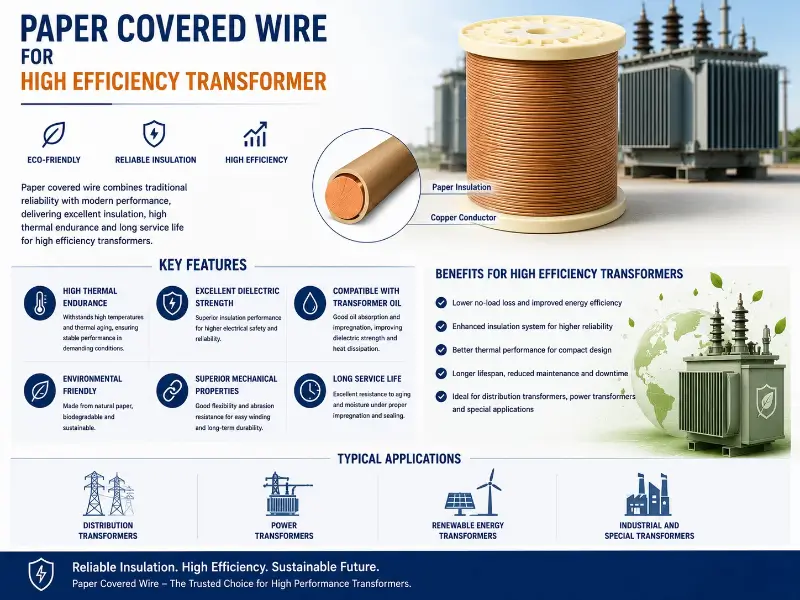
Paper-covered magnet wire has broad applications in the power industry and serves as a critical insulation material for oil-immersed power transformers, distribution transformers, and special-purpose transformers.
Oil-Immersed Power Transformers
Oil-immersed power transformers represent the most critical application area for paper-covered magnet wire. Paper-covered magnet wire is widely used as winding insulation in high-voltage and extra-high-voltage oil-immersed power transformers rated at 110 kV, 220 kV, 500 kV, and 1000 kV. Requirements for paper-covered magnet wire in oil-immersed power transformers include high dielectric strength, high thermal endurance, high mechanical strength, excellent compatibility with transformer oil, and high long-term reliability.
Distribution Transformers
Distribution transformers represent the largest application segment for paper-covered magnet wire. Paper-covered magnet wire is widely used as winding insulation in 10 kV and 35 kV distribution transformers. Requirements for paper-covered magnet wire in distribution transformers include adequate dielectric strength, reasonable cost, reliable long-term operation, and suitability for outdoor environments.
Special Transformers
Special-purpose transformers represent a high-end application area for paper-covered magnet wire. Electric furnace transformers, rectifier transformers, traction transformers, new-energy step-up transformers, and test transformers commonly employ paper-covered magnet wire for winding insulation. Special-purpose transformers impose specific requirements on paper-covered magnet wire, including adaptability to special operating environments, special electrical properties, and special mechanical properties.
Other Applications
Paper-covered magnet wire is also used in other applications, including current transformers, reactors, filters, and special inductors. Magnet wire for current transformers requires high dielectric strength and high dimensional accuracy. Magnet wire for reactors requires high mechanical strength and high thermal dissipation performance.
Process Development Trends
Development trends in paper-covered magnet wire manufacturing encompass multiple directions, including the application of new materials, process improvements, intelligent manufacturing, and green manufacturing.
Application of New Materials
The application of new materials represents a key development direction for paper-covered magnet wire manufacturing processes. The use of novel insulating materials—such as aramid paper, polyimide film, and high-performance polyester film—significantly enhances the thermal class rating, dielectric strength, and mechanical strength of paper-covered magnet wire. The adoption of advanced conductor materials—including high-purity oxygen-free copper and copper alloys—improves both the electrical conductivity and mechanical properties of paper-covered magnet wire.
New Process Improvement
Improvement of new processes represents a key development direction for paper-covered magnet wire manufacturing. Application of continuous production processes enhances both production efficiency and quality stability of paper-covered magnet wire. Implementation of precision winding processes improves paper-layer uniformity and dielectric strength of paper-covered magnet wire. Adoption of digital process control enhances the accuracy and consistency of paper-covered magnet wire manufacturing processes.
Intelligent Manufacturing
Intelligent manufacturing is a key development direction for paper-covered wire production processes. The application of online quality monitoring systems enables real-time detection of critical quality parameters of paper-covered wire. The application of intelligent scheduling systems optimizes production scheduling and equipment utilization for paper-covered wire. The application of data analytics and machine learning identifies correlations between process parameters and quality metrics, thereby guiding process optimization.
Green Manufacturing
Green manufacturing is a key development direction for paper-covered magnet wire production. The application of eco-friendly insulating paper—such as that made from renewable fibers and subjected to low-chemical treatments—reduces environmental impact. The adoption of energy-saving manufacturing processes—including low-temperature drying and low-energy winding—lowers energy consumption in production. Waste recycling and reuse technologies enhance resource utilization efficiency in paper-covered magnet wire manufacturing.
Conclusion
Paper-covered wire manufacturing process overview encompasses eight core engineering dimensions: (1) comprehensive manufacturing process (process flow overview, process characteristics, comparison with enameled wire); (2) conductor preparation (conductor material selection, conductor cross-sectional configuration, conductor drawing process, conductor annealing process, conductor surface treatment); (3) insulation paper material selection and pre-treatment (insulation paper type selection, insulation paper thickness and density, insulation paper moisture content control, insulation paper slitting and pre-treatment); (4) paper layer winding process (winding principle, winding equipment, winding tension control, paper layer lap control, winding speed control); (5) in-process quality control (conductor quality control, insulation paper quality control, paper layer winding quality control, on-line inspection technologies); (6) finished product inspection and packaging (finished product inspection items, packaging and labeling, storage and transportation); (7) application fields (oil-immersed power transformers, distribution transformers, special-purpose transformers, other applications); and (8) process development trends (application of new materials, process improvements, intelligent manufacturing, green manufacturing).
Paper-wrapped wire manufacturing is a multi-step, multi-control-point process system, wherein process control parameters decisively influence the dielectric strength, mechanical strength, and long-term reliability of paper-wrapped wire. Key process steps include conductor preparation, insulation paper selection and pre-treatment, paper-layer winding, and in-process quality control.
With the development of the power industry, construction of ultra-high-voltage (UHV) transmission networks, grid integration of new energy power generation, and expansion of rail transit, demand for paper-covered magnet wire will continue to grow. Application of new materials, improvement of new processes, advancement of intelligent manufacturing, and development of green manufacturing will continuously drive progress in paper-covered magnet wire production technology, delivering higher-performance, more reliable, and more environmentally friendly paper-covered magnet wire products for the power industry.