


Introduction
How Paper-Covered Wire Enhances Transformer Insulation is a core topic in the transformer manufacturing industry concerning insulation material applications. Paper-covered wire (Paper-Covered Wire, Paper-Insulated Wire), as a critical insulation material for transformer windings, offers unique insulation advantages over other insulation forms—such as enameled wire, rectangular enameled wire, and film-wrapped wire—in applications including oil-immersed transformers, specialty transformers, and high-voltage transformers. Understanding the operational mechanisms by which paper-covered wire improves transformer insulation, the mechanisms underlying insulation class enhancement, its application advantages, and suitable application scenarios constitutes essential knowledge for transformer manufacturers, oil-immersed transformer design engineers, specialty transformer manufacturers, and power transformer producers.
From the perspective of transformer engineering practice, paper-covered magnet wire offers insulation value far exceeding its traditional role as an “insulation covering layer.” Insulation protection is achieved through multi-layer paper wrapping; the porous structure of the paper synergizes with oil impregnation to form a paper-oil composite insulation system, significantly enhancing the transformer’s dielectric strength, thermal endurance, mechanical properties, and long-term reliability. Paper-covered magnet wire has been applied in oil-immersed transformers for over a century and serves as a critical insulation material for large oil-immersed power transformers, distribution transformers, and special-purpose transformers.
The engineering implications of paper-covered wire for enhancing transformer insulation can be systematically elaborated from eight dimensions: fundamentals and insulation mechanisms of paper-covered wire; comparison between paper-covered wire and enamel-coated wire; insulation class improvement mechanisms; performance advantages; types of paper-covered wire; applications in transformers; application considerations; and selection strategies. This article provides a systematic engineering reference for transformer manufacturers, oil-immersed transformer design engineers, specialty transformer manufacturers, and power transformer producers.
Fundamentals and Insulation Mechanism of Paper-Insulated Magnet Wire
Paper-covered wire, as a critical insulation material for transformer windings, exhibits a significantly different insulation mechanism from that of enameled wire; understanding the insulation mechanism of paper-covered wire forms the foundation for comprehending its insulation advantages.
Fundamentals of Paper-Insulated Magnet Wire
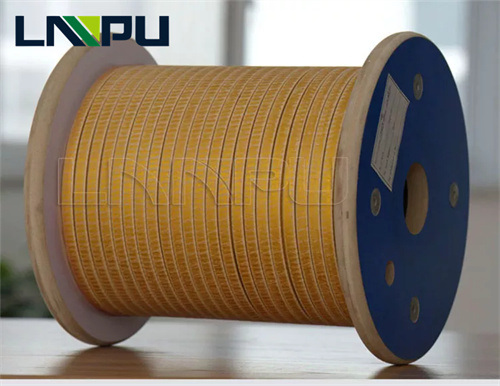
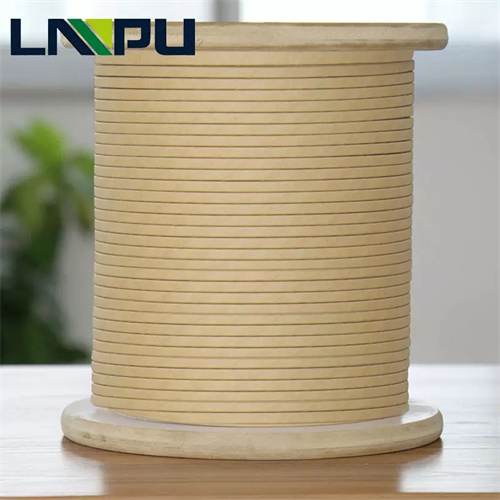
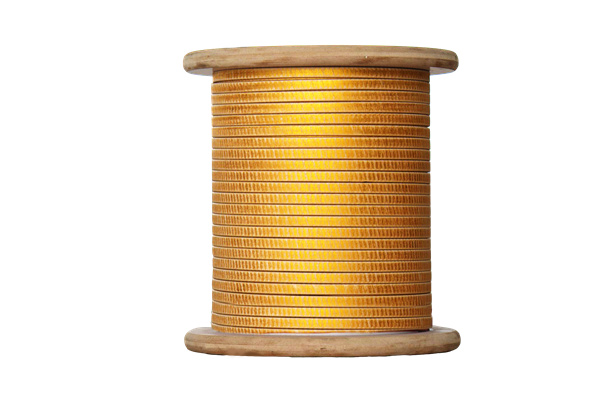
Paper-covered magnet wire consists of a round or rectangular copper conductor wrapped helically with insulating paper (e.g., cable paper, telephone paper, or polyester film-paper composite materials). The insulation layer comprises multiple superimposed paper layers, with the number of layers determined by the required insulation class. After transformer winding fabrication, paper-covered magnet wire is impregnated together with the transformer core and coil assembly in transformer oil; the porous structure of the paper absorbs the oil, forming a paper–oil composite insulation system.
The conductor material for paper-covered magnet wire is primarily copper, including electrolytic tough pitch (ETP) copper and oxygen-free copper (OFC). Conductor cross-sectional shapes include round, rectangular, and square forms, suitable for various transformer winding configurations. Round paper-covered wire is used in cylindrical windings of small- and medium-sized transformers. Rectangular paper-covered wire is used in disc-type, continuous, and helical windings of medium- and large-sized transformers.
The insulating paper materials for paper-covered magnet wire are primarily cellulose-based, including cable paper (Kraft Paper), telephone paper (Crepe Paper), and polyester film–paper composite materials (e.g., DMD, NMN). Cable paper is manufactured from unbleached kraft wood pulp and exhibits excellent mechanical strength, oil absorption, and dielectric properties. Telephone paper is produced from bleached kraft wood pulp and features a thinner caliper, making it suitable for interlayer insulation. Polyester film–paper composite materials combine the high dielectric strength of polyester film with the oil absorption capability of paper, rendering them the preferred insulation material for premium transformers.
Paper–Oil Composite Insulation Mechanism
Paper-oil composite insulation is the core mechanism for enhancing transformer insulation with paper-wrapped magnet wire. In oil-immersed transformers, the paper insulation of paper-wrapped magnet wire works synergistically with transformer oil to form a paper-oil composite insulation system. The dielectric strength of the paper-oil composite insulation is significantly higher than that of paper insulation or oil insulation alone.
The porous structure of paper insulation enables absorption of transformer oil; once the interstitial spaces between paper fibers are saturated with transformer oil, the dielectric strength of the paper–oil composite dielectric is significantly enhanced. Dry paper exhibits limited dielectric strength, but after impregnation with transformer oil, the dielectric strength of the paper–oil composite dielectric can reach several times that of transformer oil alone. The cellulose fibers in the paper provide mechanical strength, while the oil filling the interstitial voids delivers high dielectric strength; the synergistic interaction between these two components forms a high-performance composite insulation system.
The breakdown mechanism of paper–oil composite insulation involves multiple phenomena, including bubble discharge, fiber bridging, and electrical treeing. Bubble discharge is the primary cause of breakdown in paper–oil composite insulation; bubbles present either in the transformer oil or within the paper insulation undergo discharge under electric field stress, leading to degradation of insulation performance. The purpose of the oil impregnation process is to eliminate bubbles from the paper insulation and thereby enhance the dielectric strength of the paper–oil composite insulation. Vacuum Pressure Impregnation (VPI) is a commonly employed impregnation process for high-end transformers and effectively removes bubbles from the paper insulation.
Dielectric Strength Enhancement Mechanism
The mechanisms by which paper-covered magnet wire enhances transformer dielectric strength include the multilayer superposition effect, electric field homogenization effect, and oil-gap filling effect.
The multilayer stacking effect forms the basis for enhancing the dielectric strength of paper-covered magnet wire. Dielectric breakdown typically occurs at the weakest point of the insulation; multilayer paper stacking randomizes the locations of these weak points, significantly reducing the overall probability of insulation breakdown. The statistical dielectric breakdown strength of multilayer paper insulation is substantially higher than that of single-layer insulation, and the improvement in dielectric strength exhibits a nonlinear relationship with the number of paper layers.
The electric field homogenization effect is critical to enhancing the dielectric strength of paper-covered magnet wire. In enameled wire, the thin enamel coating results in pronounced electric field concentration at the conductor surface. In contrast, the thicker multi-layer paper insulation of paper-covered wire yields a more uniform electric field distribution across the conductor surface, significantly reducing the risk of breakdown caused by electric field concentration. This electric field homogenization effect is especially valuable in high-voltage transformers and specialty transformers.
Oil-gap filling effect is a unique mechanism by which paper-covered magnet wire enhances dielectric strength. The enamel coating on enameled wire forms a solid insulation layer incapable of filling the air gaps between conductors. In contrast, the paper insulation of paper-covered magnet wire absorbs transformer oil, forming a paper-oil composite dielectric that fills all inter-conductor voids, thereby eliminating low-dielectric-strength regions caused by air gaps. This oil-gap filling effect results in significantly superior overall insulation performance of paper-covered magnet wire transformers compared to enameled wire transformers.
Comparison of Paper-Insulated Wire and Enamel-Insulated Wire
Paper-covered wire and enamel-coated wire are two primary insulation forms for transformer windings, exhibiting significant differences in insulation performance, application scenarios, and process characteristics.
Insulation Structure Comparison
The insulation layer of magnet wire is a solid enamel film coated onto the conductor surface, with film thickness ranging from several tens to several hundreds of micrometers. The insulation structure of magnet wire is a single-layer configuration, and the integrity of the enamel film determines insulation reliability. Enamel film defects—such as pinholes, thin spots, and mechanical damage—directly cause insulation failure.
The insulation layer of paper-covered wire consists of a composite insulation formed by stacking multiple layers of paper, with the number of paper layers ranging from several to dozens. The insulation structure of paper-covered wire is multilayered, and dielectric breakdown requires penetration through all paper layers. Even if defects exist in some paper layers, the overall insulation performance of paper-covered wire does not significantly deteriorate. The multilayer structure of paper-covered wire exhibits a “statistical effect,” substantially enhancing insulation reliability.
Dielectric Property Comparison
The dielectric strength of magnet wire is typically several kilovolts to tens of kilovolts per millimeter, and is influenced by enamel coating thickness, enamel quality, and enamel uniformity. The dielectric strength of magnet wire is limited in high-voltage applications and is generally suitable for medium- and low-voltage transformers.
The dielectric strength of paper-oil composite insulation for paper-covered magnet wire is typically several tens of kilovolts per millimeter, and is influenced by the number of paper layers, paper quality, impregnation process, and oil quality. Paper-covered magnet wire offers significant dielectric strength advantages in high-voltage applications and is the preferred insulation form for high-voltage and extra-high-voltage transformers.
Application Scenario Comparison
Magnet wire is primarily used in small- and medium-sized transformers, electronic transformers, high-frequency transformers, and household appliance transformers. Its advantages include simple winding processes, high fill factor, and high automation production efficiency. Its limitations include limited dielectric strength, rendering it unsuitable for high-voltage, high-power oil-immersed transformers.
Paper-covered magnet wire is primarily used in oil-immersed power transformers, distribution transformers, special-purpose transformers, and high-voltage transformers. Its advantages include high dielectric strength, excellent thermal endurance, outstanding long-term reliability, and good compatibility with transformer oil. Its limitations include a more complex winding process, relatively low fill factor, and the requirement for oil impregnation treatment.
Process Characteristics Comparison
The manufacturing process of magnet wire includes conductor drawing, annealing, enamel coating, baking and curing, and enamel film quality inspection. Magnet wire production is highly efficient and supports large-scale automated manufacturing. The application processes for magnet wire include winding, coil insertion, and termination, which are relatively simple.
The manufacturing process of paper-covered wire includes conductor drawing (round or rectangular wire), paper insulation winding, paper-layer quality inspection, and paper-covered wire coiling. The production efficiency of paper-covered wire is relatively low, especially for rectangular paper-covered wire, whose manufacturing process is more complex. The application processes for paper-covered wire include winding, coil insertion, termination, and oil impregnation—requiring specialized oil impregnation equipment and procedures.
Insulation Class Enhancement Mechanism
The mechanism by which paper-covered magnet wire enhances transformer insulation class encompasses turn-to-turn insulation, layer-to-layer insulation, and main insulation.
Improved Turn-to-Turn Insulation
Turn-to-turn insulation refers to the insulation between adjacent turns in a transformer winding; its reliability directly affects the safe operation of the transformer. The mechanisms by which paper-covered magnet wire enhances turn-to-turn insulation include dielectric strength improvement through paper layer stacking and paper-oil composite filling of inter-turn voids.
The turn-to-turn insulation of paper-wrapped wire is typically achieved using 1 to 3 layers of insulating paper, with the insulation between adjacent turns consisting of a double-layer paper structure. The turn-to-turn dielectric strength of paper-wrapped wire is significantly higher than that of enamel-coated wire, enabling it to withstand higher turn-to-turn voltage stress. Enhanced turn-to-turn insulation is critical for the safe operation of high-voltage transformers.
Paper-oil composite filling of inter-turn voids is another critical mechanism by which paper-covered magnet wire enhances inter-turn insulation. In enameled wire windings, air-filled voids exist between adjacent turns due to the difficulty in precisely controlling enamel film thickness; the low dielectric strength of air limits the reliability of inter-turn insulation. In paper-covered wire windings, the paper insulation between adjacent turns absorbs transformer oil, forming a paper-oil composite dielectric medium whose dielectric strength is significantly higher than that of air, thereby substantially improving the reliability of inter-turn insulation.
Enhanced Interlayer Insulation
Interlayer insulation refers to the insulation between different layers of transformer windings; the reliability of interlayer insulation affects the risk of interlayer breakdown in transformers. Paper-covered magnet wire enhances interlayer insulation through mechanisms including interlayer paper insulation (cable paper, telephone paper, polyester film-paper composite materials) and paper-oil composite dielectric filling of interlayer voids.
Interlayer paper insulation is the primary form of interlayer insulation for transformers. The thickness of interlayer insulation paper typically ranges from 0.1 mm to 0.5 mm, determined according to the transformer’s voltage class, capacity, and insulation requirements. Interlayer insulation paper provides both physical and electrical isolation between winding layers, significantly enhancing the reliability of interlayer insulation.
Filling inter-turn voids with a paper–oil composite dielectric medium is the key mechanism for enhancing inter-turn insulation in paper-wound magnet wire. After impregnation with transformer oil, the inter-turn insulation paper forms a paper–oil composite dielectric that fills all inter-turn voids, eliminating low-dielectric-strength regions caused by air gaps. The dielectric strength of the paper–oil composite medium is typically tens of kilovolts per millimeter, significantly higher than that of air—several kilovolts per millimeter.
Enhanced Main Insulation
Main insulation refers to the insulation between transformer windings and ground, between phases, and between windings; it constitutes the core of the transformer insulation system. The reliability of main insulation directly determines the safe operation of the transformer. Mechanisms by which paper-covered magnet wire enhances main insulation include outer-layer paper insulation of windings (end insulation, electrostatic shield insulation), paper–oil composite dielectric filling of voids in the main insulation, and synergistic insulation provided by insulating cylinders and insulating pressboard.
The outer paper insulation of the winding is a critical component of the main insulation system. Multiple layers of insulating paper are typically applied to the outermost layer of the winding to provide electrical isolation between the winding and the core, as well as between the winding and the tank. The number of layers and thickness of the outer paper insulation are determined according to the transformer’s voltage class.
The synergistic insulation between the insulating cylinder and insulating paperboard is critical to the main insulation system. The insulating cylinder (paper cylinder, laminated paper cylinder, or electrical-grade paperboard cylinder) provides electrical isolation between the winding and the core, while the insulating paperboard (electrical-grade paperboard or compressed paperboard) provides electrical isolation at the winding ends and between windings. The coordinated operation of the insulating cylinder and insulating paperboard constitutes a complete main insulation system.
Performance Advantages
The performance advantages of paper-covered magnet wire for transformers are primarily reflected in four aspects: dielectric strength, thermal endurance, mechanical properties, and long-term reliability.
Dielectric Strength Advantage
Paper-insulated winding wires offer significant dielectric strength advantages for transformers. The dielectric strength of the paper–oil composite insulation can reach several tens of kilovolts per millimeter—several times higher than that of enameled wire (ranging from several kilovolts to several tens of kilovolts per millimeter). Paper-insulated winding wire transformers can withstand higher voltage stress and are the preferred insulation system for high-voltage and extra-high-voltage transformers.
The dielectric strength advantage of paper-covered magnet wire is particularly pronounced in oil-immersed power transformers. Paper-covered magnet wire is widely used as winding insulation in high-voltage and extra-high-voltage oil-immersed power transformers rated at 110 kV, 220 kV, 500 kV, and 1000 kV. The paper–oil composite insulation system represents the classic insulation solution for high-voltage and extra-high-voltage oil-immersed transformers.
Thermal Class Advantages
The temperature resistance advantage of paper-covered magnet wire in transformers manifests in long-term stable operation. Under the protection of transformer oil, the paper–oil composite insulation enables long-term operating temperatures up to 105°C (standard operating temperature for oil-immersed transformers). Circulating transformer oil removes heat generated by the insulation, maintaining long-term thermal stability of the paper–oil composite insulation.
The temperature resistance performance of paper-covered magnet wire transformers is comprehensively influenced by transformer oil quality, paper insulation quality, and operating temperature. High-quality transformer oil (containing antioxidants, low moisture content, and low impurities) combined with high-quality paper insulation (high purity and high dielectric strength) enables long-term stable operation of transformers for over 30 years.
Mechanical Performance Advantages
The mechanical performance advantages of paper-covered magnet wire in transformers are manifested in short-circuit resistance. Short-circuit currents in transformers generate enormous electromagnetic forces that may cause winding deformation and insulation damage. The multi-layer paper insulation of paper-covered magnet wire forms a robust mechanical protective layer on the winding surface, enhancing the winding’s short-circuit resistance.
The short-circuit withstand capability of paper-covered magnet wire is a critical reliability indicator for transformers. High-quality transformers are designed to ensure that windings can endure multiple short-circuit impulses without damage. The integrated insulation structure formed by the multi-layer paper insulation of paper-covered magnet wire and impregnating insulating varnish significantly enhances the mechanical strength and short-circuit withstand capability of the windings.
Long-Term Reliability Advantages
Paper-covered magnet wire offers significant long-term reliability advantages for transformers. Oil-immersed transformers are typically designed for a service life exceeding 30 years, and the paper-oil composite insulation system maintains stable performance over extended operation. Continuous oil circulation, filtration, drying treatment, and periodic testing ensure the long-term reliability of the insulation system.
Long-term reliability of paper-covered magnet wire transformers is fundamental to the stable operation of power systems. Failures of power transformers and distribution transformers can cause widespread blackouts, resulting in substantial economic losses and societal impact. Long-term reliability of paper-covered magnet wire transformers is a critical safeguard for the safe operation of power systems.
Paper-Insulated Wire Types
Paper-covered magnet wire can be classified into multiple types based on dimensions such as insulation paper material, conductor cross-sectional area, and insulation class.
Classification by Insulation Paper Material
Classified by insulating paper material, paper-covered magnet wire includes cable paper-covered wire, telephone paper-covered wire, and polyester film-paper composite-covered wire. Cable paper-covered wire uses cable paper as the insulating material and is a common insulation form for power transformers and distribution transformers. Telephone paper-covered wire employs telephone paper as the insulating material and features thinner insulation, suitable for interlayer insulation. Polyester film-paper composite-covered wire utilizes composite materials such as DMD (polyester film–polyester fiber paper–polyester film) and NMN (Nomex paper–polyester film–Nomex paper), representing the preferred insulation form for high-end transformers.
Classification by Conductor Cross-Section
Classified by conductor cross-section, paper-covered magnet wire includes round paper-covered wire, rectangular paper-covered wire, and square paper-covered wire. Round paper-covered wire is suitable for cylindrical windings in small- and medium-sized transformers. Rectangular paper-covered wire is suitable for disc-type, continuous, and helical windings in medium- and large-sized transformers. Square paper-covered wire is suitable for special transformer windings.
Classification by Insulation Class
Classified by insulation class, paper-covered magnet wire includes low-voltage paper-covered wire, medium-voltage paper-covered wire, high-voltage paper-covered wire, and ultra-high-voltage paper-covered wire. Low-voltage paper-covered wire features fewer insulation layers (typically 1 to 2 layers) and is suitable for transformers operating below 1 kV. Medium-voltage paper-covered wire features a moderate number of insulation layers (typically 2 to 4 layers) and is suitable for transformers operating from 1 kV to 35 kV. High-voltage paper-covered wire features more insulation layers (typically 4 to 10 layers) and is suitable for transformers operating from 35 kV to 220 kV. Ultra-high-voltage paper-covered wire features the highest number of insulation layers (typically more than 10 layers) and is suitable for transformers operating above 220 kV.
Applications in Transformers
Paper-covered magnet wire is used in various types of transformers, including oil-immersed power transformers, distribution transformers, special-purpose transformers, and high-voltage transformers.
Oil-Immersed Power Transformers
Oil-immersed power transformers represent the primary application domain for paper-covered magnet wire. Paper-covered magnet wire is widely used as winding insulation in high-voltage and extra-high-voltage oil-immersed power transformers rated at 110 kV, 220 kV, 500 kV, and 1000 kV. The paper–oil composite insulation system constitutes a classic insulation solution for high-voltage and extra-high-voltage oil-immersed transformers.
Requirements for paper-covered wire used in oil-immersed power transformers include high dielectric strength (to meet high-voltage and extra-high-voltage ratings), high temperature resistance (to ensure long-term stable operation), high mechanical strength (to withstand short-circuit forces), and compatibility with transformer oil (to ensure long-term oil impregnation operation).
Distribution Transformers
Distribution transformers represent a key application area for paper-covered magnet wire. Paper-covered magnet wire is widely used as winding insulation in 10 kV and 35 kV distribution transformers. Requirements for paper-covered magnet wire used in distribution transformers include appropriate dielectric strength (to meet the distribution voltage class), reasonable cost (distribution transformers are cost-sensitive), and reliable long-term operation (to fulfill the design service life of distribution transformers).
Special Transformers
Special-purpose transformers represent a high-end application for paper-covered magnet wire. Paper-covered magnet wire is widely used as winding insulation in special-purpose transformers, including electric furnace transformers, rectifier transformers, traction transformers, mining transformers, and test transformers. Requirements for paper-covered magnet wire used in special-purpose transformers include adaptability to special operating environments (e.g., high temperature, high humidity, high altitude, salt fog), special electrical properties (e.g., high overload capacity, high harmonic tolerance), and special mechanical properties (e.g., vibration resistance, impact resistance).
High-Voltage Test Transformer
High-voltage test transformers represent a high-voltage application field for paper-covered magnet wire. Test transformers demand extremely high dielectric strength and reliability; the paper–oil composite insulation system is the preferred insulation configuration for high-voltage test transformers. Requirements for paper-covered magnet wire used in high-voltage test transformers include exceptionally high dielectric strength, extremely low dielectric loss, and exceptionally high long-term reliability.
Application Precautions
Multiple considerations must be observed when applying paper-covered magnet wire in transformers, including oil impregnation processes, paper insulation quality, temperature control, and operational maintenance.
Oil Impregnation Process
Oil impregnation is a critical process for paper-wrapped magnet wire used in transformers, directly affecting the transformer’s insulation performance. The objective of the oil impregnation process is to eliminate air bubbles, moisture, and contaminants from the paper insulation, thereby achieving the designed dielectric strength of the paper-oil composite insulation.
Vacuum Pressure Impregnation (VPI) is a common oil impregnation process for high-end transformers. The VPI process comprises pre-baking, vacuum degassing, vacuum oil impregnation, pressure oil impregnation, and pressure release with oil drainage. The VPI process effectively removes air bubbles and moisture from paper insulation, thereby enhancing the dielectric strength of the paper–oil composite insulation.
Paper Insulation Quality
Paper insulation quality forms the foundation of insulation reliability for paper-wrapped magnet wire used in transformers. Quality control of paper insulation encompasses raw material inspection, paper thickness control, paper uniformity control, paper dielectric property testing, paper-wrapped wire winding quality control, and storage protection of paper-wrapped wire. The moisture content, cleanliness, and dielectric properties of paper insulation directly affect transformer insulation reliability.
Temperature Control
Temperature control is critical to the long-term reliability of paper-wrapped magnet wire used in transformers. The operating temperature of a transformer affects the aging rate of the paper-oil composite insulation; the higher the operating temperature, the faster the aging rate. Transformer operating temperature control encompasses load management, cooling system operation, ambient temperature control, and oil temperature monitoring. The transformer’s long-term operating temperature must be maintained within its design temperature range to prevent operation above rated temperature.
Operation and Maintenance
Operational maintenance ensures the long-term reliability of paper-covered magnet wire transformers. Operational maintenance of transformers includes periodic oil sampling tests (dielectric strength, moisture content, gas content, dissolved gas analysis), periodic insulation testing (insulation resistance, polarization index, dielectric loss tangent), periodic inspection and maintenance (fasteners, connectors, seals), and periodic cleaning (oil tank, radiators, bushings). Standardized operational maintenance enables timely detection of insulation hazards and prevents insulation failure.
Selection Strategy
Selection of paper-wrapped magnet wire must comprehensively consider multiple factors, including transformer type, voltage class, rated capacity, insulation requirements, operating conditions, and cost constraints.
Selection by Transformer Type
Power transformers typically use cable paper-covered magnet wire, with the number of insulation layers determined by the voltage class. Distribution transformers generally employ either cable paper-covered magnet wire or polyester film–paper composite-covered magnet wire, with fewer insulation layers. Special-purpose transformers select appropriate paper-covered magnet wire types based on specific operating environments. Test transformers commonly utilize high-quality cable paper-covered magnet wire or polyester film–paper composite-covered magnet wire, with a greater number of insulation layers.
Selection by Voltage Class
Low-voltage transformers (less than 1 kV) typically employ magnet wire insulated with 1 to 2 layers of cable paper. Medium-voltage transformers (1 kV to 35 kV) typically employ magnet wire insulated with 2 to 4 layers of cable paper. High-voltage transformers (35 kV to 220 kV) typically employ magnet wire insulated with 4 to 10 layers of cable paper. Extra-high-voltage transformers (above 220 kV) typically employ magnet wire insulated with more than 10 layers of cable paper or composite insulation comprising polyester film and paper.
Selection by Operating Conditions
Transformers operating in high-humidity environments require paper-covered magnet wire with excellent moisture resistance. Transformers operating at high altitudes require consideration of the impact of atmospheric pressure on insulation performance. Transformers operating in high-temperature environments require paper-covered magnet wire with excellent thermal resistance. Transformers operating in salt-spray environments require paper-covered magnet wire with excellent corrosion resistance. Transformers subjected to long-term high-load operation require paper-covered magnet wire with excellent thermal aging resistance.
Conclusion
Engineering Implications of Paper-Covered Wire for Enhancing Transformer Insulation encompass eight core engineering dimensions: fundamentals of paper-covered wire and insulation mechanisms (fundamentals of paper-covered wire / paper-oil composite insulation mechanism / dielectric strength enhancement mechanism); comparison between paper-covered wire and enamel-coated wire (insulation structure comparison / dielectric performance comparison / application scenario comparison / process characteristic comparison); insulation class enhancement mechanisms (turn-to-turn insulation enhancement / layer-to-layer insulation enhancement / main insulation enhancement); performance advantages (dielectric strength advantage / thermal endurance advantage / mechanical property advantage / long-term reliability advantage); types of paper-covered wire (classified by insulation paper material / conductor cross-section / insulation class); applications in transformers (oil-immersed power transformers / distribution transformers / special-purpose transformers / high-voltage test transformers); application considerations (oil impregnation process / paper insulation quality / temperature control / operation and maintenance); and selection strategies (selection by transformer type / voltage class / operating conditions).
Paper-covered magnet wire significantly enhances the dielectric strength, thermal resistance, mechanical properties, and long-term reliability of transformers through multiple mechanisms—including multi-layer paper winding, oil-impregnated paper composite insulation media, and synergistic operation of insulating cylinders and insulating cardboard. The oil-impregnated paper composite insulation system is a classic insulation solution for high-voltage and extra-high-voltage oil-immersed power transformers and serves as a critical foundation for the safe operation of power systems.
With the development of power systems, construction of ultra-high-voltage (UHV) transmission networks, and grid integration of new energy generation, transformer requirements for insulation performance will continue to increase. Paper-covered wire manufacturers shall continuously improve product quality, deepen application research, and expand product specification portfolios to supply transformer manufacturers with high-quality, high-performance, and highly reliable paper-covered wire products.