


Introduction
How to Choose a Magnet Wire Supplier for Your Project is a core procurement decision issue faced by OEM manufacturers, electrical equipment producers, and magnetic component manufacturers. As a critical foundational material for electrical equipment, magnetic components, and new-energy equipment, magnet wire (enameled wire) supplier selection directly impacts product electrical performance, mechanical performance, thermal performance, long-term reliability, cost competitiveness, and supply chain resilience. Selecting an appropriate magnet wire supplier requires establishing a systematic selection decision framework, a scientific supplier capability assessment methodology, a rigorous supplier audit process, and a long-term collaboration strategy.
From the perspective of OEM procurement engineering practices, selecting enameled wire suppliers is an interdisciplinary, cross-departmental comprehensive decision involving technical engineering, quality management, supply chain management, commercial negotiation, and project management. The technical engineering department focuses on the supplier’s product specification coverage, technical capabilities, R&D support, and application engineering services. The quality management department evaluates the supplier’s quality management system, product certifications, process control, and testing capabilities. The supply chain management department assesses the supplier’s production capacity, inventory levels, logistics, delivery performance, and emergency response capability. The commercial department considers the supplier’s pricing level, payment terms, contractual conditions, and willingness for long-term collaboration. Procurement decisions require integration of these multidimensional inputs to achieve optimal balance among technical compliance, quality reliability, delivery capability, and commercial terms.
The engineering implications of magnet wire supplier selection (“How to Choose a Magnet Wire Supplier for Your Project”) can be systematically elaborated across eight dimensions: supplier selection decision framework, technical capability assessment, quality control assessment, production capacity and delivery assessment, commercial capability assessment, service support assessment, supplier audit methodology, and long-term collaboration strategy. This article provides systematic supplier selection decision guidance for procurement engineers, project managers, supply chain managers, and quality engineers at OEM manufacturers, electrical equipment producers, and magnetic component manufacturers.
Selection Decision Framework
Magnet wire supplier selection decisions should be based on a systematic, multi-dimensional evaluation framework to avoid the limitations of single-dimensional decision-making.
Decision Factor Architecture
The supplier selection decision framework for magnet wire encompasses five core dimensions: technology, quality, production capacity, commercial terms, and service. The technology dimension evaluates the supplier’s product specification alignment, depth of technical capability, and R&D support capability. The quality dimension evaluates the maturity of the supplier’s quality management system, completeness of product certifications (e.g., IEC 60317, NEMA MW 1000, ASTM B566, UL 1446), process control capability, and testing equipment capability. The production capacity dimension evaluates the supplier’s manufacturing scale, capacity flexibility, inventory capability, and logistics network. The commercial terms dimension evaluates the supplier’s price competitiveness, flexibility of payment terms, and reasonableness of contract terms. The service dimension evaluates the supplier’s application engineering support capability, sample response time, and level of after-sales technical service.
Decision Weight Allocation
Different OEM manufacturers assign varying weights to each decision-making dimension based on their industry-specific characteristics, product positioning, and market environment. For high-reliability applications—such as aerospace, medical devices, and rail transit—the weight assigned to the quality dimension shall be set to the highest level to ensure suppliers possess a robust quality management system and relevant certifications (e.g., IATF 16949). For cost-sensitive applications—such as consumer electronics, household appliances, and small power tools—the weight assigned to the commercial dimension shall be set to the highest level to ensure suppliers’ price competitiveness. For emerging applications—such as new-energy vehicles, 5G communications, and the Internet of Things (IoT)—the weights assigned to the technical and capacity dimensions shall be set to the highest level to ensure suppliers possess technological foresight and production capacity flexibility.
Decision-making Process
The selection of magnet wire suppliers shall follow a standardized decision-making process. Phase 1 is requirement analysis, clarifying product specification requirements, technical performance requirements, quality standards, certification requirements (e.g., IEC 60317, NEMA MW 1000, ASTM B566, UL 1446, IATF 16949), capacity requirements, delivery lead time, and commercial budget. Phase 2 is market research, identifying potential suppliers via industry trade shows, professional media, industry associations, and customer referrals. Phase 3 is preliminary screening, performing initial filtering based on basic information such as product specifications, pricing, and geographical location. Phase 4 is detailed evaluation, assessing shortlisted suppliers through sample testing, on-site audits, and in-depth discussions. Phase 5 is supplier selection and finalization, determining the final supplier based on comprehensive evaluation results. Phase 6 is trial order validation, verifying the supplier’s actual delivery capability via small-batch trial orders. Phase 7 is formal collaboration, establishing a long-term cooperative relationship.
Technical Capability Assessment
Technical capability is the core evaluation criterion for selecting magnet wire suppliers, determining whether a supplier can meet OEM manufacturers’ product technical requirements.
Product Specification Coverage
Product specification coverage is a fundamental indicator for assessing a supplier’s technical capability. OEM manufacturers must evaluate the breadth of product specifications a supplier can provide, including conductor materials (copper, aluminum, copper-clad aluminum, specialty alloys), conductor diameter range (full coverage from ultra-fine wire to heavy-gauge wire), insulation systems (polyester, polyurethane, polyester-imide, polyamide-imide, polyimide, etc.), thermal classes (Class 105 to Class 240), insulation thickness grades (single-coat, heavy-build, triple-heavy-build), and product forms (round wire, rectangular (flat) wire, square wire, Litz wire).
Compliance with Standards
Compliance with standards is a key evaluation criterion for assessing a supplier’s technical capability. OEM manufacturers must evaluate the extent to which a supplier’s products conform to relevant international and national standards. International standards include the IEC 60317 series (winding wire product standards), IEC 60085 (electrical insulation thermal classification), NEMA MW 1000 (U.S. magnet wire standard), UL 1446 (insulating materials and systems for magnetic components), and ASTM B566 (copper-clad aluminum wire standard). National standards include GB/T 6109 (Chinese enameled wire series standards) and JIS C 3202 (Japanese enameled wire standard). Industry-specific standards include IATF 16949 (automotive industry), UL standards (electrical industry), and ASTM standards (specialty industries).
R&D Capability
R&D capability is a forward-looking indicator for evaluating a supplier’s technical competence. OEM manufacturers must assess the size of the supplier’s R&D team, the proportion of R&D investment, patent portfolio, and new product development capability. A superior magnet wire supplier shall maintain continuous R&D investment, track cutting-edge industry technologies, and develop novel insulation coating systems, novel conductor materials, and innovative product configurations.
Application Engineering Capability
Application engineering capability is a service-extension evaluation metric of the supplier’s technical competence. OEM manufacturers must assess whether the supplier maintains a professional application engineering team capable of delivering services such as magnet wire selection consultation, winding process optimization, failure analysis support, and joint development of new products. An outstanding application engineering team shall possess in-depth understanding of customers’ equipment design requirements and provide targeted magnet wire solutions.
Quality Control Assessment
Quality control is a critical evaluation criterion in the selection of magnet wire suppliers, determining their ability to consistently deliver products that meet quality requirements.
Quality Management System Certification
Quality management system certification is a fundamental evaluation criterion for supplier quality control. OEM manufacturers must assess whether suppliers have obtained relevant quality management system certifications. ISO 9001 quality management system certification constitutes the baseline qualification for suppliers. ISO 14001 environmental management system certification and ISO 45001 occupational health and safety management system certification represent extended management system certifications for suppliers. IATF 16949 automotive quality management system certification is a mandatory requirement for suppliers in the automotive supply chain.
Product Certifications
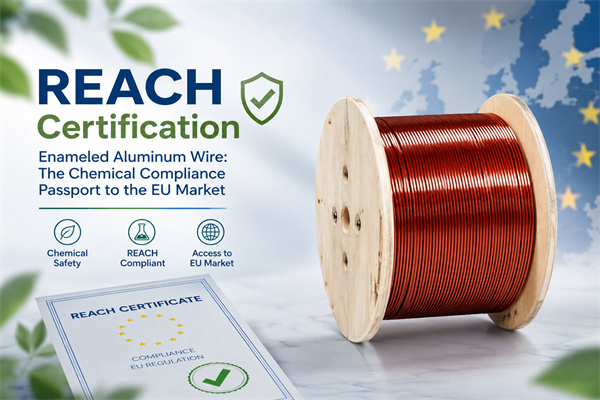
Product certification is a product-level evaluation metric for supplier quality control. OEM manufacturers must assess whether suppliers’ products have obtained relevant product certifications. UL certification is the authoritative product certification for the North American market. CSA certification is the product certification for the Canadian market. CE marking is the mandatory certification for the European Union market. RoHS and REACH certifications are EU regulatory certifications concerning environmental protection and chemical substances. CCC certification is the mandatory product certification for the Chinese market.
Process Control Capability
Process capability is a process-level evaluation metric for supplier quality control. OEM manufacturers must assess the supplier’s process capability, including raw material inspection, in-process monitoring, finished product inspection, outgoing testing, nonconforming product control, and corrective and preventive actions. Excellent suppliers shall establish a comprehensive Statistical Process Control (SPC) system to perform real-time monitoring and statistical analysis of critical process parameters.
Testing Equipment Capability
Testing equipment capability is a hardware evaluation criterion for supplier quality control. OEM manufacturers must assess the testing equipment configuration level of suppliers. Basic testing equipment includes film continuity testers, dielectric breakdown voltage testers, enamel thickness measuring instruments, elongation testers, and solderability testers. Advanced testing equipment includes thermal shock test chambers, thermal aging ovens, dielectric loss testers, scanning electron microscopes (SEM), energy-dispersive spectrometers (EDS), X-ray diffractometers (XRD), and atomic absorption spectrometers (AAS).
Quality Data Transparency
Quality data transparency is an information-level evaluation metric for supplier quality control. OEM manufacturers must assess whether suppliers can provide complete quality data, including raw material inspection reports, process monitoring data, finished product test reports, Certificates of Conformance (COC), and Material Test Reports (MTC). Excellent suppliers shall establish a traceable quality data system to support customers’ quality traceability requirements.
Production Capacity and Delivery Assessment
Production capacity and delivery performance constitute an operational-level evaluation criterion for magnet wire supplier selection, determining whether the supplier can meet the delivery requirements of OEM manufacturers.
Production Capacity
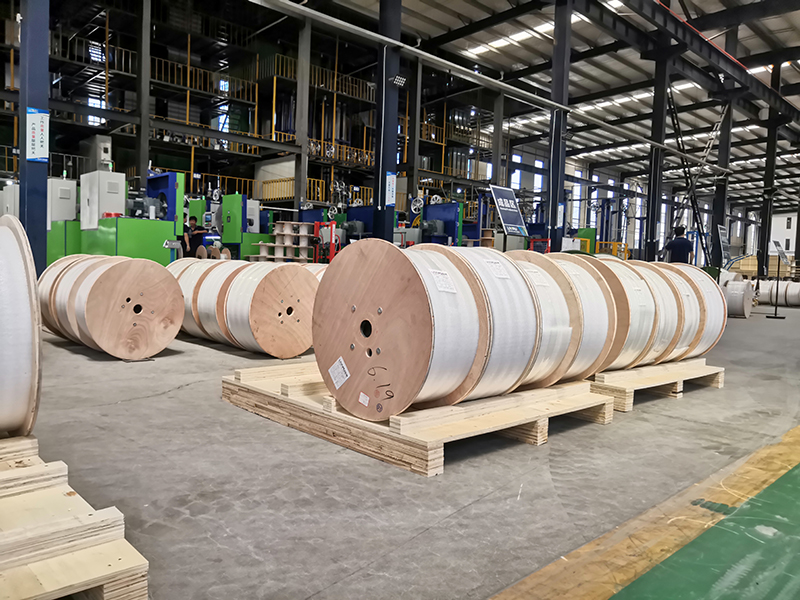
Production capacity is a fundamental evaluation metric for assessing a supplier’s manufacturing capability and delivery performance. OEM manufacturers must evaluate whether a supplier’s production capacity meets project requirements. Evaluation criteria include annual capacity, monthly capacity, and maximum batch capacity. The supplier’s production capacity should align with the customer’s procurement volume; insufficient capacity may lead to delivery risks, while excessive capacity may indicate inadequate focus on the customer.
Production Capacity Flexibility
Production capacity flexibility is an evaluation metric for a supplier’s production capacity and delivery agility. OEM manufacturers must assess a supplier’s production capacity flexibility, including flexibility to accommodate order volume fluctuations, flexibility to fulfill urgent orders, and flexibility to meet capacity expansion requirements. An excellent supplier should possess flexible capacity allocation capabilities to rapidly respond to changes in customer demand.
Inventory Capacity
Inventory capacity is a buffer assessment metric reflecting a supplier’s production capacity and delivery capability. OEM manufacturers must evaluate a supplier’s inventory capacity, including finished goods inventory volume, raw materials inventory volume, and inventory capability for special specifications. An excellent supplier should establish a rational inventory system capable of supporting customers’ emergency orders and short-lead-time delivery requirements.
Logistics Network
Logistics network is a logistics evaluation metric reflecting supplier production capacity and delivery performance. OEM manufacturers must assess the coverage of a supplier’s logistics network, including local distribution capability, regional distribution capability, and international logistics capability. An excellent supplier should possess a comprehensive logistics network capable of supporting customers’ global procurement requirements.
On-Time Delivery Rate
On-Time Delivery (OTD) rate is a performance metric evaluating a supplier’s production capacity and delivery capability. OEM manufacturers must assess the supplier’s OTD rate, including order confirmation on-time rate, shipment on-time rate, and receipt on-time rate. Excellent suppliers should maintain a high OTD rate (typically above 95%) and continuously improve delivery performance.
Business Capability Assessment
Business capability is a commercial-level evaluation criterion for magnet wire supplier selection, determining whether the supplier can offer competitive commercial terms.
Price Competitiveness
Price competitiveness is a fundamental evaluation criterion for a supplier’s commercial capability. OEM manufacturers must assess whether a supplier’s pricing level is competitive in the market. Price evaluation should comprehensively consider unit price, total cost (including transportation cost, tariff cost, and inventory holding cost), long-term price trends, and foreign exchange rate fluctuation risk.
Payment Terms
Payment terms serve as an evaluation metric for the supplier’s commercial flexibility. OEM manufacturers must assess the flexibility of the supplier’s payment terms, including payment methods (e.g., letters of credit, telegraphic transfers, collections), payment due periods (e.g., advance payment, monthly settlement, quarterly settlement), and payment currencies. An excellent supplier shall offer flexible payment terms to support customers’ working capital requirements.
Contract Terms
Contract terms serve as standardized evaluation criteria for a supplier’s commercial capability. OEM manufacturers must assess the standardization of a supplier’s contract terms, including quality assurance clauses, delivery assurance clauses, liability for breach of contract clauses, confidentiality clauses, and intellectual property clauses. An excellent supplier shall provide standardized contract terms that balance the rights and obligations of both buyer and seller.
Willingness to Establish Long-Term Cooperation
Long-term cooperation willingness is a strategic evaluation criterion for a supplier’s commercial capability. OEM manufacturers must assess the supplier’s long-term cooperation willingness, including the supplier’s emphasis on customers, the supplier’s development strategy, and the supplier’s customer management capability. An excellent supplier shall regard customers as strategic partners and provide long-term, stable cooperative support.
Service Support Evaluation
Service support is a service-level evaluation criterion for supplier selection, impacting the procurement experience and project support provided to OEM manufacturers.
Product Selection Consultation Capability
Selection consultation capability is a technical evaluation metric for supplier service support. OEM manufacturers must assess the supplier’s selection consultation capability, including product specification recommendations, application scenario matching, and technical parameter optimization. Excellent suppliers shall maintain a professional team of applications engineers to provide customers with systematic selection consultation services.
Sample Response Capability
Sample response capability is an evaluation metric for the responsiveness of a supplier’s service support. OEM manufacturers must assess the supplier’s sample response capability, including standard sample turnaround time, custom sample turnaround time, and sample quality level. An excellent supplier should deliver samples meeting customer requirements within a short timeframe—typically 7 to 14 days.
After-sales Technical Service
After-sales technical service is a continuous evaluation metric for supplier service support. OEM manufacturers must assess the supplier’s after-sales technical service capability, including response to quality issues, technical issue support, failure analysis assistance, and on-site technical service. An excellent supplier shall establish a comprehensive after-sales service system to provide customers with full-lifecycle technical support.
Communication Efficiency
Communication efficiency is a communication-level evaluation metric for supplier service support. OEM manufacturers must assess the supplier’s communication efficiency, including response time, communication methods, language used in communication, and initiative in communication. An excellent supplier shall maintain efficient communication and proactively provide information on project progress, quality status, and technical updates.
Supplier Audit Methodology
Supplier audits are verification assessments used for selecting enameled wire suppliers and serve as a critical basis for decision-making and final supplier selection.
Document Review
Document review is the preliminary evaluation method for supplier audits. OEM manufacturers must collect and review relevant supplier documents, including corporate qualification documents (business license, industry-specific qualifications), quality management system certificates (ISO 9001, IATF 16949), product certification certificates (UL, CSA, CE, RoHS, REACH), product technical documents (product specifications, test reports, material certifications), and commercial documents (quotation sheets, sample contracts). The document review shall focus on certificate validity periods, scope of certification, and document completeness.
On-site Audit
On-site audit is an in-depth evaluation method for supplier assessment. OEM manufacturers shall organize a cross-functional audit team—including technical, quality, procurement, and production departments—to conduct on-site audits of candidate suppliers. The on-site audit covers capacity assessment, production equipment assessment, process control assessment, test equipment assessment, quality management system operation assessment, R&D capability assessment, and personnel competency assessment. The on-site audit shall be conducted using a standardized audit checklist to identify supplier strengths and risks.
Sample Testing
Sample testing is a product-level verification method used in supplier audits. OEM manufacturers shall obtain samples from candidate suppliers and conduct rigorous sample testing in their in-house laboratories or third-party laboratories. Sample testing shall cover multiple dimensions of magnet wire—including electrical, mechanical, thermal, chemical, and long-term reliability performance—and be evaluated against the OEM manufacturer’s technical specifications.
Trial Order Verification
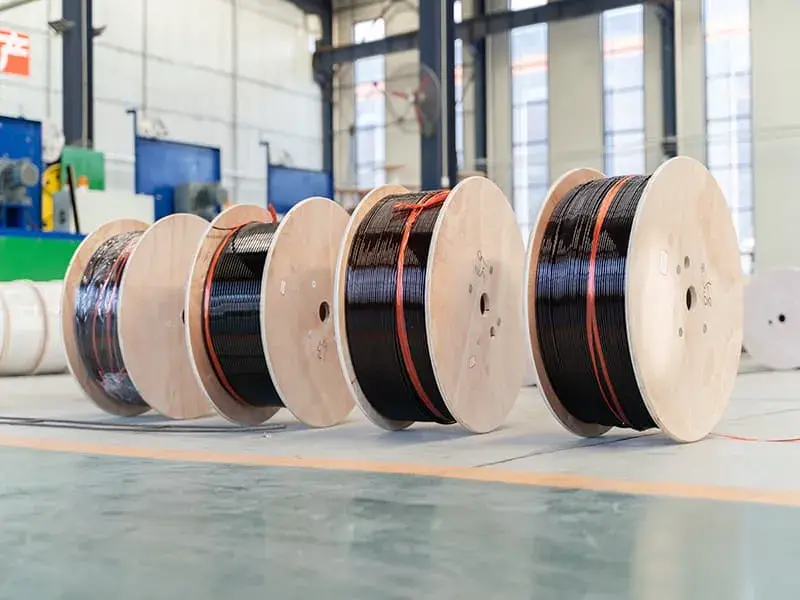
Trial order validation is a commercial-level verification method used in supplier audits. OEM manufacturers shall validate the supplier’s actual delivery capability through small-batch trial orders, including order confirmation speed, production lead time, product quality, on-time delivery rate, packaging quality, and document completeness. Trial order validation represents the most realistic assessment in supplier audits and shall serve as a critical basis for final supplier selection decisions.
Long-term Cooperation Strategy
Long-term collaboration strategies with magnet wire suppliers are central to OEM manufacturers’ supply chain management, impacting supply chain stability, cost competitiveness, and risk control.
Strategic Partnership
OEM manufacturers shall identify and cultivate strategic partners for magnet wire to establish long-term, stable cooperative relationships. Strategic partnerships are built on mutual trust, mutual benefit, and win-win collaboration, including joint R&D, long-term supply agreements, shared inventory management, technical information sharing, and joint market expansion. Strategic partnerships enable OEM manufacturers to obtain priority support, preferential pricing, and customized services from suppliers.
Multi-supplier Strategy
OEM manufacturers shall establish a multi-supplier strategy for critical magnet wire products to mitigate supply chain risks. This multi-supplier strategy shall maintain the dominant position of the primary supplier while cultivating secondary suppliers as backups. Cultivation of secondary suppliers shall be advanced incrementally through small-batch orders, technical support, and collaborative development. The multi-supplier strategy shall maintain a dynamic balance between primary and backup suppliers to avoid over-reliance on any single supplier.
Supplier Performance Management
OEM manufacturers shall establish a performance management system for magnet wire suppliers and conduct periodic performance evaluations. Performance evaluation metrics include product quality (batch pass rate, quality complaint rate), delivery performance (on-time delivery rate, lead time), price performance (price level, price stability), service performance (response time, technical support), and overall performance (willingness to collaborate, long-term performance). The performance evaluation results shall be communicated to the supplier to drive continuous supplier improvement.
Supply Chain Risk Management
OEM manufacturers shall establish a risk management mechanism for the magnet wire supply chain. Risk identification includes supplier financial risk, supplier production risk, raw material price risk, exchange rate risk, and geopolitical risk. Risk mitigation measures include multi-sourcing, safety stock, long-term agreements, price hedging, and exchange rate locking. Supply chain risk management helps OEM manufacturers respond to emergencies and maintain supply chain stability.
Conclusion
The engineering implications of “How to Choose a Magnet Wire Supplier for Your Project” encompass eight core dimensions: (1) supplier selection decision framework (decision factor architecture, weight allocation, decision process); (2) technical capability assessment (product specification coverage, compliance with standards such as IEC 60317, NEMA MW 1000, ASTM B566, UL 1446, and IATF 16949, R&D capability, application engineering capability); (3) quality control assessment (quality management system certification, product certifications, process control capability, testing equipment capability, quality data transparency); (4) production capacity and delivery assessment (production capacity scale, capacity flexibility, inventory capability, logistics network, on-time delivery rate); (5) commercial capability assessment (price competitiveness, payment terms, contract terms, willingness to engage in long-term cooperation); (6) service support assessment (technical consultation capability for wire selection, sample response capability, after-sales technical service, communication efficiency); (7) supplier audit methodology (document review, on-site audit, sample testing, trial order validation); and (8) long-term collaboration strategy (strategic partnership, multi-supplier strategy, supplier performance management, supply chain risk management).
Selection of enameled wire suppliers is a critical decision in OEM manufacturers’ supply chain management, impacting product quality, production cost, delivery capability, and market competitiveness. Establishing a systematic supplier selection decision framework, a scientific supplier capability evaluation methodology, a rigorous supplier audit process, and a long-term collaboration strategy are key to ensuring high-quality magnet wire supply for OEM manufacturers. OEM manufacturers operating in different application fields, with varying product positioning and market environments, should adjust the weight allocation in their supplier selection decisions according to their specific characteristics to develop targeted supplier selection strategies.
As global supply chains become increasingly complex, performance requirements for electrical equipment continue to rise, and emerging application fields develop rapidly, OEM manufacturers’ selection criteria for magnet wire suppliers will continue to intensify. Magnet wire suppliers must continuously enhance their technical capabilities, quality control, production capacity flexibility, and service levels; actively participate in OEM manufacturers’ product development and supply chain collaboration; and establish long-term, stable strategic partnerships with customers.
About the Author
Zhengzhou Lanpu Industrial Co., Ltd. is a source manufacturer of magnet wire with 30 years of export experience, operating a modern production base covering 60 mu. The company specializes in manufacturing enameled round wire, flat wire, and square wire made of copper, aluminum, and aluminum-clad copper, offering a full range of thermal classes. Its products are certified to ISO 9001/14001/45001, UL, REACH, and RoHS standards, and are exported to more than 50 countries.
Contact Information:
- 📧 Email: <office@cnlpzz.com>
- 📱 WhatsApp: 0086-19337889070
- 🌐 Website: <https://lpenamelwire.com/>