

Introduction
Enameled Wire for Industrial Equipment is one of the most widely applied and technically demanding engineering fields within the enameled wire industry. Industrial equipment encompasses a broad range of categories, including motors, transformers, reactors, relays, sensors, solenoid valves, inductors, power supply units, and automated control systems—each imposing specific engineering requirements on enameled wire regarding electrical performance, mechanical performance, thermal performance, chemical resistance, and long-term reliability. Understanding these technical requirements for enameled wire in industrial equipment constitutes a core knowledge requirement for enameled wire manufacturers, OEM design engineers, equipment procurement engineers, and equipment operation & maintenance engineers.
From the perspective of industrial equipment engineering practice, magnet wire—serving as a critical foundational material for electromagnetic energy conversion and control—holds engineering value far beyond that of a mere conductor. In industrial motors, magnet wire forms the electromagnetic circuits of stator and rotor windings; its dielectric strength, thermal stability, and mechanical reliability directly determine the motor’s power density, efficiency class, and operational service life. In transformers and inductors, magnet wire serves as the coupling medium within the magnetic circuit; its electrical conductivity, insulation performance, and temperature stability govern the energy efficiency and reliability of magnetic components. In relays and sensors, magnet wire constitutes the electromagnetic actuating element; its solderability without pre-stripping, dimensional accuracy, and long-term stability determine the component’s response characteristics and service life.
The engineering implications of enameled wire for industrial equipment can be systematically elaborated from seven dimensions: application domain landscape, enamel coating system and thermal class, conductor material, key performance requirements, equipment-type selection, quality control and certification systems, and future development trends. This article provides a systematic engineering reference for industrial equipment manufacturers, OEM design engineers, procurement engineers, and operations & maintenance engineers.
Comprehensive Application Scope of Magnet Wire for Industrial Equipment
The application areas of magnet wire for industrial equipment cover virtually all industrial sectors involving electromagnetic conversion and control.
Motor Applications
Motors represent the largest application segment for magnet wire. Motor types used in industrial equipment include induction motors, DC motors, permanent magnet synchronous motors, servo motors, stepper motors, and specialty motors. In motors, magnet wire is primarily employed for electromagnetic winding of stator windings, rotor windings, field windings, and armature windings.
Requirements for magnet wire vary significantly among different types of industrial motors. General-purpose industrial motors typically satisfy requirements using Class 130 or Class 155 magnet wire; variable-frequency motors, subjected to stress concentration from harmonic currents, require a Class 180 enamel system to withstand partial discharge and impulse voltage; servo motors impose extremely high demands on dimensional accuracy and enamel uniformity of magnet wire, directly affecting torque ripple and positioning accuracy; high-power-density motors—such as traction motors and new-energy-vehicle drive motors—require high-temperature enamel systems rated Class 200 or Class 220.
Applications in Transformers and Inductors
Transformers represent another major application area for magnet wire. Transformer types used in industrial equipment include control transformers, isolation transformers, electronic transformers, power transformers, rectifier transformers, furnace transformers, and traction transformers. Magnet wire is primarily employed for electromagnetic winding of primary windings, secondary windings, auxiliary windings, and electrostatic shield windings in transformers.
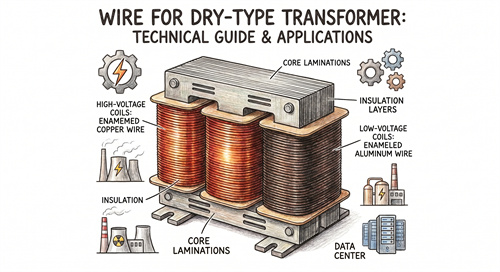
Requirements for magnet wire vary significantly among different types of industrial transformers. Control transformers typically employ Class 130 or Class 155 magnet wire; electronic transformers impose higher requirements on dielectric strength and enamel uniformity; high-frequency transformers require enamel systems rated Class 180 or higher to withstand temperature rise caused by high-frequency losses; high-power rectifier transformers require enamel systems rated Class 180 to Class 200 to withstand temperature rise induced by high current.
Inductors include line-frequency reactors, filter inductors, power inductors, energy-storage inductors, and RF inductors. Requirements for magnet wire vary significantly depending on the application. Line-frequency reactors typically use Class 130 or Class 155 magnet wire; power inductors and energy-storage inductors, operating at high frequencies, require magnet wire with insulation systems rated Class 180 or higher; RF inductors impose stringent requirements on magnet wire regarding skin effect and skin depth control.
Relay and Solenoid Applications
Relays represent a high-volume application area for magnet wire (enameled wire). Relay types used in industrial equipment include general-purpose relays, automotive relays, communication relays, solid-state relays, power relays, and time-delay relays. Magnet wire is primarily employed in relays for electromagnetic coil winding.
Relay requirements for magnet wire focus on solderability without pre-stripping, dimensional accuracy, coating uniformity, and long-term stability. Polyurethane enamel-coated wire (UEW) with Class 130 or Class 155 thermal class is the preferred material for relay coils due to its excellent solderability without pre-stripping, significantly simplifying the connection process for relay lead wires.
Solenoids represent another application area for magnet wire. The coils in solenoids must withstand frequent on/off cycling, demanding high mechanical fatigue resistance and thermal cycling reliability from the magnet wire. Automotive solenoids, industrial control solenoids, and appliance solenoids are key application directions for magnet wire.
Applications in Sensors and Detection Devices
Sensors represent an emerging application area for magnet wire. Sensor types used in industrial equipment include inductive sensors, Hall-effect sensors, current transformers, voltage transformers, magnetoresistive sensors, encoders, and rotational speed sensors. Magnet wire is primarily employed in sensors for electromagnetic winding applications, including excitation windings, sensing windings, and compensation windings.
Sensor requirements for magnet wire focus on dimensional accuracy, coating uniformity, long-term stability, and consistency of temperature coefficient. The performance of precision sensors depends on high-accuracy winding and stable electromagnetic characteristics of the magnet wire.
Industrial Power Supply and Control Equipment Applications
Industrial power supplies and control devices are application areas for magnet wire (enameled wire). Magnet wire is extensively used in industrial power supplies, variable-frequency drives (VFDs), servo drives, programmable logic controllers (PLCs), industrial control cabinets, and switched-mode power supplies (SMPS). Industrial power supplies and control devices impose requirements on magnet wire across multiple dimensions, including electrical performance, mechanical performance, thermal performance, and long-term reliability.
High-frequency switching power supplies impose stringent requirements on the high-frequency performance of winding wire, necessitating enamel systems rated Class 180 or higher to withstand temperature rise during high-frequency operation. Industrial control equipment demands exceptional long-term stability and reliability from magnet wire, requiring compliance with industrial-grade temperature ranges, vibration resistance, and shock resistance.
Enamel System and Thermal Class System
The enamel coating system and thermal class system of magnet wire for industrial equipment determine its long-term operational capability under varying temperature conditions.
Primary Enamel Systems
The primary enamel systems for magnet wire used in industrial equipment include polyester (PEW), polyurethane (UEW), modified polyester, polyester-imide (PEI), polyamide-imide (PAI), and polyimide (PI). Each enamel system exhibits distinct performance characteristics:
Polyester enamel (PEW) offers low cost, good mechanical properties, and moderate dielectric properties, making it suitable for general-purpose industrial motors, household appliances, and general-purpose transformers. Typical thermal class is Class 130.
Polyurethane enamel (UEW) offers outstanding advantages including solderability without prior stripping, low-temperature curing, and low dielectric loss, making it suitable for relay coils, precision inductors, and electronic transformers. Typical thermal classes range from Class 130 to Class 155.
Modified polyester enamel film is developed by incorporating modified monomers into standard polyester enamel, resulting in improved thermal stability and mechanical properties. It is suitable for control transformers and precision coils. Typical thermal class: Class 155.
Polyester-imide (PEI) enamel incorporates imide bonds into a polyester base, significantly enhancing thermal stability while offering superior dielectric and mechanical properties. It is suitable for Class F insulation motors, inverter-duty motors, and high-voltage motors. Typical thermal class: Class 180.
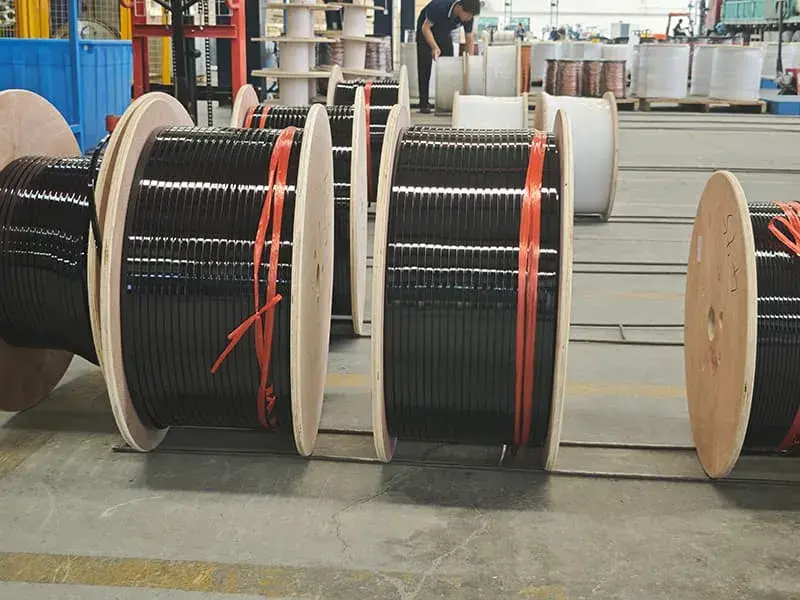
Polyamide-imide (PAI) enamel coating offers superior thermal stability and dielectric strength, suitable for Class H insulation motors, traction motors, new-energy vehicle drive motors, and wind turbine generators. Typical thermal class is Class 200.
Polyimide (PI) enamel film exhibits exceptional thermal stability and dielectric strength, making it suitable for Class C insulated motors, specialized high-temperature applications, and aerospace equipment. Typical thermal classes range from Class 220 to Class 240.
Thermal Class System
Thermal Class is a classification standard for the long-term operating temperature of enamel coatings, conforming to IEC 60085 and UL 1446. Common Thermal Classes include Class 105, Class 130, Class 155, Class 180, Class 200, Class 220, and Class 240. Each Thermal Class corresponds to a specific Temperature Index—the maximum temperature at which the enamel coating can operate continuously under standard lifetime conditions.
Correlation between thermal classes and temperature indices: Class 130 enamel coatings have a temperature index of 130 °C; Class 155 enamel coatings, 155 °C; Class 180 enamel coatings, 180 °C; Class 200 enamel coatings, 200 °C; Class 220 enamel coatings, 220 °C; and so on.
Enamel Thickness Grades
The漆膜 thickness grade system for magnet wire used in industrial equipment complies with the grading provisions of international and national standards including IEC 60317, NEMA MW 1000, and GB/T 6109. The漆膜 thickness grades primarily include Single Build (Grade 1), Heavy Build (Grade 2), and Triple Build (Grade 3). Different漆膜 thickness grades correspond to distinct dielectric strength levels and application scenarios.
Conductor Materials
The selection of conductor material for magnet wire used in industrial equipment directly affects its electrical performance, mechanical performance, cost, and weight.
Copper Conductor
Copper is the predominant conductor material for magnet wire used in industrial equipment. With its low resistivity and among the highest electrical conductivity of all practical metals, copper exhibits excellent machinability and superior connection performance. Copper magnet wire delivers optimal electrical conductivity in power-frequency and medium-frequency applications, making it the preferred conductor material for most industrial magnet wire.
Copper magnet wire for industrial equipment typically uses electrical-grade pure copper (ETP, Electrolytic Tough Pitch Copper) as the conductor material. Conductor diameters cover the full range—from ultra-fine wire (for precision coils) to heavy-gauge wire (for large motor stator windings).
Aluminum Conductors
Aluminum is a lightweight conductor option for magnet wire used in industrial equipment. Abundant in resources and less expensive than copper, aluminum weighs approximately one-third that of copper, making it the preferred conductor material for lightweight design of large power transformers and large motors. Aluminum magnet wire is widely applied in power transformers, distribution transformers, and large motors operating at power frequency.
However, aluminum magnet wire presents technical challenges such as lower electrical conductivity, inferior joint performance, and susceptibility to surface oxidation. Engineering applications of aluminum magnet wire require special attention to termination processes and long-term reliability.
Copper-Clad Aluminum (CCA) Conductors
Copper-clad aluminum (ECCA, Electrical Copper Clad Aluminum) is a novel conductor material for magnet wire used in industrial equipment. ECCA achieves an engineering balance between copper and aluminum through metallurgical bonding of an outer copper layer to an inner aluminum core. ECCA magnet wire offers application value in high-frequency magnetic components, lightweight transformers, and auxiliary motors for new-energy vehicles.
Copper-Clad Aluminum vs. Copper Conductors
ECCA magnet wire exhibits lower DC conductivity than pure copper magnet wire (depending on the copper layer volume ratio), but its high-frequency conductivity is comparable to that of pure copper magnet wire (due to current concentration in the copper layer under the skin effect). The weight of ECCA magnet wire is significantly lower than that of pure copper magnet wire, and its cost lies between that of pure aluminum and pure copper.
Key Performance Requirements
Key performance requirements for magnet wire used in industrial equipment span multiple dimensions, including electrical properties, mechanical properties, thermal properties, chemical properties, and long-term reliability.
Electrical Performance Requirements
Electrical performance requirements for magnet wire used in industrial equipment include conductivity, dielectric strength, film continuity, dielectric loss tangent, and DC withstand voltage.
Electrical conductivity directly affects equipment power loss and efficiency. The direct-current (DC) resistance of magnet wire is determined by the conductor material, conductor diameter, and conductor length. Conductor diameter accuracy and consistency impact motor electromagnetic design and performance.
Dielectric strength is a critical parameter indicating the voltage stress resistance of magnet wire, determining its insulation reliability in motors, transformers, and other equipment. Dielectric strength is influenced by factors including enamel coating thickness, enamel coating uniformity, enamel coating quality, and conductor surface quality.
Coating continuity is a comprehensive quality indicator of magnet wire manufacturing, reflecting the coating’s ability to provide continuous coverage over the conductor surface. Coating continuity defects—such as pinholes, thin spots, and coating damage—can lead to dielectric breakdown failure of the magnet wire under voltage stress.
Dielectric loss tangent (tan δ) is a critical parameter for magnet wire in high-frequency applications. Applications such as high-frequency transformers and power inductors impose stringent requirements on the dielectric loss of magnet wire.
Mechanical Property Requirements
Mechanical property requirements for magnet wire used in industrial equipment include tensile strength, elongation, flexibility, abrasion resistance, and impact resistance. During winding processing, magnet wire is subjected to various mechanical stresses such as tension, bending, and torsion; insufficient mechanical properties may result in insulation damage or conductor breakage.
Winding processing imposes stringent mechanical performance requirements on magnet wire. Automated high-speed winding machines require magnet wire with appropriate tensile strength, flexibility, and surface smoothness. Winding forming, coil insertion, shaping, and tying operations further demand specific levels of flexibility and tensile strength from the magnet wire.
Thermal Performance Requirements
Thermal performance requirements for magnet wire used in industrial equipment include thermal shock, softening breakdown, temperature index, and thermal aging life. Magnet wire is subjected to thermal stress and temperature cycling during long-term operation; insufficient thermal performance may lead to insulation failure and reduced service life.
Thermal shock testing evaluates the integrity of the enamel coating under rapid temperature change conditions. Softening breakdown testing evaluates the stability of the enamel coating at elevated temperatures. Temperature index evaluates the maximum long-term operating temperature of the magnet wire.
Chemical Property Requirements
Chemical performance requirements for magnet wire used in industrial equipment include solderability, resistance to chemical media, oil resistance, and hydrolysis resistance. Magnet wire may come into contact with various chemical media—such as oils, coolants, cleaning agents, and acidic or alkaline solutions—in industrial environments; inadequate chemical performance can lead to enamel coating damage and insulation failure.
Solderability is a critical performance attribute for lead wire connections in relays and transformers. Polyurethane enamel (UEW) exhibits direct solderability, enabling soldering without prior enamel removal, thereby significantly simplifying lead wire connection processes.
Long-term reliability requirements
Long-term reliability requirements for magnet wire used in industrial equipment include thermal aging life, vibration resistance, and environmental resistance. Industrial equipment typically requires an operational lifetime of 10 to 20 years, during which the magnet wire must maintain stable electrical, mechanical, and insulation properties.
Accelerated aging testing is a critical method for evaluating the long-term reliability of magnet wire. By measuring the failure time of magnet wire at multiple temperature points, the maximum operating temperature at standard lifetime is extrapolated based on the Arrhenius kinetic model.
Key Selection Criteria for Equipment Types
Different types of industrial equipment impose distinct requirements for magnet wire selection.
Motor-Type Equipment Selection
Selection of magnet wire for motor-type equipment must comprehensively consider motor type, power density, efficiency class, operating temperature, and variable-frequency drive (VFD) requirements. Class 130 or Class 155 magnet wire is suitable for general-purpose industrial motors; Class 180 magnet wire with partial discharge-resistant enamel systems is required for VFD motors; high-power-density motors require Class 200 or Class 220 high-temperature enamel systems.
Selection of the conductor diameter for magnet wire used in motors must consider slot fill factor, number of winding turns, and electromagnetic design requirements. A conductor diameter that is too small increases the resistance and risk of mechanical damage to the magnet wire, whereas a conductor diameter that is too large reduces the slot fill factor and power density.
Selection Guide for Transformer-Type Equipment
Selection of magnet wire for transformer-type equipment must comprehensively consider transformer type, capacity, frequency, and insulation class. Control transformers shall use Class 130 or Class 155 magnet wire; electronic transformers and high-frequency transformers shall use magnet wire with a film system rated Class 180 or higher; high-power rectifier transformers and traction transformers shall use magnet wire with a film system rated Class 180 to Class 200.
Conductor selection for magnet wire used in transformers must consider current density, skin effect, and eddy current losses. Round copper magnet wire is used in power-frequency transformers; Litz wire or stranded wire is employed in high-frequency transformers to mitigate the skin effect; flat copper magnet wire is utilized in high-power transformers to improve the fill factor.
Selection Guide for Relays and Solenoids
Selection of magnet wire for relays and solenoids requires consideration of solderability without pre-stripping, dimensional accuracy, coating uniformity, and long-term stability. Polyurethane enamel-coated wire (UEW) with Class 130 or Class 155 thermal class offers excellent solderability without pre-stripping and is the preferred material for relay coils.
Magnet wire for relays typically features fine conductor diameters to meet the turn-count requirements of relay coils. The uniformity and dimensional accuracy of the enamel coating directly affect the relay’s response characteristics and service life.
Selection of Sensors and Inspection Equipment
Selection of magnet wire for sensors and detection devices requires consideration of dimensional accuracy, enamel uniformity, temperature coefficient, and long-term stability. Precision sensors impose stringent requirements on the high-accuracy winding capability and stable electromagnetic characteristics of magnet wire.
Magnet wire for sensors typically features extremely fine conductor diameters (for precision coils) and thin enamel coatings to minimize sensor size. Enamel coating uniformity and temperature coefficient stability directly affect sensor measurement accuracy.
Quality Control and Certification System
Quality control and certification systems for magnet wire used in industrial equipment are the core guarantee of product reliability.
Quality Management System Certification
Magnet wire manufacturers shall establish a comprehensive quality management system. ISO 9001 quality management system certification is the foundational qualification for magnet wire manufacturers. ISO 14001 environmental management system certification, ISO 45001 occupational health and safety management system certification, and IATF 16949 automotive industry quality management system certification represent higher-level certifications.
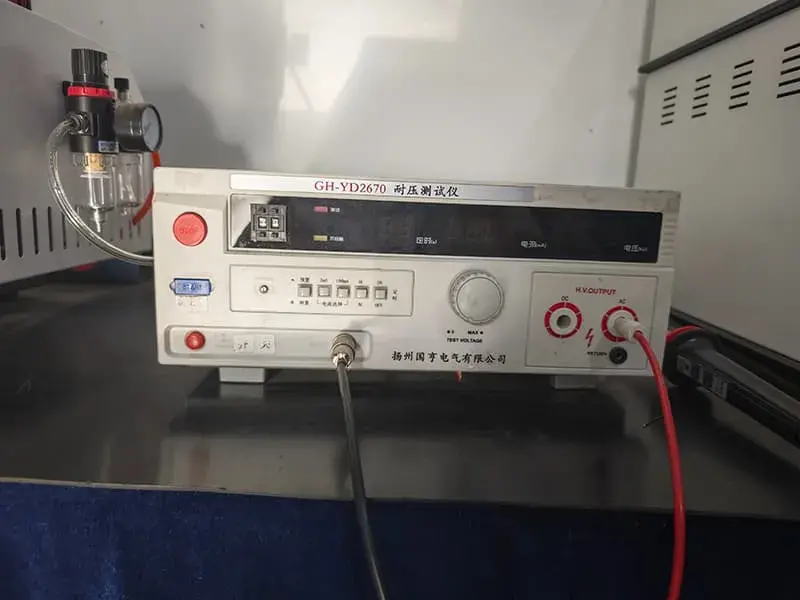
Quality control for magnet wire manufacturers covers raw material inspection, in-process inspection, finished product inspection, and outgoing tests. Raw material inspection includes compositional and performance testing of critical raw materials such as copper rod, aluminum rod, and enamel varnish. In-process inspection includes online monitoring of conductor processing, enamel coating application, enamel film thickness, and enamel film continuity. Finished product inspection includes comprehensive outgoing tests (dielectric breakdown voltage, enamel film continuity, enamel film thickness, elongation, solderability, thermal shock, etc.).
Product Certification System
The product certification system for magnet wire used in industrial equipment encompasses multiple levels, including international certifications, regional certifications, and industry-specific certifications.
UL certification (Underwriters Laboratories) is the authoritative certification for magnet wire products in the North American market, covering specialized standards such as UL 1446 (Insulating Materials and Systems for Magnetic Components) and UL 2353 (Magnet Wire for Use in Equipment).
CSA certification (Canadian Standards Association) is a mandatory certification for the Canadian market. C-UL certification is a joint certification issued by CSA and UL.
CE marking is a mandatory certification for the European Union market, covering the Low Voltage Directive (LVD), the Electromagnetic Compatibility Directive (EMC), and the RoHS Directive.
RoHS Certification (Restriction of Hazardous Substances) is a mandatory certification imposed by the European Union to restrict hazardous substances in electrical and electronic equipment. Enamelled wire must comply with the RoHS Directive’s restrictions on hazardous substances such as lead, mercury, cadmium, and hexavalent chromium.
REACH certification is a mandatory EU regulation governing the registration, evaluation, authorization, and restriction of chemicals. Chemical substances used in magnet wire must comply with the REACH regulation.
Third-party testing laboratories
Third-party testing of magnet wire for industrial equipment is conducted by authoritative testing organizations. International testing organizations include UL (USA), CSA (Canada), VDE (Germany), TÜV (Germany), Intertek (UK/USA), and SGS (Switzerland/China). Domestic testing organizations include China Quality Certification Centre (CQC) and China Electric Apparatus Research Institute.
Third-party testing covers multiple dimensions of magnet wire performance, including electrical, mechanical, thermal, chemical, and long-term reliability properties. Test reports serve as a critical basis for industrial equipment manufacturers to evaluate magnet wire quality.
Future Development Trends
The future development of magnet wire for industrial equipment will continue to advance along the directions of high performance, lightweighting, intelligence, and green manufacturing.
Development of High-Performance Insulation Coating Systems
R&D directions for new high-performance enamel systems include nanocomposite enamels, organic-inorganic hybrid enamels, and modified polyimide enamels. Nanocomposite enamels enhance dielectric strength, thermal resistance, and mechanical properties by incorporating nanofillers (e.g., nano-SiO₂, nano-Al₂O₃, nano-TiO₂). Organic-inorganic hybrid enamels combine the flexibility of organic materials with the thermal resistance of inorganic materials, representing a key development trend for high-temperature enamels.
Evolution of High-Temperature Enamel Systems
As the power density of industrial equipment continues to increase and operating environments become increasingly demanding—such as higher power density requirements for new-energy vehicle motors, larger-scale wind turbine generators, and special requirements for aerospace equipment—the temperature rating requirements for magnet wire are continuously rising. Insulation systems rated Class 240, Class 250, and above will become the focus of future R&D efforts.
Expansion of Lightweight Conductor Applications
Lightweighting is a key development direction for industrial equipment—especially new-energy vehicles, rail transit systems, and aerospace equipment. Demand for ECCA magnet wire and aluminum alloy magnet wire in lightweighting applications will continue to grow. Increasing power density of new-energy vehicle traction motors, scaling-up of wind turbine generators, and lightweighting requirements for rail transit vehicles will all drive broader application of lightweight magnet wire products.
Intelligent Manufacturing and Quality Control
Intelligent manufacturing and quality control represent the developmental direction of the magnet wire industry. Emerging technologies—including online quality monitoring, non-destructive testing, big data analytics, and machine learning–assisted quality prediction—will be progressively implemented in magnet wire manufacturing and quality control. Intelligent manufacturing can significantly enhance consistency, reliability, and production efficiency of magnet wire.
Greening and Sustainable Development
Greening and sustainable development are key directions for the magnet wire industry. The development of water-based, solvent-free, and recyclable enamel coating systems will progress incrementally. Energy consumption, waste emissions, and use of hazardous substances in magnet wire manufacturing processes will be subject to increasingly stringent regulatory requirements.
Conclusion
The engineering scope of Enameled Wire for Industrial Equipment encompasses the full application spectrum (motors, transformers, relays, sensors, power supply controls), enamel systems and thermal classes (polyester, polyurethane, polyester-imide, polyamide-imide, polyimide enamels; Class 130 to Class 240 thermal classes), conductor materials (copper, aluminum, copper-clad aluminum), critical performance requirements (electrical, mechanical, thermal, chemical, long-term reliability), equipment-specific selection criteria (key selection points for motors, transformers, relays, and sensors), quality control and certification systems (ISO 9001/14001/45001, IATF 16949, UL, CSA, CE, RoHS, REACH), and future development trends (high-performance enamels, high-temperature enamels, lightweight conductors, intelligent manufacturing, green production) across multiple engineering dimensions.
Magnet wire for industrial equipment is a critical foundational material across numerous industrial sectors, including industrial manufacturing, energy production, infrastructure, and automated control. Its engineering value lies in the comprehensive balance of electrical, mechanical, thermal, chemical, and long-term reliability performance—serving as the fundamental guarantee for functional implementation and long-term reliable operation of industrial equipment.
With the continuous advancement of industrial automation, the ongoing increase in power density of industrial equipment, and the rapid development of emerging industrial sectors—including new-energy vehicles, 5G communications, the Internet of Things (IoT), and intelligent manufacturing—the performance requirements for magnet wire in industrial equipment will continue to rise. Magnet wire manufacturers must continuously enhance product performance, deepen application research, expand product specification portfolios, and strengthen quality assurance systems to supply the global industrial equipment manufacturing sector with high-quality, high-performance, and highly reliable magnet wire products.
About the Author
Zhengzhou Lanpu Industrial Co., Ltd. is a source manufacturer of magnet wire with 30 years of export experience, operating a modern production base spanning 60 mu. The company specializes in manufacturing copper, aluminum, and aluminum-clad copper enameled round wire, flat wire, and square wire, covering the full range of thermal classes. Its products are certified to ISO 9001/14001/45001, UL, REACH, and RoHS standards and exported to over 50 countries.
Contact Information:
- 📧 Email: <office@cnlpzz.com>
- 📱 WhatsApp: 0086-19337889070
- 🌐 Website: <https://lpenamelwire.com/>