

1 Introduction
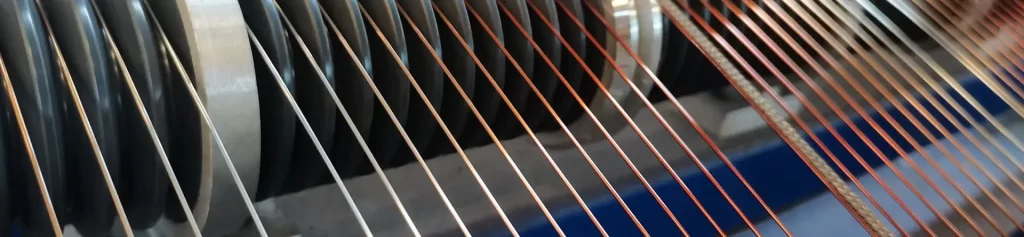
Enameled copper wire is a core material for windings in electrical equipment such as motors, transformers, inductors, and household appliances. Its quality directly affects the electrical and mechanical performance and service life of the winding products. However, the quality of enameled copper wire on the market varies greatly. Some unscrupulous manufacturers use copper-clad aluminum wire (CCA) instead of pure copper wire, use non-standard enameled wire instead of standard enameled wire, use low-purity copper instead of high-purity oxygen-free copper, use recycled copper instead of electrolytic copper, and pass off short lengths as long lengths, causing significant quality risks and economic losses to winding manufacturers.
Mastering practical methods for identifying inferior and counterfeit enameled copper wire is of great significance to winding wire purchasing engineers, quality inspectors, and end users. This article, based on international standards such as NEMA MW 1000-2018, IEC 60317 series, and ASTM B566-04a, systematically elaborates on practical methods for identifying the quality of enameled copper wire from five dimensions: visual inspection, physical testing, electrical verification, quality control, and case analysis, providing the industry with a systematic reference for quality identification.
2 Common Counterfeiting Methods of Enameled Copper Wire
2.1 Conductor Counterfeiting
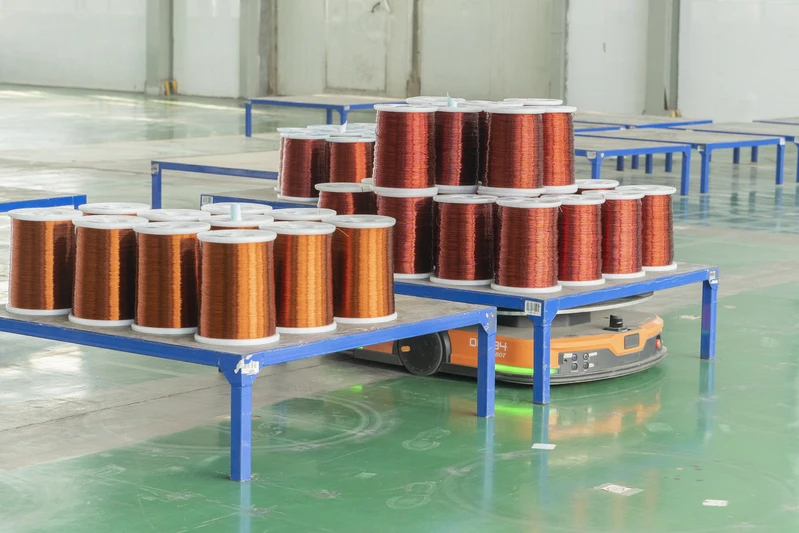
Conductor counterfeiting is the most common quality problem in enameled copper wire. Common forms include: using copper-clad aluminum wire (CCA) to impersonate pure copper wire; using non-electrical grade copper to impersonate electrical grade copper; using T2 ordinary electrolytic copper to impersonate TU1 oxygen-free copper; using recycled copper or copper alloys to impersonate electrolytic copper; and using small cross-sectional area conductors to impersonate conductors with nominal cross-sectional area. Conductor counterfeiting directly leads to a decrease in the conductivity, mechanical properties, and solderability of the enameled wire.
Copper-clad aluminum (CCA) wire is a typical form of conductor counterfeiting. According to ASTM B566-04a, the copper layer in CCA accounts for only 10% or 15% of the cross-section, while the aluminum core comprises 85% to 90%. The density of CCA is approximately 3.63 to 4.05 grams per cubic centimeter, significantly lower than the 8.89 to 8.96 grams per cubic centimeter of pure copper, a weight difference of approximately 55% to 60%. The DC conductivity of CCA is approximately 63% to 65% IACS, lower than the 100% IACS of pure copper, indicating a significant performance difference.
2.2 enamel coating counterfeiting
Counterfeiting of enamel coating is another common quality issue. Common forms include: using non-standard enamel coating to impersonate standard enamel coating, such as using low-grade enamel coating to impersonate high-grade enamel coating; using thin enamel coating to impersonate thick enamel coating; and using inferior enamel coating to impersonate branded enamel coating. Counterfeiting of enamel coating directly leads to a decrease in the dielectric strength, heat resistance, and mechanical strength of the enamel-coated wire, affecting the long-term reliability of the winding.
Identifying the enamel coating grade is crucial for detecting counterfeit enamel coatings. NEMA MW 1000-2018 specifies enamel coating heat ratings including 105, 120, 130, 155, 180, 200, 220, and 240. Each heat rating corresponds to specific enamel coating materials and performance indicators. Counterfeit enamel coatings typically involve passing off lower heat rating enamel coatings as higher heat rating enamel coatings, such as using a 130-grade enamel coating to impersonate a 180-grade enamel coating.
2.3 specifications Imitation
Counterfeiting includes imitation of wire diameter, imitation of enamel coating thickness, and imitation of length. Wire diameter imitation refers to using a smaller wire diameter to impersonate a larger one, such as using 0.45 mm to impersonate 0.50 mm; enamel coating thickness imitation refers to using a thinner enamel coating to impersonate a thicker enamel coating; and length imitation refers to using a shorter ruler to impersonate a longer ruler, such as a ruler labeled as 1000 meters but actually only 950 meters.
Counterfeit wire diameter has a significant impact on winding performance. With the same number of turns, smaller wire diameter leads to increased winding resistance, higher temperature rise, and decreased efficiency. Wire diameter deviations exceeding the permissible deviations of the IEC 60317 standard are considered non-conforming. The IEC 60317 standard specifies that the permissible deviation for enameled round copper wire diameter is ±0.005 mm to ±0.013 mm of the nominal value, depending on the conductor diameter.
2.4 Counterfeiting of Manufacturing Processes
Process counterfeiting includes imitation of conductor stretching processes, annealing processes, and enamel coating processes. Stretching process counterfeiting refers to using low-precision molds to imitate high-precision molds, resulting in decreased wire diameter accuracy. Annealing process counterfeiting refers to using incomplete annealing to imitate complete annealing, resulting in insufficient conductor elongation and poor flexibility. Enamel coating process counterfeiting refers to using single-layer coating to imitate multi-layer coating, resulting in uneven enamel coating thickness and insufficient dielectric strength.
3 Visual Identification Method
Visual inspection is the simplest preliminary identification method. The visual characteristics of high-quality enameled copper wire include: uniform color, with a typical purplish-red metallic luster; a smooth and flat surface for the enameled coating, free from defects such as bubbles, particles, flow marks, and pinholes; uniform coating thickness without significant unevenness; high conductor roundness accuracy, with no obvious elliptical deformation in the circular cross-section; and a tight bond between the enameled coating and the conductor, without peeling or flaking.
The appearance characteristics of inferior enameled copper wire include: abnormal color, such as blackening, darkening, or brass color in the copper conductor, which may indicate recycled copper or copper alloy; rough surface of the enameled coating with defects such as bubbles, particles, flow marks, pinholes, and impurities; significantly uneven thickness of the enameled coating, with visible accumulation or exposure; poor conductor roundness, with obvious elliptical deformation; and poor bonding between the enameled coating and the conductor, resulting in peeling and flaking.
When inspecting the appearance, pay attention to the following details: whether the color of the enamel coating matches the nominal enamel coating system (polyurethane enamel coating is usually light-colored, while polyester enamel coating is usually dark-colored); whether there are visible impurities, particles, or bubbles on the enamel coating surface; whether the enamel coating exhibits a typical metallic luster under natural light; and whether the packaging label is complete and clear, and includes key information such as the manufacturer’s name, specifications, standard number, and production date.
3.1 Appearance Identification of Copper Materials
The appearance of copper can provide a preliminary indication of whether it is pure copper. Pure copper typically has a purplish-red metallic luster, and after oxidation, it turns deep red or dark red. Copper-clad aluminum wire has a thinner copper layer, and a grayish-white aluminum core can be seen on the cross-section after scraping. Recycled copper tends to be darker and may contain impurities and inclusions on its surface.
3.2 Appearance Identification of enamel coating
The appearance of enamel coating can provide a preliminary indication of its quality. High-quality enamel coating has a smooth, flat surface, uniform color, and is free of defects such as bubbles, particles, pinholes, and flow marks. Inferior enamel coating has a rough surface, contains impurities, and has uneven thickness.
3.3 Packaging and Label Identification
Packaging and labeling are important indicators of product quality. High-quality products have standardized packaging and complete labels, including key information such as the manufacturer’s name, address, specifications, standard number, production date, batch number, and inspector’s identification. Inferior products have flimsy packaging and missing or illegible labels.
4 Physical Testing Methods
Physical testing methods are more in-depth identification methods, including size measurement, density testing, scratch testing, winding testing, and burning testing.
4.1 Dimensional Measurement
Dimensional measurement is a fundamental method for identifying counterfeit specifications. According to IEC 60317, the permissible deviation for the diameter of enameled round copper wire is ±0.005 to ±0.013 mm, and the enameled coating thickness is classified into grades 1, 2, and 3. A micrometer is used to measure the conductor diameter, and an enameled coating thickness gauge is used to measure the enameled coating thickness.
Wire diameter measurement method: Use a micrometer with an accuracy of not less than 0.001 mm to measure 3 to 5 times at different locations on the enameled wire and take the average value. Enameled coating thickness measurement method: Use an enamel coating thickness gauge with an accuracy of not less than 0.001 mm or measure by chemical dissolution method. Wire diameter exceeding the standard deviation is considered unqualified.
4.2 Density Test
Density testing is a key method for identifying copper-clad aluminum (CCA) as a substitute for pure copper. Pure copper has a density of 8.89 to 8.96 grams per cubic centimeter, while CCA has a density of 3.63 to 4.05 grams per cubic centimeter, showing a significant difference. The density testing method involves taking a section of enameled wire, measuring its mass using a precision balance, and then measuring its volume using either the displacement method or the wire diameter calculation method to calculate the density.
A density of 8.7 to 9.0 grams per cubic centimeter is typically pure copper; a density of 3.5 to 4.2 grams per cubic centimeter is typically CCA; and a density of 2.65 to 2.75 grams per cubic centimeter is typically pure aluminum. Any deviation from the density standard indicates a counterfeit conductor.
4.3 Scratch Test
The scratch test is a fundamental method for judging the quality of enamel coatings. High-quality enamel coatings should meet the scratch resistance requirements of NEMA MW 1000-2018 standard. According to Table 51, Grade 1 enamel coatings should withstand at least 5 to 40 scratches, Grade 2 at least 15 to 75 scratches, and Grade 3 at least 25 to 100 scratches. The test is conducted using an enamel coating scratch tester, where a scratching needle reciprocates across the enamel coating surface, and the number of times the coating is scratched is recorded.
4.4 Winding Test
The winding test is a method for judging the flexibility of the enamel coating. According to IEC 60851-3 standard, enameled round copper wire should not crack when wound with a mandrel diameter of 1d to 5d. The winding test method is as follows: Take a section of enameled wire and tightly wind it at least 5 turns around the specified mandrel diameter. Visually inspect the enamel coating for cracks or peeling. Cracked enamel coating indicates a failure.
4.5 Combustion Test
Combustion testing is a method for evaluating enamel coating materials. Different enamel coating materials have different combustion characteristics. Polyurethane enamel coatings are flammable in a flame and self-extinguish after being removed from the flame, producing a small amount of smoke during combustion. Polyester enamel coatings are flammable in a flame and continue to burn after being removed from the flame, producing black smoke during combustion. Polyimide enamel coatings are flame-retardant and self-extinguish after being removed from the flame.
Combustion test method: Take a small section of enameled wire, ignite the end of the enamel coating with a lighter, and observe the combustion characteristics. Polyurethane enamel coating allows for rapid low-temperature welding and leaves minimal residue after combustion. Inferior enamel coating may burn violently, producing a pungent odor or large amounts of black smoke.
4.6 Scraping Test
The blade-scraping test is a direct method for identifying copper-clad aluminum (CCA) wire as a substitute for pure copper. When the enamel coating of a pure copper wire is scraped off, the cross-section is typically purplish-red, with no clear boundary between the copper layer and the core. When the enamel coating of a CCA wire is scraped off, the outer layer is a purplish-red copper layer, and the inner layer is a grayish-white aluminum core, with a clear copper-aluminum boundary. When the enamel coating of a pure aluminum wire is scraped off, the cross-section is silvery-white.
The cross-section test is the most intuitive method for identifying copper-clad aluminum, and it can be quickly completed on-site during procurement.
5 Electrical Verification Method
Electrical verification is the core method for quality assessment of enameled wires, including conductivity testing, breakdown voltage testing, thermal shock testing, and enameled coating continuity testing.
5.1 Conductivity Test
Conductivity testing is a key method for determining the purity of copper and its suitability as a substitute for copper-clad aluminum. Pure copper has a conductivity of 100% IACS; T2 copper with a copper content of 99.90% or higher has a conductivity of no less than 98% IACS; TU1 oxygen-free copper with a copper content of 99.97% or higher has a conductivity of no less than 100% IACS; CCA has a conductivity of 63% to 65% IACS; and pure aluminum has a conductivity of 61% IACS.
Conductivity testing method: Use a wire resistance meter to measure the resistance per unit length of the wire, and calculate the conductivity based on the wire diameter. A high resistance may indicate the use of copper-clad aluminum or insufficient purity of the copper.
5.2 Breakdown Voltage Test
Breakdown voltage testing is the core method for determining the dielectric strength of enamel coatings. According to IEC 60317 standard, the breakdown voltage of enamel coatings is not less than 1500 to 7500 volts for Class 1, not less than 2350 to 12000 volts for Class 2, and not less than 3000 to 14000 volts for Class 3, depending on the conductor diameter.
Breakdown voltage test method: Using a breakdown voltage tester, apply an increasing voltage between the two electrodes of the enameled wire until the enamel coating breaks down, and record the breakdown voltage value. If the breakdown voltage is lower than the standard value, the dielectric strength of the enamel coating is considered unqualified.
5.3 Thermal Shock Test
Thermal shock testing is a method for determining the heat resistance of enamel coatings. According to IEC 60851-6, enameled wire should not crack after being wound at a specified temperature. The thermal shock temperature for enamel coatings is not lower than 175 degrees Celsius for grade 155, not lower than 200 degrees Celsius for grade 180, not lower than 220 degrees Celsius for grade 200, and not lower than 240 degrees Celsius for grade 220.
Thermal shock test method: Take a section of enameled wire, pre-treat it in an oven at a specified temperature for 30 minutes, then wind it around a specified mandrel diameter, and visually inspect the enameled coating for cracks. Cracks in the enameled coating indicate a failure.
5.4 Continuity Test of enamel coating
The enamel coating continuity test is a method for determining the integrity of the enamel coating. According to IEC 60851-5 standard, the number of enamel coating defects in the enameled wire should be lower than the standard requirement after passing the specified continuity test. The enamel coating continuity test method involves passing the enameled wire through a mercury or brine bath. At the defective point in the enamel coating, the copper conductor becomes conductive with the mercury or brine, triggering an alarm. A defect number exceeding the standard indicates non-compliance.
5.5 Dielectric Loss Test
Dielectric loss testing is a method for judging the high-frequency performance of enamel coatings. The dielectric loss tangent should not exceed 0.01, depending on the enamel coating system. The dielectric loss test method involves using a precision LCR meter or dielectric loss tester to measure the dielectric loss tangent of the enamel coating at a specified frequency. A high dielectric loss indicates that the enamel coating is of substandard quality.
6 Supplier Audit and Quality Control
6.1 Supplier Qualification Verification
Supplier qualification verification is the first line of defense in quality control. High-quality suppliers should possess the following qualifications: ISO 9001 quality management system certification, ISO 14001 environmental management system certification, product certifications such as UL, CE, CSA, etc., third-party type test reports, production scale and capacity matching, and industry reputation and historical performance.
6.2 Incoming Material Inspection Specifications
Incoming material inspection is a crucial aspect of quality control. Incoming material inspection should include: visual inspection (100% sampling or random inspection); dimensional inspection (sampling measurement of wire diameter and enamel coating thickness); electrical inspection (sampling measurement of breakdown voltage and conductivity); and physical inspection (sampling for winding, scratching, and density testing).
The frequency of incoming material inspection and the sampling plan should be determined based on the supplier’s historical quality data and risk level. High-quality suppliers can use a lower sampling frequency and a smaller sample size, while new suppliers or high-risk suppliers should use a higher sampling frequency and a larger sample size.
6.3 In-process inspection and factory inspection
Supplier process inspection and outgoing inspection are the starting points of quality control. Suppliers should establish a complete quality inspection system, including raw material inspection, process inspection, and outgoing inspection. Raw material inspection includes incoming inspection of key raw materials such as copper, paint, and thinner. Process inspection includes process inspection of key processes such as conductor stretching, enamel coating, and curing. Outgoing inspection includes comprehensive inspection of the finished product’s appearance, dimensions, electrical properties, and physical characteristics.
6.4 Handling of Non-conforming Products
A standardized procedure should be established for handling non-conforming products. Upon discovery of non-conforming products, they should be immediately identified, isolated, and recorded. The cause of the non-conformity should be analyzed, and corrective measures should be taken. Non-conforming products should be handled according to regulations regarding return, acceptance with concessions, downgrading, or scrapping.
6.5 Quality Traceability System
A quality traceability system is a crucial guarantee for quality control. High-quality suppliers should establish a complete quality traceability system, ensuring that each batch of [product name] can be traced back to key information such as raw materials, production equipment, production personnel, inspection personnel, and production date. A quality traceability system helps to quickly locate quality problems, trace responsibility, and implement corrective measures.
7 Case Analysis
7.1 Case 1: Identification of Copper-Clad Aluminum as a Substitute for Pure Copper
A motor factory purchased a batch of enameled copper wire, nominally 0.50 mm thick, for use in the stator windings of low-power motors. After the motors were manufactured, a batch exhibited problems such as excessive temperature rise and decreased efficiency. Quality inspection revealed that this batch of enameled wire was actually copper-clad aluminum wire (CCA), with a conductivity of approximately 64% IACS and a density of 3.85 grams per cubic centimeter. Identification methods included: a visible boundary between the copper layer and the aluminum core when scraped with a knife; density lower than pure copper; conductivity lower than pure copper; and excessively high motor temperature rise.
7.2 Case 2: Identification of Low-Heat Grade Enamel Coating as High-Heat Grade Enamel Coating
A transformer manufacturer purchased a batch of enameled copper wire labeled as Class 180, Grade H, for use in transformers operating at 155 degrees Celsius. After a period of operation, a batch of transformers experienced insulation breakdown. Quality inspection revealed that this batch of enameled wire was actually Class 130, Grade B, with a breakdown voltage of only 2000 volts, far below the Class 180 standard. Identification methods: thermal shock testing showed the enameled wire cracking at 200 degrees Celsius; combustion testing showed the enameled wire’s burning characteristics were consistent with Class 130; and the breakdown voltage test showed it was below the Class 180 standard.
7.3 Case Study 3: Identification of Counterfeit Wire Diameter
An inductor factory purchased a batch of enameled copper wire nominally 0.30 mm thick for use in precision inductor windings. The batch of inductors exhibited problems such as lower inductance values and a decreased quality factor (Q). Quality inspection revealed that the actual wire diameter of this batch was only 0.27 mm, a deviation of 10%, far exceeding the allowable deviation of the IEC 60317 standard. The identification methods included: measuring the wire diameter with a micrometer; and noting that the resistance value was higher for the same number of turns in the winding.
7.4 Case 4: Identification of Recycled Copper as a Substitute for Electrolytic Copper
A transformer manufacturer purchased a batch of enameled copper wire labeled as TU1 oxygen-free copper for use in precision transformer windings. After a period of operation, the batch exhibited problems such as increased contact resistance and cracked solder joints. Quality inspection revealed that this batch of enameled wire was actually recycled copper, containing approximately 98.5% copper and having a high oxygen content. Identification methods included: a darker, duller copper surface color; conductivity below 100% IACS; and incomplete solder joints in welding performance tests.
8 Quality Control Recommendations
8.1 Procurement Process
A strict supplier admission mechanism should be established in the procurement process, including qualification review, sample verification, and batch verification. Qualification review includes business licenses, production permits, quality system certifications, and product certifications. Sample verification involves conducting full-item testing on samples provided by suppliers; only those that pass the tests can be included in the qualified supplier list. Batch verification involves sampling and verifying each batch of incoming materials; only those that pass the verification can be put into storage and used.
8.2 Inspection Process
A comprehensive set of inspection standards and procedures should be established for the inspection process. Inspection standards include inspection items, inspection methods, sampling plans, and acceptance criteria. Inspection procedures include incoming material inspection, in-process inspection, outgoing inspection, and handling of non-conforming products. Inspection personnel should receive professional training and possess the corresponding inspection capabilities and quality awareness.
8.3 Storage and Use
The storage and use of enameled wire should comply with the specifications. The storage environment should be dry, well-ventilated, and protected from light, with a temperature between 5 and 35 degrees Celsius and a relative humidity not exceeding 70%. Enameled wire should avoid contact with corrosive media such as acids, alkalis, and organic solvents. Before use, check the integrity of the enameled coating to avoid damage.
8.4 Continuous Improvement
Quality control is a continuous improvement process. Quality data should be regularly collected and analyzed, including incoming material pass rate, in-process inspection pass rate, outgoing inspection pass rate, and customer complaint rate. Based on this data, opportunities for quality improvement should be identified, quality improvement plans should be developed, and continuous quality improvement should be promoted.
9 Conclusion
Identifying inferior, counterfeit enameled copper wire is a crucial capability for winding wire procurement and quality control. Counterfeiting of enameled copper wire in the market takes many forms, including conductor imitation, enameled coating imitation, imitation of specifications, and imitation of processes. Identification methods include visual inspection, physical testing, electrical verification, and supplier auditing.
Visual inspection is a preliminary method, assessing the quality of the enameled wire through visual characteristics such as color, gloss, surface finish, and packaging labels. Physical testing is a more in-depth method, using techniques like dimensional measurement, density testing, scratch testing, winding testing, burning testing, and knife-scratching tests to determine conductor material, enameled coating quality, and specification compliance. Electrical verification is the core method, verifying the electrical performance of the enameled wire through tests such as conductivity, breakdown voltage, thermal shock, enameled coating continuity, and dielectric loss.
Quality control is the fundamental guarantee for identifying inferior and counterfeit products. A complete quality control system is built through rigorous supplier qualification audits, standardized incoming material inspection, in-process and outgoing inspections, handling of non-conforming products, and the establishment of a quality traceability system. Quality control should run through the entire process of procurement, inspection, storage, and use, and continuously improve the quality level through ongoing improvement.
Winding wire engineers and purchasers should establish a systematic quality identification capability, strictly implement quality control standards, establish long-term cooperative relationships with high-quality suppliers, and jointly ensure the quality of winding products and the reliability of electrical equipment.
Contact information: E-mail office@cnlpzz.com, WhatsApp 0086-19337889070, Zhengzhou LP Industry Co., Ltd.
Contact Information:
- E-mail: office@cnlpzz.com
- WhatsApp: 0086-19337889070
- Zhengzhou LP Industry Co., Ltd.