

Introduction
Polyurethane enameled copper wire (UEW) is a key category in the enameled wire product system, using polyurethane (PU) resin as insulation and coating. UEW enameled wire occupies a core position in many application areas such as precision coil manufacturing, electronic transformers, relays, sensors, speaker voice coils, and RFID coils. Its “direct solderability” has become an irreplaceable engineering advantage. Within the ANSI/NEMA MW 1000-2018 standard system, the UEW (enamel coating) system corresponds to multiple specifications, including MW 35-C. In the IEC 60317 series of standards, the UEW (enamel coating) system corresponds to specific standards such as IEC 60317-20 and IEC 60317-21. In the GB/T 6109 series, the UEW (enamel coating) system corresponds to national standards such as GB/T 6109.10 and GB/T 6109.11. This standardization of UEW (enameled wire) across these three major standard systems reflects its fundamental position in the global enameled wire industry.
From an engineering perspective, the core value of UEW (enameled wire) lies in the unique combination of properties endowed by its chemical structure: solderability significantly simplifies winding connection processes, low-temperature curing significantly reduces manufacturing costs and energy consumption, high-frequency performance provides low dielectric loss advantages in precision electronics, and storage stability allows for long-term preservation at room temperature without affecting performance. This combination of properties is difficult to simultaneously possess by other enamel coating systems (PEW (polyester), PEI (polyester imide), PAI (polyamide-imide), PI (polyimide).
The engineering implications of Polyurethane Enameled Copper Wire (UEW) features and benefits can be systematically explained from seven dimensions: chemical basis, core characteristics, performance advantages, application areas, comparison with other enamel coating systems, selection criteria, and future trends. This article provides a systematic engineering reference for precision coil manufacturing engineers, electronic transformer design engineers, relay/sensor manufacturing engineers, and instrumentation procurement engineers.
Chemical Foundation of Polyurethane Enamel
The chemical structure and reaction mechanism of polyurethane enamel coating are fundamental to understanding the properties of UEW enameled wire.
Polyurethane Resin Chemistry
Polyurethane (PU) is a polymer formed by step-growth polymerization of polyisocyanate and polyol. Its molecular backbone contains repeating urethane groups (-NH-CO-O-). The polyisocyanate provides rigidity and mechanical strength to the hard segments, while the polyol provides flexibility and toughness to the soft segments. The alternating arrangement of hard and soft segments forms the microphase-separated structure of polyurethane, giving polyurethane enamel coatings excellent overall properties.
The polyurethane resin used for enameled wire typically employs a blocked isocyanate system. Blocked isocyanates are stable at room temperature and, when mixed with polyols, form a one-component coating. During the coating and baking process, the blocker de-blocks within a standard temperature range, releasing active isocyanate groups that react with the polyol to form a polyurethane enamel coating. This chemical design gives UEW enameled wire a wide process window and good process stability.
Film Formation Mechanism
The formation process of UEW enamel coating includes three stages: coating, baking, and film formation. Coating stage: Polyurethane varnish is applied to the surface of the copper conductor through a mold, forming a uniform wet enamel coating. Baking stage: The coated wet enamel coating enters an oven and undergoes solvent evaporation, chemical reaction, and cross-linking curing within a specified temperature range. Film formation stage: The polyurethane resin completes the cross-linking reaction within a standard temperature range, forming a solid enamel coating with specified thickness, uniformity, and adhesion.
The baking temperature of UEW (enameled wire) is typically significantly lower than that of PEI, PAI, PI, and other enamel coating systems. This low-temperature curing characteristic significantly reduces the manufacturing cost and energy consumption of UEW. Simultaneously, the low-temperature baking process also minimizes the impact on the annealing degree of the copper conductor, ensuring stable conductivity and mechanical properties.
Comparison with Other Enamel Systems
Chemical structure comparison of UEW enamel coating with other enamel coating systems:
UEW (Polyurethane) vs PEW (Polyester): PEW (enamel coating) is formed by the reaction of terephthalic acid and polyol. It has good mechanical strength but average dielectric and high-frequency performance. UEW (enamel coating) has lower dielectric loss, better high-frequency performance, and outstanding direct solderability.
UEW vs PEI (Polyesterimide): PEI enamel coating introduces imine bonds on the basis of PEW, significantly improving thermal stability to Class 180; UEW enamel coating typically has a Class 155 thermal rating, but has direct solderability that PEI does not possess.
UEW vs PAI (Polyamide-imide): PAI enamel coating has higher thermal stability (Class 200) and dielectric strength, but it has a higher baking temperature and no direct solderability; UEW enamel coating has irreplaceable advantages in terms of direct solderability and low-temperature curing.
UEW vs PI (Polyimide): PI enamel coating is a representative system of Class 220 and Class 240, with extremely high thermal stability and dielectric strength, but the process is complex, costly, and lacks direct solderability; UEW enamel coating has significant advantages in direct solderability, low cost, and low-temperature curing.
Core Features of UEW Magnet Wire
The core characteristics of UEW enameled wire can be systematically explained from multiple dimensions such as direct solderability, low temperature curing, high frequency performance, storage stability, and flexibility.
Solderability Feature
Direct solderability is the core characteristic of UEW (enameled wire) that has the greatest engineering value. When immersed in a standard temperature solder bath, the UEW enamel coating undergoes a thermal decomposition reaction under heating conditions. The decomposition products volatilize and escape, and the molten solder directly wets the surface of the copper conductor, realizing a direct soldering process that does not require prior removal of the enamel coating.
The engineering value of direct solderability is reflected in: significantly simplifying the winding connection process (eliminating the need for mechanical scraping or chemical paint removal processes), significantly improving the production efficiency of winding connections (automated immersion soldering or selective soldering), reducing manufacturing costs (saving labor, equipment, and chemical consumption in the enamel coating removal process), and improving connection reliability (avoiding cold solder joints and poor contact caused by enamel coating residue).
The standard method for direct solderability testing is as follows: Immerse the UEW (enameled wire) in a solder bath at a standard temperature for a specified time. After cooling, observe the wetting of the copper conductor surface by the molten solder to determine the wetting area and uniformity. Direct solderability is affected by factors such as enamel coating thickness, baking degree, storage conditions, immersion temperature, and time.
Low-Temperature Curing Feature
The low-temperature curing characteristic of UEW enamel coating is another core advantage. The typical curing temperature of UEW enamel coating is significantly lower than that of PEI, PAI, PI, and other enamel coating systems. The engineering value of low-temperature curing is reflected in: significantly reduced baking energy consumption and manufacturing costs; reduced impact on the annealing degree of the copper conductor (maintaining the high conductivity and mechanical properties of copper); shorter baking time (improving production efficiency); and reduced investment and maintenance costs for oven equipment.
Low-temperature curing also brings some engineering constraints: the heat resistance of enamel coating is relatively low (mainly Class 155), the mechanical strength of enamel coating may be slightly different compared with PEI/PAI enamel coating, and the chemical resistance of enamel coating needs to be evaluated according to the specific media environment.
High-Frequency Performance Feature
UEW (enamel coating) exhibits excellent high-frequency performance, primarily due to its low dielectric loss tangent (Low tan δ) and low dielectric constant. Under high-frequency AC electric fields, the energy loss of UEW is significantly lower than that of PEI, PAI, and other enamel coating systems, giving it an irreplaceable advantage in high-frequency applications such as precision electronic coils, RF coils, and high-frequency transformers.
The dielectric properties of UEW enamel coating stem from its chemical structure: the urethane groups (-NH-CO-O-) in the polyurethane molecular chain have moderate polarity, good flexibility of the molecular chain, fast polarization response speed under high frequency electric field, and low dielectric loss.
Practical application value of high-frequency performance: precision electronics transformer (switching power supply transformer, signal transformer, etc.), RF coils (inductors, filters, antenna coils, etc.), high-frequency inductors (power inductors, energy storage inductors, common mode inductors, etc.), wireless charging coils (WPC Qi standard coils, magnetic resonance coils, etc.), 5G communication coils (RF front-end modules, filters, etc.).
Storage Stability Feature
UEW (enamel coating) exhibits excellent storage stability. Under standard storage conditions of room temperature, dryness, and protection from light, the performance of UEW (enamel coating) remains stable over a long period without significant chemical aging or physical degradation. This storage stability reduces performance risks for UEW (enameled wire) during storage, transportation, and turnover, facilitating supply chain management and inventory control.
Chemical basis for storage stability: UEW enamel coating uses a closed isocyanate system, which is highly chemically inert at room temperature and is not prone to aging reactions such as hydrolysis, oxidation, and cross-linking. At the same time, UEW enamel coating has low hygroscopicity, making it less susceptible to performance degradation in humid environments.
Flexibility and Adhesion Feature
UEW enamel coating exhibits excellent flexibility and adhesion. Under processing conditions such as rapid stretching, winding, and bending, UEW enamel coating is not prone to cracking or peeling. The chemical basis of its flexibility lies in the fact that the soft segments (polyol portion) of the polyurethane molecular chain provide excellent flexibility and elongation, while the hard segments (isocyanate portion) provide rigidity and mechanical strength. The microphase separation structure of the hard and soft segments gives the enamel coating both flexibility and strength.
The engineering significance of adhesion: The UEW (enamel coating) interface has high bonding strength with the copper conductor, making it less prone to enamel coating peeling during winding, winding, and shaping processes. Good adhesion is the foundation for the long-term operational reliability of the winding.
Engineering Performance Advantages
UEW enameled wire offers significant overall performance advantages in engineering applications.
Manufacturing Process Advantages
Simplified Process: The coating process for UEW enameled wire is relatively simple, with lower baking temperatures, a wider process window, and lower precision requirements for coating equipment. This results in lower investment in UEW enameled wire production lines, lower production and operating costs, and lower equipment maintenance costs.
Production efficiency: UEW enamel coatings cure quickly and produce moderate thicknesses with each coat, giving them an advantage in production efficiency. The production speed of UEW enameled wire is significantly higher than that of high-temperature curing enamel coating systems such as PAI and PI.
Material Costs: The raw materials for UEW enamel coating (blocked isocyanates, polyols, solvents, etc.) are relatively inexpensive. The enamel coating also has a low density, allowing a unit weight of enamel coating to coat a longer length of enameled wire. Overall, the material costs are significantly lower.
Energy Efficiency Advantages
Low-temperature baking significantly reduces the baking energy consumption of UEW (enameled wire). Baking energy consumption is a major energy-consuming stage in the production process of enameled wire, and low-temperature baking of UEW enameled wire can reduce energy consumption to a lower proportion of that of high-temperature baking of the enamel coating system. This energy consumption advantage has significant engineering and environmental value in the context of rising energy costs and increasingly stringent carbon emission controls.
Quality Control Advantages
UEW enamel coating offers relatively simple quality control: direct solderability provides a straightforward process verification method; the appearance (color, gloss, uniformity) of the enamel coating is easy to visually inspect; breakdown voltage and enamel coating continuity testing methods are mature and reliable; and storage stability reduces supply chain quality risks. These quality control advantages make UEW enamel coated wire the preferred choice for small and medium-sized magnetic component manufacturers.
Cost-Effectiveness Advantages
Taking into account material costs, baking energy consumption, production efficiency, equipment investment, maintenance costs, and storage costs, UEW enameled wire offers the best cost-effectiveness in applications below Class 155 heat rating. This cost-effectiveness advantage is the fundamental reason why UEW enameled wire has long maintained a large market share in the global enameled wire market.
Application Domains
UEW enameled wire serves multiple application areas, and each application area has different performance requirements and application methods for UEW enameled wire.
Precision Coil and Electronics Applications
Precision coils (voice coils, RFID antenna coils, precision solenoid valve coils, etc.) are a core application area for UEW enameled wire. Voice coils are the core component of loudspeakers, and voice coil windings have comprehensive requirements regarding the flexibility, adhesion, dielectric strength, and solderability of the enamel coating. UEW enameled wire is the preferred enamel coating system for voice coil windings. The winding of RFID antenna coils has stringent requirements for the fineness, flexibility, and adhesion of the enamel coating; UEW enameled wire’s fine wire products can meet these requirements. Applications such as precision solenoid valve coils, relay coils, and sensor coils also benefit from the solderability and high-frequency performance of UEW enameled wire.
Electronic Transformer Applications
Electronic transformers (switching power supply transformers, signal transformers, isolation transformers, driver transformers, etc.) are major application areas for UEW (enamel-coated wire). UEW is extensively used in the primary and secondary windings of switching power supply transformers (SMPS transformers). Since switching power supply transformers typically operate at high frequencies, the low dielectric loss characteristics of UEW give it a significant advantage in this application. Furthermore, the direct solderability of UEW makes the immersion soldering process for transformer leads efficient and reliable.
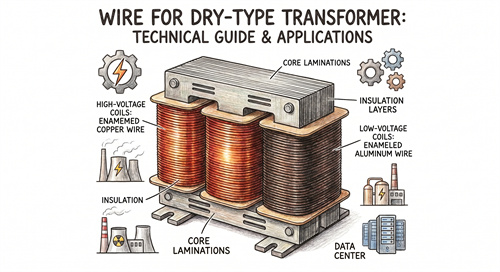
Electronic transformers such as signal transformers, isolation transformers, and drive transformers have comprehensive requirements for the dielectric properties, solderability, and mechanical properties of enamel coatings. UEW enameled wire is the preferred choice for these applications.
Relay and Solenoid Applications
Relays and solenoids are another core application area for UEW enameled wire. UEW enameled wire is widely used in the coil windings of automotive relays, industrial control relays, home appliance relays, and communication relays. The application environment of automotive relays (high and low temperature cycling, vibration and shock, long-term reliability) places requirements on the mechanical durability and thermal stability of the enamel coating; UEW enamel coating, within Class 155, can meet these requirements. The direct solderability of the polyurethane enamel coating makes the lead wire connection process of the relay coil efficient and reliable.
The coil windings of devices such as solenoid valves, solenoids, and electromagnetic locks also widely use UEW enameled wire.
Sensor and Detector Applications
Sensors and detectors are emerging application areas for UEW (enameled wire). UEW wire can be used for windings of magnetic components such as inductive sensors, Hall effect sensors, current transformers, voltage transformers, position sensors, and speed sensors. The direct solderability of polyurethane enamel coating enables the miniaturization and precision manufacturing of sensor windings. Current transformers (CTs) and voltage transformers (PTs) have specific requirements for the dielectric and mechanical properties of enamel coatings, and UEW wire offers advantages in medium and low voltage applications.
Speaker and Microphone Applications
Loudspeakers and microphones are specialty applications of UEW enameled wire. The voice coil is the core component of a loudspeaker, and its windings have stringent requirements regarding the flexibility, adhesion, and dielectric strength of the enamel coating. UEW enameled wire’s low dielectric loss and high flexibility give it a significant advantage in voice coil windings. UEW enameled wire can also be used for the coil windings of headphones, receivers, and microphones.
RFID and Smart Card Applications
RFID electronic tags and smart cards are emerging application areas for UEW’s enameled wire. The winding of RFID antenna coils places stringent requirements on the fine wire specifications (such as extremely small diameter enameled wire), flexibility, and adhesion; UEW’s fine wire products can meet these requirements.
Communication and High-Frequency Applications
Communication and high-frequency applications are the distinctive application areas of UEW (enameled wire). High-frequency components such as RF front-end modules, filters, and antenna coils in 5G communication have stringent requirements for the dielectric properties of UEW, and the low dielectric loss characteristics of UEW give it an advantage in these applications. UEW can also be used for the transmitting and receiving coils in wireless charging (WPC Qi standard, magnetic resonance charging), as its high-frequency performance and direct solderability provide a comprehensive advantage in wireless charging applications.
Selection Criteria and Engineering Considerations
The selection and application of UEW enameled wire requires comprehensive consideration of multiple engineering factors such as application scenarios, performance requirements, processing technology, certification requirements, and cost control.
Selection Decision Tree
The core issue in the selection decision is “whether to choose the UEW (enamel coating) system.” The decision is based on factors including: whether the operating temperature of the application is within Class 155 (yes → UEW is feasible; no → consider Class 180 PEI or Class 200 PAI, etc.), whether direct solderability is required (yes → UEW is preferred; no → consider other specifications), whether high-frequency, low-loss performance is required (yes → UEW (polyurethane/enamel coating) is preferred; no → consider PEW (polyester/enamel coating), whether the conductor diameter and enamel coating thickness are within the UEW specifications, and whether UL/CSA/CE certification requirements are met.
Compatibility with Other Materials
UEW (enameled wire) requires use in conjunction with other materials in practical applications, including impregnating varnishes, potting compounds, encapsulating compounds, insulating paper, insulating sleeves, and lead wires. Polyurethane enamel coatings have good compatibility with most impregnating varnishes and potting compounds, but the following precautions should be taken: the curing temperature of the impregnating varnish should not exceed the maximum withstand temperature of the UEW enamel coating; the solvent of the impregnating varnish should not excessively swell the polyurethane enamel coating; and the curing shrinkage rate of the potting compound should not be too large to avoid stress concentration in the enamel coating.
Processing Considerations
The following points should be noted during the processing of UEW enameled wire: winding tension control (avoiding excessive tension that could cause tensile damage to the enamel coating), winding speed control (avoiding high-speed winding that could generate frictional heat and cause the enamel coating to soften), bending radius control (avoiding sharp bends that could cause the enamel coating to crack), welding temperature and time control (the direct weldability of polyurethaneenamel coating is effective within the standard temperature window; exceeding the temperature window may lead to poor welding or residual carbonization of the enamel coating), and storage condition control (polyurethaneenamel coating should be stored under standard storage conditions to avoid performance degradation caused by high temperature and high humidity).
Failure Mode Analysis
Typical failure modes of UEW (enameled wire) include: enamel coating cracking (caused by mechanical damage), enamel coating peeling (caused by insufficient adhesion), enamel coating breakdown (caused by insufficient dielectric strength or insulation damage), enamel coating thermal aging (cumulative aging at long-term operating temperatures), loss of solderability (enamel coating performance degradation due to improper storage conditions), and conductor breakage (caused by insufficient elongation or processing damage). Identification of failure modes and root cause analysis are fundamental to continuous improvement of enamel wire quality.
Future Development Trends
UEW (enameled wire) technology is continuously developing in the directions of material modification, process upgrading, application expansion, and derivatives.
Material Modification Direction
Modified polyurethane enamel coating is a core direction of materials innovation. By introducing specific chemical groups (such as epoxy, hydroxyl, and amide groups), nanomaterials (such as nano-SiO₂, nano-Al₂O₃, and nano-TiO₂), and organic-inorganic hybrid materials, the thermal stability, mechanical properties, and dielectric properties of polyurethane enamel coatings can be further improved. Modified polyurethane enamel coatings can be extended to Class 180 and even Class 200 thermal grades, expanding the application range of UEW (enameled wire).
The development of self-bonding enamel coatings is another important direction in materials innovation. Self-bonding enamel coatings can directly bond with other enamel coatings or conductors under heating conditions, eliminating the need for additional adhesives or insulation materials and simplifying the winding manufacturing process. Composite coatings of UEW enamel coatings and self-bonding enamel coatings (UEW/Self-Bonding) can achieve overall curing and high-strength bonding of the windings.
Process Upgrade Direction
Upgrades to the coating process continuously improve the quality and stability of UEW (enameled wire). The development of precision coating molds, optimization of multi-segment baking temperature profiles, application of intelligent tension control systems, and deployment of online quality monitoring systems significantly enhance the uniformity, adhesion, and long-term reliability of the enamel coating. Further optimization of the low-temperature baking process (e.g., lower temperature, shorter time, lower energy consumption) is a continuing direction for process upgrades.
Application Expansion Direction
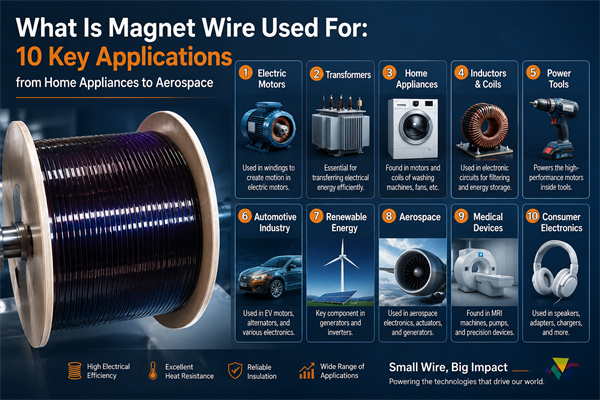
The application areas of UEW (enameled wire) are expanding from traditional electronic transformers, relays, and voice coils to high-end fields such as new energy vehicles (auxiliary windings for drive motors, DC-DC converters, inductors), 5G communication (RF front-end modules, filters, antennas), the Internet of Things (RFID, sensors, smart cards), artificial intelligence (speech recognition, microphones, voice coils), and medical devices (precision sensors, medical electronics). These new application scenarios place more stringent performance requirements on UEW, driving continuous upgrades and the emergence of related specifications.
Standard Evolution Direction
The NEMA MW 1000-2018, IEC 60317 series, and GB/T 6109 series standards are continuously being updated. New versions will reflect the latest advancements in UEW (enameled wire) technology and market demands. The technical content, testing methods, and judgment rules of UEW will be continuously optimized with each standard update.
Conclusion
The engineering implications of Polyurethane Enameled Copper Wire (UEW) features and benefits encompass multiple technical dimensions, including chemical fundamentals (polyurethane resin chemistry, enamel coating formation mechanism), core characteristics (direct solderability, low-temperature curing, high-frequency performance, storage stability, flexibility), engineering advantages (manufacturing process, energy consumption, quality control, cost-effectiveness), application areas (precision coils, electronic transformers, relays, sensors, speakers, RFID, high-frequency communications), selection criteria, and future trends.
The core value of UEW (enameled wire) lies in its direct solderability and high-frequency performance, two key characteristics that give it an irreplaceable advantage in the field of precision electronics. Furthermore, the comprehensive advantages of UEW in manufacturing cost, energy consumption, and storage stability make it the most cost-effective option for applications below Class 155.
For precision coil manufacturing engineers, the direct solderability of UEW (enamel coating) is a core value that simplifies winding connection processes and improves production efficiency. For electronic transformer design engineers, the low dielectric loss characteristics of UEW (enamel coating) are key to reducing switching power supply losses and improving energy efficiency. For relay and sensor manufacturers, the comprehensive performance advantages of UEW (enamel coating) are a core guarantee of product quality and supply chain reliability.
With the continuous development of new materials, new processes, and new applications, the technological content of UEW enameled wire will continue to be optimized, and its application fields will continue to expand, providing a solid material foundation for the high-end, intelligent, and sustainable development of the precision electronics industry.
About the Author
Zhengzhou LP Industry Co., Ltd. is a source manufacturer of enameled wire with 30 years of export experience. With a modern 60-acre production base, it specializes in manufacturing copper/aluminum/copper-clad aluminum enameled round wire, flat wire, and square wire, offering a full range of heat treatment grades. Certified by ISO 9001/14001/45001, UL, REACH, and RoHS, its products are exported to over 50 countries.
Contact Information: – 📧 Email:<office@cnlpzz.com> – 📱 WhatsApp: 0086-19337889070 – 🌐 Website:<https://lpenamelwire.com/>