

Introduction
High-voltage insulating aluminum wire is a key material used for electromagnetic energy conversion and transmission in high-voltage applications such as power equipment, new energy power generation, high-voltage motors, traction transformers, and reactors. Compared to traditional copper wire, aluminum wire has significant advantages in terms of resource reserves, unit weight cost, lightweight design, and long-term supply stability, making it one of the important technological paths to replace copper wire in high-voltage electromagnetic equipment.
The engineering implications of high-voltage insulated aluminum wire encompass multiple dimensions, including conductor metallurgy, insulation system design, geometric precision control, dielectric strength, thermal stability, and long-term reliability. Its core technological challenge lies in achieving dielectric properties, mechanical durability, and long-term reliability comparable to copper wire under high-voltage electric fields, while maintaining the inherent advantages of aluminum conductors (lightweight, low cost, and ease of processing). Achieving this goal relies on a systematic engineering approach, including conductor surface pretreatment, multi-layer composite coatings, high-dielectric-strength coatings, rigorous process control, and reliability verification.
From an application perspective, high-voltage insulated aluminum wire primarily serves three major scenarios: first, the high-voltage motor field, including high-voltage asynchronous motors, high-voltage synchronous motors, explosion-proof motors, and traction motors; second, the power transmission and distribution equipment field, including dry-type transformers, oil-immersed transformers, reactors, instrument transformers, and bushings; and third, the new energy and high-end equipment field, including wind turbines, new energy vehicle drive motors, rail transit traction systems, and aerospace electrical systems. These application scenarios place stringent requirements on the electrical strength, thermal stability, mechanical strength, and chemical durability of the insulation system.
The engineering implications of high-voltage electromagnetic wire can be systematically explained from six dimensions: material systems, insulation design, performance requirements, application scenarios, design specifications, and future trends. This article provides a systematic engineering reference for high-voltage electromagnetic equipment design engineers, application engineers, procurement engineers, and quality engineers.
Aluminum Conductor Material System
The conductor material system of aluminum is the engineering foundation of high voltage insulation performance. The quality of the conductor directly determines the conductivity, mechanical strength, surface characteristics and insulation adhesion performance of the magnetic wire.
Aluminum Conductor Metallurgy
High-voltage insulating aluminum (magnet wire) typically uses electrical grade aluminum as the conductor material. The purity of electrical grade aluminum requires strict control of impurity elements such as iron, copper, silicon, and magnesium to achieve good conductivity and machinability. Aluminum’s conductivity is approximately higher than copper’s (compared to the International Association of Standards for Annealed Copper, IACS). Although lower than copper, equivalent conductivity can be achieved by increasing the conductor’s cross-sectional area.
In high-voltage applications, alloying design of aluminum conductors is a crucial means of performance control. Adding trace amounts of iron (such as Al-Fe alloys) or iron-copper alloys (such as Al-Fe-Cu alloys) to pure aluminum can significantly improve the creep resistance and high-temperature strength of the aluminum conductor, compensating for the strength degradation of pure aluminum under long-term high-temperature conditions. Alloying design requires achieving a balance between electrical conductivity, mechanical strength, and machinability.
Conductor Surface Treatment
The surface properties of the aluminum conductor have a decisive influence on the adhesion performance and long-term reliability of the insulating enamel coating. Aluminum rapidly forms a dense aluminum oxide (Al₂O₃) layer in air. While this oxide layer possesses excellent chemical stability, its coefficient of thermal expansion differs significantly from that of the enamel coating, making it prone to peeling under temperature cycling conditions. Therefore, high-voltage insulating aluminum wires must undergo rigorous conductor surface pretreatment.
Surface pretreatment processes include: mechanical polishing (removing macroscopic surface defects and contaminants), chemical cleaning (acid or alkali washing to remove oxide layers and residues), plasma cleaning (high-energy plasma activation of the surface to form micron-level roughening), and chemical conversion treatment (forming a chemical conversion layer on the aluminum surface to enhance the adhesion of the enamel coating). Different treatment processes have significantly different effects on improving the adhesion of the enamel coating; therefore, an appropriate pretreatment scheme should be selected based on the enamel coating system and application scenario.
Conductor Geometry and Tolerance
The conductor geometry accuracy of high-voltage insulated aluminum (magnet wire) directly affects the uniformity of the enamel coating and the electric field distribution. Conductor diameter tolerances should be strictly controlled within the standard grade range to avoid uneven enamel coating thickness and localized electric field concentration due to diameter fluctuations. The conductor diameter range for round wires typically covers a wide range of specifications, while flat wires and square wires are customized according to user drawings. The roundness (out-of-roundness of round wires) and straightness (coaxiality, perpendicularity) of the conductor are also key geometric indicators, directly affecting winding inlay and electric field uniformity.
Insulation System Design
The insulation system design of high-voltage insulated aluminum (magnet wire) is a core technical aspect, encompassing multiple dimensions such as enamel coating material selection, coating structure, enamel coating thickness, dielectric properties, thermal properties, and mechanical properties.
Enamel Coating Material Selection
The selection of materials for high-voltage insulation (enamel coating) follows the principle of optimizing the overall performance of thermal, dielectric, and mechanical properties. Commonly used high-voltage insulation (enamel coating) systems include:
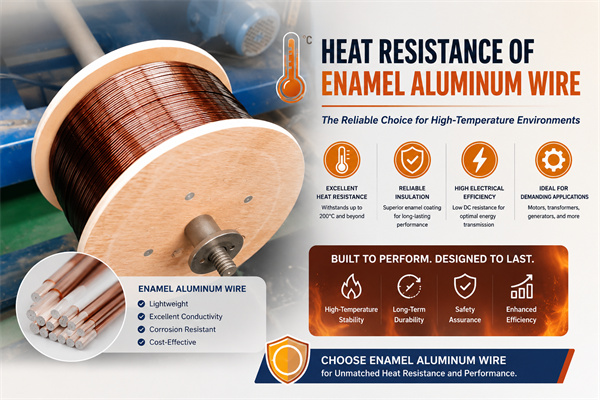
Polyesterimide (PEI) enamel coating: It has excellent thermal stability, mechanical strength and dielectric properties, and is a representative system of Class 180 enamel coating, suitable for medium and high voltage motors and transformers.
Polyamide-imide (PAI) enamel coating: It has higher thermal stability and dielectric strength, and is a representative system of Class 200 enamel coating. It is suitable for high-end applications such as high-voltage motors, traction motors, and drive motors for new energy vehicles.
Polyimide (PI) enamel coating: It has extremely high thermal stability and dielectric strength, and is a representative system of Class 220 and Class 240 enamel coating, suitable for extreme environments such as aviation, aerospace, and nuclear industry.
Composite coatings (enamel coatings): These achieve synergistic effects through the stacking of multiple enamel coatings. Typical combinations include PEI/PAI dual coatings, PI/PAI dual coatings, and PEI/PI dual coatings. Composite coatings combine the advantages of each individual enamel coating layer to improve overall insulation performance.
Coating Structure and Layers
The coating structure design of high-voltage insulating aluminum (magnet wire) follows the principle of “functional layering”:
Base Coat/Bonding Coat: Directly applied to the surface of the aluminum conductor, it plays a crucial role in the bonding between the enamel coating and the conductor interface. The base coating must possess excellent adhesion and flexibility to mitigate the difference in thermal expansion coefficients between the aluminum conductor and the topcoat.
Intermediate Coat: This layer plays a crucial role in enhancing dielectric strength and mechanical properties. It can be made of high-dielectric-strength or high-toughness materials.
Top Coat: This coating plays a crucial role in providing environmental resistance (moisture, oil, and chemical resistance) and mechanical durability. It must possess excellent weather resistance, abrasion resistance, and chemical stability.
The three-layer structure is a typical solution for high-voltage insulating aluminum (magnet wire), achieving optimal overall performance through the coordinated design of primer, intermediate coat, and topcoat.
Film Thickness and Dielectric Strength
The thickness of the enamel coating and its dielectric strength are core parameters in high-voltage insulation design. Increasing the enamel coating thickness directly improves the breakdown voltage, but also increases conductor duty cycle loss, reduces slot fill factor, and increases winding size. The design of the enamel coating thickness must strike a balance between electrical strength, duty cycle, and heat dissipation performance.
The enamel coating grade of high-voltage insulating aluminum (magnet wire) typically adopts the Heavy Build, Triple Build, or thicker grades according to the NEMA MW 1000-2018 standard to meet the dielectric strength requirements of high-voltage electric fields. The uniformity of the enamel coating thickness is also a key control indicator; fluctuations in enamel coating thickness can lead to localized electric field concentration, reducing overall insulation reliability.
Thermal Endurance and Aging Resistance
The thermal stability of high-voltage insulating aluminum (magnet wire) under long-term operating temperatures is a core reliability indicator. The thermal aging of the enamel coating follows Arrhenius kinetics; for every certain temperature increase, the enamel coating lifespan is approximately halved. Class 200 enamel coatings typically have higher long-term operating temperatures, while Class 220 and Class 240 enamel coatings can operate at even higher temperatures for extended periods.
Thermal aging testing assesses the long-term reliability of the enamel coating through accelerated aging tests (such as the 20,000-hour thermal aging test specified in IEC 60216). Based on Arrhenius curve extrapolation, the expected lifespan of the enamel coating at operating temperatures can be predicted.
Mechanical Properties of Insulation
High-voltage insulated aluminum wire is subjected to various mechanical stresses during use, including tension, bending, winding, embedding, and vibration. The mechanical properties of the coating include: flexibility (no cracking under rapid stretching and winding conditions), adhesion (no peeling under tension and bending conditions), abrasion resistance (resistance to friction during winding and embedding), and cutting temperature resistance (resistance to cutting under high temperature and pressure).
There is often a trade-off between mechanical and dielectric properties: increasing the enamel coating thickness improves dielectric strength but may reduce flexibility; increasing the enamel coating hardness improves abrasion resistance but may reduce flexibility. The design of high-voltage insulation enamel coatings requires a comprehensive balance among multiple performance dimensions.
Engineering Performance Requirements
The engineering performance requirements for high-voltage insulated aluminum (magnet wire) cover four major dimensions: electrical, mechanical, thermal, and chemical.
Electrical Performance Requirements
The electrical performance requirements for high-voltage insulated aluminum (magnet wire) include: breakdown voltage (high dielectric strength grade), enamel coating continuity (extremely low defect density), dielectric loss tangent (low AC loss), DC withstand voltage (insulation reliability under DC electric field), and corona resistant life (withstandability under high-frequency peak voltage).
In high-voltage motor applications, the enamel coating must withstand the combined effects of operating voltage and switching overvoltage; in dry-type transformer applications, the enamel coating must withstand power frequency high voltage and lightning impulse voltage; in new energy vehicle drive motor applications, the enamel coating must withstand PWM high-frequency peak voltage and dV/dt stress.
Mechanical Performance Requirements
The mechanical performance requirements for high-voltage insulated aluminum wire include: flexibility, adhesion, abrasion resistance, cutting temperature, and coefficient of friction. The coating must maintain its integrity during winding, embedding, and shaping processes. Under long-term vibration conditions, the coating must maintain resistance to fatigue cracking. Under thermo-mechanical coupling stress, the coating must maintain resistance to cracking and peeling.
Thermal Performance Requirements
The thermal performance requirements for high-voltage insulating aluminum (magnet wire) include: temperature index (long-term operating temperature), thermal shock (resistance to short-term temperature changes), softening breakdown (insulation reliability under high temperature and pressure), and aging life (expected life under long-term thermal aging). High-voltage motors and traction transformers have high hotspot temperatures, placing stringent requirements on the thermal performance of the enamel coating.
Chemical Performance Requirements
The chemical performance requirements for high-voltage insulating aluminum (magnet wire) include: resistance to oil (transformer oil, ATF oil, etc.), resistance to refrigerants (refrigeration systems), resistance to acids and alkalis (chemical or battery environments), resistance to hydrolysis (high temperature and high humidity environments), and resistance to salt spray (marine or coastal environments). The chemical environments vary significantly across different applications, and the selection of the enamel coating system must be customized based on the specific media environment.
Typical Application Scenarios
High-voltage insulated aluminum (magnet wire) has wide application value in many high-end application fields.
High Voltage Motor Applications
High-voltage motors (including high-voltage asynchronous motors and high-voltage synchronous motors) are a traditional core application of high-voltage insulated aluminum (enamel coating). Motor power ranges from small to large (hundreds of kW to several MW), and voltage levels range from medium voltage (hundreds of V to thousands of V) to high voltage (thousands of V to tens of kV). The operating environment of high-voltage motors places comprehensive requirements on the electrical strength, thermal stability, and mechanical strength of the enamel coating.
The advantages of using aluminum in high-voltage motors are mainly reflected in: significantly reducing motor weight (aluminum’s density is about one-third that of copper), reducing raw material costs (aluminum is relatively cheaper than copper), and improving the sustainability of motor manufacturing (aluminum resources are abundant). However, the application of aluminum in high-voltage motors also faces challenges: the connection process between aluminum conductors and copper leads, the creep resistance of aluminum conductors, and the high current carrying capacity of aluminum conductors.
Dry-Type Transformer Applications
Dry-type transformers are another core application of high-voltage insulated aluminum wire. Dry-type transformers use air or solid insulating media instead of traditional transformer oil, offering advantages such as fire resistance, explosion protection, and maintenance-free operation. The voltage ratings of dry-type transformers range from medium to high voltage (tens of kV), and the windings are made of enameled wire and then treated with vacuum pressure impregnation (VPI).
The application of aluminum magnetic wire in dry transformers can significantly reduce transformer weight and cost, while improving overload capacity and short-circuit withstand capability. The lightweight design of aluminum magnetic wire is particularly suitable for weight-sensitive applications such as rail transit traction transformers, wind power transformers, and photovoltaic inverters.
Reactor and Inductor Applications
Reactors and inductors are important applications of high-voltage insulated aluminum wire. Reactors (series reactors, shunt reactors, filter reactors, smoothing reactors, etc.) need to withstand high voltage and high current, making the dielectric strength and thermal stability of the aluminum coating crucial requirements. The application of aluminum wire in reactors can reduce reactor weight, decrease raw material consumption, and improve the long-term economic efficiency of reactor operation.
Renewable Energy Applications
The demand for high-voltage insulated aluminum wire is rapidly increasing in the new energy power generation sector (wind power, photovoltaic power, energy storage systems). Wind turbines (especially direct-drive permanent magnet wind turbines) use a large amount of enameled wire in their windings, placing stringent requirements on the dielectric strength, thermal stability, and mechanical durability of the enamel coating. Aluminum-based copper substitution solutions offer significant cost and weight advantages in large wind turbines.
New energy vehicle drive motors represent another emerging application of high-voltage insulated aluminum wire. Drive motors are characterized by high power density, high operating temperatures, severe vibration, and limited space; therefore, the enamel coating must simultaneously meet the requirements of high dielectric strength, high thermal stability, and high mechanical durability. Composite coated aluminum wire (PEI/PAI or PI/PAI systems) has become one of the mainstream choices for new energy vehicle drive motors.
Special Application Scenarios
Specialized applications place higher demands on high-voltage insulating aluminum (magnet wire). Explosion-proof motor applications require the enamel coating to possess explosion-proof safety performance; nuclear power applications require the enamel coating to pass rigorous irradiation aging tests; aerospace applications require the enamel coating to maintain reliability under extreme temperatures (extremely low and high temperatures), low pressure, and high radiation conditions; and rail transit applications require the enamel coating to meet comprehensive requirements such as long lifespan, vibration resistance, fire resistance, and low-smoke halogen-free properties.
Design Standards and Specifications
The design, production, testing, and application of high-voltage insulated aluminum (magnet wire) must comply with international and domestic standards.
International Standards
The IEC 60317 series of standards are specialized standards for winding wires developed by the International Electrotechnical Commission. The specifications for aluminum (magnet wire) include: IEC 60317-0-2 (General requirements for enameled round aluminum wire), IEC 60317-25 (Polyamide-imide enameled round aluminum wire), IEC 60317-26 (Polyamide-imide enameled flat aluminum wire), IEC 60317-67 (Polyvinyl acetal enameled flat aluminum wire), and IEC 60317-68 (Polyvinyl acetal enameled round aluminum wire), etc.
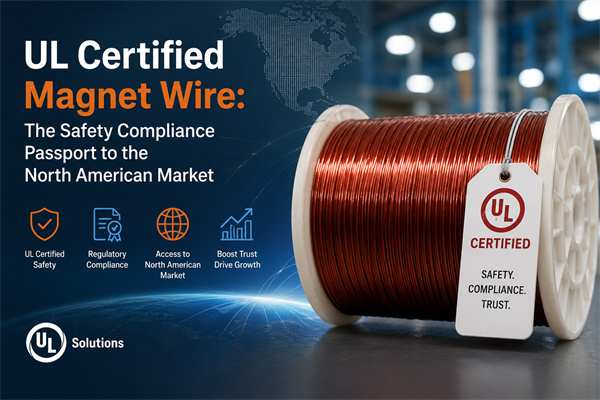
ANSI/NEMA MW 1000-2018 covers several specifications for enameled aluminum wire, including MW 31-C, MW 33-C, MW 35-C, MW 36-C, MW 37-C, MW 38-C, MW 41-C, MW 42-C, MW 43-C, MW 48-C, MW 50-C, MW 51-C, MW 52-C, MW 53-C, MW 54-C, MW 55-C, MW 56-C, MW 57-C, MW 58-C, MW 59-C, MW 60-C, MW 73-C, MW 75-C, MW 76-C, MW 77-C, MW 78-C, and MW 79-C. Each specification corresponds to a specific enamel coating system, thermal grade, and conductor material.
ASTM D1676 is a test method standard for enamel coating insulation of magnetic wire, which specifies in detail the test methods for enamel coating of aluminum magnetic wire.
Chinese National Standards
GB/T 23312.2 specifies the general requirements for enameled round aluminum wire, and GB/T 23312.4 specifies the general requirements for enameled flat aluminum wire, which are equivalent to the IEC 60317 series.
Test Methods and Acceptance Criteria
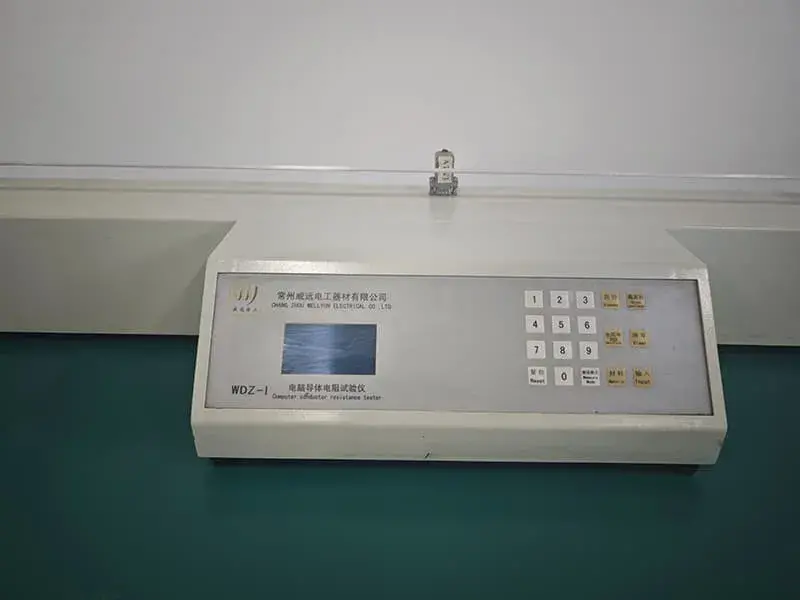
The testing items for high-voltage insulated aluminum wire include: conductor testing (diameter, resistance, elongation, surface quality), electrical testing (breakdown voltage, continuity, tan δ, DC withstand voltage), mechanical testing (flexibility, adhesion, abrasion resistance, cutting temperature), thermal testing (thermal shock, softening breakdown, temperature index, aging life), and chemical testing (solderability, solvent resistance, oil resistance, chemical resistance, hydrolysis resistance).
The testing methods strictly follow the operating procedures specified in the standards, and the testing equipment is calibrated regularly and traceable to national metrological standards. Judgment rules are implemented according to the AQL sampling plan.
Future Development Trends
High-voltage insulated aluminum (magnet wire) technology is developing rapidly in the areas of material innovation, process upgrading, application expansion, and intelligent testing.
Material Innovation
Material innovation is the core driving force behind the development of high-voltage insulating aluminum wire technology. Novel insulating resin systems (such as modified polyimide, nanocomposite insulating coatings, and organic-inorganic hybrid insulating coatings) are continuously improving the dielectric strength, thermal stability, mechanical properties, and chemical durability of insulating coatings. The introduction of nanomaterials (nano SiO₂, nano Al₂O₃, nano TiO₂, etc.) can significantly improve the corona resistance and partial discharge resistance of insulating coatings.
Innovation in conductor materials is also an important direction. New aluminum alloys (such as Al-Mg-Si series aluminum alloys and Al-RE rare earth aluminum alloys) maintain conductivity while possessing higher mechanical strength and creep resistance. Copper-clad aluminum (CCA), as a transitional solution for replacing copper with aluminum, has significant value in specific application scenarios.
Process Upgrade
Upgrading the coating process is a key support for the development of high-voltage insulated aluminum (magnet wire) technology. The development of precision coating molds, optimization of multi-segment baking temperature profiles, and the application of intelligent tension control systems significantly improve the uniformity and stability of the enamel coating. The application of novel conductor surface treatment processes such as plasma pretreatment and chemical conversion treatment enhances the bonding strength and long-term reliability of the enamel coating-conductor interface.
Application Expansion
The application fields of high-voltage insulating aluminum (magnet wire) are expanding from traditional high-voltage motors and dry-type transformers to high-end fields such as new energy, rail transportation, aerospace, and marine engineering. These new application scenarios place more stringent performance requirements on enamel coatings, driving continuous innovation in enamel coating materials and processes.
Intelligent Testing and Quality Management
Intelligent testing and quality management are important directions for the development of high-voltage insulated aluminum (magnet wire) technology. The application of online quality monitoring systems, non-destructive testing technology, big data analysis, and machine learning algorithms will significantly improve the real-time performance, accuracy, and intelligence level of (magnet wire) quality control.
Conclusion
The engineering implications of High Voltage Insulation Aluminum Wire encompass multiple technical dimensions, including aluminum conductor metallurgy, conductor surface pretreatment, high dielectric strength enamel coating systems, composite coating structures, enamel coating thickness optimization, and the balance of thermo-mechanical-chemical properties. Its applications cover high-end equipment such as high-voltage motors, dry-type transformers, reactors, new energy power generation, and new energy vehicle drive motors.
High-voltage insulated aluminum wire offers significant advantages over traditional copper wire in terms of cost, weight, and resource sustainability. However, its engineering applications require addressing key technical challenges such as reliable connection between the aluminum conductor and copper leads, creep resistance of the aluminum conductor, complex winding processes for large-scale applications, and long-term stability of the enamel coating-aluminum conductor interface. The selection of the enamel coating system should comprehensively consider thermal level, dielectric strength, mechanical properties, chemical durability, and the specific requirements of the application scenario.
With the continuous development of new materials, new processes, and new applications, high-voltage insulated aluminum (magnet wire) technology will continue to evolve towards higher dielectric strength, higher thermal stability, longer lifespan, and lower cost, providing a solid material foundation for the high-end, lightweight, and sustainable development of high-voltage electromagnetic equipment.
About the Author
Zhengzhou LP Industry Co., Ltd. is a source manufacturer of enameled wire with 30 years of export experience. With a modern 60-acre production base, it specializes in manufacturing copper/aluminum/copper-clad aluminum enameled round wire, flat wire, and square wire, offering a full range of heat treatment grades. Certified by ISO 9001/14001/45001, UL, REACH, and RoHS, its products are exported to over 50 countries.
Contact Information: – 📧 Email:<office@cnlpzz.com> – 📱 WhatsApp: 0086-19337889070 – 🌐 Website:<https://lpenamelwire.com/>