

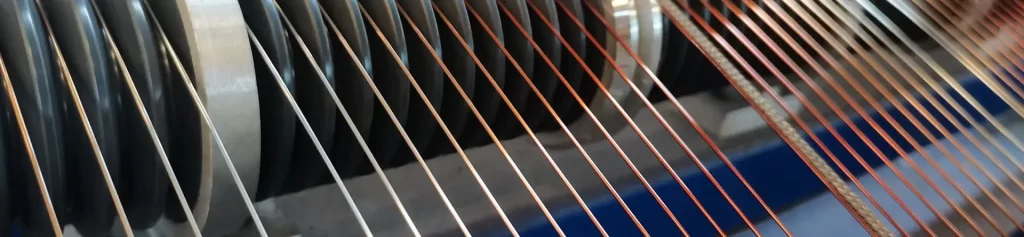
Magnet Wire and Enameled Copper Wire are two terms frequently used in the field of electrical engineering, sometimes used interchangeably, but strictly speaking, they differ in meaning, scope, and application. This article systematically explains the differences and connections between the two from the perspectives of definition, terminology origin, standard system, construction, insulation method, application scenarios, helping readers accurately understand these two concepts.
Basic Definition Comparison
Definition of Enameled Copper Wire
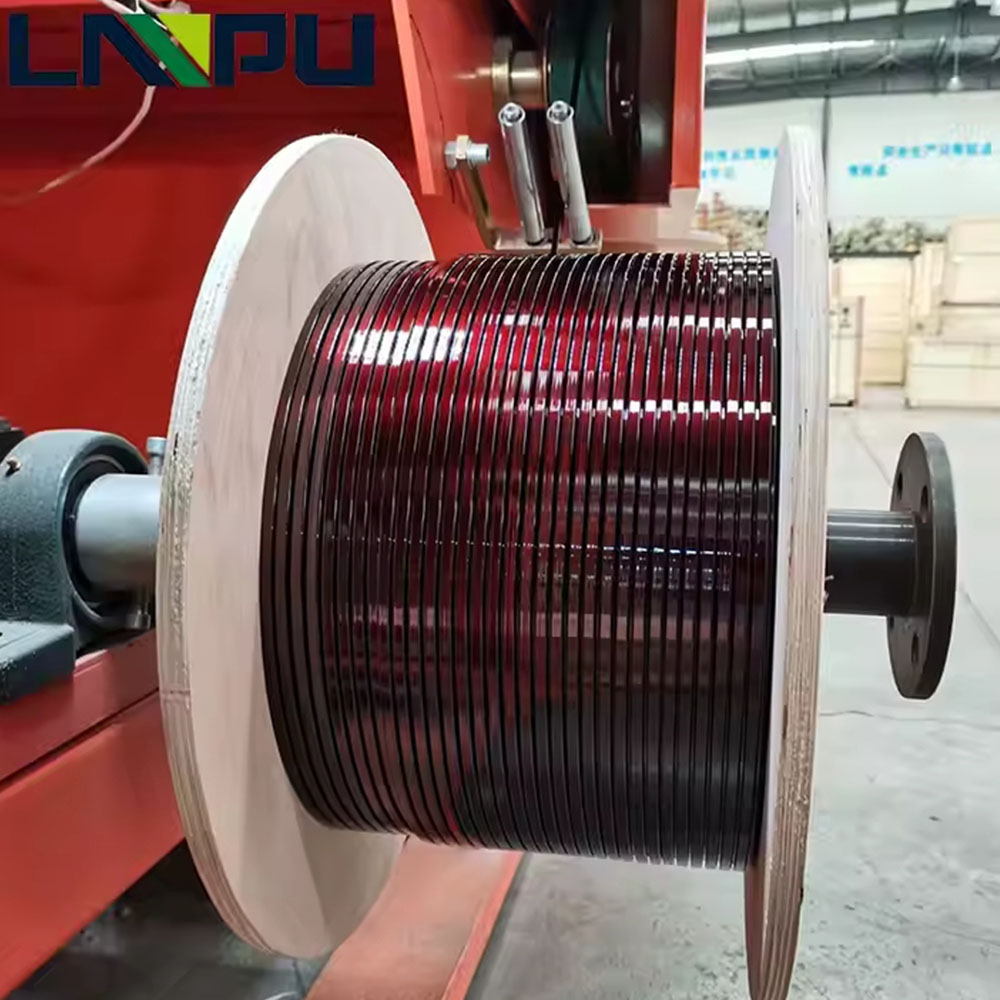
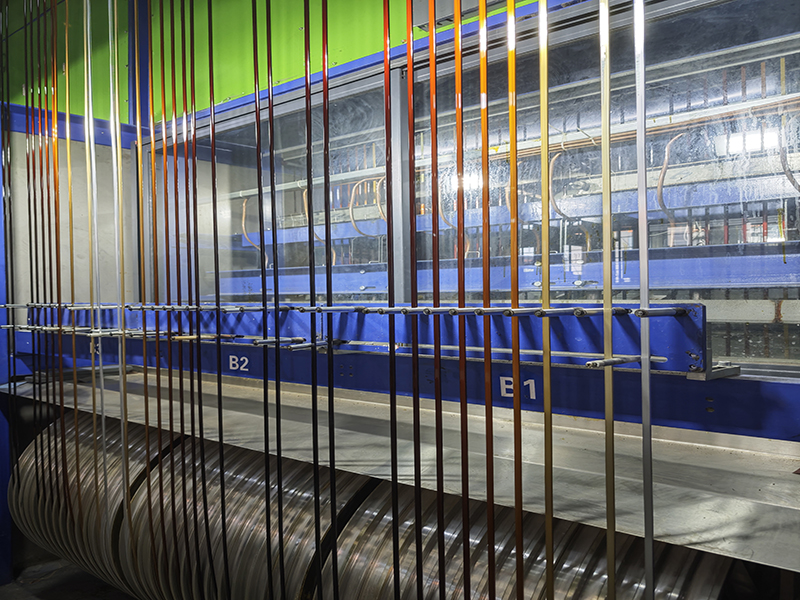
Enameled copper wire is a specific electromagnetic wire material with clear characteristics: conductor material: copper (high-purity oxygen-free copper), insulation method: surface coating of one or more layers of insulating enamel, insulation layer curing: baking and curing in an oven, enamel thickness: 0.01mm – 0.10mm.
Definition of Magnet Wire
Magnet wire is a general term for a class of electromagnetic wire materials with broader meaning: conductor material: copper, aluminum, copper clad aluminum, etc., insulation method: enamel, paper covered, fiberglass, mica, ceramic, etc., use: used for electromagnetic coils, transformers, motors, etc. to generate magnetic fields or induce current.
Core Difference
Enameled copper wire is a subset of magnet wire. Magnet wire includes enameled copper wire, enameled aluminum wire, paper covered copper wire, fiberglass covered copper wire, mica covered copper wire, and many other types. Enameled copper wire specifically refers to copper wire insulated with enamel film.
Terminology Origin
Origin of Magnet Wire
The term Magnet Wire originated in the United States. The magnet wire standard issued by NEMA (National Electrical Manufacturers Association) is NEMA MW1000. This standard defines magnet wire as insulated wire used to manufacture electromagnetic coils, transformer windings, and motor windings. In the North American market, Magnet Wire is the most commonly used term.
Origin of Enameled Copper Wire
The term Enameled Copper Wire originated in Europe and Asia. IEC (International Electrotechnical Commission) calls this type of wire Winding Wire. In the Chinese and Japanese markets, Enameled Wire and Enameled Copper Wire are the most commonly used terms.
Regional Differences in Terminology
Regional Terms Table
| Region | Common Term | Main Standard |
|---|---|---|
| North America | Magnet Wire | NEMA MW1000 |
| Europe | Winding Wire | IEC 60317, EN 60317 |
| China | Enameled Wire/Enameled Copper Wire | GB/T 6109 |
| Japan | Enameled Wire/Winding Wire | JIS C 3202 |
| International | Enameled Wire/Winding Wire | IEC 60317 |
Standard System Comparison
Enameled Copper Wire Standards
Enameled copper wire mainly follows the IEC 60317 series of standards: IEC 60317-0-1: General requirements for round copper wires, IEC 60317-1 to IEC 60317-78: specific type of enameled wire requirements, GB/T 6109: China equivalently adopts IEC 60317, JIS C 3202: Japanese industrial standard, ASTM D1676: American test method standard.
Magnet Wire Standards
Magnet wire is a broader concept, and the standard system includes: NEMA MW1000 (American magnet wire standard, including copper, aluminum, various insulation), IEC 60317 (international standard for winding wire), GB/T 6109 (Chinese enameled wire standard), JIS C 3202 (Japanese enameled wire standard), special standards for various products (paper covered wire, fiberglass covered wire, etc.).
Correspondence Between Standards
NEMA MW1000 and IEC 60317 are highly corresponding in content. Many NEMA standard part numbers correspond to a specific part of IEC 60317. For example: NEMA MW 35-C corresponds to IEC 60317-1 (polyvinyl acetal enameled round copper wire), NEMA MW 24-C corresponds to IEC 60317-2 (solderable polyurethane enameled round copper wire), NEMA MW 76-C corresponds to IEC 60317-46 (polyester-imide enameled round copper wire), NEMA MW 77-C corresponds to IEC 60317-47 (polyamide-imide enameled round copper wire).
Construction Comparison
Enameled Copper Wire Construction
Enameled copper wire consists of two parts: 1. Copper conductor: high-purity oxygen-free copper, copper content ≥ 99.99%, 2. Enamel insulation layer: thin layer of insulating enamel coated on the surface of the copper wire.
Magnet Wire Construction
Magnet wire can have various constructions: 1. Conductor: copper, aluminum, copper clad aluminum, 2. Insulation: enamel, paper, fiberglass, mica, ceramic, polyimide film, etc.
Main Types of Magnet Wire
Enameled Wire
Magnet wire with enamel film as insulation. Including: enameled copper wire (Enameled Copper Wire), enameled aluminum wire (Enameled Aluminum Wire), enameled copper clad aluminum wire (Enameled CCA Wire).
Paper Covered Wire
Magnet wire with insulating paper (such as Nomex, Mylar paper) as insulation. Used for transformers, oil-immersed motors.
Fiberglass Covered Wire
Magnet wire with fiberglass yarn as insulation. Used for high-temperature applications.
Mica Covered Wire
Magnet wire with mica tape as insulation. Used for ultra-high temperature applications.
Film Wrapped Wire
Magnet wire with polyimide (Kapton) film as insulation.
Insulation Method Comparison
Enameled Copper Wire Insulation
Insulation material: insulating enamel (polyester, polyurethane, polyester-imide, polyamide-imide, etc.), insulation thickness: 0.01mm – 0.10mm, insulation layers: single coat (Grade 1) or double coat (Grade 2), curing method: oven baking and curing, working temperature: 105°C – 240°C.
Other Magnet Wire Insulation
Paper Insulation
Insulation material: cable paper, Nomex paper, polyester film paper. Insulation thickness: 0.05mm – 0.50mm (multi-layer). Working temperature: 105°C – 220°C. Advantages: high voltage resistance, reliable insulation. Disadvantages: low fill factor.
Fiberglass Insulation
Insulation material: alkali-free fiberglass yarn. Insulation thickness: 0.10mm – 0.50mm. Working temperature: 155°C – 250°C. Advantages: high temperature resistance. Disadvantages: low fill factor, easy to absorb moisture.
Film Insulation
Insulation material: polyimide (Kapton), polyester film. Insulation thickness: 0.025mm – 0.10mm. Working temperature: 220°C – 300°C. Advantages: ultra-high temperature resistance. Disadvantages: high cost.
Performance Parameter Comparison
Key Performance of Enameled Copper Wire
Conductor resistance: low (high conductivity of copper), breakdown voltage: 200V – 5000V (depending on enamel thickness), temperature class: 105°C – 240°C, fill factor: high (thin enamel), flexibility: good (mandrel winding, small bending radius), solderability: depends on enamel type (polyurethane solderable).
Key Performance of Other Magnet Wire
Paper Covered Copper Wire
Breakdown voltage: high (multi-layer insulation), temperature class: 105°C – 220°C, fill factor: low (thick insulation), flexibility: poor, solderability: poor.
Fiberglass Covered Copper Wire
Breakdown voltage: high, temperature class: 155°C – 250°C, fill factor: low, flexibility: poor, solderability: poor.
Enameled Copper Wire vs Paper Covered Copper Wire
Comparison Table
| Property | Enameled Copper Wire | Paper Covered Copper Wire |
|---|---|---|
| Insulation Thickness | Thin (0.01-0.10mm) | Thick (0.05-0.50mm) |
| Fill Factor | High | Low |
| Breakdown Voltage | Medium | High |
| Heat Dissipation | Good | Poor |
| Oil Resistance | Average | Good (oil-immersed transformer) |
| Cost | Medium | Medium |
| Application | Motor, transformer, inductor | Oil-immersed transformer |
Application Scenario Comparison
Main Applications of Enameled Copper Wire
Motor windings: home appliance motors, industrial motors, traction motors. Transformers: dry-type transformers, small transformers. Inductors: power inductors, high-frequency inductors, common mode inductors. Relay coils, contactor coils. Solenoid valves, solenoids.
Main Applications of Other Magnet Wire
Paper Covered Copper Wire
Oil-immersed transformers, medium and large motors, generators, oil-immersed reactors.
Fiberglass Covered Copper Wire
High-temperature motors, traction motors, dry-type transformers, aviation motors, military electrical equipment.
Mica Wire
Special motors, high-temperature environments.
Film Wrapped Wire
Micro motors, high-frequency transformers, special applications.
Enameled Copper Wire vs Fiberglass Covered Copper Wire
| Application | Enameled Copper Wire | Fiberglass Covered Copper Wire |
|---|---|---|
| General Motor | Yes | No |
| High-Temperature Motor | Limited (Class 200-220) | Yes |
| Dry-Type Transformer | Yes | Yes |
| Oil-Immersed Transformer | Limited | No |
| High-Frequency Inductor | Yes | No |
| Traction Motor | Yes | Yes |
| Aviation Motor | No | Yes |
Choose Enameled Copper Wire or Other Magnet Wire?
Scenarios for Choosing Enameled Copper Wire
Working temperature between 105°C – 240°C, need for high fill factor, focus on winding weight, medium voltage class, mass production, cost-sensitive.
Scenarios for Choosing Paper Covered Copper Wire
High working voltage, oil-immersed environment, large transformers, need for high breakdown voltage.
Scenarios for Choosing Fiberglass Covered Copper Wire
Working temperature exceeds 200°C, high-temperature environment (aviation, military), dry-type high-temperature transformer, traction motor.
Scenarios for Choosing Film Wrapped Wire
Ultra-micro motor, ultra-high frequency application, extreme temperature environment.
Enameled Copper Wire Selection Steps
1. Determine working voltage and current. 2. Determine working temperature and temperature rise. 3. Select conductor material (copper/aluminum/CCA). 4. Select insulation enamel type (polyester, polyurethane, polyester-imide, etc.). 5. Select enamel grade (Grade 1/2). 6. Select conductor specification (diameter or cross-sectional area). 7. Verify standard compliance (IEC/NEMA/GB/JIS).
Terminology Confusion in Actual Use
Interchangeable Use
In actual engineering, Magnet Wire and Enameled Copper Wire are often used interchangeably: North American customers say Magnet Wire, usually referring to enameled copper wire. European customers say Winding Wire, usually referring to enameled wire. Chinese customers say enameled copper wire or enameled wire.
Scenarios Requiring Distinction
In the following scenarios, distinction is needed: technical documents: should use standard terminology (IEC 60317 calls it Winding Wire, NEMA calls it Magnet Wire). Purchase orders: should clarify whether it is enameled copper wire or other magnet wire. Product specifications: should clarify insulation type, temperature class, conductor material. Academic papers: should use standard terminology to avoid ambiguity.
Summary
Magnet Wire and Enameled Copper Wire are related but different concepts. Magnet wire is a general term for electromagnetic wire materials, covering various conductor materials and insulation methods. Enameled copper wire is an important subclass of magnet wire, specifically referring to copper wire insulated with enamel film. The two differ in standard system, construction, insulation method, and application scenarios. Enameled copper wire is the most commonly used type of magnet wire, but other magnet wires are irreplaceable in specific applications. Understanding the differences and connections between the two is of great significance for correctly selecting, purchasing, and applying electromagnetic wire materials. In engineering practice, appropriate electromagnetic wire materials should be selected according to specific application scenarios to avoid selection errors due to terminology confusion.