

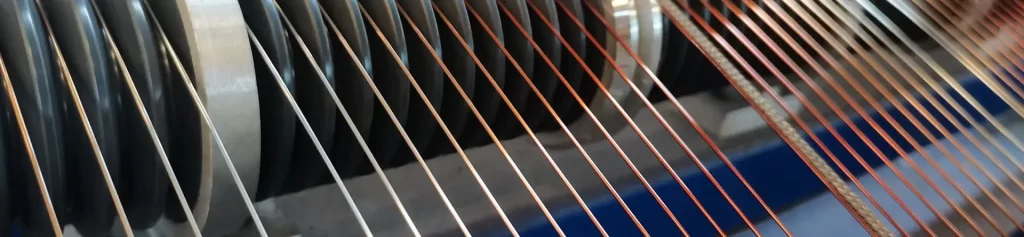
High frequency aluminum wire refers to enameled aluminum wire products working in high frequency current environments (usually referring to above 1 kHz).
With the rapid development of emerging technologies such as wireless charging, new energy vehicles, 5G communications, induction heating, and high frequency power supplies, high frequency application scenarios have put forward new technical requirements for winding wire materials.
Traditional round copper wire has problems such as serious skin effect, high loss, and heavy weight in high frequency applications. Aluminum wire, with its unique physical properties, has shown irreplaceable advantages in the high frequency range.
The core technical challenge of high frequency aluminum wire is how to deal with the loss increase caused by skin effect and proximity effect, while fully utilizing the weight advantage and cost advantage of aluminum.
This article systematically describes the conduction characteristics of high frequency current in aluminum wire, the technical principles and design methods of high frequency aluminum wire, enamel film system, manufacturing process, typical application scenarios, and selection points, providing comprehensive technical reference for high frequency winding designers and electrical engineers.
Conduction Characteristics of High Frequency Current in Aluminum Wire
Skin effect is the phenomenon that current density is concentrated on the conductor surface when high frequency current is conducted in the conductor.
Under DC or low frequency conditions, the current is evenly distributed on the conductor cross-section; under high frequency conditions, due to electromagnetic induction, the current is squeezed toward the conductor surface, resulting in reduced effective conductive cross-sectional area and significantly increased AC resistance.
Skin depth is an important parameter to describe the skin effect, defined as the depth when the current density decays to 1/e (about 37%) of the surface value.
Skin depth is inversely proportional to the square root of frequency, and proportional to the square root of conductor resistivity and magnetic permeability.
The skin depth of aluminum is greater than that of copper. At the same frequency, the skin effect influence of aluminum wire is relatively small, which is an important advantage of aluminum wire in high frequency applications.
Proximity effect is the phenomenon that the current distribution is distorted due to mutual electromagnetic action when multiple conductors are close to each other.
In multi-turn windings or multi-strand twisted wires, the proximity effect makes the current distribution more uneven, further increasing the AC resistance.
The strength of the proximity effect is related to factors such as conductor spacing, frequency, and conductor diameter.
In applications such as high frequency transformers and inductors, the proximity effect is often one of the main factors leading to increased loss.
Methods to reduce the proximity effect include optimizing the winding structure, adopting Litz wire, and increasing the conductor spacing.
At the same frequency, the skin depth of aluminum wire is about 1.3 times that of copper wire.
This means that in high frequency applications, aluminum wire has an advantage in the skin effect.
At a frequency of 1 MHz, the skin depth of copper is about 66 micrometers, and the skin depth of aluminum is about 84 micrometers.
However, the resistivity of aluminum is higher than that of copper, and the DC resistance of aluminum is still greater than that of copper at the same cross-sectional area.
In high frequency applications, it is necessary to comprehensively consider DC loss and AC loss, and balance the total loss of aluminum wire and copper wire through optimized design.
Core Technical Advantages of High Frequency Aluminum Wire
The density of aluminum is about 30% of that of copper, and in weight-sensitive high frequency application scenarios (such as new energy vehicles, portable devices, and aerospace), aluminum wire has significant weight advantages.
For applications such as electric vehicle wireless charging systems and portable wireless charging boards, aluminum wire is an ideal choice.
The skin depth of aluminum is greater than that of copper, which means that at the same frequency, the effective conductive area of aluminum wire is larger and the AC resistance is smaller.
In the medium to high frequency range (10 kHz to 1 MHz), this advantage of aluminum wire is more obvious.
The price of aluminum is much lower than that of copper, and the use of aluminum wire can significantly reduce the cost of high frequency applications.
In large-scale applications such as wireless charging and new energy vehicles, the cost advantage of aluminum wire is an important consideration.
The thermal conductivity of aluminum is 237 W/(m·K). Although it is lower than that of copper, it is still at a relatively high level.
In high frequency applications, the heat dissipation performance of aluminum wire windings is good, which helps to reduce temperature rise and improve efficiency.
Structural Design of High Frequency Aluminum Wire
The single-strand enameled aluminum round wire is the simplest high frequency aluminum wire structure, suitable for application scenarios with small high frequency current and not too high frequency.
The typical specification is a fine aluminum wire of 0.05 to 0.5 mm, coated with insulating enamel film.
The skin effect and proximity effect of single-strand aluminum wire are obvious, and the efficiency decreases with the increase of frequency, which is usually used in low to medium frequency applications below 100 kHz.
Litz wire is a composite conductor formed by twisting multiple strands of fine enameled aluminum wire, with each strand diameter less than the skin depth.
Through the twisting structure, the position of each strand in the magnetic field constantly changes, thereby effectively suppressing the skin effect and proximity effect and reducing the AC resistance.
Litz wire is the core structure of high frequency aluminum wire, especially suitable for medium to high frequency applications of 100 kHz to 10 MHz.
Litz aluminum wire is widely used in wireless charging, new energy vehicles, and other fields.
Braided aluminum wire is a conductor formed by braiding multiple strands of enameled aluminum wire into a tubular or strip structure.
The braided structure has better flexibility, larger surface area, and lower AC resistance, and is suitable for special-shaped windings and high current applications.
Aluminum foil winding is a process in which aluminum foil is used as a conductor material to wind coils, and is mainly used in high frequency transformers, inductors, etc.
Aluminum foil windings have a large conductor width and a thin thickness, and the skin effect is small, suitable for high current and high frequency application scenarios.
Transposed conductors are conductors in which multiple enameled aluminum wires are transposed and twisted in a certain pattern through a special process.
Transposed conductors can effectively suppress the skin effect and proximity effect, and are key materials for large high frequency transformers and reactors.
Enamel Film System of High Frequency Aluminum Wire
The requirements for enamel film of high frequency aluminum wire are different from those of ordinary enameled aluminum wire, mainly including: uniform enamel film thickness and stable dielectric constant; high dielectric strength of the enamel film; low dielectric loss tangent (tan delta) of the enamel film; stable insulation performance of the enamel film at high frequency; high adhesion strength between the enamel film and the aluminum conductor.
In terms of common enamel film systems, polyurethane enamel (UEW) is suitable for applications of Class 130 and below, with a thin enamel film and good solderability, but the dielectric loss is relatively large at high frequency.
Polyester enamel (PEW) is suitable for Class 130 to 155, with good electrical performance and moderate cost, suitable for general high frequency applications.
Polyester imide enamel (EIW) is suitable for Class 180, with excellent heat resistance, high mechanical strength, and stable electrical performance, suitable for medium to high frequency applications.
Polyamide imide enamel (AIW) is suitable for Class 200 or 220, with outstanding heat resistance, high mechanical strength, and good chemical stability, and is the first choice for enamel film of high-end high frequency aluminum wire.
The composite enamel film adopts a polyester imide base layer plus a polyamide imide surface layer structure, with the best comprehensive performance, and is suitable for harsh high frequency application scenarios.
In terms of enamel film thickness, the enamel film thickness of high frequency aluminum wire is usually thin to reduce the dielectric loss and duty cycle of the enamel film.
Common enamel film thickness grades include: Grade 0 (ultra-thin enamel layer, suitable for ultra-high frequency applications), Grade 1 (thin enamel layer, suitable for high frequency applications), Grade 2 (standard enamel layer, strong universality), and Grade 3 (thick enamel layer, suitable for lower frequency applications).
Manufacturing Process of High Frequency Aluminum Wire
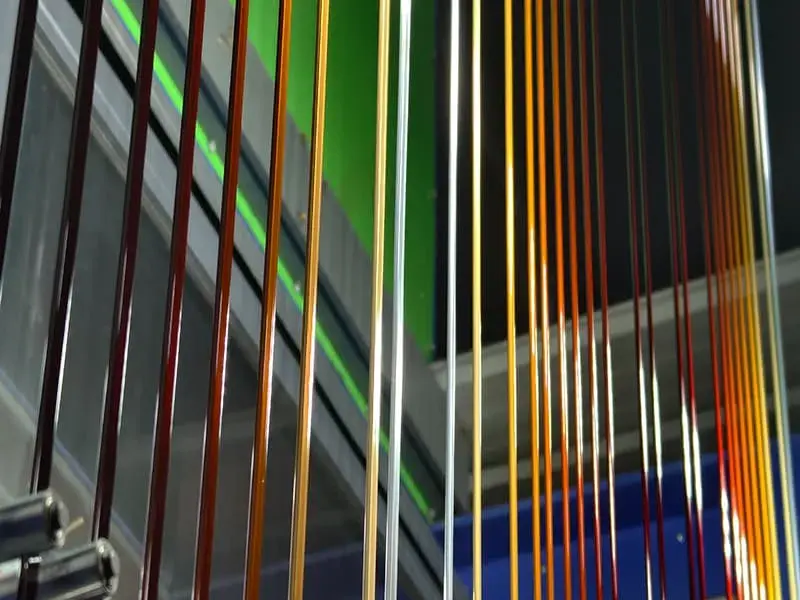
The manufacturing process of high frequency enameled aluminum round wire is similar to that of ordinary enameled aluminum wire, mainly including aluminum rod drawing, enamel liquid coating, baking and curing, wire collection, and other processes.
However, due to the high requirements of high frequency applications for aluminum wire, special attention should be paid to the manufacturing process: strictly control the purity of aluminum to reduce the influence of impurities on electrical conductivity; precisely control the thickness of the enamel film to ensure stable high frequency performance; precisely control the curing degree of the enamel film to avoid under-curing or over-curing; strictly control the surface quality to avoid defects affecting the insulation performance.
Litz wire manufacturing is the core technology of high frequency aluminum wire, and mainly includes the following processes: single-strand aluminum wire preparation (first prepare a single-strand enameled aluminum round wire that meets the requirements, with a wire diameter usually between 0.05 and 0.3 mm); multi-strand twisting (twist multiple strands of enameled aluminum round wire according to specific rules, and the twisting pitch needs to be precisely controlled); braiding (braid the twisted wire to form a braided aluminum wire); insulation covering (add an insulation layer outside the twisted wire to form a double insulation structure); quality inspection (including inspection of wire diameter, twisting pitch, insulation resistance, withstand voltage, and other indicators).
The manufacturing process of aluminum foil winding mainly includes aluminum foil slitting, insulation treatment, winding, curing, and other processes.
The thickness of aluminum foil is usually between 0.05 and 0.5 mm, and the width is determined according to the design requirements.
The tension and interlayer insulation need to be controlled during winding.
The key process parameters that need to be controlled in the manufacturing process of high frequency aluminum wire include: purity and impurity content of aluminum, accuracy of single-strand aluminum wire diameter, uniformity of enamel film thickness, accuracy of twisting pitch, baking temperature and time, and wire collection tension and speed.
Application Fields of High Frequency Aluminum Wire
Wireless charging is one of the most important application fields of high frequency aluminum wire.
Wireless charging systems usually work in the 85 to 205 kHz frequency range, and some systems work in higher frequency bands such as 6.78 MHz or 13.56 MHz.
Both the transmitting coil and the receiving coil of wireless charging need to use Litz wire structure of high frequency aluminum wire.
The advantages of Litz aluminum wire in wireless charging include: light weight, high efficiency, and low cost.
In the fields of electric vehicle wireless charging and portable device wireless charging, Litz aluminum wire is an ideal choice.
Typical applications include electric vehicle wireless charging systems, smartphone wireless charging boards, and wireless charging power tools.
High frequency transformers are the core components of switching power supplies, inverters, UPS, and other power electronic equipment, with a working frequency usually between 20 kHz and 500 kHz, and some high frequency transformers work above 1 MHz.
High frequency transformer windings can use structures such as Litz aluminum wire, aluminum foil winding, and transposed conductors.
The application of aluminum wire in high frequency transformers is gradually increasing, especially in application scenarios with weight sensitivity and high efficiency requirements.
Typical applications include switching power supply transformers, resonant inductors, and isolation transformers.
Induction heating uses the principle of high frequency electromagnetic induction to heat metals, with a working frequency usually between 1 kHz and 1 MHz.
The induction coil in induction heating equipment needs to carry high current, and has high requirements for the conductivity, heat resistance, and mechanical strength of the conductor material.
Induction heating coils can use structures such as Litz aluminum wire, aluminum tube, and aluminum foil.
Litz aluminum wire is widely used in small and medium power and high frequency induction heating equipment.
Typical applications include induction furnaces, induction welding equipment, and induction heating power supplies.
The development of 5G communications, Internet of Things, and other technologies has driven the demand for high frequency winding materials in communication equipment.
Components such as inductors, filters, and transformers in communication equipment require winding materials with excellent high frequency performance.
Applications of high frequency aluminum wire in communication equipment include: base station inductors, filter windings, baluns, and impedance matching transformers.
Typical applications include 5G base stations, satellite communications, and radar systems.
Components such as wireless charging systems, on-board chargers, DC converters, and induction heaters in new energy vehicles all need to use high frequency winding materials.
The demand for lightweight in new energy vehicles makes aluminum wire an important choice.
Typical applications include electric vehicle wireless charging, on-board OBC (on-board charger), DC-DC converters, and in-vehicle wireless charging.
High frequency aluminum wire is also used in the following fields: medical equipment (high frequency coils in MRI magnetic resonance imaging systems), industrial heating (medium frequency furnaces, high frequency welding machines), aerospace (aviation electronic equipment, satellite power supplies), and consumer electronics (laptop wireless charging, wearable device wireless charging).
Selection Points of High Frequency Aluminum Wire
Application scenario analysis: clarify the application field, working frequency, power level, efficiency requirements, weight limitations, cost budget, and other key factors.
Conductor structure selection: select the appropriate conductor structure according to the working frequency. Low frequency (less than 100 kHz) can select single-strand or Litz wire structure, medium to high frequency (100 kHz to 1 MHz) usually selects Litz wire structure, and ultra-high frequency (greater than 1 MHz) requires special structure.
Conductor specification determination: determine the conductor cross-sectional area and single-strand diameter according to the current capacity, conductor resistance, and heat dissipation requirements.
Enamel film grade selection: select the enamel film grade according to the working temperature, insulation requirements, and dielectric loss requirements.
The key parameters of Litz wire include single-strand diameter, number of strands, twisting pitch, twisting method, etc.
Single-strand diameter selection: the single-strand diameter should be less than or equal to the skin depth corresponding to the working frequency. For example, at a frequency of 100 kHz, the skin depth of aluminum is about 0.26 mm, and the single-strand diameter should not exceed 0.2 mm.
Number of strands selection: determine the total number of strands according to the required current capacity and single-strand diameter. Increasing the number of strands can reduce the AC resistance, but will increase the manufacturing cost and volume.
Twisting pitch: the twisting pitch is usually 10 to 20 times the single-strand diameter. Too small a pitch will increase the proximity effect.
In terms of supplier evaluation, in terms of production capacity, the supplier should have the production capacity of Litz aluminum wire, including precision twisting equipment and online detection systems.
In terms of quality management system, the supplier should pass the ISO 9001 quality management system certification and have perfect process quality control.
In terms of R&D capability, the supplier should have the design and development capability of high frequency winding materials, and be able to provide customized products according to customer needs.
In terms of application experience, the supplier should have application experience in wireless charging, new energy vehicles, induction heating, and other fields, and be able to provide professional technical support.
In terms of standards and certification, the main standards: high frequency aluminum wire products can refer to IEC 60317 series, NEMA MW 1000, GB/T 23312, and other enameled wire standards.
Product certification: UL certification, VDE certification, CQC certification, etc., as well as industry certification for specific applications.
Quality Control of High Frequency Aluminum Wire
In terms of key quality indicators, single-strand diameter: the accuracy of the single-strand diameter directly affects the high frequency performance of Litz wire and needs to be strictly controlled.
Enamel film thickness: the uniformity of the enamel film thickness affects the insulation performance and high frequency characteristics.
Twisting pitch: the accuracy of the twisting pitch affects the skin effect suppression effect.
Insulation resistance: the insulation resistance reflects the insulation performance of the enamel film.
Withstand voltage: the withstand voltage reflects the ability of the enamel film to withstand electric field stress.
Dielectric loss: the dielectric loss tangent (tan delta) reflects the energy loss at high frequency.
AC resistance: the AC resistance reflects the effective conductive ability at high frequency.
In terms of inspection methods, dimensional measurement: use laser diameter measuring instruments, projectors, and other precision measuring equipment to detect single-strand diameter, twisting pitch, and other dimensions.
Electrical testing: including DC resistance, AC resistance, insulation resistance, withstand voltage, dielectric loss, and other tests.
Mechanical testing: including tensile strength, elongation, bending performance, twisting firmness, and other tests.
Appearance inspection: including surface quality, color uniformity, defect detection, etc.
Key points of quality control: incoming material control (strictly control the incoming quality of aluminum, enamel liquid, and auxiliary materials); process control (monitor the process parameters of key processes such as drawing, enameling, and twisting); finished product control (perform full inspection or sampling inspection of finished products to ensure factory quality); continuous improvement (continuously optimize processes and quality control methods based on quality data analysis).
Development Trends of High Frequency Aluminum Wire
Wireless charging driver: the rapid development of wireless charging technology is the most important market driver for high frequency aluminum wire.
The continuous expansion of applications in electric vehicle wireless charging, portable device wireless charging, and home appliance wireless charging will drive the rapid growth of the demand for high frequency aluminum wire.
High frequency trend: with the progress of power electronics technology, the working frequency of high frequency power supplies, high frequency induction heating, and high frequency communications continues to increase.
This puts forward higher requirements for the high frequency performance of high frequency aluminum wire, and promotes the continuous upgrading of high frequency aluminum wire technology and products.
Lightweight demand: the demand for lightweight in new energy vehicles, portable devices, and aerospace continues to grow.
Aluminum wire has irreplaceable advantages in weight-sensitive high frequency applications, and the application of aluminum wire replacing copper wire in the high frequency range will continue to expand.
Manufacturing technology progress: the continuous progress of precision twisting technology, enamel film coating technology, online detection technology, and other manufacturing technologies will improve the performance and quality stability of high frequency aluminum wire.
The application of intelligent manufacturing technology will further improve production efficiency and product consistency.
New materials and new processes: the application of new aluminum alloy materials, nano-modified enamel films, self-adhesive enamel films, and other new materials and new processes will further improve the performance of high frequency aluminum wire.
Composite structures (such as copper clad aluminum, aluminum copper composite) high frequency wires are also expected to be applied more.
Conclusion
High frequency aluminum wire is an important winding material in high frequency application scenarios, and has broad application prospects in wireless charging, high frequency transformers, induction heating, communication equipment, new energy vehicles, and other fields.
The advantages of aluminum wire in high frequency applications include light weight, large skin depth, low cost, and good heat dissipation, but it also faces technical challenges such as skin effect, proximity effect, and connection process.
The core technology of high frequency aluminum wire is the Litz wire structure, which effectively suppresses the skin effect and proximity effect and reduces the AC resistance by twisting multiple strands of fine aluminum wire.
The selection of the enamel film system has an important impact on the performance of high frequency aluminum wire. High-performance enamel films such as polyester imide and polyamide imide are common choices for high frequency aluminum wire.
The selection of high frequency aluminum wire should comprehensively consider the working frequency, power level, weight limitations, cost budget, and other factors.
Suppliers should have the professional production capacity of high frequency aluminum wire, a perfect quality management system, rich application experience, and professional technical support.
With the rapid development of technologies such as wireless charging, new energy vehicles, and 5G communications, the market prospects of high frequency aluminum wire are broad.
Enameled aluminum wire manufacturers should keep up with the development trend of technology, continuously improve product performance, expand application fields, and provide high-quality products and solutions for the high frequency winding material market.