


Rectangular aluminum magnet wire, also known as aluminum flat wire or enameled aluminum flat wire, is an increasingly widely used key basic material in the modern electrical industry.
Compared with the traditional round wire, rectangular aluminum magnet wire has outstanding advantages such as high slot fill rate, high power density, good heat dissipation performance, and high space utilization, playing an important role in the manufacture of electrical equipment such as transformers, motors, and reactors.
With the rapid development of high-end equipment manufacturing industries such as new energy vehicles, rail transit, and smart grids, the technical level and application scale of rectangular aluminum magnet wire continue to improve.
The Hairpin winding technology of new energy vehicle drive motors, the high power density design of distribution transformers, the high-efficiency flat wire winding of high-speed rail traction motors, and other emerging application scenarios put forward higher technical requirements for rectangular aluminum magnet wire.
This article systematically describes the technical characteristics, specification system, manufacturing process, enamel film system, application fields, selection points, and quality control of rectangular aluminum magnet wire, providing comprehensive technical reference for electrical engineers and designers.
Overview of Rectangular Aluminum Magnet Wire
Rectangular aluminum magnet wire refers to an enameled aluminum wire product with a rectangular (flat) cross-section, composed of an aluminum conductor and an insulating enamel film.
The conductor part is formed by rolling and drawing an electrical aluminum rod, with a rectangular or flat cross-section, and the aluminum purity is usually above 99.5%.
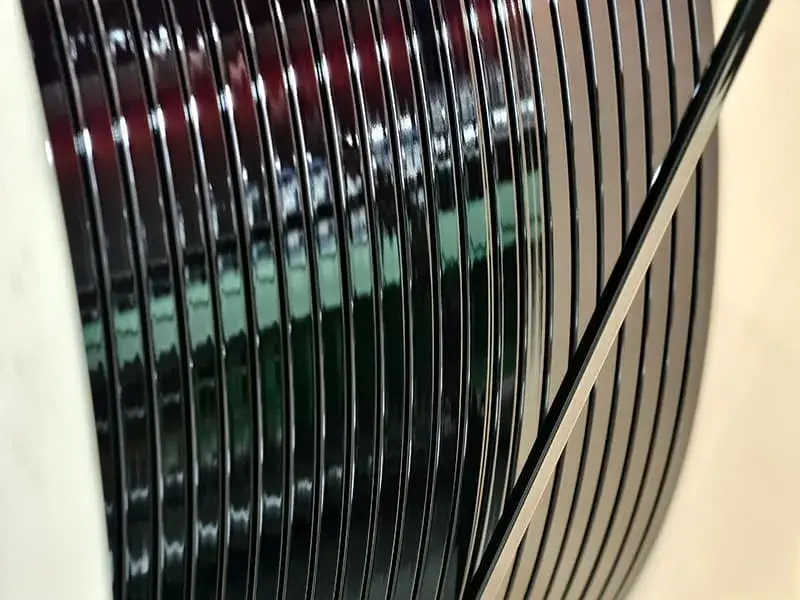
The insulating enamel film is coated in a single layer or double layer, and the thickness of the enamel film is determined according to the temperature class, and the enamel film completely covers the surface of the conductor.
Rectangular aluminum magnet wire can be divided into flat wire (width-to-thickness ratio between 5:1 and 20:1), strip wire (width-to-thickness ratio above 20:1), and square wire (width-to-thickness ratio close to 1:1) according to the width-to-thickness ratio.
According to the type of enamel film, it can be divided into polyester enameled rectangular aluminum wire (PEW), polyurethane enameled rectangular aluminum wire (UEW), polyester imide enameled rectangular aluminum wire (EIW), polyamide imide enameled rectangular aluminum wire (AIW), and composite enamel film enameled rectangular aluminum wire.
According to the temperature class, it can be divided into Class 130, Class 155, Class 180, Class 200, Class 220, and other grades.
Compared with round wire, rectangular aluminum magnet wire has multiple core advantages.
In terms of slot fill rate, the rectangular cross-section can fill the rectangular slot more tightly than the round cross-section, and the slot fill rate is increased from 45% of the round wire to more than 70% of the flat wire, and the increase in slot fill rate is directly converted into the increase in power density.
Due to the increase in slot fill rate, the conductor content per unit volume increases, the number of winding turns increases, the magnetic flux density increases, and the power density can be increased by 20 to 50%.
In terms of heat dissipation performance, the surface area to volume ratio of the rectangular cross-section is larger than that of the round wire, the heat dissipation surface increases, the heat dissipation performance improves, the winding temperature rise decreases, and the efficiency improves.
In terms of space utilization, the rectangular cross-section perfectly matches the rectangular slot, reducing space waste, and the equipment volume can be reduced accordingly.
In terms of mechanical strength, the bending stiffness of the rectangular cross-section is greater than that of the round wire, the winding structure stability is better, and the vibration resistance and impact resistance performance are better.
In terms of manufacturing process, rectangular aluminum magnet wire is suitable for high-efficiency automatic winding, large-scale production, and new winding technologies such as Hairpin.
Specification System of Rectangular Aluminum Magnet Wire
The typical size range of rectangular aluminum magnet wire is that the thickness is usually between 0.8 mm and 5.0 mm, the width is usually between 2.0 mm and 20.0 mm, the width-to-thickness ratio is usually between 1.5:1 and 20:1, and the cross-sectional area is usually between 1.5 mm² and 100 mm².
Common specifications include small specifications such as thickness 1.0 mm × width 3.0 mm, medium specifications such as thickness 2.0 mm × width 8.0 mm, large specifications such as thickness 3.0 mm × width 12.0 mm, and extra-large specifications such as thickness 5.0 mm × width 20.0 mm.
In terms of tolerance requirements, the thickness tolerance is usually ±0.03 mm to ±0.05 mm, the width tolerance is usually ±0.05 mm to ±0.10 mm, the corner radius is usually 0.3 mm to 0.8 mm, and the straightness is usually within 1 mm/m.
In terms of enamel grade and thickness, Grade 1 (thin enamel layer) has an enamel film thickness of 0.02 to 0.06 mm, Grade 2 (standard enamel layer) has an enamel film thickness of 0.05 to 0.11 mm, and Grade 3 (thick enamel layer) has an enamel film thickness of 0.10 to 0.16 mm.
The selection of enamel film thickness needs to comprehensively consider factors such as working voltage and insulation requirements, temperature rise and heat dissipation balance, slot fill rate and power density, and processing performance.
In terms of temperature class, Class 130 polyurethane enamel is suitable for small transformers and household appliances, Class 155 polyester enamel is suitable for small and medium-sized motors and distribution transformers, Class 180 polyester imide enamel is suitable for industrial motors and medium and large transformers, Class 200 polyamide imide enamel is suitable for traction motors and wind generators, and Class 220 modified polyamide imide enamel is suitable for special motors and high temperature applications.
In terms of performance indicators, the electrical conductivity resistivity (20 degrees C) should not be greater than 0.02826 Ω·mm²/m, and the conductivity should not be less than 61% IACS.
In terms of mechanical properties, the tensile strength is usually not less than 90 MPa (soft state), the elongation is usually not less than 20%, and it can withstand 180 degree bending without cracking.
In terms of insulation performance, the dielectric strength is not less than 5 kV (enamel film thickness 0.05 to 0.11 mm), the insulation resistance is not less than 1000 MΩ·km, and the enamel film continuity is no more than 5 pinholes per 30 meters.
Manufacturing Process of Rectangular Aluminum Magnet Wire
The overall process flow of rectangular aluminum winding wire mainly includes aluminum rod preparation, flat wire forming, surface treatment, enamel coating and baking, wire collection and packaging.
In the aluminum rod preparation stage, electrical aluminum rods with a purity of not less than 99.5% are used, and after inspecting the chemical composition, size, and appearance, they are stored in a dry and cool environment.
In the flat wire forming stage, the round aluminum rod is rolled into a rectangular cross-section by a rolling mill, the precise size is adjusted by a die, and then the work hardening is eliminated and the plasticity is restored by annealing.
In the surface treatment stage, the surface oil and oxide layer are removed, and the surface is adjusted to enhance the adhesion of the enamel film.
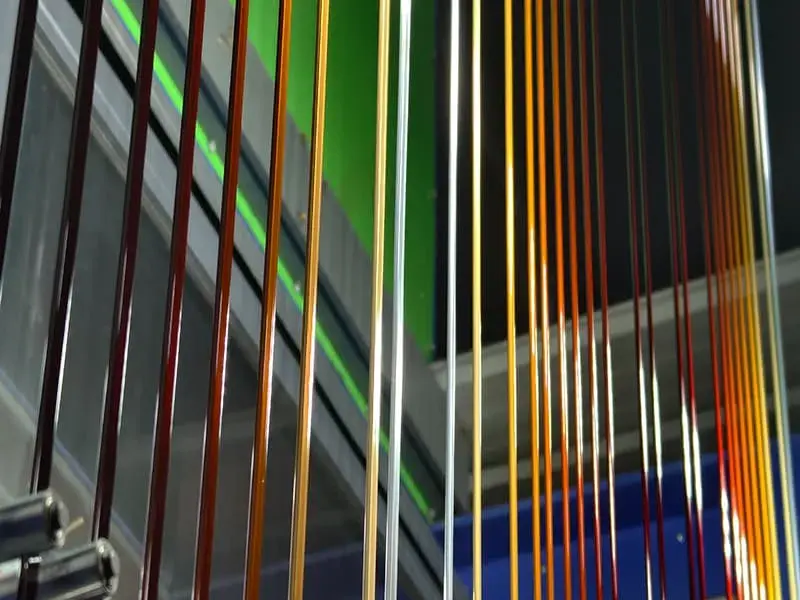
In the enamel coating and baking stage, the enamel liquid is coated by the die coating method, the enamel film is cured by high-temperature baking, and the required enamel film thickness is achieved by multiple coatings.
In the wire collection and packaging stage, the wire is evenly and neatly collected, moisture-proof and damage-proof packaging is adopted, and the specifications, batch number, and production date are marked.
In the flat wire forming process, the rolling process adopts multi-pass rolling to gradually form, and the cross-section is gradually transitioned from a round cross-section to a rectangular cross-section, and the deformation of each pass is reasonably controlled to prevent cracking caused by excessive deformation.
The drawing process adjusts the size through precision die drawing, the die precision is required to be high, and the drawing process requires lubrication and cooling.
The annealing process is used to eliminate the work hardening caused by rolling and drawing, the annealing temperature is usually 300 to 400 degrees C, the annealing time is determined according to the linear speed, and the annealing atmosphere is controlled to prevent oxidation.
The enamel coating process mainly adopts the die coating method, the coating die matches the rectangular cross-section, and the viscosity of the enamel liquid is precisely controlled.
The coating parameters include the viscosity of the enamel liquid adjusted according to the specification and enamel film thickness, the coating speed is usually tens of meters per minute, the baking temperature is determined according to the enamel liquid system, and the baking time is determined according to the linear speed.
Multiple coatings usually require 4 to 10 coating cycles, and each coating is immediately baked and cured to form a multi-layer enamel film structure.
In terms of process control points, aluminum material quality control needs to strictly control the purity, impurity content, and internal structure of the aluminum rod.
Dimensional accuracy control needs to strictly control the rolling and drawing parameters, perform online thickness and width measurement, and achieve automatic feedback adjustment.
Enamel film quality control needs to carry out online monitoring of enamel liquid viscosity, precise control of baking temperature, online detection of enamel film thickness, and sampling inspection of enamel film performance.
Enamel Film System of Rectangular Aluminum Magnet Wire
The enamel film system of rectangular aluminum magnet wire includes polyester enamel (PEW), polyurethane enamel (UEW), polyester imide enamel (EIW), polyamide imide enamel (AIW), and composite enamel film.
Polyester enamel has a temperature class of Class 130 or Class 155, with good mechanical properties, excellent electrical properties, and relatively economical cost, and is mainly used in small and medium-sized motors, distribution transformers, and household appliances.
Polyurethane enamel has a temperature class of Class 130, with solderability, good enamel film flexibility, and moderate cost, and is mainly used in household appliance motors, electronic transformers, and small inductors.
Polyester imide enamel has a temperature class of Class 180, with excellent heat resistance, high mechanical strength, and good chemical resistance, and is mainly used in industrial motors, medium and large transformers, traction motors, and wind generators.
Polyamide imide enamel has a temperature class of Class 200 or Class 220, with outstanding heat resistance, excellent wear resistance, and excellent chemical stability, and is mainly used in high-end motors, special transformers, aviation motors, and military equipment.
The composite enamel film adopts a double-layer or three-layer composite structure.
The double-layer composite structure has a polyester imide (EIW) as the base layer and a polyamide imide (AIW) as the surface layer, which has the advantages of both enamel systems and the best comprehensive performance.
The three-layer composite structure has polyester as the base layer, polyester imide as the middle layer, and polyamide imide as the surface layer, which is suitable for high-end application scenarios.
Application Fields of Rectangular Aluminum Magnet Wire
Rectangular aluminum magnet wire is increasingly widely used in the field of new energy vehicle drive motors.
The rapid development of new energy vehicles has promoted the upgrading of drive motor technology, the Hairpin winding technology has become the mainstream direction, and the application of rectangular aluminum magnet wire in Hairpin windings is increasing.
Its technical advantages are that the slot fill rate is high, the power density is improved, the heat dissipation performance is good, the motor efficiency is improved, the end size is small, the motor volume is compact, and it is suitable for automated production.
Typical specifications are thickness 1.5 to 3.0 mm, width 5.0 to 10.0 mm, enamel film Class 200 or Class 220, enamel film thickness Grade 2 or Grade 3.
Application cases include drive motors of mainstream new energy vehicle manufacturers such as BYD, Tesla, and NIO, with a slot fill rate of more than 70% and a power density of 5 to 7 kW/kg.
In the field of distribution transformers, the number of distribution transformers is huge, rectangular aluminum magnet wire is widely used in distribution transformers, and the power density of transformers can be improved.
The technical advantages include high slot fill rate, reduced transformer volume, good heat dissipation, low temperature rise, lower cost than the comprehensive solution of round aluminum wire, and suitability for large-scale production.
Typical specifications are thickness 1.5 to 5.0 mm, width 5.0 to 15.0 mm, enamel film Class 130, Class 155, Class 180.
Application cases include small and medium-sized oil-immersed distribution transformers, dry-type distribution transformers, and combined transformers.
In the field of rail transit traction motors, rail transit vehicles have high requirements for motor performance, flat wire winding technology improves the performance of traction motors, and the application of rectangular aluminum magnet wire in traction motors is increasing.
The technical advantages include high power density, small motor volume, good heat dissipation performance, suitability for high load conditions, good vibration resistance, and suitability for frequent start and stop.
Typical specifications are thickness 2.0 to 4.0 mm, width 6.0 to 12.0 mm, enamel film Class 200 or Class 220.
In the field of wind generators, the application of rectangular aluminum magnet wire in the stator winding of wind generators is increasing, and the unit capacity of offshore wind power is increasing.
The technical advantages include suitability for high-power generators, good heat dissipation performance, good vibration resistance, and salt spray corrosion resistance.
Typical specifications are thickness 2.0 to 5.0 mm, width 8.0 to 15.0 mm, enamel film Class 200 or Class 220.
In the field of industrial motors, the demand for high-efficiency industrial motors is increasing, rectangular aluminum magnet wire is used in high-efficiency motors, and the power density and efficiency of motors can be improved.
The technical advantages include high slot fill rate, good heat dissipation, high efficiency, suitability for high-efficiency motors (IE4, IE5), and suitability for variable frequency drive.
Typical specifications are thickness 1.0 to 3.0 mm, width 4.0 to 10.0 mm, enamel film Class 155, Class 180, Class 200.
In the field of power reactors, shunt reactors and current-limiting reactors in power systems use a large number of rectangular aluminum magnet wires, which can improve the power density of reactors.
The technical advantages include suitability for high current applications, good heat dissipation performance, good structural stability, and obvious cost advantages.
Typical specifications are thickness 2.0 to 5.0 mm, width 6.0 to 15.0 mm, enamel film Class 155, Class 180.
Flat Wire Winding Technology
Flat wire winding technology mainly includes Hairpin winding, I-pin winding, continuous wave winding, and traditional winding.
The Hairpin winding technology uses rectangular aluminum magnet wire pre-formed into a U-shape or I-shape, inserts the pre-formed conductor into the stator slot, and performs welding connection at the end to form a complete winding.
The technical advantages include a high slot fill rate (more than 70%), small end size, suitability for automated production, and high power density.
The process flow includes cutting of rectangular aluminum magnet wire, end paint removal treatment, U-shape or I-shape forming, insertion into the stator slot, end welding (laser welding, TIG welding, etc.), and insulation treatment.
The I-pin winding technology uses I-shaped pre-formed rectangular aluminum wire, inserts it into the stator slot from one side, and performs end bending and welding on the other side to form a complete winding.
The technical advantages include simpler process, suitability for automation, high slot fill rate, and suitability for large-scale production.
The continuous wave winding technology uses rectangular aluminum magnet wire for continuous winding, realizes continuous winding through a special process, reduces welding points, improves reliability, and is suitable for specific applications such as special motors.
From the comparison, the Hairpin technology has a slot fill rate of 70 to 80%, medium process difficulty, suitable for medium and large specifications, and is mainly used in new energy vehicle drive motors.
The I-pin technology has a slot fill rate of 70 to 75%, medium process difficulty, suitable for medium and large specifications, and is mainly used in new energy vehicle drive motors.
The continuous wave technology has a slot fill rate of 65 to 75%, high process difficulty, suitable for large specifications, and is mainly used in special motors.
The traditional winding has a slot fill rate of 45 to 60%, low process difficulty, suitable for general specifications, and is mainly used in general motors.
Selection Points of Rectangular Aluminum Magnet Wire
The selection of rectangular aluminum magnet wire should be based on the selection principle, specification selection, supplier evaluation, and standards and certification.
In terms of selection principle, it is first necessary to analyze the application scenario, clarify the type and capacity of electrical equipment, analyze the requirements of the application for power density, efficiency, and cost, and evaluate the application environment (temperature, humidity, vibration, etc.).
Then determine the technical parameters, calculate the required cross-sectional area according to the current capacity, determine the enamel film thickness according to the voltage class, determine the temperature class according to the working temperature, and determine the width-to-thickness ratio according to the space limitation.
Finally, the economic evaluation is carried out, taking into account the raw material cost, processing cost, full life cycle cost, and maintenance cost.
In terms of specification selection, the cross-sectional area selection should be calculated according to the rated current and current density, and consider the heat dissipation conditions, voltage class, and insulation requirements.
In terms of width-to-thickness ratio selection, a large width-to-thickness ratio has high space utilization and short ends, and a small width-to-thickness ratio has good mechanical strength and is easy to manufacture, and the typical range is 5:1 to 15:1.
The selection of enamel film class needs to consider the working temperature and temperature rise margin, reserve a temperature rise margin of 15 to 20 degrees C, and consider the ambient temperature.
The selection of enamel film thickness needs to consider the voltage class, processing technology requirements, and balance the insulation performance and heat dissipation performance.
In terms of supplier evaluation, in terms of production capacity, the supplier should have the production capacity of rectangular aluminum magnet wire, equipped with precision rolling, drawing, and enamel coating equipment, and have online detection and quality control capabilities.
In terms of quality management system, the supplier should pass the ISO 9001 quality management system certification and IATF 16949 (automotive industry) certification, and have perfect process quality control.
In terms of R&D capability, the supplier should have the enamel formula R&D capability, process optimization capability, and customized product development capability.
In terms of application experience, the supplier should have application experience in new energy vehicles, rail transit, transformers, and other fields, and be able to provide professional technical support.
In terms of standards and certification, the main standards include IEC 60317 series (international standard), NEMA MW 1000 (North American standard), GB/T 23312 (Chinese national standard), and ASTM B566 (reference standard).
Product certification includes UL certification (North American market), VDE certification (European market), CQC certification (Chinese market), and RoHS/REACH (environmental protection requirements).
Quality Control of Rectangular Aluminum Magnet Wire
The key quality indicators of rectangular aluminum magnet wire cover multiple dimensions such as dimensional accuracy, enamel film quality, electrical performance, mechanical performance, and thermal performance.
Dimensional accuracy includes thickness and width tolerance, corner radius, straightness, and cross-sectional area.
Enamel film quality includes enamel film thickness, enamel film continuity (number of pinholes), enamel film adhesion, and enamel film uniformity.
Electrical performance includes dielectric strength, insulation resistance, and conductor resistance.
Mechanical performance includes tensile strength, elongation, and bending performance.
Thermal performance includes thermal shock performance and long-term thermal aging performance.
In terms of inspection methods, the appearance inspection mainly checks the enamel film surface quality, color uniformity, and surface defects.
The dimensional measurement uses a micrometer to measure the thickness, a caliper to measure the width, and a projector to measure the cross-section.
Electrical tests include dielectric strength test, insulation resistance test, and conductor resistance test.
Mechanical tests include tensile strength test, bending test, and enamel film adhesion test.
Thermal performance tests include thermal shock test and thermal aging test.
The key points of quality control run through the entire production process.
Process control includes aluminum rod incoming inspection, flat wire forming process monitoring, enamel coating process monitoring, and enamel film curing process monitoring.
Finished product control includes full appearance inspection, dimensional sampling inspection, performance sampling inspection, and batch consistency verification.
Continuous improvement includes quality data analysis, process optimization, and quality improvement measures.
Development Trends of Rectangular Aluminum Magnet Wire
The development trend of rectangular aluminum magnet wire is mainly reflected in the directions of new energy vehicle drive, high power density transformer, high-end motor application, and manufacturing process progress.
In terms of new energy vehicle drive, the market drivers include the continuous growth of new energy vehicle sales, the increasing requirements for drive motor power density, and the Hairpin flat wire winding technology becoming the mainstream.
The technical development direction includes the stable production of large specification rectangular aluminum magnet wire, the wide application of Class 200 and Class 220 enamel films, the improvement of enamel film thickness uniformity, and the improvement of automated production efficiency.
In terms of high power density transformer, the technical drivers include the demand for small transformer in urban distribution, the special requirements for transformers in new energy access, and the construction of intelligent substations.
The technical development direction includes high slot fill rate design, heat dissipation optimization, noise suppression, and intelligent monitoring.
In terms of high-end motor applications, the application field is extended to industrial robots, medical equipment, aerospace, and ship electric propulsion.
The technical development direction includes high efficiency and energy saving, high power density, long life, and high reliability.
In terms of manufacturing process progress, the process technology development includes precision rolling technology, high-efficiency enamel coating technology, online detection technology, and intelligent manufacturing technology.
The material technology development includes high-performance enamel liquid formula, new aluminum alloy materials, and composite enamel film structure.
Conclusion
As a key basic material in the modern electrical industry, rectangular aluminum magnet wire plays an irreplaceable role in new energy vehicle drive motors, distribution transformers, rail transit traction motors, wind generators, and other fields.
Compared with round aluminum magnet wire, rectangular aluminum magnet wire has outstanding advantages such as high slot fill rate, high power density, good heat dissipation performance, and high space utilization, and is the preferred winding material for high power density electrical equipment.
The core advantages of rectangular aluminum magnet wire include: the slot fill rate is as high as more than 70%, which significantly improves the power density; the heat dissipation surface increases, and the temperature rise decreases; the mechanical strength is good, and the structure is stable; it is suitable for new winding technologies such as Hairpin; and it is suitable for automated large-scale production.
Its application scenarios cover new energy vehicle drive motors (Hairpin/I-pin windings), distribution transformers, rail transit traction motors, wind generators, industrial motors, power reactors, and other fields.
The selection of rectangular aluminum magnet wire should be based on specific application scenarios, electrical performance, space limitations, production processes, and other factors, taking into account the parameters such as cross-sectional area, width-to-thickness ratio, enamel film class, and enamel film thickness.
The supplier should have the professional production capacity of rectangular aluminum magnet wire, a perfect quality management system, rich application experience, and professional technical support.
With the rapid development of high-end equipment manufacturing industries such as new energy vehicles, rail transit, and smart grids, the application prospects of rectangular aluminum magnet wire will be broader.
Aluminum enameled wire manufacturers should keep up with the development trend of technology, continuously optimize product performance, improve manufacturing processes, and expand application fields, to provide a solid material foundation for the high-quality development of the electrical industry.