

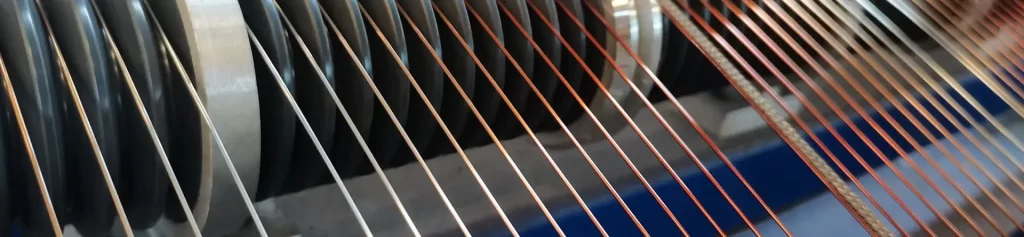
Enameled copper wire is a key fundamental material in the electrical industry, and its quality directly relates to the reliability and life of terminal products such as motors, transformers, and household appliances. Pinholes and flexibility are the two most critical test items for enameled wire, reflecting the integrity of the enamel film and mechanical properties respectively. The pinhole test is an important method for evaluating the continuity of the enamel film. Microscopic defects (pinholes) in the enamel film will lead to insulation failure, causing breakdown faults in high voltage or humid environments. The flexibility test evaluates the ability of enameled wire to withstand deformation during winding, embedding, bending, and other processing. This article will systematically introduce the principles, methods, equipment, standards, and result analysis of pinhole and flexibility tests for enameled copper wire, providing professional technical reference for relevant engineers and quality inspection personnel.
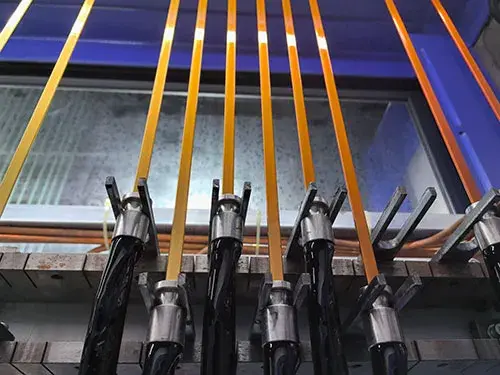
Importance of Enameled Copper Wire Testing
Quality Assurance
Enameled copper wire may have various defects during production and use. If these defects are not detected and eliminated in time, they will lead to early failure of terminal products. Quality testing is a key link in enameled wire production. Through strict testing, products can be ensured to meet standard requirements and customer needs.
Failure Prevention
Pin holes and other defects in enameled wire enamel film can cause: inter-turn short circuits in windings, winding to ground breakdown, shortened electrical equipment life, and in severe cases safety accidents. Insufficient flexibility can lead to: enamel film cracking during winding, damage during embedded winding, fracture during terminal forming, and early failure under temperature cycling. Strict pinhole and flexibility tests can effectively prevent these failure modes.
Enameled Wire Testing Standard System
International Standards
The IEC 60851 series standards issued by the International Electrotechnical Commission (IEC) are the basic standards for enameled wire testing. IEC 60851-1: General. IEC 60851-2: Electrical performance tests. IEC 60851-3: Mechanical performance tests. IEC 60851-4: Chemical performance tests. IEC 60851-5: Electrical performance tests (continued). IEC 60851-6: Thermal performance tests.
Regional Standards
Different regions have different enameled wire testing standards. NEMA MW1000 (US) specifies magnet wire testing methods and performance requirements. GB/T 4074 (China) equivalently adopts the IEC 60851 series of standards. JIS C3202 (Japan) is the Japanese Industrial Standard.
Industry Standards
ASTM D1676 (American Society for Testing and Materials) specifies standard test methods for film-insulated magnet wire. EN 60317 series (Europe) specifies detailed specifications for particular types of winding wires.
Pinhole Test
Definition of Pinhole
A pinhole is a microscopic hole or weak point in the enamel film of an enameled wire. The size of pinholes is usually between a few microns and tens of microns, difficult to observe with the naked eye, but can cause insulation failure. The causes of pinhole generation include: imperfect enameling process, incomplete baking and curing, impurities in the enamel, defects on the copper wire surface, and insufficient enamel film thickness.
Hazards of Pinholes
The hazards of pinholes may not be obvious at low voltages, but will be significantly amplified at high voltages or in harsh environments. Low voltage applications (such as ordinary household appliances): a small number of pinholes may not immediately cause failure. High voltage applications (such as transformers, traction motors): pinholes are the main factor causing breakdown. Humid environments: pinholes provide channels for moisture entry, accelerating insulation aging.
Pinhole Test Principle
The basic principle of the pinhole test is to detect the electrical continuity of the enamel film. When the enamel film is intact, the copper wire is insulated from the external electrode. When the enamel film has pinholes, current can flow through the pinholes to form a path. By measuring the small current that passes through, it can be determined whether the enamel film has pinholes. The more and larger the pinholes, the larger the current that passes through.
Mercury Method Pinhole Test
The mercury method is one of the earliest pinhole test methods. During the test, the enameled wire passes through a mercury bath, and mercury acts as the external electrode. When the enamel film has pinholes, current flows through the pinholes to the mercury. The advantage of the mercury method is high sensitivity, but the disadvantage is that mercury is toxic, and modern industry has gradually eliminated it.
Water Immersion Method Pinhole Test
The water immersion method is one of the standard methods specified in the IEC 60851 standard. During the test, the enameled wire passes through an aqueous solution containing electrolyte. The test solution is generally an aqueous solution containing sodium chloride (NaCl), or an aqueous solution containing surfactant. The enameled wire serves as one electrode, and the external metal electrode or copper rod serves as the other electrode. When the enameled wire passes through the test solution, if the enamel film has pinholes, current will flow through the pinholes to the test solution. The tester records the number and location of pinholes.
Dry Method Pinhole Test
The dry method pinhole test uses a metal brush or conductive rubber as the external electrode, and the enameled wire passes through for detection. The advantage of dry testing is environmental friendliness, with no liquid pollution. The sensitivity of dry testing may be slightly lower than the water immersion method, but it has been able to meet the needs of most applications.
Pinhole Test Equipment
Pinhole test equipment usually includes: pay-off device, test electrode (or test solution tank), high-voltage power supply, signal detection system, take-up device, data recording system. Modern pinhole test equipment has functions of automatic detection, automatic recording, and automatic alarm, and can achieve 100% online detection.
Pinhole Test Voltage
The pinhole test voltage for enameled wire is determined based on the wire diameter and enamel film thickness. General rule: the thinner the wire diameter, the lower the test voltage; the thicker the enamel film, the higher the test voltage. Typical test voltage range: 30V DC ~ 200V DC. Fine wire (0.10-0.30mm): 30-60V. Medium wire (0.30-0.50mm): 60-100V. Coarse wire (above 0.50mm): 100-200V.
Pinhole Standard Requirements
Different standards have different requirements for the number of pinholes. Common standard: the number of pinholes allowed per 30 meters of enameled wire does not exceed 1-3, the specific number depending on the wire diameter and application requirements. High-frequency applications, transformer applications, traction motor applications, etc. have stricter requirements for pinholes.
Pinhole Test Result Analysis
Test result analysis needs to focus on: total number of pinholes, pinhole distribution, pinhole size. The total number of pinholes reflects the overall quality of the enamel film. The pinhole distribution reflects the source of enamel film defects (process problems or material problems). The pinhole size reflects the severity of the defect. If pinholes exceed the standard, it is necessary to check: enamel quality, enameling process, baking process, copper wire surface quality, production environment.
Flexibility Test
Definition of Flexibility
Flexibility is the ability of enameled wire to maintain enamel film integrity under deformation such as bending, stretching, and twisting. Enameled wire with good flexibility is not prone to enamel film damage during processing and use. Flexibility tests mainly include: elongation test, winding test, snap test, springback angle test, peel test, scrape test, etc.
Elongation Test
Elongation is a basic indicator for evaluating the plasticity of enameled wire. The elongation test is performed on a tensile testing machine, and the enameled wire is stretched to fracture, and the elongation before fracture is measured. Elongation calculation formula: Elongation (%) = (L₁ – L₀) / L₀ × 100%. Different diameters of enameled wire have different elongation requirements. Typical requirements: enameled wire with diameter 0.25-1.0mm, elongation ≥15%. Enameled wire with diameter 1.0-2.5mm, elongation ≥20%.
Winding Test
The winding test is the most commonly used method for evaluating the flexibility of enameled wire. During the test, the enameled wire is tightly wound a specified number of turns on a mandrel of specified diameter. Test procedure: take a sample of enameled wire of specified length. Slowly wind on a mandrel of specified diameter. The number of winding turns is usually 10-20 turns. After winding, check whether the enamel film is cracked, peeled, or flaked. The mandrel diameter for the winding test is determined based on the enameled wire diameter. Common regulation: mandrel diameter = enameled wire diameter × N (N is a multiple, determined based on wire diameter and application requirements).
Snap Test
The snap test simulates the situation where the enameled wire is suddenly subjected to stretching during processing. During the test, the enameled wire is quickly stretched to fracture. The snap test mainly evaluates the performance of the enameled wire under impact loads. After the test, check the fracture morphology and enamel film status.
Springback Angle Test
The springback angle test measures the springback angle of the enameled wire after bending, reflecting the elasticity and flexibility of the enameled wire. Test method: bend the enameled wire at a specified angle on a specified mandrel. Measure the springback angle after release. The smaller the springback angle, the better the flexibility. The springback angle test is of great significance for evaluating the winding performance of enameled wire. Enameled wire with small springback angle is easier to form, and the winding quality is higher.
Peel Test (Winding Peel)
The peel test evaluates the adhesion of the enameled wire enamel film to the copper conductor. During the test, the enameled wire is wound on a mandrel, and then check whether the enamel film peels off. Good enamel film adhesion is a basic requirement for enameled wire. Enameled wire with poor adhesion is prone to enamel film peeling during processing and use.
Scrape Test
The scrape test evaluates the ability of the enameled wire enamel film to resist mechanical damage. During the test, a steel needle is used to scrape the enamel film surface, and the number of times or force required for the enamel film to be scraped through is recorded. The scrape test is of great significance for evaluating the damage resistance of enameled wire during processing. Enameled wire with high scrape resistance is more suitable for high-speed winding and embedded windings.
Heat Shock Test
The heat shock test evaluates the flexibility of enameled wire at high temperatures. During the test, the enameled wire is treated at a specified temperature for a specified time, and then wound on a specified mandrel. The heat shock test temperature is determined based on the thermal class of the enameled wire. After heat shock, check whether the enamel film is cracked.
Flexibility Test Equipment
Flexibility test equipment includes: tensile testing machine, winding testing machine, mandrels (different diameters), scrape tester, springback angle tester, oven, etc. Modern flexibility test equipment has a high degree of automation, capable of achieving standardized testing and automatic recording.
Enamel Film Thickness and Flexibility
Effect of Enamel Film Thickness
Enamel film thickness has a significant effect on flexibility. The thicker the enamel film, the worse the flexibility. The thinner the enamel film, the better the flexibility, but the insulation performance may be insufficient. Enamel film thickness needs to find a balance between flexibility and insulation performance. Standards specify the minimum enamel film thickness for different grades of enameled wire.
Effect of Enamel Film Uniformity
Enamel film uniformity is also an important factor affecting flexibility. When the enamel film thickness is uneven, the thinnest point may become a weak point. Modern enameling processes can achieve high uniformity of enamel film coating. Online testing equipment such as laser thickness gauges ensure the stability of enamel film thickness.
Test Results and Quality Control
Pass Determination
Test results need to be compared with standard requirements to determine whether the product is qualified. All required test items pass, and the product can be determined as qualified. If a test item fails, the cause needs to be traced and corrective measures taken.
Quality Trend Analysis
The quality department needs to regularly analyze test results to identify quality trends. If the number of pinholes is on the rise, it is necessary to pay attention to process changes. If the flexibility decreases, it is necessary to pay attention to the enamel and enameling process.
Statistical Process Control (SPC)
Modern enameled wire production adopts statistical process control methods. SPC can detect process deviations in time and prevent the generation of non-conforming products. Control charts, process capability index (Cpk), etc. are important tools for SPC.
Common Testing Problems and Solutions
Excessive Pinholes
Possible causes of excessive pinholes: enamel contamination, abnormal enameling process, insufficient baking temperature, dirty copper wire surface, excessive environmental humidity. Solutions: replace enamel, adjust enameling parameters, increase baking temperature, strengthen copper wire cleaning, control production environment.
Substandard Flexibility
Possible causes of substandard flexibility: enamel formula problems, over-curing, thick enamel film, poor copper wire quality, excessive baking temperature. Solutions: adjust enamel formula, control curing degree, control enamel film thickness, replace copper wire raw materials, adjust baking parameters.
Test Equipment Selection Recommendations
Pinhole Test Equipment Selection
Pinhole test equipment selection needs to consider: test voltage range, test speed, sensitivity, stability, operational convenience. Mainstream brands include multiple domestic and foreign suppliers. Equipment investment needs to be determined based on production scale and testing requirements.
Flexibility Test Equipment Selection
Flexibility test equipment selection needs to consider: test item coverage, test accuracy, operational convenience, data processing capability. Modern flexibility test equipment usually integrates multiple test functions, capable of improving test efficiency.
Third-Party Testing
Necessity of Third-Party Testing
When customers have special requirements for product quality, third-party testing institutions can be commissioned to conduct verification testing. Third-party testing has independence and authority.
Selection of Third-Party Testing Institutions
When selecting third-party testing institutions, consider: qualification certification, testing capability, testing cycle, testing fees, reputation.
Third-Party Testing Items
Common third-party testing items include: performance testing, reliability testing, life testing, environmental adaptability testing, etc.
Testing Standard Development Trends
Standardization and Internationalization
Enameled wire testing standards are developing in the direction of internationalization and unification. The IEC 60851 series standards are international common standards, and national standards are gradually aligning with them.
Automation and Intelligence
Testing technology is developing in the direction of automation and intelligence. The application of online testing, automatic determination, intelligent analysis, and other technologies has improved testing efficiency and accuracy.
Improvement in Testing Accuracy
With the increasing quality requirements of electrical equipment for enameled wire, the requirements for testing accuracy are also increasing. High-precision testing equipment and methods are constantly emerging.
Summary
Pinholes and flexibility are the two most critical quality indicators of enameled wire. The pinhole test evaluates the integrity of the enamel film, and the flexibility test evaluates the mechanical properties of the enamel film. Strict pinhole and flexibility tests are key links in ensuring the quality of enameled wire. The production process should strictly implement relevant standards and establish a complete quality control system. With the increasing quality requirements of electrical equipment for enameled wire, testing technology is also continuously developing. Automation, intelligence, and high precision are the development directions of future testing technology. Understanding the principles and methods of enameled wire testing is of great significance for correctly evaluating enameled wire quality and selecting suitable products. Both production enterprises and user units should attach importance to testing work to ensure the reliability of enameled wire products.