

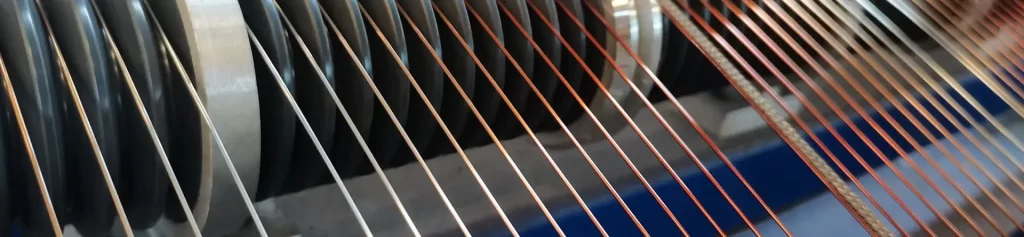
As a key basic material for electrical equipment such as motors, transformers, and inductors, the electrical safety performance of enameled copper wire directly determines the operational reliability and service life of the electrical equipment. The enamel film of enameled copper wire must have complete electrical insulation performance and be able to withstand electrical stress under various working conditions without insulation failure. Therefore, establishing a systematic and scientific routine electrical safety inspection system for enameled copper wire is of great significance to ensuring product quality and the safe operation of electrical equipment. The routine electrical safety inspection items for enameled copper wire mainly include: dielectric strength test, insulation resistance test, enamel film continuity (pinhole) test, DC resistance test, enamel film adhesion test, thermal shock and aging test, etc. Each inspection item corresponds to a specific test method, judgment standard, and non-conforming product handling process. This article systematically describes the test principles, test methods, judgment standards, common non-conforming reasons, and improvement measures of routine electrical safety inspection items for enameled copper wire, providing comprehensive technical reference for enameled copper wire production, inspection, and application personnel.
Overview of Electrical Safety Inspection for Enameled Copper Wire
Importance of Inspection
The importance of electrical safety inspection for enameled copper wire is mainly reflected in the following aspects: Ensure Product Quality: Through strict inspection, enamel film defects can be found in time to prevent non-conforming products from flowing into the market. Ensure Equipment Safety: The insulation performance of enameled copper wire directly determines the safe operation of electrical equipment, and products that fail the inspection may cause serious accidents such as equipment short circuit, fire, and electric shock. Extend Equipment Life: Qualified enameled copper wire can ensure the long-term stable operation of electrical equipment under rated working conditions and extend the service life of the equipment. Meet Standard Requirements: International and domestic standards such as IEC 60317, NEMA MW 1000, and GB/T 23312 have clear requirements for the electrical performance of enameled copper wire, and inspection is an important means for products to meet the standards. Support Quality Improvement: Through the statistical analysis of inspection data, quality problems in the production process can be found, providing a basis for quality improvement.
Inspection System Architecture
The electrical safety inspection system for enameled copper wire usually includes the following levels: Incoming Quality Control (IQC): Carry out incoming inspection on the purchased enameled copper wire raw materials to ensure that the quality of raw materials meets the production requirements. In-Process Quality Control (IPQC): Inspection carried out in the production process of enameled copper wire, including first piece inspection, patrol inspection, and completion inspection. Outgoing Quality Control (OQC): Comprehensive inspection of finished enameled copper wire before delivery to ensure the quality of the delivered product. Type Inspection: Comprehensive performance inspection of products, including long-term properties such as heat resistance and chemical resistance, usually carried out during product finalization or periodically. Third-Party Inspection: Inspection carried out by an independent third-party organization, used for product certification, trade settlement, quality arbitration, etc.
Inspection Environment Requirements
The electrical safety inspection of enameled copper wire has the following requirements for the environment: Temperature: The inspection environment temperature is usually 15 to 35 degrees C, and temperature correction is required if it is out of this range. Humidity: The relative humidity is usually controlled in the range of 45 to 75%, and excessive humidity may affect the insulation performance test results. Cleanliness: The inspection environment should be kept clean to avoid dust and impurities affecting the test results. Electromagnetic Interference: The test equipment should be kept away from strong electromagnetic interference sources to avoid affecting the test accuracy. Stable Power Supply: The power supply of the test equipment should be stable, and the voltage fluctuation should be within the allowable range.
Dielectric Strength (Withstand Voltage) Test
Test Principle
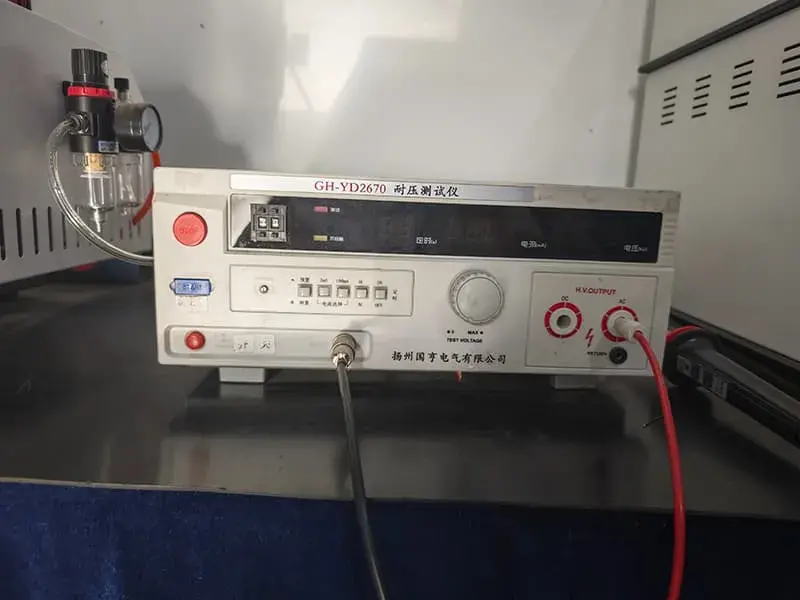
The dielectric strength test is one of the most important electrical safety inspection items for enameled copper wire. During the test, a certain voltage is applied between the conductor of the enameled copper wire and the electrode to detect whether the enamel film is broken down. The dielectric strength reflects the ability of the enamel film to withstand electric field stress and is the core indicator for evaluating the insulation performance of the enamel film.
Test Method
Test Equipment: Dielectric strength tester (withstand voltage tester), which can output stable AC or DC high voltage and detect breakdown current. Test Electrode: Select the appropriate electrode according to the specification of the enameled wire. For round wire, V-groove electrode or mercury electrode is usually used; for flat wire, plate electrode is used. Test Voltage: According to the specification, thermal class, and enamel layer thickness of the enameled wire, the test voltage is determined according to the corresponding standard. The typical test voltage range is 100V to 5000V. Voltage Boosting Method: The test voltage should be boosted smoothly from zero, and after reaching the specified value, it should be maintained for a specified time (usually 1 minute) to observe whether breakdown occurs. Test Frequency: AC test usually uses 50Hz or 60Hz power frequency voltage.
Judgment Standard
Conforming Judgment: Maintain the specified voltage for the specified time, and there is no breakdown and no flashover phenomenon, and it is judged as conforming. Non-Conforming Judgment: If breakdown, flashover occurs, or the leakage current exceeds the specified value, it is judged as non-conforming. Breakdown Identification: Breakdown is usually manifested as a sudden drop in voltage, a sudden increase in current, and an obvious discharge sound or spark.
Common Non-Conforming Reasons
Insufficient Enamel Film Thickness: The enamel film thickness is lower than the standard requirement, resulting in substandard dielectric strength. Enamel Film Defects: The enamel film has pinholes, bubbles, impurities, and other defects, and breakdown is easy to occur at the defects. Poor Enamel Film Curing: The enamel film is not fully cured, the molecular structure is not dense, and the dielectric performance decreases. Copper Wire Surface Contamination: There are oil stains, oxides, and other pollutants on the surface of the copper wire, which affect the enamel film adhesion and dielectric performance. Abnormal Test Conditions: Excessive humidity in the test environment, poor electrode contact, voltage fluctuation, etc.
Insulation Resistance Test
Test Principle
The insulation resistance test is to measure the resistance value of the enamel film of enameled copper wire under a specified voltage. The insulation resistance reflects the insulation performance of the enamel film, and the higher the resistance value, the better the insulation performance. The insulation resistance test can detect the overall insulation performance decline of the enamel film, which is more reflective of the overall quality of the enamel film than the dielectric strength test.
Test Method
Test Equipment: Insulation resistance tester (high resistance meter), which can output stable DC voltage (usually 100V, 250V, 500V, 1000V, etc.) and measure tiny leakage current. Test Electrode: Similar to the dielectric strength test, a suitable electrode structure is used. Test Voltage: Select the test voltage according to the standard requirements. The common test voltages are 100V DC, 250V DC, 500V DC, 1000V DC. Charging Time: It should be fully charged (usually 1 minute) before the test to make the test results stable. Reading Method: Read the insulation resistance value after stabilization, the unit is usually MΩ·km (megohm per kilometer).
Judgment Standard
Typical Index: The insulation resistance of enameled copper wire is usually required to be greater than 1000 MΩ·km, and some high-end products require greater than 10000 MΩ·km. Temperature Correction: The insulation resistance is significantly affected by temperature, and temperature correction should be carried out according to the standard to convert the resistance value at the test temperature to the standard temperature (usually 20 degrees C). Humidity Correction: The insulation resistance is also affected by humidity, and the resistance value will decrease when the humidity is too high.
Common Non-Conforming Reasons
Enamel Film Moisture Absorption: After the enamel film absorbs moisture, the insulation resistance decreases significantly. Enamel Film Aging: The enamel film ages during storage or use, and the insulation performance decreases. Enamel Film Contamination: The surface of the enamel film is contaminated by conductive impurities. Insufficient Test Voltage: The test voltage is too low, and the early insulation defect cannot be found. Poor Electrode Contact: The contact between the electrode and the enameled wire is poor, resulting in a low test result.
Enamel Film Continuity (Pinhole) Test
Test Principle
The enamel film continuity test (pinhole test) is an important method to detect the integrity of the enamel film of enameled copper wire. During the test, a certain voltage is applied between the conductor of the enameled wire and the enameled wire immersed in water to detect the leakage at the tiny pinholes on the enamel film. Pinhole is one of the most common defects of the enamel film, and excessive pinholes will significantly reduce the insulation performance of the enamel film.
Test Method
Test Equipment: Pinhole tester (enamel film continuity tester), which outputs stable DC voltage (usually 6V DC, 12V DC, 24V DC, 48V DC, etc. low voltage) and detects leakage current. Test Electrode: The enameled wire conductor is used as one electrode, and the conductive liquid (such as salt water) immersed in the enameled wire is used as the other electrode. Test Voltage: Select the test voltage according to the enameled wire specification and standard requirements. Wire Speed: During the test, the enameled wire passes through the test tank at a uniform speed, and the number of pinholes and leakage times are recorded. Judgment Method: Judge whether it is qualified or not according to the pinhole number limit specified in the standard.
Judgment Standard
Pinhole Number Limit: According to the specification and thermal class of the enameled wire, the standard has a clear regulation on the number of pinholes per 30 meters (or per 100 meters). The common limit is no more than 5 to 10 pinholes per 30 meters. Pinhole Definition: The defect point where the enamel film is broken down to form leakage under the specified test voltage. Test Voltage Selection: The test voltage should be selected according to the enamel layer thickness and thermal class to ensure that the pinhole can be detected and the qualified enamel film will not be damaged.
Common Non-Conforming Reasons
Enamel Liquid Contamination: There are impurity particles and bubbles in the enamel liquid, resulting in pinholes in the coated enamel film. Copper Wire Surface Contamination: There are oil stains, dust, oxide scale, etc. on the surface of the copper wire, resulting in poor enamel film adhesion and pinholes. Abnormal Enamel Coating Process: The enamel liquid viscosity is not appropriate, the linear speed fluctuates, the die precision is insufficient, etc. Abnormal Baking Process: The baking temperature is too low or the time is too short, the enamel film is not fully cured, and the residual solvent forms pinholes. Environmental Factors: The cleanliness of the production environment is insufficient, and the dust in the air adheres to the enamel film.
DC Resistance Test
Test Principle
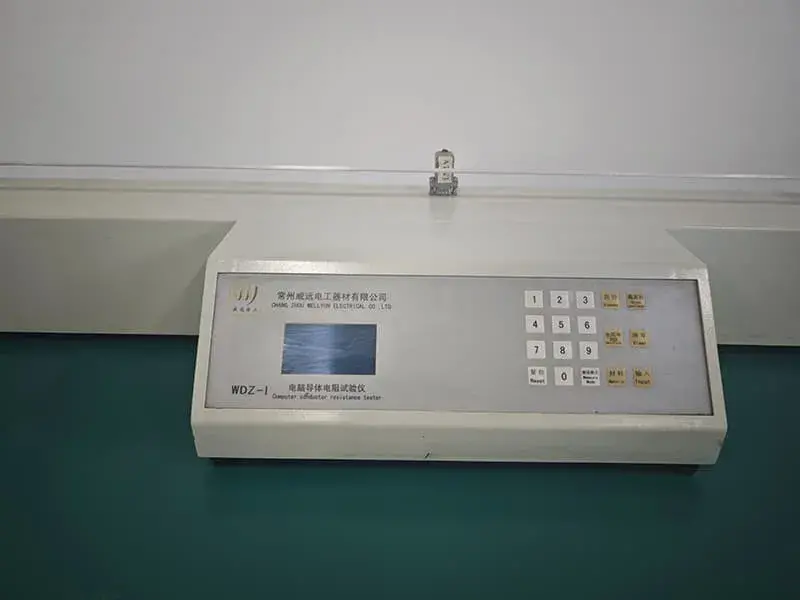
The DC resistance test is to measure the resistance of the enameled copper wire conductor under DC conditions. The conductor resistance reflects the electrical conductivity of the conductor and is the basic index to evaluate the conductor quality of enameled copper wire. Excessive conductor resistance may lead to increased coil copper loss, excessive temperature rise, and decreased efficiency.
Test Method
Test Equipment: DC resistance tester (milliohmmeter, microhmmeter) or bridge, which can measure the resistance as small as the microhm level. Test Method: Four-terminal method measurement to eliminate the influence of contact resistance on the test results. Test Temperature: The test temperature is usually 20 degrees C, and temperature correction is required for tests at other temperatures. Test Length: The test length is usually 1 meter, and the appropriate test length is selected according to the specification of the enameled wire. Temperature Conversion: Convert the resistance value at the test temperature to the resistance value at the standard temperature of 20 degrees C.
Judgment Standard
Resistivity Requirement: The conductor resistivity of enameled copper wire should meet the corresponding standard, usually required to be no more than 0.01724 Ω·mm²/m (20 degrees C). Tolerance Requirement: The actual resistance value of the enameled wire conductor should be within the plus or minus 5% range of the standard value. Batch Consistency: The resistance value of the same batch of enameled wire should remain consistent.
Common Non-Conforming Reasons
Insufficient Copper Purity: The purity of the copper rod is not up to the standard, the impurity content is too high, and the resistivity increases. Insufficient Conductor Cross-Section: The wire drawing process is abnormal, resulting in a small conductor diameter, insufficient cross-section, and increased resistance. Conductor Defects: There are metallurgical defects such as porosity and slag inclusion inside the conductor, which affect the electrical conductivity. Abnormal Test Temperature: The temperature is too high during the test, resulting in a high resistance value. Poor Contact: Poor contact of the terminal during the test, resulting in a high test result.
Enamel Film Adhesion Test
Test Principle
The enamel film adhesion test is an inspection item to evaluate the bonding strength between the enamel film and the copper conductor. The adhesion performance of the enamel film directly affects the processing performance and operational reliability of enameled copper wire. The enamel film with poor adhesion is prone to delamination and blistering in the process of winding, coil insertion, and operation, resulting in insulation failure.
Test Method
Sudden Pull Test: Pull the enameled wire sample to break under the specified conditions (usually stretching 15 to 20% elongation), and check the adhesion of the enamel film at the fracture. The qualified enamel film should remain intact without obvious delamination and blistering. Adhesion Test After Thermal Shock: Carry out thermal shock treatment on the enameled wire according to the specified conditions (placed at a high temperature for a specified time and then cooled), and then carry out the sudden pull test to check the adhesion of the enamel film. Peel Test: Use a special tool to peel off the enamel film, measure the force required for peeling, and quantitatively evaluate the enamel film adhesion strength.
Judgment Standard
Sudden Pull Test: The enamel film at the fracture should remain intact, without delamination, blistering, peeling, and other defects. Adhesion After Thermal Shock: After thermal shock, the enamel film should remain completely attached, without delamination and blistering. Peel Strength: According to the standard or customer requirements, the peel strength should meet the specified value.
Common Non-Conforming Reasons
Copper Wire Surface Contamination: There are oil stains and oxides on the surface of the copper wire, and the enamel film cannot be effectively combined with the copper wire. Enamel Liquid Formula Problem: The enamel liquid lacks an adhesion promoter or the adhesion promoter fails. Abnormal Enamel Coating Process: The surface of the copper wire is not fully cleaned before enamel coating, the coating thickness is insufficient, and the curing is insufficient. Abnormal Baking Process: The baking temperature is too high, resulting in over-curing of the enamel film, and the adhesion performance decreases; the temperature is too low, resulting in insufficient curing of the enamel film.
Thermal Shock and Aging Test
Thermal Shock Test
Test Principle: The thermal shock test is an inspection item to evaluate the integrity of the enamel film under rapid temperature change. During the test, the enameled wire is wound on a mandrel of a specified diameter, then heated to a specified temperature for a specified time, and check whether the enamel film cracks or peels off. Test Conditions: Winding Diameter: Select according to the specification of the enameled wire, usually 1 to 4 times the diameter of the enameled wire. Heating Temperature: Select according to the thermal class of the enameled wire, Class 130 corresponds to 155 to 175 degrees C, Class 155 corresponds to 180 to 200 degrees C, Class 180 corresponds to 200 to 220 degrees C, Class 200 corresponds to 220 to 240 degrees C. Heating Time: Usually 30 minutes to 6 hours. Judgment Standard: After thermal shock, the enamel film should remain intact, without cracking, peeling, and delamination.
Long-Term Thermal Aging Test
Test Principle: The long-term thermal aging test is an inspection item to evaluate the performance stability of the enamel film under long-term high temperature. During the test, the enameled wire is placed at a specified temperature for a long time (usually 1000 to 2000 hours), and then the electrical and mechanical properties of the enamel film are detected. Test Conditions: Aging Temperature: Select according to the thermal class of the enameled wire, usually 20 to 30 degrees C higher than the rated temperature. Aging Time: Usually 1000 to 2000 hours, and some high-end products require 5000 to 10000 hours. Test Interval: Sample and test regularly during the aging process. Judgment Standard: After aging, the dielectric strength, insulation resistance, adhesion performance, and other indicators of the enamel film should be kept within the specified range.
Common Non-Conforming Reasons
Insufficient Enamel Film Curing: The enamel film with insufficient curing degree is easy to crack and peel off at high temperature. Over-Curing of Enamel Film: The brittleness of the over-cured enamel film increases, and it is easy to crack under thermal shock. Enamel Liquid Formula Problem: The thermal stability of the enamel liquid is insufficient, and the performance decreases under long-term high temperature. Mismatch of Expansion Coefficient Between Copper Wire and Enamel Film: The expansion coefficient difference between the copper wire and the enamel film is too large, and the internal stress is generated when the temperature changes, resulting in the cracking of the enamel film.
Flexibility and Abrasion Resistance Test
Flexibility Test
Test Principle: The flexibility test is an inspection item to evaluate the integrity of the enamel film under bending deformation. During the test, the enameled wire is wound on a mandrel of a specified diameter for a specified number of turns, and check whether the enamel film cracks or peels off. Test Method: Winding Diameter: Select according to the specification of the enameled wire. Number of Winding Turns: Usually 5 to 10 turns. Winding Speed: Slowly and evenly wind. Judgment Standard: After winding, the enamel film should remain intact, without cracking and peeling.
Abrasion Resistance Test
Test Principle: The abrasion resistance test is an inspection item to evaluate the ability of the enamel film surface to resist mechanical friction. During the test, a special abrasion tester is used to apply a specified friction force on the surface of the enamel film, and the number of times required for the enamel film to be worn through is detected. Test Method: Use a special abrasion tester. Friction Force: Select according to the standard. Friction Frequency: Usually 60 times per minute. Judgment Standard: The number of times the enamel film is worn through should reach the minimum value specified in the standard.
Common Non-Conforming Reasons
Insufficient Enamel Film Curing: The flexibility and abrasion resistance of the enamel film with insufficient curing are not up to the standard. Insufficient Enamel Film Thickness: The enamel film is too thin, resulting in substandard flexibility and abrasion resistance. Enamel Liquid Formula Problem: The flexibility or abrasion resistance of the enamel liquid is insufficient. Abnormal Baking Process: The baking temperature is too high, resulting in increased brittleness of the enamel film and decreased flexibility.
Chemical Resistance Test
Solvent Resistance Test
Test Principle: The solvent resistance test is an inspection item to evaluate the ability of the enamel film to resist solvent erosion. The enameled wire may be exposed to various solvents (such as impregnating varnish, cleaning agent, etc.) in the process of use, and the enamel film is required to have sufficient solvent resistance. Test Method: Immerse the enameled wire in the specified solvent. Immersion Time: Select according to the standard, usually 24 to 168 hours. Immersion Temperature: Usually room temperature or specified temperature. After immersion, detect the appearance, adhesion performance, and dielectric strength of the enamel film. Judgment Standard: After immersion, the enamel film should have no blistering, peeling, discoloration, and other defects, and the dielectric strength should remain qualified.
Chemical Media Resistance Test
Test Principle: The chemical media resistance test is an inspection item to evaluate the ability of the enamel film to resist the erosion of chemical media such as acid, alkali, and salt. Test Method: Similar to the solvent resistance test, use the specified chemical media for the immersion test. Judgment Standard: After immersion, the enamel film should remain intact, and the performance indicators should be within the qualified range.
Common Non-Conforming Reasons
Enamel Liquid Formula Problem: The chemical media resistance of the enamel liquid is insufficient. Insufficient Enamel Film Curing: The chemical media resistance of the enamel film with insufficient curing is poor. Excessive Chemical Media Concentration: The concentration of the chemical media used in the test is abnormal, resulting in distortion of the test results. Abnormal Test Temperature: The test temperature is too high, accelerating the aging of the enamel film.
Judgment and Handling of Inspection Results
Classification of Inspection Results
The inspection results of enameled copper wire are usually divided into the following categories: Conforming Product: All inspection items meet the standard requirements, and can be sold normally. Non-Conforming Product: Any key inspection item does not meet the standard requirements, and should be judged as a non-conforming product. Concession Acceptance Product: Some non-key items do not meet the standard requirements, but do not affect the use performance, and can be accepted by concession with the consent of the customer. Product To Be Inspected: The inspection results are doubtful or need further verification.
Handling of Non-Conforming Products
Identification and Isolation: Clearly identify the non-conforming products and store them separately from the conforming products. Cause Analysis: Analyze the causes of the non-conforming items and find out the root causes. Rework/Scrap: According to the cause and severity of the non-conformity, decide to rework or scrap. Corrective Measures: Take corrective measures for the cause of the non-conformity to prevent similar problems from happening again.
Quality Records and Traceability
Inspection Records: Each batch of products should have complete inspection records, including inspection items, test data, judgment results, inspectors, inspection dates, etc. Quality Traceability: Establish a batch traceability system, which can trace back to the raw materials, production process, and inspection data according to the batch number. Statistical Analysis: Regularly conduct statistical analysis of the inspection data to find quality trends and improvement opportunities.
Inspection Equipment and Personnel Requirements
Inspection Equipment
The electrical safety inspection of enameled copper wire needs to be equipped with the following main equipment: Dielectric Strength Tester: Used for dielectric strength test, with output voltage range covering 0 to 5000V AC/DC. Insulation Resistance Tester: Used for insulation resistance test, with resistance measurement range covering 10 to the 6th power to 10 to the 15th power Ω. Pinhole Tester: Used for enamel film continuity test. DC Resistance Tester: Used for conductor resistance test. Thermal Shock Test Chamber: Used for thermal shock test, which can accurately control the test temperature. Constant Temperature Aging Chamber: Used for long-term thermal aging test. Abrasion Tester: Used for abrasion resistance test. Micrometer/Diameter Measuring Instrument: Used for dimensional measurement. Standard Mandrel Set: Used for flexibility test.
Equipment Management
Regular Calibration: All test equipment should be calibrated regularly, and the calibration cycle is usually 6 to 12 months. Routine Maintenance: Keep the equipment clean and intact, and establish equipment use and maintenance records. Intermediate Verification: Intermediate verification is carried out between two calibrations to ensure the stability of the equipment status. Equipment Archives: Establish equipment archives, recording equipment model, serial number, calibration records, maintenance records, etc.
Inspection Personnel Requirements
Professional Ability: Inspection personnel should have professional knowledge of enameled wire inspection and be familiar with relevant standards and test methods. Operation Skills: Inspection personnel should be skilled in operating various test equipment and be able to correctly read and process test data. Quality Awareness: Inspection personnel should have a strong quality awareness and be able to strictly implement the inspection in accordance with standards and procedures. Training and Assessment: Inspection personnel should receive professional training and can only work after passing the assessment.
Inspection Standards and Certification
Main International Standards
IEC 60317 Series: The winding wire standard formulated by the International Electrotechnical Commission (IEC), which specifies the technical requirements and test methods for various enameled wires in detail. NEMA MW 1000: The enameled wire standard formulated by the National Electrical Manufacturers Association (NEMA) of the United States, which is the main standard in North America. JIS C 3202: The enameled wire standard in the Japanese Industrial Standard (JIS). GB/T 23312: The enameled wire standard in the Chinese National Standard (GB), which specifies the technical requirements for enameled copper wire and enameled aluminum wire.
Standard Content Structure
Enameled copper wire standards usually include the following contents: Scope of Application: The applicable types and specification range of enameled wire. Technical Requirements: Requirements for enameled wire conductor, enamel film, appearance, size, performance, etc. Test Method: Test methods and conditions for various performance indicators. Inspection Rules: Rules and judgment methods for delivery inspection and type inspection. Marking, Packaging, Transportation, and Storage: Requirements for product marking, packaging, transportation, and storage.
Product Certification
Enameled copper wire products usually need to pass the following certifications: UL Certification: The certification of Underwriters Laboratories (UL) in the United States, which is a common certification for entering the North American market. VDE Certification: The certification of the German Electrical Engineers Association (VDE), which is a common certification for entering the European market. CQC Certification: The certification of the China Quality Certification Center (CQC). RoHS/REACH: The requirements of EU environmental protection regulations, and products need to meet relevant environmental protection standards.
Conclusion
The routine electrical safety inspection of enameled copper wire is a key link to ensure product quality and the safe operation of electrical equipment. The inspection items mainly include dielectric strength, insulation resistance, enamel film continuity, DC resistance, enamel film adhesion, thermal shock and aging, flexibility and abrasion resistance, chemical resistance, etc. The dielectric strength test is the most important inspection item, which evaluates the ability of the enamel film to withstand electric field stress. The insulation resistance test reflects the overall insulation performance of the enamel film. The enamel film continuity (pinhole) test detects the integrity of the enamel film. The DC resistance test evaluates the electrical conductivity of the conductor. The enamel film adhesion test evaluates the bonding strength between the enamel film and the conductor. The thermal shock and aging test evaluates the stability of the enamel film under long-term high temperature. The flexibility and abrasion resistance test evaluates the mechanical performance of the enamel film. The chemical resistance test evaluates the chemical media resistance of the enamel film. In the inspection process, attention should be paid to the control of the test environment, the calibration of the equipment, and the standardization of the operation to ensure the accuracy and reliability of the inspection results. The inspection results should be recorded and analyzed in time, and a quality traceability system should be established to provide a basis for quality improvement. With the development of electrical equipment in the direction of high-end and reliability, the requirements for the electrical safety performance of enameled copper wire will continue to increase. Enameled copper wire production and inspection personnel should keep up with the development of standards and technology, continuously optimize the inspection methods and quality control system, and provide high-quality and high-reliability enameled copper wire products for the development of the electrical industry.