


Enameled copper wire is the core basic material for manufacturing electrical equipment such as motors, transformers, inductors, and household appliances. Its enamel film quality directly determines the insulation reliability, operational efficiency, and service life of electrical equipment. The enamel film coating of enameled copper wire is a precision manufacturing process involving multiple disciplines and multiple processes, putting forward strict requirements for equipment accuracy, process parameters, environmental control, and quality management. The complete enameled copper wire enamel film coating production process mainly includes the following core processes: raw copper rod inspection, wire drawing, annealing, surface cleaning, enamel liquid preparation, enamel coating, baking and curing, wire collection, and finished product inspection. Each process involves complex process parameters and quality control points, and any negligence in any link may lead to insulation defects, substandard mechanical performance, or appearance defects in the final product. This article systematically describes the complete production process, key equipment, core process parameters, common quality problems, and solutions of enameled copper wire enamel film coating, providing comprehensive technical reference for enameled copper wire production technicians, quality management personnel, and downstream application engineers.
Overview of Enameled Copper Wire Production Process
Process Characteristics
Enameled copper wire production has the following significant characteristics: Continuous Production: Enameled copper wire production is a continuous assembly line operation, from raw copper rod to finished enameled wire, the entire production process is continuous, with extremely high requirements for equipment reliability and process stability. Multi-Process Coordination: The complete production process includes multiple links such as wire drawing, annealing, cleaning, enamel coating, baking, and wire collection, and the process parameters of each process will affect the final product quality. Precision Parameter Control: The enamel coating thickness is usually measured in micrometers (single enamel layer thickness is about 5 to 15 micrometers), and the baking temperature is usually precisely controlled within plus or minus 5 degrees C range, with extremely high requirements for the control accuracy of process parameters. High Production Speed: The linear speed of modern enameled copper wire production lines can reach hundreds of meters per minute, putting forward strict requirements for the dynamic control capability of the equipment. Strict Quality Control: As an electrical insulation material, the quality of enameled copper wire directly affects the safe operation of electrical equipment, and strict process quality control and finished product inspection must be implemented.
Main Process Types
According to the classification of enamel coating methods, the enameled copper wire production process mainly includes the following types: Die Coating Method: The most mainstream enamel coating process. The enamel liquid is coated on the surface of the copper wire through a special die (coating die), and the coating thickness is precisely controlled by the die size and enamel liquid viscosity. Felt Coating Method: Felt is used as the coating carrier to transfer the enamel liquid to the copper wire surface. Suitable for coating of special specifications or special enamel systems. Roller Coating Method: A roller is used to coat the enamel liquid on the surface of the copper wire, mainly used for the production of large specification rectangular enameled wire. Electrophoretic Coating Method: The principle of electrophoresis is used to deposit enamel film on the surface of copper wire, mainly used for the production of special enameled wire. Self-Bonding Enamel Coating Method: A self-bonding enamel layer is coated outside the conventional enamel layer, and an integral coil is formed by heating and curing.
Raw Copper Rod and Wire Drawing Process
Raw Copper Rod Requirements
Copper Purity: The conductor of enameled copper wire usually uses oxygen-free copper rod with purity above 99.9%, and the oxygen content should be lower than 30 ppm. Impurities in low-purity copper will significantly reduce the enamel film adhesion performance and electrical conductivity. Copper Rod Specification: The commonly used copper rod diameters are 8 mm, 12 mm, and other specifications, and the appropriate copper rod is selected according to the final enameled wire specification. Surface Quality: The surface of the copper rod should be smooth and clean, without oxide layer, oil stains, impurities, scratches, and other defects. Internal Structure: The internal structure of the copper rod should be dense and uniform, without porosity, slag inclusion, and other metallurgical defects. Mechanical Properties: The copper rod should have appropriate tensile strength and elongation to facilitate subsequent wire drawing processing.
Wire Drawing Process
Wire Drawing Principle: Wire drawing is a plastic processing process in which the thick copper rod is gradually drawn to the target diameter through a die. Each wire drawing die reduces the diameter of the copper wire by a certain proportion (usually 10 to 25%), and the target size is reached through multi-pass continuous drawing. Wire Drawing Pass Design: According to the diameter of the raw copper rod and the target finished diameter, design a reasonable number of wire drawing passes and the reduction ratio of each pass. The wire drawing passes of general enameled copper wire are between 8 and 15 passes. Lubrication and Cooling: Special wire drawing lubricants are used in the wire drawing process to play the roles of lubrication, cooling, and cleaning. The lubricant should be replaced regularly to ensure the lubrication effect and the cleanliness of the copper wire surface. Annealing Softening: After multi-pass wire drawing, the hardness of the copper wire rises and the elongation decreases, and intermediate annealing treatment is required to restore the plasticity of the copper wire. Quality Control: The key quality control points of the wire drawing process include: wire diameter accuracy, roundness, surface finish, mechanical properties (tensile strength, elongation), and surface cleanliness.
Intermediate Annealing
Annealing Purpose: Eliminate the work hardening generated in the wire drawing process, restore the plasticity of the copper wire, and facilitate subsequent wire drawing and enamel coating processing. Annealing Method: Modern enameled copper wire production lines usually use continuous annealing furnaces, including resistance annealing, induction annealing, etc. Annealing Parameters: The annealing temperature is usually between 400 and 650 degrees C, and the annealing time is determined according to the linear speed and the equipment length. Excessive annealing temperature will lead to oxidation of the copper wire and coarse grains; if the temperature is too low, the annealing will be insufficient. Protective Atmosphere: In order to prevent the copper wire from being oxidized at high temperature, protective atmospheres such as nitrogen and water vapor are usually introduced into the annealing furnace. Annealing Quality: The annealed copper wire should have appropriate tensile strength (180 to 230 MPa), elongation (not less than 25%), and surface finish.
Enamel Liquid Preparation Process
Composition of Enamel Liquid
Enameled wire enamel liquid is usually composed of the following components: Main Resin: The core film-forming substance of the enamel liquid, which determines the thermal class, mechanical properties, and chemical properties of the enamel film. Commonly used resins include polyester resin, polyurethane resin, polyester-imide resin, polyamide-imide resin, etc. Curing Agent: Cross-linking reaction occurs with the main resin to form a three-dimensional network structure. Commonly used curing agents include blocked isocyanate, epoxy resin, phenolic resin, etc. Diluent/Solvent: Adjust the viscosity of the enamel liquid to facilitate coating construction. Commonly used solvents include cresol, xylene, DMF, NMP, etc. The choice of solvent has an important impact on the stability of the enamel liquid, coating performance, and baking volatilization performance. Additives: Improve specific properties of the enamel liquid, including leveling agent, wetting agent, defoamer, catalyst, coloring agent, etc.
Enamel Liquid Preparation Process
Raw Material Inspection: Carry out incoming inspection on resin, curing agent, solvent, additives, and other raw materials to ensure that the quality of raw materials meets the process requirements. Formula Calculation: According to the enamel liquid formula and production batch, accurately calculate the dosage of each raw material. Batching and Mixing: According to the formula, the resin, curing agent, solvent, and other raw materials are added to the mixing kettle, and the feeding sequence and stirring speed are controlled to ensure uniform mixing. Viscosity Adjustment: Use solvent to adjust the viscosity of the enamel liquid to the process requirement range. The viscosity of the enamel liquid is the key process parameter of the enamel coating process, which directly affects the coating thickness and enamel film quality. Filtration and Impurity Removal: Use a filtering device to remove impurities and gel particles in the enamel liquid to avoid enamel film defects in the enamel coating process. Standing Defoaming: After the enamel liquid is prepared, it is left standing for a certain time so that the bubbles can fully escape to avoid enamel film bubbles in the enamel coating process. Quality Inspection: Inspect the viscosity, solid content, gel time, and other indicators of the prepared enamel liquid to ensure that the quality of the enamel liquid meets the process requirements.
Enamel Liquid Performance Requirements
Viscosity Stability: The enamel liquid should maintain stable viscosity during the production process to avoid viscosity rise due to solvent volatilization. Storage Stability: The enamel liquid should have certain storage stability to avoid gel, precipitation, and other problems in the production process. Coating Performance: The enamel liquid should have good wettability and leveling property to ensure that the coated enamel film is uniform and smooth. Curing Performance: The enamel liquid should have appropriate curing speed and curing degree to ensure the mechanical and electrical properties of the enamel film.
Enamel Coating Process
Enamel Coating Principle
The enamel coating of enameled copper wire is based on the following principles: Wetting and Spreading: The enamel liquid wets the surface of the copper wire and spreads into a uniform liquid film. Viscosity Control: The viscosity of the enamel liquid and the enamel coating die together determine the coating thickness. Baking and Curing: The coated enamel liquid undergoes the process of solvent volatilization, resin cross-linking, and enamel film curing in the baking furnace. Multi-Layer Coating: Through multiple enamel coating and baking cycles, the enamel film of the required thickness is gradually formed (usually 4 to 12 enamel coating cycles are required).
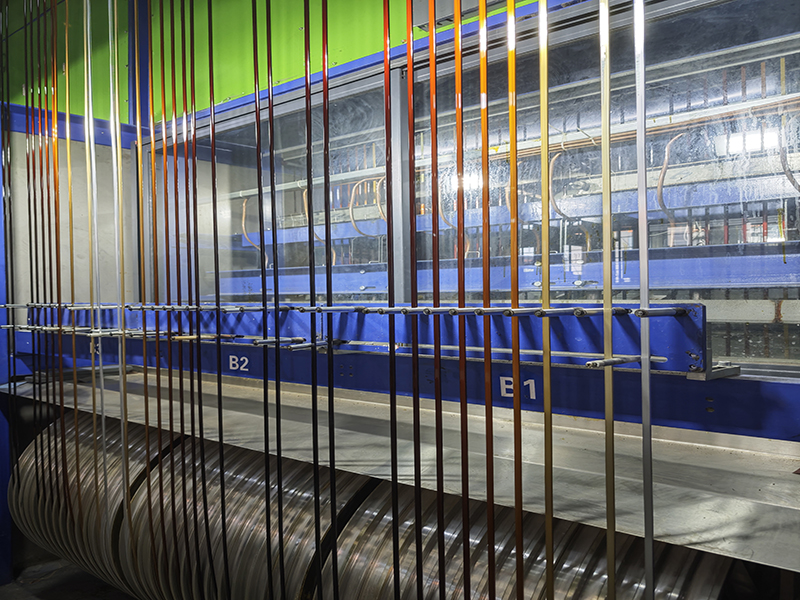
Enamel Coating Die
The enamel coating die is the core component of the enamel coating process: Die Material: Usually, high-hardness and high wear-resistant materials such as cemented carbide, diamond, and ceramic are used. Die Structure: Includes die core, die sleeve, and adjustment mechanism. The die core is processed with precision hole shapes (usually double cone or arc shape), which determines the enamel film thickness. Die Specification: According to the enameled wire specification and the enamel layer thickness requirement, the appropriate die aperture is selected. The die aperture is usually slightly larger than the target outer diameter. Die Maintenance: Regularly clean, inspect, and replace the die to ensure the accuracy and surface quality of the die.
Enamel Coating Process Parameters
Enamel Liquid Viscosity: The viscosity of the enamel liquid is one of the main determinants of the coating thickness. Higher viscosity, the coating thickness increases; lower viscosity, the coating thickness decreases. The viscosity of the enamel liquid should be monitored and adjusted in real time during the production process. Linear Speed: The running speed during enamel coating affects the rheological behavior and coating thickness of the enamel liquid. The higher the linear speed, the shorter the residence time of the enamel liquid in the die, and the coating thickness may decrease. Baking Temperature: The baking temperature after enamel coating affects the curing degree and final performance of the enamel film. The baking temperature should be precisely controlled within the process range. Baking Time: The running speed and the length of the baking furnace together determine the residence time of the enamel film in the high temperature zone, that is, the baking time. Enamel Layer Thickness: The enamel layer thickness of each layer of enamel coating should be controlled within the process requirement range to avoid being too thick or too thin. Tension Control: The tension during the running process affects the uniformity of the enamel coating and the quality of the enamel film. Excessive tension may lead to stretching and thinning of the enamel film; too little tension may lead to unstable running.
Multi-Layer Enamel Coating Process
Number of Coatings: According to the enamel layer thickness requirement and the single-layer coating thickness, determine the number of coatings. The common number of coatings of enameled copper wire is 4 to 12 times. Grade 1 (thin enamel layer) is usually 4 to 6 times, Grade 2 (standard enamel layer) is usually 6 to 8 times, and Grade 3 (thick enamel layer) is usually 8 to 12 times. Layer-by-Layer Curing: After coating each layer of enamel, immediately enter the baking furnace for curing, and then coat the next layer of enamel. This cycle process of coating, baking, coating, baking ensures that each layer of enamel film is fully cured, and finally forms a dense and uniform enamel film structure. Enamel Layer Structure: The enamel film formed by multiple coatings has a multi-layer structure, and good interlayer bonding is formed between adjacent enamel layers, which together constitute a complete insulation layer.
Baking and Curing Process
Baking Furnace Structure
The enameled copper wire baking furnace is one of the core equipment of the enamel coating process: Furnace Type Classification: Modern enameled copper wire production lines usually use vertical baking furnaces or horizontal baking furnaces. The vertical baking furnace has a small footprint and high output, which is the mainstream choice. Furnace Body Structure: The baking furnace is usually divided into a preheating zone, a main curing zone, and a slow cooling zone. The preheating zone makes the solvent fully volatilize, the main curing zone makes the resin fully cross-link and cure, and the slow cooling zone avoids the internal stress of the enamel film caused by rapid cooling. Heating Method: Including electric heating, natural gas heating, catalytic combustion heating, etc. Catalytic combustion heating has the advantages of low energy consumption and low nitrogen oxide emission. Furnace Temperature Control: The furnace temperature is usually divided into multiple independent temperature control zones, and the temperature of each zone can be independently adjusted, and the temperature control accuracy can reach plus or minus 2 degrees C. Furnace Atmosphere: Fresh air is usually introduced into the furnace to take away the volatile solvent vapor and avoid the accumulation of combustible solvent vapor.
Baking Process Parameters
Furnace Temperature Curve: According to the enamel liquid system, enameled wire specification, linear speed, and other parameters, design a reasonable furnace temperature curve. The furnace temperature curve is the core parameter of the baking process. Typical Furnace Temperature Range: Polyurethane enamel (Class 130): Furnace temperature is usually between 300 and 450 degrees C. Polyester enamel (Class 130): Furnace temperature is usually between 350 and 500 degrees C. Polyester imide enamel (Class 180): Furnace temperature is usually between 400 and 550 degrees C. Polyamide imide enamel (Class 200): Furnace temperature is usually between 450 and 600 degrees C. Linear Speed and Baking Time: The running speed and the effective length of the baking furnace together determine the baking time of the enamel film. The baking time is usually between 0.5 and 5 seconds. Solvent Volatilization: During the baking process, the solvent in the enamel liquid is fully volatilized, and the solvent vapor is taken away by fresh air. The solvent volatilization should be sufficient to avoid residual solvent affecting the performance of the enamel film. Resin Cross-Linking: At high temperature, the resin and the curing agent undergo a cross-linking reaction to form a three-dimensional network structure. The cross-linking degree directly affects the heat resistance, mechanical properties, and electrical properties of the enamel film. Enamel Film Curing Degree: The curing degree of the enamel film is evaluated by the solvent extraction method and other detection methods to ensure that the enamel film is completely cured.
Physical and Chemical Changes in the Baking Process
Temperature Gradient: The enamel film undergoes a temperature gradient change from the surface to the inside during the baking process. Solvent Volatilization: The solvent on the surface of the enamel film volatilizes first, and then the solvent in the inner layer diffuses outward and volatilizes. Resin Flow: Within a certain temperature range, the resin still has a certain fluidity, and the enamel film tends to be flat under the action of surface tension. Cross-Linking Curing: At a higher temperature, the resin and the curing agent undergo a cross-linking reaction, the molecular weight increases, and the enamel film is cured and formed. Post-Curing: Some enamel systems will still undergo a slow cross-linking reaction (post-curing) during the cooling process, which helps to improve the performance of the enamel film.
Wire Collection and Packaging
Wire Collection Process
Wire Collection Speed: The wire collection speed of modern enameled copper wire production lines can reach hundreds to thousands of meters per minute. Tension Control: During the wire collection process, uniform and appropriate tension should be maintained to avoid the tension being too large or too small affecting the quality of the wire. Neat Wire Arrangement: When collecting the wire, the enameled wire should be neatly arranged on the wire collection shaft to avoid crossing and pressing. Full Shaft Switching: Modern production lines are equipped with automatic full shaft switching devices to achieve continuous production.
Packaging and Storage
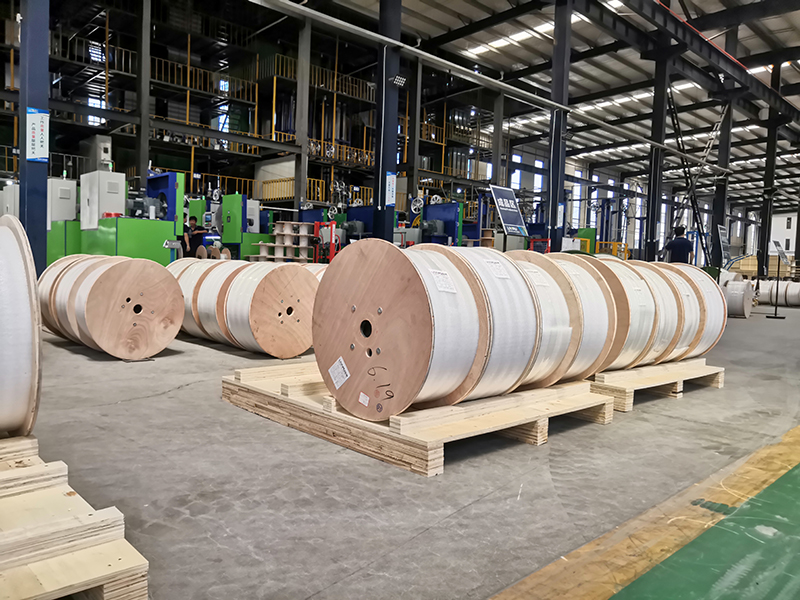
Packaging Form: Enameled copper wire is usually packaged with plastic wire shafts and metal wire shafts, covered with moisture-proof plastic bags. Identification Information: The package should be marked with product specifications, batch number, production date, inspection results, and other information. Storage Conditions: Enameled copper wire should be stored in a dry, cool, ventilated, non-corrosive gas environment, avoiding direct sunlight and high temperature. Storage Period: The reasonable storage period is usually 6 to 12 months, and the enameled wire exceeding the period should be re-inspected.
Online Quality Control
Key Online Monitoring Parameters
Wire Diameter Monitoring: Use a laser diameter gauge to monitor the copper wire diameter and enameled wire outer diameter online, with an accuracy of up to plus or minus 0.001 mm. Enamel Layer Thickness Monitoring: Calculate the enamel layer thickness through the difference between the outer diameter and the conductor diameter, or use a special enamel layer thickness measuring device. Pinhole Detection: The online pinhole detector can detect tiny pinholes on the enamel film, and the number of pinholes is a key indicator to measure the integrity of the enamel film. Tension Monitoring: Set tension sensors at key positions during the running process to monitor the running tension. Temperature Monitoring: Real-time monitoring of the temperature of each zone of the baking furnace to ensure that the furnace temperature is stable. Enamel Liquid Viscosity Monitoring: Regularly or online monitor the viscosity of the enamel liquid in the circulation pipeline.
Process Quality Control
First Piece Inspection: First piece inspection is carried out at the beginning of each shift production or after the adjustment of process parameters. Regular Sampling Inspection: Sampling inspection of enameled wire on the production line according to the prescribed frequency. Statistical Process Control (SPC): Implement statistical process control on key process parameters and quality indicators, and timely find process abnormalities. Quality Traceability: The production parameters and inspection results of each batch of products should be recorded and searchable to achieve quality traceability.
Finished Product Inspection
Appearance Inspection
Surface Quality: The surface of the enamel film should be smooth, uniform, and glossy, without bubbles, impurities, pinholes, peeling, wrinkling, color unevenness, and other defects. Uniform Color: The color of the enamel film should be uniform. Neat Winding: The finished enameled wire should be neatly wound on the packaging shaft.
Dimensional Inspection
Conductor Diameter: Use a micrometer or optical measuring instrument to detect the conductor diameter. Enameled Wire Outer Diameter: Detect the total outer diameter of the enameled wire. Enamel Layer Thickness: Calculate the enamel layer thickness through the outer diameter and the conductor diameter, which should meet the standard requirements.
Performance Inspection
Dielectric Strength: Detect the voltage resistance of the enamel film. Insulation Resistance: Detect the insulation resistance of the enamel film. Adhesion Performance: Detect the adhesion strength of the enamel film and the conductor through the sudden pull test. Flexibility: Detect the flexibility of the enamel film through the bending test. Thermal Shock Performance: Detect the stability of the enamel film under rapid temperature change through the thermal shock test. Solderability: For solderable enameled wire, detect the solderability of the enamel film. Chemical Resistance: Detect the solvent resistance and acid and alkali resistance of the enamel film.
Common Quality Problems and Solutions
Enamel Film Pinholes
Cause: Bubbles and impurities in the enamel liquid; insufficient cleanliness of the copper wire surface; improper enamel coating process parameters. Solution: Strengthen the filtration and degassing of the enamel liquid; strengthen the cleaning of the copper wire surface; adjust the coating viscosity and linear speed; check the cleanliness of the die.
Uneven Enamel Film Thickness
Cause: Die wear or insufficient accuracy; enamel liquid viscosity fluctuation; linear speed fluctuation; tension fluctuation. Solution: Replace or repair the die; stabilize the enamel liquid viscosity; stabilize the linear speed and tension.
Enamel Film Blistering
Cause: Insufficient volatilization of solvent in the enamel liquid; baking temperature is too low; water is mixed into the enamel liquid. Solution: Increase the baking temperature; extend the baking time; avoid the enamel liquid contacting water.
Enamel Film Cracking
Cause: Baking temperature is too high; over-curing of the enamel liquid; abnormal mechanical properties of the copper wire. Solution: Adjust the baking temperature and time; check the quality of the enamel liquid; adjust the wire drawing and annealing process.
Poor Enamel Film Adhesion
Cause: Copper wire surface contamination; enamel liquid formula problem; insufficient curing. Solution: Strengthen the surface treatment of the copper wire; optimize the enamel liquid formula; adjust the curing process.
Abnormal Enamel Film Color
Cause: Baking temperature is too high; enamel liquid contamination; copper wire oxidation. Solution: Adjust the baking temperature; replace the enamel liquid; optimize the annealing process.
Development Trends of Enameled Copper Wire Production Process
High-Speed Production
The linear speed of modern enameled copper wire production lines continues to increase, putting forward higher requirements for the dynamic control capability of the equipment and the real-time adjustment capability of process parameters.
Intelligent Control
Through industrial Internet, machine learning, digital twin, and other technologies, the intelligent control of the enameled copper wire production process is realized, and the stability and consistency of product quality are improved.
Green Production
Low VOC (Volatile Organic Compounds) emissions, water-based enamel systems, catalytic combustion heat recovery, and other green production processes will be gradually promoted and applied.
High-End Products
With the development of high-end applications such as new energy vehicles, rail transit, and aerospace, the performance requirements for enameled copper wire continue to increase, promoting the development of production processes in a high-end direction.
Conclusion
The enamel film coating of enameled copper wire is a complex multi-process precision manufacturing process, involving wire drawing, annealing, enamel liquid preparation, enamel coating, baking and curing, wire collection, inspection, and other links. The process parameters of each process directly affect the quality and performance of the final product. The wire drawing process provides qualified copper wire conductors for subsequent enamel coating, and the key control points include wire diameter accuracy, surface quality, and mechanical properties. The annealing process eliminates work hardening and restores the plasticity of the copper wire, and the key control points include annealing temperature and atmosphere protection. Enamel liquid preparation is one of the core technologies of enameled wire production, and the key control points include formula accuracy, viscosity stability, and filtration quality. The enamel coating and baking process is the core link of enameled wire production, and the key control points include coating viscosity, linear speed, baking temperature, time, and other parameters. The wire collection and packaging process ensures the integrity and traceability of the product. Quality control should run through the entire production process, from the incoming of raw materials to the delivery of finished products, and a sound quality management system should be established. Through online monitoring, process sampling inspection, finished product inspection, and other means, the stability and reliability of product quality are ensured. With the development of high-end electrical equipment, the performance requirements for enameled copper wire continue to increase. Enameled copper wire production enterprises should continuously optimize production processes, introduce advanced equipment, strengthen technological innovation, and provide high-quality enameled copper wire products for the development of the electrical industry.