

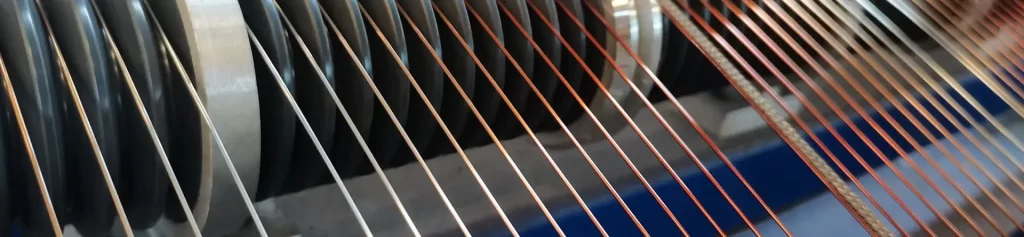
In precision electronic equipment, thinner is more advanced.
Thin Film Insulated Aluminum Wire is the perfect embodiment of this philosophy.
Today, let’s take a deep dive into the core of this “ultra-thin” insulation technology.
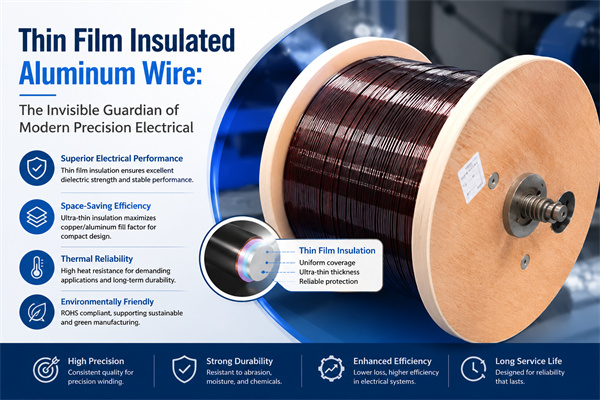
What Is Thin Film Insulated Aluminum Wire?
Thin Film Insulated Aluminum Wire (Film-Insulated Aluminum Wire) is an aluminum-based magnet wire coated with extremely thin insulating enamel film.
Core Features:
- Conductor: Aluminum
- Insulation: Ultra-thin enamel film (thickness 10-50 micrometers)
- Features: Maximizes conductor density while maintaining insulation performance
Key Standards:
- NEMA MW 1000 categorizes these products as “Film-Insulated” wires
- IEC 60317 series standards detail various film-insulated enameled wires
- GB/T 6109 is China’s corresponding national standard
Why is it called “Thin Film”:
Traditional thick enamel film may reach 100 micrometers or more, while thin film insulated aluminum wire’s enamel film thickness is usually controlled between 10-50 micrometers, which is 1/3 to 1/2 of ordinary enamel film.
Structure of Thin Film Insulated Aluminum Wire
1. Basic Structure
Typical structure of thin film insulated aluminum wire includes:
- Aluminum Conductor: Core conductive part
- Primer Layer: Enhances adhesion between enamel and aluminum conductor
- Main Insulation Layer: Provides main electrical insulation
- Top Coat Layer: Provides mechanical protection and chemical resistance
2. Single Coating vs Double Coating
Single Coating Thin Film Insulation:
- Enamel thickness: 10-30 μm
- Breakdown voltage: ≥1500V
- Applications: Dense winding, small coils
Double Coating Thin Film Insulation:
- Enamel thickness: 20-50 μm
- Breakdown voltage: ≥3000V
- Applications: General motors, transformers
3. Bonding with Aluminum Conductor
Aluminum conductors require special treatment before use:
- Pre-oxidation Treatment: Forms dense aluminum oxide layer
- Coupling Agent Treatment: Enhances enamel adhesion
- Chemical Conversion Treatment: Improves corrosion resistance
Core Technology of Thin Film Insulated Aluminum Wire
1. Enamel Materials
| Enamel | Thermal Class | Features |
|---|---|---|
| Polyurethane (UEW) | Class 130 | Thin film, solderable |
| Polyester (PEW) | Class 130 | Low cost, good processability |
| Polyesterimide (EIW) | Class 180 | Heat resistant, thin film |
| Polyamide-imide (AIW) | Class 220 | Heat and chemical resistant |
| Polyimide (PI) | Class 240 | Highest temperature resistance |
2. Coating Process
Key processes for thin film insulation:
Felt Method:
- Use felt to dip enamel
- Suitable for thin film coating
- Suitable for small batch, multi-variety
Die Method:
- Use precision metal die
- Precise control of enamel thickness
- Suitable for mass production
3. Baking Curing
- Oven temperature: 400-600°C
- Enamel undergoes crosslinking curing at high temperature
- Forms tough thin film insulation layer
Core Advantages of Thin Film Insulated Aluminum Wire
1. High Slot Fill Rate
The biggest advantage of thin film insulation:
- Ordinary enameled wire: Slot fill rate 60-70%
- Thin film insulated aluminum wire: Slot fill rate can reach 75-85%
Significance:
- Increase motor power density
- Reduce motor volume
- Improve efficiency
2. Advantages of Aluminum Conductor
- Light Weight: About 70% lighter than copper
- Low Cost: Price approximately 1/3 of copper
- Resource Abundant: Stable supply
- Good Heat Dissipation: Helps lower operating temperature
3. Excellent Electrical Performance
- Good dielectric strength
- Stable insulation resistance
- Suitable for high-frequency applications
4. Easy Dense Winding
- Thin film → Small outer diameter → More compact winding
- Adapt to automated winding process
- Improve production efficiency
Thin Film Insulated Aluminum Wire vs Ordinary Enameled Wire
| Comparison | Thin Film Insulated Aluminum Wire | Ordinary Enameled Wire |
|---|---|---|
| Enamel Thickness | 10-50 μm | 30-100 μm |
| Slot Fill Rate | 75-85% | 60-70% |
| Breakdown Voltage | 1500-3000V | 1500-5000V |
| Conductor Material | Aluminum | Copper/Aluminum |
| Weight | Light | Heavier |
| Cost | Lower | Medium |
| Main Applications | Precision electronics | General motors |
Application Scenarios of Thin Film Insulated Aluminum Wire
1. Precision Electronic Equipment
Thin film insulated aluminum wire is the first choice for precision electronics:
- Smartphones: Micro speakers, vibration motors
- Laptops: Cooling fans, power inductors
- Digital Cameras: Zoom motors, flash coils
- Wearable Devices: Micro motors
2. Micro Motors
- Micro special motors
- Brushless DC motors
- Stepper motors
- Vibration motors
3. Precision Instruments
- Measuring instruments
- Medical instruments
- Optical equipment
- Aerospace instruments
4. High-Frequency Transformers
- Switching power supplies
- Communication equipment
- Radar systems
- High-frequency power supplies
5. Audio Equipment
- Speaker voice coils
- Headphone voice coils
- Microphone coils
6. Automotive Precision Components
- Sensor coils
- Instrument coils
- Micro special motors
- Automotive electronics
Specifications of Thin Film Insulated Aluminum Wire
Conductor Specifications
Thin film insulated aluminum wire is usually used for relatively thin wire diameters:
| Conductor Diameter (mm) | Cross-sectional Area (mm²) | Typical Application |
|---|---|---|
| 0.05-0.10 | 0.002-0.008 | Micro special motors |
| 0.10-0.30 | 0.008-0.071 | Precision instruments |
| 0.30-0.50 | 0.071-0.196 | General small motors |
| 0.50-1.00 | 0.196-0.785 | Medium motors |
Enamel Thickness Grade
Thin film insulated aluminum wire typically uses Grade 1 (thin enamel) or Grade 2 (standard enamel):
| Grade | Enamel Thickness | Breakdown Voltage | Application |
|---|---|---|---|
| Grade 1 | Thin | ≥1500V | Dense winding |
| Grade 2 | Medium | ≥3000V | General |
International Standards for Thin Film Insulated Aluminum Wire
IEC 60317 Series
IEC 60317 is the core international standard for thin film insulated aluminum/copper wire:
- IEC 60317-0-3: General requirements for enameled round aluminum wire
- IEC 60317-13: Polyester enameled round aluminum wire (Class 130)
- IEC 60317-25: Polyesterimide enameled round aluminum wire (Class 180)
- IEC 60317-26: Polyamide-imide enameled round aluminum wire (Class 200)
- IEC 60317-27: Paper covered enameled round aluminum wire
NEMA MW 1000
NEMA standard categorizes enameled wire as “Film-Insulated” category:
- Various enamel materials
- Various conductor materials
- Various specifications and dimensions
GB/T 6109 Series
China’s national standards, equivalent to IEC 60317.
Production Process of Thin Film Insulated Aluminum Wire
1. Main Process Flow
Step 1: Aluminum Rod Pre-treatment
- Inspect aluminum rod quality
- Clean surface oil contamination
- Pre-oxidation treatment
Step 2: Drawing
- Stretch thick aluminum rod into fine wire
- Multi-stage die drawing
- Intermediate annealing
Step 3: Annealing
- Eliminate drawing stress
- Restore aluminum flexibility
- Heating temperature: 300-400°C
Step 4: Thin Film Coating
- Enamel preparation
- Multiple coatings (usually 4-8 times)
- Control enamel thickness
Step 5: Baking Curing
- 400-600°C high temperature
- Enamel crosslinking curing
- Forms tough insulation layer
Step 6: Spooling
- Precise tension control
- Spool to wire spool
- Inspection and packaging
2. Key Process Parameters
| Parameter | Typical Value |
|---|---|
| Conductor Diameter | 0.05-1.0mm |
| Enamel Thickness | 10-50μm |
| Curing Temperature | 400-600°C |
| Line Speed | 100-500m/min |
| Coating Times | 4-8 passes |
Quality Inspection of Thin Film Insulated Aluminum Wire
1. Appearance Inspection
Uniform enamel, smooth surface, no bubbles or impurities, consistent color.
2. Dimension Inspection
Conductor diameter tolerance, enamel thickness, overall outer diameter, enamel thickness tolerance.
3. Electrical Performance
Breakdown voltage, insulation resistance, dielectric loss, pinhole test.
4. Mechanical Performance
Tensile strength, elongation, scratch resistance, flexibility (winding test).
5. Thermal Performance
Heat shock test, softening breakdown temperature, long-term thermal aging test.
Selection Key Points for Thin Film Insulated Aluminum Wire
1. Clarify Application Scenario
- Micro motors: Thin film priority
- Precision instruments: Balanced choice
- General small motors: Standard enamel
2. Determine Conductor Specification
- Power requirements
- Space limitations
- Weight requirements
3. Select Enamel Material
- Temperature class
- Chemical resistance
- Cost consideration
4. Select Enamel Grade
- Grade 1: Dense winding
- Grade 2: General choice
5. Verify Supplier Capability
- Thin film coating process
- Enamel thickness control
- Quality control system
- Industry application experience
Usage Notes
1. Winding Process
Control winding tension (thin film is more easily damaged), use specialized winding molds, bend radius should comply with specifications.
2. Welding Process
Aluminum conductors require specialized welding process, enamel needs to be removed first (stripping), or use solderable polyurethane enamel.
3. Impregnation Process
Select impregnating resin compatible with thin film, impregnation temperature must be within thermal class, avoid enamel damage during impregnation.
4. Storage and Transportation
Avoid direct sunlight, maintain dry environment, prevent mechanical damage, thin film is more easily damaged, need special attention.
Cost Analysis
1. Price Composition
| Cost Item | Description |
|---|---|
| Aluminum Conductor | Benchmark price |
| Thin Film Enamel | 1.5-2x more expensive than ordinary enamel |
| Coating Process | Precision process cost |
| Quality Control | Inspection cost |
2. Value Analysis
Initial Cost:
- Thin film insulated aluminum wire: 20-50% more expensive than ordinary enameled aluminum wire
- Compared to thin film insulated copper wire: 30-50% cheaper
Comprehensive Value:
- Slot fill rate improved 5-15%
- Power density improved
- Weight reduced
- Long-term efficiency improved
3. Comparison with Thin Film Insulated Copper Wire
| Comparison | Thin Film Insulated Aluminum Wire | Thin Film Insulated Copper Wire |
|---|---|---|
| Weight | Light | Heavy |
| Cost | Low | High |
| Slot Fill Rate | Comparable | Comparable |
| Application | Lightweight priority | Extreme performance priority |
FAQ
Q: How thin is the enamel of thin film insulated aluminum wire?
A: Usually between 10-50 micrometers, which is 1/3 to 1/2 of ordinary enamel film.
Q: Can thin film insulated aluminum wire be used in inverter-driven motors?
A: Yes, but recommend using corona-resistant thin film enamel.
Q: What slot fill rate can thin film insulated aluminum wire achieve?
A: Thin film insulated aluminum wire can achieve 75-85% slot fill rate, which is 5-15% higher than ordinary enameled wire.
Q: Is thin film insulated aluminum wire easily damaged?
A: Yes, thin film insulated aluminum wire is more susceptible to mechanical damage due to its thin enamel. Special attention is needed for handling and transportation.
Q: Can thin film insulated aluminum wire replace thin film insulated copper wire?
A: It can replace in most applications. But in extreme high-performance scenarios (such as ultra-high power density), copper wire still has advantages.
Q: What is the typical delivery time for thin film insulated aluminum wire?
A: Standard specifications are usually in stock. Custom specifications typically require 4-8 weeks.