

Industrial generators are the core equipment of the power system, and the performance of their winding materials directly determines the efficiency, reliability, and service life of the generators. Heavy duty enameled copper wire, as a key conductor material for generator stator and rotor windings, undertakes critical electric energy conversion tasks under harsh working conditions such as high temperature, high vibration, and strong electromagnetic stress. Compared with ordinary motor enameled copper wire, heavy duty enameled copper wire for industrial generators has higher technical requirements in terms of insulation class, mechanical strength, environmental resistance, and long-term reliability. This article systematically describes the technical characteristics of industrial generators, technical requirements of heavy duty enameled copper wire, insulating enamel systems, applications of different types of generators, selection methods, and quality control points, providing comprehensive technical reference for generator design, manufacturing, and maintenance personnel.
Technical Characteristics of Industrial Generators
Classification of Industrial Generators
Industrial generators can be divided into the following main types according to power source: Turbine Generators: Driven by high temperature and high pressure steam pushing the steam turbine, are the core equipment of thermal power plants and nuclear power plants. The single unit capacity is large (usually 100 MW to 1000 MW or more), and the operating conditions are harsh. Hydro Generators: Driven by water flow pushing the hydraulic turbine, are the core equipment of hydropower stations. The single unit capacity range is wide, from several MW to hundreds of MW, the operating speed is relatively low but the rotor diameter is large. Diesel Generators: Driven by diesel engines, often used as backup power or mobile power. The single unit capacity is relatively small (usually several thousand kW or less), but the start and stop are flexible. Wind Generators: Driven by wind pushing the impeller, are the mainstream form of new energy power generation. The single unit capacity ranges from several kW to 10 MW or more, and the reliability requirements are extremely high. Gas Turbine Generators: Driven by gas turbines, start and stop quickly, and are often used for peak shaving power stations. Special Generators: Including marine generators, locomotive generators, aviation generators, etc., have special requirements for environmental adaptability.
Special Requirements of Industrial Generators for Enameled Wire
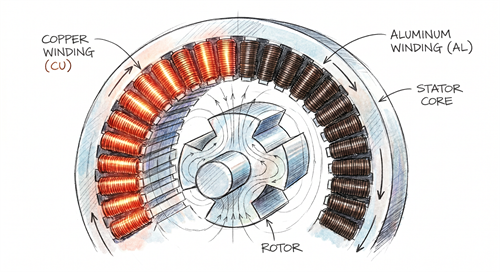
Industrial generators put forward the following special requirements for enameled copper wire: High Temperature Operation: Generator windings will generate temperature rise during operation, and the working temperature of large generator stator windings is usually between 130 degrees C and 155 degrees C, and some high temperature components can reach above 180 degrees C. High Vibration Environment: The high speed rotation of the generator rotor produces strong vibration, and the windings bear continuous mechanical stress. Strong Electromagnetic Force: The generator windings bear huge electromagnetic force during operation, and the electromagnetic force during short circuit can reach dozens of times that during normal operation. Long-Term Continuous Operation: Generators usually need to run continuously for decades, requiring the winding materials to have extremely high reliability and life. Large Specification Conductor: The stator windings of large generators use copper conductors with large cross-sections, with specifications up to several mm or even larger. Strict Quality Control: The criticality of generators requires enameled copper wire to have high consistency and reliability.
Technical Requirements of Heavy Duty Enameled Copper Wire
Electrical Performance Requirements
High Dielectric Strength: The stator windings of generators bear relatively high working voltage, and heavy duty enameled copper wire should have sufficient dielectric strength to deal with power frequency voltage, lightning impulse, operating overvoltage, and other working conditions. Low Dielectric Loss: Dielectric loss is a key factor affecting generator efficiency. The insulating enamel layer of heavy duty enameled copper wire should have a low dielectric loss tangent value to reduce the dielectric loss of the generator. High Insulation Resistance: During long-term operation, the insulation resistance should remain stable to avoid equipment failure due to insulation performance degradation. Partial Discharge Resistance: The stator windings of high voltage generators should have good partial discharge resistance to avoid gradual erosion of the insulation layer.
Mechanical Performance Requirements
High Tensile Strength: The windings of large generators bear various mechanical stresses during winding, assembly, and operation, requiring enameled copper wire to have high tensile strength. Excellent Flexibility: The enamel film should be able to withstand complex bending deformation without cracking, ensuring the reliability of the winding and assembly process. High Adhesion Strength: There should be stable adhesion strength between the insulating enamel layer and the copper conductor, without delamination under long-term vibration and temperature cycles. Abrasion Resistance: The enamel film should have a certain surface hardness to withstand friction during winding and assembly. Resilience: The enameled copper wire should be able to maintain stable shape after bending.
Thermal Performance Requirements
High Thermal Class: The thermal class of heavy duty enameled copper wire should be able to meet the working temperature requirements of the generator. Common thermal classes are Class F (155 degrees C), Class H (180 degrees C), Class C (200 degrees C). Thermal Shock Resistance: The temperature changes rapidly during the start and stop process of the generator, and the enameled copper wire should be able to withstand thermal shock without cracking. Long-Term Thermal Stability: During long-term high temperature operation, the enamel film should maintain stable insulation performance and mechanical performance. Thermal Conductivity: The insulating enamel layer should have a certain thermal conductivity, which is beneficial to winding heat dissipation.
Chemical Performance Requirements
Oil Resistance: For oil-immersed generators (rarely used now), the enamel film should be able to withstand long-term immersion in insulating oil. Impregnating Varnish Resistance: Generator windings usually need to undergo the VPI (Vacuum Pressure Impregnation) process, and the enamel film should have good compatibility with the impregnating varnish. Moisture and Heat Resistance: In humid environments, the enamel film should maintain stable insulation performance. Chemical Media Resistance: In industrial environments, the enamel film should be able to withstand chemical media such as acids, alkalis, and salt spray.
Specification and Size Requirements
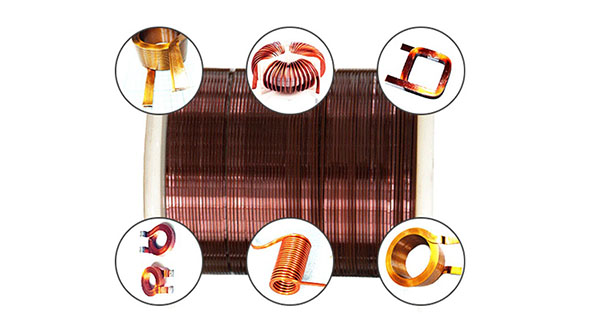
The specification range of enameled copper wire for industrial generators is wide: Fine Specification: Diameter 0.30 mm to 1.00 mm, mainly used for small generator stator windings. Medium Specification: Diameter 1.00 mm to 3.00 mm, is the main specification of medium-sized generators. Large Specification: Diameter above 3.00 mm, mainly used for large generator stator windings, excitation windings, etc. Rectangular/Flat Wire: Large generators often use rectangular enameled copper wire to improve slot fill rate and heat dissipation performance. Dimensional accuracy has an important impact on generator winding quality and should strictly comply with standard tolerance requirements.
Insulating Enamel Systems of Heavy Duty Enameled Copper Wire
Polyester Imide Enamel (EIW)
The thermal class of polyester imide enameled copper wire is usually Class 180 (Class H), which is the mainstream choice of heavy duty enameled copper wire for industrial generators. Enamel Film Performance: Polyester imide enamel introduces imide structure into the polyester molecular chain, significantly improving heat resistance and mechanical strength. The enamel film has excellent adhesion strength, thermal shock resistance, and long-term thermal stability. Application Temperature: Maximum working temperature 180 degrees C. Advantages: Excellent heat resistance, 180 degrees C long-term working capability; strong mechanical properties, stable adhesion; good chemical resistance; relatively economical cost. Applications: Widely used in medium-sized turbine generators, hydro generators, diesel generators, etc.
Polyamide Imide Enamel (AIW)
The thermal class of polyamide imide enameled copper wire can reach Class 200 or Class 220, which is the first choice for high-end heavy duty enameled copper wire. Enamel Film Performance: The polyamide imide enamel molecular structure contains amide groups and imide groups, and the enamel film has extremely strong heat resistance, mechanical strength, and chemical stability. Application Temperature: Maximum working temperature can reach 220 degrees C. Advantages: Stable performance at ultra-high temperature; outstanding abrasion resistance and chemical resistance; high mechanical strength; excellent long-term reliability. Applications: Large turbine generators, high temperature generators, special generators, etc.
Composite Insulating Enamel System
The composite insulating enamel system adopts a double-layer coating structure of polyester imide base layer plus polyamide imide top layer. Enamel Film Performance: Combining the advantages of both enamel systems, the base layer provides adhesion and flexibility, and the surface layer provides high temperature resistance and chemical resistance. Application Temperature: Maximum working temperature can reach 200 degrees C or higher. Advantages: Excellent comprehensive performance; meeting the harsh requirements of large generators; outstanding long-term reliability. Applications: Large generators, high voltage generators, high temperature components, etc.
Modified Polyester and Special Enamel Systems
Modified Polyester Enamel: By introducing heat-resistant modified monomers, it can reach Class 155 (Class F), which is an economical choice for medium-sized generators. Corona-Resistant Enameled Wire: For high voltage generators, corona-resistant enameled wire can be used to deal with the erosion of corona discharge on insulation. Self-Bonding Enameled Wire: A self-bonding enamel is coated outside the conventional enamel layer, and the coil is heated and cured after winding to form an integral coil, improving the structural strength of the winding.
Applications of Different Types of Generators
Turbine Generators
Turbine generators are the core equipment of thermal power plants and nuclear power plants, with the most stringent requirements for enameled copper wire. Capacity Range: From 100 MW to 1000 MW or more, some large units can reach 1500 MW or more. Working Temperature: The working temperature of the stator winding is usually between 130 degrees C and 155 degrees C, and the excitation winding can reach above 180 degrees C. Enameled Wire Selection: The stator winding usually uses Class 180 polyester imide enameled copper wire or Class 200 polyamide imide enameled copper wire. The excitation winding can use Class 200 or higher thermal class products. Specification Selection: The stator windings of large turbine generators often use rectangular enameled copper wire to improve slot fill rate and heat dissipation performance. Quality Requirements: Turbine generators have extremely high requirements for the consistency and reliability of enameled copper wire, and products with stable quality and mature technology from suppliers should be selected.
Hydro Generators
Hydro generators are the core equipment of hydropower stations, with low operating speed but large rotor diameter. Capacity Range: From several MW to hundreds of MW, and extra-large units can reach 800 MW or more. Working Temperature: The working temperature of the stator winding is usually between 120 degrees C and 140 degrees C. Enameled Wire Selection: Class 155 modified polyester enameled copper wire or Class 180 polyester imide enameled copper wire can be selected. Specification Selection: Large hydro generators often use rectangular enameled copper wire, with diameter range covering from fine wire to coarse wire. Special Requirements: Hydropower stations are usually located in humid environments, with high requirements for the moisture and heat resistance of enameled copper wire.
Wind Generators
Wind generators are the mainstream form of new energy power generation, with extremely high requirements for reliability. Capacity Range: From several kW to 10 MW or more, the mainstream capacity of onshore wind turbines is 2 to 5 MW, and offshore wind turbines can reach 10 MW or more. Working Temperature: The working temperature of the stator winding is usually between 130 degrees C and 155 degrees C. Enameled Wire Selection: Usually Class 180 polyester imide enameled copper wire or Class 200 polyamide imide enameled copper wire is selected. Special Requirements: The operating environment of wind generators is harsh (high humidity, high temperature difference, severe vibration), with extremely high requirements for the weather resistance, vibration resistance, and long-term reliability of enameled copper wire. Special Standards: Enameled copper wire for wind generators usually needs to pass relevant industry certifications, such as IEC 61400, etc.
Diesel Generators
Diesel generators are often used as backup power or mobile power, with flexible start and stop. Capacity Range: From several kW to several MW, with the common range being 100 kW to 2000 kW. Working Temperature: The working temperature of the stator winding is usually between 120 degrees C and 140 degrees C. Winding Wire Selection: Class 130 to Class 155 enameled copper wire can be selected. Special Requirements: Diesel generators should have the ability to start and stop quickly, with certain requirements for the thermal shock resistance of enameled copper wire.
Gas Turbine Generators
Gas turbine generators start and stop quickly and are often used for peak shaving power stations. Capacity Range: From tens of MW to 400 MW or more. Working Temperature: The working temperature of the stator winding is usually between 130 degrees C and 155 degrees C. Enameled Wire Selection: Usually Class 155 or Class 180 enameled copper wire is selected. Special Requirements: Gas turbine generators start and stop frequently, with high requirements for the thermal shock resistance of enameled copper wire.
Special Generators
Special generators include marine generators, locomotive generators, aviation generators, ship generators, etc. Marine Generators: Have high requirements for salt spray resistance and moisture resistance, and Class 180 enameled copper wire can be selected. Locomotive Generators: Have high requirements for vibration resistance and temperature cycle resistance, and Class 180 or Class 200 enameled copper wire can be selected. Aviation Generators: Have extremely high requirements for weight and reliability, and Class 200 or Class 220 polyamide imide enameled copper wire can be selected.
Selection Points of Heavy Duty Enameled Copper Wire
Thermal Class Selection
The thermal class is the core parameter for the selection of heavy duty enameled copper wire. Basic Principle: When selecting the thermal class, a temperature margin of 15 degrees C to 20 degrees C should be reserved to ensure that the insulation material will not accelerate aging at the maximum working temperature of the generator. Typical Correspondence: Class 130 enameled copper wire corresponds to generator maximum working temperature of about 110 degrees C. Class 155 enameled copper wire corresponds to generator maximum working temperature of about 135 degrees C. Class 180 enameled copper wire corresponds to generator maximum working temperature of about 160 degrees C. Class 200 enameled copper wire corresponds to generator maximum working temperature of about 180 degrees C.
Specification Selection
Stator Windings: Select specifications according to the generator capacity, slot fill rate requirements, and heat dissipation requirements. Small generators use fine specifications, large generators use coarse specifications or rectangular wire. Rotor Windings: Rotor windings usually use medium specification round wire, with the specification range between 0.50 mm and 2.00 mm. Excitation Windings: Select specifications according to the magnitude of the excitation current, usually using medium specification round wire.
Enamel System Selection
Polyester Imide Enamel (EIW): A cost-effective choice, suitable for most industrial generators. Polyamide Imide Enamel (AIW): A high-performance choice, suitable for large, high-temperature, and high-reliability generators. Composite Enamel System: A high-end choice, suitable for generators under harsh working conditions. Special Functional Enamel: Select special functional enamels such as corona resistance and self-bonding according to special needs.
Supplier Selection
Production Capacity: Suppliers should have the production capacity of heavy duty enameled copper wire, including the production capacity of large specification round wire and rectangular wire. Quality Management System: Should pass ISO 9001 and other quality management system certifications, and implement strict control over the production process. R&D Capability: Should have enamel formula R&D and process optimization capabilities, and be able to provide customized products according to customer needs. Certification Qualifications: Products should pass relevant international standard certifications. Application Experience: Suppliers should have application experience in the field of industrial generators and be able to provide professional technical support.
Quality Control of Heavy Duty Enameled Copper Wire
Key Quality Indicators
When procuring heavy duty enameled copper wire, attention should be paid to the following quality indicators: Conductor Purity: The purity of copper conductor directly affects electrical conductivity and mechanical properties. High-quality heavy duty enameled copper wire usually uses oxygen-free copper with purity above 99.9%. Dimensional Accuracy: The conductor diameter, enamel layer thickness, and overall outer diameter should strictly comply with standard tolerance requirements. Dielectric Strength: The insulating enamel layer should have sufficient dielectric strength to meet the voltage level requirements of the generator. Adhesion Strength: There should be stable adhesion strength between the enamel film and the conductor, verified by sudden pull test, thermal shock test, etc. Thermal Aging Performance: The thermal aging performance of the insulating enamel layer should be verified by accelerated aging tests. Batch Consistency: The performance of different batches of products should remain stable, ensuring the quality consistency of large-volume procurement.
Supplier Evaluation
Production Capacity Evaluation: Investigate the production scale, equipment configuration, and process level of the supplier. Quality Management System Evaluation: Evaluate the supplier’s ISO 9001, IATF 16949, and other quality management systems. R&D Capability Evaluation: Evaluate the supplier’s enamel formula R&D and process optimization capabilities. Application Experience Evaluation: Investigate the supplier’s application cases and customer feedback in the field of industrial generators. Technical Service Capability Evaluation: Evaluate the supplier’s technical support and after-sales service capabilities.
Incoming Inspection
Appearance Inspection: Check the enamel film surface quality for bubbles, impurities, pinholes, peeling, and other defects. Dimensional Measurement: Measure conductor diameter, enamel layer thickness, and overall outer diameter. Electrical Testing: Conduct dielectric strength test, insulation resistance test, and dielectric loss test. Mechanical Testing: Conduct flexibility test, adhesion strength test, and tensile strength test. Thermal Performance Testing: Conduct thermal shock test and thermal aging test. Batch Consistency Verification: Verify batch number, production date, inspection report, and other information.
Process Quality Control
Winding Process: Monitor the tension, speed, temperature, and other parameters during the winding process to avoid damaging the enamel film. Coil Insertion Process: Monitor the friction, compression, and other working conditions during the coil insertion process to ensure the integrity of the enamel film. VPI Process: Monitor the vacuum degree, pressure, temperature, time, and other parameters of the VPI process to ensure the impregnation effect. Curing Process: Monitor the temperature curve of the curing process to ensure that the enamel film is fully cured.
Application Development Trends of Heavy Duty Enameled Copper Wire
Higher Thermal Class
With the development of generator technology, the working temperature and power density of generators continue to increase, and the requirements for the thermal class of enameled copper wire also increase accordingly. The application proportion of Class 200 and Class 220 enameled copper wire will continue to increase.
Larger Specification Conductor
The single unit capacity of large generators continues to increase, and the conductor specifications of stator windings are also getting larger and larger. The demand for large specification (diameter above 5 mm) round wire and large rectangular wire will continue to grow.
Higher Reliability
High-end applications such as new energy, smart grid, and rail transit have extremely high requirements for the reliability of generators, promoting the development of enameled copper wire towards higher reliability.
Intelligent Production
The intelligent control of the production process of enameled copper wire will further improve the consistency and stability of product quality.
Conclusion
Heavy duty enameled copper wire for industrial generators is a key basic material for generator manufacturing, and its performance directly affects the efficiency, reliability, and service life of the generator. When selecting, factors such as generator type, capacity, working temperature, environmental conditions, and reliability requirements should be comprehensively considered. The thermal class selection should be based on the working temperature of the generator, with a margin of 15 degrees C to 20 degrees C reserved. Conventional turbine, hydro, and diesel generators can use Class 155 or Class 180 products; high-end generators and special generators are recommended to use Class 200 or Class 220 polyamide imide products. Specification selection should be based on winding design, current capacity, mechanical strength, and other factors. Small generators use fine specifications, medium and large generators use medium specifications or large specification conductors, and large generators often use rectangular enameled copper wire. Quality control is a key link to ensure the application effect of heavy duty enameled copper wire. Suppliers with production capacity, quality assurance, R&D capability, and certification qualifications should be selected, and strict incoming inspection and process quality control should be carried out. With the continuous development of industrial generator technology, the performance requirements for heavy duty enameled copper wire will continue to increase. Enameled wire manufacturers should continuously optimize enamel formulas and manufacturing processes, provide higher performance and higher reliability products for the generator industry, and provide a solid guarantee for the stable development of the power industry.