

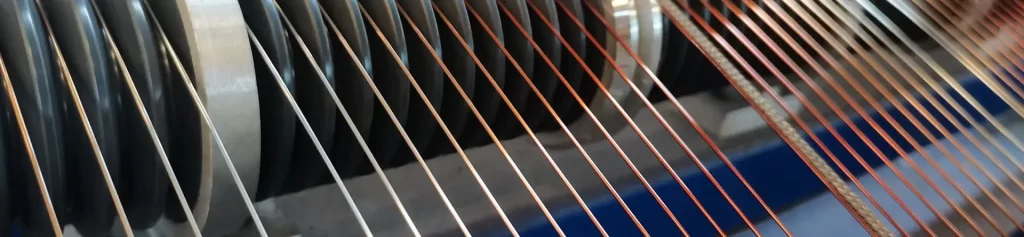
When a measurement instrument must read to the third decimal place, when a medical implant must operate for a decade inside the human body, or when a satellite sensor must survive the vacuum of space, the quality of its internal windings becomes non-negotiable. Fine gauge enameled copper wire—generally defined as enameled copper wire with a conductor diameter below 0.5 mm—is the foundational material for these demanding applications. From the miniature voice coils in hearing aids to the precision inductors in metrology-grade instruments, the performance of these fine wires directly determines whether the end device achieves its specified accuracy, reliability, and service life.
What Is Fine Gauge Enameled Copper Wire?
Fine gauge enameled copper wire is magnet wire with a bare copper conductor diameter typically below 0.5 mm (corresponding roughly to AWG 24 and finer), insulated with a thin layer of polymer enamel. The wire is manufactured by drawing oxygen-free copper rod to the target diameter through precision dies, then applying and curing multiple thin coats of insulating varnish in a controlled enameling process. The finished wire delivers the high conductivity of copper with the electrical isolation needed for dense winding, all within a tiny cross-section.
For precision instrument applications, fine gauge wire is further categorized by diameter range:
- Fine wire (0.5 mm to 0.1 mm): The workhorse range for most precision instrument windings, including small motor coils, relay coils, sensor windings, and miniature transformers.
- Ultra-fine wire (0.1 mm to 0.03 mm): Reserved for specialized micro-sensors, hearing aid voice coils, medical device coils, and high-frequency transformers requiring very high turns counts in small windows.
- Extreme-fine wire (below 0.03 mm): Used in the most demanding applications, including chip inductors, micro-electromechanical systems (MEMS), and certain implantable medical devices.
Each diameter range presents unique manufacturing and application challenges, with finer wires requiring increasingly strict control of conductor purity, enamel uniformity, and process cleanliness.
Key Properties of Fine Gauge Wire
The performance of fine gauge enameled copper wire in precision applications depends on a combination of conductor properties, insulation characteristics, and manufacturing precision.
Conductor Properties
Copper is the preferred conductor material for fine gauge wire in precision instruments because of its exceptional electrical and mechanical properties. The key parameters of high-purity copper used in fine wire production include:
- Conductivity: 100% IACS (International Annealed Copper Standard), second only to silver among commercially practical metals
- Density: 8.96 g/cm³
- Melting point: 1085°C
- Tensile strength: 220 to 250 MPa (annealed condition)
- Resistivity: 1.7241 × 10⁻⁸ Ω·m at 20°C
- Temperature coefficient of resistance: 0.00393/°C
- Coefficient of thermal expansion: 17 × 10⁻⁶/°C
These properties make copper uniquely suited for fine wire applications. Its high conductivity minimizes I²R losses and signal attenuation, while its predictable temperature coefficient simplifies temperature compensation in precision circuits. The ductility of high-purity copper allows drawing to diameters as small as 0.02 mm without breakage, and the mechanical strength of the drawn wire is sufficient to survive automated winding operations.
Insulation Properties
The enamel insulation on fine gauge wire must provide reliable electrical isolation at extremely thin coating thicknesses, typically 5 to 50 micrometers depending on wire size and insulation build. The insulation must deliver several critical properties simultaneously:
- High dielectric strength to withstand inter-turn voltages and transient overvoltages
- Uniform coating thickness to eliminate weak points that could lead to insulation failure
- Good adhesion to the copper substrate to prevent cracking during winding and thermal cycling
- Flexibility and elongation to survive bending during coil winding without cracking or delaminating
- Thermal endurance to maintain dielectric and mechanical properties at the operating temperature over the design life of the instrument
- Chemical resistance to withstand varnishing, potting, and any environmental exposures the instrument may encounter
These demanding requirements explain why insulation material selection and manufacturing process control are at least as important as conductor quality in determining the performance of fine gauge wire.
Insulation Materials and Thermal Classes
Different precision instrument applications impose different operating temperatures, reliability requirements, and processing constraints. The major insulation systems used for fine gauge enameled copper wire include the following.
Polyester (Class B, 130°C)
Polyester enameled wire (often designated PEW or QZ) is the most widely used general-purpose fine gauge wire insulation. It provides a good balance of mechanical strength, flexibility, dielectric strength, and cost for applications operating at temperatures up to 130°C. The main advantages are excellent winding performance, good resistance to common solvents, and compatibility with most impregnation varnishes. Polyester insulation is the default choice for general industrial sensors, small motors, relays, and similar applications.
Polyesterimide (Class H, 180°C)
Polyesterimide enameled wire (QZY) builds on the polyester base by introducing imide groups that significantly improve thermal endurance, thermal shock resistance, and chemical resistance. This insulation system is rated for continuous operation at 180°C and survives the thermal cycling common in many precision instrument applications. Polyesterimide is widely used in motors for servo systems, instrument transformers, automotive sensors, and other applications where high reliability and elevated temperature capability are required.
Polyamide-Imide Overcoat (Class H, 180°C+)
Polyamide-imide (AI or QZY/X) is typically applied as a thin topcoat over a polyester or polyesterimide base coat. The dual-layer construction combines the processability of the base coat with the exceptional thermal, chemical, and abrasion resistance of the polyamide-imide overcoat. This construction is the industry standard for high-reliability applications including aerospace instruments, medical devices, and traction motors.
Polyimide (Class C, 220°C and above)
Polyimide enameled wire (QPY) provides the highest thermal endurance of any commercially available magnet wire insulation, with continuous operating temperatures of 220°C and short-term capability above 400°C. It also offers excellent radiation resistance and solvent resistance, making it the preferred choice for aerospace, military, and specialized industrial applications. The trade-off is higher cost and more demanding processing requirements.
Polyurethane (Class A/B/E/BE, 105 to 155°C)
Polyurethane enameled wire (UEW or QA) is distinguished by its ability to be soldered directly without removing the enamel—the polyurethane decomposes at soldering temperatures to expose clean copper. This unique property, combined with low dielectric loss at high frequencies, makes polyurethane-insulated fine wire the standard choice for high-frequency precision instrument applications including RF transformers, communication equipment coils, and precision impedance standards. Available in thermal classes from 105°C to 155°C depending on the formulation.
Selection Guidance
For most precision instrument applications, the insulation system should be selected based on the maximum operating temperature with a safety margin, the required dielectric strength, any special processing requirements (such as direct soldering), and the cost target. In safety-critical applications such as medical implants and aerospace, higher-cost insulation systems like polyimide or polyamide-imide overcoated constructions are preferred for their proven long-term reliability.
Manufacturing Process and Quality Control
The reliability of fine gauge enameled copper wire depends on manufacturing precision at every step, from raw material selection to final test.
Conductor Drawing
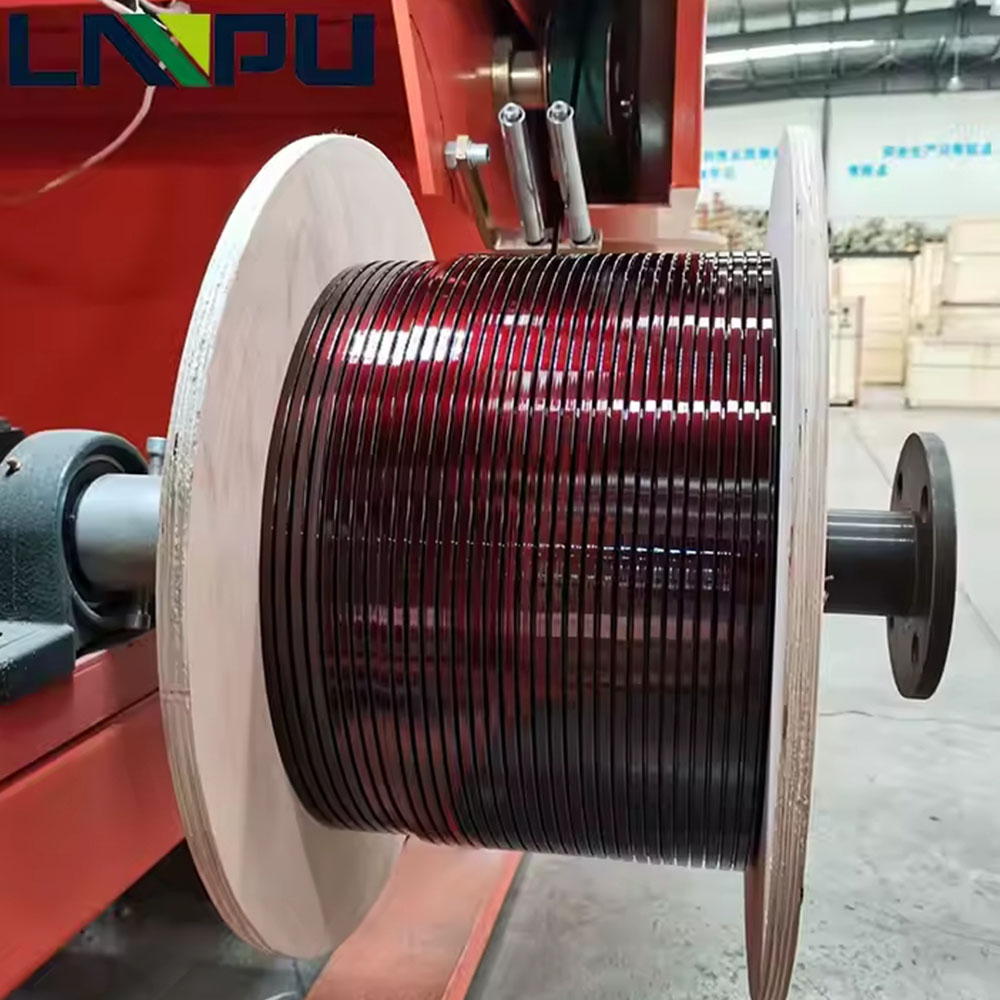
The copper conductor is produced by progressively drawing high-purity oxygen-free copper rod through a series of precision dies, each reducing the diameter by a controlled amount. The drawing process must maintain precise tension control, use high-quality dies with smooth polished surfaces, and employ appropriate lubrication to avoid surface damage. Any surface scratch, die mark, or inclusion on the copper surface becomes a potential site for enamel failure.
Enameling Process
The enamel is applied in multiple thin coats using precision dies or applicators, with each coat cured in a controlled-atmosphere oven before the next is applied. Typical enameling lines operate at speeds up to several hundred meters per minute while maintaining coating thickness uniformity within tight tolerances. The curing temperature profile must be optimized for the specific enamel chemistry to achieve full polymerization and solvent removal without damaging the insulation or the copper substrate.
Online Quality Control
Modern fine wire production lines employ continuous online testing to detect insulation defects before the wire is spooled. The most common online tests include:
- High-voltage continuity testing to detect pinholes, bare spots, and thin areas in the enamel
- Dimensional monitoring using laser micrometers to verify the overall wire diameter and detect ovality
- Spark testing with high-voltage electrodes that ionize the air around any defect, making it visible as a spark
- Surface inspection using optical or eddy current techniques to identify surface irregularities
Any wire section that fails online testing is automatically marked and removed from the production run, ensuring that only fully conforming wire reaches the customer.
Why Fine Gauge Wire Matters for Precision Applications
The use of fine gauge enameled copper wire in precision instruments is driven by several interrelated requirements that cannot be easily met with larger wire sizes.
High Turns Count in Small Windows
Many precision coils require hundreds or thousands of turns to achieve the required inductance or magnetic field strength, while fitting within a small physical envelope. Fine gauge wire enables these high turns counts in tight spaces, allowing instrument designers to achieve the necessary electromagnetic performance without enlarging the device.
Miniaturization
The trend toward smaller, lighter, and more portable instruments drives the use of progressively finer wire. Modern hearing aids, implantable medical devices, and wearable sensors all depend on fine gauge wire to fit functional coils into tiny form factors.
Reduced Distributed Capacitance
Fine wire windings have lower inter-turn capacitance than equivalent windings of larger wire, which improves high-frequency performance and reduces parasitic effects in precision AC circuits.
Lower Skin Effect Losses at High Frequencies
For high-frequency applications, the skin effect causes current to flow primarily near the conductor surface. With fine wire diameters, the skin depth at typical operating frequencies is often larger than the conductor radius, meaning the full cross-section carries current. This makes fine wire efficient for high-frequency precision circuits.
Low Mass for Sensitive Measurements
Instruments that must respond to tiny forces or accelerations benefit from the low mass of fine wire windings, which minimizes the mechanical loading on the sensing element and improves measurement bandwidth and accuracy.
Key Applications in Precision Instruments
Fine gauge enameled copper wire is used across a remarkably broad range of precision instrument applications.
Medical and Life Science Instruments
The medical device industry is one of the largest consumers of fine gauge enameled copper wire. Applications include magnetic resonance imaging (MRI) gradient and RF coils, computed tomography (CT) scanner components, ultrasound transducers, hearing aid voice coils and receivers, cochlear implant coils, pacemaker lead coils, neurostimulator coils, patient monitoring sensors, and laboratory analytical instruments. Medical applications demand the highest levels of reliability, biocompatibility (where the wire contacts body tissue), and long-term stability—often requiring wire manufactured under ISO 13485 quality systems with full material traceability.
Aerospace and Defense Systems
Aerospace applications use fine gauge enameled copper wire in flight control sensors, inertial navigation systems, satellite communication equipment, avionics transformers, and various military electronic systems. These applications expose the wire to extreme temperatures, vibration, shock, and radiation environments, requiring insulation systems that maintain performance over decades of service. Wire supplied to aerospace customers typically must meet stringent military or aviation standards (such as AS9100 quality system requirements) and be accompanied by comprehensive traceability documentation.
Metrology and Calibration Equipment
Precision voltmeters, ammeters, impedance analyzers, and frequency standards depend on fine wire windings for their measurement accuracy. The wire must exhibit extremely low temperature coefficient, precise and stable resistance values, and long-term dimensional stability to maintain calibration over years of use. National metrology institutes and accredited calibration laboratories specify the highest-grade fine wire available for their reference standards.
Communication and Signal Processing
Modern communication infrastructure uses fine gauge enameled copper wire in high-frequency transformers, baluns, filters, inductors, and impedance matching networks. The push toward 5G, satellite internet, and high-speed data transmission has increased demand for fine wire with excellent high-frequency properties. Polyurethane-insulated fine wire is the industry standard in this segment due to its low dielectric loss and direct solderability.
Industrial Automation and Control
Factory automation, process control, and robotics systems use fine wire in encoder resolvers, servo motor windings, position sensors, current transformers, and various control loop components. These applications require reliable operation in industrial environments with exposure to temperature variations, vibration, and electrical noise.
Scientific Research Instruments
Particle accelerators, mass spectrometers, electron microscopes, and other scientific research instruments often use custom-wound coils made from fine gauge enameled copper wire for beam steering, magnetic field generation, and precision measurements. These applications typically require very small production quantities with extremely high performance specifications.
Selection Criteria for Precision Applications
Selecting the right fine gauge enameled copper wire for a precision instrument application requires systematic evaluation of multiple criteria.
Wire Diameter and Tolerance
Determine the required conductor diameter based on the current load, target turns count, and available winding window. For automated winding, specify the diameter tolerance the winding machine can accommodate—typically ±0.003 mm for ultra-fine wire. Verify that the proposed wire meets this tolerance consistently across the production lot.
Conductor Material and Purity
For high-reliability and ultra-fine applications, specify wire made from oxygen-free copper rod (oxygen content below 20 ppm) with copper purity exceeding 99.95%. Lower-grade copper is acceptable for less demanding applications but may cause yield problems when drawing to diameters below 0.1 mm.
Insulation System and Thermal Class
Match the insulation system to the maximum operating temperature with a safety margin of at least 20°C. For applications with thermal cycling, verify that the insulation is rated for the expected number of cycles. For high-frequency applications, select insulation with low dielectric loss (low dissipation factor) at the operating frequency.
Dielectric Strength
Determine the maximum voltage stress the wire will experience in service, including steady-state operating voltage, transient overvoltages, and any resonant voltage amplification. Select wire with dielectric strength that provides a safety factor of at least 2x over the maximum stress, with higher factors for safety-critical applications.
Mechanical Properties
For automated winding, specify wire with elongation and tensile strength suitable for the winding machine’s tension settings and bending requirements. For applications involving vibration or thermal cycling, verify that the insulation can withstand the expected mechanical stress without cracking or delaminating.
Quality System and Traceability
For medical, aerospace, and other high-reliability applications, select wire suppliers with certified quality management systems (ISO 9001, AS9100, or ISO 13485 as appropriate) and the ability to provide full material traceability, batch test reports, and long-term supply continuity.
Standards Compliance
Verify that the wire complies with the relevant international standards:
- IEC 60317 series for winding wire specifications
- NEMA MW 1000 for magnet wire in North American applications
- GB/T 7673 for Chinese national standard compliance
- JIS C 3202 for Japanese applications
- UL certifications for safety-critical applications
- RoHS and REACH compliance for environmental requirements
Common Challenges and Best Practices
Specifying and using fine gauge enameled copper wire presents several common challenges that can be avoided with proper planning and quality control.
Inconsistent Wire Diameter
Variations in wire diameter can cause tension problems in automated winding machines, leading to inconsistent coil quality and yield losses. Best practice: specify tight diameter tolerances, verify incoming wire dimensions on a sample basis, and work with the wire supplier to identify the source of any variation.
Insulation Damage During Winding
Fine wire is susceptible to insulation damage from excessive tension, sharp winding tooling, or contaminated winding surfaces. Best practice: use winding machines with adjustable tension control, polished and clean tooling, and proper wire guides. Conduct wound coil dielectric testing to detect any insulation damage before the coil is assembled into the instrument.
Soldering and Termination Issues
Terminating fine wire requires careful technique to avoid cold joints, wire breakage, or insulation damage from soldering iron heat. Best practice: use temperature-controlled soldering stations with appropriate tip sizes, use polyurethane-insulated wire where direct soldering is desired, and consider mechanical connection methods (crimping, wire bonding) for the finest wire sizes.
Thermal Aging Effects
Long-term exposure to operating temperature gradually degrades the insulation’s mechanical and dielectric properties, ultimately leading to failure if the design life is exceeded. Best practice: select insulation with adequate thermal class margin, conduct accelerated aging tests on representative samples, and design the instrument for a service life that includes appropriate aging margin.
Supplier Variability
Different wire suppliers, and even different production lots from the same supplier, can exhibit variation in dielectric strength, dimensional consistency, and winding performance. Best practice: qualify wire suppliers through comprehensive incoming inspection and qualification testing, monitor ongoing quality with periodic sampling, and maintain safety stock to allow for lot-to-lot variation.
Industry Trends and Future Outlook
The fine gauge enameled copper wire industry continues to evolve in response to the changing needs of precision instrument manufacturers.
Pushing the Diameter Limit
Wire manufacturers continue to extend the practical diameter limit downward, with production capability now extending to 0.02 mm and below. This trend is driven by demand from medical implants, micro-electromechanical systems (MEMS), and advanced sensor applications. As diameters shrink, the industry is developing new conductor materials, new insulation chemistries, and new manufacturing techniques to maintain quality and yield at these extreme dimensions.
High-Frequency Performance Optimization
The shift toward higher switching frequencies in power electronics and higher frequency bands in communications is driving development of new insulation materials with lower dielectric loss, better high-frequency voltage endurance, and improved thermal conductivity. Nanomodified insulation coatings and composite enamel systems are emerging as promising approaches to meet these demands.
Smart Manufacturing and Quality 4.0
Wire manufacturers are adopting Industry 4.0 concepts including inline statistical process control, machine learning-based defect detection, full digital traceability, and predictive maintenance. These technologies improve production consistency, reduce quality variability, and provide customers with detailed quality data for each production lot.
Environmental Sustainability
Environmental regulations and customer expectations are driving the industry toward water-based and solvent-free enamel formulations, reduced energy consumption in the curing process, and improved recycling of manufacturing waste. The use of recycled copper with controlled impurity levels is also growing, though it requires careful qualification for precision applications.
Application-Specific Wire Designs
Rather than one-size-fits-all products, the industry is moving toward application-specific wire designs optimized for particular use cases. Medical-grade wire, aerospace-grade wire, and high-frequency-grade wire each have specialized constructions, quality systems, and documentation packages tailored to the requirements of their target applications.
Conclusion
Fine gauge enameled copper wire is a critical enabler of precision instrument technology. The combination of high conductivity, mechanical flexibility, reliable insulation, and consistent manufacturing quality allows this material to support applications ranging from medical implants and aerospace sensors to metrology standards and high-frequency communication equipment. Successful use of fine gauge wire in precision applications requires careful attention to conductor quality, insulation system selection, dimensional precision, and supplier qualification.
For engineers and procurement professionals specifying fine gauge wire, the following best practices will help ensure successful outcomes:
- Select the wire diameter based on current load, winding requirements, and miniaturization needs
- Choose the insulation system based on operating temperature, dielectric requirements, and processing needs
- Specify oxygen-free copper conductor for ultra-fine and high-reliability applications
- Apply appropriate safety factors to voltage stress and thermal aging calculations
- Qualify suppliers based on quality systems, technical support, and supply continuity
- Verify incoming wire quality with systematic inspection and testing
As precision instrument applications continue to demand higher performance in smaller packages, the importance of fine gauge enameled copper wire will only grow. Manufacturers that invest in understanding the capabilities and limitations of this critical material, and that build strong partnerships with qualified wire suppliers, will be well-positioned to deliver the next generation of precision instruments.