

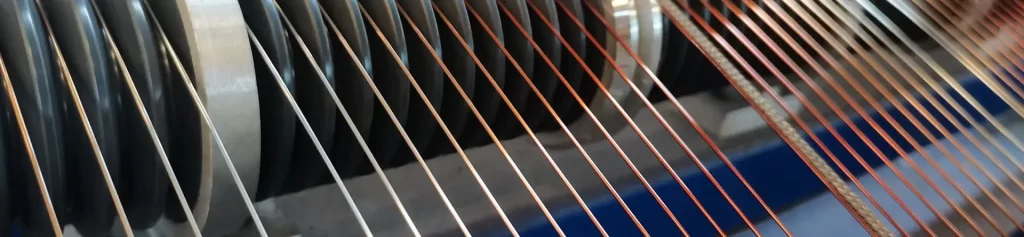
Enameled Copper Clad Aluminum wire (ECCA) is a new winding material that combines the advantages of CCA wire core and enamel insulation. This structure maintains the lightweight and economical characteristics of copper clad aluminum wire while providing excellent insulation performance of enameled wire. The insulation coating is the core component of enameled copper clad aluminum wire, determining the wire’s thermal class, electrical performance, mechanical strength, and application range. Different types of coating materials have different chemical structures and performance characteristics, suitable for different working environments and application scenarios.
Basic Structure of Enameled CCA Wire
Conductor Section
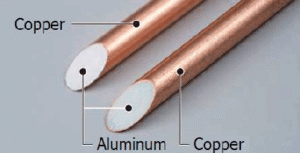
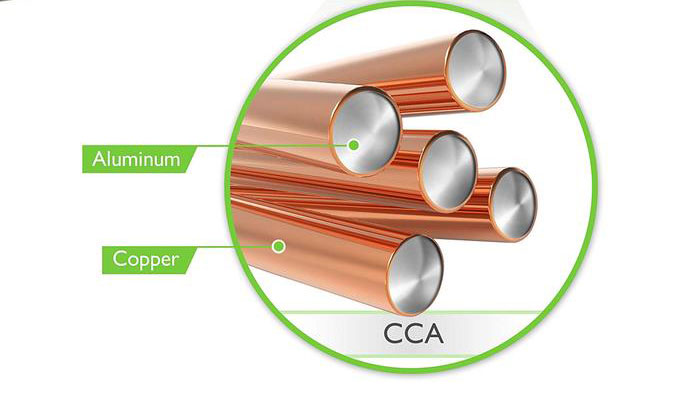
The conductor of enameled copper clad aluminum wire is Copper Clad Aluminum wire (CCA), composed of outer high-purity oxygen-free copper and inner electrical-grade aluminum. The copper layer and aluminum core form a reliable composite conductor through metallurgical bonding. Common copper layer ratios for copper clad aluminum wire include 10%, 15%, 20%, 25%, and 30%. Higher copper layer ratio means better conductivity and correspondingly higher cost. 15% and 20% are the most common specifications in industrial applications.
Insulation Layer
The insulation layer is the coating applied on the surface of the CCA wire core. Coating materials are typically organic polymer compounds, forming a tough insulation layer after baking and curing. Coating thickness is determined by product type and application requirements. Common coating thickness grades include: Grade 1 (thin), Grade 2 (standard), Grade 3 (thick). Thicker coating means higher insulation strength, but also larger outer diameter.
Mainstream Coating Types
Polyurethane Coating (UEW)
Polyurethane coating is an insulation material based on polyurethane resin, one of the most commonly used coatings in the enameled wire industry. Core features of polyurethane coating include: excellent direct solderability, can be directly soldered without scraping the coating; thermal class typically 130°C or 155°C; good electrical performance; moderate mechanical performance. UEW 130 and UEW 155 are the two most common polyurethane coating specifications. UEW 155 has higher heat resistance, suitable for higher operating temperature environments. The chemical foundation of polyurethane coating is the reaction product of polyols and isocyanates. This chemical structure determines the coating’s direct solderability. At soldering temperature, the coating quickly decomposes and is wetted by solder. Polyurethane enameled copper clad aluminum wire is widely used in electronic transformers, relays, small motors, instrument coils, and other applications requiring convenient soldering.
Polyester Coating (PEW)
Polyester coating is an insulation material based on saturated polyester resin, one of the most commonly used coating types in industrial fields. Main features of polyester coating include: high mechanical strength, excellent wear resistance; thermal class typically 130°C or 155°C; stable electrical performance; strong adhesion to conductor. Polyester coating has good chemical resistance, able to withstand impregnation treatment in motor manufacturing. Coating flexibility is moderate, facilitating high-speed winding. Polyester enameled copper clad aluminum wire is mainly used in industrial motors, fan motors, power tools, general transformers, and other applications.
Modified Polyester Coating
Modified polyester coating is an insulation material that improves polyester coating performance by adding special components. Common modification methods include: nylon overcoating modification to improve mechanical performance; epoxy modification to improve chemical resistance; self-bonding modification to facilitate coil fixing. Typical thermal class of modified polyester coating is 155°C. Modified products maintain the basic performance of polyester while obtaining significant improvement in a specific aspect. Nylon overcoating modified coating performs excellently in high-speed winding, with coating not easily damaged. This product is suitable for motors and transformers requiring mass automated production.
Polyester-Imide Coating (EIW)
Polyester-imide coating is an insulation material based on polyester-imide resin, with good heat resistance. Core features of polyester-imide coating: thermal class typically 180°C; excellent chemical resistance; high mechanical strength; good thermal shock performance. Polyester-imide is a widely used enameled wire coating, suitable for Class 180 and above, applicable in single-coat and double-coat processes. Polyester-imide enameled copper clad aluminum wire is mainly used in industrial motors, special motors, fans, water pumps, and other applications requiring higher heat resistance.
Polyamide-Imide Coating (AIW)
Polyamide-imide coating is a premium insulation material based on polyamide-imide resin, one of the coatings with the highest heat resistance. Main features of polyamide-imide coating: thermal class can reach above 200°C; excellent chemical resistance; outstanding mechanical strength; excellent wear resistance. Polyamide-imide coating is typically used as a top coat, combined with polyester-imide base coat, forming a double-coat structure. This structure can provide 200°C or even 220°C thermal class. Polyamide-imide enameled copper clad aluminum wire is mainly used in new energy vehicle drive motors, traction motors, aerospace equipment, special industrial motors, and other high-end applications.
Polyvinyl Formal Coating
Polyvinyl formal coating (PVF) is an early-used coating material with 120°C thermal class. Polyvinyl formal coating has good electrical performance and mechanical performance, but relatively lower heat resistance. It has been replaced by new coating materials in high-temperature applications. PVF enameled copper clad aluminum wire is mainly used in ordinary electrical equipment with no high heat resistance requirements.
Composite Coating Structure
Composite coating structure is an insulation method combining two or more coatings. Common composite structures include: polyester-imide base coat + polyamide-imide top coat, with combined thermal class reaching 200°C; polyurethane base coat + nylon top coat, improving mechanical performance. Composite coating structure can combine the advantages of multiple coatings, providing more comprehensive performance. In high-end motors and transformers, composite coated enameled wire is the mainstream choice.
Coating Performance Comparison
Heat Resistance Performance
Standard thermal class for different coating types: Polyurethane (UEW) 130-155°C; Polyester (PEW) 130-155°C; Modified Polyester 155°C; Polyester-Imide (EIW) 180°C; Polyamide-Imide (AIW) 200-220°C; Polyvinyl Formal (PVF) 120°C; Composite Coating 200°C+.
Key Performance Comparison
| Coating Type | Direct Solderability | Mechanical Strength | Heat Resistance | Chemical Resistance |
|---|---|---|---|---|
| Polyurethane | Excellent | Medium | Medium | Medium |
| Polyester | Poor | High | Medium | Medium |
| Modified Polyester | Poor | High | Medium | Medium-High |
| Polyester-Imide | Poor | High | High | High |
| Polyamide-Imide | Poor | Very High | Very High | Very High |
| Composite Coating | Depends | Very High | Very High | Very High |
Insulation Thickness Grades
Grade Classification Standards
The insulation thickness of enameled wire is divided into three grades according to international standards. Grade 1 (thin coating): thinnest coating, smallest outer diameter, suitable for windings with extremely limited space. Grade 2 (standard coating): standard specification, balancing insulation performance and outer diameter size, most widely used. Grade 3 (thick coating): thicker coating, higher insulation strength, suitable for high voltage or high reliability applications.
Thickness Selection
Selection of insulation thickness requires comprehensive consideration of electrical insulation requirements, winding space, heat dissipation conditions, and other factors. High voltage applications should select Grade 3 to ensure sufficient electrical insulation strength. Low voltage ordinary applications can select Grade 2 to balance performance and cost. Micro windings with extremely limited space can consider Grade 1.
Selection Recommendations
Selection Based on Operating Environment
Different operating environments have different coating requirements. Normal temperature low voltage environment: polyurethane or polyester coating meets requirements. High temperature environment (>155°C): polyester-imide or composite coating. Harsh chemical environment: polyamide-imide coating provides best chemical protection. High frequency vibration environment: modified polyester or composite coating has better mechanical durability.
Selection Based on Application Field
| Application | Recommended Coating |
|---|---|
| Household Appliances | Polyurethane, Polyester |
| Industrial Motors | Polyester, Polyester-Imide |
| EV Drive Motors | Polyester-Imide + Polyamide-Imide |
| Aerospace | Premium Composite Coating |
Household appliances: polyurethane, polyester coating as main, common choice for cost-sensitive applications. Industrial motors: polyester, polyester-imide coating, balancing performance and cost. New energy vehicle drive motors: polyester-imide + polyamide-imide composite coating, 200°C thermal class. Special industrial motors: polyamide-imide coating or composite coating, resistant to harsh environments. Aerospace: high-end composite coating, ensuring reliability in extreme environments.
Selection Based on Cost Budget
Cost is an important consideration during selection. Economic choice: polyurethane or polyester coating, lowest cost. Performance choice: polyester-imide coating, good performance-cost balance. High-end choice: composite coating or polyamide-imide coating, best performance but highest cost.
Processing and Usage Notes
Winding Process
Different coatings have different winding process requirements. Polyurethane coating: can be wound at high speed, but need to control winding tension to avoid coating damage. Polyester coating: good wear resistance, can adapt to higher winding speed. Polyester-imide and polyamide-imide coatings: higher hardness, winding tension needs appropriate control.
Soldering Process
The unique direct solderability of polyurethane coating gives it advantages in applications requiring soldering. Polyurethane coating can be directly dip-soldered in tin liquid at approximately 375°C. Soldering time is adjusted according to wire diameter, from 1 second to several seconds. Other coating types require pre-scraping of coating or use of special soldering processes.
Impregnation Treatment
Impregnation treatment is an important process for improving the overall performance of windings. Impregnation varnish should be compatible with enameled wire coating, avoiding chemical reactions. Impregnation and curing temperature should not exceed the coating’s maximum heat resistance temperature. Adequate drying should be performed after impregnation to avoid residual solvents affecting insulation performance.
Storage and Transportation
Enameled copper clad aluminum wire requires proper protection during storage and transportation. Avoid direct sunlight and high temperature environments to prevent coating aging. Maintain dry storage environment to prevent copper layer oxidation. Handle with care to avoid mechanical damage to coating.
Testing and Certification
Standard Testing
Enameled copper clad aluminum wire requires passing multiple standard tests. Visual inspection: coating should be uniform and smooth, free of bubbles, impurities, damage. Dimensional measurement: conductor diameter, coating thickness, outer diameter should be within specified ranges. Electrical testing: breakdown voltage, insulation resistance should meet standard requirements. Mechanical testing: elongation, springback angle, scrape resistance should meet requirements. Thermal performance testing: thermal shock, thermal aging, cut-through temperature testing.
Certification Standards
International and regional certifications are important guarantees of product quality. IEC 60317 series standards are international universal standards. NEMA MW1000 is the North American regional standard. UL certification is an important safety certification in the North American market. RoHS and REACH are international environmental certifications.
Development Trends
Higher Thermal Class
With the increasing power density of electrical equipment, requirements for thermal class continue to rise. New coating materials with resistance above 220°C are being researched and developed. Nanomodified insulation materials may provide better heat resistance performance. Ceramic coating insulation materials are potential choices for high-temperature applications.
Environmentally Friendly Materials
Environmental regulations are driving coating materials toward more environmentally friendly directions. Solvent-free coatings reduce VOC emissions. Water-based coatings reduce environmental pollution during production. Biodegradable materials are the future development direction.
Smart Manufacturing
Advanced manufacturing technology improves the product quality of enameled copper clad aluminum wire. Automated coating and curing processes improve coating uniformity. Online detection technology monitors coating quality in real time. Digital production management ensures product performance is traceable.
Summary
The insulation types of enameled copper clad aluminum wire are rich and diverse, from polyurethane to polyamide-imide, from single coating to composite structure, each insulation type has its unique performance characteristics and applicable scenarios. Correctly selecting insulation type requires comprehensive consideration of operating environment, application requirements, cost budget, and other factors. Polyurethane coating is widely used in household appliances and electronic fields due to its direct solderability. Polyester coating occupies the mainstream of industrial motors with mature processes and cost advantages. Polyester-imide and polyamide-imide coatings meet the needs of high temperature and high reliability applications. Composite coating structure represents the development direction of high-end enameled wire. With the continuous development of material technology, manufacturing processes, and application requirements, the insulation technology of enameled copper clad aluminum wire will continue to progress, providing higher quality winding material choices for the electrical industry.