


Enameled copper wire, as a key basic material for electrical equipment, has its selection quality directly affecting the operational reliability and service life of motors, transformers, relays, and other devices. In high-end application fields such as industrial automation, power systems, and new energy vehicles, more stringent requirements are placed on the long-life stable operation performance of enameled copper wire. Reasonable enameled copper wire selection requires comprehensive consideration of multiple factors including thermal class, mechanical properties, electrical properties, chemical stability, and cost economy. This article systematically describes the selection method for enameled copper wire with long-life stable operation, covering the thermal class system, insulating varnish types, product standards, quality control, application scenarios, and other key contents, providing systematic selection guidance for engineering technicians.
Core Elements of Long-Life Operation of Enameled Copper Wire
Concept of Long-Life Operation
Long-life stable operation is one of the core requirements of electrical equipment for enameled copper wire. The so-called long life refers to the length of time during which enameled copper wire can maintain its performance stability under specified working conditions, usually expressed in expected service hours or years. The requirements for enameled copper wire life vary significantly across different application scenarios: consumer electronic products typically have a life requirement of 5 to 10 years; industrial motors have a life requirement of 15 to 20 years; the design life of power transformers can reach more than 30 years; aerospace equipment requires enameled copper wire to work stably for 20 to 30 years or even longer. Long-life stable operation requires that during long-term use, key indicators such as insulation performance, mechanical properties, and electrical properties of enameled copper wire do not degrade significantly, and can continuously meet the design requirements of equipment.
Main Factors Affecting Enameled Copper Wire Life
The main factors affecting the long-term stable operation of enameled copper wire include the following aspects: Temperature Factor: Working temperature is the most critical factor affecting the life of enameled copper wire. Insulation materials undergo thermal aging under temperature, leading to degradation of insulation performance. For every 10 degrees C increase in temperature, the insulation aging rate approximately doubles. Electrical Stress Factor: Long-term working voltage will generate electrical stress in the insulation layer, accelerating insulation aging. The higher the voltage level, the more stringent the requirements for insulation varnish layer quality. Mechanical Stress Factor: Mechanical vibration, thermal expansion, and other stresses during winding, assembly, and operation may cause cracking or delamination of the insulation layer. Chemical Corrosion Factor: Chemical media such as moisture, oil contamination, acid, alkali, and salt spray will erode the insulation layer, accelerating performance degradation. Environmental Factor: Environmental factors such as altitude, air pressure, and ultraviolet radiation will also affect the life of enameled copper wire.
Design Principles for Long-Life Operation
The design principles for long-life operation mainly include the following points: Temperature Margin Principle: When selecting the thermal class of enameled copper wire, a temperature margin of 15 degrees C to 20 degrees C should be reserved to ensure that the insulation material does not accelerate aging at the maximum working temperature of the equipment. Insulation System Matching Principle: As part of the insulation system, enameled copper wire should coordinate and match with other insulation materials such as impregnating varnish, insulating paper, and sleeves to ensure the reliability of the overall insulation system. Quality Priority Principle: For applications with long-life operation requirements, products from suppliers with stable quality and mature technology should be prioritized to avoid equipment failures caused by low-priced and low-quality products. Redundancy Design Principle: In critical applications, redundancy designs such as double insulation and composite insulation can be adopted to improve system reliability.
Thermal Class System and Long-Life Relationship
IEC 60085 Thermal Class System
IEC 60085 is the thermal assessment and classification standard for insulating materials developed by the International Electrotechnical Commission, providing unified specifications for the thermal class identification of enameled copper wire. According to this standard, enameled copper wire is divided into the following classes based on the maximum allowable operating temperature: Class E (120 degrees C): suitable for low temperature applications such as electronic transformers and small relays. Class B (130 degrees C): suitable for medium and low temperature applications such as small and medium-sized motors and ordinary transformers. Class F (155 degrees C): suitable for industrial motors and enclosed motors with higher working temperatures. Class H (180 degrees C): suitable for high temperature conditions, large motors, traction motors, etc. Class C (200 degrees C and above): suitable for extreme high temperature environments such as electric arc furnace transformers and aerospace equipment. The enameled copper wire corresponding to each thermal class should meet specified performance requirements under standard test conditions, including thermal aging performance, electrical properties, mechanical properties, etc.
Quantitative Relationship Between Thermal Class and Life
The thermal class and expected life of enameled copper wire follow the 10 degrees C rule: for every 10 degrees C increase in working temperature, the expected life is shortened by approximately half. Conversely, for every 10 degrees C decrease in working temperature, the expected life is approximately doubled. Taking Class 130 enameled copper wire as an example: the expected life at 130 degrees C is approximately 20,000 hours; it can be extended to approximately 40,000 hours at 120 degrees C; approximately 80,000 hours at 110 degrees C; and approximately 160,000 hours at 100 degrees C. This rule has important guiding significance for equipment design and enameled copper wire selection. Within the design-allowed range, appropriately reducing the working temperature of enameled copper wire can significantly extend the service life of the equipment.
Scientific Setting of Temperature Margin
A reasonable temperature margin is key to ensuring long-life operation. The recommended temperature margin is 15 degrees C to 20 degrees C. If the expected maximum working temperature of the equipment is 100 degrees C, Class 130 (Class B) or higher thermal class enameled copper wire should be selected to reserve sufficient protection space for uncertain factors. The setting of temperature margin should comprehensively consider factors such as ambient temperature fluctuation, load changes, measurement errors, and long-term performance degradation. Too small a margin increases the risk of early failure, while too large a margin causes unnecessary cost waste.
Standard Enameled Copper Wire Insulating Varnish Systems
Polyurethane Enameled Copper Wire
The thermal class of polyurethane enameled copper wire is usually Class 130 (Class B), with a maximum allowable operating temperature of 130 degrees C. Its insulating varnish uses polyurethane resin as the main film-forming substance, with the following characteristics: Excellent Solderability: The biggest advantage of polyurethane varnish is that it can be directly soldered without the need for pre-scraping the insulation layer. This feature makes polyurethane enameled copper wire widely used in applications requiring automatic soldering such as electronic transformers, relays, and ignition coils. Good Electrical Performance: High dielectric strength and stable insulation resistance meet the use requirements of general electrical equipment. Good Flexibility: The varnish film has excellent elasticity and can withstand bending deformation during high-speed winding. Limitations: Relatively low heat resistance, accelerated aging during long-term operation above 130 degrees C; limited chemical resistance, requiring protection when exposed to strong solvents. Polyurethane enameled copper wire is mainly used in consumer electronics, household appliances, office equipment, and other fields.
Polyester Enameled Copper Wire
The thermal class of polyester enameled copper wire is usually Class 130 (Class B) or Class 155 (Class F), making it one of the most widely used enameled wire types in industrial applications. Conventional polyester enameled copper wire has a thermal class of 130, featuring economical cost, excellent processing performance, and good insulation performance, and is widely used in small and medium-sized motors, transformers, lighting ballasts, and other fields. Modified polyester varnish, by introducing heat-resistant modified monomers, can increase the thermal class to Class 155, expanding the application temperature range. Modified polyester varnish significantly improves heat resistance while maintaining the good processing performance of polyester varnish. Characteristics of the polyester varnish system: excellent insulation performance and high dielectric strength; good varnish film leveling and smooth surface; strong flexibility and stable adhesion; economical cost and high cost-effectiveness. Limitations: moderate hydrolysis resistance, requiring durability evaluation in humid environments; limited chemical resistance.
Polyester Imide Enameled Copper Wire
The thermal class of polyester imide enameled copper wire is usually Class 180 (Class H), which is the mainstream choice for medium and high temperature applications. Polyester imide varnish introduces imide structures into the polyester molecular chain, significantly improving heat resistance and chemical stability. This product can operate long-term at 180 degrees C and is the preferred material for dry-type transformers, high-voltage motors, traction motors, and other occasions. Core advantages of the polyester imide varnish system: excellent heat resistance, capable of long-term operation at 180 degrees C; good chemical stability, resistant to various chemical substances; stable thermal aging performance and long expected service life; high mechanical property retention, not easily becoming brittle during long-term high temperature. Polyester imide enameled copper wire is widely used in industrial motors, distribution transformers, rail transit traction motors, and other fields.
Polyamide Imide Copper Enameled Wire
The thermal class of polyamide imide enameled copper wire can reach Class 200 (Class C) or even Class 220, making it one of the commercially available insulating varnish systems with the best heat resistance. The outstanding features of this system include: maximum temperature resistance of 220 degrees C, with special formulations reaching 240 degrees C; excellent chemical resistance to strong acids, strong alkalis, organic solvents, etc.; outstanding abrasion resistance; and good thermal shock resistance. Polyamide imide enameled copper wire is mainly used in: extreme high temperature equipment such as arc furnace transformers; rail transit traction transformers; special industrial power transformers; and high-reliability equipment in the aerospace field. Due to high cost, polyamide imide enameled copper wire is typically used only in applications with special requirements for heat resistance.
Composite Insulating Varnish System
The composite insulating varnish system uses a multi-layer coating process, combining insulating varnishes with different properties to leverage their respective advantages. The typical composite structure is a double-layer coating of polyester imide base layer plus polyamide imide top layer. This structure combines the flexibility of polyester imide with the high temperature resistance and chemical resistance of polyamide imide, and is a common configuration for high-end enameled copper wire. The thermal class of composite enameled copper wire is usually Class 200 or higher, with excellent comprehensive performance. This product is particularly suitable for power transformers requiring high reliability, variable frequency power supply motors, and special motors in harsh environments.
Key Quality Indicators and Testing Methods
Electrical Performance Indicators
Dielectric Strength: Dielectric strength is the core indicator for evaluating the insulation performance of enameled copper wire. The test method is to apply specified AC voltage between the conductor and the insulation layer, slowly increase the voltage until breakdown, and record the breakdown voltage value. The dielectric strength of high-quality enameled copper wire should comply with the IEC 60317 standard. Insulation Resistance: Insulation resistance reflects the overall insulation performance of the insulation layer of enameled copper wire. Testing is usually conducted under specified DC voltage, reading the steady-state current value and calculating the insulation resistance. Conductor Resistance: The DC resistance of the conductor should comply with standard specifications; excessively high values will lead to increased equipment loss. Partial Discharge Performance: For enameled copper wire used in high voltage applications, partial discharge performance is an important indicator. Partial discharge will gradually erode the insulation layer, shortening the service life of the equipment.
Mechanical Performance Indicators
Flexibility: Enameled copper wire should be able to be wound on a mandrel of specified diameter for a specified number of turns without cracking or peeling of the varnish film. Flexibility testing is an important method for evaluating the processing performance of enameled copper wire. Adhesion Strength: Stable adhesion strength should be maintained between the varnish film and the conductor. Common test methods include sudden pull test and adhesion test after thermal shock. Abrasion Resistance: The varnish film should have a certain surface hardness to withstand friction during the winding process. Elongation and Tensile Strength: The elongation and tensile strength of the copper conductor should comply with standard requirements, ensuring no breakage during the winding process.
Thermal Performance Indicators
Temperature Index: The temperature index is an indicator of heat resistance of insulation materials determined based on accelerated aging tests. Thermal Shock Performance: The adhesion performance of enameled copper wire should remain stable under high temperature conditions. This can be verified through thermal shock tests. Softening Breakdown Temperature: The varnish film should not soften, flow, or break down under high temperature conditions. Weight Loss Test: The weight loss rate of the varnish film after high temperature aging should comply with standard requirements.
Chemical Performance Indicators
Solvent Resistance: The varnish film should be able to withstand erosion from common organic solvents without swelling, softening, or peeling. Oil Resistance: For oil-immersed equipment such as transformers, the varnish film of enameled copper wire should be able to withstand long-term immersion in transformer oil. Hydrolysis Resistance: In high temperature and high humidity environments, the insulation performance of the varnish film should remain stable. Chemical Media Resistance: In special environments, the varnish film should be able to withstand chemical media such as acids, alkalis, and salt spray.
Detailed Explanation of IEC 60317 Standard System
IEC 60317 Standard Structure
IEC 60317 is a series of product standards for winding wire developed by the International Electrotechnical Commission, specifying the technical requirements for various types of enameled copper wire in detail. The standard structure is as follows: General Standard: IEC 60317-0-1 specifies the basic requirements for enameled round copper wire, including general provisions for test methods, dimensional tolerances, mechanical properties, and electrical properties. Product Specific Standards: The IEC 60317 series includes multiple product standards for different insulating varnish systems, such as polyurethane enameled copper wire, polyester enameled copper wire, polyester imide enameled copper wire, and polyamide imide enameled copper wire. Special Product Standards: There are specific standards for self-bonding enameled wire, rectangular enameled wire, special enameled wire, etc.
Key Test Items
Key test items specified in the IEC 60317 standard include: Appearance Inspection: The varnish film should be continuous, smooth, and uniform, without bubbles, impurities, damage, or other defects. Dimensional Measurement: Conductor diameter, varnish layer thickness, overall outer diameter, etc. should comply with standard tolerances. Pinhole Test: The varnish film should have no pinhole defects, ensuring insulation integrity. Dielectric Strength Test: Testing according to the voltage specified in the standard to ensure no breakdown occurs. Adhesion Strength Test: Including sudden pull test, adhesion test after thermal shock, etc. Flexibility Test: Winding on a specified mandrel to check the integrity of the varnish film. Thermal Aging Test: Conducting long-term aging tests at specified temperatures to evaluate thermal aging performance.
Regional Standard Comparison
Different regional standard systems have differences, and attention should be paid to distinguishing them during selection: IEC Standard: Widely used globally, serving as the basis for product technical requirements. NEMA MW 1000: Commonly adopted in the North American market, with thermal class identification using the numerical system of Class 130, Class 155, etc. GB/T 23312: Adopted in the Chinese market, equivalent to IEC 60317. JIS Standard: Adopted in the Japanese market, with some differences from the IEC standard. Products exported to different regions should clearly adopt the corresponding regional standards and ensure obtaining corresponding certification.
Selection Recommendations for Different Application Scenarios
Small and Medium-Sized Motors
Small and medium-sized motors are one of the most important application areas of enameled copper wire. Based on motor power, duty cycle, and insulation class requirements, enameled copper wire with corresponding thermal class should be selected. For small and medium-sized motors with working temperatures between 80 degrees C and 120 degrees C, Class 130 polyester enameled copper wire or polyurethane enameled copper wire can be selected. These products are economical in cost, have excellent processing performance, and can meet the use requirements of most small and medium-sized motors. For enclosed motors with higher working temperatures, Class 155 modified polyester enameled copper wire or Class 180 polyester imide enameled copper wire should be selected to ensure sufficient temperature margin. For inverter-powered motors, due to high frequency harmonics increasing winding temperature rise, Class 180 or higher thermal class products are recommended.
Transformers
The requirements of transformers for enameled copper wire differ from those of motors. The working temperature of transformer windings is usually affected by oil temperature or heat dissipation conditions. The working temperature of oil-immersed distribution transformers is usually between 100 degrees C and 140 degrees C, and Class 155 polyester imide enameled copper wire can be selected. Due to poor heat dissipation conditions, the working temperature of dry-type transformers may reach 130 degrees C to 155 degrees C, and it is recommended to select Class 180 polyester imide enameled copper wire or Class 200 polyamide imide enameled copper wire. High-voltage transformers have strict requirements for insulation performance, and Class 200 or higher thermal class enameled copper wire should be selected, ensuring compliance with corresponding dielectric strength and partial discharge performance requirements.
Relays and Solenoid Valves
The windings of relays, solenoid valves, and other devices are usually intermittent duty or short-time duty, with relatively low working temperatures. For general relays and solenoid valves, Class 130 polyurethane enameled copper wire or polyester enameled copper wire can be selected. The solderability advantage of polyurethane enameled copper wire can simplify the assembly process. For industrial control relays and solenoid valves, the working temperature may be higher, and Class 155 modified polyester enameled copper wire is recommended.
Electronic Transformers
Electronic transformers include switching power supply transformers, audio transformers, pulse transformers, etc., with working conditions significantly different from power transformers. Electronic transformers usually work in environments from room temperature to 80 degrees C, and selecting Class 130 polyurethane enameled copper wire is a common practice. The solderability of polyurethane varnish simplifies the production process. For high-frequency switching power supply transformers, due to high switching frequency generating additional temperature rise, products with appropriate thermal class need to be selected based on specific design evaluation.
New Energy Vehicles
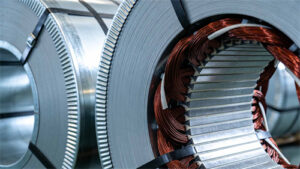
New energy vehicles have strict requirements for the long-life stable operation of enameled copper wire. The working environment of drive motors is harsh, with high requirements for the heat resistance, mechanical properties, and insulation properties of enameled copper wire. New energy vehicle drive motors usually select Class 180 polyester imide enameled copper wire or Class 200 polyamide imide enameled copper wire. Automotive-grade enameled copper wire should comply with relevant automotive industry standards and pass strict vehicle-level certification.
Rail Transit
Rail transit traction motors, transformers, and other equipment have extremely high requirements for the reliability of enameled copper wire, with expected service life usually requiring 20 to 30 years. Traction motors should select Class 180 or Class 200 enameled copper wire, and meet the special requirements of the rail transit industry, such as vibration resistance, temperature cycle resistance, and oil contamination resistance.
Quality Control and Procurement Recommendations
Key Quality Indicators
When procuring enameled copper wire, attention should be paid to the following quality indicators: Conductor Purity: The purity of copper conductor directly affects electrical conductivity and mechanical properties. High-quality enameled copper wire usually uses oxygen-free copper or electrical copper with purity above 99.9%. Insulation Varnish Layer Quality: The varnish layer thickness should comply with standard requirements, and the varnish film should be continuous and complete, without pinholes, bubbles, peeling, or other defects. Dielectric Strength: Should comply with the specified values of corresponding standards, ensuring insulation reliability. Thermal Aging Performance: The thermal aging performance of the insulating varnish layer should be verified through accelerated aging tests. Batch Consistency: The performance of different batches of products should remain stable.
Supplier Evaluation
When selecting enameled copper wire suppliers, the following factors should be comprehensively considered: Production Capacity: Suppliers should have stable production scale and advanced production processes. Quality Management System: Suppliers should pass ISO 9001 and other quality management system certifications. Technical Research and Development Capability: Excellent suppliers should have technical research and development capabilities to provide customized products and technical support based on customer needs. Certification Qualifications: Supplier products should pass relevant international standard certifications. After-sales Service: Suppliers should provide timely technical support and after-sales service.
Incoming Inspection Points
Enameled copper wire should undergo necessary inspection upon arrival, including: Appearance Inspection: Check the surface quality of the varnish film. Dimensional Measurement: Measure key dimensions such as conductor diameter and varnish layer thickness. Electrical Testing: Conduct dielectric strength tests and insulation resistance tests. Mechanical Testing: Conduct flexibility tests and adhesion strength tests. Batch Consistency Verification: Verify batch numbers, production dates, and other information.
Conclusion
Long-life stable operation is the core objective of enameled copper wire selection. Reasonable selection methods should be based on comprehensive consideration of multiple factors including thermal class system, insulating varnish type, product standards, and application scenarios. The thermal class and equipment life follow the 10 degrees C rule, with the expected life shortened by approximately half for every 10 degrees C increase in working temperature. A temperature margin of 15 degrees C to 20 degrees C should be reserved in the design. The selection of insulating varnish systems should be based on thermal class and application scenarios: Class 130 or Class 155 products can be selected for conventional small and medium-sized motors; Class 180 polyester imide products are recommended for medium and high temperature applications; Class 200 or higher polyamide imide products are required for extreme high temperature occasions. Quality control is a key link in ensuring long-life stable operation. Suppliers with production capacity, quality assurance, and certification qualifications should be selected, and strict incoming inspection should be conducted to ensure product quality meets requirements. With the rapid development of industrial automation, new energy vehicles, rail transit, and other high-end fields, the requirements for long-life stable operation of enameled copper wire will continue to increase. Engineering technicians should continuously pay attention to industry technology development trends, continuously optimize selection schemes, and provide solid guarantees for the high-reliability operation of electrical equipment.