

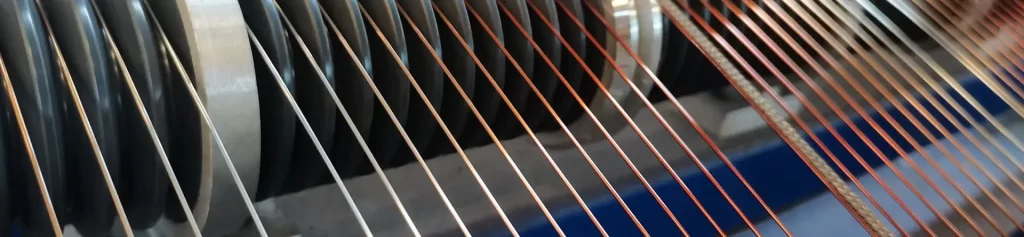
Best Enameled Aluminum Wire for Transformer
Enameled aluminum wire, as an important conductor material for transformer windings, has been widely used in the manufacturing of modern electrical equipment. Compared with enameled copper wire, enameled aluminum wire significantly reduces raw material costs and overall equipment weight while ensuring basic electrical performance, making it the preferred solution for distribution transformers, reactors, and other medium to large electrical equipment. This article systematically describes the technical requirements of transformers for enameled aluminum wire, performance comparison of different insulating varnish systems, the impact of thermal class on transformer life, key technologies for aluminum conductor connection, and selection recommendations for different types of transformers, providing a reference for transformer design and manufacturing engineers and technicians.
Application Background of Enameled Aluminum Wire in Transformers
Application Development History
Transformer winding conductor materials have evolved from copper to aluminum. With the rapid development of the power industry and increasing pressure on transformer costs, aluminum conductors gradually entered the transformer manufacturing field. In the mid-20th century, aluminum-wound transformers began large-scale application in the power distribution field, initially mainly using foil structures. With the advancement of enameled wire manufacturing technology, enameled aluminum round wire and enameled aluminum flat wire gradually replaced some foil windings and have been widely used in small and medium-sized transformers.
Main Advantages
Enameled aluminum wire offers the following significant advantages in transformer applications:
Cost Economy: Aluminum resources are abundant in the Earth’s crust, approximately 800 times the copper content. The material cost of enameled aluminum wire is typically only 25% to 40% of that of enameled copper wire, significantly reducing raw material costs in large-scale manufacturing.
Weight Lightness: The density of aluminum is 2.70 g/cm3, approximately one-third that of copper. Using enameled aluminum wire as winding material can reduce the overall weight of the transformer by 30% to 40%, facilitating transportation, installation, and maintenance.
Heat Dissipation Performance: Aluminum has a relatively large specific heat capacity, providing higher thermal capacity under the same mass conditions, which is beneficial for temperature control and thermal balance during transformer operation.
Resource Sustainability: Aluminum has a high recyclability, and the conductivity of recycled aluminum can reach more than 90% of primary aluminum, meeting the requirements of circular economy development.
Technical Challenges
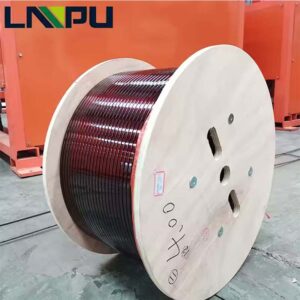
Enameled aluminum wire faces the following technical challenges in application: the conductivity of aluminum is approximately 61% of that of copper, requiring an increase in conductor cross-sectional area to meet current carrying requirements; the tensile strength and hardness of aluminum are lower than those of copper, and attention should be paid to the influence of mechanical stress under winding and vibration conditions; aluminum surface easily forms an oxide film, affecting connection reliability; the thermal expansion coefficient of aluminum is relatively large, requiring attention to thermal stress issues under temperature cycling conditions.
Technical Requirements of Transformers for Enameled Aluminum Wire
Electrical Performance Requirements
DC Resistance: The DC resistance of enameled aluminum wire should comply with the relevant standard specifications and directly affects the transformer load loss.
Dielectric Strength: The insulating varnish layer should have sufficient dielectric strength to withstand transformer working voltage and transient overvoltage.
Insulation Resistance: The insulation resistance of enameled aluminum wire should comply with standard requirements, reflecting the overall insulation performance of the insulating layer.
Partial Discharge Performance: For high-voltage transformers, enameled aluminum wire should have good partial discharge resistance to avoid gradual erosion of the insulating layer.
Mechanical Performance Requirements
Flexibility: The insulating varnish layer should withstand bending deformation during the winding process without cracks or peeling.
Adhesion Strength: The insulating varnish layer and aluminum conductor should have stable adhesion strength, without delamination under processing and operating conditions.
Abrasion Resistance: The insulating varnish layer should have a certain surface hardness, capable of withstanding friction with molds, iron cores, and other components during the winding process.
Resilience: After bending, enameled aluminum wire should maintain shape stability, facilitating subsequent assembly processes.
Thermal Performance Requirements
Thermal Class: The thermal class of enameled aluminum wire should match the insulation class of the transformer. Common correspondences are Class B 130 degrees C, Class F 155 degrees C, and Class H 180 degrees C.
Thermal Aging Performance: The insulating varnish layer should have long-term stable performance at the rated operating temperature, with low thermal aging rate.
Thermal Shock Resistance: The insulating varnish layer should withstand thermal stress caused by sudden temperature changes, without cracking or delamination during transformer start and stop processes.
Chemical Performance Requirements
Oil Resistance: For oil-immersed transformers, the insulating layer should withstand long-term immersion in transformer oil.
Impregnating Varnish Resistance: The insulating layer should have good compatibility with impregnating varnish.
Moisture and Heat Resistance: Insulation performance should remain stable in humid environments.
Insulating Varnish Systems and Thermal Class
Polyester Enameled Aluminum Wire
The thermal class of polyester enameled aluminum wire is typically Class 130 (Class B), with a maximum allowable operating temperature of 130 degrees C, widely used in medium and low temperature applications such as distribution transformers and electronic transformers. The polyester varnish system features excellent insulation performance, good varnish film leveling, strong flexibility, economical cost, and excellent processing performance. Limitations include accelerated thermal aging when operating at temperatures above 130 degrees C for extended periods, moderate hydrolysis resistance, and limited chemical resistance. Modified polyester varnish, by introducing heat-resistant modified monomers, can increase the thermal class to Class 155 (Class F), expanding the application temperature range.
Polyester Imide Enameled Aluminum Wire
Polyester imide enameled aluminum wire typically has a thermal class of Class 180 (Class H) and is the mainstream choice for medium and high temperature applications. Polyester imide varnish introduces imide structures into the polyester molecular chain, significantly improving heat resistance and chemical stability, and can operate long-term at 180 degrees C. The core advantages of this system include excellent heat resistance, good chemical stability, stable thermal aging performance, and high mechanical property retention. The cost of the polyester imide varnish system is between polyester varnish and polyamide imide varnish, making it a cost-effective high-end product widely used in industrial transformers, distribution transformers, and other fields.
Polyamide Imide Enameled Aluminum Wire
Polyamide imide enameled aluminum wire can reach a thermal class of Class 200 (Class C) or even Class 220, making it one of the commercially available insulating varnish systems with the best heat resistance. Key features include a maximum temperature resistance of 220 degrees C, with special formulations reaching 240 degrees C; excellent chemical resistance; outstanding abrasion resistance; and good thermal shock resistance. This product is mainly used in extreme high temperature or high reliability applications such as electric arc furnace transformers, rail transit traction transformers, special industrial power transformers, and aerospace fields. Due to high cost, it is typically used only in applications with special requirements for heat resistance.
Composite Insulating Varnish System
The composite insulating varnish system uses a multi-layer coating process, combining insulating varnishes with different properties. The typical structure is a polyester imide base layer plus a polyamide imide top layer, combining the flexibility of polyester imide with the high temperature resistance of polyamide imide, with a thermal class typically of Class 200 or higher. This system is particularly suitable for power transformers requiring high reliability, variable frequency power transformers, and special transformers in harsh environments.
Impact of Thermal Class on Transformer Life
Thermal Aging Law
According to the 10 degrees C rule, for every 10 degrees C increase in the operating temperature of insulating materials, the thermal aging rate approximately doubles, and the expected life of the transformer shortens accordingly. For example, an enameled aluminum wire with a thermal class of Class 180 has an expected life of approximately 20,000 hours at 180 degrees C; if the operating temperature is controlled at 160 degrees C (with a 20 degrees C margin reserved), the expected life can be extended to approximately 80,000 hours, approximately 4 times that of full-temperature operation.
Temperature Margin Design Principles
When designing transformers, the maximum allowable operating temperature of the insulation system should be ensured to be higher than the expected operating temperature, and a reasonable temperature margin should be reserved, typically recommended to be 15 degrees C to 20 degrees C. Factors considered in reserving the margin include ambient temperature fluctuations, temperature rise due to load changes, measurement errors and design uncertainty, performance degradation during long-term operation, and protection against sudden overload. The winding operating temperature of oil-immersed transformers is typically between 90 degrees C and 120 degrees C; for dry-type transformers, due to relatively poor heat dissipation conditions, the winding operating temperature may reach 130 degrees C to 155 degrees C.
Actual Life Assessment
The actual service life of a transformer depends not only on the thermal class, but also on multiple factors such as operating temperature, load rate, operating environment, and maintenance quality. The design life of power grid main transformers operating continuously for long periods is typically more than 30 years, and distribution transformers are generally 20 to 25 years. Accurate life assessment requires comprehensive analysis based on accelerated aging test data combined with actual operating temperature curves.
Key Connection Technology for Aluminum Conductors
Terminal Connection Challenges
Aluminum surface rapidly forms a dense aluminum oxide film in air, which has high resistivity and is the main obstacle to aluminum conductor connection. If the connection process is improper, it may lead to excessive contact resistance, heating at the connection point, and ultimately cause failure. In addition, the thermal expansion coefficient of aluminum is relatively large, and thermal stress at the connection point under temperature cycling conditions may lead to loosening.
Cold Pressure Connection Process
Cold pressure connection is one of the most commonly used connection methods for aluminum conductors. Key technical points include: selecting dedicated aluminum terminals matching the aluminum conductor; pre-coating the inner wall of the terminal with anti-oxidation conductive paste; using appropriate crimping force and crimping dies; performing appearance inspection and tensile testing after crimping. Cold pressure connection offers the advantages of low connection resistance, high mechanical strength, mature process, and suitability for mass production, but requires dedicated tools and terminals, and is not detachable.
Brazing Connection Process
Brazing fills the connection gap through melting of filler metal under heating conditions to achieve metallurgical bonding. Aluminum conductor brazing requires the use of dedicated aluminum filler metal and flux, with strict control of heating temperature and holding time. Brazing offers the advantages of high connection strength, excellent electrical performance, and suitability for complex shape connections, but requires dedicated equipment and skilled operators, and flux residue may cause corrosion.
Bolt Connection Process
Bolt connection is mainly used for high-current terminals, bus connections, and other occasions. The following measures should be taken: using dedicated aluminum alloy bolts or copper-aluminum transition bolts; ensuring the contact surface is flat and clean and coated with anti-oxidation conductive paste; using a torque wrench to tighten according to the specified torque; and regularly checking the connection fastening condition.
Selection Recommendations for Different Types of Transformers
Oil-Immersed Distribution Transformers
Oil-immersed distribution transformers typically have a capacity range from 315 kVA to 2500 kVA, with relatively low winding operating temperature (100 degrees C to 140 degrees C). Class 155 polyester imide enameled aluminum wire is typically selected to meet requirements. For larger capacity (such as above 2500 kVA) transformers, enameled aluminum flat wire can be used for windings to improve slot fill rate and heat dissipation performance. Oil-immersed transformers have special requirements for the oil resistance of enameled aluminum wire, and both polyester imide varnish and polyamide imide varnish have good oil resistance.
Dry-Type Transformers
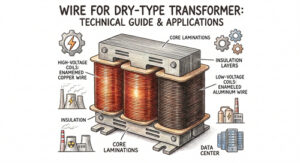
Dry-type transformers are widely used in high-rise buildings, subways, power stations, and other occasions with high fire protection requirements. Heat dissipation conditions are relatively poor, and winding operating temperatures may reach 130 degrees C to 155 degrees C. It is recommended to select Class 180 polyester imide enameled aluminum wire or Class 200 polyamide imide enameled aluminum wire. Epoxy resin cast dry-type transformers require the insulating varnish layer to combine well with epoxy resin, without delamination or cracking.
Rectifier Transformers
Rectifier transformers have high harmonic content, large additional loss, and relatively high operating temperature. For ordinary industrial rectifier transformers, Class 180 polyester imide enameled aluminum wire can be selected; for large current rectifier transformers such as electrolytic aluminum and electrochemistry, Class 200 polyamide imide enameled aluminum wire is recommended.
Arc Furnace Transformers
Arc furnace transformers operate in the harshest environments, characterized by frequent overload and short circuit impact, high operating temperature (up to 180 degrees C or more), severe vibration, and high ambient temperature. Class 200 or higher thermal class polyamide imide enameled aluminum wire should be selected, and the insulating varnish layer should have excellent thermal shock resistance and mechanical strength.
Electronic Transformers
Electronic transformers operate at high frequencies, are small in size and compact in structure, and have high requirements for the precision and consistency of enameled aluminum wire. Ordinary electronic transformers can select Class 130 or Class 155 products; high-frequency switching power supply transformers can use Litz wire or multiple strands of fine enameled aluminum wire to reduce the impact of skin effect and proximity effect.
Certification and Standards for Enameled Aluminum Wire
IEC 60317 is a series of product standards for enameled wire developed by the International Electrotechnical Commission. IEC 60317-0-2 specifies the basic requirements for enameled round aluminum wire, and IEC 60317-0-9 specifies the requirements for enameled flat aluminum wire. IEC 60085 is the thermal assessment and classification standard for insulating materials. The EU market requires products to comply with IEC 60317 standards and bear the CE marking.
The NEMA MW 1000 series standards occupy an important position in the North American market, with thermal class identification using the numerical system (Class 130, Class 155, Class 180, Class 200). UL certification is a necessary condition for entering the North American market, with the main relevant standards being UL 1446 and UL 1000.
The Chinese market primarily adopts the GB/T 23312 standard, which is equivalent to IEC 60317, with thermal class identification consistent with the IEC standard.
Quality Control and Procurement Recommendations
Key Quality Indicators
When procuring enameled aluminum wire, attention should be paid to indicators such as conductor purity (electrical grade aluminum material purity above 99.5%), insulating varnish layer thickness, dielectric strength, varnish film continuity, flexibility, and thermal aging performance.
Supplier Evaluation
When selecting suppliers, comprehensive consideration should be given to factors such as production capacity, quality management system (ISO 9001 certification), technical research and development capabilities, certification qualifications, and after-sales service.
Incoming Inspection Points
Enameled aluminum wire should undergo appearance inspection, dimensional measurement, electrical testing (dielectric strength, insulation resistance), mechanical testing (flexibility, adhesion strength), and batch consistency verification upon incoming inspection.
Conclusion
Enameled aluminum wire, as an important conductor material for transformer windings, offers significant cost and weight advantages. Selection should be based on comprehensive evaluation of the transformer type, capacity, operating environment, and performance requirements: Class 130 or Class 155 products can be selected for conventional small and medium-sized transformers; Class 180 polyester imide products are recommended for medium and high temperature applications; Class 200 or higher polyamide imide products are required for extreme high temperature occasions. Aluminum conductor connection technology is a key link in transformer manufacturing, and process specifications for cold pressure connection, brazing, or bolt connection should be strictly followed. When procuring, suppliers with production capacity and certification qualifications should be selected, and strict incoming inspection should be conducted.