

Introduction
Supercapacitors, also known as electrochemical capacitors or Electric Double Layer Capacitors (EDLC), are novel energy storage devices positioned between traditional capacitors and rechargeable batteries. Compared to batteries, supercapacitors offer extremely high power density, very fast charge-discharge speeds (in seconds), and ultra-long cycle life (up to one million cycles or more). Compared to ordinary capacitors, they have higher capacitance, able to store more energy.
Supercapacitors consist of electrodes, electrolyte, separator, and current collector. Among these, the current collector is a key conductive component connecting electrodes to external circuits. As the mainstream material for current collectors, aluminum foil bears the important function of current collection and conduction. Aluminum foil quality directly affects supercapacitor internal resistance, power characteristics, and long-term reliability.
This article systematically explains key parameters, selection criteria, and industrial applications for aluminum foil used in supercapacitors, serving as a professional reference for supercapacitor manufacturers and procurement personnel.
1. Supercapacitor Structure and Aluminum Foil Current Collector Principles
1.1 Basic Structure of Supercapacitors
The core structure of supercapacitors includes five parts: positive electrode, negative electrode, separator, electrolyte, and current collector.
Positive and negative electrodes: Usually composed of activated carbon electrodes coated on current collectors. Activated carbon has extremely large specific surface area (above 2000m²/g), storing charge through forming an electric double layer at the electrode/electrolyte interface.
Separator: Located between positive and negative electrodes, preventing electrode short circuits while allowing ion passage. Common materials include cellulose paper, glass fiber paper, and polymer films.
Electrolyte: Provides ionic conductivity channel, divided into organic electrolyte (such as carbonate solvents) and aqueous electrolyte (such as sulfuric acid, potassium hydroxide). Organic electrolyte can achieve higher rated voltage (2.7V-3.0V), while aqueous electrolyte has better safety but limited voltage (around 1.0V).
Current collector: Located at the outermost part of electrodes, responsible for collecting current generated by electrodes and conducting to external circuits. The material selection and surface treatment of current collectors directly affect supercapacitor internal resistance and power characteristics.
1.2 Role of Aluminum Foil Current Collector in Supercapacitors
As the current collector for supercapacitors, aluminum foil bears the following core functions:
Current collection: Current generated by electrodes first accumulates to the current collector, then outputs through external circuits. The conductivity of the current collector directly affects the capacitor’s equivalent series resistance (ESR).
Current conduction: The current collector needs to conduct current from the central electrode area to external wiring terminals, requiring sufficiently low resistance and good thickness uniformity.
Mechanical support: The current collector needs to support the activated carbon electrode layer, withstand winding or lamination tension during processing, and endure vibration and thermal expansion/contraction during use.
Interface bonding: Good bonding performance between current collector and electrode active materials ensures no delamination during long-term charge-discharge cycles.
1.3 Comparison of Aluminum Foil and Copper Foil Current Collectors
In the supercapacitor field, aluminum foil is the mainstream current collector material choice, mainly due to:
Cost advantage: Aluminum price is much lower than copper, providing significant cost advantage in mass production.
Weight advantage: Aluminum density is only 30% that of copper, helping reduce overall device weight.
Surface oxidation: Aluminum surface easily forms stable aluminum oxide film, having good corrosion resistance in organic electrolyte.
Processing convenience: Aluminum foil is easy to roll, slit, and surface treat, with mature processing technology.
Of course, in certain specific high-power or high-voltage applications, copper foil current collectors also have their place, but overall, aluminum foil is the preferred material for supercapacitor current collectors.
2. Key Specifications and Technical Requirements
2.1 Aluminum Foil Purity
Aluminum foil purity is a fundamental factor affecting current collector conductivity and corrosion resistance.
High purity aluminum (99.99%, i.e., 4N aluminum): Low impurity content, good conductivity, excellent stability in organic electrolyte, the mainstream choice for supercapacitor current collectors.
Ordinary industrial pure aluminum (99.5%-99.8%): Lower cost but higher impurity content, may affect electrolyte stability and device lifespan.
Impurity effects: Impurity elements such as iron, silicon, and copper may reduce aluminum foil corrosion resistance and may dissolve in electrolyte, affecting electrode performance. It is recommended to select aluminum with iron content below 0.3% and silicon content below 0.2%.
2.2 Thickness Selection
Aluminum foil thickness needs to balance mechanical strength, conductivity, and material cost.
Thin aluminum foil (15μm–20μm): Helps reduce overall capacitor volume and lower material cost. However, lower mechanical strength may cause problems during winding or use.
Medium aluminum foil (20μm–30μm): The mainstream specification for supercapacitor current collectors, balancing mechanical strength, conductivity, and cost.
Thick aluminum foil (30μm–50μm and above): High mechanical strength, suitable for high-power or special structure capacitor designs, but higher cost.
Selection advice: For general consumer electronics and industrial applications, selecting 20μm–30μm thickness aluminum foil offers better cost-performance; for high-power pulse applications, thicker aluminum foil may be needed to reduce internal resistance.
2.3 Width and Dimensions
Aluminum foil width needs to match supercapacitor structure and winding process.
Standard width range: Customizable according to customer requirements; common widths range from tens of millimeters to hundreds of millimeters.
Slitting precision: Width tolerance is usually required within ±0.1mm to ensure smooth winding and electrode alignment.
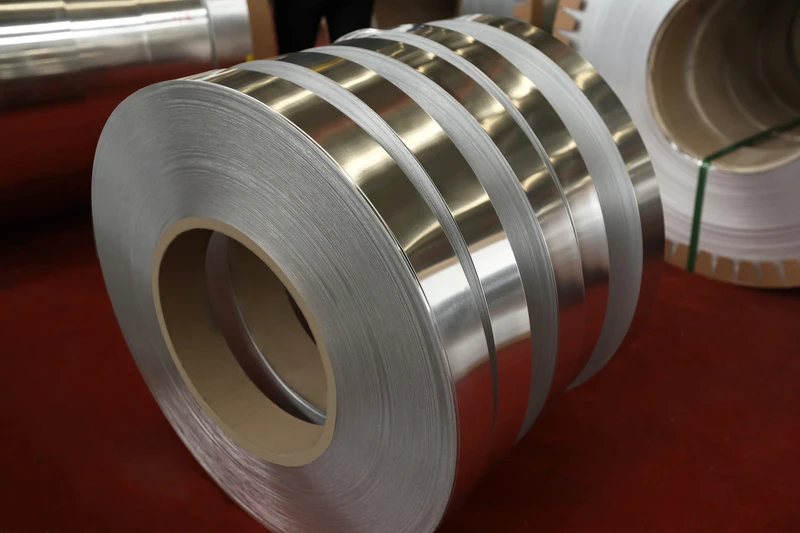
Coil quality: Aluminum foil is usually supplied in coil form; supplier’s rewinding quality (no wrinkles, no ripples) and core tube diameter (usually 3 inches or 6 inches) need to be evaluated.
2.4 Surface State and Treatment
Aluminum foil surface state is crucial for electrode coating and interface bonding.
Plain foil (bare aluminum foil): Smooth surface, requires surface treatment or primer coating before subsequent coating process.
Pre-treated foil: Aluminum foil treated with corona treatment, plasma treatment, or chemical treatment; surface energy is improved, facilitating bonding with activated carbon slurry.
Primer-coated aluminum foil: Pre-coated with a very thin conductive coating (such as carbon paste or special adhesive), enhancing bonding force with electrode materials.
Selection advice: Selecting aluminum foil with appropriate surface treatment can significantly improve electrode layer bonding strength and long-term reliability.
2.5 Mechanical Performance Requirements
Supercapacitors have strict requirements for aluminum foil mechanical properties during manufacturing and use.
Tensile strength: Aluminum foil needs sufficient tensile strength to withstand winding tension and assembly stress. Annealed aluminum foil tensile strength is usually in the 70-110MPa range.
Elongation: Appropriate elongation ensures aluminum foil does not crack during bending and forming processing. Elongation is usually required above 5%.
Surface hardness: Appropriate surface hardness can reduce scratches and indentations, helping maintain consistency of electrode coating quality.
Thickness uniformity: Thickness tolerance should be controlled within ±5% to ensure smooth winding and uniform electrode distribution.
3. Electrode Coating and Manufacturing Process
3.1 Activated Carbon Electrode Slurry
Supercapacitor activated carbon electrodes are usually composed of a mixture of activated carbon, conductive agent (such as carbon black), and binder (such as PVDF or CMC).
Activated carbon: Provides the main active material for double layer capacitance; specific surface area and pore size distribution directly affect capacitance.
Conductive agent: Improves electrode conductivity and reduces internal resistance. Common carbon black or graphite is used.
Binder: Ensures bonding strength between electrode material and current collector while providing mechanical integrity.
3.2 Coating Process
Electrode slurry is uniformly coated on aluminum foil current collectors through coating process, with main processes including:
Screen printing: Suitable for small-batch, precision pattern electrode manufacturing.
Blade coating: Suitable for large-area, continuous industrial production.
Spray coating: Suitable for special shapes or occasions requiring thin film coating.
Coated aluminum foil needs to undergo drying and compaction processes to form the final electrode structure.
3.3 Winding and Assembly
Coated electrode materials are wound or laminated with separators.
Winding process: Higher requirements for aluminum foil flatness and mechanical strength to avoid wrinkling and electrode deviation.
Lamination process: Suitable for large cells or applications requiring high energy density, with strict requirements for aluminum foil thickness uniformity.
4. Industrial Applications and Selection Recommendations
4.1 New Energy Field
PV inverter energy storage: Supercapacitors are used for smoothing PV output fluctuations and short-term energy storage; aluminum foil needs good electrolyte stability and long-term reliability.
Wind power pitch systems: Need to quickly release high power under extreme temperature conditions; supercapacitors and their current collectors need to withstand high pulse current and wide temperature range.
4.2 Transportation Field
New energy vehicle start-stop systems: Supercapacitors are used for capturing braking energy and providing instant high power; devices need high power density and long cycle life.
Rail transit: Used for braking energy recovery and door opening/closing systems, with extremely high requirements for reliability and safety.
4.3 Industrial and Consumer Electronics Field
Uninterruptible power supplies (UPS): Used for short-term backup power and instant power supplementation, requiring fast charge-discharge capability and stable reliable performance.
Smart meters and IoT devices: Used for energy management and data backup, requiring long lifespan and low self-discharge characteristics.
4.4 Common Selection Problems and Solutions
Excessive internal resistance: Check if aluminum foil thickness and conductivity meet requirements; confirm if surface treatment is adequate to ensure good interface contact; consider using thicker aluminum foil or etched aluminum foil to increase surface roughness.
Electrode delamination: Check if aluminum foil surface treatment is sufficient; confirm if binder type and amount are appropriate; consider using primer-coated or pre-treated aluminum foil.
Insufficient cycle life: Check electrolyte and aluminum foil compatibility; confirm if aluminum foil impurity content is within allowable range; consider using higher purity aluminum material.
High-temperature performance degradation: Select aluminum foil and electrolyte system with high temperature resistance; confirm if aluminum foil corrosion resistance meets high-temperature operating environment requirements.
5. Supplier Selection and Quality Control
5.1 Quality Certifications
ISO9001 quality management system certification is the basic requirement. For automotive-grade applications, IATF16949 certification is required. Environmental certifications such as RoHS and REACH are necessary for exporting to overseas markets.
5.2 Technical Capability Evaluation
Custom drawing capability: Whether aluminum foil thickness, width, and tolerance range can meet design requirements.
Surface treatment capability: Whether pre-treatment, etching, or primer coating and other value-added processing capabilities are available.
Sample development cycle: Usually 5–10 working days is a reasonable sample delivery cycle.
Process quality control: Whether key control capabilities such as thickness testing, surface roughness testing, and mechanical performance testing are available.
5.3 Production Capacity and Delivery
Stable production capacity is the guarantee for batch supply. It is recommended to select suppliers with monthly production capacity above 100 tons and complete quality control systems.
6. Product Specifications Summary
| Parameter | Specification Range |
|---|---|
| Aluminum Foil Purity | 99.5% – 99.99% |
| Thickness | 15μm – 50μm |
| Width | 50mm – 500mm |
| Surface State | Plain / Pre-treated / Primer-coated |
| Mechanical Strength | Tensile strength 70–110MPa |
| Standards | IEC / GB / Enterprise Standard |
7. Technical Support and Contact
For detailed product specifications, samples, or technical selection support, please contact Zhengzhou LP Industry Co., Ltd. With years of expertise in electronic aluminum exports, our supercapacitor aluminum foil products are widely used in new energy, transportation, industrial automation, and other fields.
- Email: office@cnlpzz.com
- Phone/WhatsApp: 0086-19337889070
- Key Products: Current collector aluminum foil, Capacitor aluminum foil, Pre-treated aluminum foil
This document provides professional guidance for aluminum foil selection in supercapacitor applications. For specific projects, please consult with technical professionals based on actual operating conditions.