

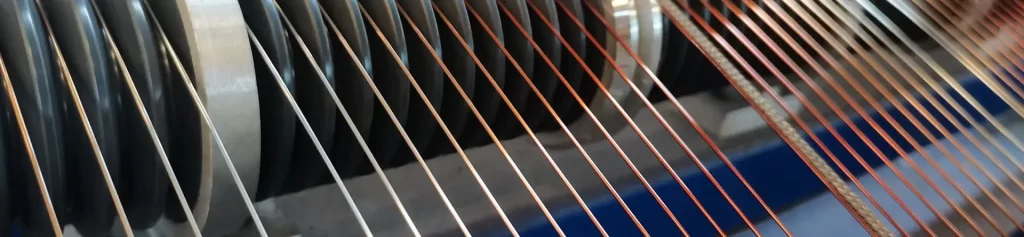
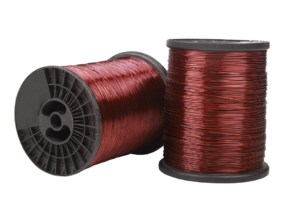
Polyester enameled aluminum wire
Polyester enameled aluminum wire is a product that uses polyester insulating varnish as the main insulating material and aluminum conductor as the conductor. This product combines the excellent performance of polyester insulation system with the economic advantages of aluminum conductor, and has wide applications in the field of electrical equipment manufacturing. Polyester insulation system has excellent electrical insulation performance, good mechanical protection characteristics, and moderate thermal class. Compared with copper conductor, aluminum conductor has the significant characteristics of lower density and economical cost. The combination of the two forms polyester enameled aluminum wire products with a competitive advantage in terms of cost performance. This article systematically describes the technical characteristics, classification system, electrical performance, typical applications, and selection points of polyester enameled aluminum wire, providing a reference for purchasing and engineering technicians.
Technical Characteristics of Polyester Insulation System
Basic Composition of Polyester Insulating Varnish
Polyester insulating varnish is an insulating coating system with polyester resin as the main film-forming substance. Polyester resin is produced by the condensation reaction of polyols and polyacids. Depending on the molecular structure and modification method, various types of polyester varnishes with different properties are formed. Conventional polyester varnishes have excellent insulation performance and adhesion properties, but their thermal class is limited. Modified polyester, by introducing heat-resistant modifying monomers or using special synthesis processes, can improve its thermal class while maintaining good processing performance. Polyester imine varnishes introduce imine structures into the polyester molecular chain, significantly improving heat resistance and chemical stability. The curing mechanism of polyester insulating varnish is a thermosetting reaction. Under appropriate temperature conditions, the enamel coating undergoes a cross-linking reaction, forming a dense insulation layer with a three-dimensional network structure. This structure endows the enamel coating with excellent electrical insulation performance and mechanical protective properties.
Advantages of Polyester Insulation Systems
Polyester insulation systems have multiple advantages compared to other insulation systems. Firstly, there is a cost advantage. Polyester resin raw materials are widely available and relatively inexpensive, making the overall cost of polyester enameled wire lower than that of polyester imide or polyamide-imide products. Secondly, there is a processing performance advantage. Polyester varnish has excellent leveling properties, easily forming a uniform and smooth enameled coating surface during the coating process. Enameled coatings have good flexibility and stable adhesion to conductors, facilitating high-speed winding. Thirdly, there is an electrical performance advantage. Polyester insulation layers possess excellent dielectric strength and low dielectric loss factor characteristics, meeting the application requirements of most conventional electrical equipment.
Limitations of Polyester Insulation Systems
Polyester insulation systems also have certain limitations. In terms of thermal class, the thermal class of conventional polyester varnish is typically limited to 130 degrees C to 155 degrees C, which cannot meet the needs of higher temperature operating conditions. In terms of chemical resistance, polyester enameled coatings have limited resistance to certain organic solvents and polar chemicals. In applications involving benzene, ketone solvents, or strong acids and alkalis, alternative insulation systems should be considered. Regarding hydrolysis resistance, the polyester enamel coating exhibits slightly lower resistance to hydrolysis in high-temperature and high-humidity environments compared to polyester imide systems. For equipment used in humid environments for extended periods, the durability of the polyester insulation layer should be evaluated.
Product Classification and Thermal Class
Classification by Insulation Type
Polyester enameled aluminum wire can be classified into three main categories based on the type of insulating varnish: conventional polyester enameled aluminum wire, modified polyester enameled aluminum wire, and polyester imide enameled aluminum wire. Conventional polyester enameled aluminum wire uses standard polyester insulating varnish, is suitable for thermal class 130 (Class B), and has a maximum operating temperature of 130 degrees C. This product is economical and suitable for conventional electrical equipment with less stringent operating temperature requirements. Modified polyester enameled aluminum wire uses heat-resistant modified polyester insulating varnish, achieving a thermal class of 155 (Class F) with a maximum operating temperature of 155 degrees C. The modification process improves the thermal class while maintaining the good processability of the polyester varnish. Polyester imide enameled aluminum wire uses polyester imide insulating varnish, achieving a thermal class of 180 (Class H) with a maximum operating temperature of 180 degrees C. The polyester imide system achieves a good balance between heat resistance and processability.
Thermal Class System
According to IEC 60085 standard, insulating materials are classified into different thermal classes based on their maximum permissible operating temperature. Common thermal classes for polyester enameled aluminum wire include Class 130, Class 155, and Class 180. Class 130 (Class B) corresponds to a maximum operating temperature of 130 degrees C, and the insulating material is usually a conventional polyester or modified polyester system. This product class is suitable for small and medium-sized motors and transformers with relatively low operating temperatures. Class F (155) corresponds to a maximum operating temperature of 155 degrees C, and the insulation material is typically modified polyester or polyester imide. This class has a wide range of applications and is a common choice for industrial motors and power distribution transformers. Class H (180) corresponds to a maximum operating temperature of 180 degrees C, and the insulation material is typically polyester imide or polyester imide composite. This class is suitable for high-temperature conditions or applications requiring higher safety margins.
Size Specifications Range
Polyester enameled aluminum wire sizes cover two main types: round wire and flat wire. Round wire nominal diameters typically range from 0.20 mm to 3.50 mm, meeting the needs of most round conductor applications. Enameled flat wire (rectangular conductor) specifications are expressed in terms of width and thickness. High-quality manufacturers offer flat wires with widths ranging from 2.0 mm to 25.0 mm and thicknesses from 0.8 mm to 10.0 mm, resulting in hundreds of standard specifications. The standard system covers international and regional standards such as IEC 60317, NEMA MW 1000, and GB/T 23312. Different standards differ in dimensional tolerances, testing methods, and other technical clauses; therefore, the specific standard to be followed should be clearly defined when selecting a product.
Electrical Performance and Testing Indicators
Dielectric Strength
Dielectric strength is the core indicator for evaluating the ability of an insulation layer to withstand an electric field without breakdown. The dielectric strength test for polyester enameled aluminum wire involves applying a gradually increasing AC voltage between the conductor and the insulation layer, recording the voltage value at which insulation breakdown occurs. For example, for a 130-grade polyester enameled aluminum round wire with a nominal diameter of 1.00 mm, the minimum breakdown voltage is typically no less than 2000 VAC. For 155 grade modified polyester or polyester imide products with the same specifications, the minimum breakdown voltage is typically not less than 2500 VAC. Factors affecting dielectric strength include: enamel coating thickness uniformity, curing degree, pinhole defect density, and insulation layer integrity. High-quality manufacturers ensure stable and compliant dielectric strength through rigorous process control and online testing.
Voltage Resistance Performance
The voltage resistance test applies a test voltage higher than the rated voltage to the insulated conductor under specified conditions to verify the reliability of the insulation layer under transient overvoltage conditions. The test voltage is typically 2 to 3 times the rated voltage, and the holding time is typically 1 to 60 seconds. The voltage resistance performance of polyester enameled aluminum wire should meet the requirements of the corresponding product standard. Taking IEC 60317 as an example, the test voltage application time for routine tests is 1 minute, and the test voltage value is determined according to the conductor specifications.
Dielectric Loss Factor
The dielectric loss factor (tan delta) is a parameter characterizing the energy loss of an insulating material under an alternating electric field. A low dielectric loss factor indicates high insulation efficiency and low heat generation in the insulation system. The dielectric loss factor of polyester insulation materials is typically in the range of 0.01 to 0.05 at room temperature, which is superior to some other insulation systems. Low dielectric loss characteristics are particularly important for high-frequency applications or equipment operating continuously for extended periods.
Flexibility and Adhesion
The flexibility test evaluates the ability of the insulation layer to remain intact after bending deformation. The test method involves bending the conductor 180 degrees on a specified mandrel and checking for cracking or peeling of the enamel coating. Polyester enamel coating exhibits good flexibility and can withstand the bending deformation specified in the standard. The adhesion test evaluates the bonding strength between the enamel coating and the conductor surface. Good adhesion ensures that the insulation layer does not peel or detach during winding, processing, and operation. Polyester enamel coating exhibits stable and reliable adhesion to the surface of the aluminum conductor.
Material Properties of Aluminum Conductors
Physical Parameters of Aluminum
Aluminum is a light metallic element with a density of 2.70 g/cm3, approximately one-third that of copper. Replacing copper with aluminum as the conductor material can significantly reduce the overall weight of the wire. The resistivity of aluminum is 2.82 × 10⁻⁸ Ω·m, approximately 1.64 times that of copper. Under the same current carrying conditions, the cross-sectional area of the aluminum conductor needs to be increased accordingly to compensate for the higher resistivity. The coefficient of thermal expansion of the aluminum conductor is 23.5 × 10⁻⁶/degrees C, higher than that of copper (17 × 10⁻⁶/degrees C). In environments with varying temperatures, the difference in thermal expansion between the aluminum conductor and the insulation layer may affect adhesion performance; this factor needs to be considered during design.
Economic Advantages of Aluminum Conductors
Aluminum conductors have a significant cost advantage compared to copper conductors. Aluminum is about 800 times more abundant than copper in the Earth’s crust, and the raw material supply is abundant and the price is relatively stable. Based on current market prices, the material cost of aluminum conductor is about one-quarter to one-fifth that of copper conductor. In large-scale applications or cost-sensitive projects, using polyester enameled aluminum wire can effectively reduce raw material costs. At the same time, the lightweight nature of aluminum conductor can reduce transportation costs and installation labor intensity.
Connection Considerations for Aluminum Conductors
An aluminum oxide film easily forms on the surface of aluminum conductor, which may affect the quality of electrical connections. Standard connection processes should use dedicated aluminum conductor terminals, appropriate tightening torque, and anti-oxidation conductive paste. At the connection points between the enameled aluminum wire and terminals or busbars, it is necessary to ensure that the aluminum oxide film is effectively removed or penetrated, allowing the conductor metal body to form good electrical contact. Cold pressing or brazing processes are recommended.
Typical Application Areas
Small and Medium-Sized Motors
Polyester enameled aluminum wire is widely used in the stator and rotor windings of small and medium-sized asynchronous motors. Motors wound with 130 or 155 grade polyester enameled aluminum wire are widely used in HVAC equipment, pumps, fans, and other fields. Aluminum-wound motors have advantages over copper-wound motors in terms of cost and weight, making them particularly suitable for price-sensitive applications or those with weight restrictions. 130 grade polyester enameled aluminum wire can meet the insulation requirements of most small and medium-sized motors. When selecting polyester enameled aluminum wire for motors, the appropriate thermal class and size specifications should be determined based on the motor’s insulation class requirements, power specifications, and operating system.
Distribution Transformers
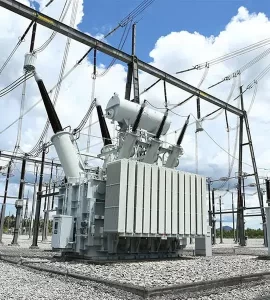
Distribution transformer windings are an important application area for polyester enameled aluminum wire. Oil-immersed transformers use paper-insulated rectangular aluminum windings, while dry-type transformers can directly use polyester enameled rectangular aluminum wire. Transformers for power distribution range in rated capacity from 315 kVA to 2500 kVA, typically operating in thermal class 155 or 180. Grade 155 or 180 products using polyester imide enameled aluminum wire meet the insulation requirements of most power distribution transformers. Flat polyester enameled aluminum wire offers excellent filling efficiency in transformer windings, contributing to improved power density and overall performance.
Relays and Solenoid Valves
Relays, solenoid valves, contactors, and other electrical devices widely utilize polyester enameled round aluminum wire in their windings. These devices have relatively low power ratings, and the insulation material requirements prioritize economy and reliability. Grade 130 polyester enameled aluminum wire, with its moderate thermal class and economical cost, is ideal for these applications. Small round wire products (diameters from 0.20 mm to 1.00 mm) are commonly used in these applications. The windings of solenoid valves and relays typically operate with energized power for extended periods in a closed state, placing certain demands on the heat aging resistance of the insulation materials. Grade 155 modified polyester enameled aluminum wire offers a longer expected lifespan in these applications.
Lighting Ballasts and Transformers
Fluorescent lamp ballasts, electronic transformers, switching power supplies, and other electronic and electrical devices also extensively use polyester enameled aluminum wire in their windings. These applications have high requirements for dimensional accuracy, consistency, and electrical performance stability. Polyester enameled aluminum wire offers a wide range of dimensional specifications to meet the design requirements of different power ratings and voltage specifications. Its excellent processing performance and stable electrical characteristics ensure high efficiency and high quality in automated winding production.
Selection Considerations
Thermal Class Matching
The primary consideration in thermal class matching is the compatibility between the thermal class and the equipment’s operating temperature. The rated temperature of the insulated wire should be 15 degrees C to 20 degrees C higher than the equipment’s maximum operating temperature to allow for appropriate thermal aging margins. For routine applications with operating temperatures below 130 degrees C, Grade 130 polyester enameled aluminum wire is sufficient. For applications with operating temperatures close to or reaching 155 degrees C, Grade 155 modified polyester or polyester imide products should be selected. Ambient temperature, load rate, and heat dissipation conditions all affect the actual operating temperature of the equipment; these factors should be considered comprehensively during selection.
Size Specifications Confirmation
Select polyester enameled aluminum wire with the appropriate specifications based on the conductor dimensions determined by the equipment design. For round wire, the nominal diameter and permissible deviation must be determined; for flat wire, the width, thickness, and aspect ratio must be determined. It should be confirmed that the selected specifications are within the manufacturer’s standard supply range. Special sizes or specifications outside the standard range may require custom production, and the delivery time and price may differ.
Standard System Correspondence
Select products that meet the corresponding standards based on the regulatory requirements of the target market and customer specifications. The North American market typically requires compliance with NEMA MW 1000 standards; the European and international markets typically require compliance with IEC 60317 standards; and the Chinese market typically requires compliance with GB/T 23312 or IEC 60317 standards. UL certification is an important qualification for entering the North American market. Procurement documents should clearly state whether UL certification is required and confirm that the supplier can provide compliant products and supporting documentation.
Supplier Evaluation
Assess the supplier’s production capacity, quality control level, and delivery reliability. Advanced production equipment, comprehensive testing methods, and a strict quality management system are the foundation for ensuring stable product quality. Suppliers should be required to provide product sample testing and batch testing data to verify the consistency of product performance with standard requirements. On-site audits may be conducted if necessary to assess the supplier’s actual production capacity and management level.
Conclusion
Polyester enameled aluminum wire, with its excellent insulation system performance and economic advantages of aluminum conductor, has wide applications in small and medium-sized motors, power distribution transformers, relays and solenoid valves, and lighting ballasts. Different thermal classes of polyester enameled aluminum wire products can meet application requirements from 130 degrees C to 180 degrees C. Grade 130 standard polyester products are cost-effective and suitable for general operating conditions; Grade 155 modified polyester and Grade 180 polyester imide products offer superior heat resistance and are suitable for more demanding applications. Equipment manufacturers should comprehensively consider factors such as thermal class matching, size specifications confirmation, standard system compatibility, and supplier capabilities during the selection process to choose the polyester enameled aluminum wire product with the best cost performance.