

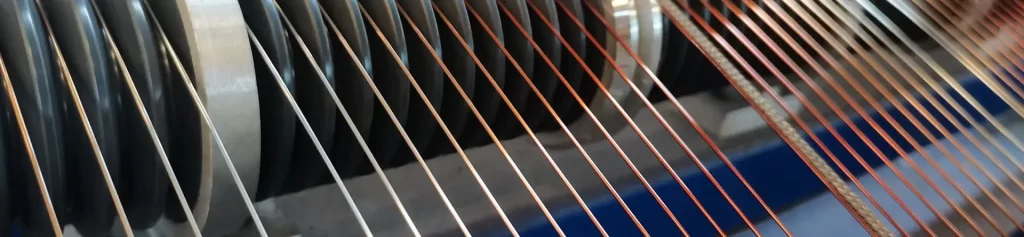
Copper foil, as an important functional metallic material, plays a crucial role in welding electrodes and related processes. Copper, with its excellent electrical conductivity, good thermal conductivity, and excellent corrosion resistance, is an ideal choice for manufacturing welding electrodes. This article will systematically elaborate on the selection points and typical application scenarios of copper foil in the field of welding electrodes, starting from its material properties, providing selection references for engineering technicians.
Material Properties and Classification
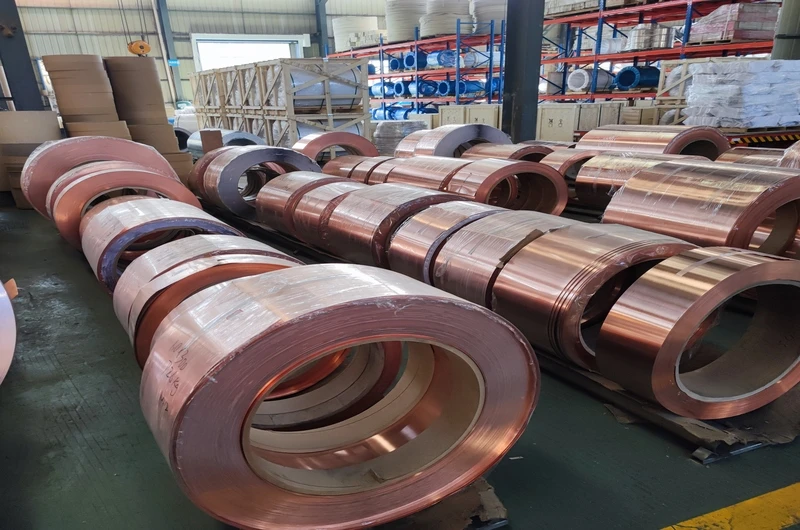
Basic Definition and Scope Copper foil refers to thin strips of pure copper or copper alloys with a thickness ranging from 0.01 mm to several millimeters. According to industry standards, the thickness of copper foil for welding electrodes is typically in the range of 0.1 mm to 3.0 mm, with appropriate specifications selected according to different application scenarios. Copper foil has excellent ductility and processing performance, meeting the manufacturing needs of electrodes with various complex shapes. From a materials science perspective, copper foil for welding electrodes mainly uses high-purity electrolytic copper as raw material. Electrolytic copper can have a copper content of over 99.9%, ensuring stable conductivity and welding quality. Copper’s conductivity is approximately 100% IACS (International Standard for Annealed Copper), making it one of the most conductive materials among all industrial metals.
Key Performance Parameters
Conductivity: Copper’s conductivity is far superior to other commonly used metals. In resistance welding applications, high conductivity means more uniform heat distribution when current passes through, resulting in more stable weld quality. Compared to materials like aluminum, copper electrodes can carry a larger welding current within the same cross-sectional area. Thermal Conductivity: Copper’s thermal conductivity is approximately 397 W/(m·K), ranking among the highest of all metals. This characteristic is particularly important for welding electrodes—the heat generated during welding can be quickly conducted and dispersed, preventing electrode damage or welding defects caused by localized overheating. Mechanical Properties: Copper foil typically has a tensile strength in the range of 200-400 MPa. Annealed copper has good plasticity, facilitating stamping, bending, and other processing. Different heat treatment states can yield a variety of mechanical property combinations, ranging from soft to semi-hard states. Corrosion Resistance: Copper forms a dense copper oxide protective film in air, providing excellent resistance to atmospheric corrosion. This characteristic ensures electrode lifespan and weld quality stability in the harsh environments of welding operations.
Classification System
By Material: Copper foil for welding electrodes mainly falls into two categories: pure copper (T2, T3, etc.) and copper alloys (chromium copper, zirconium copper, etc.). Pure copper foil has lower cost and is suitable for general welding applications; copper alloy foil has higher hardness, wear resistance, and high-temperature performance, making it suitable for heavy-duty or automated welding scenarios. By State: Based on different processing techniques, copper foil can be divided into soft (O state) and hard (Y state). Soft copper foil is easy to form but has lower strength; hard copper foil has high strength but limited ductility. Selection requires comprehensive consideration based on the specific requirements of the welding process. By Surface Condition: The surface treatment method of copper foil directly affects its welding performance. Smooth copper foil has a high surface finish, making it suitable for precision welding; rough copper foil has a larger surface roughness, which helps improve the contact stability with the workpiece.
Selection of Copper Foil for Welding Electrodes
Material Selection
Guide Pure Copper Foil (T2/T3): As the most common electrode material, pure copper foil has the best conductivity and formability. T2 copper foil has a copper content of not less than 99.9%, and the total amount of impurity elements is controlled within 0.1%. This grade is suitable for most common resistance welding, arc welding, and other applications. Chromium Copper Alloy Foil: Adding 0.5%-1.0% chromium to copper can significantly improve the material’s hardness and wear resistance. Chromium copper alloys maintain good mechanical properties at high temperatures and are suitable for high-current continuous welding or automated welding production lines. Zirconium Copper Alloy Foil: Zirconium copper alloys have excellent anti-softening properties and higher conductivity. In high-frequency scenarios requiring long-term continuous welding, zirconium copper electrodes exhibit longer service life and more stable welding quality. Welding process parameters should also be considered during selection. Resistance spot welding typically uses pure copper or low-alloy copper foil; flash butt welding requires oxygen-free copper material with higher conductivity; submerged arc welding and gas shielded welding may require surface plating treatment.
Thickness and Width specifications
Width specifications: The copper foil width selection needs to be determined based on the electrode design. For round electrodes, copper foil with a width slightly larger than the electrode diameter is typically selected for cutting. For irregularly shaped electrodes, the required width needs to be calculated based on the unfolded diagram, with appropriate machining allowance.
Thickness Tolerance: The thickness tolerance of the copper foil used for electrodes directly affects the stability of the welding quality. High-precision welding applications should use products with higher tolerance grades (usually within ±0.02mm); general industrial applications can use ordinary industrial-grade products (tolerance around ±0.05mm).
Surface Treatment Processes
The surface condition of the copper foil is one of the key factors affecting welding performance. Common surface treatment processes include: Bright Annealing: By controlling the heating temperature and atmosphere, work hardening is eliminated, resulting in a bright, new-looking surface. Bright copper foil has a high surface finish and stable contact resistance, making it suitable for welding applications of precision electronic components. Tin Plating: Plating a thin layer of tin on the surface of the copper foil improves the solderability and corrosion resistance of the material. Tin-plated copper foil is commonly used in the manufacture of electrodes requiring brazing processes. Nickel Plating: Nickel plating improves the hardness and wear resistance of copper foil, extending the electrode’s lifespan in heavy-duty welding. Roughening Treatment: Increasing the surface roughness of copper foil through chemical or mechanical methods improves the frictional stability between the electrode and the workpiece, reducing slippage.
Typical Applications
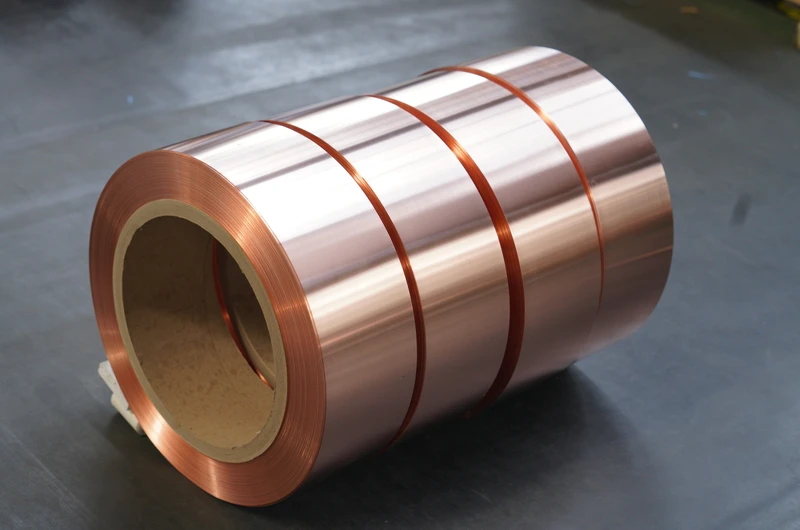
Copper Foil in Welding Electrodes:Resistance Spot Welding Electrodes Resistance spot welding is one of the most important application areas for copper foil electrodes. In the spot welding process, the electrode plays a triple role in conducting current, transmitting pressure, and dissipating heat. Electrode Cap and Electrode Rod: The electrode of a spot welding machine typically consists of an electrode cap and an electrode rod. The electrode cap is in direct contact with the workpiece and needs to withstand high temperature, high pressure, and mechanical wear. Copper foil is stamped to form the electrode cap blank, which is then machined to achieve precise dimensions. Typical Failure Modes: The main failure modes of spot welding electrodes include end face wear, end face deformation, and center depression. Selecting appropriate copper foil materials and processing techniques can significantly extend the electrode’s lifespan. For example, in spot welding of galvanized steel sheets, using chromium-copper alloy electrodes can extend the lifespan by 3-5 times compared to ordinary pure copper electrodes. Cooling Design: High-current spot welding electrodes typically employ an internal water-cooling structure. A copper foil outer casing and inner cooling pipe form a complete cooling channel, allowing heat to be dissipated promptly during welding and ensuring stable electrode end-face temperature.
Seam Welding Electrode
Electrode Wheel Seam welding requires the electrode wheel to maintain stable welding pressure and current conduction while rotating continuously. Electrode Wheel Design: Seam welding electrode wheels typically consist of a copper alloy wheel body and insulated bearings. Copper foil is rolled and welded to create a wheel-shaped electrode of a specific diameter. The rim width and thickness are determined based on welding process parameters. Continuous Operation Requirements: Seam welding is a continuous welding process, requiring the electrode wheel to withstand high temperatures and mechanical loads for extended periods. Selecting high-temperature performance-grade zirconium copper or chromium copper alloy copper foil is crucial for ensuring the electrode wheel’s lifespan. Common Applications: Copper alloy electrode wheels are used for sealing seams in products such as fuel tanks, gas cylinders, and kitchenware.
Flash Butt Welding Electrode
Flash butt welding is a common welding method for butt welding large cross-section workpieces, placing even stricter requirements on electrode materials. High Current Conduction: The instantaneous current in flash butt welding can reach thousands to tens of thousands of amperes. Copper foil electrodes require extremely low resistance and excellent heat dissipation to ensure efficient current conduction. Upsetting Force Withstand: After flash butt welding, rapid upsetting is required, and the copper electrode must withstand enormous axial impact forces. High-strength copper alloys are the preferred material for this application. Alignment Accuracy: Precise alignment of the welding electrodes directly affects the welding quality. The thickness uniformity and flatness of the copper foil are prerequisites for ensuring electrode alignment accuracy.
Gas Shielded Welding Contact Tips
In gas shielded welding (such as MIG welding and TIG welding), the contact tip is a key component for transmitting welding wire and current. Material Selection: Contact tips are usually made of pure copper or copper alloy tubing with a wall thickness of 0.5-1.5mm. For high-current welding, oxygen-free copper with better thermal conductivity should be selected. Specifications Matching: The inner diameter of the contact tip must be precisely matched with the diameter of the welding wire. The smoothness of the inner wall of the copper foil contact tip directly affects the stability of the welding wire feed. Lifespan Impact: The contact tip orifice diameter increases due to wear, leading to arc instability and decreased welding quality. Regularly replacing the contact tip is an important maintenance measure to ensure welding quality.
Plasma Cutting Electrodes
Copper foil electrodes for plasma cutting have a special structural design. Tungsten Electrode Clamping: The electrode chuck of the plasma cutting torch is usually made of copper alloy to clamp the tungsten electrode and conduct current. Cooling Channels: Cooling channels formed by the copper foil processing ensure that the electrode maintains a reasonable temperature near the high-temperature plasma arc. Resistance to Plasma Erosion: The high temperature of the plasma arc poses a severe test to the electrode material. Specialized copper alloy materials can maintain stable performance under extreme conditions.
Procurement and Quality
Supplier Selection
The selection of suppliers of copper foil for welding electrodes should comprehensively consider the following factors: Production Capacity: Confirm that the supplier can provide copper foil materials that meet the technical requirements. Key parameters include: thickness range, width range, material grade, surface condition, etc. Quality Certification: Basic certifications include ISO9001 quality management system. For export products, it is also necessary to pay attention to relevant international standard compliance certificates. Technical Cooperation Capability: Excellent suppliers should be able to provide technical consultation, selection advice, and other services according to customer needs. For customized product needs, the supplier’s technical responsiveness is crucial.
Storage and Transportation
Copper foil material is relatively stable, but precautions should still be taken during storage and transportation: Moisture and Oxidation Prevention: Copper foil should be stored in a dry and ventilated environment, avoiding contact with corrosive substances. Moisture-proof packaging can be used for long-term storage. Avoid Mechanical Damage: Copper foil has a low surface hardness; scratches, indentations, and other mechanical damage should be avoided during stacking and handling. Clear Labeling: Materials arriving on site should have clear product labels indicating material, specifications, batch number, etc., for easy traceability management.
Technological Development
and Prospects With the development of welding automation and intelligence, copper foil for welding electrodes exhibits the following development trends: High-Strength Copper Alloys: By adding trace alloying elements (chromium, zirconium, silver, etc.), new copper alloy materials with high strength, high conductivity, and excellent high-temperature performance are being developed to meet the needs of efficient welding production lines. Surface Treatment Technology: Advanced surface treatment technologies (such as PVD coating, laser surface treatment, etc.) can further improve the wear resistance and service life of copper foil electrodes. Precision Rolling Process: Automated welding places higher demands on electrode dimensional accuracy; precision rolling technology can achieve stricter thickness tolerance control. Environmentally Friendly Materials: Developing environmentally friendly copper alloy materials reduces the use of harmful elements, aligning with the development trend of green manufacturing. —
Summary
Copper foil, as a key material in the manufacture of welding electrodes, plays an irreplaceable role in numerous application fields such as resistance spot welding, seam welding, flash butt welding, and gas shielded welding due to its excellent electrical and thermal conductivity, good processing performance, and reliable welding quality. During the selection process, factors such as material grade, dimensions, surface condition, and quality level should be comprehensively considered based on the specific welding process requirements to choose the most suitable copper foil product.