

Introduction
Electromagnetic coils are one of the most fundamental and important components in electrical equipment. From household appliances to industrial equipment, from new energy vehicles to rail transit, from medical devices to aerospace, almost all equipment relying on electromagnetic principles depends on electromagnetic coils. The performance of electromagnetic coils directly determines the efficiency, reliability, and service life of the entire equipment.
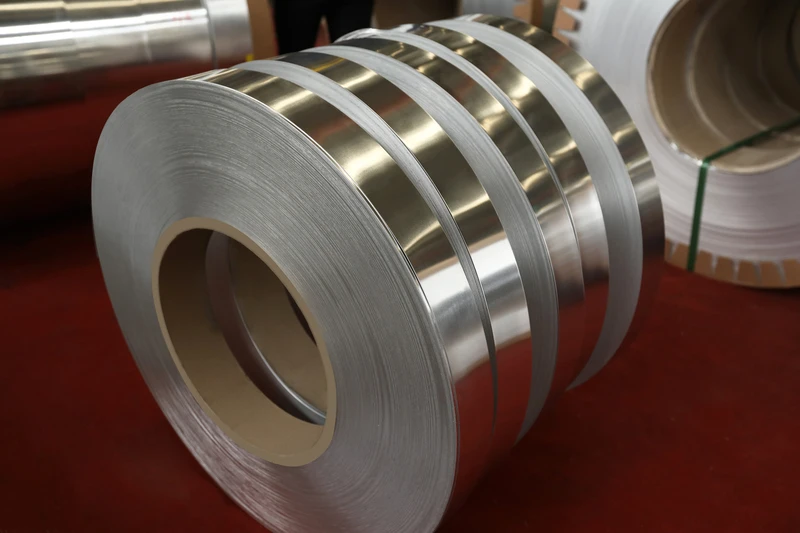
With its lightweight properties, cost advantages, and good electrical conductivity, aluminum foil has gained widespread application in the electromagnetic coil field. Compared to round aluminum wire, aluminum foil as a flat conductor offers larger heat dissipation area, higher fill factor, and better mechanical processing performance, making it especially suitable for large-scale automated production.
This article systematically explains key parameters, selection criteria, and industrial applications for aluminum foil used in electromagnetic coils, serving as a professional reference for engineers and procurement personnel.
1. Working Principles of Electromagnetic Coils and Advantages of Aluminum Foil
1.1 Basic Principles of Electromagnetic Coils
The working principle of electromagnetic coils is based on the law of electromagnetic induction. When current flows through a conductor, it generates a magnetic field around it; conversely, a changing magnetic field can induce current in a conductor. This principle was first discovered by Faraday in 1831 and forms the foundation of modern electrical industry.
The number of turns, wire diameter, and arrangement of coils directly affect magnetic field strength and coil performance. According to Ampere’s circuital law, the magnetic field strength generated by a coil is proportional to the product of current strength and number of turns. Therefore, under the same current conditions, increasing turns or conductor cross-sectional area can both enhance magnetic field strength.
Core functions of electromagnetic coils include: generating magnetic fields of required strength, achieving electromagnetic energy conversion and transmission, and working with other components to complete functions such as filtering, current limiting, and energy storage. In practical applications, electromagnetic coils often need to withstand harsh conditions such as high current, high voltage, and high temperatures, making material selection crucial.
1.2 Why Choose Aluminum Foil
As a coil material, aluminum has the following significant characteristics compared to copper:
Lightweight Advantage: Aluminum has a density of only 2.7 g/cm³, approximately one-third that of copper (8.9 g/cm³). It is an ideal choice for applications requiring weight reduction, such as new energy vehicles, aerospace, and rail transit. Reducing equipment weight not only decreases material costs but also improves energy efficiency ratio.
Cost Advantage: Aluminum resources are abundant, with prices approximately one-third to one-half that of copper. In large-scale applications, this can significantly reduce material costs. Taking an industrial motor as an example, using aluminum coils instead of copper coils can reduce conductor costs by 30-50%.
Electrical Conductivity: Aluminum’s conductivity is approximately 61% that of copper (IACS standard). Although the absolute value is lower than copper, considering the weight factor, aluminum’s conductivity-to-weight ratio is actually comparable to copper. For applications pursuing lightweight rather than extreme performance, aluminum is an extremely cost-effective choice.
Thermal Dissipation Performance: As a flat conductor, aluminum foil has a much larger heat dissipation area than round wire with the same cross-sectional area. The flat structure allows heat to dissipate more easily to the surrounding medium, effectively reducing coil temperature rise. Good thermal dissipation performance is particularly important for high power density applications.
Corrosion Resistance: Aluminum naturally forms a dense aluminum oxide film (Al₂O₃) on its surface, which has excellent corrosion resistance and can protect the internal conductor from further oxidation. In contrast, copper requires additional anti-oxidation treatment.
1.3 Typical Applications of Aluminum Foil in Electromagnetic Coils
Electromagnetic coils are core fundamental components of various electrical equipment, with extremely wide application fields.
In the motor field: household appliance motors (air conditioning compressors, washing machine motors, refrigerator compressors, etc.), industrial special motors, wind power generators, new energy vehicle drive motors, all require electromagnetic coils.
In the transformer field: power transformers, distribution transformers, high-frequency transformers, switching power supplies, etc., with their core components being coil windings.
In the inductor field: various filtering inductors, power inductors, common-mode inductors, differential-mode inductors, all require coils as the core conductor of the magnetic circuit.
In the control component field: solenoid valves, relays, contactors, circuit breakers, etc., generate electromagnetic force through coils to drive mechanical component movements.
In the new energy field: PV inverters, wind power converters, electric vehicle charging stations, energy storage systems and other power electronics equipment all rely on inductive coils and transformer coils.
2. Key Specifications and Technical Requirements
2.1 Thickness Selection
Aluminum foil thickness is a core parameter affecting coil performance, requiring comprehensive selection based on working current, power density, and thermal dissipation conditions of specific applications.
For small-power electromagnetic coils (current below 10A), recommended thickness is 0.03–0.08mm. Thin aluminum foil is soft and easy to form, suitable for precision winding design, widely used in household appliance micro motors, relays, solenoid valves, and similar applications.
For medium-power electromagnetic coils (current 10–100A), recommended thickness is 0.08–0.20mm. This thickness range balances conductivity and mechanical strength, can carry relatively high current while maintaining sufficient softness for winding. Industrial contactors, relays, general-purpose motors, etc. typically use aluminum foil in this thickness range.
For large-power electromagnetic coils (current above 100A), recommended thickness is 0.20–0.50mm. Thick aluminum foil has large cross-sectional area, low resistance, good heat dissipation, and can effectively carry high current. PV inverters, wind power converters, new energy vehicle charging stations and other high-power equipment typically require aluminum foil above 0.3mm.
Selection advice: Within space permitting, it is recommended to prioritize thicker aluminum foil. Thicker aluminum foil has lower resistance, less heat generation, and better heat dissipation, which is beneficial for improving coil power density and service life. Although thin aluminum foil has slightly lower cost, the increased heat generation and efficiency reduction due to higher resistance may not be economical in the long run.
2.2 Width and Shape
Aluminum foil width needs to be comprehensively determined based on coil frame dimensions, turn design, and winding process.
Standard width specifications include 5mm, 10mm, 15mm, 20mm, 30mm, 50mm, 80mm, and 100mm, with custom widths available as needed. Width tolerance is typically controlled within ±0.1mm to ±0.2mm, and high-precision applications can control within ±0.05mm.
Aluminum foil width should match the coil frame and winding process. If width is too large, it may lead to uneven winding and reduced fill factor; if width is too small, it may require more turns to achieve the same electrical parameters, potentially increasing coil size and cost.
Special-shaped aluminum foil such as bent type, step type, and U-type can be customized according to customer drawings to meet special coil design requirements. For example, in inductor designs requiring specific magnetic circuit structures, special-shaped aluminum foil can help achieve optimal magnetic flux paths and improve inductor performance and efficiency.
2.3 Purity and Conductivity
Aluminum foil purity directly affects conductivity and thermal stability, and is an important reference for selection.
1060 pure aluminum (99.6% aluminum content) is the most commonly used industrial aluminum material, with conductivity approximately 61% IACS, best cost-effectiveness, suitable for most general industrial applications such as ordinary motors, transformers, and inductors.
1070 pure aluminum (99.7% aluminum content) has very close performance to 1060, with conductivity also approximately 61% IACS, and can serve as an alternative to 1060.
Higher purity aluminum materials such as 1080 (99.8%) and 1090 (99.9%) have significantly increased costs but limited conductivity improvement, and are generally not recommended for ordinary electromagnetic coils. Only consider using them in high-end applications with special requirements for electrical conductivity.
It is particularly important to note that impurity content directly affects electrical conductivity. Impurity elements such as iron, silicon, and copper reduce aluminum’s conductivity. Impurity content should be strictly controlled, especially for iron content, typically required to be below 0.35%.
2.4 Annealing State Selection
The annealing state of aluminum foil determines its mechanical properties, requiring selection based on processing method and usage requirements.
Hard state aluminum foil (H18/H19): Tensile strength 150–200MPa, elongation 1–3%. Hard state aluminum foil has strong shape-holding ability and is not easily deformed, suitable for automatic winding machines and high-speed winding processes. In applications requiring precise coil dimensions, hard state is the preferred choice.
Soft state aluminum foil (O): Tensile strength 50–80MPa, elongation 20–35%. Soft state aluminum foil is very soft and easy to form, suitable for manual winding and complex shape coil designs. In cases requiring post-bending processing, soft state is the only choice.
Half-hard state aluminum foil (H14/H16): Tensile strength 100–150MPa, elongation 3–8%. The performance of half-hard state aluminum foil is between hard and soft states, offering both certain formability and mechanical strength. It has the widest applicability, and most application scenarios can use it.
Selection advice: If unsure about which state to choose, half-hard state is the safest choice, as it can demonstrate good performance in most applications.
2.5 Surface Quality Requirements
Aluminum foil surface quality directly affects coil insulation performance, dielectric strength, and service reliability.
Surface roughness (Ra) should be controlled at ≤1.0μm, and ≤0.6μm recommended for high-frequency applications to reduce eddy current losses. Rough surfaces can increase eddy current losses for high-frequency current, reducing coil efficiency.
Surfaces should be free from cracks, folds, inclusions, oil contamination, and other defects. These defects may lead to insulation breakdown or stress concentration, affecting coil reliability.
For applications with dielectric strength requirements, aluminum foil’s dielectric strength needs to be tested. Standard aluminum foil’s dielectric strength is typically between 30–80 kV/mm, with specific values depending on thickness and surface condition.
3. Temperature Resistance and Insulation Selection
3.1 Effect of Temperature on Aluminum Foil Coils
Temperature is one of the key factors affecting aluminum foil coil performance and life. For every 10°C increase in temperature, aluminum’s resistance increases by approximately 4%. This means that if coil temperature rise is too high, not only do losses increase, but a vicious cycle may form—the hotter coil generates more heat, which ultimately may lead to overheating damage.
Aluminum’s melting point is 660°C, but mechanical properties significantly decline at high temperatures. When temperature exceeds 200°C, aluminum’s tensile strength decreases by more than 50%. Therefore, aluminum foil coils should generally not operate above 200°C.
Good thermal dissipation design is crucial for maintaining coils within a reasonable operating temperature range. Common thermal dissipation methods include: natural air cooling, forced air cooling, water cooling, and oil cooling. Aluminum foil selection needs to match the thermal dissipation design.
3.2 Insulation Class and Selection
| Insulation Class | Max Operating Temperature | Aluminum Foil Selection Advice |
|---|---|---|
| Class B | 130°C | Soft aluminum foil + regular insulation |
| Class F | 155°C | Half-hard aluminum foil + heat-resistant insulation |
| Class H | 180°C | Hard aluminum foil + high heat-resistant insulation |
Selection requires comprehensive consideration of the following factors: ambient temperature (maximum working ambient temperature), coil temperature rise (determined by current and thermal dissipation conditions), safety margin (typically above 20°C), and duty cycle (continuous vs. intermittent operation).
Calculation formula: Design Temperature = Ambient Temperature + Temperature Rise + Safety Margin (20°C)
Example: 40°C ambient + 80°C rise + 20°C margin = 140°C design temperature, should select Class F insulation.
4. Insulation Treatment Solutions
4.1 Enameled Aluminum Foil
Enamel insulation is the most common and economical treatment method for electromagnetic coils. Insulation varnish is applied to the aluminum foil surface to form a uniform insulation layer.
Polyester varnish (PEW): Temperature resistance 130°C (Class B), dielectric strength 80–120 kV/mm, best cost-effectiveness, suitable for most general industrial applications such as household appliance motors and ordinary contactors.
Polyesterimide varnish (EIW): Temperature resistance 155°C (Class F), dielectric strength 100–150 kV/mm, with better heat resistance, suitable for applications with higher temperature rise such as industrial motors and power inductors.
Polyamide-imide varnish (AIW): Temperature resistance 200°C (Class C), dielectric strength 120–180 kV/mm, with excellent heat and chemical resistance, suitable for high-temperature environments or applications with high reliability requirements.
4.2 Insulation Paper/Film Lamination
Insulation paper or film laminated with aluminum foil can significantly improve dielectric strength and moisture resistance.
Polyester film (PET): Thickness 0.025–0.188mm, used laminated with aluminum foil to increase insulation strength.
NOMEX paper (aromatic polyamide paper): Heat resistance above 200°C, excellent electrical and mechanical properties, particularly suitable for high-temperature and high-voltage applications.
For coils used in high-voltage or humid environments, composite insulation solutions are recommended. For example, in outdoor transformers and high-voltage inductors, composite insulation can effectively prevent breakdown and moisture ingress.
4.3 Epoxy Impregnation
Coils undergo epoxy resin overall impregnation after winding, then cured.
Advantages of this treatment method: excellent sealing, effective moisture and corrosion resistance; high mechanical strength, able to withstand vibration and impact; strong weather resistance, suitable for outdoor and harsh environment use.
Disadvantages: thermal dissipation performance may slightly decrease (as epoxy layer may hinder heat dissipation); difficult maintenance, coils are hard to repair once impregnated.
Epoxy impregnation is particularly suitable for the following applications: rail transit traction motors, electric vehicle drive motors, outdoor power transformers, and electrical equipment used in marine environments—applications with extremely high reliability requirements.
5. Industrial Applications and Selection Recommendations
5.1 Typical Application Fields
Household Appliance Field: Air conditioning compressor motors, washing machine motors, refrigerator compressor motors, vacuum cleaner motors, fan motors, etc. These applications focus on cost control and reliability, with coil power typically ranging from tens of watts to hundreds of watts. Recommended: soft or half-hard 1060 aluminum foil with polyester enamel insulation.
Industrial Motor Field: Various industrial special motors, wind power generators, water pump motors, power tool motors, etc. Power ranges from hundreds of watts to hundreds of kilowatts, with higher requirements for reliability and durability. Recommended: half-hard aluminum foil, select appropriate thickness based on power, and Class F or H insulation based on temperature rise.
New Energy Power Electronics Field: PV inverters, wind power converters, electric vehicle charging stations, energy storage systems, etc. These applications have high power density and significant heat generation, with strict requirements for thermal dissipation and efficiency. Recommended: thicker aluminum foil (above 0.2mm) and high insulation class (Class F or H).
Rail Transit Field: Traction motors, auxiliary power supplies, braking systems, etc. Rail transit has extremely high reliability requirements, needing to withstand harsh conditions such as vibration, impact, and wide temperature ranges. Recommended: hard aluminum foil with epoxy impregnation to ensure long-term stable operation.
5.2 Common Selection Problems and Solutions
High Coil Temperature Rise: First check if aluminum foil thickness is sufficient—insufficient thickness leads to excessive resistance and heat generation; second, check if thermal dissipation design is reasonable—whether air/water cooling is adequate and heat dissipation area is sufficient; finally, confirm if insulation class matches—high-temperature applications must use high insulation class magnet wire.
Skin Effect in AC High-Frequency Applications: When current frequency increases, current tends to flow along the conductor surface (skin effect), reducing effective conductive cross-sectional area and increasing equivalent resistance. Solution: select thin aluminum foil with multi-turn parallel winding instead of thick aluminum foil with fewer turns, utilizing the large surface area of thin foil to reduce high-frequency resistance.
Mechanical Strength in Vibration Environments: In vibration environments (such as rail transit and electric vehicles), coils need to withstand continuous mechanical stress. Solutions: select hard aluminum foil to improve mechanical strength; use epoxy impregnation reinforcement when necessary; consider vibration reduction measures in design.
Moisture and Corrosion Environments: In moist or salt fog environments (such as marine applications and outdoor equipment), aluminum foil may be subject to corrosion. Solutions: select high-purity aluminum to reduce galvanic corrosion caused by impurities; use epoxy impregnation or insulation paper composite solutions for enhanced moisture resistance; apply anti-corrosion coatings on surfaces.
6. Supplier Selection and Product Specifications
6.1 Quality Certifications
ISO9001 quality management system certification is the basic requirement for suppliers, ensuring stable and traceable product quality. UL certification is necessary for entering the North American market. RoHS and REACH certifications are required for exporting to European markets. CE marking is mandatory for entering the EU market.
It is recommended to select suppliers with complete testing equipment and reporting capabilities, able to provide material certificates and inspection reports for each batch.
6.2 Technical Capabilities
Aluminum foil thickness and width should be customizable according to drawings, supporting sample processing. Sample delivery within 5–10 working days is a reasonable requirement. Mass production delivery within 20–30 working days is standard lead time; expedited services may require additional fees.
Important to evaluate suppliers’ actual supply cases, especially those related to your application field. Experienced suppliers can provide better technical support and selection advice.
6.3 Production Capacity and Delivery
Stable production capacity is the foundation of supply chain security. It is recommended to select suppliers with monthly production capacity above 100 tons to ensure delivery stability. Also evaluate suppliers’ raw material sources and quality control systems.
7. Product Specifications Summary
| Parameter | Specification Range |
|---|---|
| Thickness | 0.03mm – 0.50mm |
| Width | 5mm – 150mm |
| Purity | 99.5% – 99.8% |
| State | Soft / Half-hard / Hard |
| Temperature Range | -40°C – +200°C |
| Standards | IEC / GB / JIS / NEMA |
8. Technical Support and Contact
For detailed product specifications, samples, or technical selection support, please contact Zhengzhou LP Industry Co., Ltd. With 30 years of expertise in electromagnetic wire exports, our aluminum foil products are widely used in various electromagnetic coil fields, exported to over 50 countries and regions worldwide.
- Email: office@cnlpzz.com
- Phone/WhatsApp: 0086-19337889070
- Key Products: Enameled copper (aluminum) round wire, Enameled copper (aluminum) flat wire, Copper foil, Aluminum foil
This document provides professional guidance for aluminum foil selection in electromagnetic coil applications. For specific projects, please consult with technical professionals based on actual operating conditions.