

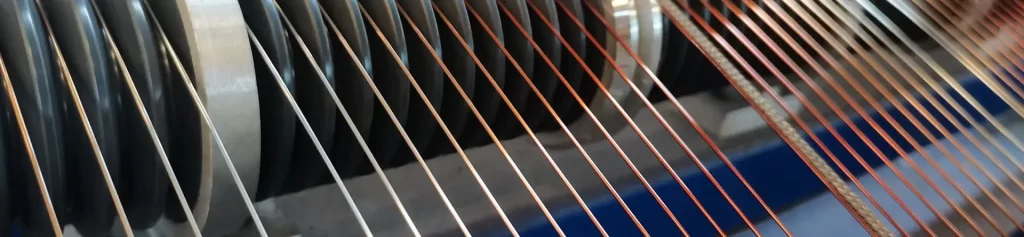
Motor winding aluminum wire
# Aluminum Wire for Motor Windings: An Economical Alternative to Copper Conductors In the design and manufacture of electromagnetic equipment such as motors, transformers, and inductors, the selection of conductor materials is a crucial decision. Copper conductors have long held a dominant position due to their superior conductivity, while aluminum conductors, with their unique cost advantages and lightweight characteristics, demonstrate irreplaceable value in specific application areas. Aluminum wire for motor windings, as an economical alternative to copper wire, has a wide application market and accumulated technological expertise globally.
For power transformer manufacturers, motor design engineers, and purchasing decision-makers, a deep understanding of the technical characteristics, economic advantages, and application boundaries of aluminum wire is fundamental to making optimal material choices. This article will systematically introduce the technical characteristics of aluminum wire for motor windings, a comprehensive comparison with copper conductors, detailed classifications, application areas, and selection points, providing comprehensive and in-depth technical reference for electrical engineers, purchasing personnel, and equipment manufacturers.
Basic Characteristics of Aluminum Conductors
The core advantages of aluminum wire for motor windings are built upon the physical and electrical properties of aluminum itself. Aluminum has a resistivity of 2.65 × 10⁻⁸ Ω·m, approximately 1.6 times that of copper (1.68 × 10⁻⁸ Ω·m). This means that, under the same cross-sectional area, the resistance of an aluminum conductor is about 60% higher than that of a copper conductor, resulting in a corresponding decrease in current carrying capacity and conductivity. However, aluminum has a density of only 2.7 g/cm³, about 30% of that of copper (8.96 g/cm³), giving aluminum windings a significant advantage in weight-sensitive applications. Under the same conductivity conditions, an aluminum conductor weighs only about one-third of a copper conductor, a lightweight characteristic that is particularly important in large equipment.
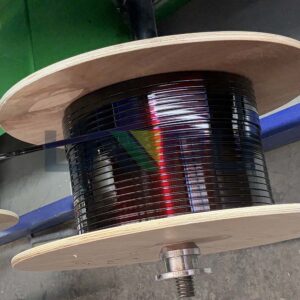
From a cost perspective, aluminum is about one-third to one-quarter the price of copper, and sometimes the price difference is even greater. In large equipment, the material cost of the windings accounts for a considerable proportion of the overall equipment cost. Taking a large power transformer as an example, replacing copper windings with aluminum windings can save considerable material costs, sometimes reaching 15% to 25% of the total material cost.
Furthermore, aluminum has good processing properties, exhibiting good operability in winding, forming, and other processes, and the investment and maintenance costs of production equipment are relatively low. However, the main disadvantages of aluminum conductors also need to be acknowledged.
First, the higher resistivity leads to increased losses—which, in long-term operation, results in higher energy consumption and operating costs. For example, in a 10 MVA power transformer, replacing copper windings with aluminum windings could increase load losses by 10% to 15%, representing a considerable additional electricity expense over the transformer’s lifespan.
Second, the mechanical strength of aluminum conductors is lower than that of copper. Copper’s tensile strength is approximately 210-250 MPa, while aluminum’s is approximately 70-110 MPa. Aluminum is more prone to stretching and deformation, requiring stricter process control during winding and tensioning.
Furthermore, the connection between aluminum conductors and copper conductors requires special processing to prevent electrochemical corrosion. When aluminum and copper are in direct contact, electrochemical corrosion can occur in humid environments, leading to increased contact resistance and even connection failure.
Performance Comparison of Aluminum and Copper Wires
When selecting motor winding conductor materials, a comprehensive comparison of the performance indicators of both materials is necessary.
In terms of conductivity, the conductivity of copper conductors is approximately 1.6 times that of aluminum (under IACS standards, copper is 100%, while aluminum is approximately 61%). This means that under the same power transmission conditions, aluminum windings require a larger cross-sectional area to compensate for the difference in conductivity.
Specifically, if the cross-sectional area of a copper winding is 1000 mm², an aluminum winding needs approximately 1600 mm² to achieve comparable conductivity. Correspondingly, the winding dimensions and core window area need to be adjusted accordingly, which may affect the overall size and weight of the equipment.
In terms of weight, aluminum has a significant advantage in lightweight design. Continuing with the example above: if a copper winding weighs 1000 kg, an aluminum winding with the same conductivity weighs approximately 370 kg, a weight reduction of over 60%. In weight-sensitive applications, such as aerospace equipment, rail vehicles, and mobile transformers, this advantage has significant engineering value.
In large power transformers, although the absolute weight is still substantial, using aluminum windings can significantly reduce transportation and installation costs. Regarding thermal properties, aluminum and copper have different coefficients of thermal expansion, resulting in different behaviors of the two materials with varying temperatures. Aluminum’s coefficient of thermal expansion is approximately 23 × 10⁻⁶/°C, while copper’s is approximately 17 × 10⁻⁶/°C, meaning aluminum expands about 35% more than copper.
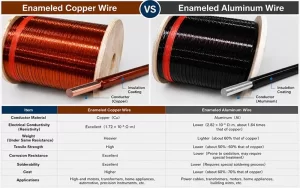
This means that aluminum windings expand more as temperatures rise, a factor that must be considered in the design—sufficient clearances must be maintained between the winding and the core, and between the winding and the insulation structure, to prevent excessive thermal stress during temperature increases. Regarding heat resistance, the thermal class of the winding wire depends primarily on the insulation coating rather than the conductor itself; therefore, aluminum and copper windings can use the same insulation class.
In terms of mechanical properties, copper has higher tensile and yield strengths than aluminum, making it advantageous in applications requiring greater mechanical stress. When dealing with the significant electrodynamic forces generated by short-circuit currents, copper windings generally exhibit better mechanical stability than aluminum windings. Regarding flexibility, aluminum conductors are relatively softer, requiring careful process control in applications involving frequent bending. In terms of fatigue performance, aluminum is more prone to fatigue cracking under repeated bending stress, a factor that needs to be evaluated when using aluminum windings in vibrating environments.
In terms of economic performance, both initial and operating costs must be considered. The material cost of aluminum windings is typically only 30% to 40% of that of copper windings, but its higher resistance leads to higher energy loss. When selecting conductor materials, a life-cycle cost analysis must be performed, rather than simply comparing initial material costs.
Insulation Coating and Thermal Class
There is no fundamental difference in insulation coating between aluminum and copper motor winding wires; the main difference lies in the conductor material. Aluminum winding wires also use insulation coatings such as polyurethane, polyester, polyester imide, polyamide-imide, and polyimide, corresponding to different thermal classes. The insulation coating determines the winding wire’s heat resistance limit, electrical performance, mechanical strength, and chemical stability, and is the most crucial technical element of the winding wire. According to the IEC 60034-1 standard, the insulation class of aluminum motor winding wires is also divided into multiple levels, each with its applicable application scenarios and technical characteristics.
Class 120 (corresponding to IEC Class E)
uses a polyvinyl alcohol formal coating, with a maximum operating temperature of 120°C. It is the lowest cost option and is suitable for light industrial applications with low temperature requirements, small motors, lighting transformers, etc. This level of product has advantages in price-sensitive applications with low performance requirements.
Grade 130 (corresponding to IEC Grade B)
uses a polyester coating and has a maximum operating temperature of 130°C. It is one of the most widely used grades in industrial applications, achieving a good balance between cost and performance. Grade 130 aluminum winding wire is widely used in household appliance motors, agricultural equipment motors, and small water pump motors. Its advantages include good cost-effectiveness, excellent processing performance, and good compatibility with mainstream impregnating resins; its disadvantage is that its performance may degrade more quickly in humid environments.
Grade 155 (corresponding to IEC Grade F)
uses a modified polyester or polyester imide coating and has a maximum operating temperature of 155°C. It has better thermal stability and aging resistance, making it suitable for industrial motors and transformers with higher operating temperatures. Grade 155 aluminum winding wire is widely used in transformers used in industrial and mining enterprises, arc welding equipment, and industrial fan motors. Compared to Grade 130, Grade 155 offers longer service life and better thermal stability, but its price is correspondingly higher.
Grade 180 (corresponding to IEC Class H)
uses polyester imide or polyamide-imide coating, with a maximum operating temperature of 180°C, and is the mainstream choice for high-end applications such as new energy vehicles and high-efficiency industrial motors. Grade 180 aluminum winding wire is used in rail transit auxiliary transformers, high-power industrial inductors, resistance welding equipment, and other fields. Although new energy vehicle drive motors generally use copper windings to pursue maximum efficiency, Grade 180 aluminum windings still have their place in automotive electronic components such as OBCs and DC-DC converters.
Grade 200 and above (corresponding to IEC Class C)
uses polyamide-imide or polyimide coating, with a maximum operating temperature exceeding 200°C, and is mainly used in extreme applications such as aerospace and nuclear power plants. The application of these ultra-high-grade products in the aluminum winding field is relatively limited, mainly concentrated in extreme high-temperature environments with special weight and cost requirements. It should be noted that the selection principle for aluminum winding wire is completely consistent with that for copper winding wire. Designers should select products with a rated temperature 15 to 20°C higher than the design temperature, based on the actual operating temperature of the equipment. The selection of the thermal class should be based on the thermal design calculations of the equipment, rather than simply comparing conductor materials.
Main Product Classification
Motor winding aluminum wire can be divided into two main categories according to conductor shape: round wire and flat wire, each with its applicable application areas and technical characteristics. Enameled round aluminum wire is the most common form, with nominal conductor diameters typically ranging from 0.100mm and above, manufactured according to IEC 60317 standards.
Enameled round aluminum wire is widely used in the winding manufacturing of various motors, transformers, and inductors, offering advantages such as complete specifications, mature production processes, and cost-effectiveness. Diameter ranges from 0.1mm to 5.0mm cover the needs of most industrial applications.
When selecting enameled round aluminum wire, key quality indicators such as conductor diameter tolerance, insulation thickness uniformity, and enamel coating adhesion need to be considered. Enameled flat aluminum wire and rectangular aluminum wire are another important classification. Compared to round wire, flat wire can achieve a higher slot fill factor within the same footprint, thereby increasing power density or reducing equipment size.
Flat wire winding technology is widely used in large power transformers, reactors, and other fields. In transformer applications, aluminum flat wire is often combined with paper insulation or Nomex insulation to form paper-insulated enameled aluminum wire or corrugated paper-insulated aluminum flat wire, meeting the insulation requirements of high-voltage, high-capacity transformers. The width and thickness of flat aluminum wire can be customized according to specific designs, providing greater flexibility for equipment optimization.
Copper-clad aluminum wire (CCA) is a special aluminum-based winding wire product, representing the application of aluminum-copper composite technology. According to ASTM B566, copper-clad aluminum wire uses aluminum as the core material and is coated with a copper layer, with the copper layer volume ratio typically ranging from 10% to 20%. The design philosophy of this structure combines the lightweight properties of aluminum with the excellent conductivity and solderability of copper.
The copper layer is mainly distributed on the surface of the conductor, providing the surface properties of copper (solderability, brazingability, and oxidation resistance), while the aluminum core contributes to the advantages of lightweight and low cost. Copper-clad aluminum wire is particularly suitable for applications that require copper solderability but also want to reduce weight. In the audio transformer field, copper-clad aluminum wire is a common choice—audio transformers have high requirements for solderability and frequency response, while also needing to control weight.
Copper-clad aluminum wire is also widely used in electronic transformers such as inductors, filters, and pulse transformers. When selecting copper-clad aluminum wire, it is important to note that its DC resistance is about 10% to 15% higher than that of pure copper wire, and its skin effect in high-frequency applications differs from that of copper wire; AC loss characteristics require specific evaluation. Poor-quality copper-clad aluminum wire may exhibit problems such as copper layer peeling and copper-aluminum interface delamination, affecting product reliability and lifespan.
Application Area Analysis
The application areas of aluminum wire motor windings are mainly concentrated in large and medium-sized power equipment such as power transformers, distribution transformers, and reactors. These devices are more sensitive to weight and cost than to the ultimate pursuit of efficiency, making aluminum windings an ideal choice. In the power transformer field, aluminum windings have decades of mature application experience and play an important role in global power grid construction.
From power plant step-up transformers to distribution transformers, the installed capacity of aluminum winding transformers is enormous. Especially in applications with higher voltage levels and larger transformer capacities, the cost advantage of aluminum windings is more significant. Taking a 110kV transformer as an example, the material cost savings of aluminum winding solutions compared to copper winding solutions can reach 20% to 30%, an advantage particularly prominent in large-capacity transformers. Although the losses of aluminum winding transformers are higher than those of copper winding transformers, their initial investment cost advantage is significant.
In certain applications, such as low load rates, low electricity costs, or short expected lifespans of the transformer, aluminum winding solutions offer good economic advantages. Power companies typically conduct detailed economic and technical comparisons before deciding between aluminum and copper winding solutions. Aluminum windings are also widely used in inductors and instrument transformers. Aluminum windings are commonly used in distribution transformers, arc welding transformers, and rectifiers. In these applications, the equipment typically does not operate continuously under full load conditions, and the higher losses of aluminum windings have a relatively limited impact on overall energy efficiency.
For example, in arc welding transformers, the working cycle is usually intermittent, with a load rate of approximately 20% to 40%, and the high losses of aluminum winding solutions are not a decisive factor in this case. In the field of household appliances and light industrial motors, aluminum winding motors have a certain market share, but their application scope is relatively limited. This is mainly because the resistance of aluminum conductors is higher, making them less competitive than copper windings in applications requiring high efficiency.
With the increasing prevalence of high-efficiency motor standards such as IE3 and IE4, the application of aluminum windings in industrial motors faces growing challenges. However, in some cost-sensitive applications with lower efficiency requirements (such as small water pump motors and fan motors), aluminum-wound motors remain an economical and practical choice. The new energy vehicle sector is an emerging application area for aluminum windings, but its application scope is relatively limited. In this field, aluminum windings are mainly used in some automotive components such as transformers and inductors, rather than drive motors. Drive motors generally use copper flat wire windings to achieve maximum efficiency.
Aluminum windings have some application potential in new energy vehicle OBCs (on-board chargers), DC-DC converters, and air conditioning compressors. These components have less stringent efficiency requirements than drive motors, but still require weight and cost control.
Selection Considerations and Design Considerations
When selecting aluminum windings for specific applications, multiple factors need to be considered to ensure the reliability and economy of the design. Electrical performance is the primary consideration. The required conductor cross-sectional area should be calculated based on the operating current and power requirements of the equipment.
Compared to copper windings, aluminum windings require approximately 60% more cross-sectional area to achieve comparable conductivity, necessitating adjustments to winding dimensions and slot design. In high-frequency applications, the skin effect must also be considered—aluminum’s skin depth differs from copper’s and requires special attention during design. Aluminum’s skin depth at 50Hz power frequency is approximately 11.6mm, significantly larger than conventional conductor dimensions; therefore, the skin effect is not a primary concern for power frequency applications.
Mechanical design is equally important, requiring full consideration of the properties of aluminum. The tensile strength of aluminum conductors is lower than that of copper, necessitating careful tension control during winding and tensioning—it is generally recommended that the maximum winding tension of aluminum windings not exceed 60% of that of copper windings. Excessive tension can lead to conductor stretching, deformation, or even breakage. When designing the winding core, the higher coefficient of thermal expansion of aluminum should be considered, allowing sufficient dimensional margins to prevent excessive thermal stress during temperature rise.
For connections, welding and wiring of aluminum conductors require specialized processes—aluminum surfaces easily form an oxide film (aluminum oxide), affecting weld quality; surface treatment (removing the oxide film and applying flux) is usually necessary before welding. Temperature matching is crucial for ensuring reliability. The insulation class selection principle for aluminum winding wires is consistent with that for copper winding wires; an appropriate insulation class should be selected based on the actual operating temperature of the equipment. It is important to note that aluminum windings have higher resistance losses, requiring sufficient margin in the design of heat dissipation conditions.
Aluminum’s thermal conductivity is approximately 60% that of copper, resulting in relatively poor heat dissipation performance, which also affects the temperature rise characteristics of aluminum windings. Chemical compatibility is crucial for long-term operational reliability. Aluminum conductors are sensitive to certain chemicals, such as oxidation and corrosion in humid environments, and corrosion upon contact with certain acidic or alkaline substances. When selecting impregnation processes and resins, good compatibility with the aluminum conductor should be ensured.
During storage and use, care should be taken to prevent prolonged exposure of the aluminum windings to humid environments; moisture-proof measures should be taken if necessary. Cost assessment is a practical factor that must be considered in industrial applications, but the assessment method must be scientific and comprehensive. When evaluating aluminum winding options, material costs, processing costs, operating costs, and maintenance costs should be compared comprehensively. The initial material cost of aluminum windings is typically only 30% to 40% of that of copper windings, which is a significant advantage. However, higher resistance losses may lead to increased long-term operating costs.
For example, for a transformer that operates continuously for one year: assuming a load loss difference of 10kW, an annual operating time of 8760 hours, and an electricity price of 0.6 yuan/kWh, the annual additional electricity expenditure would be approximately 53,000 yuan. When conducting a full life-cycle cost analysis, factors such as electricity prices, equipment load rate, expected service life, and maintenance costs should be fully considered.
Technical Standards and Quality Control
The production and quality control of aluminum wire for motor windings are based on a series of international and regional standards, which provide basic guarantees for product quality. The IEC 60317 series of standards is the most important international standard in the field of enameled wire, specifying the technical requirements for enameled wire, including key indicators such as conductor size, insulation thickness, electrical performance, and mechanical performance. IEC 60317-0-1 specifies the specific requirements for polyester/imide enameled round aluminum wire.
The resistivity and other parameters of the aluminum conductor differ from those of the copper conductor and require special attention. The ASTM B566 standard specifically addresses copper-clad aluminum wire, specifying the technical requirements for four levels: Class 10A, Class 15A, Class 10H, and Class 15H. The main differences between these grades lie in the copper layer volume ratio and conductivity; 10A and 15A are in a soft-annealed state, while 10H and 15H are in a hard-drawn state. The NEMA MW 1000 standard has a wide influence in the US market, covering the specifications for various types of motor winding wires. This standard system is relatively complete, containing detailed test methods and acceptance criteria, and is an important basis for product certification in the North American market.
When selecting a supplier, their quality management system certification (such as ISO 9001), product certification (such as UL, CSA, CE, etc.), technical support capabilities, and supply stability should be evaluated. High-quality aluminum winding wire products should have complete quality certification documents, including conductor composition analysis, insulation performance test reports, dimensional inspection reports, etc. Special attention is also required for the storage and transportation of aluminum winding wire. Aluminum conductors are easily oxidized in humid environments, forming a white aluminum oxide film, which increases contact resistance. When storing aluminum winding wire, it should be stored under dry conditions and appropriate moisture-proof measures should be taken.
Industry Development Trends
The aluminum wire winding industry is undergoing a dual transformation of technological upgrading and market adjustment, facing both challenges and opportunities. On the one hand, the increasing energy efficiency standards place higher demands on aluminum winding products. IEC and GB standards are continuously raising energy efficiency requirements, imposing increasingly stringent requirements on loss indicators for equipment such as transformers and motors.
The relatively high resistive loss of aluminum windings faces challenges under this trend. To address this challenge, new materials such as low-loss aluminum winding wire and high-conductivity aluminum alloys are under development. These new materials aim to narrow the efficiency gap between aluminum conductors and copper conductors. For example, by optimizing the aluminum alloy composition and processing technology, the conductivity of aluminum can be increased to over 66% IACS, an improvement of approximately 8% compared to ordinary aluminum conductors.
On the other hand, changes in the copper-aluminum price difference affect the market competitiveness of aluminum windings. In recent years, copper prices have fluctuated significantly, showing an overall upward trend, while aluminum prices have remained relatively stable. This has allowed aluminum windings to regain a cost advantage in certain application areas. Especially in the field of large-scale power equipment, the economics of aluminum windings have enabled them to maintain a stable market share. Power equipment manufacturers and end-users are increasingly inclined to conduct detailed Total Cost of Ownership (TCO) analyses, rather than simply comparing initial material costs, which also benefits the promotion of aluminum winding solutions.
The advancement of smart manufacturing and industrial automation places higher demands on the quality consistency and supply stability of aluminum winding wires. Suppliers with sound quality management systems, stable supply capabilities, and continuous technical support will have a competitive advantage. Meanwhile, increasingly stringent environmental requirements are driving the industry towards more environmentally friendly production processes and product formulations. The global energy transition has brought new market opportunities to the aluminum winding industry. Renewable energy power generation (such as wind power and photovoltaics) requires a large number of transformers and inductors, and the weight- and cost-sensitive applications in these devices provide market space for aluminum windings. The widespread adoption of electric vehicles has led to increased demand for in-vehicle electronic equipment, and aluminum windings have found new application areas in some automotive electronic components.
Conclusion
As an economical alternative to copper winding wire, aluminum wire for motor windings has irreplaceable value in specific application areas. In power transformers, distribution transformers, reactors, inductors, and other equipment, aluminum windings have become a widely recognized technical choice due to their lightweight and low cost advantages. In applications where efficiency requirements are not stringent but cost and weight are sensitive, such as household appliance motors and small water pump motors, aluminum windings are also competitive. When selecting an aluminum winding solution, electrical engineers and purchasing personnel should fully understand the technical characteristics of aluminum conductors and conduct a comprehensive techno-economic analysis based on specific application requirements.
Simply pursuing the lowest initial cost may lead to increased long-term operating costs, while ignoring cost factors may result in unnecessary design redundancy. The scientific selection method should be to choose the solution with the optimal total cost of ownership while meeting technical performance requirements. In practical engineering, the selection of aluminum windings should follow these principles: First, accurately calculate the required cross-sectional area and specifications based on electrical design requirements to ensure that conductivity and temperature rise characteristics meet design specifications; second, select an appropriate insulation class based on the equipment’s operating temperature and heat dissipation conditions, reserving sufficient temperature margin; third, assess the feasibility of machining and connection processes and formulate corresponding process control measures; fourth, conduct a full life-cycle cost analysis rather than just comparing initial material costs, comprehensively considering operating and maintenance costs; finally, select a reliable supplier with quality assurance and technical support to ensure product quality and supply stability.
Only by comprehensively considering technical performance, economic factors, and reliability can the optimal winding material selection be made.