

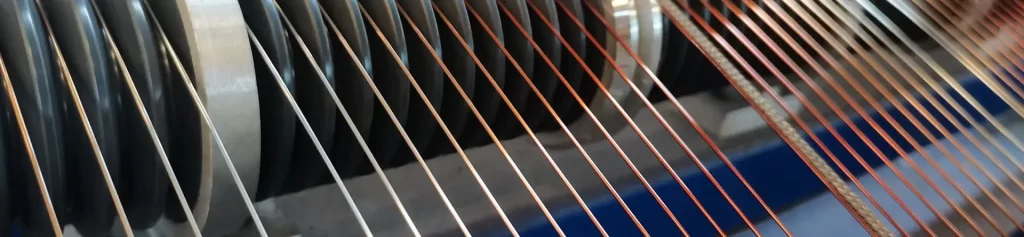
Large power transformers are the backbone of electrical transmission and distribution networks, efficiently stepping voltage up and down across vast distances. The winding wire used in these transformers must deliver reliable electrical performance while remaining cost-effective for massive-scale manufacturing. Aluminum wire has established itself as the dominant choice for large power transformer windings worldwide, offering an optimal balance of conductivity, weight, cost, and manufacturability.
What is Aluminum Wire for Large Power Transformers?
Aluminum wire for large power transformers refers to aluminum conductors specifically manufactured and processed for use in transformer windings. Unlike copper wire, which has been the traditional choice for transformer applications, aluminum wound transformers have become the industry standard for large-scale power transformers due to aluminum distinct material advantages.
These aluminum conductors come primarily in two forms: aluminum foil (strip) and aluminum rod or cable. Aluminum foil windings—thin, wide strips of aluminum—are the most common form used in large power transformers, particularly in medium and high voltage windings where the foil large surface area provides superior heat dissipation. The aluminum is typically electrolytically graded (EC-grade) aluminum with a minimum purity of 99.5%, ensuring consistent electrical conductivity and mechanical properties throughout the winding.
Transformer-grade aluminum wire must meet stringent international standards, including IEC 60317 for aluminum strip conductors and ASTM B233 for electrical conductor aluminum rod. These standards define requirements for dimensions, conductivity, tensile strength, elongation, and surface quality that ensure reliable performance under the demanding electrical and thermal conditions inside a power transformer.
Why Aluminum is Preferred in Large Power Transformers
The widespread adoption of aluminum in large power transformers is driven by compelling economic and technical factors that make aluminum the rational choice for manufacturers and utilities worldwide.
Significant Cost Savings
Aluminum costs substantially less than copper on a per-kilogram basis, and because a large power transformer requires hundreds of kilograms of winding material, the raw material cost advantage is enormous. Although aluminum has lower electrical conductivity than copper (requiring approximately 60% more cross-sectional area for equivalent current-carrying capacity), the dramatically lower per-kilogram price of aluminum means the total material cost for an aluminum-wound transformer is typically 50–70% less than an equivalent copper-wound design. For utilities purchasing thousands of transformers across a grid network, this translates to billions of dollars in savings over the equipment lifecycle.
Weight Advantages for Large Units
Large power transformers can weigh anywhere from several tonnes to over 500 tonnes for the largest units. While aluminum lower density means larger conductor cross-sections are needed, the overall weight of an aluminum-wound transformer is often comparable to—or only moderately higher than—a copper-wound equivalent. The structural implications of this weight are significant: transformer foundations, transportation equipment, and installation infrastructure can all be optimized when working with aluminum specific weight characteristics.
Superior Heat Dissipation with Foil Windings
Aluminum foil windings offer a critical advantage in large power transformers: their large flat surface area maximizes contact with the transformer cooling medium, whether oil or air. This superior heat dissipation capability allows the transformer to operate at lower hotspot temperatures, extending insulation life and improving overload capability. The mechanical strength of aluminum foil also provides excellent short-circuit withstand capability, an essential requirement for power transformers connected to the grid.
Established Supply Chain and Manufacturing Expertise
Decades of continuous use in power transformers have given the industry deep expertise in aluminum winding design, manufacturing processes, and quality control. This mature knowledge base means that transformer manufacturers can reliably produce aluminum-wound transformers with consistent quality, and utilities worldwide have extensive experience specifying, installing, and maintaining aluminum-wound equipment.
Key Types of Aluminum Wire for Transformers
Understanding the different forms of aluminum conductor used in transformers helps in selecting the right material for specific application requirements.
Aluminum Foil (Strip)
Aluminum foil or strip is the most widely used conductor form in large power transformers. Available in various widths (typically from 20 mm to over 200 mm) and thicknesses (commonly 0.5 mm to 3 mm), aluminum foil windings are wound layer by layer to form the transformer coils. The wide surface of the foil provides excellent cooling, while the precise dimensional tolerances ensure consistent winding quality.
Transformer aluminum foil is typically manufactured from EC-grade aluminum (99.5% minimum purity) and often receives a slight temper (half-hard or full-hard) to provide the mechanical strength needed for winding. The surface may be plain or pre-insulated with a thin coating of insulating varnish or paper, depending on the transformer voltage class and insulation system.
Aluminum Rod and Round Wire
For lower voltage transformer applications and certain tap windings, aluminum rod and round wire are used. These are available in standard AWG or metric sizes and are wound similarly to traditional magnet wire. Round aluminum wire is more common in small to medium transformers, while larger rod conductors are used in specific high-current applications such as auto-transformer segments.
Continuously Transposed Conductor (CTC)
For very large transformers requiring high current ratings, Continuously Transposed Conductor (CTC) provides an elegant solution. CTC is constructed from multiple parallel strands of individually insulated aluminum or copper wire, transposed (rotated) at regular intervals along the conductor length. This transposition cancels out eddy current losses that would otherwise develop between parallel conductors, allowing the transformer to handle higher currents efficiently while keeping losses within acceptable limits.
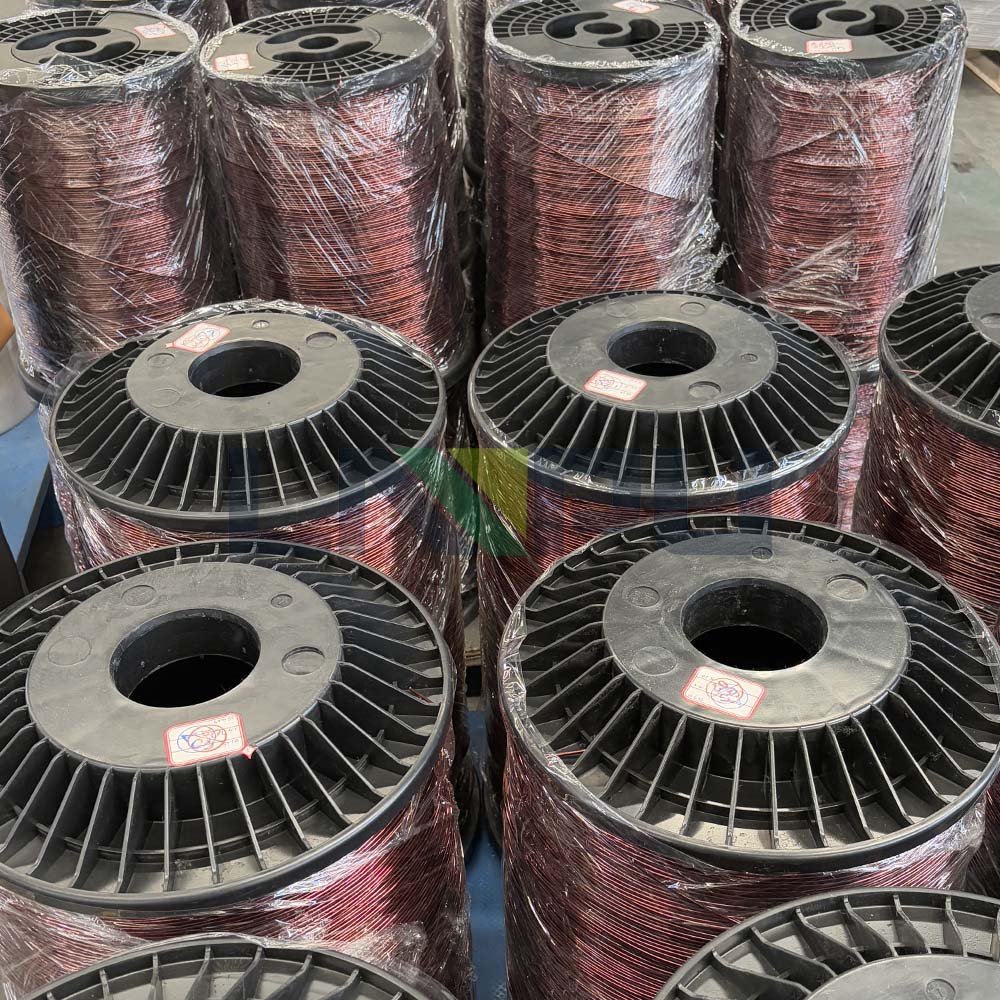
Technical Specifications and Standards
Selecting the right aluminum wire for large power transformers requires careful attention to technical specifications that directly impact transformer performance and longevity.
Electrical Conductivity
Aluminum for transformer windings must meet specific conductivity requirements. The International Electrotechnical Commission (IEC) standard for electrical grade aluminum requires a minimum conductivity of 61% IACS (International Annealed Copper Standard), which translates to a resistivity of approximately 0.0282 Ω·mm²/m at 20°C. Transformer designers use these electrical properties to calculate winding resistances, load losses, and temperature rise under various loading conditions.
Mechanical Properties
The mechanical characteristics of aluminum windings directly affect the transformer ability to withstand short-circuit forces. When a fault occurs on the power system, the resulting electromagnetic forces can be enormous—measured in tonnes—acting on the transformer windings. Key mechanical parameters include tensile strength (typically 60–120 MPa for transformer aluminum), yield strength, and elongation at break (a minimum of 15–20% is usually specified to ensure adequate ductility for winding without cracking).
Dimensional Tolerances
Precise dimensional control is critical for aluminum foil windings, where variations in thickness or width can affect the winding fill factor, coil geometry, and voltage distribution within the transformer. Standards such as IEC 60317-43 specify maximum permissible variations in thickness (±0.03 mm typical) and width (±0.1 mm typical), ensuring consistent manufacturing quality across lots and suppliers.
Purity and Alloying Elements
Transformer-grade aluminum must maintain minimum purity levels to ensure consistent electrical and mechanical properties. Common impurities that can adversely affect conductivity include iron, silicon, and copper. Quality-certified aluminum foil is tested for chemical composition, and mill test certificates document the actual composition of each production lot, giving transformer manufacturers traceability and confidence in their material inputs.
Design Considerations for Transformer Manufacturers
Designing transformers with aluminum windings requires careful consideration of several factors that differ from copper-wound designs.
Winding Cross-Section and Fill Factor
Because aluminum has lower conductivity than copper, the conductor cross-section must be larger to carry the same current. This affects the transformer window fill factor—the percentage of the core window occupied by conductors. Designers must balance the larger aluminum conductor size against the available window area, often optimizing the core size and winding arrangement to achieve the most cost-effective overall design.
Termination and Connection Design
Proper termination of aluminum windings requires attention to detail to ensure reliable, long-term electrical connections. Aluminum forms a thin oxide layer on its surface that must be addressed during termination. Common practices include mechanical crimping with aluminum-specific connectors, welding (TIG or resistance welding), or the use of compression fittings with anti-oxidant compounds. The connection design must also account for aluminum thermal expansion characteristics to prevent loosening over thermal cycles.
Insulation System Compatibility
The insulation system surrounding the aluminum windings must be compatible with the transformer cooling medium and operating temperature. For oil-immersed transformers, the interaction between the aluminum surface, insulating oil, and cellulosic or synthetic insulation materials must be carefully considered. For dry-type transformers, the aluminum windings are typically encapsulated in epoxy resin or secured with high-temperature insulation materials.
Short-Circuit Withstand Design
Transformer windings experience tremendous electromagnetic forces during short-circuit events. The design must ensure that the winding structure—conductors, insulation, and clamping system—can withstand these forces without damage. Aluminum windings, when properly designed with adequate radial and axial bracing, provide excellent short-circuit withstand capability. The conductor ductility (good elongation) helps it absorb energy without cracking, and the winding geometry must distribute forces evenly throughout the coil structure.
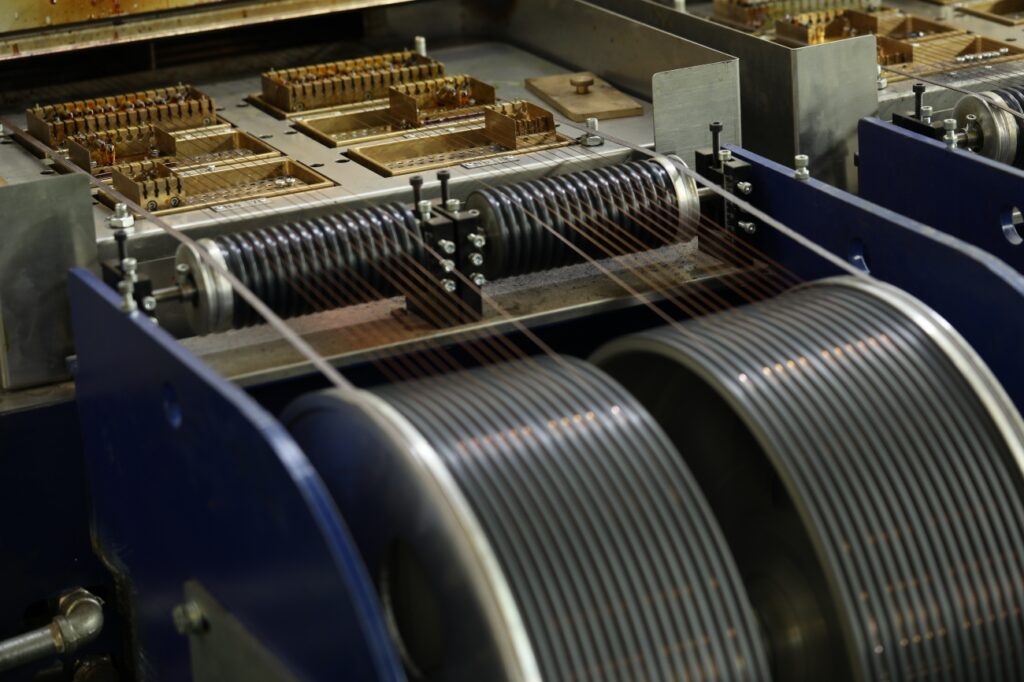
Advantages and Challenges
Like any material choice, aluminum windings for large power transformers present both significant advantages and specific challenges that must be understood and managed.
Advantages
- Substantial cost savings over copper, especially for large transformers where material cost dominates
- Mature manufacturing technology backed by decades of industry experience
- Excellent heat dissipation with foil winding geometry
- Good short-circuit withstand when properly designed
- Abundant global supply reducing procurement risk
- Lower total ownership cost for utilities across large transformer fleets
Challenges
- Larger conductor cross-section required due to lower conductivity, affecting core and tank size
- Oxide layer management at terminations requires specific handling procedures
- Higher thermal expansion coefficient requires careful joint design
- Potential for galvanic corrosion if aluminum contacts dissimilar metals in wet environments
- Lower conductivity per unit volume may be a limitation in space-constrained applications
Installation and Maintenance Tips
Proper installation and maintenance practices ensure that aluminum-wound transformers deliver their full expected service life of 30 years or more.
Transportation and Handling
Large power transformers are heavy, sensitive equipment that requires specialized transportation. During transport, transformers should be secured to prevent movement that could damage windings or internal components. Many large transformers are shipped filled with nitrogen gas to provide a dry, inert environment that protects the windings and insulation during transit. Upon arrival, the nitrogen pressure should be checked and the transformer condition documented before proceeding with installation.
Site Installation
Before energizing the transformer, thorough inspection and testing are essential. This includes checking the impedance and winding resistance to verify that no damage occurred during transport, testing insulation resistance (megger test), and performing turns ratio and polarity tests. For aluminum-wound transformers, particular attention should be paid to grounding connections and the integrity of any aluminum-to-copper interfaces in the tank grounding system.
Ongoing Maintenance
Regular maintenance of power transformers includes dissolved gas analysis (DGA) of insulating oil, oil quality testing, and periodic visual inspection of external components. For aluminum-wound transformers, the maintenance requirements are generally similar to copper-wound units. Key indicators of potential winding problems include increases in hydrogen and acetylene levels (detected through DGA), which may suggest partial discharge activity or overheating.
End-of-Life and Recycling
At end of life, power transformers have significant scrap value. The aluminum winding material can be recovered and recycled, and the steel core can also be recycled. Responsible end-of-life management of large power transformers supports circular economy principles and reduces environmental impact. Many transformer recyclers specialize in processing retired transformers, recovering valuable materials including aluminum, copper, and steel.
Conclusion
Aluminum wire for large power transformers represents one of the most successful material substitutions in electrical engineering history. By choosing aluminum over copper for transformer windings, manufacturers and utilities achieve substantial cost savings while maintaining—and in some aspects improving—transformer performance and reliability. The combination of mature manufacturing technology, favorable material properties, and well-established industry standards makes aluminum the default choice for large power transformers worldwide.
Whether you are a transformer designer seeking technical specifications, a procurement professional evaluating suppliers, or a utility engineer specifying equipment for your grid, understanding the properties, advantages, and considerations of aluminum windings is essential for making informed decisions. With proper design, manufacturing quality control, and maintenance practices, aluminum-wound power transformers deliver decades of reliable service in the most demanding electrical infrastructure applications.