

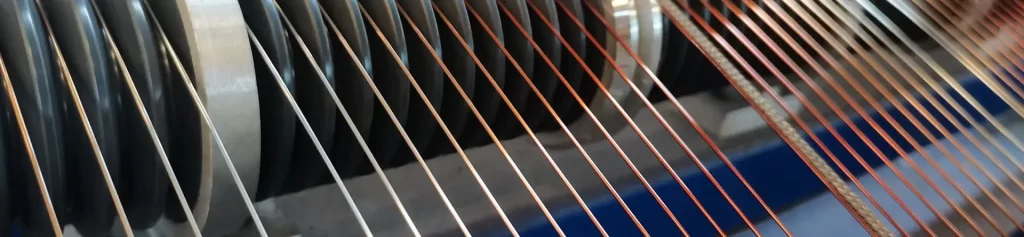
From power plants to substations, from transmission lines to distribution networks, paper-insulated wire, with its reliable insulation performance and mature technology, supports the safe and stable operation of the entire power system.
Power engineering has extremely stringent requirements for equipment reliability; a failure in any link can lead to large-scale power outages.
With its excellent electrical performance, good thermal stability, and decades of proven reliability, paper-insulated wire has become the undisputed preferred material for power transformer windings.
This article will systematically introduce the technical characteristics, selection points, and development trends of paper-insulated wire in major application areas of power engineering, providing practical technical reference for power engineers and equipment procurement personnel. —
Chapter 1Application of Paper-Insulated Wire in Power Transformers Power Plant Transformers Power plants are an important application area for paper-insulated wire: The main transformers in thermal power plants bear the heavy responsibility of raising the generator output voltage to the transmission voltage, with a capacity typically reaching hundreds of megavolt-amperes, and operating under extremely harsh conditions.
Hydropower plants&39; turbine generators also use paper-insulated wire windings to cope with the unique humid operating environment of hydropower stations.
The application of paper-insulated wire in power plant transformers has exceeded half a century, and its reliability has been fully verified.
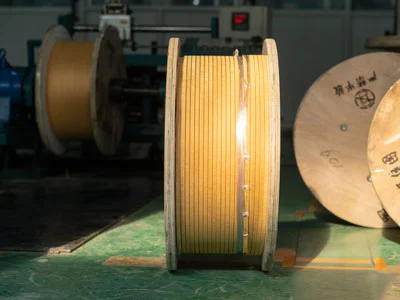
Transmission Transformers Transmission transformers are the key equipment in the power grid: Ultra-high voltage transmission transformers operate at voltages reaching 500kV or even higher, with extremely stringent insulation requirements.
Paper-insulated wire, combined with an oil-paper insulation system, can withstand the high electric field stress of ultra-high voltage transmission transformers.
The valve-side windings of DC transmission converters also rely on paper-insulated wire insulation to cope with the harmonic stress generated during the conversion process.
Power Distribution Transformers Power distribution transformers directly serve end users: Power distribution transformers are numerous and ubiquitous in urban and rural areas, forming the “capillaries” of the power grid.
Although the voltage level of power distribution transformers is relatively low, the operating environment is complex, and the requirements for reliability remain high.
Paper-insulated wire power distribution transformers, with their mature technology and stable performance, dominate the global power distribution field. —
Chapter 2Application of Paper-Insulated Wire in Special Transformers Electric Furnace Transformers Electric furnace transformers provide power to industrial electric furnaces: Steelmaking electric arc furnace transformers experience drastic load fluctuations and large short-circuit currents, placing high demands on the mechanical strength of the windings.
Submerged arc furnace transformers require long-term full-load operation, making the thermal stability of the insulation material crucial.
Paper-insulated wire, with its excellent comprehensive performance, has become the standard choice for electric furnace transformer windings.
Rectifier Transformer Rectifiers are widely used in industrial fields: Electrolytic aluminum rectifiers provide DC power to electrolytic cells, with operating currents reaching tens of thousands of amperes.
The high current requirements of paper-insulated wire meet the large cross-sectional area conductor requirements of rectifiers.
Rail transit traction rectifiers also use paper-insulated wire insulation to ensure stable and reliable traction power supply.
Testing Transformer High-voltage testing equipment has extremely high insulation requirements: Power frequency testing transformers have rated voltages reaching thousands of kilovolts, requiring specially designed paper-insulated wire insulation systems.
Impulse voltage generators use transformers to withstand extremely high voltage stresses for short periods.
The application of paper-insulated wire in the testing transformer field demonstrates its highest performance level.
Applications in Power Switchgear Current Transformer Current transformers are important equipment for power system measurement and protection: Dry-type current transformers use paper-insulated wire windings, ensuring stable and reliable insulation performance.
Oil-immersed current transformers combine paper-insulated wire with oil-paper insulation to withstand high voltage levels.
The paper-insulated wire windings form a precise electromagnetic coupling structure within the current transformer.
Voltage Transformers Voltage transformers are used for voltage measurement and relay protection: Electromagnetic voltage transformers use paper-insulated wire windings to ensure measurement accuracy.
The coupling capacitors in capacitive voltage transformers also require paper-insulated wire windings.
The low dielectric loss characteristics of paper-insulated wire contribute to improving the measurement accuracy of the transformer.
High-Voltage Switches High-voltage switchgear uses paper-insulated wire windings: Voltage transformer windings in enclosed switchgear use paper-insulated wire.
The operating mechanism coils of rectifier switchgear use paper-insulated wire.
The heat resistance and insulation reliability of paper-insulated wire meet the stringent requirements of high-voltage switches.
Chapter 4Selection Technical Requirements Voltage Rating Matching Voltage rating is the primary parameter for paper-insulated wire selection: For voltage levels of 35kV and below, either ordinary paper-insulated wire or high-voltage paper-insulated wire can be used.
For voltage levels from 66kV to 220kV, multi-layer high-voltage paper-insulated wire is required.
For ultra-high voltage transformers of 330kV and above, specially designed high-voltage paper-insulated wire is needed, along with voltage equalization measures such as capacitor rings.
Capacity Determination: The transformer capacity determines the cross-sectional area of the paper-insulated wire: Calculate the conductor cross-sectional area based on the transformer&39;s rated current.
Consider thermal and dynamic stability requirements under short-circuit current.
Larger capacity transformers have larger conductor cross-sections, requiring more sophisticated paper-insulated wire winding processes.
Environmental Considerations: The operating environment affects the selection of paper-insulated wire: In high-altitude areas, the impact of reduced air pressure on insulation strength must be considered.
In high-temperature environments, paper-insulated wire products with better heat resistance are required.
In humid environments, enhanced moisture-proof design is necessary, using high-density paper or a moisture-proof coating.
Installation and Maintenance Key Points Winding Process Control: Strict control of process parameters is required for paper-insulated wire winding: Winding tension should be uniform to avoid paper tape slack or breakage. The wrapping angle is controlled within the process range to ensure uniform insulation. Wrinkles in the paper tape are avoided during winding, as they affect insulation quality. Drying and Oil Impregnation Treatment Drying and oil impregnation are key processes for paper-insulated wire: The moisture content of the insulating paper must be controlled below 0.5%. Vacuum drying ensures sufficient evaporation of moisture from the insulating paper. The oil impregnation process is carried out under vacuum to ensure the insulating oil fully penetrates the paper insulation. Operation and Maintenance Recommendations Regular inspection and maintenance can extend the life of paper-insulated wire: Regularly test dissolved gases in the oil to promptly detect insulation overheating faults. Monitor winding temperature to avoid long-term overload operation. Regularly perform chromatographic analysis of the insulating oil to determine the insulation condition. — Chapter Six: Technological Development Trends High Voltage and High Capacity Direction Ultra-High Voltage DC Transmission Drives Advancements in Paper-Insulated Wire Technology: ±800kV ultra-high voltage DC converters place higher demands on paper-insulated wire. The manufacturing process of large-section paper-insulated wire is continuously optimized. Insulation systems for paper-insulated wire at higher voltage levels are under development. Environmentally Friendly Development: Environmental requirements for power equipment drive technological innovation in paper-insulated wire: The substitution of mineral oil with vegetable oil has become a research hotspot, forming an environmentally friendly insulation system with paper-insulated wire. Progress has been made in the research and development of biodegradable insulation materials. The environmental friendliness of paper-insulated wire throughout its entire life cycle is receiving increasing attention. Intelligent Monitoring: Smart grids place new demands on transformer state perception: Fiber optic online monitoring technology for paper-insulated wire winding temperature is becoming increasingly mature. Partial discharge intelligent monitoring systems enable early defect warnings. Digital twin technology is used for transformer state assessment of paper-insulated wire.
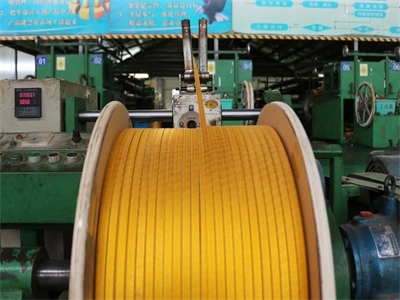
Conclusion: The application of paper-insulated wire in power engineering covers all aspects from power generation, transmission to distribution, and is an indispensable core material of the power system.
With its mature technology, reliable insulation performance, and long-proven stability, paper-insulated wire plays an irreplaceable role in power transformers, special transformers, and high-voltage switchgear.
With the development of new technologies such as ultra-high voltage direct current transmission and smart grids, paper-insulated wire technology is also continuously advancing.
High voltage, large capacity, environmental friendliness, and intelligentization are the main development trends in the application of paper-insulated wire in power engineering.
When selecting a wire, the most suitable product should be chosen based on factors such as voltage level, capacity specifications, and operating environment.
Installation and maintenance should be strictly carried out according to process requirements to ensure the safe and reliable operation of power equipment.