

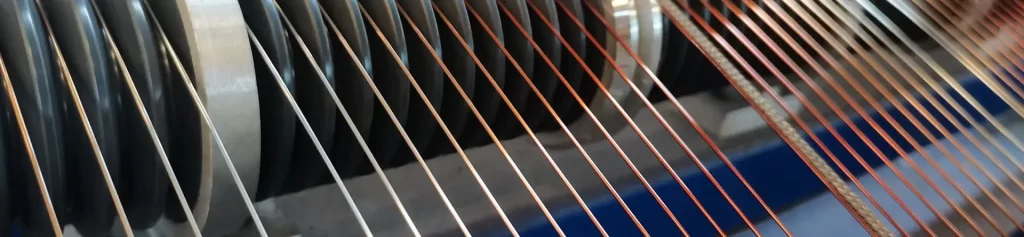
Household appliance motors are indispensable core components of modern homes. From air conditioners, refrigerators, and washing machines to fans, vacuum cleaners, and microwave ovens, all kinds of household appliances rely on efficient and reliable motor drives. As the “heart” of the motor, the performance of the winding wire directly determines the motor’s efficiency, noise, lifespan, and safety.
With the continuous improvement of global energy efficiency standards and the increasing demands of consumers for the quality of household appliances, the technical requirements for household appliance motor windings are also constantly being upgraded. This article provides a systematic technical guide for household appliance design engineers and purchasing decision-makers from six dimensions: product definition, conductor material selection, insulation system, key application scenarios, quality control, and selection guidelines.
I. Product Definition of Household Appliance Motor Windings
Household appliance motor windings are electromagnetic wire products specifically designed for various household appliance motors, mainly including two categories: enameled copper wire and enameled aluminum wire.
Key Features:
- Small Size: Home appliances require compact space, demanding high efficiency from the winding wires within limited space
- Low Noise: Home appliances operate in noise-sensitive environments, requiring motors wound with high-quality winding wires to operate smoothly
- Long Lifespan: Home appliances are expected to have a lifespan of 10-20 years
- Safety Certifications: Must meet safety certification requirements such as UL, CCC, and VDE
Main Application Scenarios:
| Appliance Type | Motor Type | Winding Wire Requirements |
|---|---|---|
| Air Conditioner | Compressor Motor, Indoor/Outdoor Fan Motor | High temperature resistance, Refrigerant Resistant, Class F/H |
| Refrigerator | Compressor Motor | Low Temperature Resistant, Refrigerant Resistant, Class F |
| Washing Machine | Washing Motor, Spin-Drying Motor, Drain Pump Motor | Moisture Resistant, Class B/F |
| Fan | Fan Motor | Low Cost, Class B/E |
| Vacuum Cleaner | High-Speed Series Motor | High temperature resistance, High Speed, Class F/H |
| Microwave Oven | Turntable Motor, Fan Motor | Miniaturization, Class B |
II. Conductor Material Selection
2.1 Enameled Copper Wire
Enameled copper wire is the mainstream choice for windings in household appliance motors:
Advantages:
- High conductivity (≥100% IACS), high energy efficiency
- Good mechanical strength, good winding processability
- Corrosion resistant, long lifespan
Applications:
- High-efficiency air conditioner compressor motors
- Variable frequency household appliance motors
- Scenarios with strict energy efficiency requirements
2.2 Enameled Aluminum Wire
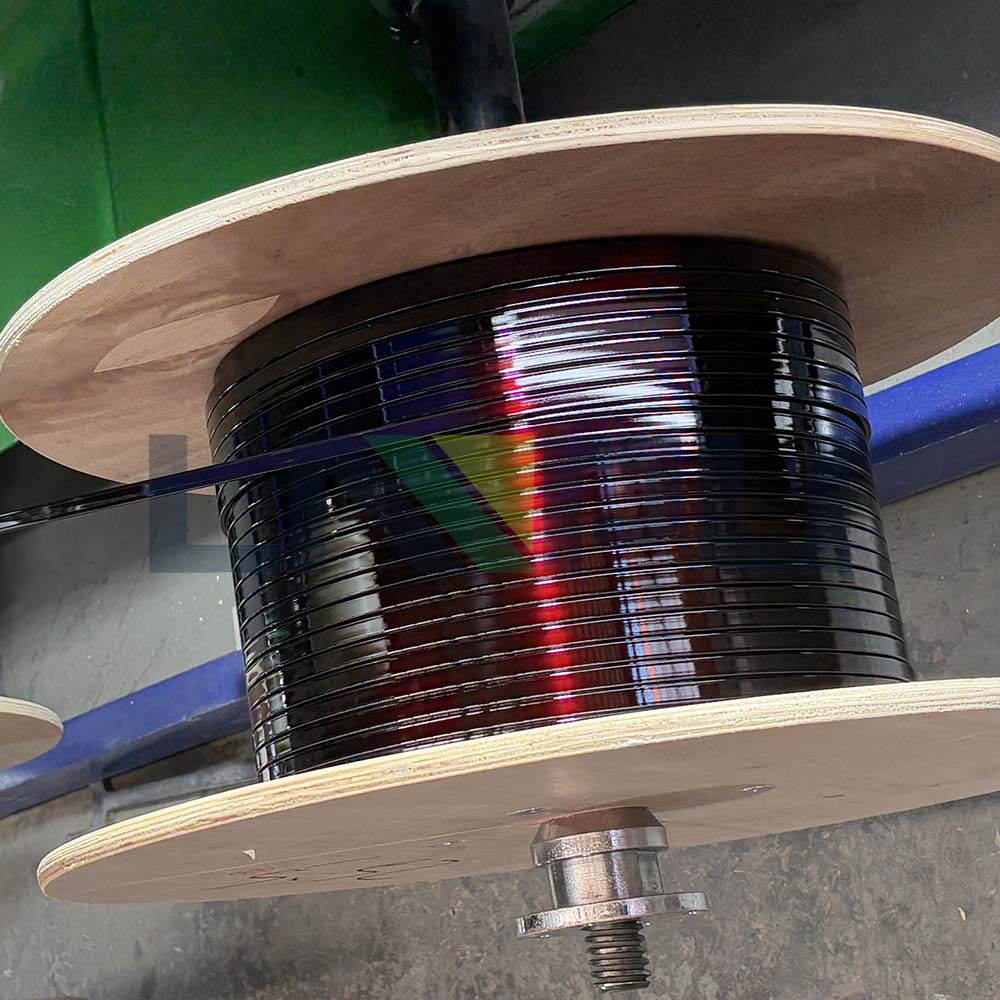
The application of enameled aluminum wire in household appliance motors is gradually increasing:
Advantages:
- Low cost, approximately 30-40% of copper wire
- Lightweight, approximately 30% of copper wire
- Meets basic performance requirements
Applications:
- Fan motors
- Small household appliance motors
- Cost-sensitive products
2.3 Comparison of Copper and Aluminum Selection
| Considerations | Copper Wire | Aluminum Wire |
|---|---|---|
| Conductivity | 100% IACS | 61% IACS |
| Cost | High | Low (30-40%) |
| Weight | Heavy | Light (30%) |
| Winding Process | Excellent | Tension control required |
| Connection Method | Conventional welding | Special treatment required |
III. Insulation System
3.1 Insulation Classes
Commonly used insulation classes for household appliance motor windings:
| Insulation Class | Maximum Operating Temperature | Typical Applications |
|---|---|---|
| Class B (130°C) | 130°C | Fan motors, small household appliance motors |
| Class E (120°C) | 120°C | Some fan motors |
| Class F (155°C) | 155°C | Air conditioner compressor motors, refrigerator compressor motors |
| Class H (180°C) | 180°C | Vacuum cleaner motors, special operating conditions |
3.2 Insulation Material Types
Polyester (PE) Enameled Wire:
- Thermal class: Class B
- Low cost, suitable for general household appliance motors
- Good electrical and mechanical properties
Polyester Imide (PEI) Enameled Wire:
- Thermal class: Class F
- Suitable for air conditioner and refrigerator compressor motors
- Good heat and refrigerant resistance
Polyamide Imide (PAI) Enameled Wire:
- Thermal class: Class H
- Suitable for high-temperature conditions
- Excellent mechanical strength and chemical resistance
3.3 Refrigerant Resistance
Air conditioner and refrigerator compressor motors need to operate in a refrigerant environment, and the winding wires must have good refrigerant resistance:
Common Refrigerant Types:
- R22 (traditional refrigerant, phased out)
- R134a (environmentally friendly refrigerant)
- R410A (new environmentally friendly refrigerant)
- R32 (low GWP refrigerant)
- R600a (environmentally friendly refrigerant for refrigerators)
Refrigerant Resistance Testing:
- Immersion Test: Immersion in a mixture of refrigerant and refrigeration oil
- Evaluation Indicators: Breakdown Voltage Retention Rate, Flexibility Retention Rate
IV. Key Application Scenarios
4.1 Air Conditioner Compressor Motor
Air conditioner compressors are among the most powerful motors in household appliances:
Technical Requirements:
- Insulation Class: Class F/H
- Refrigerant Resistance: Excellent
- High Temperature Resistance: 60-120°C operating environment
- Frequency Conversion Requirements: Withstands pulse voltage (dv/dt)
- Energy Efficiency Requirements: High (Meets national energy efficiency standards)
4.2 Refrigerator Compressor Motor
Refrigerator compressors require long-term continuous operation:
Technical Requirements:
- Insulation Class: Class F
- Refrigerant Resistance: Excellent (R600a/R134a)
- Low Noise: Smooth operation
- Long Lifespan: 15-20 years design life
4.3 Washing Machine Motor
Washing machine motors operate in humid environments:
Technical Requirements:
- Insulation Class: Class B/F
- Moisture Resistance: Good moisture-proof performance
- Variable Frequency Requirements: Variable frequency washing machine motors must withstand pulse voltage
- Quiet Operation: Low noise operation
4.4 Fan Motor
Fan motors are cost-sensitive applications:
Technical Requirements:
- Insulation Class: Class B/E
- Low Cost: Widely used aluminum wire
- Low Power Consumption: Meets energy efficiency requirements
- Long Lifespan: Continuous operation
4.5 Vacuum Cleaner Motor
Vacuum cleaner motors have high speed and high temperature:
Technical Requirements:
- Insulation Class: Class F/H
- High Speed: 30000-50000 RPM
- High Temperature Resistance: Internal motor temperature can reach over 150°C
- Miniaturization: Compact design
V. Quality Control
5.1 Raw Material Inspection
Conductor Inspection:
- Copper wire: Purity ≥99.9%, conductivity ≥100% IACS
- Aluminum wire: Purity ≥99.5%, conductivity ≥61% IACS
- Wire diameter tolerance: ±0.002mm
Insulation Varnish Inspection:
- Breakdown voltage
- Flexibility
- Enamel coating continuity (spark test)
- Refrigerant resistance (if applicable)
5.2 Production Process Inspection
| Process | Control Points | Inspection Items |
|---|---|---|
| Drawing | Compression ratio, mold condition | Wire diameter accuracy, surface quality |
| Annealing | Temperature profile, protective atmosphere | Conductivity, Flexibility |
| Coating | Enamel coating thickness, uniformity | Breakdown voltage, appearance |
| Baking | Temperature profile, time | Enamel coating curing degree, Flexibility |
5.3 Factory Inspection
Household appliance motor winding wires must undergo strict inspection before leaving the factory:
| Inspection Items | Requirements |
|---|---|
| Conductor Dimensions | Meets tolerance requirements |
| Breakdown Voltage | ≥ Specified value |
| Flexibility | Passes bending test |
| Enamel Coating Continuity | No breakdown in spark test |
| Refrigerant Resistance | Retention Rate ≥ Specified Value (if applicable) |
VI. Selection Guide
6.1 Application Scenarios Confirmation
Select based on appliance type and motor operating conditions:
- Air Conditioner/Refrigerator Compressor: Refrigerant resistant enameled wire, Class F/H
- Washing Machine: Moisture resistant enameled wire, Class B/F
- Fan: Standard enameled wire, Class B/E, optional aluminum wire
- Vacuum Cleaner: High temperature resistance enameled wire, Class F/H
6.2 Conductor Material Selection
- Copper Wire: High-efficiency, inverter appliances, high-end products
- Aluminum Wire: Cost-sensitive, conventional appliances, low-power motors
6.3 Insulation Class Selection
Select based on motor operating temperature:
- Class B (130°C): Conventional appliance motors
- Class F (155°C): Air conditioner/Refrigerator compressor motors
- Class H (180°C): Vacuum cleaner motor, special operating conditions
6.4 Certification Requirements
Ensure products meet relevant certification requirements:
- UL: North American market
- CCC: Chinese market
- VDE: European market
- RoHS: Environmental requirements
- REACH: Chemical management
Conclusion
As a core material of home appliances, the performance of motor winding wire directly affects the efficiency, noise, lifespan, and safety of home appliances. With the continuous improvement of global energy efficiency standards and the increasing demands of consumers for home appliance quality, selecting appropriate winding wire materials and insulation systems has become particularly important.
For home appliance design engineers and purchasing decision-makers, winding wire products should be selected scientifically and rationally based on specific application scenarios, energy efficiency requirements, cost budgets, and certification requirements. Cooperating with professional winding wire manufacturers to ensure product quality and supply chain stability is an important guarantee for the success of home appliance products.