

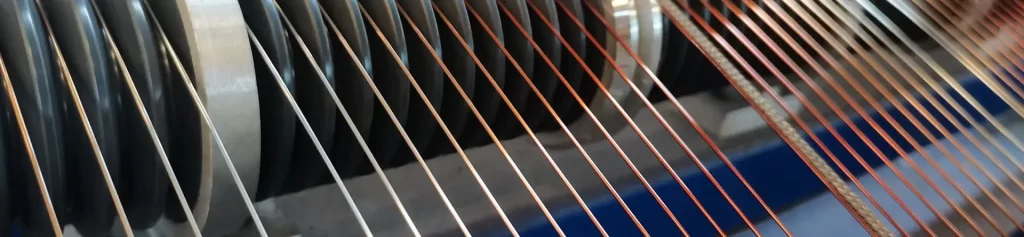
Fiberglass covered wire represents a specialized category of magnet wire that combines a conductive core with a protective fiberglass insulation layer. This construction provides exceptional electrical, thermal, and mechanical properties that make it indispensable in demanding electrical applications ranging from transformers and reactors to aerospace systems and heavy industrial equipment. The unique combination of materials in fiberglass covered wire delivers performance characteristics that neither standard enameled wire nor conventional insulated conductors can match. Understanding these electrical properties is essential for engineers and designers who specify materials for challenging applications where reliability and performance cannot be compromised.
This comprehensive technical guide examines the electrical properties of fiberglass covered wire in detail, explaining the mechanisms behind these characteristics and their practical implications for application in electrical equipment. The information presented here supports informed material selection and design decisions for engineers working across the broad landscape of electrical engineering.
Fundamental Electrical Properties
Dielectric Strength
Dielectric strength represents one of the most critical electrical properties of fiberglass covered wire, defining the maximum electric field intensity that the insulation can withstand before breakdown occurs. Fiberglass insulation demonstrates exceptional dielectric strength, typically ranging from 15 to 20 kilovolts per millimeter in air-dry conditions. This high dielectric strength enables the use of thinner insulation layers while maintaining adequate voltage withstand capability, contributing to more compact and lightweight coil designs. The dielectric strength of fiberglass insulation is influenced by several factors including the glass fiber quality, weave density, impregnation quality, and any residual porosity in the finished insulation system.
These factors interact in complex ways that require careful process control during manufacturing. Temperature has a significant effect on dielectric strength in fiberglass insulation systems. While the material maintains excellent dielectric properties across a wide temperature range, elevated temperatures do cause gradual degradation that must be accounted for in thermal classification and design margin decisions.
Insulation Resistance
Insulation resistance measures the resistance to leakage current flow through the insulation material, providing an important indicator of overall insulation quality and moisture barrier effectiveness. Fiberglass covered wire typically exhibits insulation resistance values exceeding 100 megohms per kilometer under standard test conditions. This high insulation resistance ensures minimal leakage current flow through the insulation even when conductors are subjected to sustained voltage stress. The insulation resistance of fiberglass systems is particularly stable over time, with minimal degradation under normal operating conditions.
This stability contributes to the long service life that characterizes fiberglass-insulated equipment in demanding applications. Environmental factors including humidity and temperature affect insulation resistance measurements. Proper testing procedures and appropriate test voltage selection are essential for obtaining meaningful results that accurately reflect insulation condition.
Capacitance and Dissipation Factor
Capacitance between adjacent turns and between the conductor and ground affects the electrical behavior of wound coils, particularly at higher frequencies where capacitive effects become more significant. The dielectric constant of fiberglass insulation, typically ranging from 5 to 7 depending on the specific glass composition and resin content, determines the capacitance between insulated conductors. This moderate dielectric constant provides a balance between capacitive coupling and insulation effectiveness. Dissipation factor, also known as tan delta, measures the AC loss in the insulation system under alternating voltage stress.
Fiberglass insulation exhibits low dissipation factor values, typically below 0.01 at power frequencies, indicating minimal dielectric heating under normal operating conditions. Frequency dependence of dissipation factor is an important consideration in applications involving high-frequency operation or voltage transients. The relatively stable dissipation factor of fiberglass insulation across a wide frequency range contributes to predictable performance in variable-frequency applications.
Partial Discharge Characteristics
Partial discharge activity in insulation systems indicates the presence of voids, delaminations, or other defects where small electrical breakdowns can occur. Understanding partial discharge behavior is essential for high-reliability applications. Fiberglass insulation systems demonstrate excellent resistance to partial discharge when properly impregnated with suitable varnish or resin systems. The absence of significant void content in well-manufactured fiberglass coils eliminates the primary locations where partial discharges initiate.
The partial discharge inception voltage of properly manufactured fiberglass insulation systems typically exceeds operating voltage stress by substantial margins, providing confidence that partial discharge will not occur during normal service. Accelerated life testing and offline partial discharge testing can verify the quality and void-free nature of fiberglass insulation systems, providing quantitative assurance of insulation integrity for critical applications.
Thermal Electrical Interactions
Temperature Effects on Electrical Properties
The interaction between temperature and electrical properties in fiberglass covered wire influences both performance capability and long-term reliability. These thermal effects must be thoroughly understood for successful application. Electrical conductivity of the copper conductor increases as temperature decreases, a factor that is particularly relevant for cryogenic applications where the superconductive transition has not occurred. At elevated temperatures, conductor resistance increases predictably with temperature.
Dielectric strength of fiberglass insulation shows gradual degradation at elevated temperatures, following an approximately linear relationship over the normal operating range. This degradation must be incorporated into design margins for hot-spot temperature conditions. Insulation resistance decreases exponentially with temperature increase, following a predictable pattern that allows compensation in resistance measurements used for insulation condition assessment. This temperature dependence must be considered when evaluating field measurement results.
Thermal Aging and Electrical Performance
Long-term thermal aging affects the electrical properties of fiberglass insulation through slow chemical and physical changes in the material structure. Oxidative degradation of organic components in the insulation system gradually reduces dielectric strength and increases dissipation factor over extended service periods at elevated temperatures. The rate of this degradation depends on temperature, oxygen availability, and the specific resin system used. Thermal cycling between operating and ambient temperatures creates cumulative stress that can lead to gradual property changes, particularly in the bond strength between fiberglass layers and between insulation and conductor.
Arrhenius relationship modeling allows prediction of insulation life based on accelerated aging test data, providing the foundation for thermal class assignment and warranty period determination.
Hot Spot Temperature Considerations
The existence of hot spots within wound coils creates localized regions where thermal aging proceeds more rapidly than in bulk insulation. Design practices must account for these temperature gradients. Conductor losses and core losses combine to create non-uniform temperature distribution within electrical equipment. Hot spot temperatures in transformers and reactors can exceed average winding temperature by significant margins, typically 10 to 20 degrees Celsius.
Fiberglass insulation tolerates elevated hot spot temperatures better than many alternative insulation systems, contributing to its selection for high-reliability applications where extended service life is required. Thermal modeling and measurement techniques including fiber optic temperature sensors enable accurate hot spot identification and validation of thermal design assumptions.
Voltage Stress and Breakdown Mechanisms
Voltage Distribution in Windings
Voltage distribution within wound coils is non-uniform, with turn-to-turn voltage stress concentrating in specific locations that require careful consideration during design. Initial voltage distribution across a winding follows the capacitive coupling pattern, with the first turns near the line terminal experiencing the highest voltage stress during voltage transients. This front-of-winding stress concentration requires enhanced insulation or shielding in high-voltage applications. Final voltage distribution under steady-state conditions follows the resistive path through the winding conductor resistance.
This transition from capacitive to resistive distribution occurs over milliseconds to seconds depending on the winding characteristics. Surge voltage distribution can differ dramatically from both initial and final distributions, creating voltage stress patterns that require special attention for equipment that may be subjected to lightning or switching transients.
Breakdown Mechanisms
Understanding the mechanisms by which insulation breakdown occurs enables appropriate design practices that prevent failure during the intended service life. Thermal runaway can occur when dielectric losses generate heat faster than the winding can dissipate it, leading to progressive temperature increase until insulation failure occurs. This mechanism is particularly relevant in high-voltage, high-frequency applications. Electromechanical damage from differential thermal expansion between conductors and insulation can gradually degrade the insulation structure, eventually creating conditions where breakdown occurs at voltage levels below the original dielectric strength.
Treeing and tracking represent progressive degradation mechanisms where localized damage creates conductive paths that grow through the insulation over time, eventually bridging between conductors. These mechanisms are associated with contamination, moisture, and sustained voltage stress.
Design Margins and Safety Factors
Appropriate design margins ensure that insulation systems can withstand both normal operating stresses and abnormal conditions without failure throughout the expected service life. Dielectric design stress levels for fiberglass insulation are selected based on the expected voltage stress, voltage transients, and safety margin requirements. Typical design stress levels range from 3 to 10 kilovolts per millimeter depending on the application and voltage class. Thermal design margins ensure that hot spot temperatures remain within the thermal class rating of the insulation system under all expected operating conditions including overload scenarios.
The combination of dielectric and thermal margins provides comprehensive protection against the principal failure mechanisms that affect wound coil insulation systems.
Frequency-Dependent Electrical Behavior
Impedance Characteristics
The impedance of wound coils includes both resistive and reactive components that vary with frequency in ways that affect performance in AC applications. DC resistance determines the low-frequency resistive loss in windings. This resistance can be calculated from conductor dimensions and resistivity, with temperature compensation applied for operating conditions. Skin effect causes non-uniform current distribution at higher frequencies, increasing the effective AC resistance above the DC value.
At power frequencies up to a few hundred hertz, skin effect is generally negligible for typical magnet wire sizes. Proximity effect from adjacent conductors also contributes to increased AC resistance, particularly in closely coupled windings where the magnetic field from neighboring turns influences current distribution.
Dielectric Losses at Different Frequencies
Dielectric losses in the insulation system vary with frequency, affecting the efficiency and thermal behavior of equipment operating at non-standard frequencies. Loss contributions from both insulation capacitance and surface effects combine to determine the total dielectric loss. At power frequencies, these losses are generally small compared to conductor losses. At audio frequencies and above, dielectric losses can become more significant, requiring consideration in high-frequency transformer and inductor design.
Material selection and insulation system design influence the frequency-dependent loss characteristics. Frequency converter applications present particular challenges because the voltage waveform may contain significant harmonic content at frequencies far above the fundamental power frequency.
High-Frequency Applications
Applications involving high-frequency operation require special consideration of the electrical properties of fiberglass covered wire beyond those relevant for power frequency operation.
eddy current losses in conductors increase with the square of frequency, becoming significant at frequencies above approximately 400 hertz for typical wire sizes used in power equipment. Hysteresis losses in magnetic cores also increase with frequency, limiting the practical frequency range for specific core material selections. Litz wire constructions may be required for very high-frequency applications where skin effect would otherwise cause excessive conductor losses.
Environmental and Service Conditions
Humidity and Moisture Effects
Moisture ingress represents one of the principal degradation mechanisms for electrical insulation systems, and understanding how fiberglass insulation responds to moisture exposure is essential for field reliability. Untreated fiberglass insulation absorbs moisture readily due to the porous nature of the glass fiber structure. However, proper impregnation with varnish or resin creates an effective moisture barrier that prevents significant moisture ingress under normal conditions. Moisture can enter through microscopic cracks or voids in the impregnating resin, or through damaged cable ends or terminations.
Once inside, moisture causes gradual degradation of dielectric properties and acceleration of electrochemical degradation mechanisms. Drying procedures are required before re-energization of any equipment that may have absorbed moisture. Specific drying temperature and duration requirements depend on the insulation thickness and moisture severity.
Chemical Environment Resistance
Chemical exposure in certain service environments can affect the electrical properties of fiberglass insulation systems, requiring appropriate material selection for specific applications. Mineral oil impregnation, common in transformer applications, has minimal effect on properly cured fiberglass insulation and may actually enhance electrical properties by filling any residual porosity. Solvent exposure can affect certain resin systems used in fiberglass insulation, particularly before full cure. Chemical compatibility should be verified for applications involving solvent exposure.
The chemical resistance of fiberglass insulation varies with the specific resin system and the chemical exposure conditions. Silicone-based systems provide excellent chemical resistance for demanding environments.
Radiation and Space Environment
Specialized applications in nuclear power, space systems, and radiation environments impose unique requirements on insulation materials including fiberglass covered wire. Radiation resistance of fiberglass insulation depends on the specific glass composition and resin system. Certain formulations provide excellent radiation tolerance for nuclear power applications. Outgassing characteristics are critical for space applications where volatile organic compounds can contaminate optical surfaces or sensitive equipment.
Specially formulated low-outgassing resins are available for these demanding applications. Thermal vacuum stability requirements for space applications require careful material selection and processing to ensure stable electrical properties in the space environment.
Testing and Quality Verification
Standard Electrical Tests
Standard electrical tests provide quantitative verification of insulation quality and confirmation that the insulation meets specified requirements for the intended application. Dielectric withstand testing applies high voltage to verify that insulation can withstand specified test voltage levels without breakdown. This go/no-go test provides basic quality assurance but does not reveal gradual degradation or minor defects. Insulation resistance measurement provides a more sensitive indicator of insulation condition than dielectric withstand testing, revealing moisture ingress, contamination, or other degradation mechanisms that may not cause immediate failure.
Surge voltage testing evaluates the ability of winding insulation to withstand transient overvoltages that may occur during switching or lightning events. This testing is particularly important for equipment operating at higher voltages.
Advanced Diagnostic Techniques
Advanced diagnostic techniques enable more detailed assessment of insulation condition, supporting reliability prediction and maintenance planning for critical equipment. Partial discharge detection identifies the presence of voids, delaminations, or other defects within the insulation system through sensitive measurement of the small electrical pulses generated by partial discharge activity. Dielectric frequency response testing analyzes the frequency-dependent capacitance and dissipation factor of insulation, providing information about moisture content and the condition of the insulation structure. Polarization index and step voltage tests provide additional diagnostic information about insulation condition, particularly for identifying moisture contamination in equipment that has been out of service.
Test Standards and Specifications
Industry standards and specifications define test methods, acceptance criteria, and test voltage levels that ensure consistent quality verification across manufacturers and applications. IEC standards define test methods and requirements for various types of electrical equipment, providing internationally recognized acceptance criteria for insulation systems. NEMA standards address specific equipment types and applications common in North American markets, complementing international standards with regional requirements.
manufacturer specifications may define additional requirements beyond standard specifications when the application involves unusual stresses or enhanced reliability requirements.
The electrical properties of fiberglass covered wire establish its suitability for demanding electrical applications where high dielectric strength, stable electrical characteristics, and reliable long-term performance are essential requirements. These properties result from the fundamental characteristics of the glass fiber and resin materials combined through controlled manufacturing processes. Dielectric strength and insulation resistance provide the primary electrical performance characteristics that enable fiberglass-insulated windings to operate reliably at voltage stress levels that would cause failure in less capable insulation systems. The stability of these properties over time and temperature contributes to the extended service life that characterizes fiberglass-insulated equipment.
Thermal-electrical interactions require careful consideration during design to ensure that insulation stress levels remain within acceptable bounds throughout the expected service life. Hot spot temperature considerations and thermal aging effects must be incorporated into thermal classification decisions and design margin selection. Environmental factors including humidity, chemical exposure, and radiation do not significantly degrade properly manufactured and impregnated fiberglass insulation systems, making this material suitable for applications across a wide range of environmental conditions. Testing and quality verification procedures provide the assurance that insulation systems meet specified requirements and will perform reliably in service.
Appropriate test selection and interpretation support both manufacturing quality control and field maintenance activities for electrical equipment employing fiberglass covered wire.