

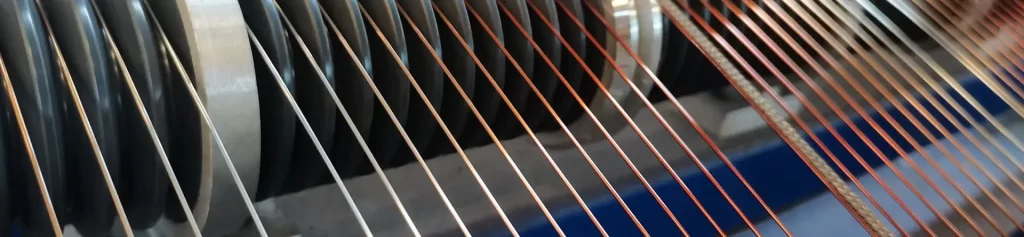
Self-bonding aluminum wire is a special type of enameled aluminum wire product. In addition to the conventional insulation varnish layer on the conductor surface, an additional self-bonding layer is applied. This self-bonding layer is activated by heat or solvent, bonding adjacent turns of the coil into a solid, integrated structure without the need for an additional bobbin or varnish impregnation.
Combining the lightweight and cost advantages of aluminum wire with the structural strength of self-bonding technology, self-bonding aluminum wire has found widespread applications in air core coils, bobbinless coils, speaker voice coils, and sensor coils. This article provides a systematic technical guide for coil design engineers and purchasing decision-makers from six dimensions: product definition, bonding methods, manufacturing processes, application scenarios, quality control, and selection guidelines.
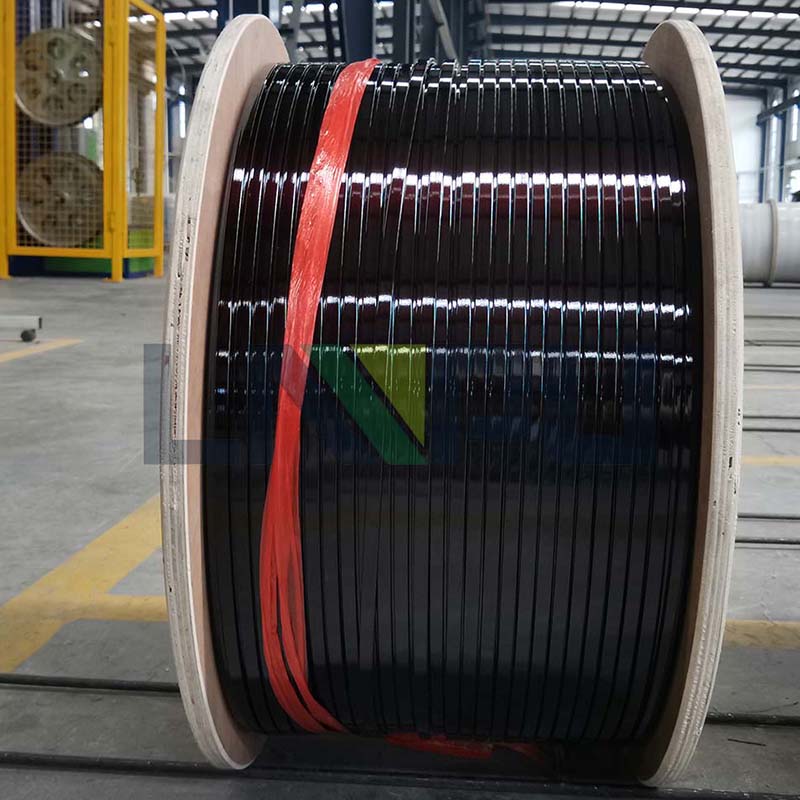
I. Product Definition of Self-Bonding Aluminum Wire
Self-bonding aluminum wire is an electromagnetic wire product with a rectangular or round cross-section, using electrical aluminum (purity ≥99.5%) as the conductor. The conductor undergoes rolling or drawing, annealing, and then coating with one or more layers of insulation varnish, followed by an additional self-bonding layer that is cured by baking.
Structural Composition:
- Conductor: Electrical aluminum (purity ≥99.5%)
- Base Insulation Layer: Conventional insulation varnish (polyurethane, polyesterimide, etc.), providing electrical insulation
- Self-Bonding Layer: Thermoplastic or thermosetting resin, providing bonding functionality
Working Principle:
The self-bonding layer is activated under specific conditions (heat or solvent), transitioning from a solid state to a viscous flow state, filling the inter-turn gaps of the coil, and then cooling or curing to bond the entire coil into a solid, integrated structure.
II. Bonding Methods
2.1 Thermal Bonding
Thermal bonding is the most commonly used self-bonding method:
Process Flow:
- After the coil is wound, place it in an oven or heating mold
- Heat to the activation temperature of the self-bonding varnish (typically 120-180°C)
- The self-bonding varnish melts and fills the inter-turn gaps
- Maintain temperature for a period to ensure sufficient flow and filling
- Cool and cure to form a solid coil structure
Advantages:
- Simple process, no additional solvents required
- Environmentally friendly, no VOC emissions
- Suitable for large-scale automated production
Disadvantages:
- Requires heating equipment
- Longer heating time (typically 10-30 minutes)
- Not suitable for temperature-sensitive components
2.2 Solvent Bonding
Solvent bonding activates the self-bonding layer through chemical solvents:
Process Flow:
- After the coil is wound, immerse or spray with solvent
- The solvent dissolves the self-bonding layer, transforming it into a viscous flow state
- Adjacent turns are bonded through capillary action
- After solvent evaporation, the coil is cured and formed
Common Solvents:
- Acetone
- Ethanol
- Specialized solvents
Advantages:
- No heating required, suitable for temperature-sensitive components
- Fast curing speed
- Suitable for complex-shaped coils
Disadvantages:
- High solvent cost, requires recovery and treatment
- VOC emissions, requires environmental protection equipment
- High operational environment requirements
2.3 Bonding Method Selection
| Consideration | Thermal Bonding | Solvent Bonding |
|---|---|---|
| Equipment Requirements | Oven/heating mold | Solvent tank/spray equipment |
| Curing Time | 10-30 minutes | 5-15 minutes |
| Environmental Friendliness | Excellent (no VOC) | Requires VOC treatment |
| Suitable Components | Temperature-resistant components | Temperature-sensitive components |
| Production Cost | Low | Medium (solvent cost) |
III. Key Manufacturing Processes
3.1 Rolling and Forming
The manufacturing of flat aluminum conductors typically employs a rolling process:
Billet Preparation: Select large-section aluminum billets or bars as raw material, with aluminum purity ≥99.5%.
Multi-Pass Rolling: The billet is gradually rolled to the target thickness and width through multiple passes. The compression rate of each pass is controlled within a reasonable range to avoid cracking of the aluminum material.
Annealing Treatment: The rolled aluminum conductor requires annealing to eliminate cold working stress and restore conductivity and flexibility. Annealing temperature is typically between 300-500°C, carried out under a protective atmosphere.
3.2 Enameling and Baking
The enameling process for self-bonding aluminum wire is basically the same as that of conventional enameled wire, but the following points should be noted:
Edge Coating: The enamel coating at the corners of flat wires is prone to thinning; it is necessary to ensure that the edge enamel coating thickness meets insulation requirements.
Flat Coating Uniformity: The wide surface of the flat wire needs to ensure uniform enamel coating, free from drips or accumulation.
Thin Coating Multiple Times: A thin coating multiple times process is used to ensure a dense, uniform, and defect-free enamel coating.
3.3 Quality Inspection
Dimensional Inspection: Thickness, width, and corner radius meet design requirements.
Enamel Coating Inspection: Breakdown voltage, flexibility, and enamel coating continuity (spark test).
Conductor Performance: Conductivity ≥61% IACS, surface quality free from oxidation and scratches.
IV. Main Application Scenarios
4.1 Transformer Windings
Self-bonding aluminum wire windings are the most traditional application:
Power Distribution Transformers: Self-bonding aluminum wire windings allow for compact designs, reducing material costs.
Dry-Type Transformers: Self-bonding aluminum wire windings have good heat dissipation, suitable for natural cooling or forced air cooling in dry-type transformers.
Electric Furnace Transformers: In high-current, low-voltage electric furnace transformers, the high current-carrying capacity and heat dissipation advantages of self-bonding aluminum wire are fully utilized.
4.2 High-Power Motors
Industrial Motors: In high-power industrial motors, self-bonding aluminum wire windings can improve power density and reduce manufacturing costs.
Wind Turbines: Large wind turbine stator windings use self-bonding aluminum wire, which can improve slot fill rate and heat dissipation.
4.3 New Energy Vehicle Drive Motors
New energy vehicle drive motors are the fastest-growing application area for self-bonding aluminum wire:
- High Power Density: Self-bonding aluminum wire windings can achieve higher slot fill rate, increasing motor power density
- Heat Dissipation Advantages: The heat dissipation performance helps the motor maintain low temperature rise under high loads
- Cost Control: Compared to copper wire, aluminum wire reduces winding material costs
- Wire Forming: Self-bonding aluminum wire needs to have good bending and forming properties to meet the requirements of winding forms such as hairpin or wave winding
4.4 Other Applications
- Reactors: Reactors wound with self-bonding aluminum wire have a compact structure and good heat dissipation
- Generators: Stator windings for small and medium-sized generators
- Induction Heating Equipment: High-current induction coils
V. Quality Control Key Points
5.1 Raw Material Control
- Aluminum purity ≥99.5%, ensuring conductivity meets standards
- Stable quality of insulation varnish, good batch consistency
5.2 Process Control
| Process | Control Points | Inspection Items |
|---|---|---|
| Rolling | Compression ratio, rolling temperature | Dimensional accuracy, surface quality |
| Annealing | Temperature profile, protective atmosphere | Conductivity, flexibility |
| Coating | Enamel thickness, uniformity | Breakdown voltage, appearance |
| Baking | Temperature profile, time | Enamel curing degree, flexibility |
5.3 Factory Inspection
- Dimensions: Thickness, width, corner radius
- Electrical: Breakdown voltage, conductor resistance
- Mechanical: Flexibility, bending test
- Appearance: Uniform enamel coating, defect-free
VI. Selection Guide
6.1 Specifications
Determine the thickness and width of the self-bonding aluminum wire based on the winding design. Note:
- Width-to-thickness ratio should not exceed 10:1
- Consider the processing capabilities of the winding equipment
- Ensure the winding window size meets requirements
6.2 Insulation Class
Select the appropriate insulation class based on the operating temperature:
- Class 130/155: General industrial applications
- Class 180/200: High-temperature applications such as new energy vehicles and variable frequency motors
6.3 Conductor Material
- Pure Aluminum: 61% IACS conductivity, lowest cost
- Aluminum Alloy: Higher strength, suitable for applications requiring mechanical strength
6.4 Certification Requirements
Ensure the product meets relevant certification requirements such as UL, IEC, and NEMA.
Conclusion
Self-bonding aluminum wire, with its high slot fill rate, excellent heat dissipation performance, and cost advantages, is increasingly widely used in transformers, high-power motors, and new energy vehicle drive motors. Through reasonable specification selection, insulation design, and process control, self-bonding aluminum wire windings can achieve performance levels comparable to copper wire windings, while significantly reducing manufacturing costs.
For applications seeking high power density and cost-effectiveness, self-bonding aluminum wire is a technology solution worthy of close attention.