

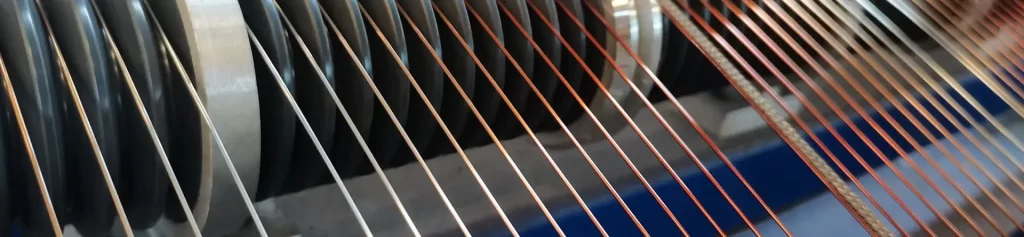
Aluminum foil winding conductors are a special type of conductor used in transformer windings. Unlike traditional round wires or flat wires, aluminum foil conductors, with their ultra-wide rectangular cross-section and unique winding method, exhibit significant technical advantages in both dry-type and oil-immersed transformers.
With the rapid growth of the dry-type transformer market and the increasing demands for transformer short-circuit strength, the application of aluminum foil winding conductors is becoming increasingly widespread. This article provides a systematic technical guide for transformer engineers and purchasing decision-makers, covering six dimensions: definition, technical advantages, insulation design, manufacturing process, application scenarios, and selection guidelines.
I. Definition of Aluminum Foil Winding Conductors
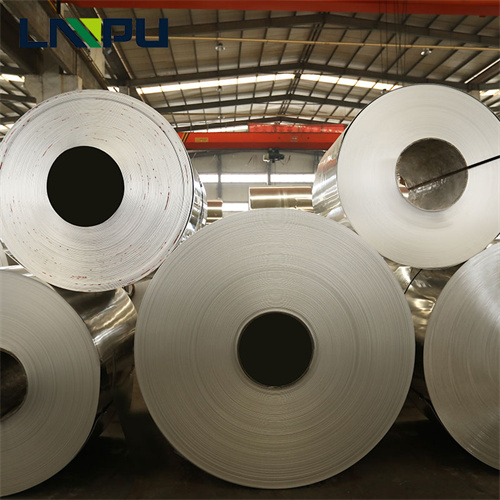
Aluminum foil winding conductors are rectangular cross-section conductors made from electrical aluminum (purity ≥ 99.5%) through a rolling process. Its characteristics are:
- Thickness: typically 0.2-3mm
- Width: can reach tens to hundreds of millimeters
- Width-to-thickness ratio: much larger than conventional flat wire, typically exceeding 10:1
- Winding method: wound layer by layer along the width direction to form a complete winding layer
Aluminum foil winding conductors are mainly used for low-voltage windings of transformers, especially low-voltage windings of dry-type transformers.
II. Technical Advantages
2.1 High Slot Fill Rate
The aluminum foil conductors are tightly arranged along the width direction, with a slot fill rate of over 95%, far higher than round wire (approximately 78.5%) and conventional flat wire (approximately 90%). High slot fill rate means:
- More conductors can be accommodated in the same window area
- More compact winding structure, smaller transformer volume
- Increased power density
2.2 Excellent Heat Dissipation Performance
The wide cross-section of the aluminum foil conductor provides a large heat dissipation surface area, which is 30-50% larger than that of round wire of the same cross-sectional area. In dry-type transformers, this heat dissipation advantage effectively reduces winding temperature rise and improves the transformer’s overload capacity.
2.3 High Short-Circuit Strength
Under short-circuit conditions, transformer windings are subjected to enormous electromagnetic forces. Aluminum foil windings, being integrally wound, have a robust overall structure and a short-circuit strength 2-3 times higher than round wire windings, effectively resisting deformation caused by short-circuit electromagnetic forces.
2.4 Low Eddy Current Loss
Under AC conditions, eddy current losses occur inside the conductor. Aluminum foil conductors are thin (typically 0.2-3mm), much smaller than the equivalent diameter of conventional flat wire and round wire, thus significantly reducing eddy current losses. This advantage is particularly pronounced in high-current, low-voltage windings.
2.5 Automated Production
Aluminum foil windings can be automated using dedicated foil winding machines, resulting in high production efficiency, good consistency, and reduced reliance on manual skills.
III. Insulation Design
3.1 Edge Insulation
The edges of the aluminum foil conductor are weak points in the insulation and require special treatment:
- Beveling Treatment: Chamfer the edges of the aluminum foil to prevent the insulation from thinning at sharp corners
- Edge Insulation Layer: Apply insulating varnish or wrap insulating tape around the edges of the aluminum foil
- Insulation Varnish Curing: Ensure the edge insulating varnish is fully cured to form a complete insulation barrier
3.2 Interlayer Insulation
Aluminum foil windings require an insulation layer between the layers:
- Nomex Paper: Class C (220°C) insulation, suitable for dry-type transformers
- Insulation Varnish: Impregnate with insulating varnish to fill the gaps between layers
- Epoxy Resin: In resin-cast dry-type transformers, epoxy resin serves as interlayer insulation
3.3 End Insulation
The ends of the windings are areas of concentrated electric field and require reinforced insulation:
- End Insulation Separator: Install an insulation separator at the ends of the windings
- End Encapsulation: Encapsulate the winding ends with insulating material
- Shielding Design: Install electrostatic shielding at the high-voltage winding ends
3.4 Insulation Class
Select the insulation class according to the transformer design requirements:
- Class F (155°C): Conventional dry-type transformer
- Class H (180°C): High-temperature dry-type transformer
- Class C (220°C): Special application using Nomex paper
IV. Manufacturing Process
4.1 Aluminum Foil Rolling
Billet Preparation: Select large-section aluminum billets with an aluminum purity ≥ 99.5%.
Multi-Pass Rolling: Roll the billet to the target thickness and width through multiple passes. During rolling, the following must be controlled:
- Compression ratio: Reasonable control of the compression ratio for each pass
- Temperature: Uniform rolling temperature
- Surface quality: No oxidation or scratches
4.2 Annealing Treatment
The rolled aluminum foil needs to be annealed:
- Annealing temperature: 300-500°C
- Protective atmosphere: Nitrogen or other protective atmosphere to prevent oxidation
- Purpose: To eliminate cold working stress and restore conductivity and flexibility
4.3 Insulation Treatment
Insulation treatment is performed according to insulation design requirements:
- Edge insulation coating: Apply insulating varnish to the edges of the aluminum foil
- Surface insulation: Some applications require an insulation layer to be applied to the surface of the aluminum foil
- Curing: Baking to cure the insulation layer
4.4 Foil Winding Process
Foil winding machine winding: Wind layer by layer along the width direction on a dedicated foil winding machine:
- Tension control: Appropriate tension to ensure tight winding
- Interlayer insulation: Place interlayer insulation material between each layer
- End treatment: Winding ends are neat and free of warping
4.5 Post-treatment
- Impregnation (if required): For non-resin-cast transformers, impregnation is required
- Baking and Curing: After impregnation, bake and cure
- Inspection: Dimensional, electrical performance, and appearance inspection
V. Application Scenarios
5.1 Dry-Type Transformers
Aluminum foil winding conductors are most widely used in dry-type transformers:
Resin-cast dry-type transformers:
- Low-voltage windings use aluminum foil conductors
- High-voltage windings use round wire or flat wire
- Epoxy resin casting, overall insulation
Open-type dry-type transformers:
- Low-voltage windings use aluminum foil conductors
- Nomex paper insulation
- Natural cooling or forced air cooling
5.2 Oil-Immersed Transformers
In oil-immersed transformers, the application of aluminum foil windings is relatively less, but it is used in the following scenarios:
- Power distribution transformers: Low-voltage high-current windings
- Special transformers: Electric furnace transformers, rectifier transformers
5.3 Reactors
In high-current reactors, aluminum foil windings can provide good heat dissipation performance and short-circuit strength.
5.4 Special Applications
- High-Frequency Transformers: The low eddy current loss advantage of aluminum foil is more pronounced in high-frequency applications
- High-Current Transformers: Low current density, low loss
VI. Selection Guide
6.1 Specifications Confirmation
Determine the thickness and width of the aluminum foil according to the transformer design:
- Thickness: 0.2-3mm, determined according to current density and eddy current loss requirements
- Width: Determined according to the winding window height
- Width-to-Thickness Ratio: Usually not exceeding 50:1 to ensure the feasibility of the winding process
6.2 Conductor Material
- Pure Aluminum: Conductivity ≥61% IACS, lowest cost
- Aluminum Alloy: Higher strength, suitable for applications requiring mechanical strength
6.3 Insulation Class
Select according to transformer design requirements:
- Class F (155°C): General applications
- Class H (180°C): High-temperature conditions
- Class C (220°C): Special applications using Nomex paper
6.4 Certification Requirements
Ensure products meet relevant certification requirements such as UL, IEC, and NEMA.
Conclusion
Aluminum foil winding conductors are widely used in dry-type low-voltage windings due to their advantages such as high slot fill factor, excellent heat dissipation, high short-circuit strength, and low eddy current loss. Through reasonable insulation design, manufacturing process control, and quality inspection, aluminum foil winding conductors can achieve performance levels comparable to copper winding conductors while significantly reducing manufacturing costs.
For transformer applications that prioritize power density, short-circuit strength, and economy, aluminum foil winding conductors are a technology solution worthy of close attention.
Collaborating with professional aluminum foil winding conductor manufacturers and selecting appropriate specifications and insulation configurations based on specific application requirements is an effective way to ensure product quality and performance.